Most deck failures do not announce themselves in July, when the boards are warm and everything looks settled. They appear in March. The snow recedes, and suddenly there is a cracked board, a railing post with a little movement, or a finish that has started peeling since fall.
After fifteen years of material-focused design work across automotive surfaces, product housings, and architectural details, I have learned to look for the stress that happened before the visible failure. On a deck, spring damage is usually the record of an entire winter. That is why the best decking materials for cold climates cannot be judged by the boards alone. Material, drainage, fasteners, footings, color, and maintenance all work as one system.
- Why Freeze–Thaw Cycles Change Deck Design
- Best Decking Materials for Cold Climates, Compared
- The Details That Matter as Much as the Boards
- How Color, Texture, and Layout Age Through Winter
- Naperville as a Cold-Climate Deck Case Study
- A Seasonal Maintenance Plan That Protects the Design
- How to Make the Final Material Choice
- FAQ
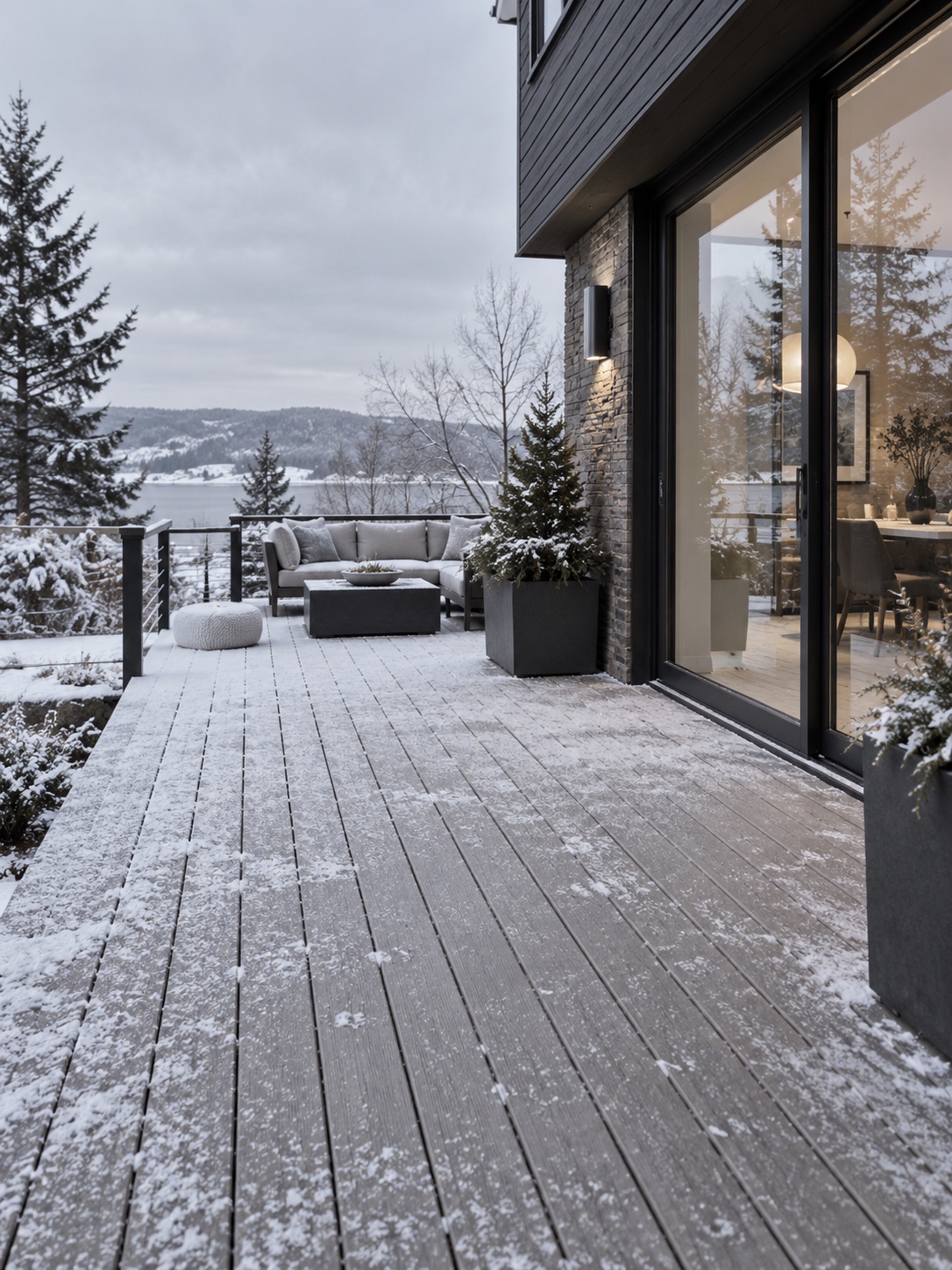
Why Freeze–Thaw Cycles Change Deck Design
A single hard freeze is not the whole problem. Repetition is. A cold-climate deck can be stressed, released, and stressed again every time daytime melting gives way to an overnight freeze.
Moisture absorption, expansion, and hidden spring damage
Water settles into pores, end grain, surface checks, and the small spaces around fasteners. When that water freezes, it expands by about nine percent. In a porous material, the pressure can widen tiny defects that are not yet visible. The ice melts, moisture moves again, and the next freeze repeats the load.
The first clues are often subtle: fine surface checks, a board edge beginning to cup, or a fastener that no longer sits quite as it did. Later come more obvious cracks, loose connections, and movement at railings or stairs. The useful lesson is not to wait for the dramatic symptom. Spring inspection matters because it catches small changes before they become structural repairs.
- Surface checking: fine cracks follow the grain or collect near exposed board ends.
- Cupping and crowning: the board edges or center lift as moisture changes unevenly through the section.
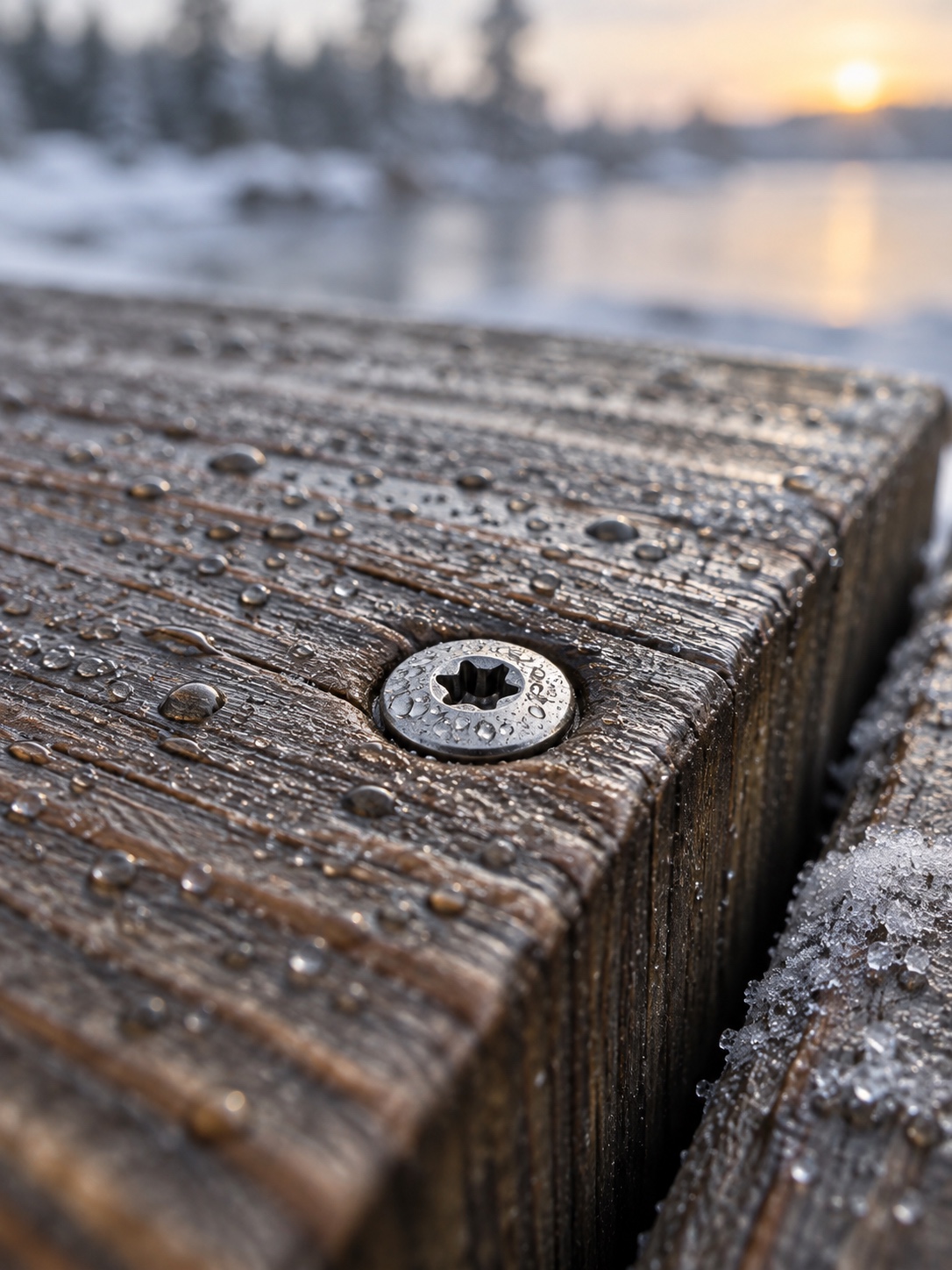
- Fastener movement: screw heads rise, holes widen, or dark staining appears around hardware.
- Joint movement: stairs, rails, and picture-frame borders open at connections.
- Ledger warning signs: persistent dampness, staining, or separation appears where the deck meets the house.
Not every hairline check is a structural failure. The pattern matters. A single stable mark can be cosmetic; several new cracks combined with movement, softness, or loose hardware deserve a closer look. If a guardrail shifts under hand pressure or the deck moves under normal walking, stop treating the issue as routine maintenance and arrange a professional inspection.
Why low temperature alone is not the real problem
A reliably frozen material can be easier to manage than one that repeatedly warms, wets, and freezes. Naperville winters often include sunny daytime snowmelt followed by nighttime refreezing. The deck is not simply cold; it is cycling between states, often while holding water in joints and shaded areas.
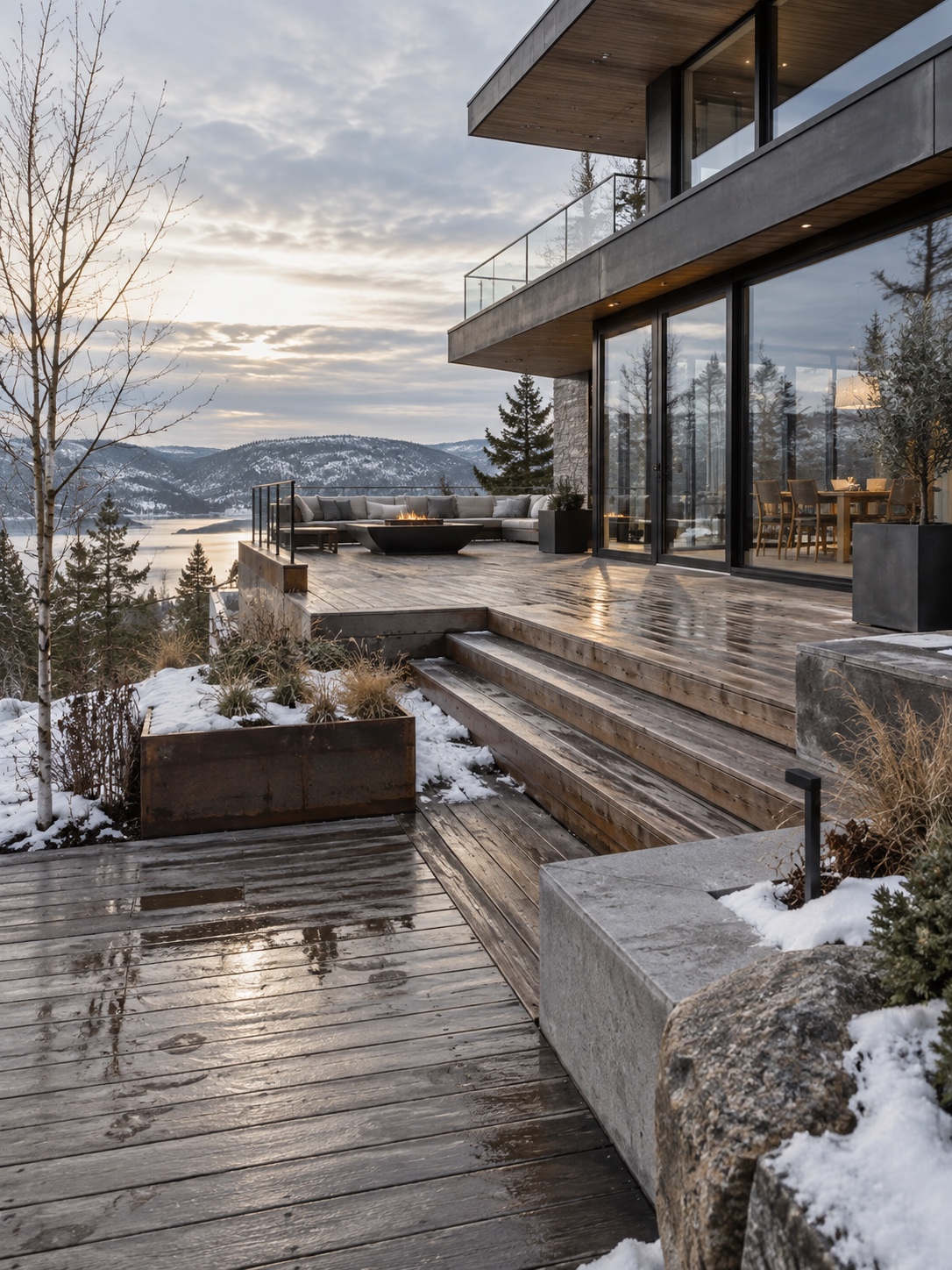
Best Decking Materials for Cold Climates, Compared
There is no honest version of “wood bad, composite good.” Every option has a characteristic strength, a maintenance burden, and a detail that can undermine it. The comparison below is a practical starting point, not a substitute for the installation guide for the product you buy.
| Material | Cold-climate advantage | Watch for |
|---|---|---|
| Capped composite | Low moisture absorption and modest upkeep | Temperature-aware spacing and the specified fastener system |
| PVC | Very low moisture absorption | Thermal movement, surface appearance, and product-specific installation |
| Pressure-treated wood | Affordable, repairable, and naturally textured | Sealing, checking, warping, and exposed cut ends |
| Tropical hardwood | Dense surface and premium natural grain | Pre-drilling, compatible fasteners, sourcing, and maintenance |
| Aluminum | No rot or water absorption | Thermal movement, noise, cost, and a distinctly modern look |
Compare the complete installed system, not only the price per board. Hidden fasteners, breaker boards, fascia, stair parts, railing interfaces, joist protection, and labor can change the order of the options. Maintenance belongs in the budget too. A lower initial price is less attractive if the finish schedule is unrealistic for the way the household actually uses the space.
Capped composite: low maintenance, but spacing still matters
Capped composite does not rot like untreated wood and takes on far less moisture. That makes it a strong default for many freeze–thaw sites. It still changes length as temperatures move, though, so a tight-looking installation is not necessarily a better one. The correct gap depends on the board line, fastener, and temperature during installation. Follow the current manufacturer table rather than a generic rule.
If you are weighing the environmental and design tradeoffs as well as winter performance, see Composite Decking Pros and Cons: The Designer’s Guide to Sustainable Materials.
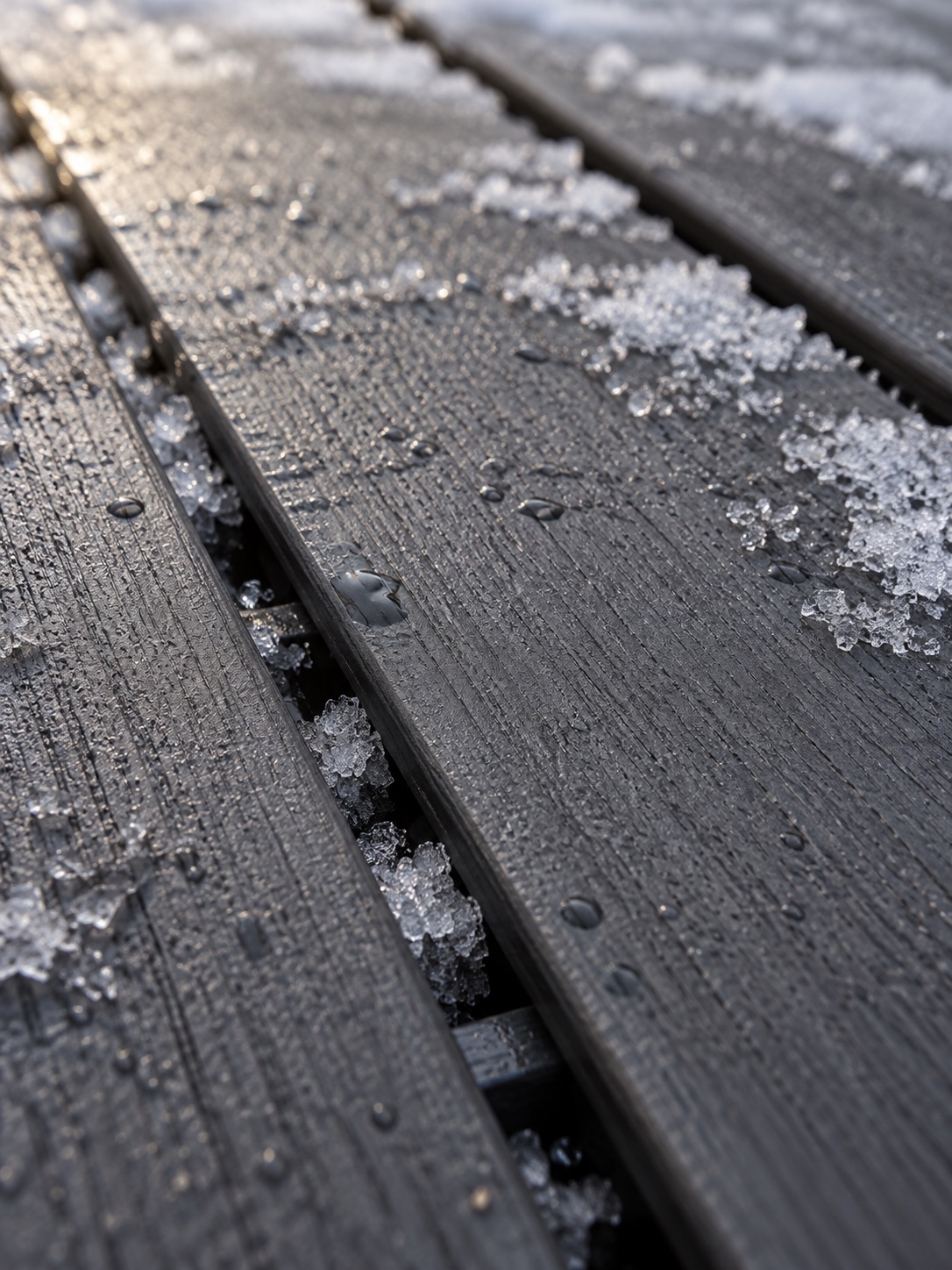
PVC: minimal moisture absorption and a cleaner, synthetic look
Cellular PVC absorbs very little water, which removes one major route for freeze-related damage. Its tradeoff is visual. Even well-made boards can look more uniform than wood or some capped composites. That can suit a crisp contemporary exterior, but it may feel less natural beside a traditional house. PVC also moves with temperature, so low moisture absorption does not cancel the need for correct spacing and fastening.
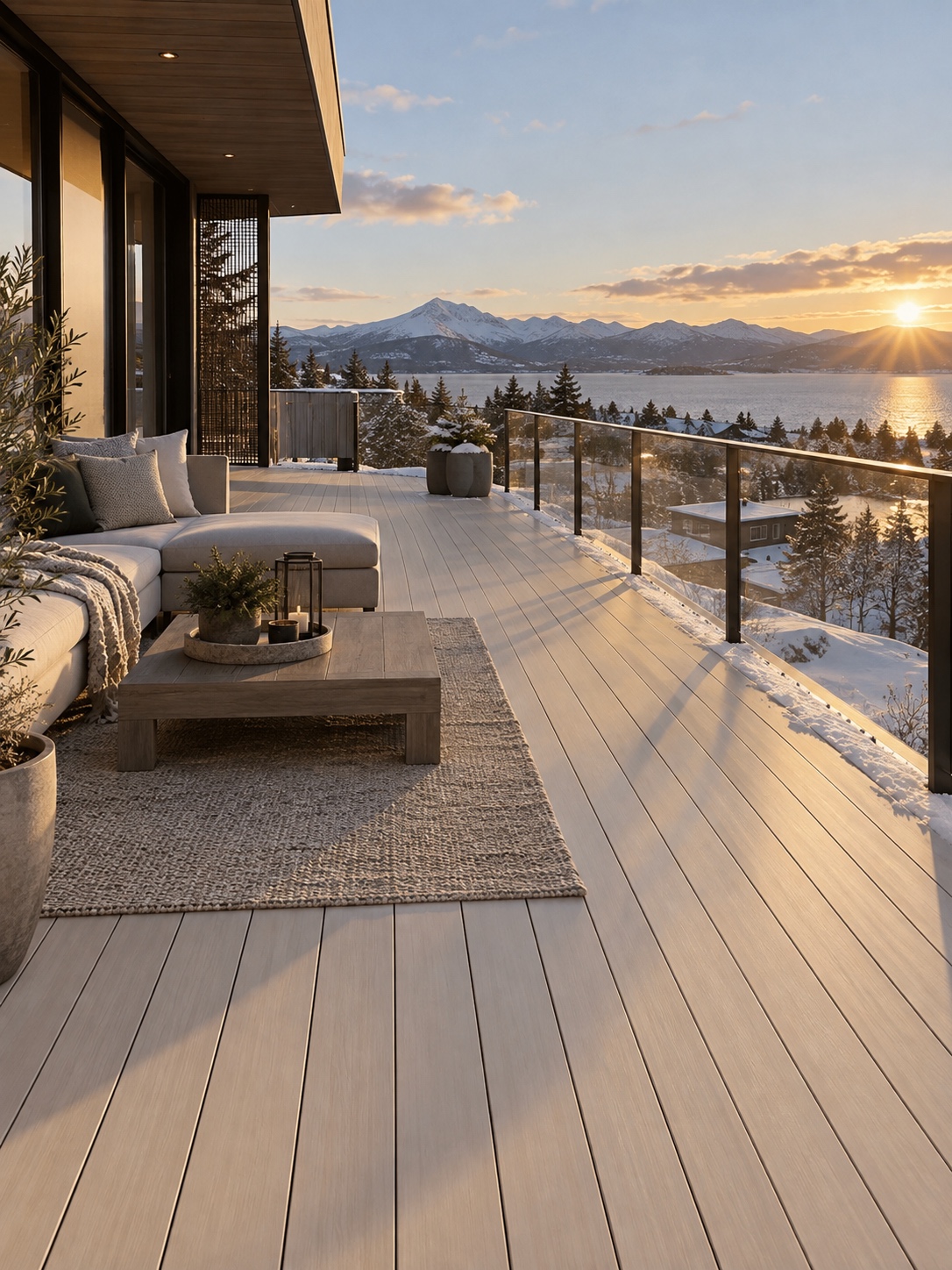
Pressure-treated wood: affordable, warm, and maintenance-heavy
Pressure-treated lumber remains the accessible choice, and real grain brings warmth that synthetics work hard to imitate. The cost comes later in inspection and finishing. Boards need time to dry before coating, exposed cuts need the treatment specified for the lumber, and the surface needs periodic care. Neglect allows checking, cupping, and fastener staining to build faster in a wet freeze–thaw climate.
Board quality varies even within one delivery. During installation, reject pieces with severe wane, damaged edges, or pronounced twist, and orient the best faces where they will be seen and walked on. Good fastening cannot flatten a badly distorted board forever. A breathable finish and unobstructed drying path do more for longevity than simply applying a heavy coat of product.
Tropical hardwoods: premium grain with demanding hardware
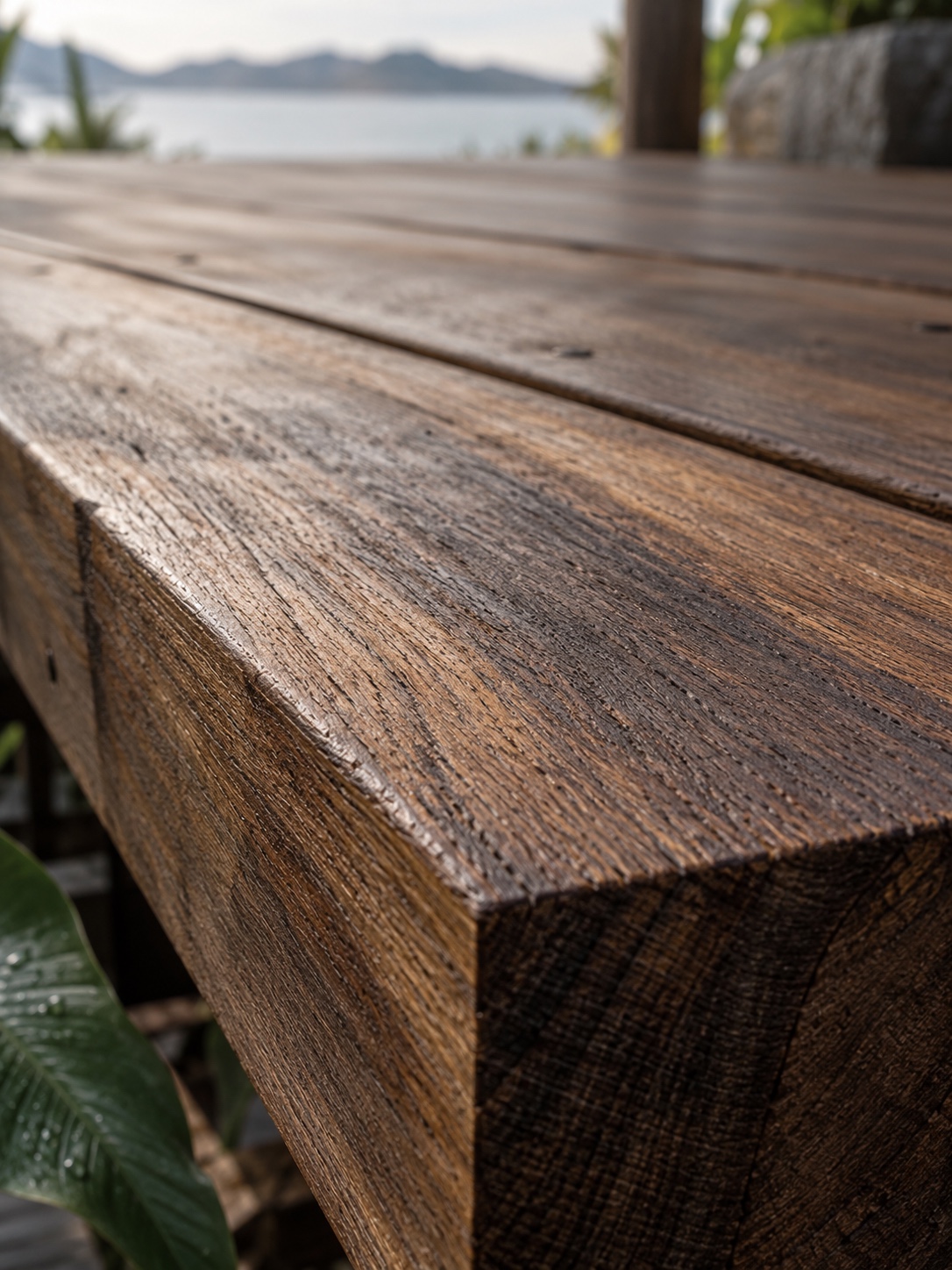
Ipe, cumaru, and other dense hardwoods resist moisture well and develop a rich, architectural surface. Density changes the installation method: many systems require pre-drilling, careful end sealing, and fasteners compatible with both the wood and the framing. Responsible sourcing belongs in the decision too. A beautiful board does not excuse questionable provenance.
Decide early whether the boards will be oiled to hold a warmer tone or allowed to weather toward silver. Both approaches can work, but switching strategies after uneven exposure often creates a patchy result. Covered zones, open edges, and paths through snow will age at different rates.
Aluminum: stable, durable, and unmistakably modern
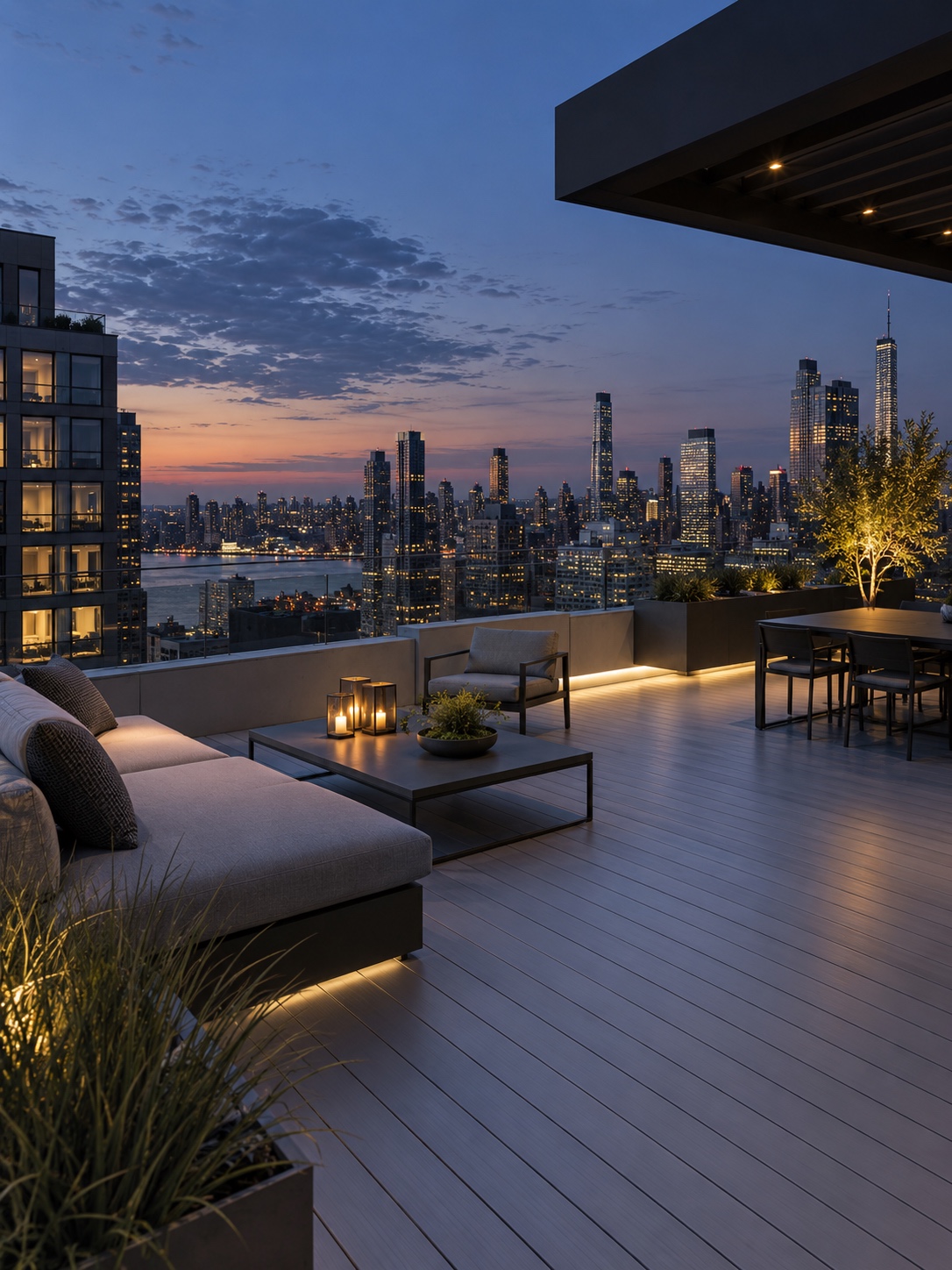
Aluminum does not absorb water or rot, making it a resilient option for demanding sites. It still expands and contracts with temperature, so the deck system must accommodate movement. The more obvious constraint is aesthetic: aluminum reads as precise and architectural, not rustic. On a contemporary house or rooftop, that character can be exactly right.
It can also conduct sound and heat differently from wood-based products. Ask to walk on a completed installation, preferably one with a similar span and framing system. The feel underfoot, sound of furniture movement, and detailing at cut edges are easier to judge in person than from a technical sheet.
The Details That Matter as Much as the Boards
Drainage, slope, ventilation, and board gaps
Water that leaves quickly has less opportunity to soak, stain, or freeze in place. A durable deck directs water away from the house, keeps drainage paths open, and allows the substructure to dry. Board spacing matters here as much for runoff and debris as it does for thermal movement. Under-deck ventilation is equally important, especially above damp or shaded ground.
- Keep downspouts and roof runoff from dumping onto the deck or against the ledger.
- Avoid trim details that create hidden troughs at fascia and stair edges.
- Protect the joist system where the chosen assembly calls for tape or membrane.
- Make drains, gaps, and the ground below accessible enough to clean.
The last point is easy to miss during design. If a narrow slot cannot be reached with a brush or vacuum, leaves will eventually turn it into a moisture trap. Durable detailing is not only about how water moves on day one; it is also about whether the owner can keep that route open five winters later.
Flashing, fasteners, and protected cut ends
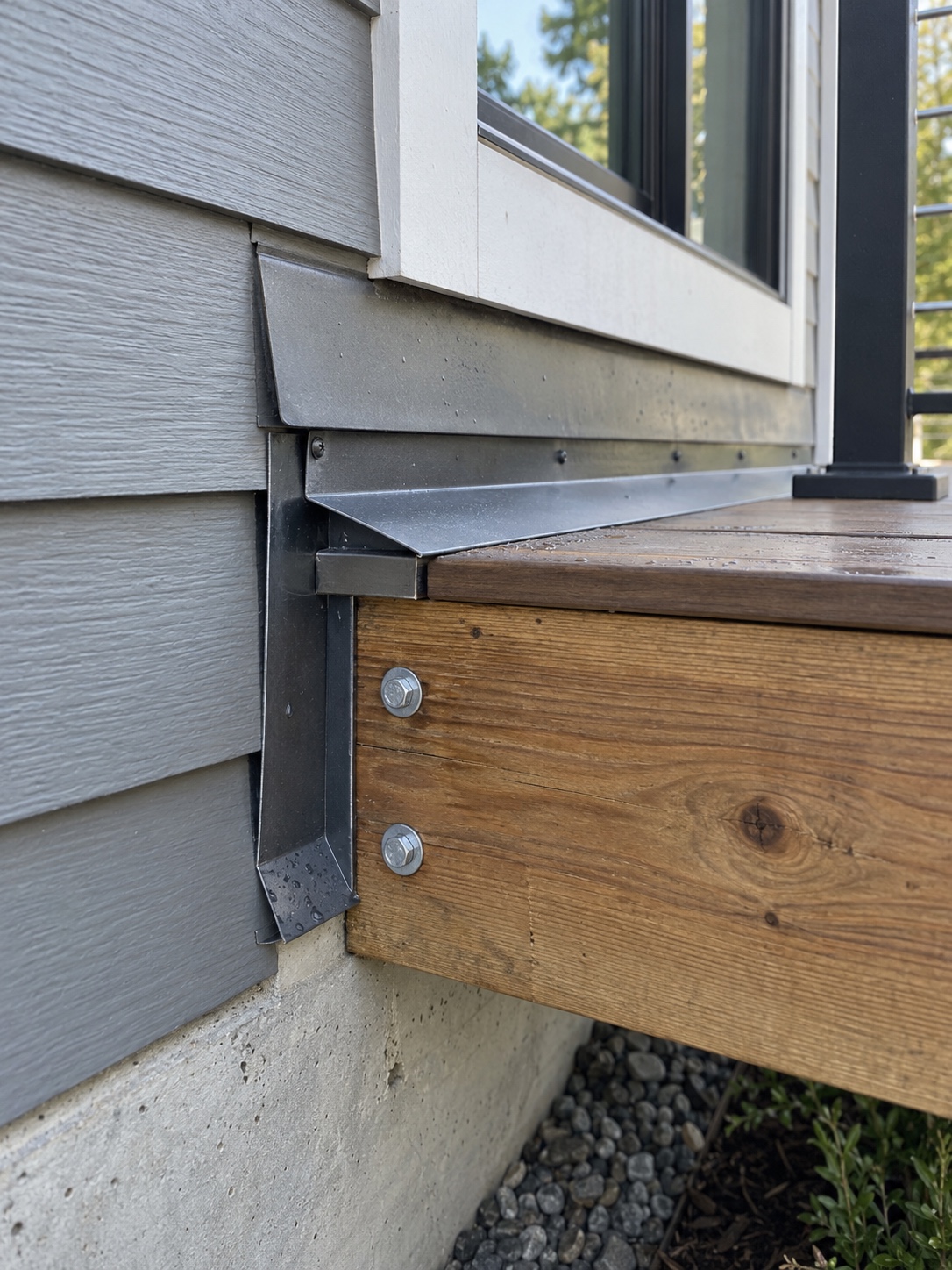
The ledger is where the deck and house meet, and where a small water-management error can become an expensive structural problem. Corrosion-resistant flashing must be layered so water sheds outward rather than collecting behind the ledger. Fasteners and connectors must suit the lumber treatment and the exposure; stainless steel or approved hot-dipped galvanized hardware is common, but the complete system matters more than a single metal label.
Footings, frost depth, and snow loads
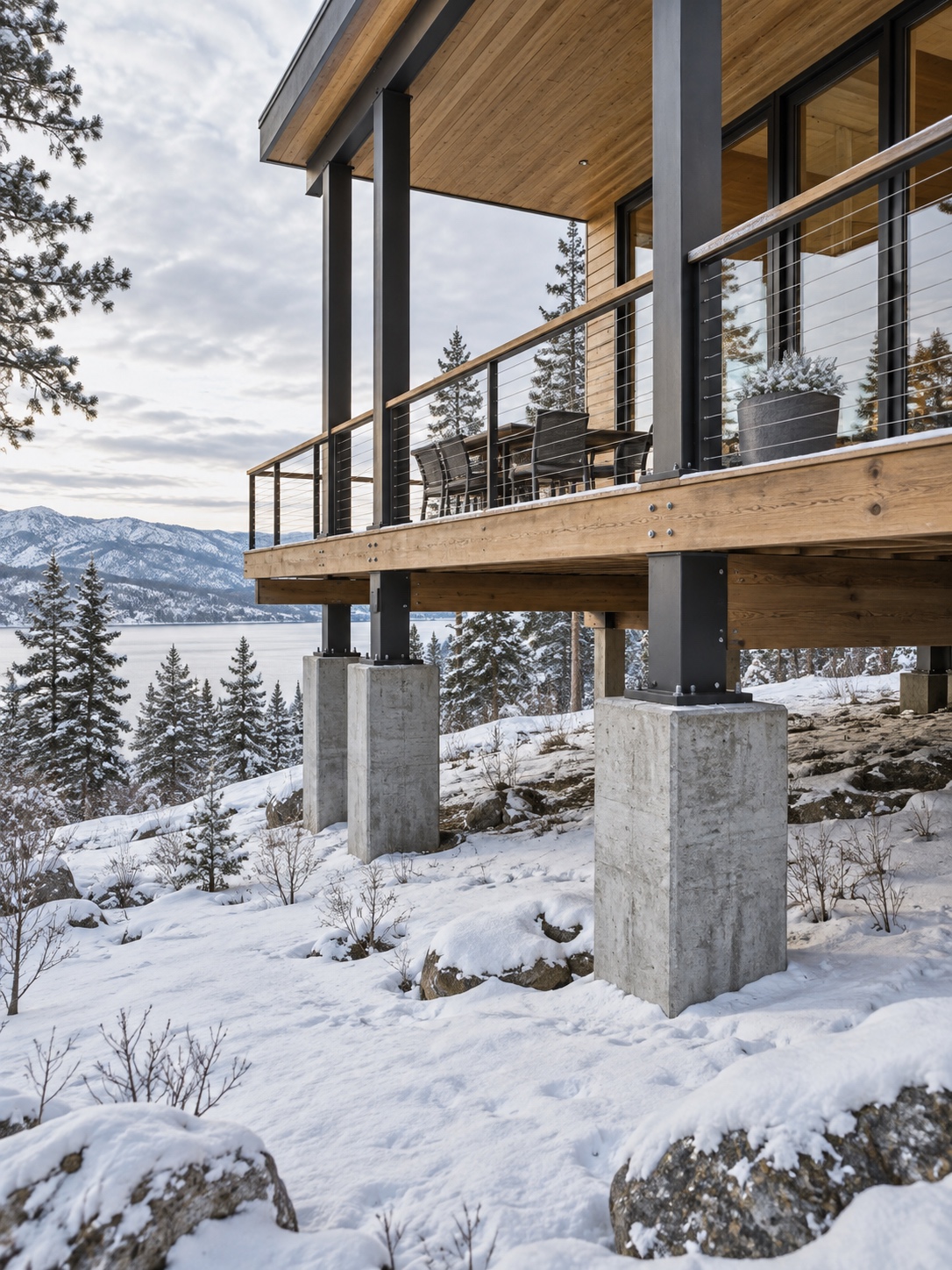
Footings above the required frost depth can move as the soil freezes and thaws. That movement may rack stairs, loosen railings, and pull a deck out of level. Local rules are specific for a reason. Naperville’s residential deck resource guide specifies concrete piers 42 inches below grade and requires a footing inspection before concrete is poured. The city also requires a permit for elevated decks and for replacement of structural or safety elements on an existing deck.
Those requirements should still be confirmed for the current project, site, and code edition. Soil, loads, attachment conditions, and deck geometry can move a design outside a prescriptive detail. This is the point to involve the permit office, a qualified contractor, or an engineer—not the point to copy a footing from a neighboring property.
How Color, Texture, and Layout Age Through Winter
Dark or light boards?
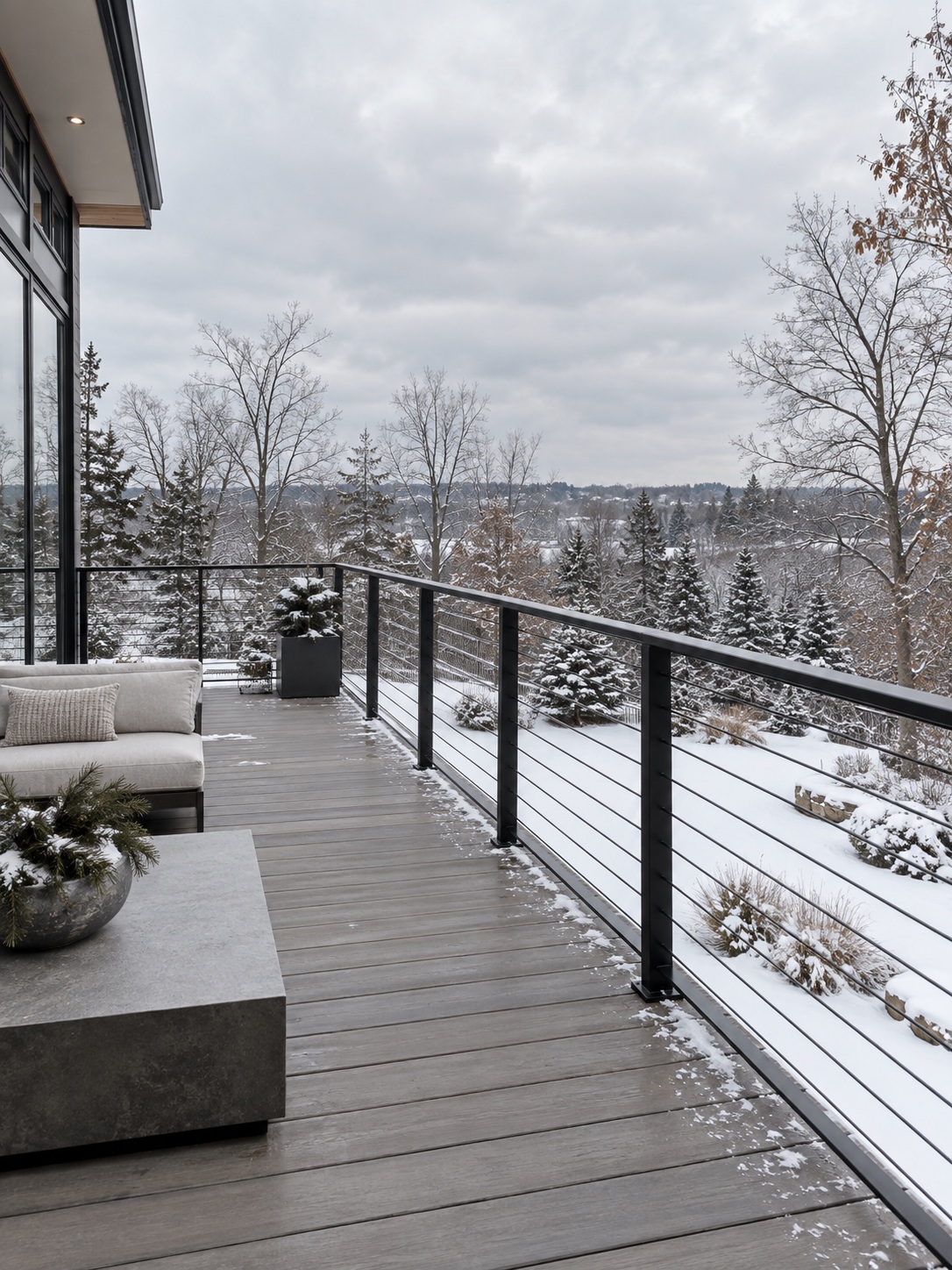
Dark decking can look exceptionally sharp against snow and summer planting, but it also shows pale mineral residue, de-icer dust, and spring mud. Lighter boards disguise that residue more readily, although algae and shaded damp patches may stand out. Mid-tones are often the forgiving choice. The right answer depends on shade, traffic, nearby planting, and how often the surface will be cleaned.
Slip-conscious texture without an industrial feel
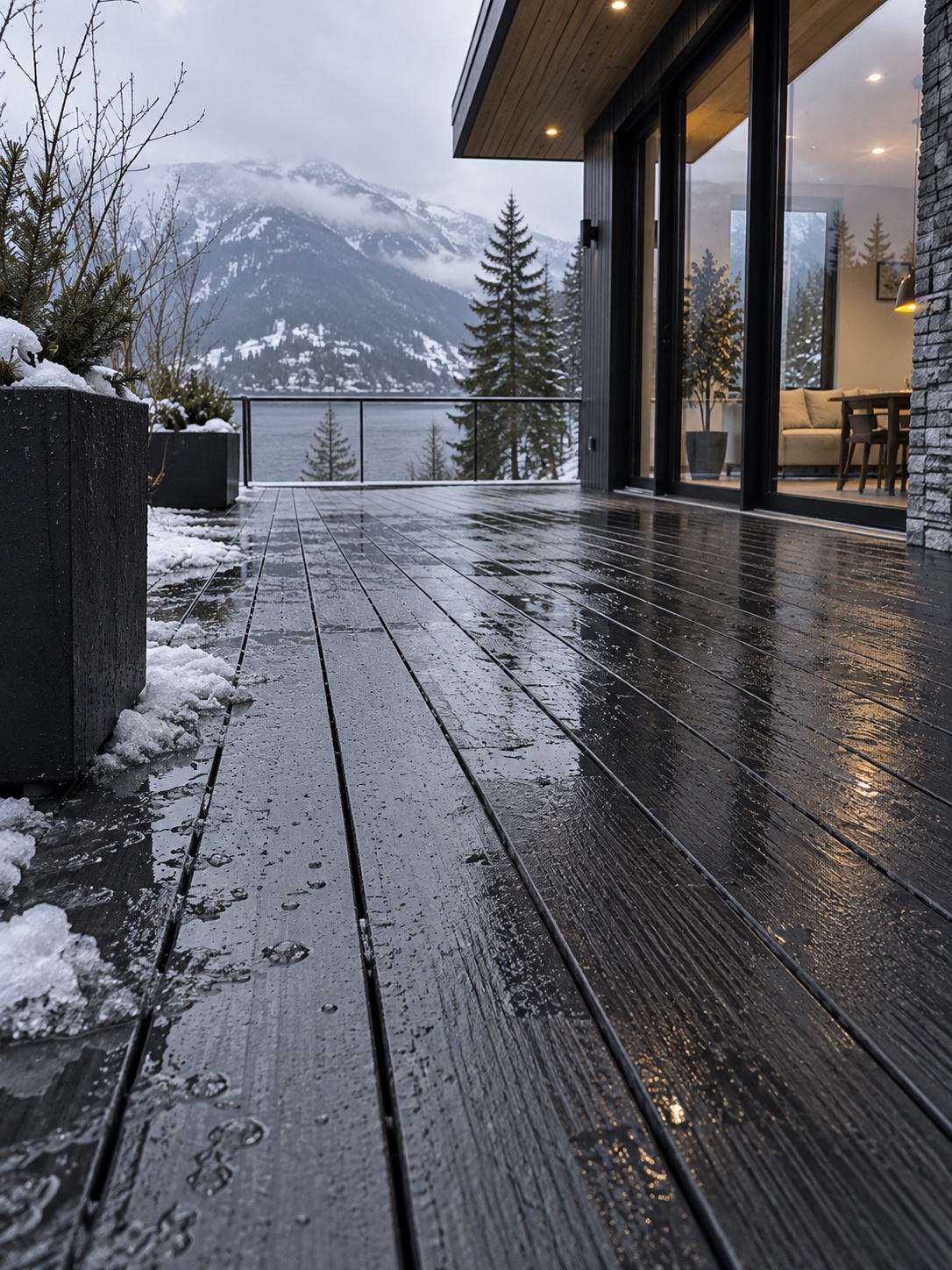
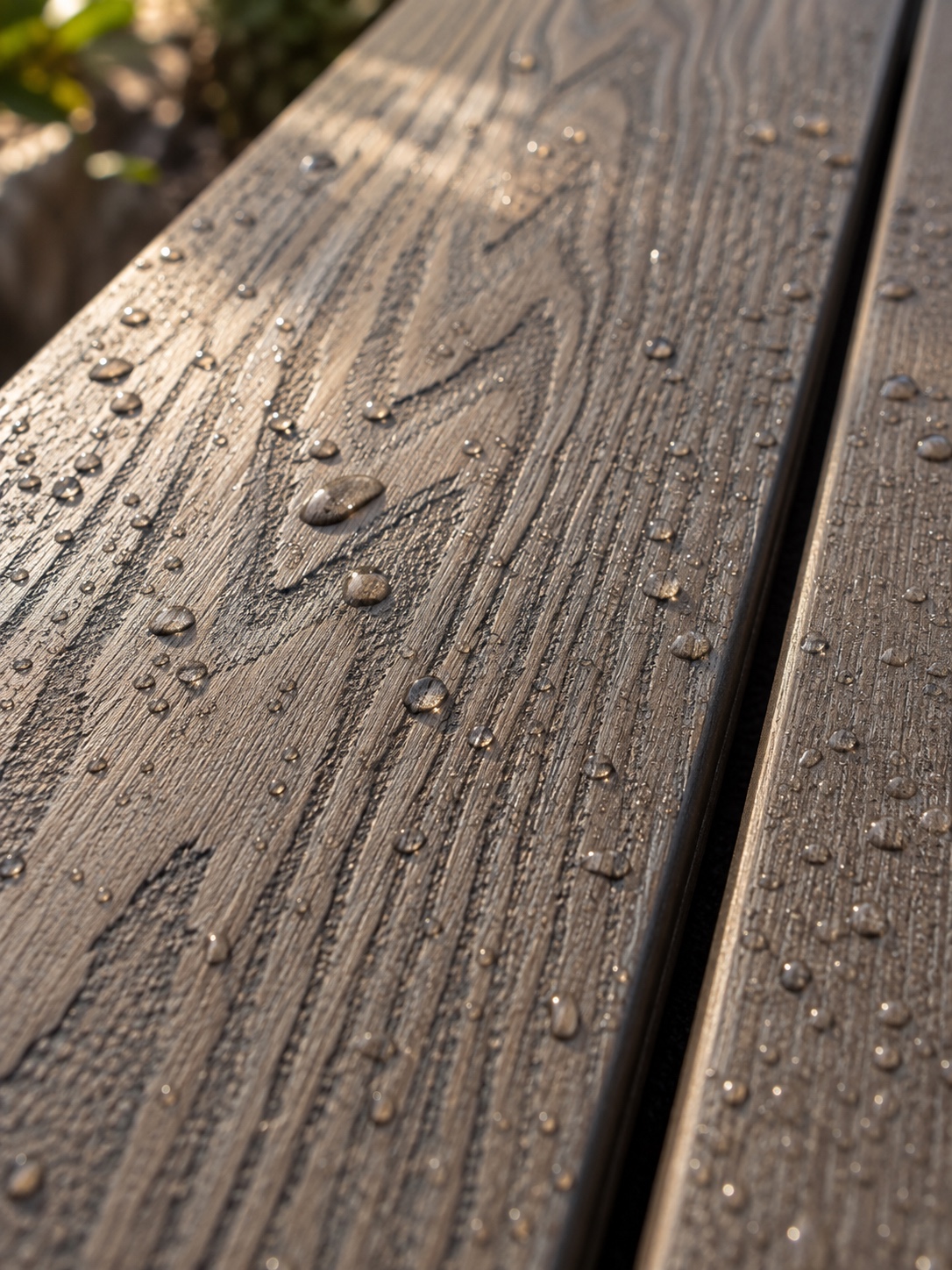
Texture helps on wet boards, but deeper is not automatically better. Aggressive grooves can trap dirt and change a residential deck into something that feels like a service walkway. Ask for physical samples, wet them, and walk on them in the shoes you normally wear outside. That ten-minute test says more than a polished catalog image.
Railings, stairs, and the transition to the house
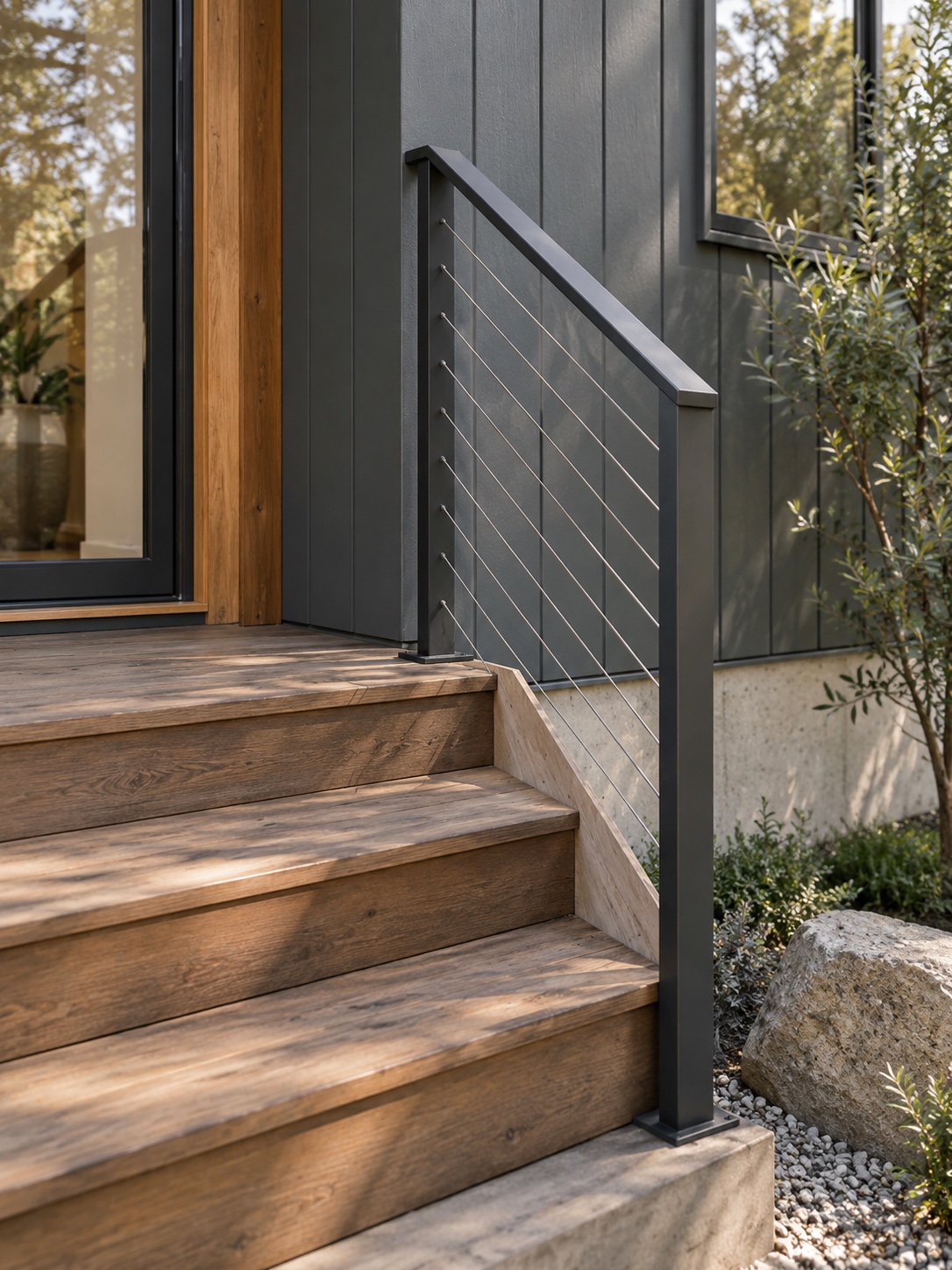
A deck is a transition between architecture and landscape. Railings, stair stringers, thresholds, and fascia should share the house’s material and color language instead of looking like a separate kit attached later. Repeating one finish or proportion is usually enough to create continuity. For a wider view of those relationships, read Designing the Perfect Deck: 3 Architectural Rules for Your Outdoor Oasis.
Naperville as a Cold-Climate Deck Case Study
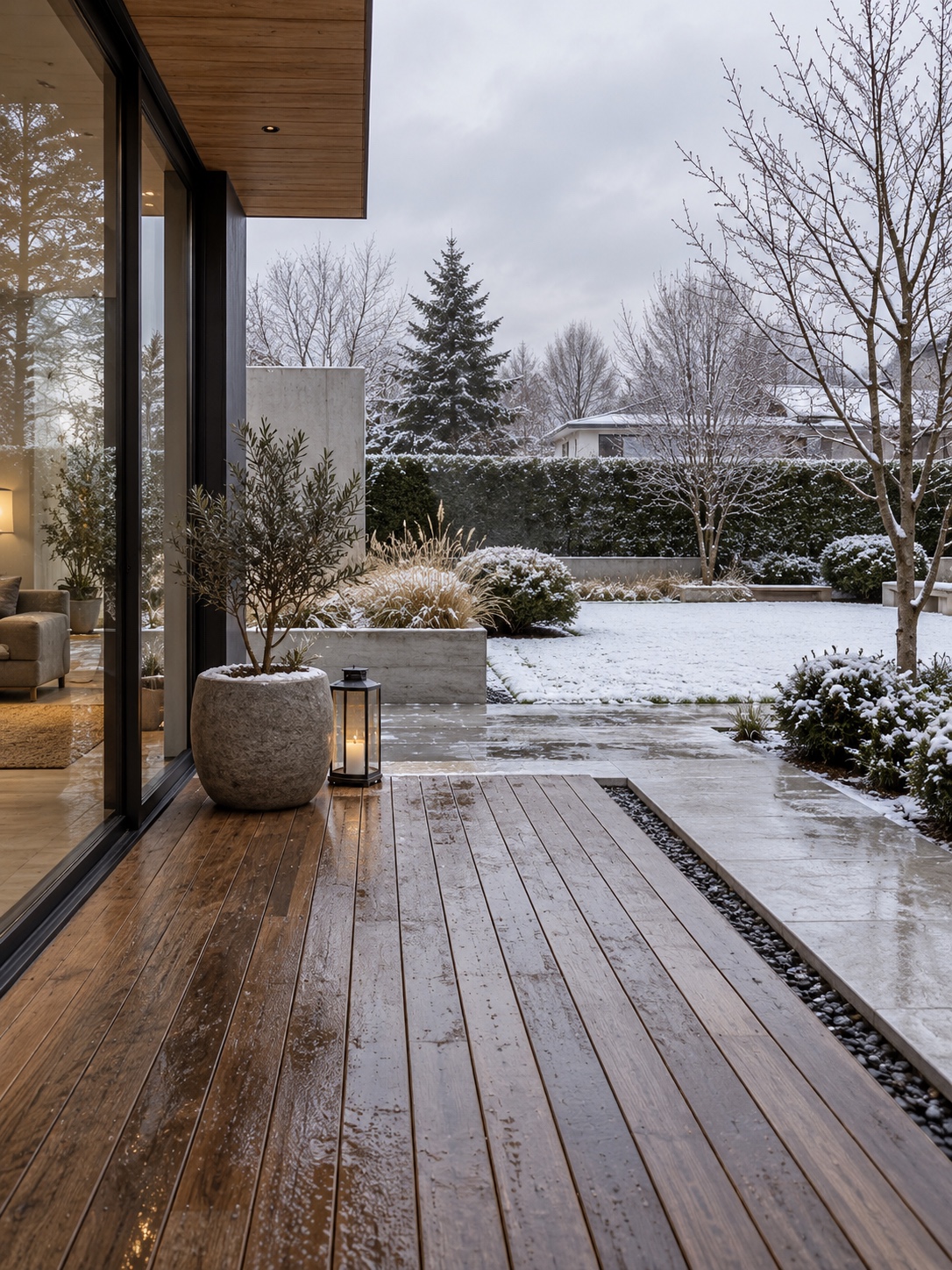
Naperville is a useful case because its winter stress comes from change. Snow can melt during the day, collect at board edges or stairs, and freeze again after sunset. A generic “cold weather” label misses that wet-and-refreeze pattern.
What repeated winter thaws change
The design response is straightforward: choose a surface with a moisture profile you can maintain, give it the movement allowance its manufacturer requires, and make every water-shedding detail easy to inspect. A board that performs well on paper can still fail in a poor assembly. Conversely, a maintenance-heavy material can last when the design keeps it dry and the owner follows through.
Why local building experience matters
A local contractor sees which details survive more than one winter. An experienced Naperville deck builder should be able to explain the permit path, footing inspection, product-specific spacing, flashing sequence, and hardware choice in plain language. Ask for those answers before comparing finish colors. If the water-management and structural details are vague, the material warranty will not rescue the project.
A useful proposal should make the hidden work visible. Before signing, ask:
- Which current installation guide controls the board gaps and fasteners?
- How will the ledger and every wall penetration be flashed?
- Where will roof water and deck runoff go during a thaw?
- Which inspections are required before framing is covered?
- What maintenance preserves the board and labor warranties?
Specific answers are more valuable than a long list of material brands. They also make competing bids easier to compare, because one contractor may include joist protection, permit handling, and upgraded hardware while another has priced only the visible deck surface.
A Seasonal Maintenance Plan That Protects the Design
Fall: clean drainage paths and check connections
Before the first hard freeze, remove leaves and debris from board gaps, stair corners, and the area beneath downspouts. Inspect exposed cut ends, fastener heads, railing bases, and the ledger area. Follow the surface manufacturer’s instructions before applying any sealer or coating; composite, PVC, hardwood, and treated lumber do not share one finish schedule.
Photograph any questionable spot from the same angle each season. A dated close-up makes gradual movement much easier to detect than memory does. Keep the product name, color, installation guide, and finish records with those photos so a future repair does not begin with guesswork.
Winter: remove snow without gouging the surface
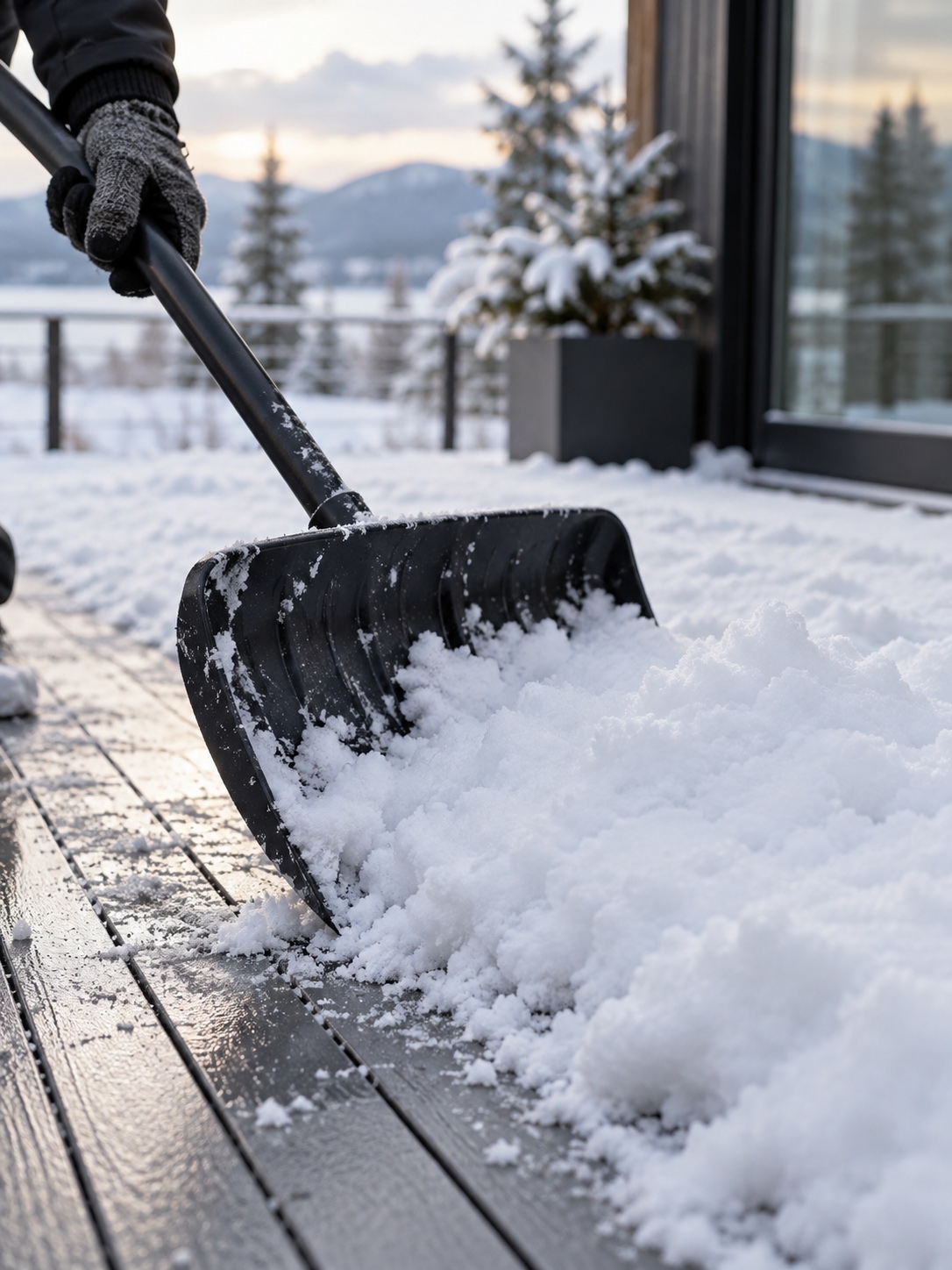
Use a plastic shovel and push with the direction of the boards when the layout allows. Do not chop at bonded ice. De-icer advice varies by brand and generation: some composite manufacturers permit calcium chloride or rock salt and ask owners to rinse residue later, while other finishes have tighter restrictions. Check the exact care guide before spreading anything, and keep de-icer away from hardware or surrounding materials when the manufacturer warns against it.
Spring: look for movement, cracks, and ledger trouble
Inspect as soon as the deck is clear and dry enough to walk safely. Look for a railing that moves, boards that have lifted, new checks around fasteners, rust staining, soft framing, or a gap opening where the deck meets the house. Naperville recommends visual deck or porch checks at least twice a year and professional inspection whenever there is movement or doubt about safety.
Test drainage with ordinary hose water only after temperatures are safely above freezing. Watch where water slows or backs up; the stain line often begins there. Do not probe questionable structural wood aggressively or dismantle a ledger connection yourself. Document the condition and let a qualified professional decide whether the concern is cosmetic, repairable, or unsafe.
Moisture damage is cheaper to address while it is still local. Beyond Staining: How True Waterproofing Saves Your WA Deck From Total Rebuild explains the cost of treating water as a finish problem rather than a construction problem. If the boards are sound but the surface has aged, Why Deck Resurfacing Is So Important in the Seattle Climate covers the next decision.
How to Make the Final Material Choice
Start with constraints that cannot be changed: the local permit requirements, height above grade, structural spans, sun exposure, drainage route, and how snow will be removed. Then compare samples where the deck will actually sit. Morning shade and low winter light can make a gray board look blue, while intense afternoon sun can turn a subtle brown nearly orange.
Next, be candid about maintenance. A homeowner who enjoys washing and refinishing wood can make a good pressure-treated or hardwood deck last. Someone who wants a surface that needs little beyond cleaning is more likely to be happy with capped composite, PVC, or aluminum. There is no design prize for choosing a maintenance routine that will be resented and skipped.
Finally, review the assembly as a whole. The most expensive board installed over poor drainage and careless flashing is still a vulnerable deck. A well-detailed, code-compliant structure made from a modest material can be the more durable and more beautiful result. Cold-climate design succeeds when every layer has a clear job and can keep doing it through many winters.
FAQ
What is the best decking material for freezing climates?
Capped composite and PVC are dependable choices because they absorb little moisture, while aluminum offers excellent dimensional stability. The right choice also depends on appearance, budget, installation details, and the maintenance a homeowner is willing to handle.
Does composite decking crack in cold weather?
Composite decking can move as temperatures change. Cracking, bowing, or buckling is more likely when the product is installed without the gaps, fasteners, and temperature allowances required by its manufacturer.
How much space should deck boards have in a cold climate?
There is no universal gap for every deck board. Required spacing depends on the material, board profile, fastener system, and installation temperature, so installers should follow the current guide for the exact product being used.
Can rock salt damage decking and metal fasteners?
Some decking manufacturers allow rock salt or calcium chloride, while other surfaces and finishes have different restrictions. Use only products approved for the specific deck system, remove residue as directed, and avoid metal shovels that can scratch the boards.
How deep should deck footings be below the frost line?
Footing depth is set by local code and site conditions. Naperville’s residential deck guide specifies concrete piers 42 inches below grade, but homeowners should confirm the current permit requirements and have the design reviewed for the actual property.
- 0shares
- Facebook0
- Pinterest0
- Twitter0
- Reddit0