I used to think buying an electric scooter was simple. Pick a color, check the range number, click buy. Then I rode three different models back to back in two weeks and realized how much the spec sheet lies.
- The Range Problem Nobody Talks About
- Why Charging Architecture Matters More Than Speed
- What Good Industrial Design Actually Solves
- Smart Features: What’s Actually Useful vs. What’s Marketing
- Build Quality: The 18-Month Test
- The Price-to-Value Calculation Nobody Does Honestly
- How Different Markets Are Solving the Same Problem
- A Practical Pre-Purchase Checklist
- FAQ
- Q: How long do electric scooter batteries actually last?
- Q: Is it worth buying an electric scooter if I live in an apartment?
- Q: What’s the real difference between a budget and premium electric scooter?
- Q: Are Chinese-brand electric scooters (NIU, Yadea) reliable?
- Q: What should I test on a test ride?
- Q: How do I calculate the real range I will get?
- Q: Which charging setup is best for apartment owners?
One scooter claimed 65 km of range and struggled through a normal commute once hills, traffic, and real rider weight came into play. Another had “premium suspension” that felt fine on smooth pavement but brutal on cracked city streets. And the fastest one? Fun for ten minutes. Annoying after forty.
That’s when I started paying attention to the details manufacturers barely mention. Deck shape. Stem flex. Throttle response. Weight distribution. Tiny things you don’t notice in marketing photos but immediately feel when you ride every day.
This isn’t a basic buyer’s guide. It’s what I learned watching the EV two-wheeler market evolve from cheap gadgets into genuinely usable transport — and what good industrial designers figured out long before most buyers knew to ask the right questions.
The Range Problem Nobody Talks About
Every scooter brand lists a range number. Ola Electric says 181 km. Ather says 105. SEAT MÓ in Europe claims 125. NIU Technologies — which ships to 50+ countries — puts their NQi GT at 100 km per charge.
Here’s what those numbers usually mean: ideal conditions, light rider, flat road, economy mode, 20°C ambient temperature.
Here’s what your commute looks like: uphill sections, stop-and-go traffic, a bag on the hook, and summer heat that pushes the battery harder than any lab test simulates.
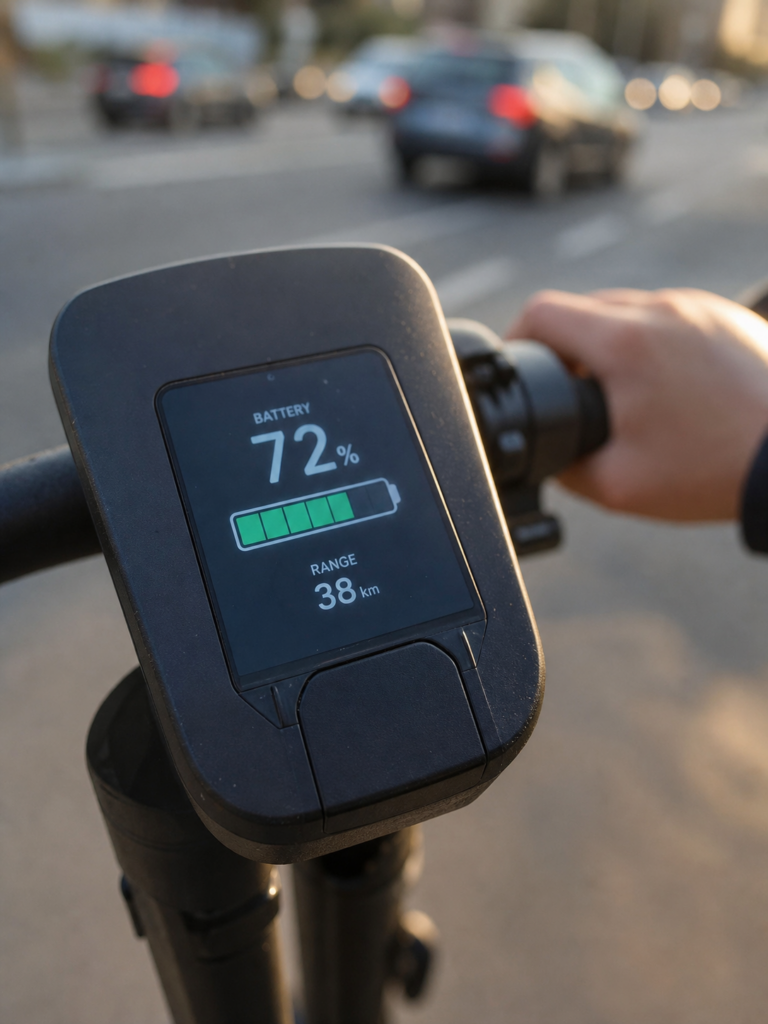
I’ve noticed that real-world range tends to be 60–75% of the advertised figure for city riding. That’s not a failure — it’s just physics. But it’s the number you should actually plan around.
So before you buy: take your actual daily distance, multiply it by 1.5 as a safety buffer, and find a scooter whose claimed range clears that number. If your commute is 25 km, you don’t need a 180 km scooter — but you do need something that confidently handles 40 km in traffic.
One practical check: Look for whether the brand publishes IDC (Indian Drive Cycle) or WMTC (World Motorcycle Test Cycle) range figures alongside the headline number. Brands that show both are being straight with you. Brands that only show the headline are not.
Why Charging Architecture Matters More Than Speed
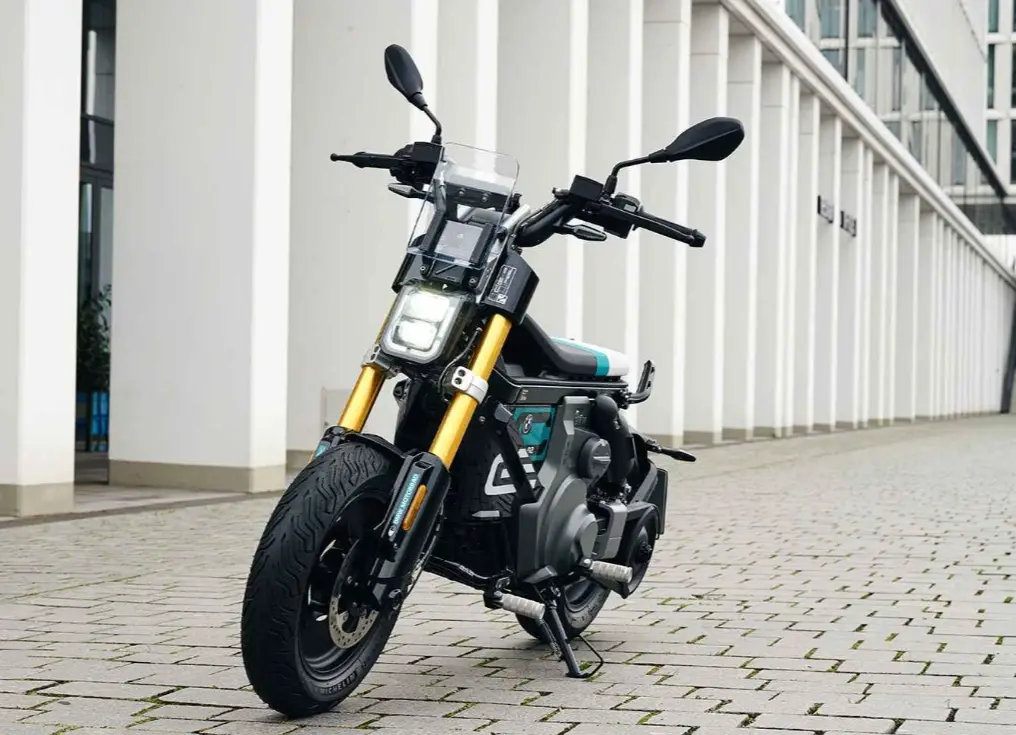
A lot of buyers focus on fast charging — and it matters, but it’s the second question to ask. The first question is: where does this scooter physically charge?
There are three main setups across global markets right now:
Fixed battery, home charging via cable. Most Taiwanese and European models work this way — brands like Gogoro (Taiwan), SEAT MÓ (Spain/Italy), Silence (Spain). You plug into a standard household outlet or a dedicated charging point. Simple, reliable, no carrying anything anywhere. The catch: if you live in an apartment without a personal parking spot, this is genuinely inconvenient.
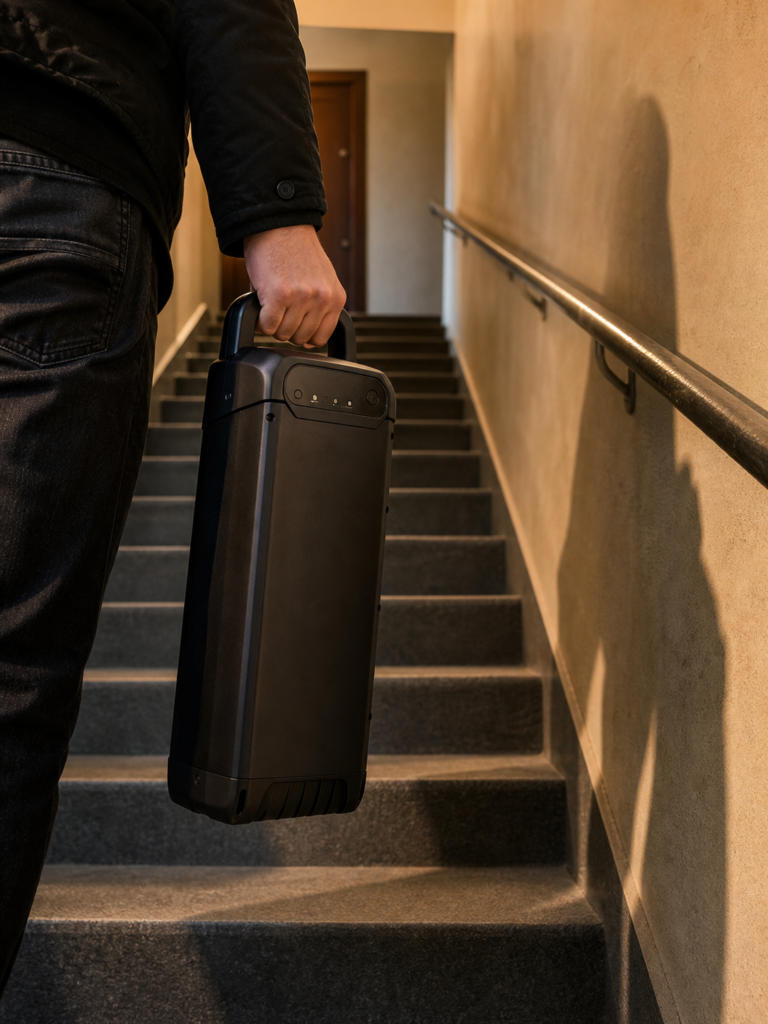
Removable battery, charge anywhere. Brands like Ather 450X (India), NIU (China/global), and Honda PCX Electric (Japan) offer this in some configurations. You pull the battery like a suitcase, carry it upstairs, plug it into the wall. It adds weight to the bike, but it solves the apartment problem entirely.
Battery swap networks. Gogoro built an entire infrastructure play around this — swap stations across Taiwan and now parts of India, the Philippines, and France. You swap a depleted battery for a full one in about 6 seconds. Brilliant if you’re in a city where the network exists. Useless if you’re not.
When comparing new electric scooty in India options specifically, the removable battery configuration tends to win for practical apartment living — most Indian cities don’t have the Gogoro swap density yet, and home EV charging infrastructure is still sparse outside metro areas.
What Good Industrial Design Actually Solves
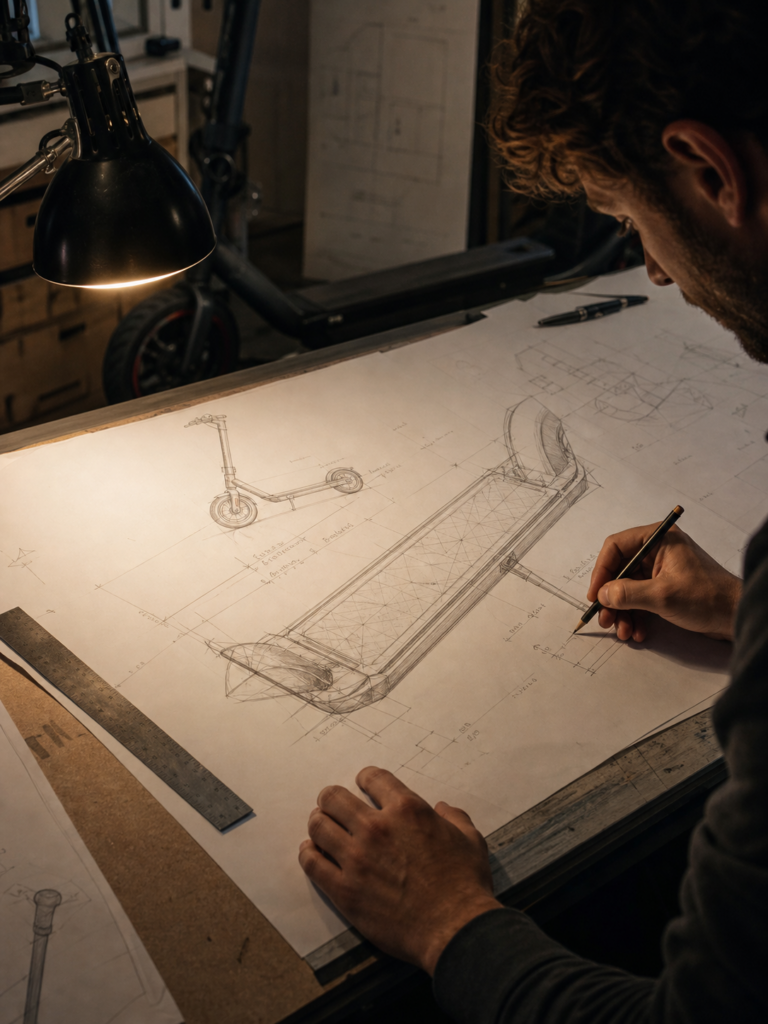
This is where I want to spend some time, because the design conversation around electric scooters usually stops at “it looks cool.” That’s the wrong frame.
The best EV scooter design isn’t about aesthetics — it’s about ergonomic problem-solving. And the differences show up in ways you’d never notice in a product photo.
Floorboard Width and Rider Fatigue
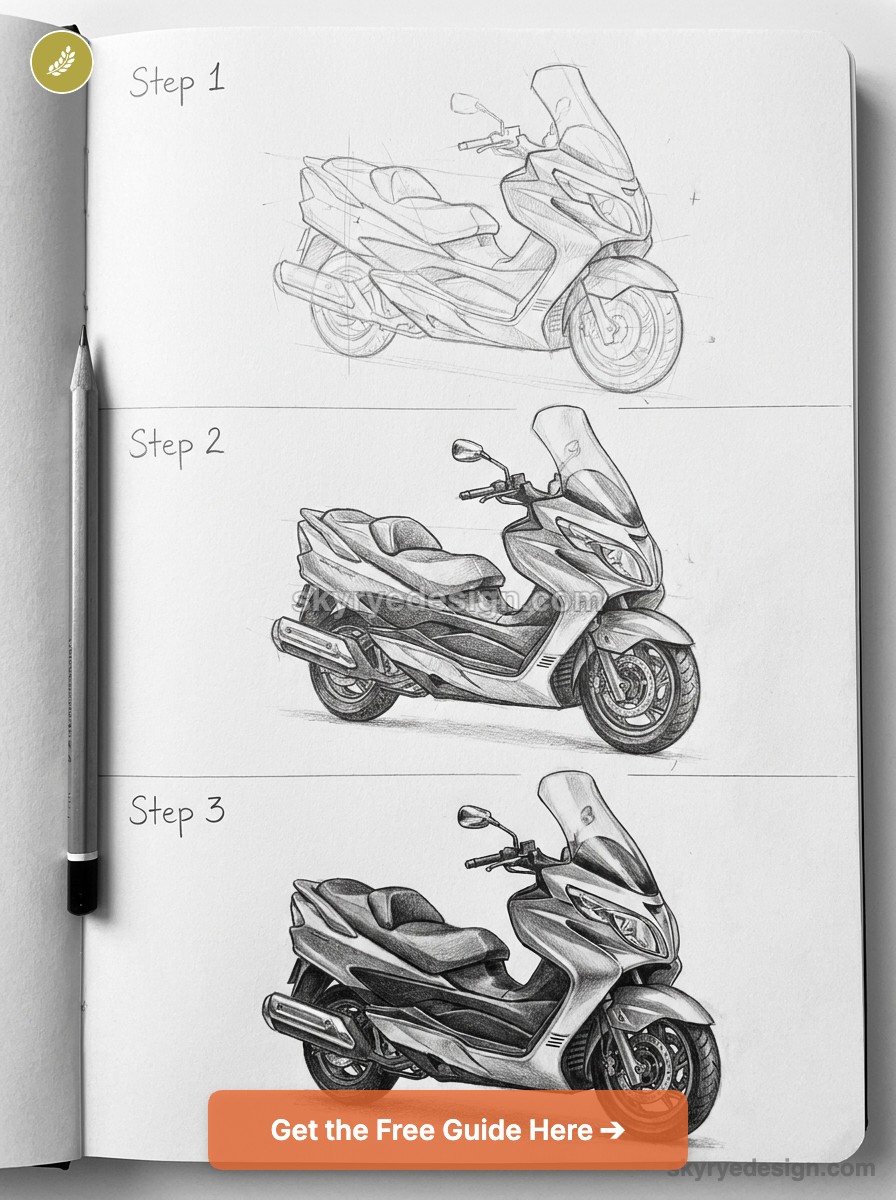
Take the floorboard. On a well-designed scooter like the Ather 450S, the floorboard is wide, flat, and positioned low — which lets your feet rest naturally without splaying outward. After 30 minutes in traffic, that matters. On cheaper models, narrower boards force your knees inward at an awkward angle. Not painful immediately, but fatiguing over a week of daily commuting.
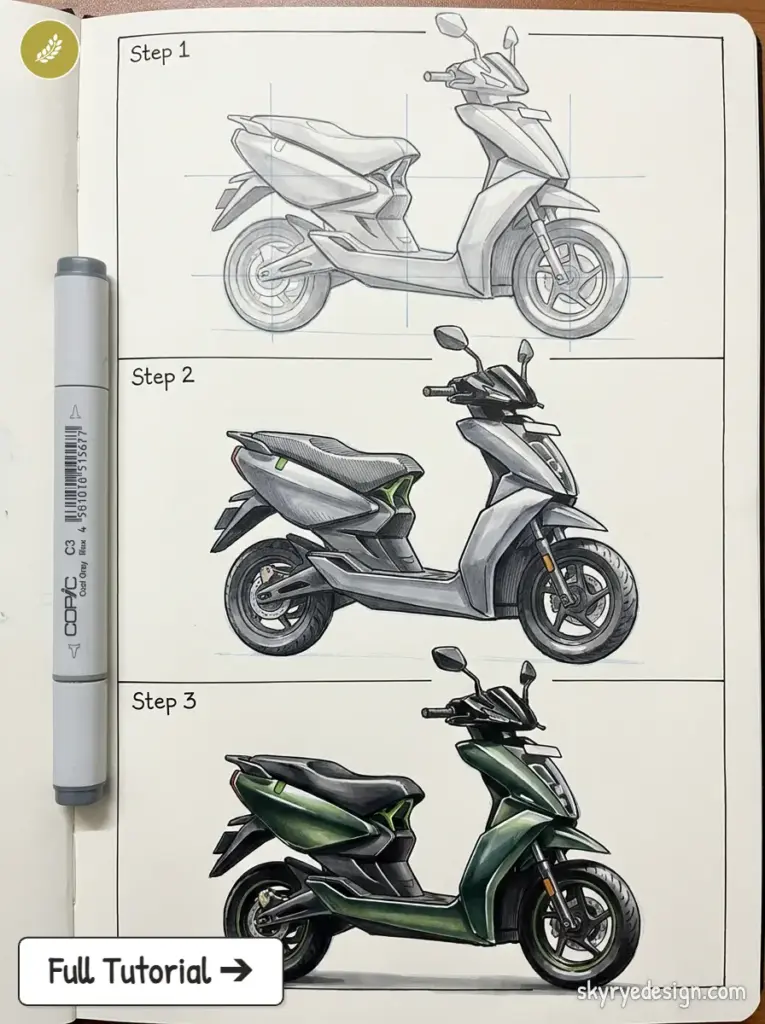
Vespa’s Elettrica (Italy, ~€6,000) does this particularly well — the floorboard geometry hasn’t changed dramatically since the 1946 original, because it was right the first time. That’s what happens when form follows actual use.
Weight Distribution and the Parking Problem
A 115 kg scooter with a low center of gravity handles nothing like a 115 kg scooter with weight concentrated high and forward. Battery placement is the core industrial design decision here — and you can’t see it in the spec sheet.
Honda’s designers put the PCX Electric’s battery low and centrally mounted, which is why it maneuvers easily despite being heavier than the petrol version. Some Chinese-market budget models mount the battery under the seat high up, which creates a top-heavy feel that makes parking in tight spots genuinely awkward.
The test: if a showroom lets you, stand the scooter upright on its center stand and try to rock it side to side. Does it feel planted, or does the weight swing? That tells you more than any brochure.
Display Readability in Real Conditions
A dashboard that looks futuristic in a showroom often becomes illegible in direct sunlight. The Ather 450X has a 7-inch TFT that handles direct sun reasonably well — not perfect, but readable. Several European budget models use displays that wash out completely in summer glare.
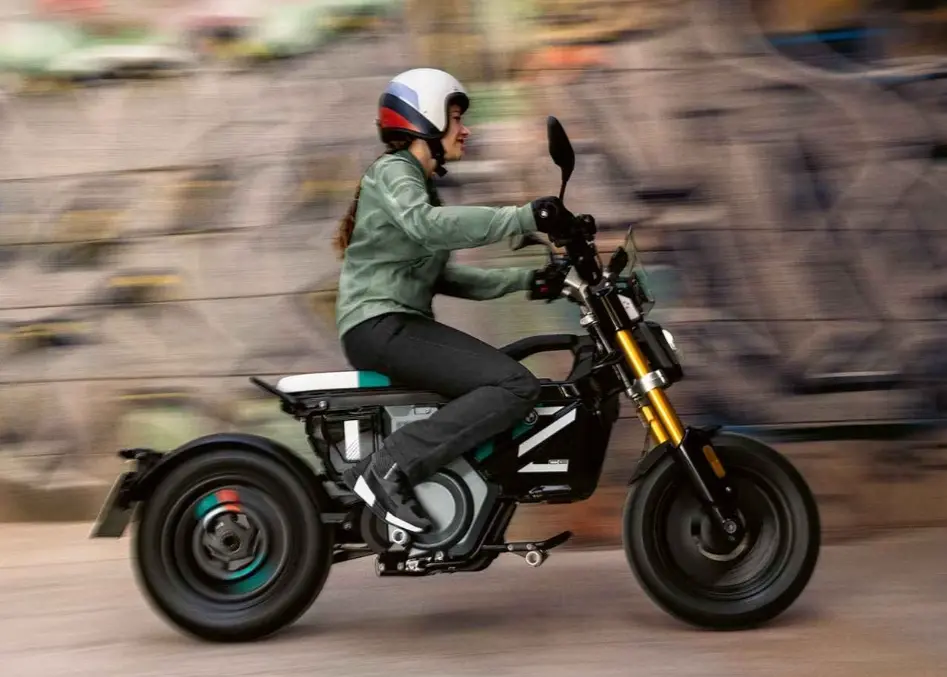
For buyers using a platform like Scooty Lelo to compare models before going to a showroom, this is worth actively searching for in owner reviews rather than spec tables — brands don’t advertise display legibility issues.
Smart Features: What’s Actually Useful vs. What’s Marketing
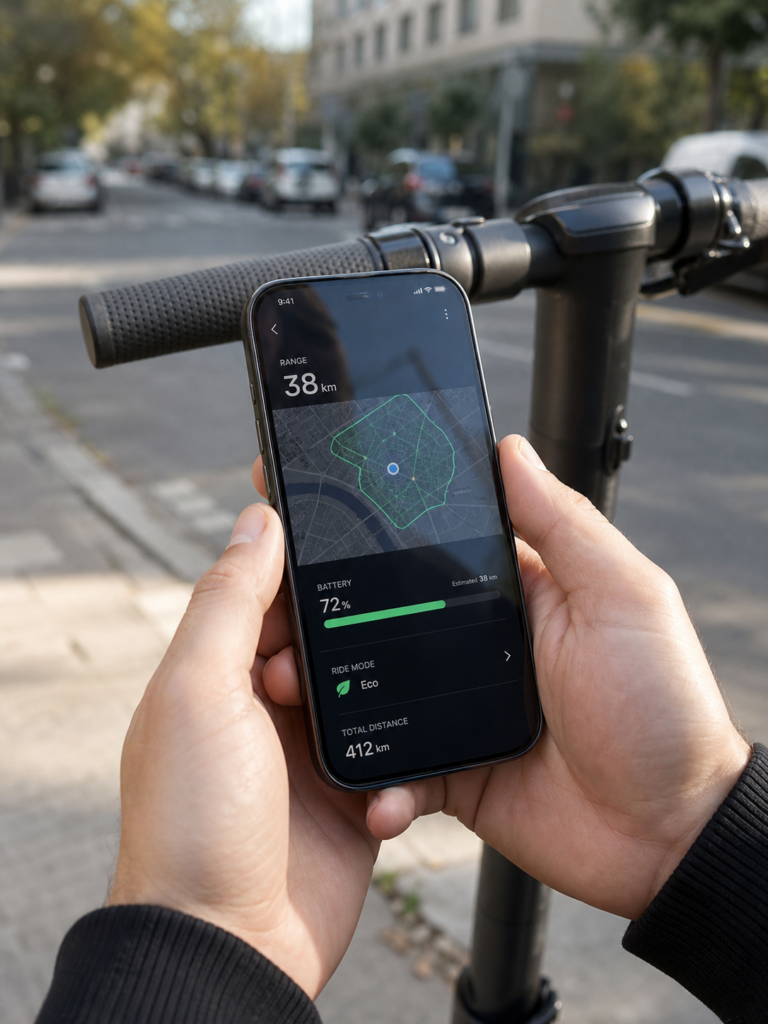
Every scooter brand has a connected app now. Most of them are mediocre. Here’s what separates useful from gimmick:
Actually useful:
- Real-time range calculation (not just battery %) — Ather does this well
- Ride history for trip planning
- Anti-theft alerts that actually notify you, not just log events
- Remote diagnostics (especially important for warranty issues)
Sounds cool, rarely changes anything:
- “Eco/Sport/Hyper” mode branding when the underlying difference is minimal
- Social features (nobody uses these)
- Over-the-air updates (useful in theory, executed poorly by most brands)
- Music controls on the handlebar (for safety reasons, please don’t)
The strongest connected system in the global market right now is probably Ather’s — their grid of fast chargers in India and the predictive range calculation based on your actual riding history is genuinely useful. NIU’s app is decent for tracking ride data but the charging network coverage outside China is thin.
Build Quality: The 18-Month Test
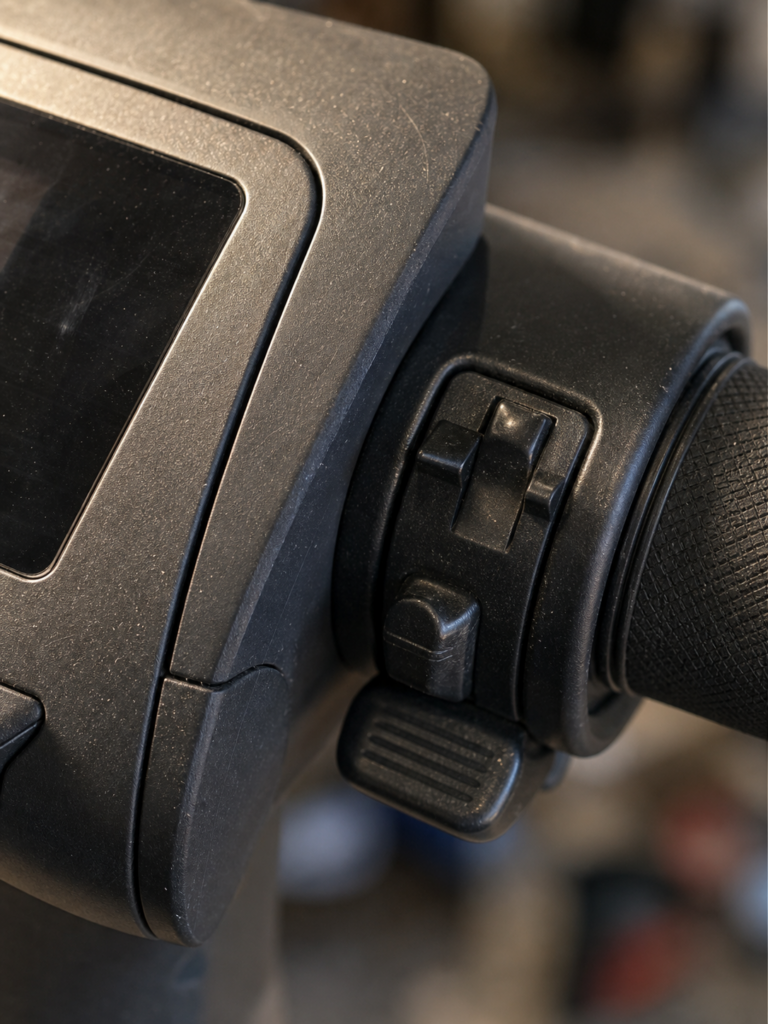
A scooter’s build quality isn’t what it looks like on day one. It’s what it looks like at 18 months of daily use — panel gaps, switch quality, suspension feel, and brake performance under repeated use.
This is harder to evaluate before buying, but there are signals:
Panel gap consistency. Uneven panel gaps on a showroom model are a warning sign — they reflect quality control processes, not just that specific unit. Brands like TVS (iQube) and Bajaj (Chetak) tend to run tighter tolerances than some newer entrants.
Switchgear feel. Press every button on the handlebar. Do they feel solid, or plasticky with an indeterminate click? The indicator stalk especially — it’s used hundreds of times a week. On cheaper models it loosens and loses its detent feel within a year.
Suspension travel. Sit on the scooter and bounce it. Do the forks dive aggressively? Is there rebound damping, or does it bounce back immediately? Indian roads in particular punish scooters with insufficient suspension travel — this is one area where the Ola S1 Pro was criticized early on despite its other strengths.
Frame rigidity. At speed (even 50 km/h), flex in the frame transmits to the handlebars as a slight wobble. You can feel this in a short test ride. It’s almost never mentioned in reviews.
The Price-to-Value Calculation Nobody Does Honestly
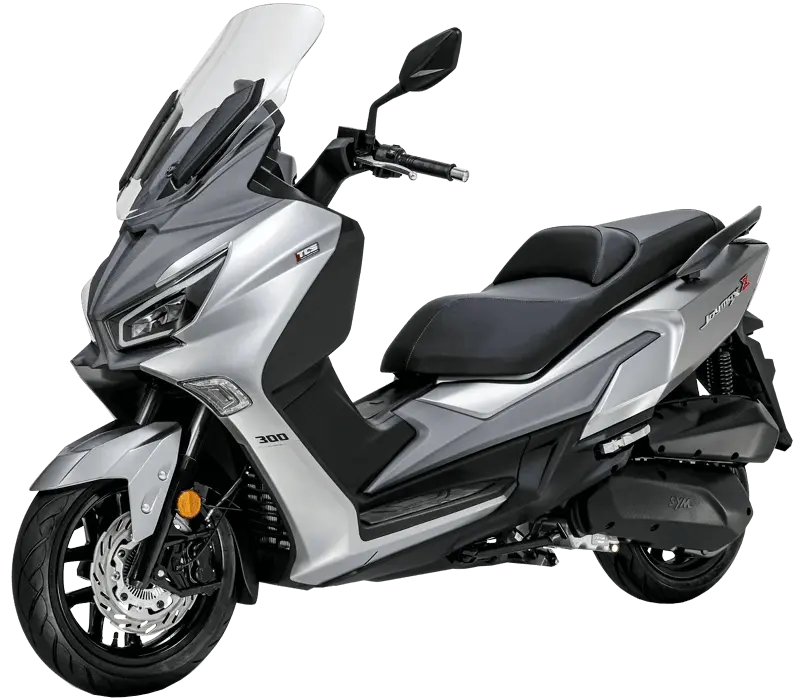
There’s a number that changes the entire purchase math: total cost per kilometer over three years.
Electric scooters have lower fuel costs and lower servicing costs than petrol equivalents. But they vary significantly in:
- Battery degradation rate (capacity at 3 years vs. new)
- Servicing costs and parts availability
- Resale value
A ₹85,000 scooter with excellent after-sales infrastructure and a 3-year battery warranty might genuinely be cheaper over three years than a ₹65,000 model with sparse service centers and no battery guarantee.
In European markets, this math is even more stark — a Vespa Elettrica at €6,000 holds resale value significantly better than a Chinese import at €3,500, and parts availability is no comparison. In Southeast Asian markets, Honda and Yamaha’s EV entries are priced at a premium but the service network is continental.
The scooter that’s easiest to maintain in your city is often the right scooter — regardless of what the launch specs say.
How Different Markets Are Solving the Same Problem

Electric scooter design isn’t happening in one place. It’s a genuinely global conversation right now — and different cities have shaped different answers to the same underlying challenge: how do you make urban mobility electric without inconveniencing people?
Taiwan built an infrastructure answer. Gogoro’s battery swap network means you never think about charging — you swap in six seconds at a kiosk, like a gas station but quieter. It works because the government and the company built the network together. Without that coordination, the model falls apart.
Italy and Spain treated it as a heritage problem. Vespa’s Elettrica preserves the original scooter silhouette almost exactly — the same swooping bodywork, the same step-through frame — but replaces the engine bay with a battery. SEAT MÓ went further in the modular direction, targeting urban sharers as much as individual buyers.
China treated it as a volume problem. NIU, Yadea, and AIMA produce at a scale that no other country matches — tens of millions of units annually. The better Chinese global brands (NIU especially) have taken the learnings from that volume and applied them to build quality. The weaker ones haven’t.
India is solving the affordability-plus-performance equation faster than almost anyone expected. Ather, Ola Electric, TVS, and Bajaj are competing in a market that is both price-sensitive and technically demanding — Indian roads are genuinely hard on hardware.
Watching how these different design traditions handle the same constraints — urban density, charging access, budget, riding culture — is one of the more interesting industrial design stories happening right now.
A Practical Pre-Purchase Checklist
Before committing:
- Does the range cover 1.5× my real daily distance?
- Can I charge at home, or do I need removable battery?
- Is there a service center within 15 km of where I live?
- What does the battery warranty cover — capacity degradation or only failure?
- Have I sat on it for at least 10 minutes to feel the ergonomics?
- Did I ride it at 40+ km/h to check for vibration and handlebar stability?
These aren’t complicated questions. But surprisingly few buyers ask all of them before signing.
If you’re still comparing models, battery setups, or trying to understand which electric scooter actually fits your daily commute, platforms like scootylelo.com make the research process much easier. Instead of relying only on spec sheets, you can compare real-world features, charging options, riding practicality, and owner-focused insights before making a final decision.
FAQ
Q: How long do electric scooter batteries actually last?
Most manufacturers warranty the battery for 3 years or 30,000–50,000 km. Lithium NMC cells (Ather, NIU) typically retain 80% capacity at 3 years with normal use. LFP cells (Bajaj Chetak) degrade more slowly but start with lower energy density. Avoid leaving the battery at 100% charge for extended periods — this matters more than most buyers realize.
Q: Is it worth buying an electric scooter if I live in an apartment?
Yes, if the model has a removable battery. You carry the pack (usually 6–12 kg) to your flat, charge on a standard socket, bring it back down. Brands like Ather, NIU, and several Taiwanese models support this. Fixed-battery models are more difficult without a dedicated parking spot with a power outlet.
Q: What’s the real difference between a budget and premium electric scooter?
Mostly: battery quality and capacity, suspension components, display and connectivity, build precision, and the service network behind the brand. A budget model might cover your commute perfectly — but a premium one will degrade more slowly, handle better, and have parts available in five years. Run the three-year cost calculation before assuming cheaper saves money.
Q: Are Chinese-brand electric scooters (NIU, Yadea) reliable?
NIU has a solid international track record since 2015 and consistent product quality. Yadea’s global models are more variable. For both, the key question is local after-sales: whether there’s an authorized service network in your city. A good scooter with no local support is a liability.
Q: What should I test on a test ride?
Braking from 50 km/h (check for front-end dive and straight tracking), acceleration response in Sport mode, handlebar vibration at speed, and visibility of the display in direct sunlight. Also: try a tight U-turn. If the scooter feels heavy or awkward at low speed, it will feel that way every time you park.
Q: How do I calculate the real range I will get?
Take your actual daily commute distance and multiply by 1.5 as a safety buffer. Real-world city range is typically 60–75% of the advertised figure. Look for IDC or WMTC range data from the manufacturer — more realistic than headline numbers.
Q: Which charging setup is best for apartment owners?
Removable battery configurations win for apartment living. You detach the battery (typically 6–12 kg), carry it inside, charge on a standard household socket. Battery swap networks like Gogoro are faster but require local infrastructure that most cities outside Taiwan still lack.
- 36shares
- Facebook0
- Pinterest36
- Twitter0
- Reddit0