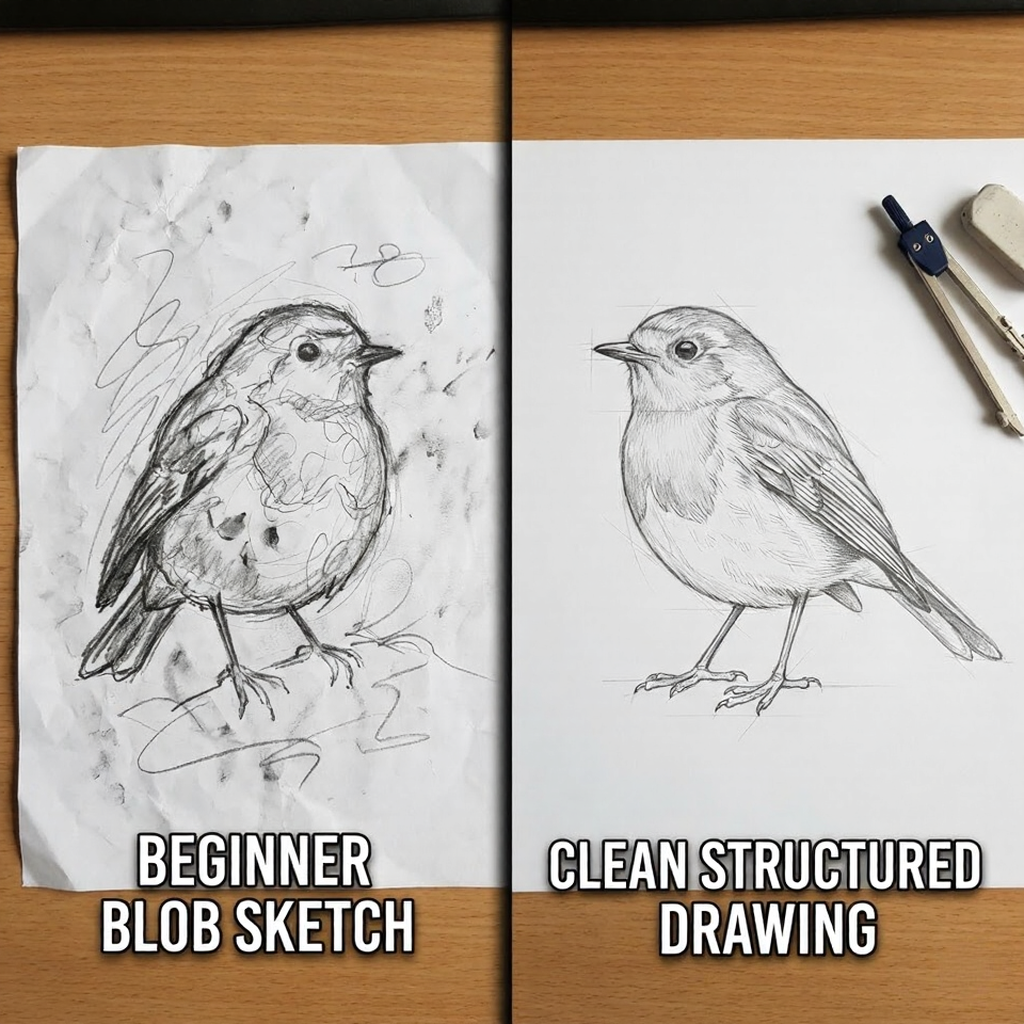
My first bird sketch looked like an angry potato with a beak. I’d used a reference photo, followed the usual “start with circles” advice, and still ended up with something unrecognizable. Sound familiar?
Birds are deceptively tricky to draw. They’re lightweight creatures built from layered feathers and hollow bones — and capturing that takes more than copying an outline. What most tutorials miss is the why behind each step: why the body tilts that way, why feathers overlap in that direction, why the eye placement changes everything.
- 1. Why Bird Drawing Trips Up Even Confident Artists
- 2. Bird Anatomy You Actually Need to Know
- 3. The 7-Step Bird Drawing Process
- 4. Drawing Feathers Without Losing Your Mind
- 5. Birds in Flight: Capturing Movement Without Making It Stiff
- 6. Materials That Actually Make a Difference
- 7. Practice That Actually Builds Skill (Not Just Fills Sketchbooks)
- FAQ: Bird Drawing
- Q: What’s the easiest bird to draw for beginners?
- Q: How do I draw realistic bird feathers?
- Q: What’s the best paper for bird drawing?
- Q: How do I draw a bird in flight realistically?
- Q: How long does it take to get good at drawing birds?
- Q: Should I use reference photos when drawing birds?
- Q: Can I draw birds digitally as a beginner?
- Start Ugly, Finish Better
This guide fixes that. Whether you’re working in graphite on Strathmore Bristol 300gsm or experimenting with Ohuhu watercolor markers, you’ll leave with techniques you can actually use today — not just theory.
1. Why Bird Drawing Trips Up Even Confident Artists
Birds don’t sit still. That’s the first problem. Unlike a bowl of fruit or a building, your subject is constantly shifting — tilting its head, ruffling its feathers, hopping sideways. Even working from photos, artists often freeze up because they try to copy every detail at once.
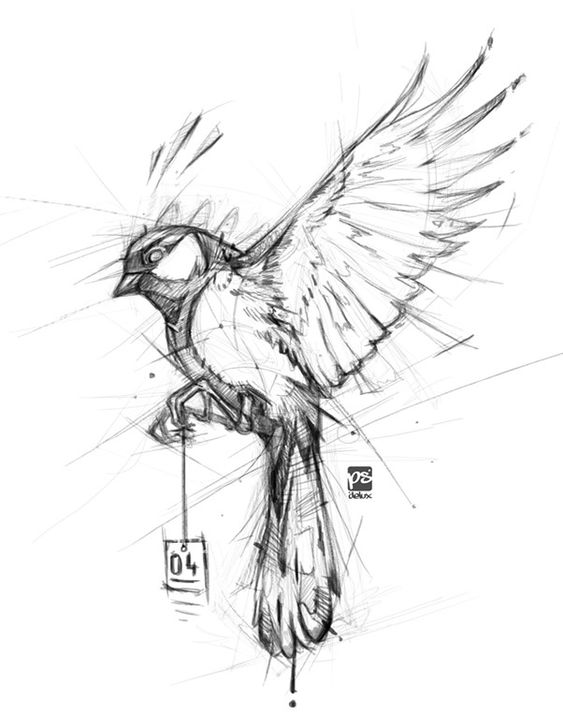
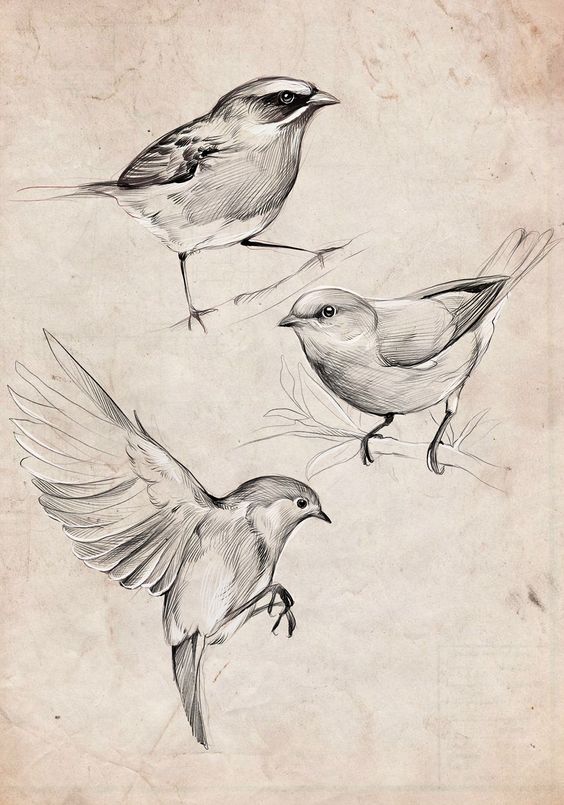
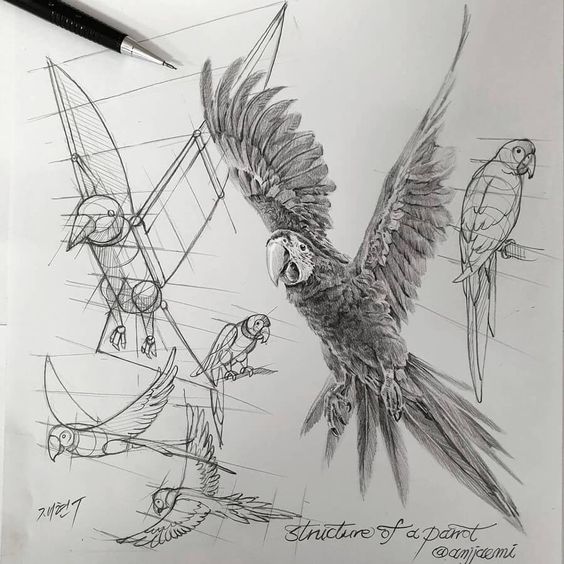
The second problem is structural. Most people see “bird” and draw a teardrop with wings. But birds have a distinct skeletal logic: the body weight sits low, the keel (breastbone) pushes forward, and the head connects via a flexible S-curve neck that completely changes the silhouette depending on posture.
The Biggest Beginner Mistake
Drawing the outline first. It feels intuitive, but it locks you into a flat shape before you’ve established any structure. I’ve watched students spend 20 minutes on a perfect contour line only to realize the proportions are off by 40%.
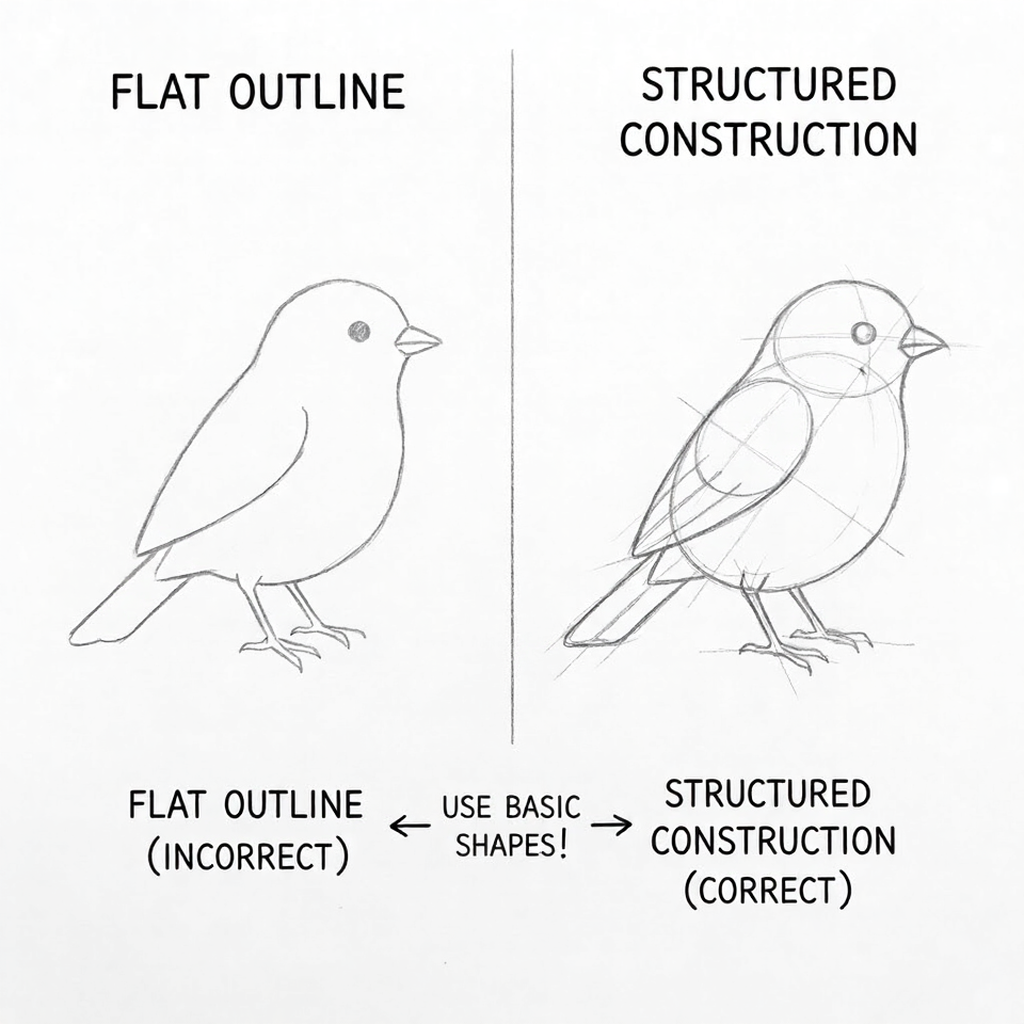
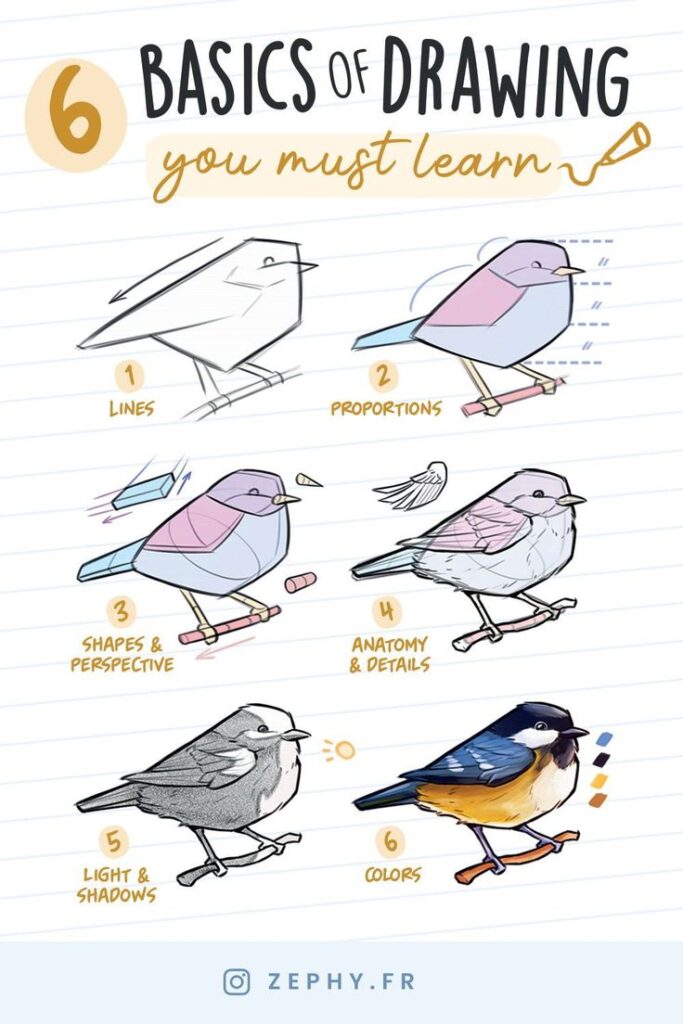
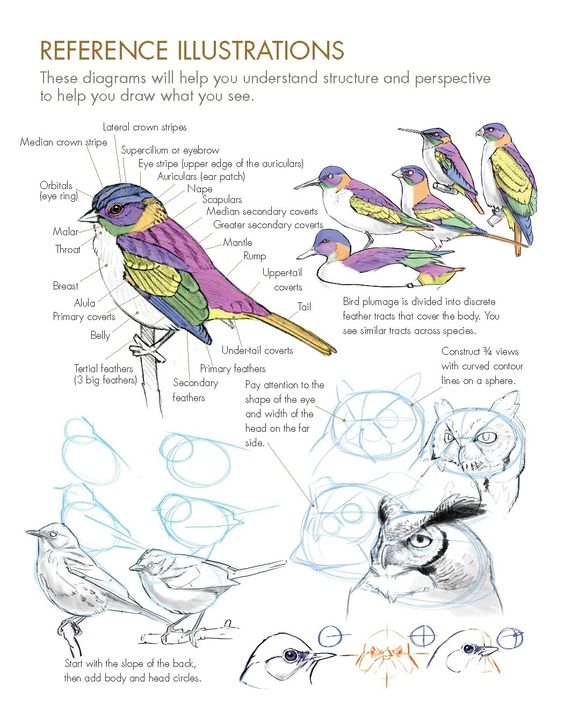
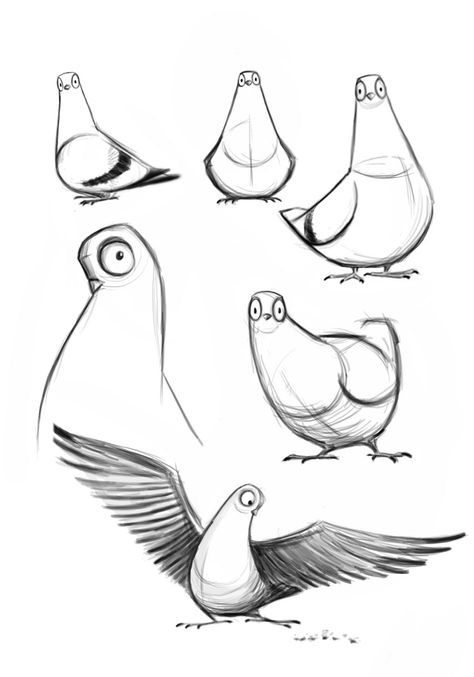
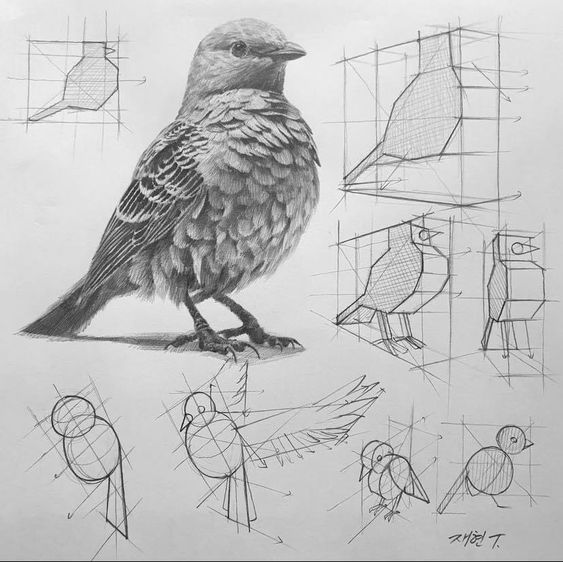
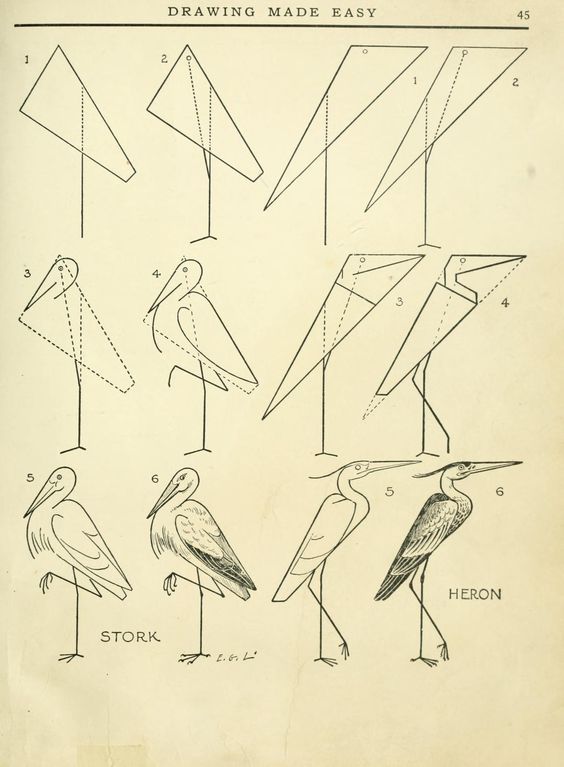
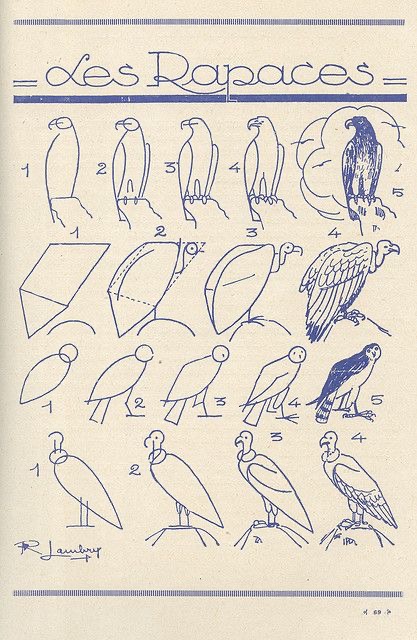
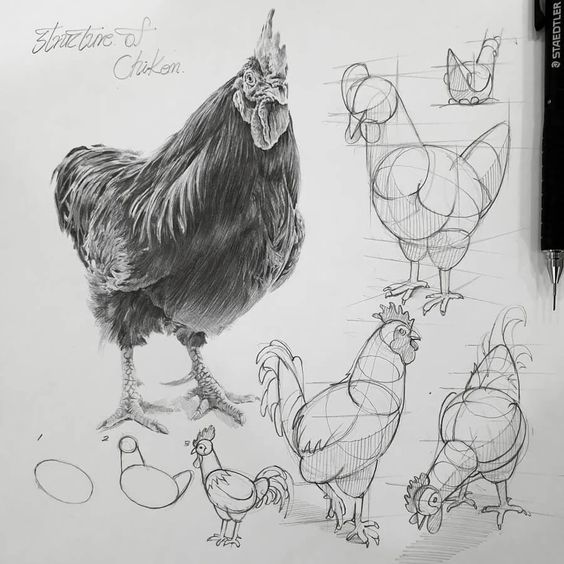
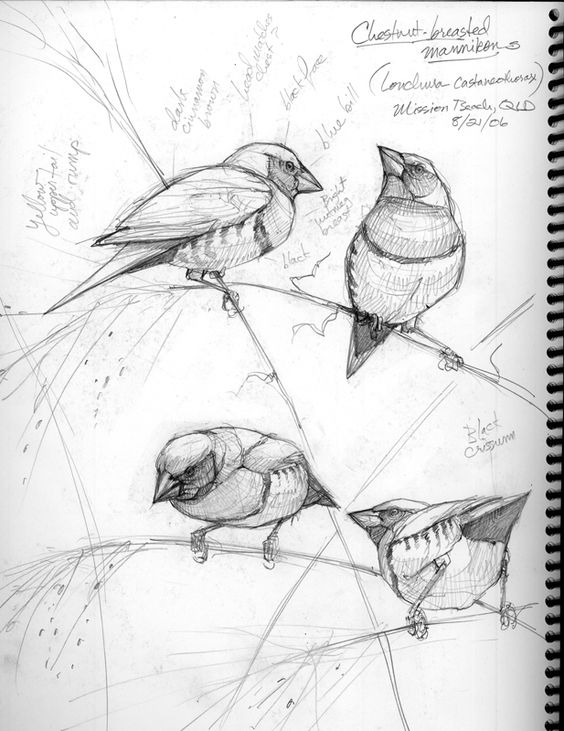
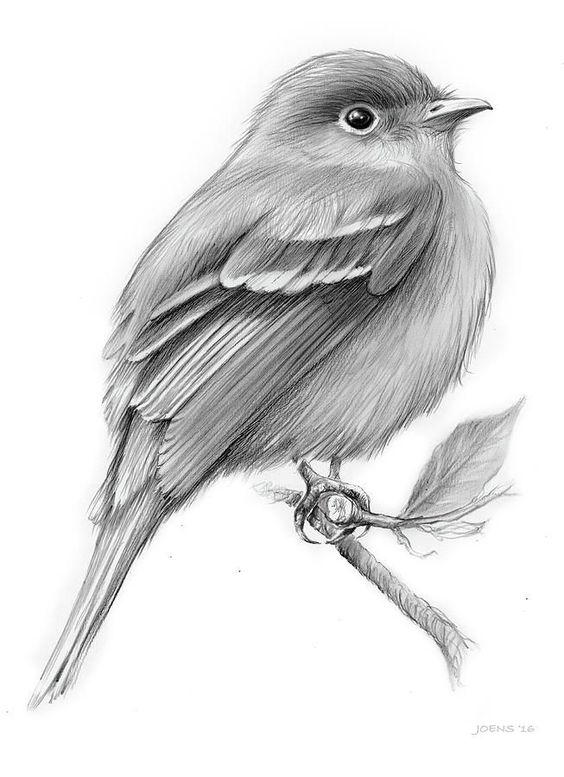
Start with the torso mass instead. Sketch a simple egg shape for the body, a smaller circle for the head, and a rough axis line for the spine. Everything else — wings, tail, beak — hangs off that skeleton.
2. Bird Anatomy You Actually Need to Know
You don’t need to memorize every bone. But five anatomical facts will immediately improve your drawings.
The Keel and Body Mass
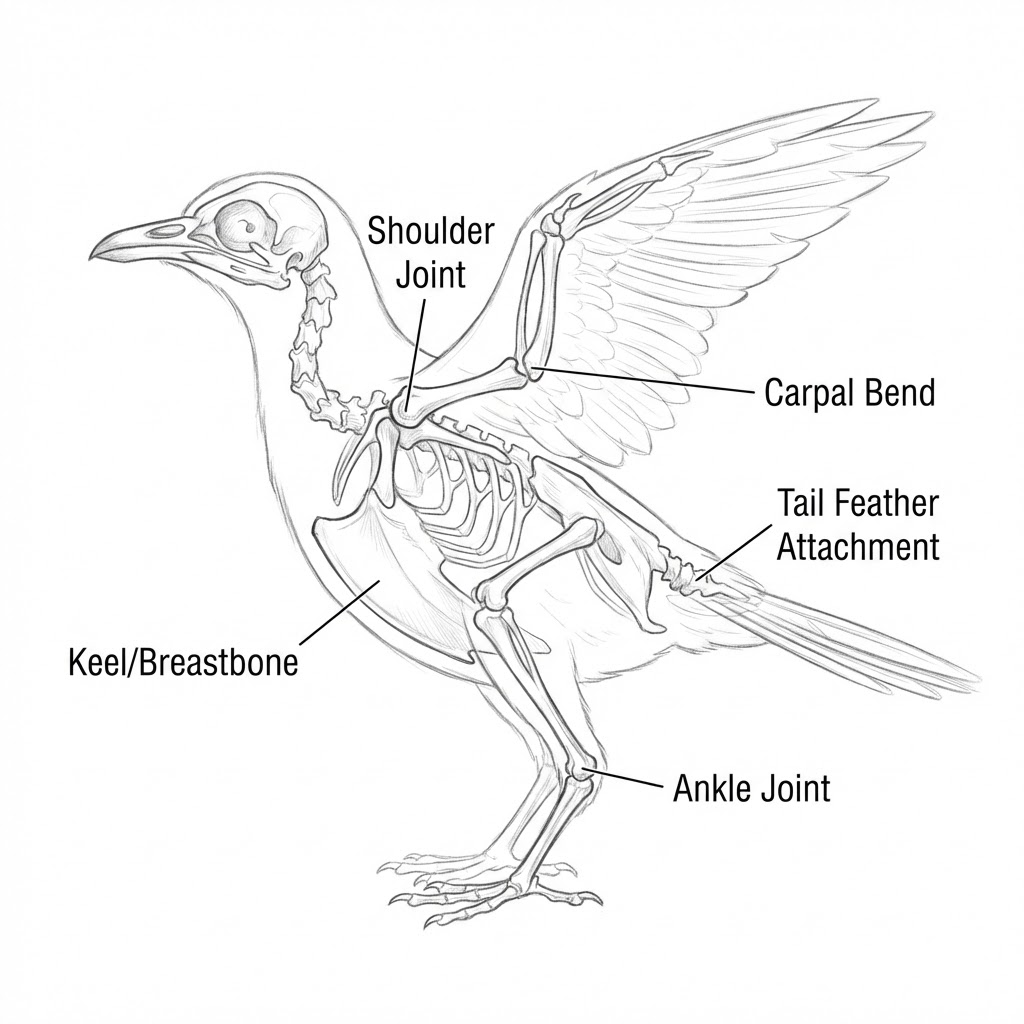
A bird’s center of gravity is lower than it looks. The keel — the ridge of the sternum — protrudes forward, giving the chest a rounded, forward-leaning mass. This is why birds look “cocked forward” even when perching. If your bird looks flat-chested, push the breast circle forward and down.
Wing Attachment Points
Wings connect at the shoulder joint, roughly one-third of the way down the body from the top. When folded, the wing’s elbow joint creates that characteristic angular bump you see on perching birds — that’s the carpal joint. Getting this right is the difference between a wing that looks attached versus one that floats.
Feather Layers (Simplified)
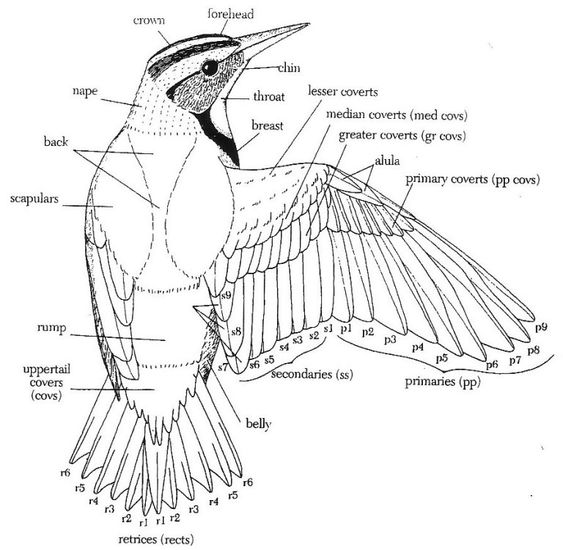
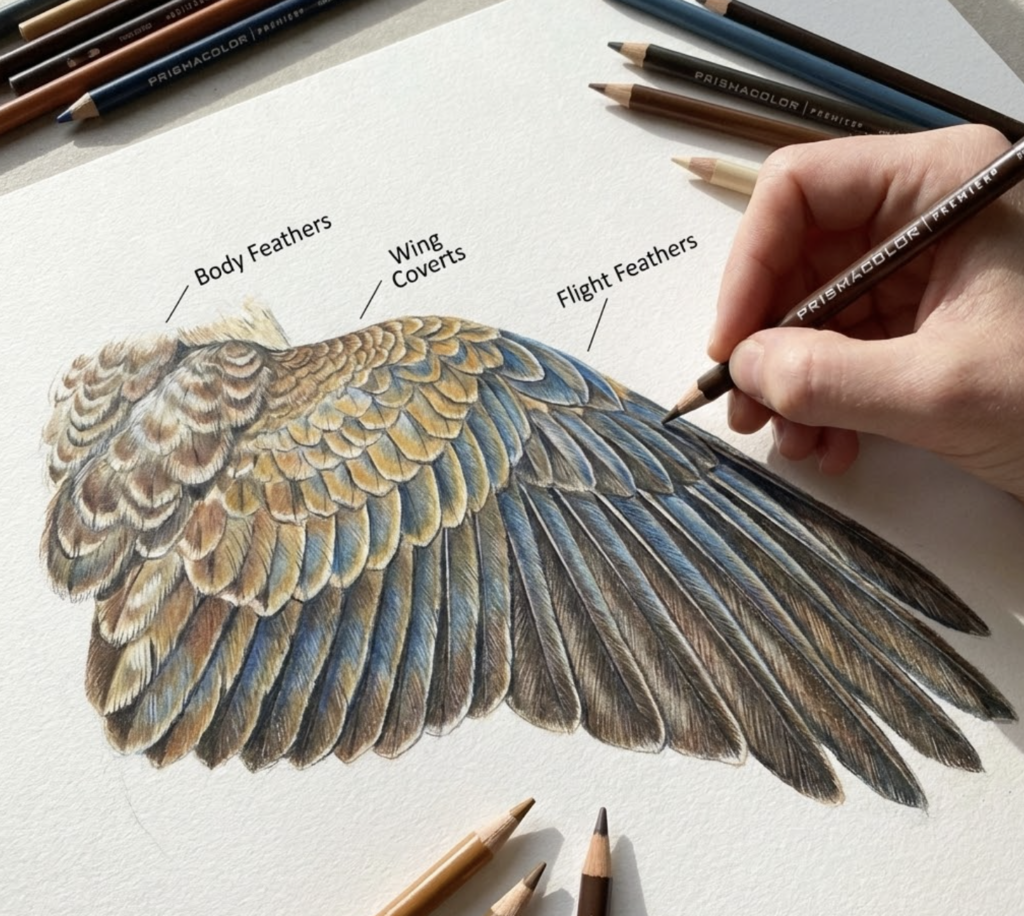
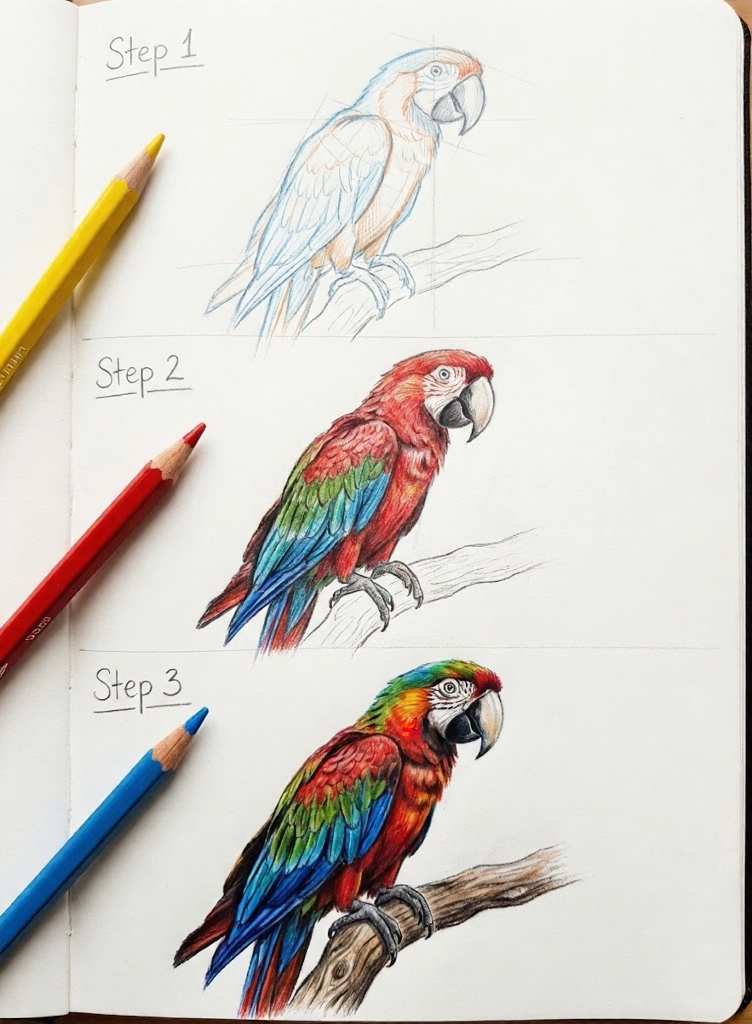
You’re really drawing three layers: the body feathers (small, soft, rounded), the wing coverts (medium, overlapping like roof tiles), and the primary and secondary flight feathers (long, stiff, clearly defined). Draw them in that order — small to large, inner to outer. Prismacolor Premier colored pencils work beautifully here because you can layer colors while following the feather direction.
Leg Placement and Posture
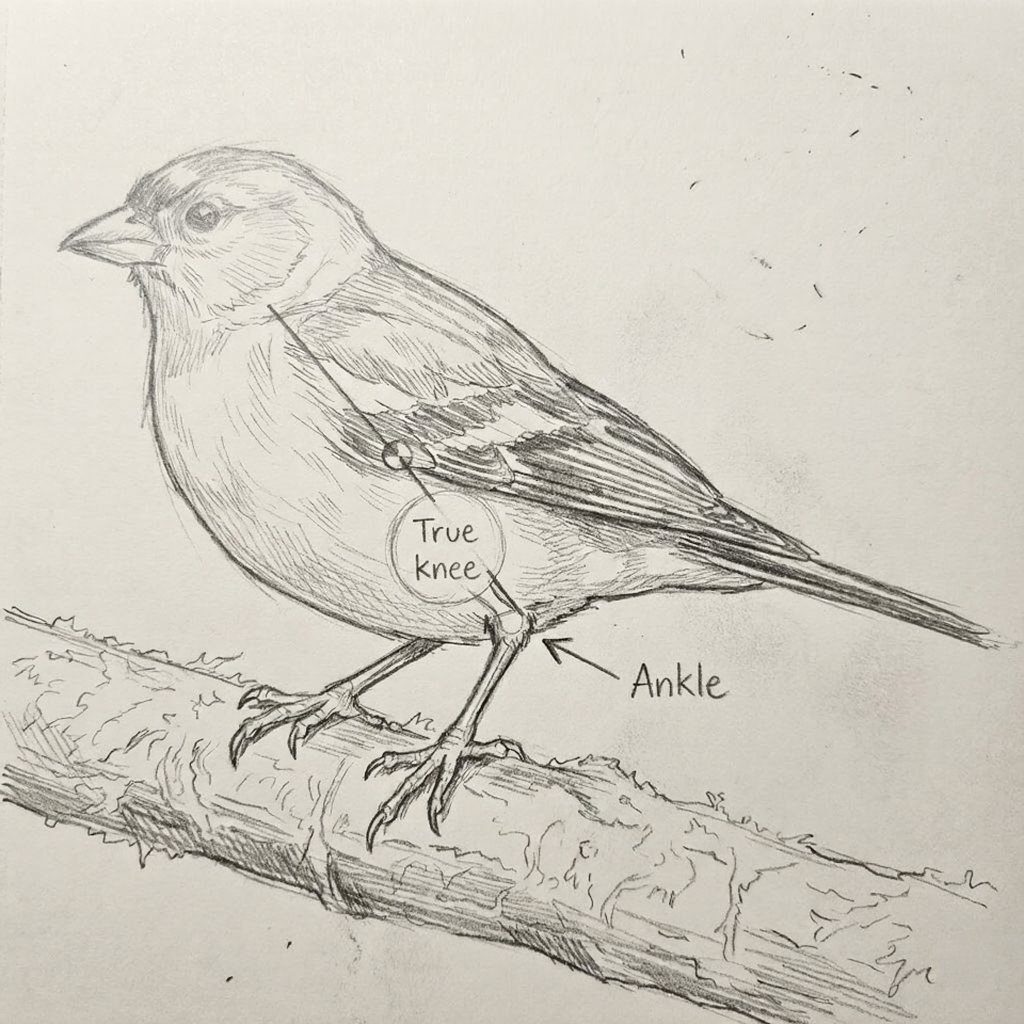
Bird legs attach further back on the body than most beginners draw them. Place the legs directly under the center of the body mass or slightly behind. The “knee” that bends backward is actually the ankle — the true knee is hidden under the body feathers. This single fix will make your perching birds look dramatically more natural.
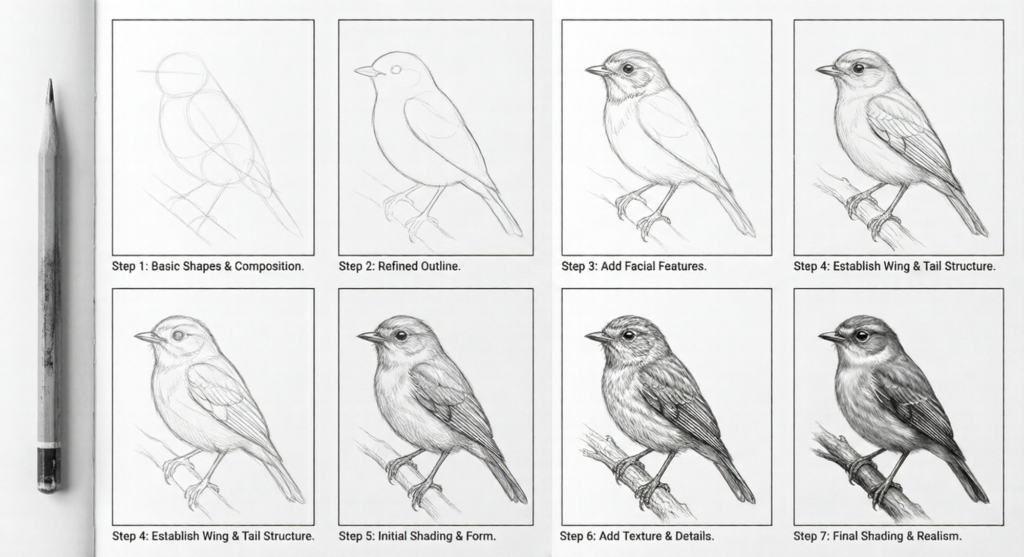
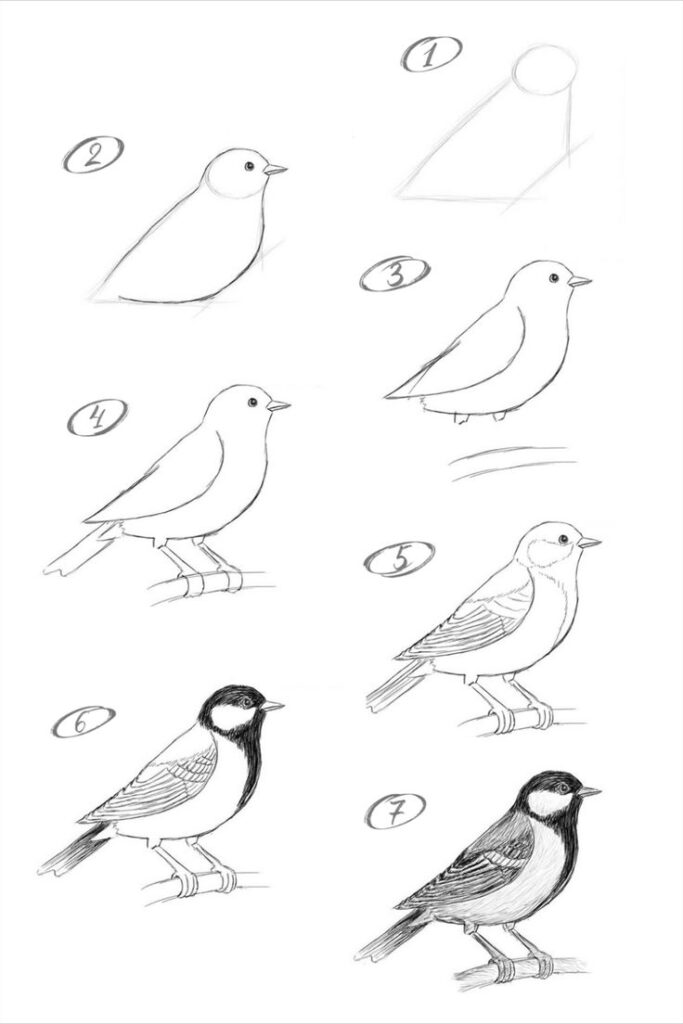
3. The 7-Step Bird Drawing Process
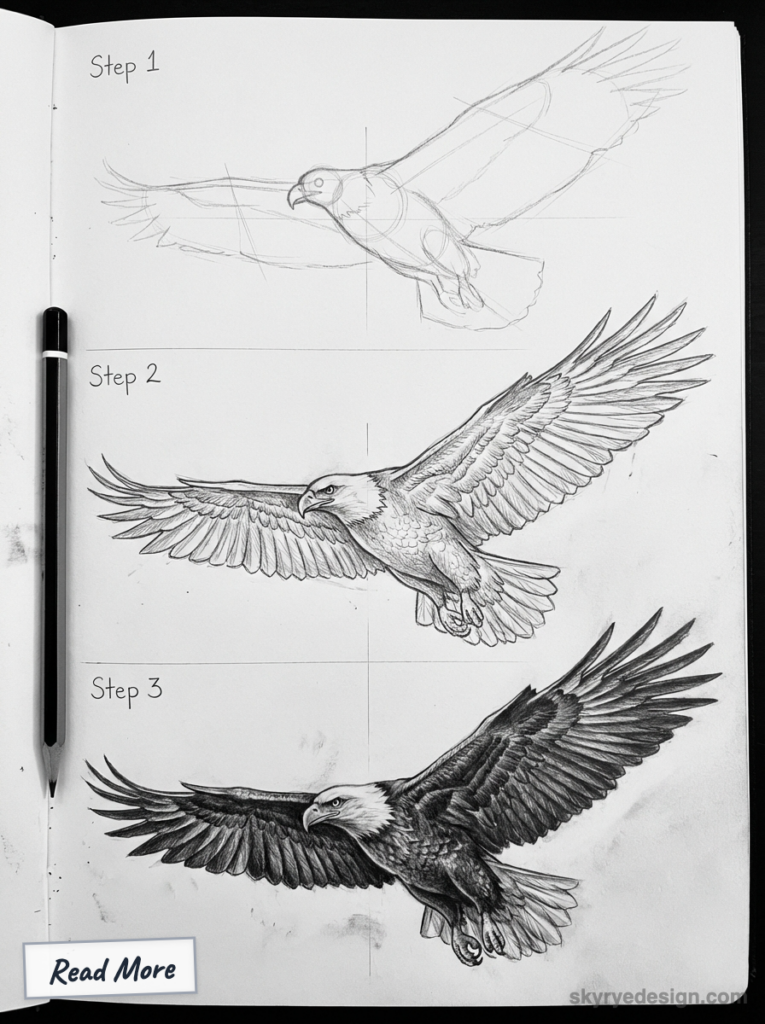
This is the method I use, whether I’m sketching a backyard sparrow or a detailed golden eagle study. It works in pencil, ink, or digital — adapt it to your tools.
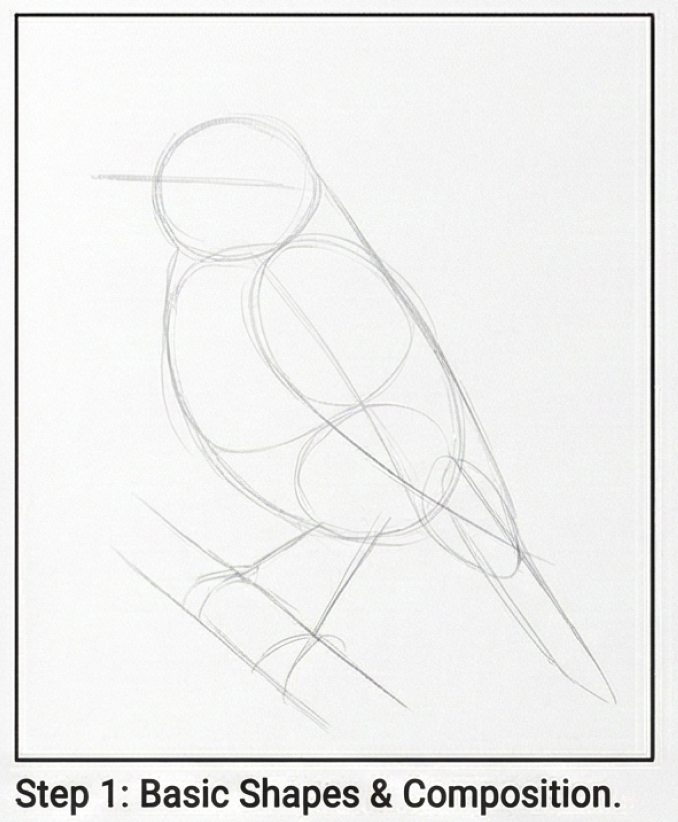
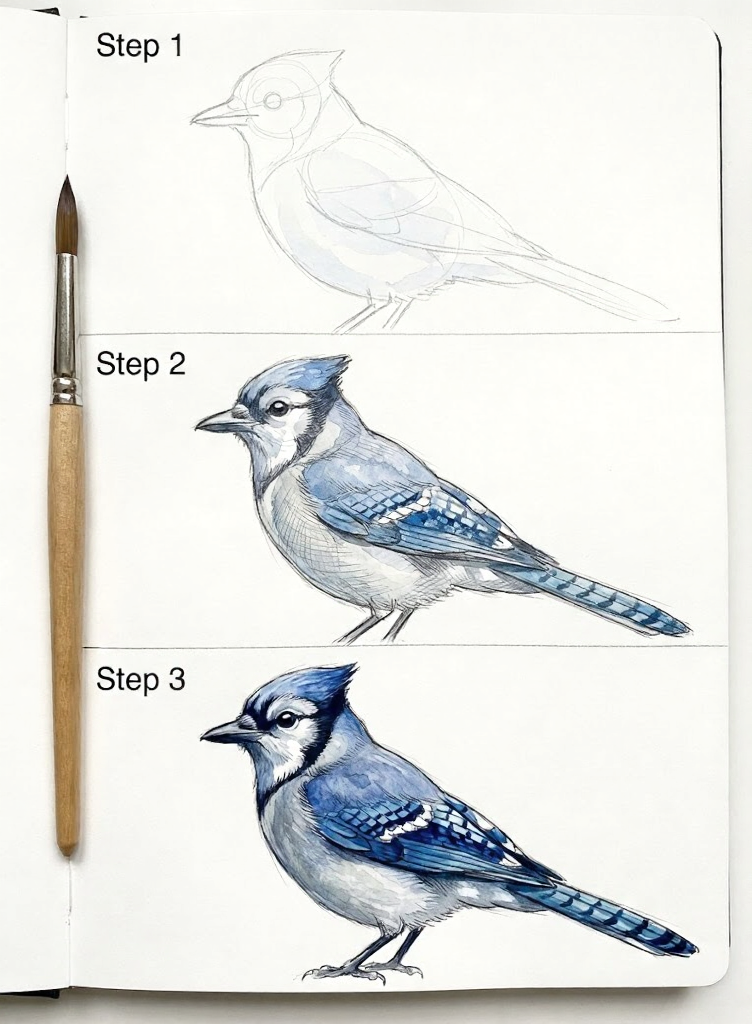
- Drop two shapes. A large egg for the body, a small circle for the head. Don’t overlap them yet.
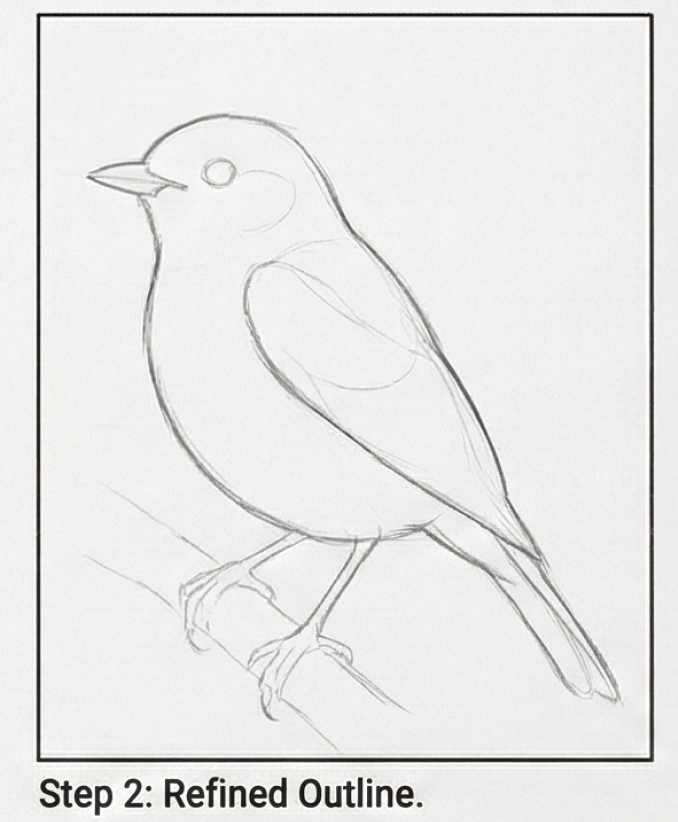
2. Connect them with the neck curve — an S-shape that changes angle depending on whether the bird is alert (neck up, tight) or relaxed (neck down, loose).
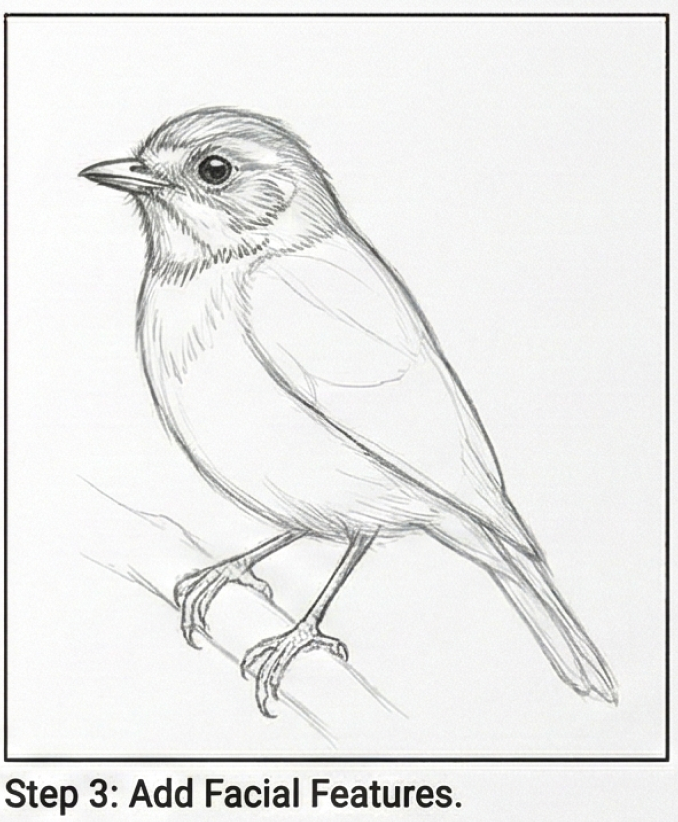
3. Add the spine axis. Draw a light line through the body egg showing the tilt. This determines the whole attitude of the pose.
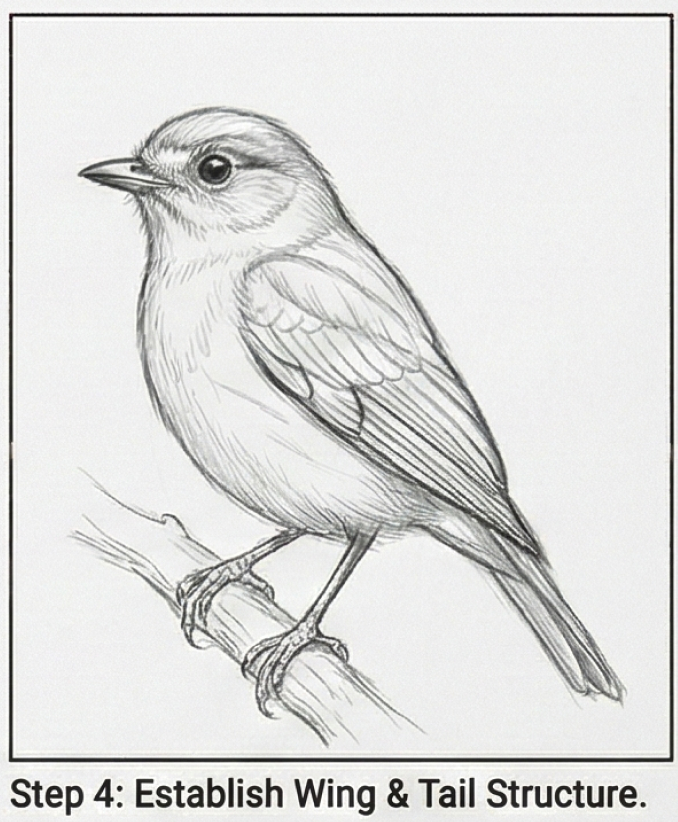
4. Block the wings and tail as flat shapes — no feather detail yet. Just mass and angle.
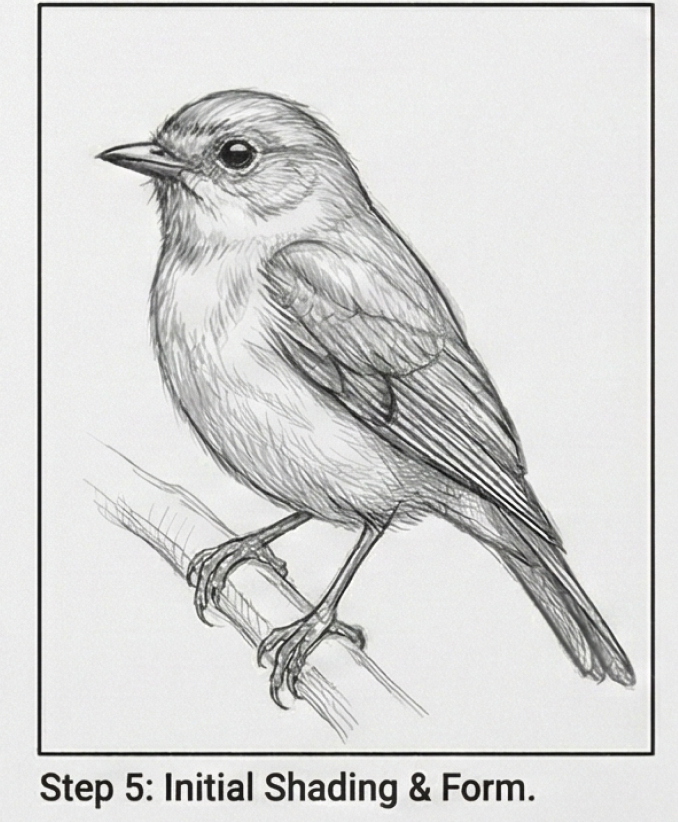
5. Place the beak. Mark the eye first (halfway down the head circle, slightly forward), then draw the beak extending from the eye level. Species-specific beak shapes come later.
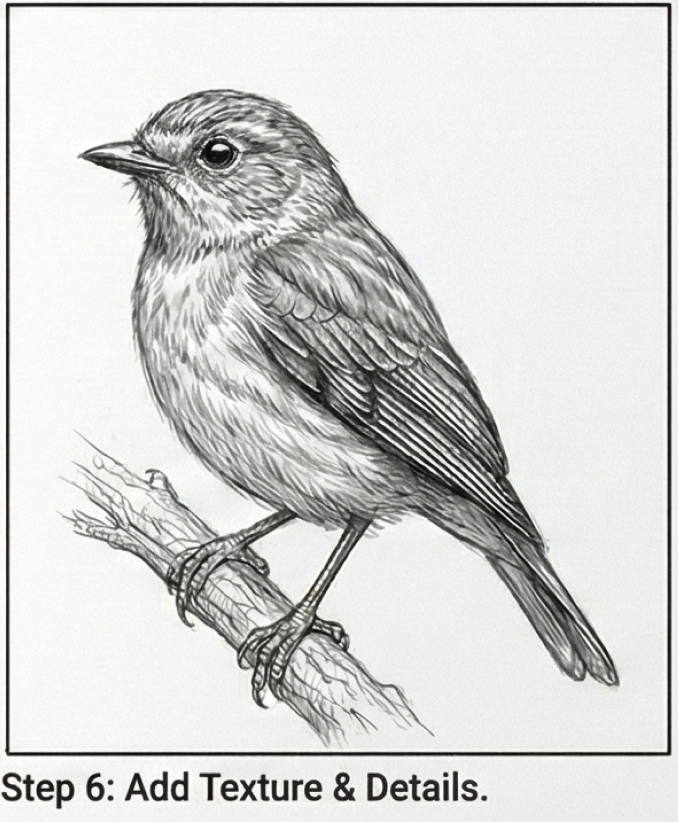
6. Refine and add feather layers. Work from the body outward — body feathers first, then wing coverts, then flight feathers.
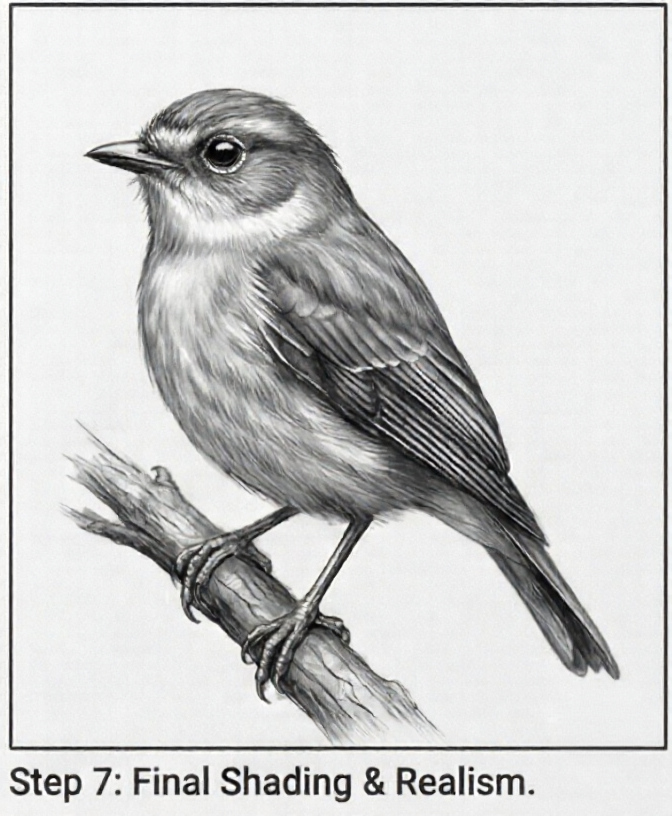
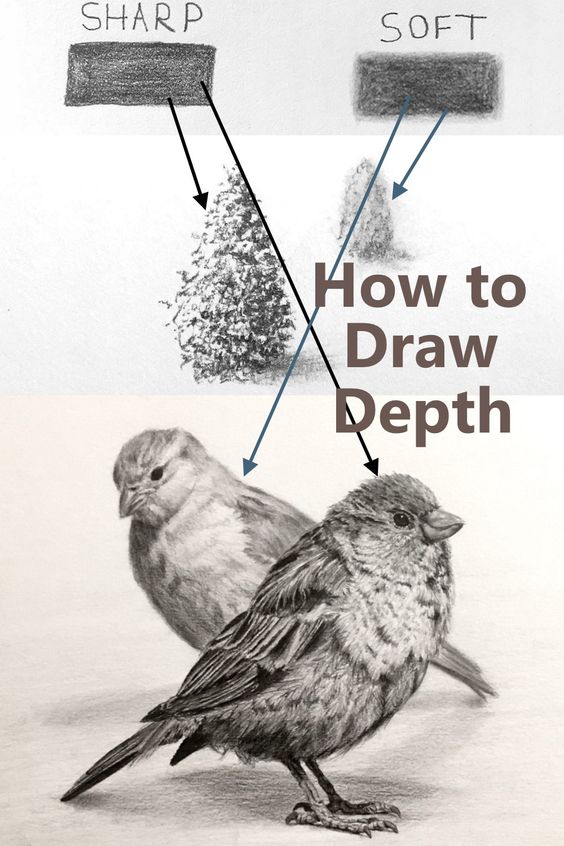
7. Add shading and light direction. Decide where your light source is before touching tone. Soft pencil under the belly, harder pencil for feather edge details.
The whole skeleton phase (steps 1–4) should take about 3–5 minutes. Don’t rush to step 6 — that’s where most artists lose control.
For a quick animal warm-up before feathers, try these simple dog drawing ideas. Dogs use the same big-shape thinking as birds: block the head and body first, then let ears, paws, and expression carry the personality.
4. Drawing Feathers Without Losing Your Mind
For a sharper bird-of-prey study, use this falcon drawing tutorial to practice a compact head, hooked beak, and folded primaries on a perched peregrine.
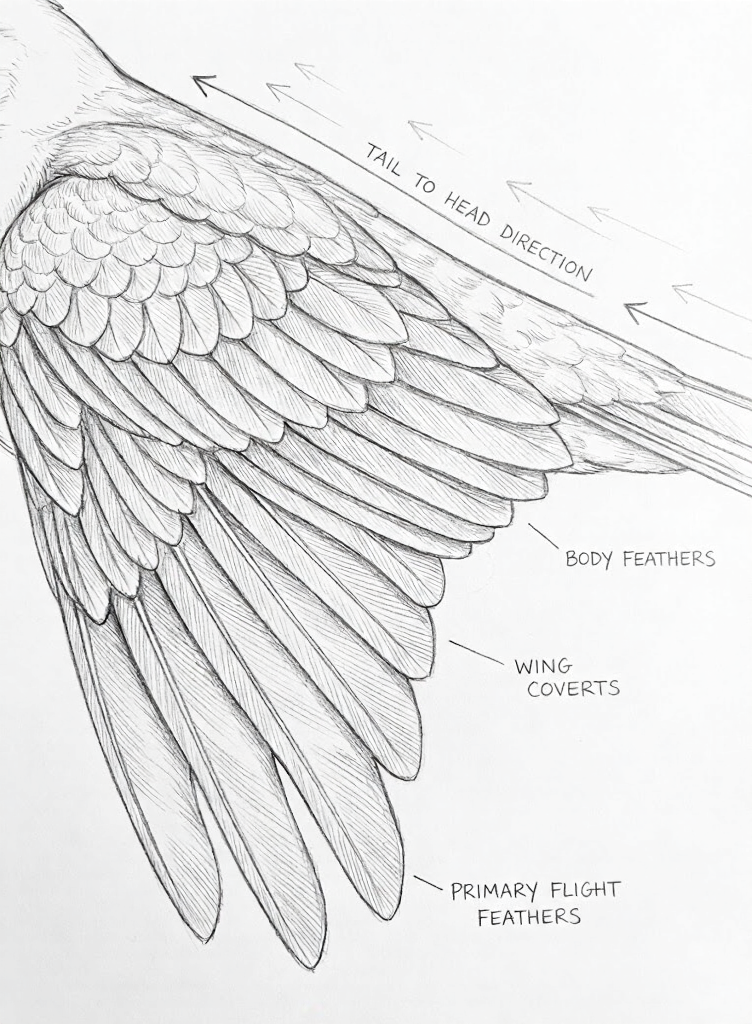
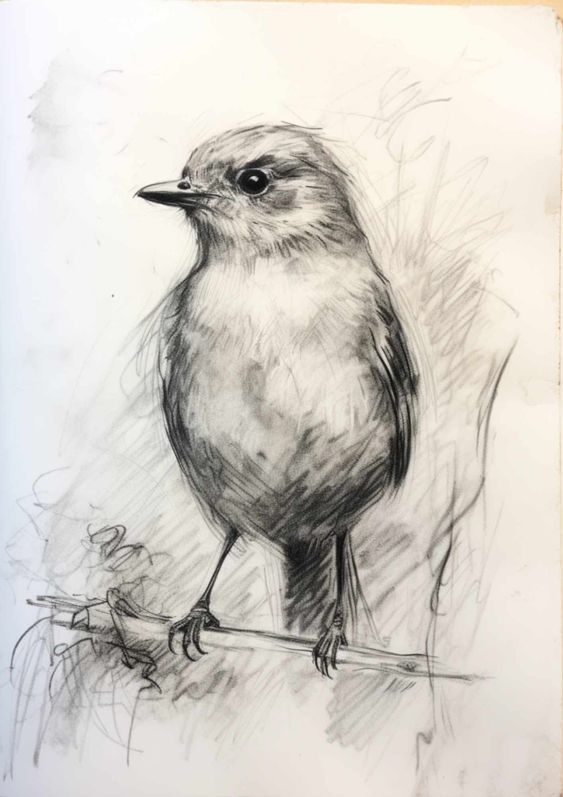
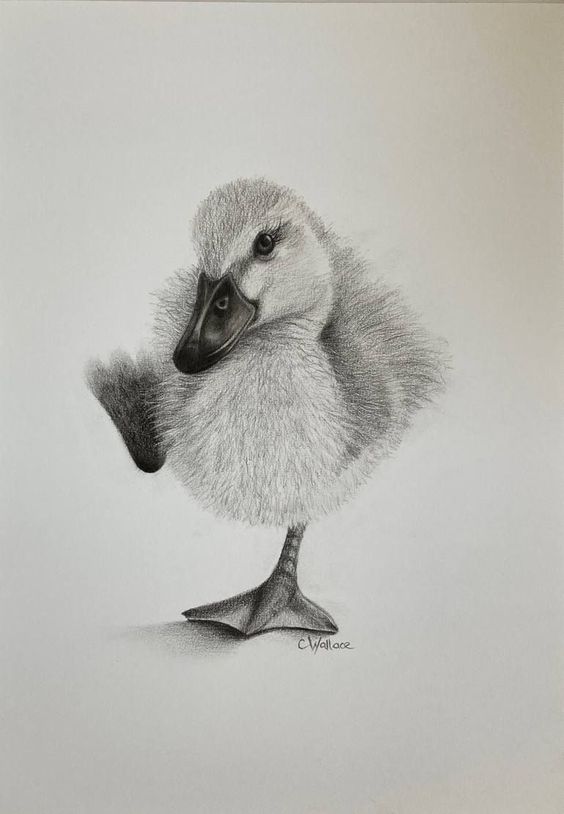
Feathers are where the bird drawing either clicks or collapses. The good news: you don’t draw every feather. You draw feather groups and let the viewer’s eye fill in the rest.
The Overlap Rule
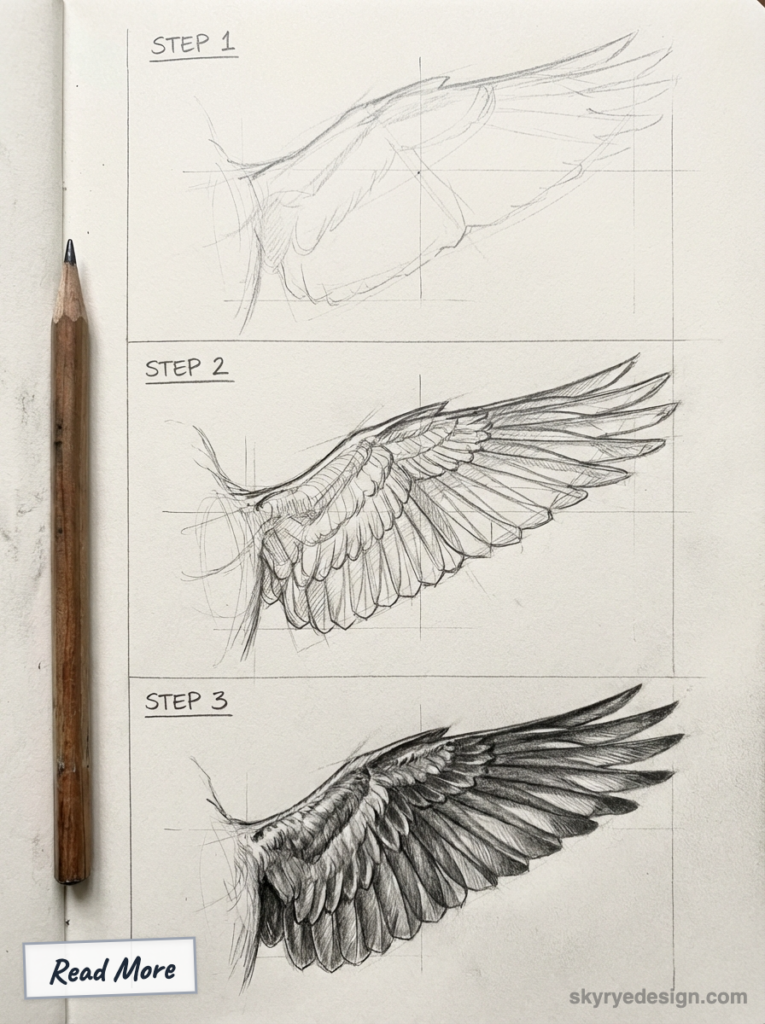
Feathers always overlap from the tail forward and from the center outward. Think of them like fish scales — each one sits slightly on top of the one behind it. Draw curved lines following that direction, not random strokes. Once you internalize this, your feathers will instantly look more structured.
Three Mark Types That Build Realistic Plumage
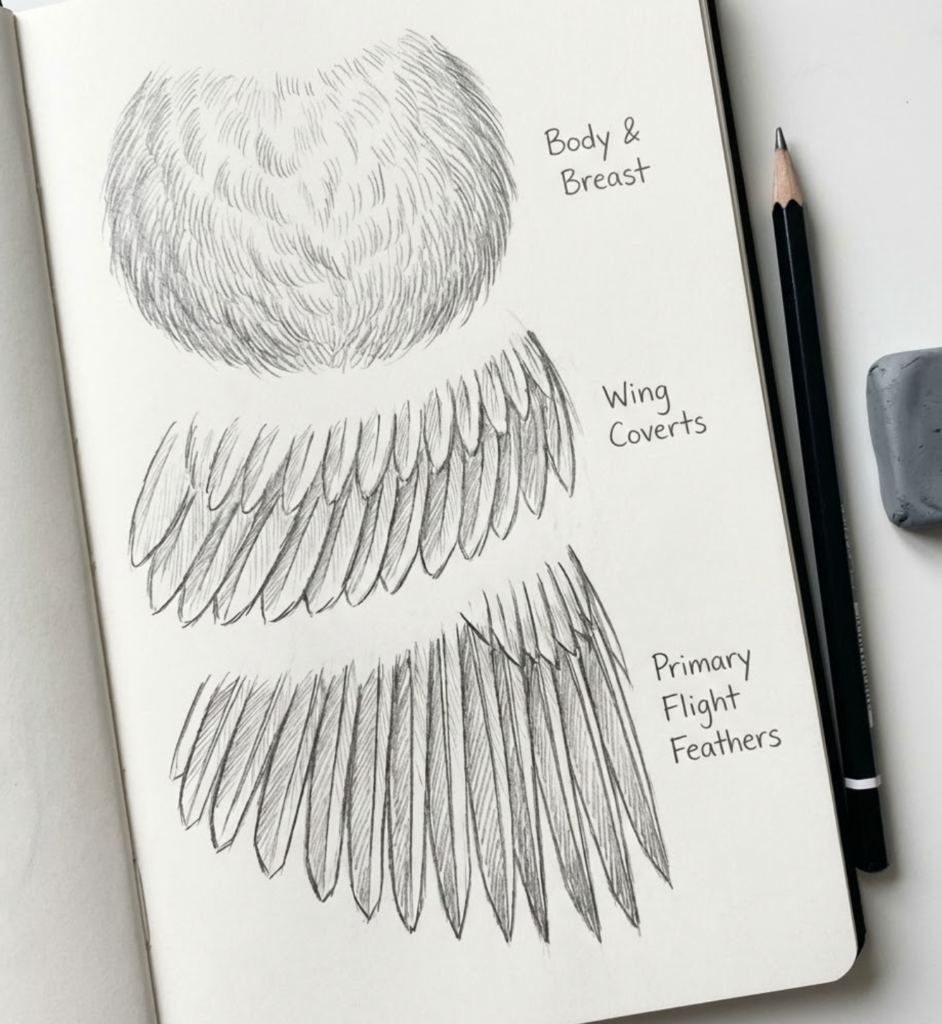
- Short curved strokes for body and breast feathers — soft, round-tipped, close together
- Medium elongated strokes for wing coverts — more defined edges, some separation
- Long, straight strokes with defined tips for primary flight feathers — stiff, clearly individual
Watercolor and Feather Texture
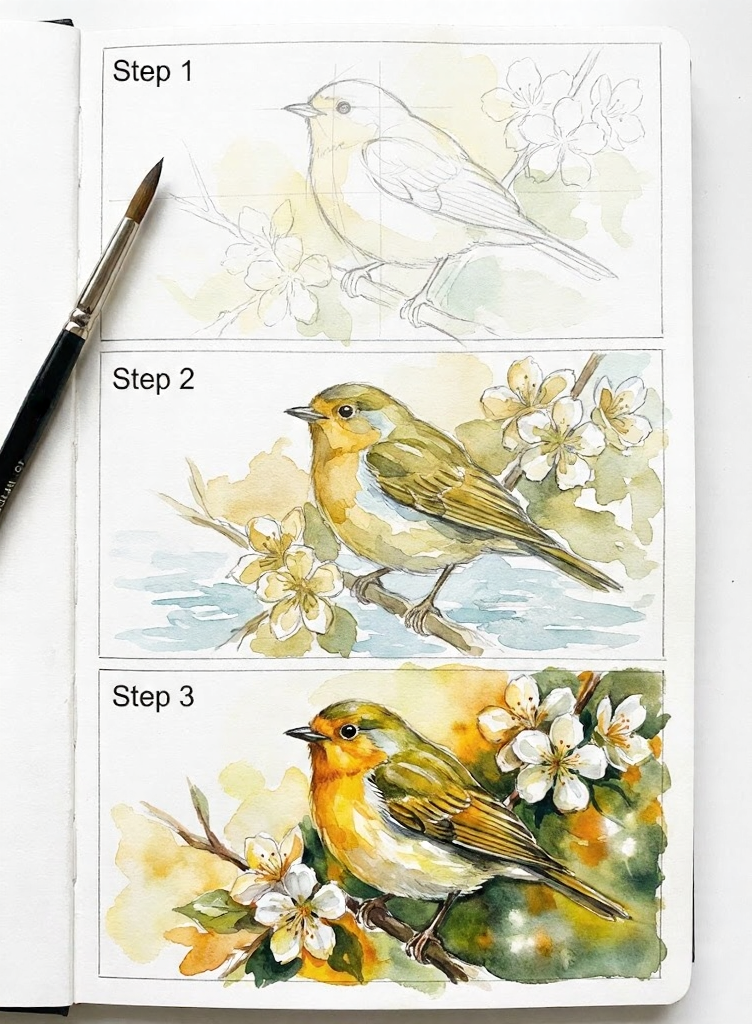
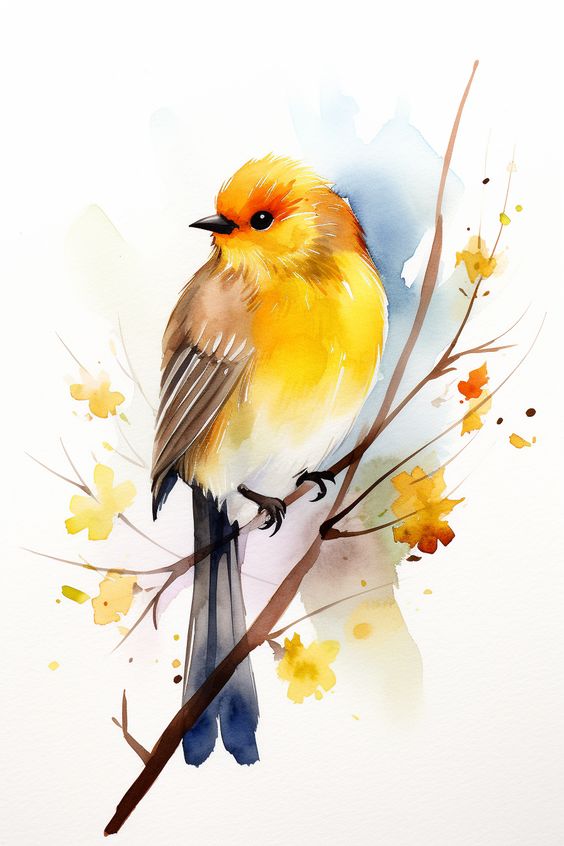
If you’re working wet, try the ‘dry brush on damp paper’ technique for body feathers. Load a round brush with a mid-tone, blot most of the paint off, then drag across slightly damp Canson 200gsm paper. You get a natural, broken texture that mimics soft plumage better than any pencil can.
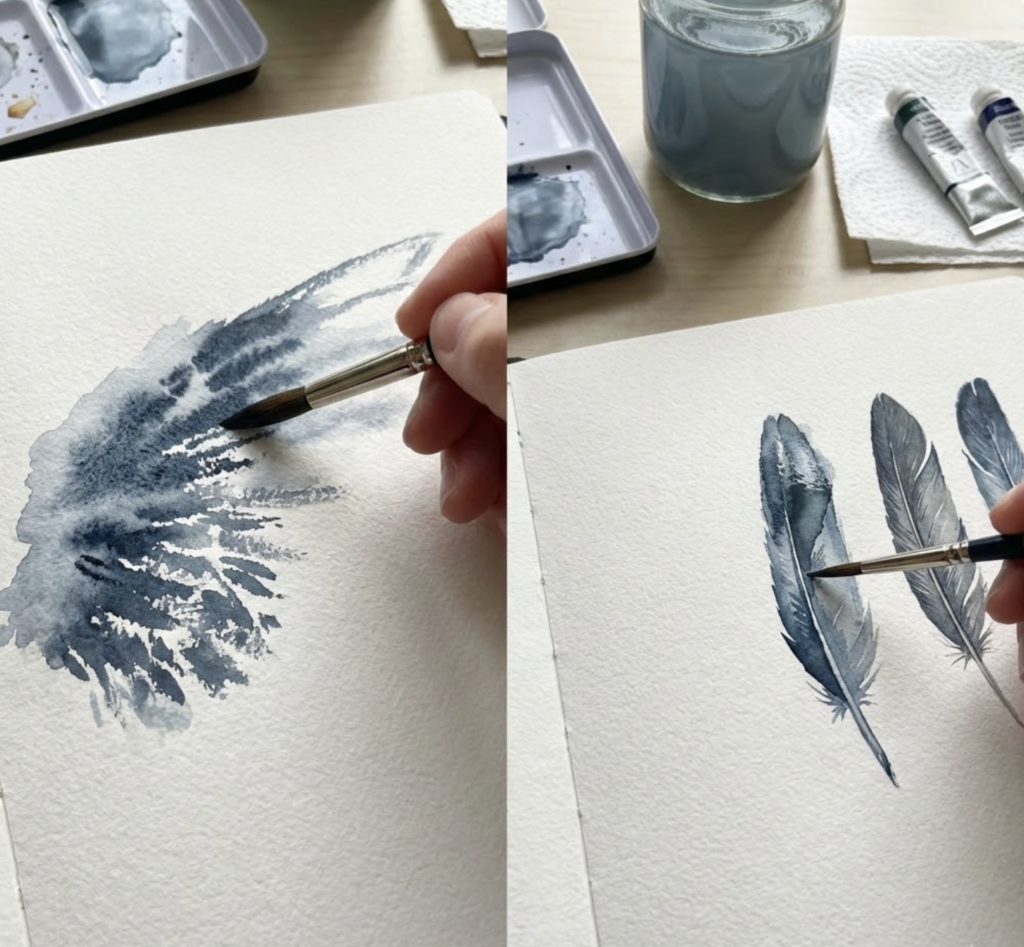
For wing feathers in watercolor, let each feather dry before painting the adjacent one. Wet-on-wet creates muddy merges where you want clean separation.
5. Birds in Flight: Capturing Movement Without Making It Stiff
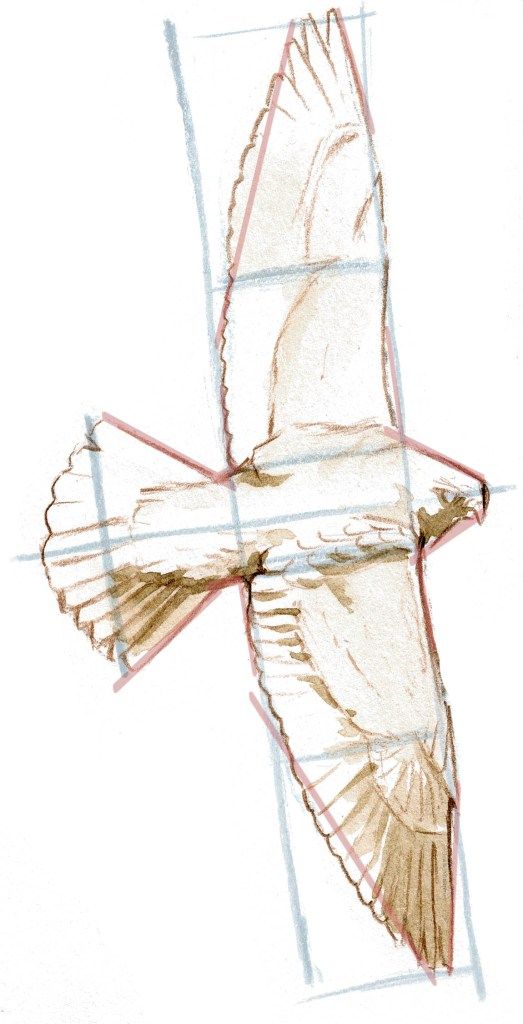
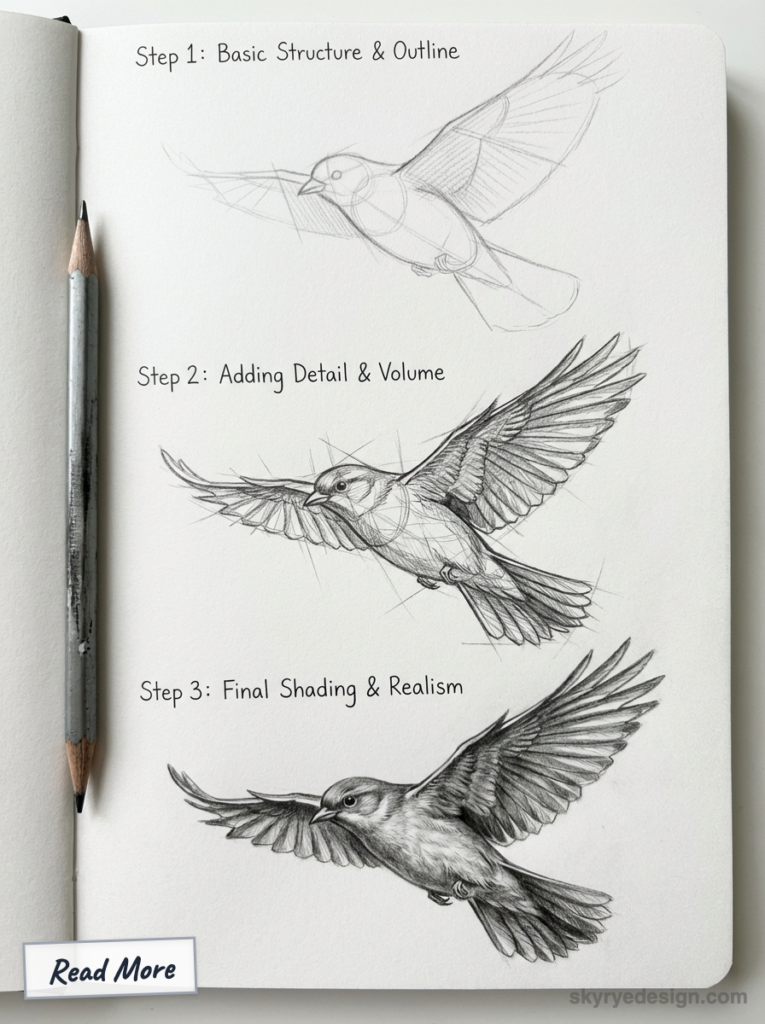
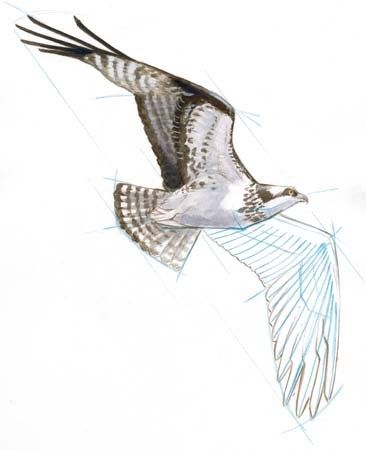
A flying bird drawn badly looks like a taxidermied specimen mid-spread. The key is understanding that flight is asymmetrical. Even when both wings are ‘up’, one leads, one lags. The body twists. The tail tilts as a rudder.
The Wing Arc
During the downstroke, the primary feathers spread and push down and back. During the upstroke, they close slightly like Venetian blinds to reduce air resistance. If you draw flight, pick one clear moment in that cycle — don’t try to split the difference. Mid-downstroke (wings slightly below horizontal) reads most powerfully.
Body Position in Flight
The body is rarely horizontal. A bird in powered flight leans forward — head up, tail low, body at roughly 20–30 degrees. Gliding birds are flatter, but the wing tips still curve upward (dihedral angle) for stability. A perfectly horizontal body in flight almost always looks wrong.
Quick Exercise: Osprey Reference Study
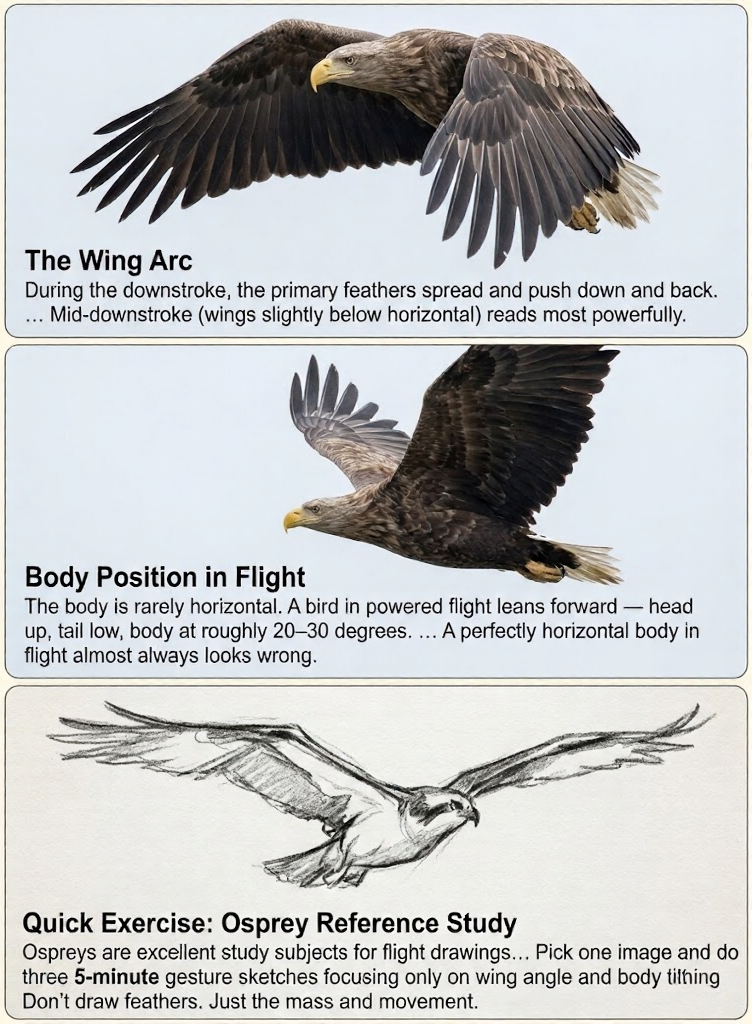
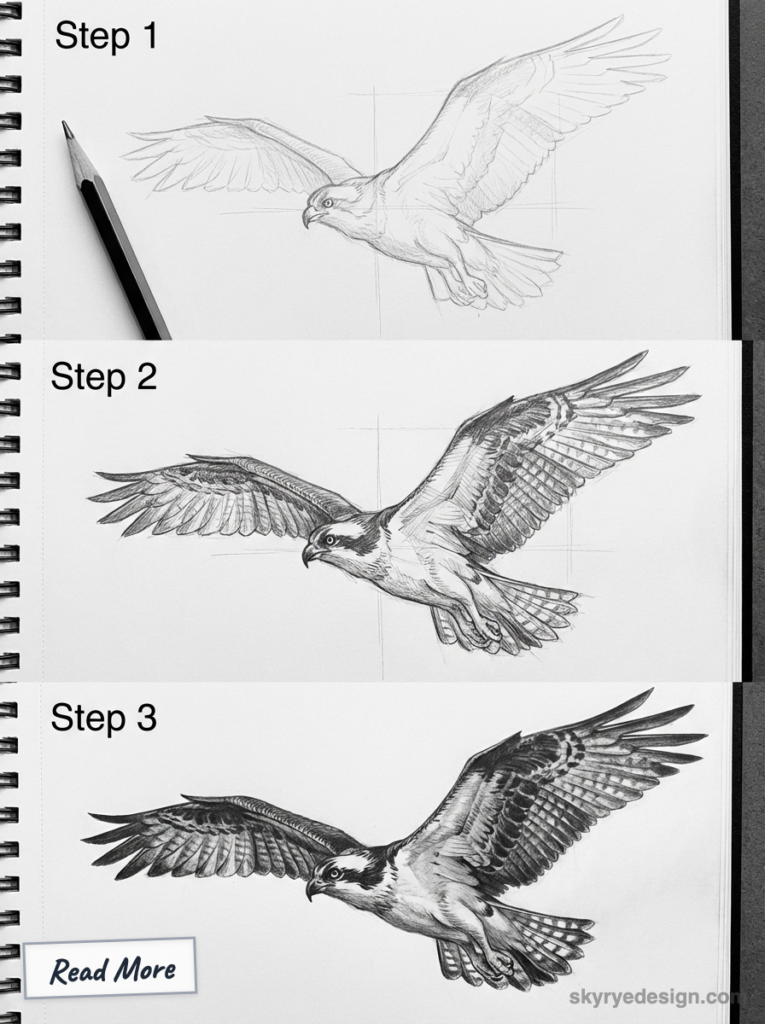
Ospreys are excellent study subjects for flight drawings — they’re large, well-documented, and have dramatic wing proportions. Search Cornell Lab’s All About Birds for their flight photo gallery. Pick one image and do three 5-minute gesture sketches focusing only on wing angle and body tilt. Don’t draw feathers. Just the mass and movement.
6. Materials That Actually Make a Difference
You don’t need expensive tools to draw birds well. But the right materials for the right technique save you hours of frustration.
Paper
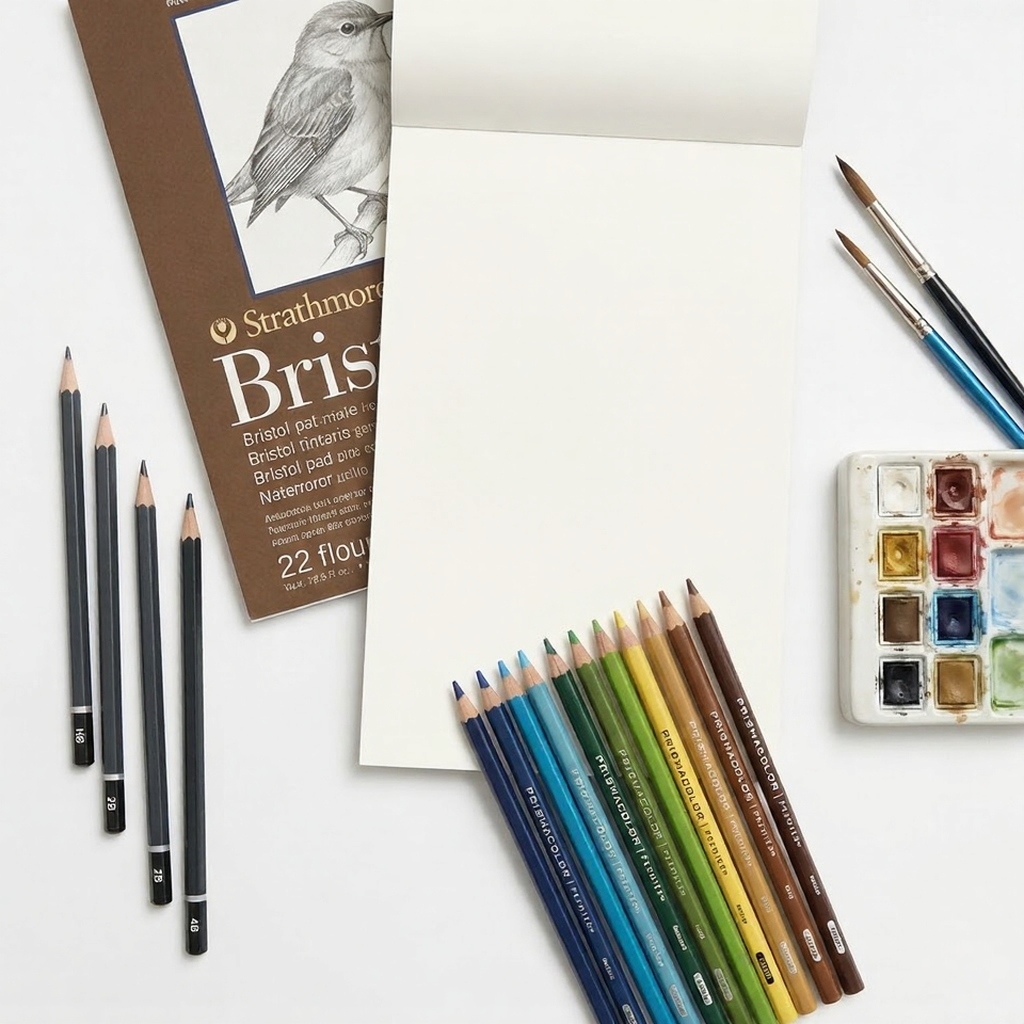
For pencil work: Strathmore Bristol 300 Series (smooth, ~$12 for a pad of 20 sheets) is the standard for a reason. The smooth surface lets you build fine feather details without tooth interrupting your strokes. For textured, expressive work: try Canson Mi-Teintes in a mid-grey or warm tan — the paper color does your mid-tone work for you.
For watercolor birds: Canson XL Watercolor 300gsm handles multiple washes without buckling. Anything under 200gsm will warp and wrinkle under heavy pigment.
Pencils
Keep three grades on your desk: H (fine details, beak edges, eye highlights), HB (general sketching, light feather marks), 4B (deep shadow areas under wings, talons, dark plumage). Faber-Castell 9000 series runs about $15 for a 12-piece set — reliable sharpening, consistent hardness.
Color Tools
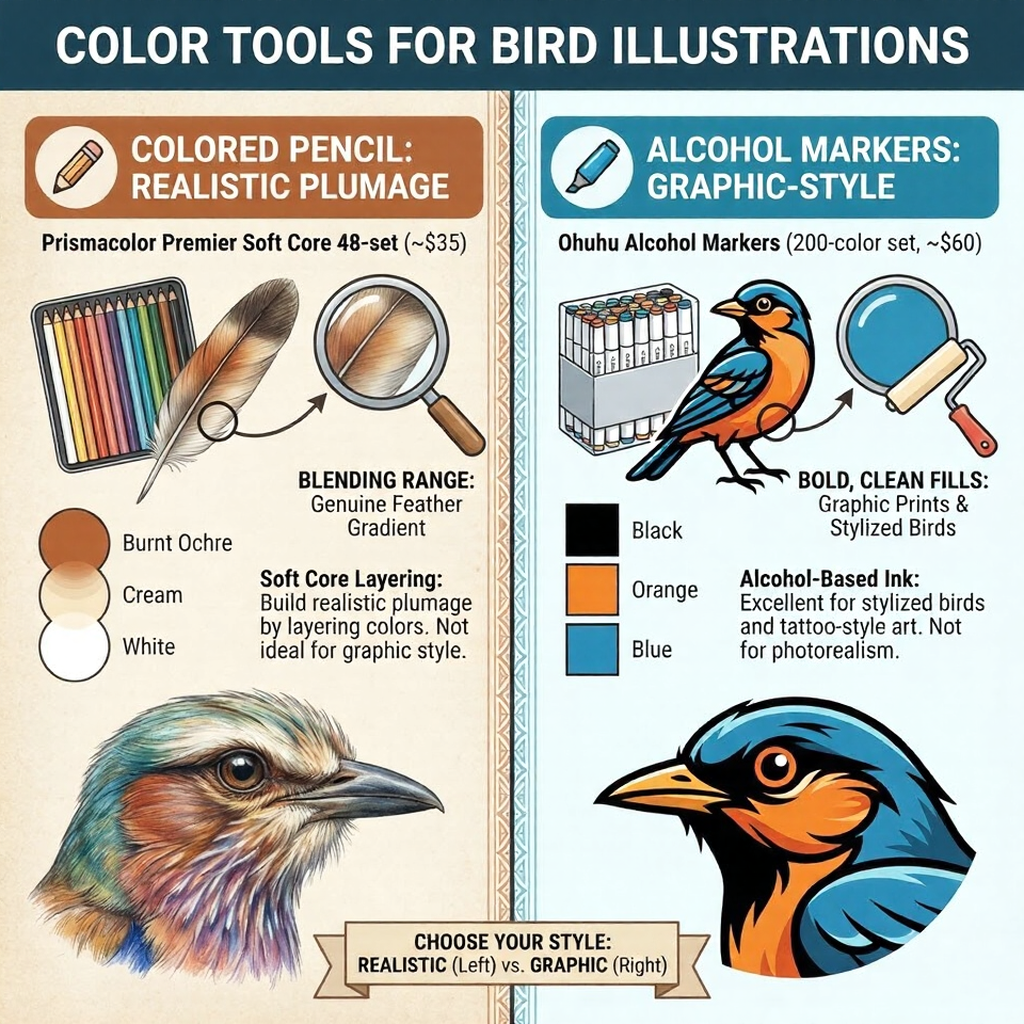
For colored pencil: Prismacolor Premier Soft Core 48-set (~$35) gives you the blending range to build realistic plumage. The soft core means you can layer burnt ochre over cream over white and get a genuine feather gradient.
For markers: Ohuhu Alcohol Markers (200-color set, ~$60) work well for graphic-style bird illustrations — bold, clean fills for graphic prints or tattoo-style reference art. Not ideal for photorealism, but excellent for Pinterest-worthy stylized birds.
7. Practice That Actually Builds Skill (Not Just Fills Sketchbooks)
Sketchbook pages full of disconnected doodles don’t build skill. Deliberate practice does. Here’s what actually moves the needle for bird drawing specifically.
If you want to keep practicing after birds, move to other animal drawing tutorials that force you to compare body mass, joints, and gesture rather than only copying the outline.
The 10-Bird Species Challenge
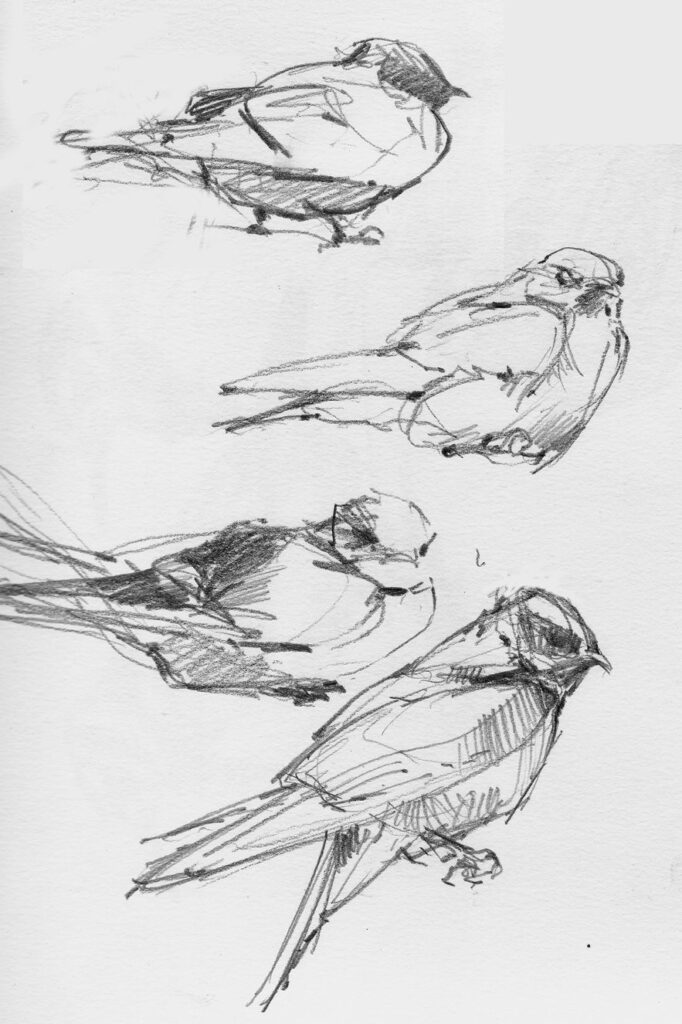
Pick 10 bird species across different size categories: hummingbird, sparrow, robin, crow, heron, hawk, owl, parrot, pelican, penguin. Draw each one three times from reference: first as a pure gesture (2 minutes), then as a structure sketch (10 minutes), then as a finished drawing (30+ minutes). By the third bird, your “start with shapes” instinct becomes automatic.
Gesture Drawing from Video
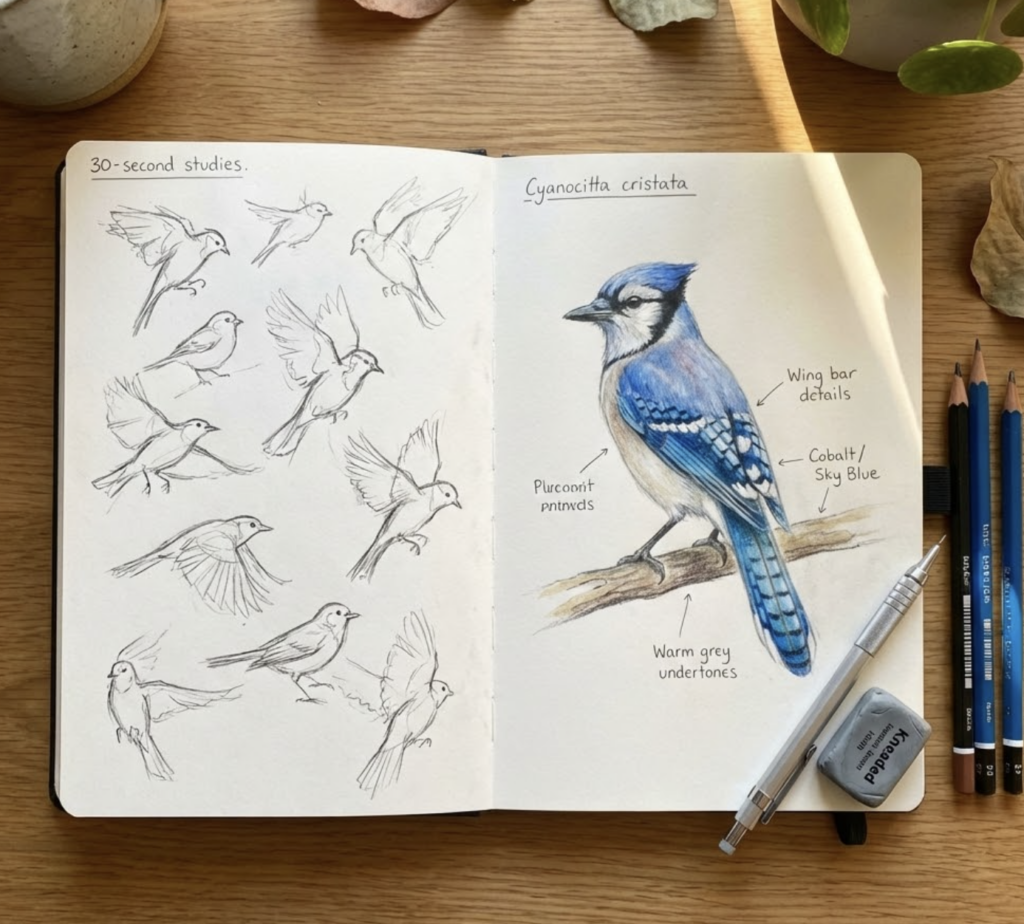
Line of Action (line-of-action.com) has a bird mode. Set it to 30-second intervals and do 20 sketches in one sitting. You’ll produce a lot of bad drawings — that’s the point. What you’re training is quick proportion judgment, not finished technique.
The Single Species Deep Study
Once a month, pick one bird and spend an entire session on just that species. Draw it from 5 different angles. Study a feather from that species separately if you can find a reference. Look up its skeletal diagram. I spent a weekend on great blue herons last spring, and my understanding of neck articulation improved more in those two days than in months of random sketching.
Keep an Error Log
This sounds tedious, but it works. After each session, write one sentence: “Today I struggled with ___.” Over a month, you’ll see patterns — maybe it’s always wing attachment, or always eye placement. Target those in your next session instead of drawing whatever feels comfortable.
Once the general bird proportions make sense, try how to draw a hummingbird so you can practice the tiny body, needle beak, and hovering wing shape.
FAQ: Bird Drawing
Q: What’s the easiest bird to draw for beginners?
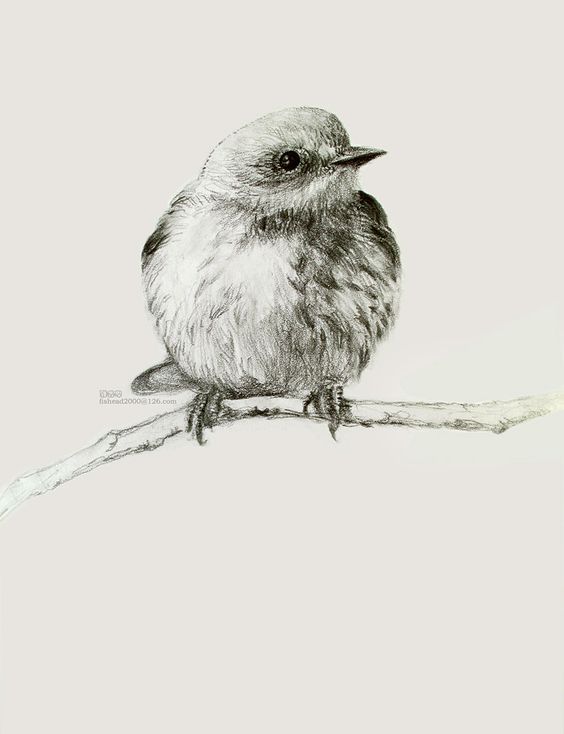
Robins and sparrows are ideal starting points — compact bodies, simple round shape, and familiar proportions. Their short tail and upright posture mean fewer complex angles to manage. Once you can draw a convincing sparrow from memory, most small songbirds become variations on the same structure.
Q: How do I draw realistic bird feathers?
Work in layers, not individual feathers. Start with the overall body shape, then suggest feather groups with short curved strokes following the bird’s contour. Only define individual feathers on the wings and tail. Use a sharp HB for light marks and a 4B for shadow areas underneath each feather group. The illusion of texture comes from contrast, not detail count.
Q: What’s the best paper for bird drawing?
For pencil: Strathmore Bristol 300 Series smooth surface (~$12 per pad). For watercolor: Canson XL Watercolor 300gsm. For colored pencil: any smooth white paper over 160gsm that won’t pill when you layer. Avoid regular printer paper — it grabs the pencil unevenly and doesn’t hold layered marks well.
Q: How do I draw a bird in flight realistically?
Pick one clear moment in the wing cycle — mid-downstroke works best. Tilt the body 20–25 degrees forward (head up, tail down). Spread the primary feathers at the wingtips and show slight asymmetry between the two wings. The single biggest improvement: add a subtle body twist so the near wing comes slightly forward of the far wing.
Q: How long does it take to get good at drawing birds?
With deliberate practice, most people see significant improvement in 2–3 months. The keyword is deliberate — doing the same comfortable sketch repeatedly doesn’t count. If you do one focused 30-minute session three times a week (gesture practice, species study, finished drawing), you’ll notice your instincts improving around the 6-week mark.
If you want to keep the session inside wildlife drawing, pair birds with larger mammals: this deer tutorial works well as wildlife drawing practice for proportion, alert posture, and quiet natural poses. e-reference-photos-when-drawing-birds-90″>Q: Should I use reference photos when drawing birds?
Yes, always — especially when learning. Artistic skill and memory drawing are different skills. Reference photos teach your eye what’s actually there, not what you assume is there. Cornell Lab’s All About Birds has free, high-quality photos of most North American species. For European birds, the RSPB photo library is excellent.
Q: Can I draw birds digitally as a beginner?
Absolutely — and digital has real advantages for beginners. You can use layers to separate your skeleton sketch from your final line work, undo without erasing, and zoom in for feather details. Procreate (iPad, ~$13 one-time) has a ‘streamline’ brush setting that smooths shaky lines, which helps a lot early on. The principles are identical to traditional drawing.
Start Ugly, Finish Better
Every good bird drawing I’ve made started with something embarrassing. Two awkward circles. A beak pointing the wrong direction. Wings that looked like floppy mittens. That’s not failure — that’s the process.
The seven techniques in this guide aren’t a guarantee of perfect results. They’re a framework that removes guesswork: build structure first, add feather groups second, use reference without apology, and practice with intention rather than just volume.
Pick one bird you’ve always wanted to draw. Open a reference photo. Start with two shapes. See where it goes.
- 15.2Kshares
- Facebook0
- Pinterest15.2K
- Twitter3
- Reddit0