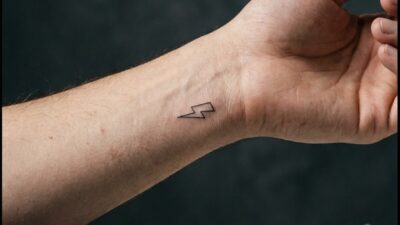
I got my first travel tattoo in a shop two blocks from the Sagrada Família — a tiny dashed flight-path line on my inner wrist that traced the route from Kyiv to Barcelona. The artist was a woman named Neus who kept asking me questions about the trip in rapid Catalan while she worked. I didn’t understand half of it, but the conversation felt like the right context for a permanent mark.
- 1. The Classic Travel Tattoo Symbols — And What They Actually Mean
- 2. 10 Travel Tattoo Ideas Beyond the Obvious
- 3. Travel Tattoo Styles in 2026 — Which to Choose
- 4. Placement Guide — Where to Put Your Travel Tattoo
- 5. How to Make a Travel Tattoo Uniquely Yours
- 6. What to Tell Your Tattoo Artist — And What to Avoid
- Frequently Asked Questions
- Your Travel Story Deserves Permanent Ink
That’s the thing about travel tattoos. When they’re good, they don’t just show where you went. They carry the texture of the experience — the smell of a city, the feeling of stepping off a night train at 6 am, the specific quality of light in a place that changed something in you.
This guide covers 50+ travel tattoo ideas for 2026, organised by symbol, style, and placement. You’ll find everything from micro-minimalist coordinates to full-sleeve vintage maps, with honest advice on which designs age well, which are saturated, and how to make a familiar motif genuinely personal.
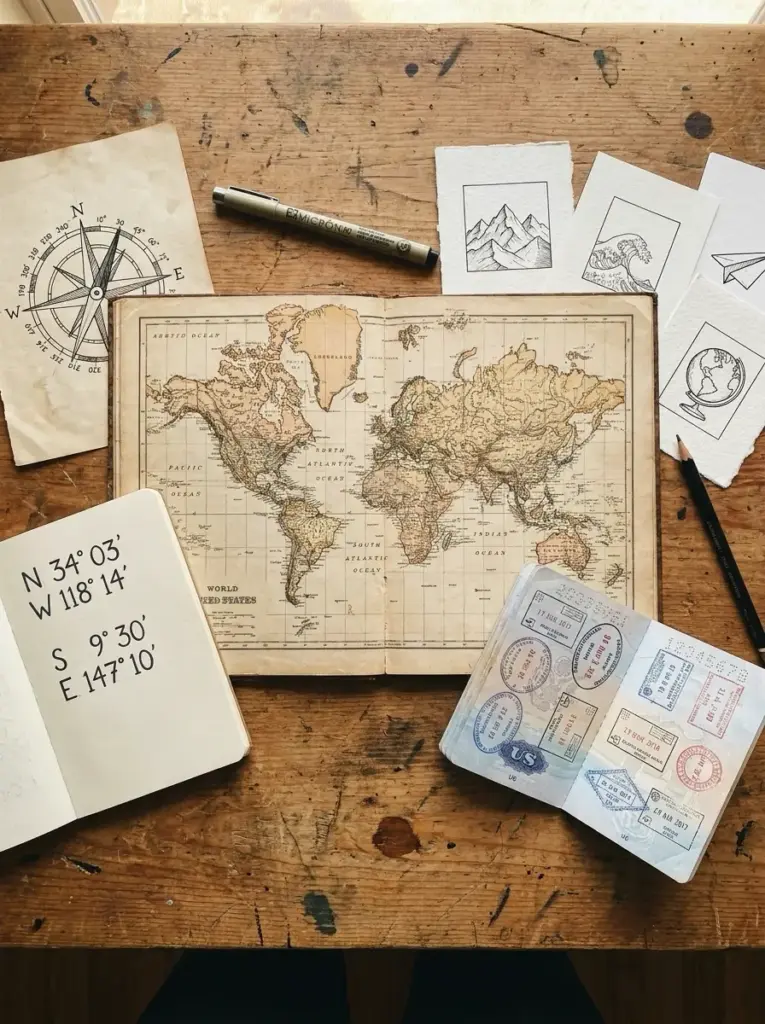
Whether you’re getting your first travel tattoo or adding to a growing collection, the goal is the same: ink that still makes sense to you twenty years from now.
1. The Classic Travel Tattoo Symbols — And What They Actually Mean
Before choosing a design, it helps to understand what these symbols have meant historically — and how that meaning translates to the skin in 2026.
Compass Tattoos
The compass is probably the most tattooed travel symbol in the world, which means it’s also the most diluted. But the original meaning is genuinely rich: sailors in the 17th and 18th centuries got compass tattoos as protective talismans — a belief that the ink would guide them home across open water. That tension between freedom and return is still what makes compass tattoos resonate.
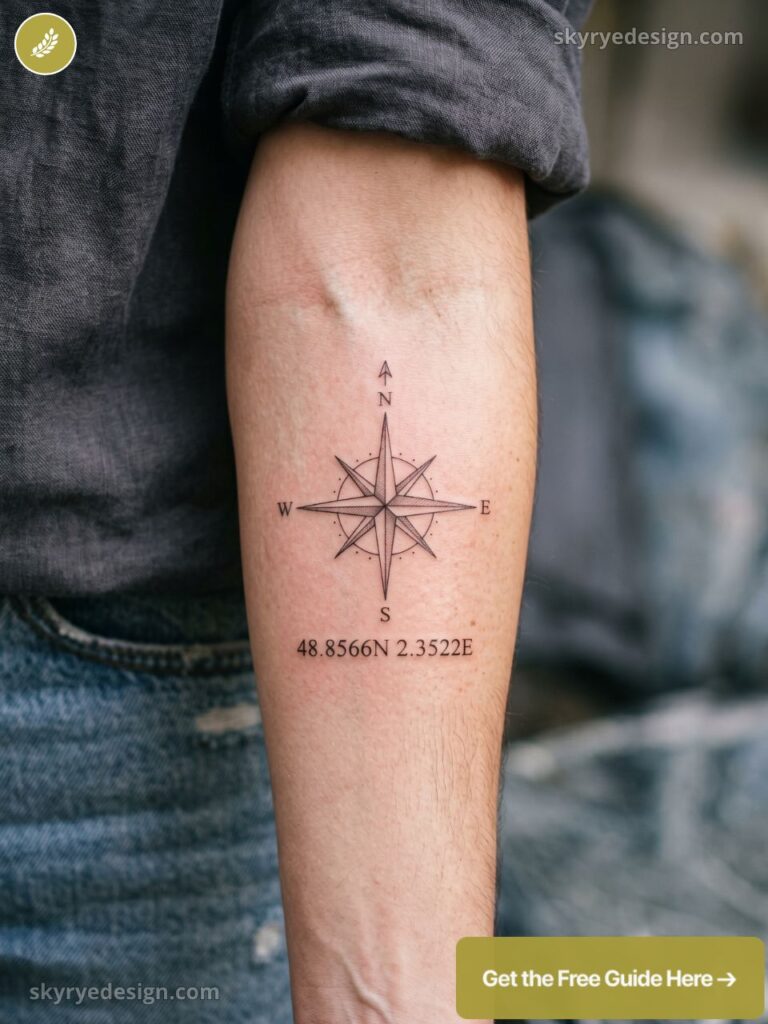
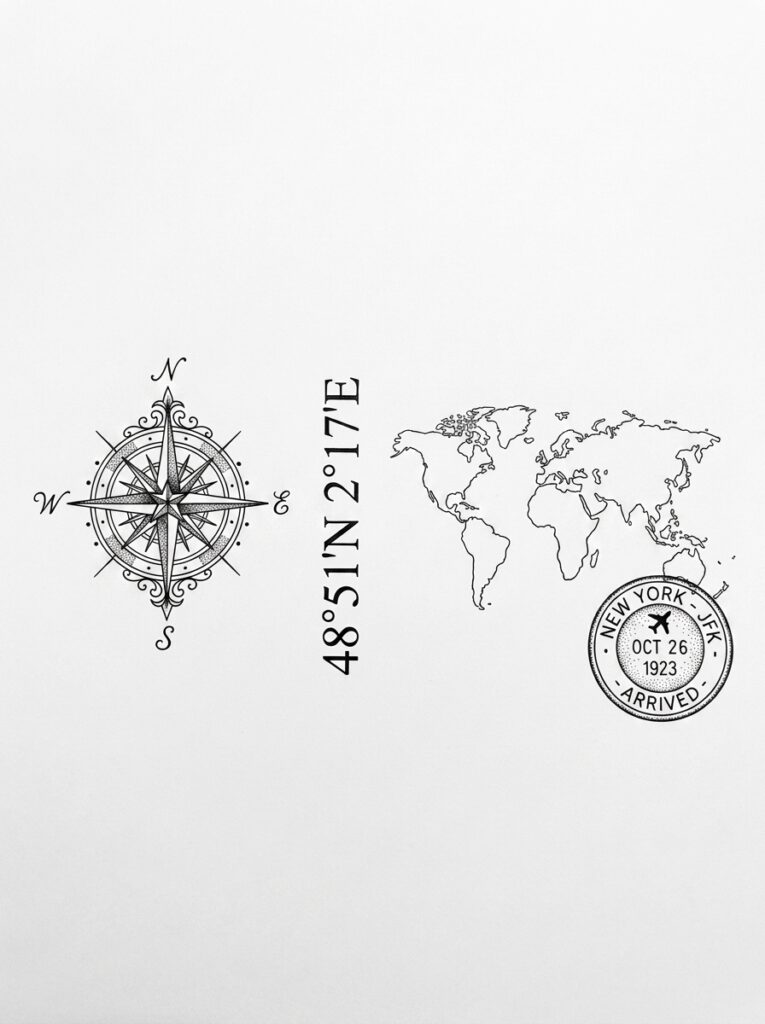
In 2026, the interesting compass tattoos move away from the generic eight-pointed rose. Fine-line compasses with a single set of coordinates tucked inside them. Vintage cartographic compasses that look lifted from a 16th-century Portuguese map. Viking Vegvisir compasses — the Norse wayfinding symbol — done in delicate linework rather than bold traditional.
| 📍 Placement that works: inner forearm (the circular geometry sits beautifully), sternum, back of the hand for a smaller version. |
Coordinates Tattoos
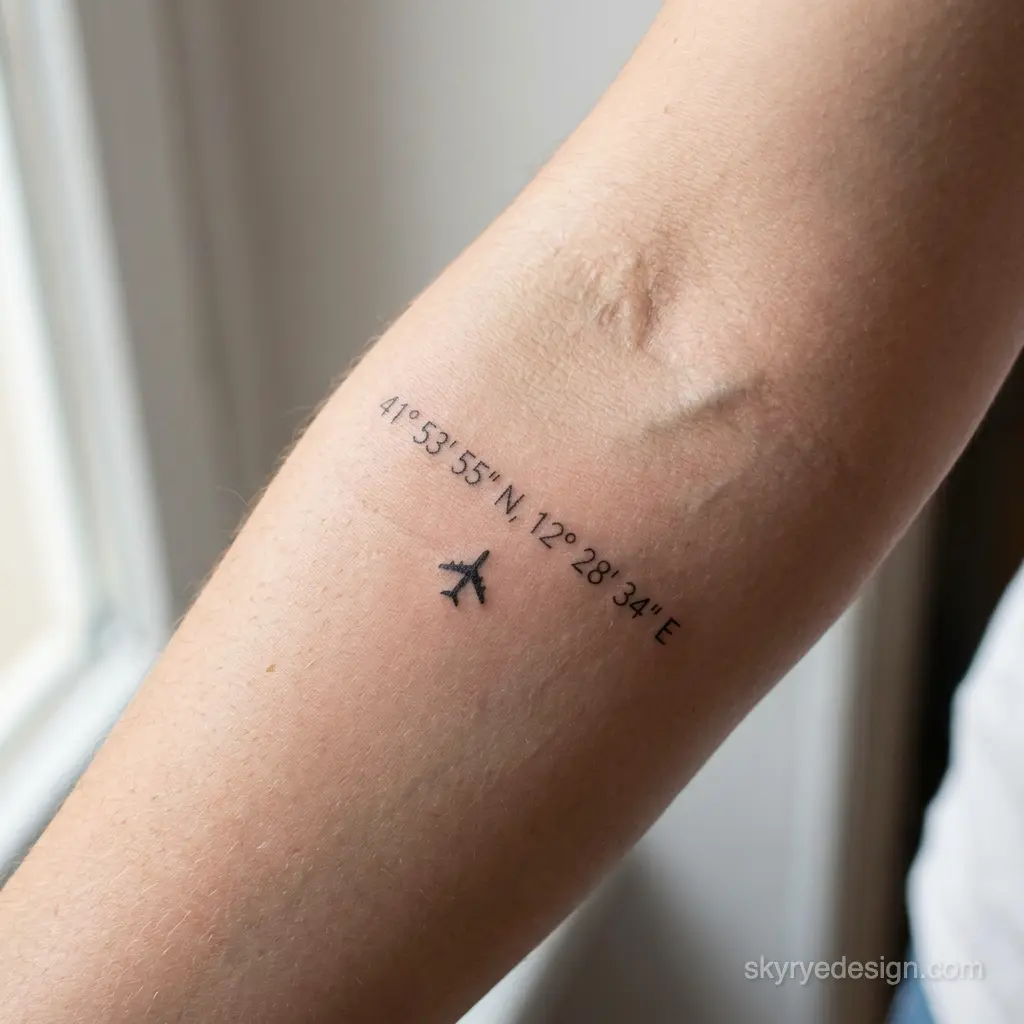
GPS coordinates are the most personal travel tattoo you can get. Unlike a compass or an airplane, no one else in the world has your exact set of numbers — they mark a specific point on the surface of the earth that means something only to you.
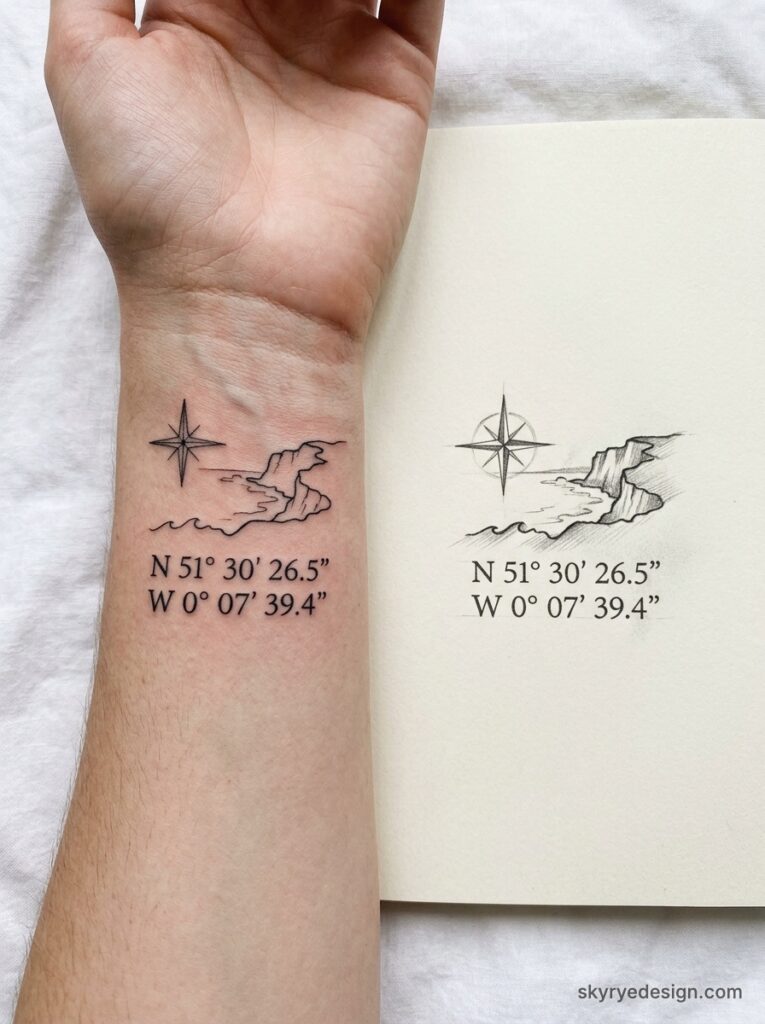
Most popular coordinate tattoos mark: the city where you were born, the place where something defining happened (a proposal, a solo trip that changed your direction), or the coordinates of a destination you’re still working toward.
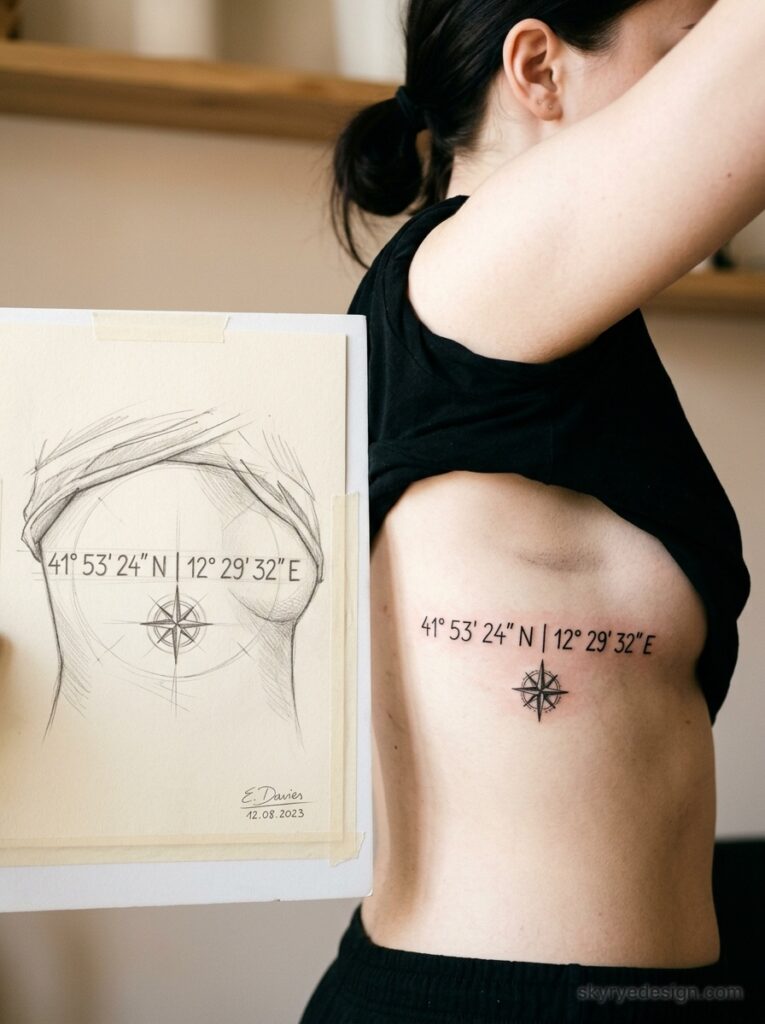
The design question is how to present them. Classic single-line latitude/longitude in a serif font is clean and ages well. A more layered version uses coordinates separated by a significant date. A circular version wraps coordinates around a small landmark symbol — a windmill for Amsterdam (52.3676° N, 4.9041° E), a tiny Eiffel Tower for Paris (48.8566° N, 2.3522° E).
| 📍 Placement that works: wrist (constant visibility), ribcage (intimate), collarbone (elegant for fine font work). |
Map Tattoos
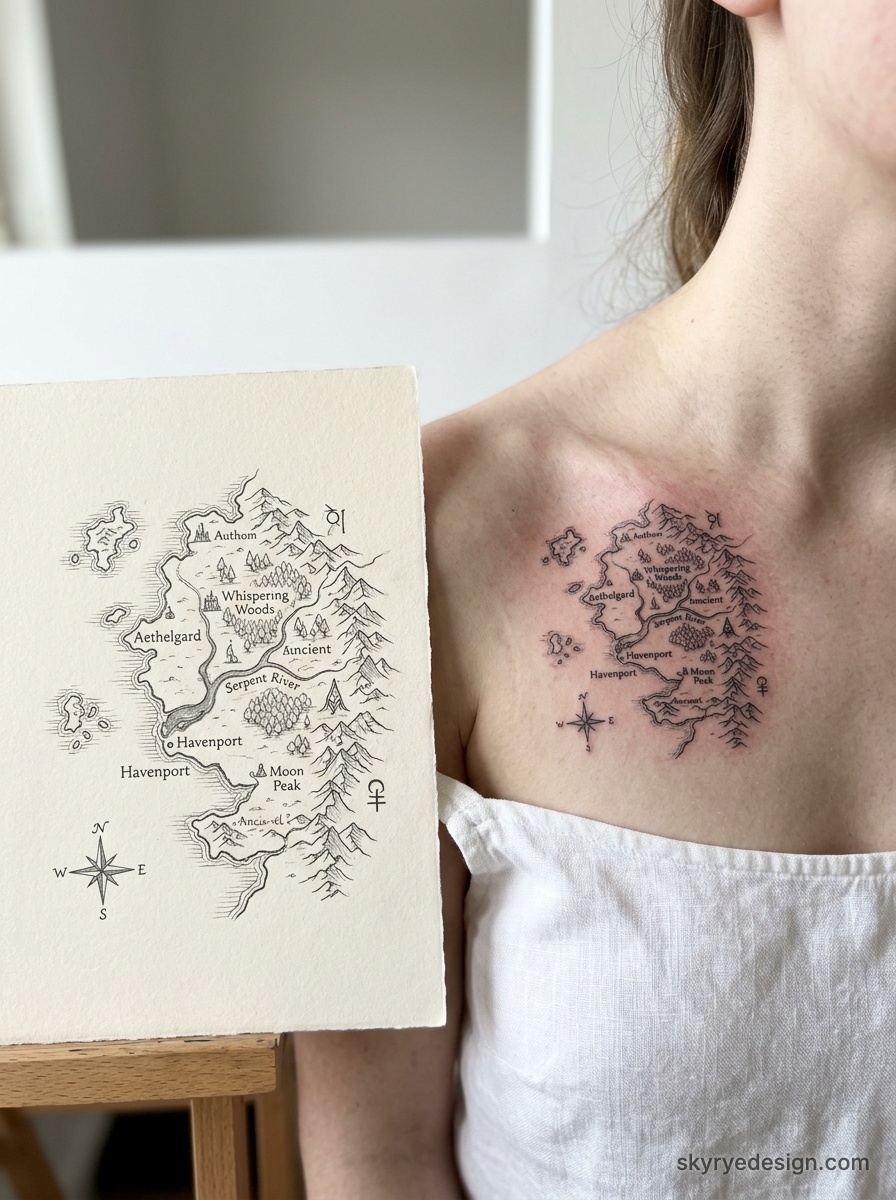
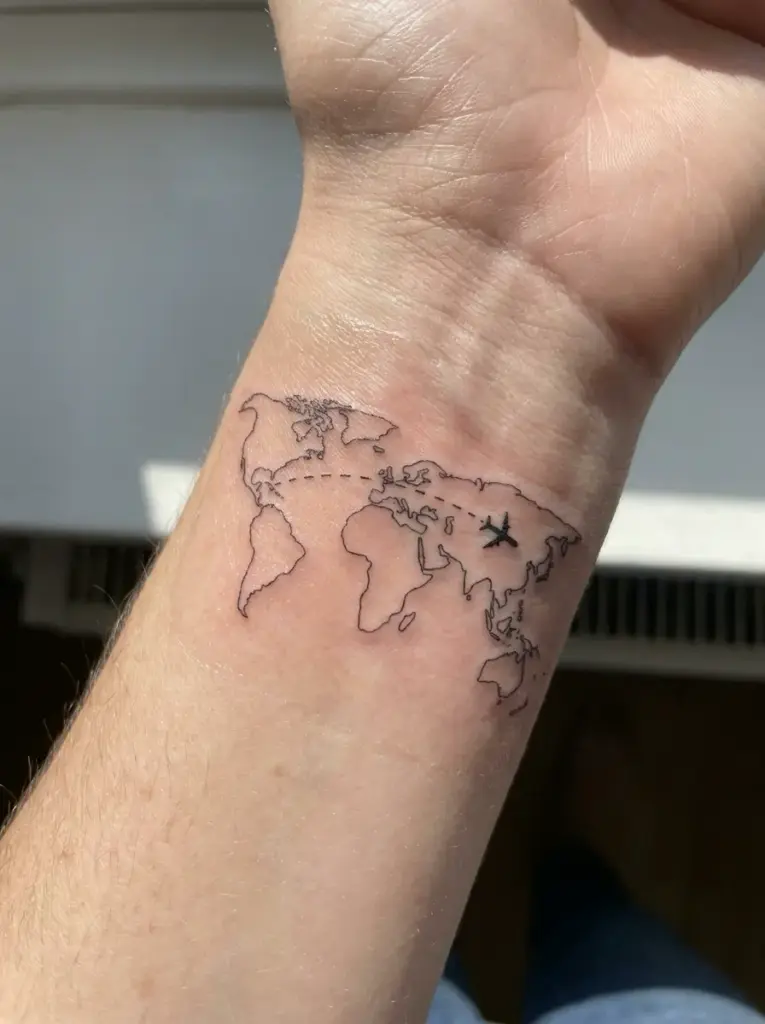
World map tattoos range from minimalist continent outlines to full-sleeve vintage cartography. The key choice is level of detail — and that choice determines how well the tattoo reads over time. A simple continent outline with one country filled in solid ages cleanly. A hyper-detailed Victorian-era map with intricate coastlines requires an experienced artist and a large canvas (back, chest, or full sleeve) to stay legible as the skin changes.
2. 10 Travel Tattoo Ideas Beyond the Obvious
These are for travelers who want something more personal than the standard compass-and-globe combination.
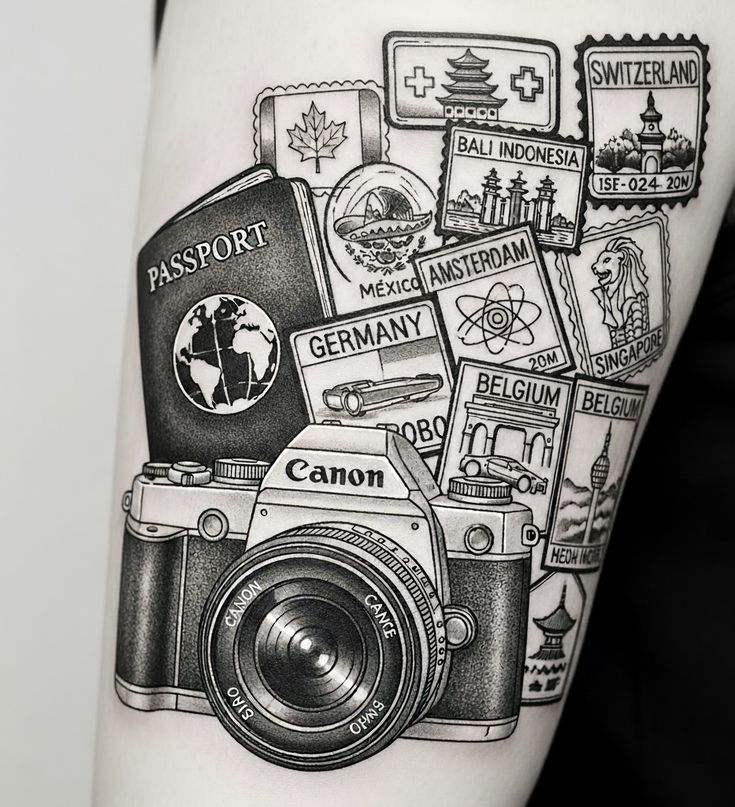
1. Passport Stamp Collection
A sleeve of passport stamp silhouettes — each stamp representing a country visited — is one of the most modular travel tattoo concepts going.
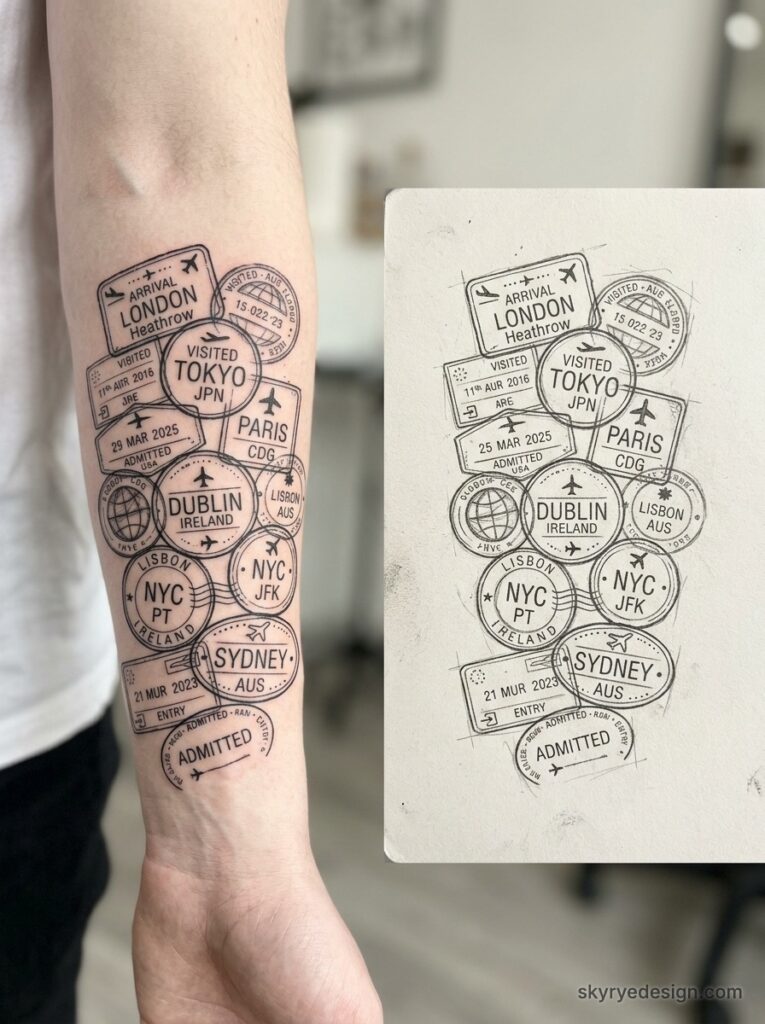
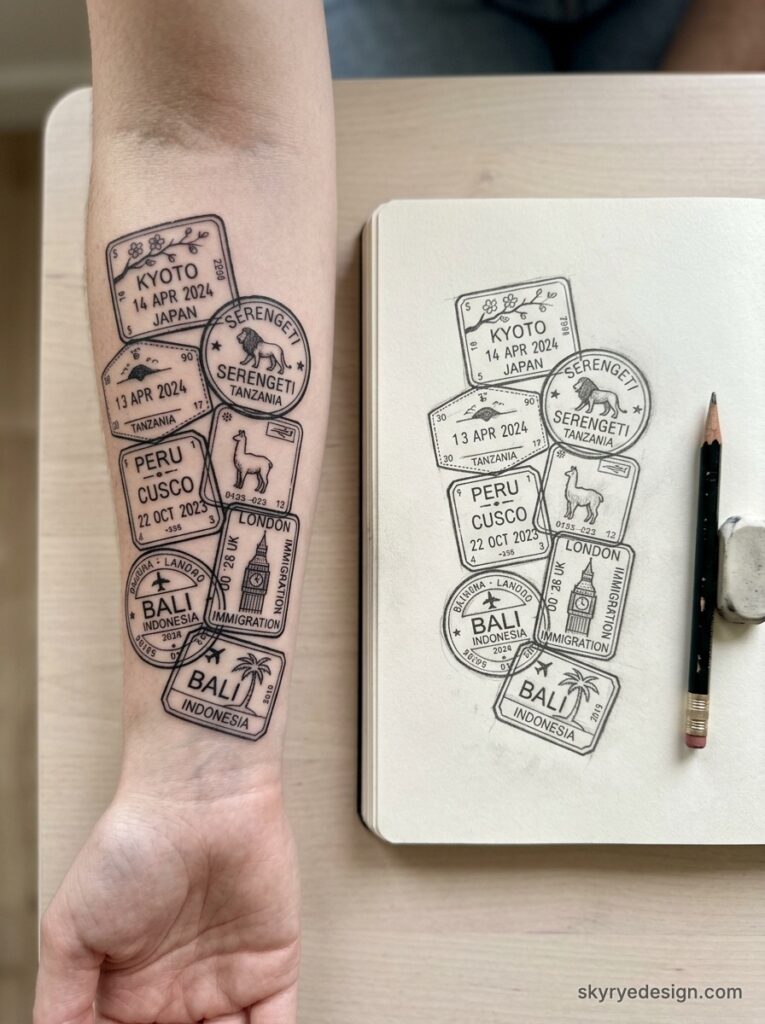
You start with two or three stamps and add one each time you cross a new border. The stamps are custom-designed to mimic real entry stamps: circular frame, bold country name, and arrival date. The outer forearm is the best placement — flat, visible, with space to grow.
2. Flight Route Line
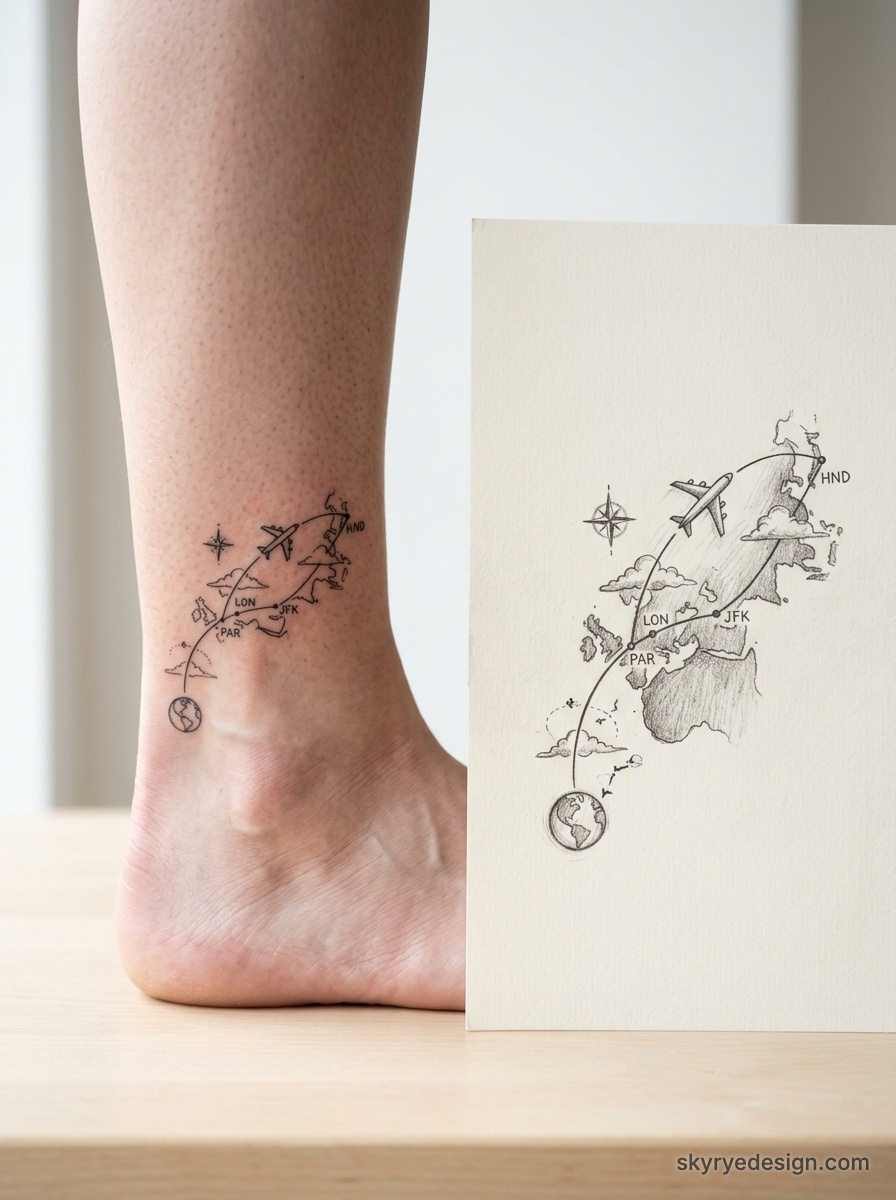
A dotted or dashed line tracing a specific route on a minimalist world map — the visual you see in airline magazines, rendered in fine-line ink. The line starts at your origin city, curves through waypoints, and ends at the destination that mattered most. Deeply personal, immediately readable, and works beautifully small (wrist, ankle) or large (shoulder blade to hip).
3. Single Landmark Silhouette
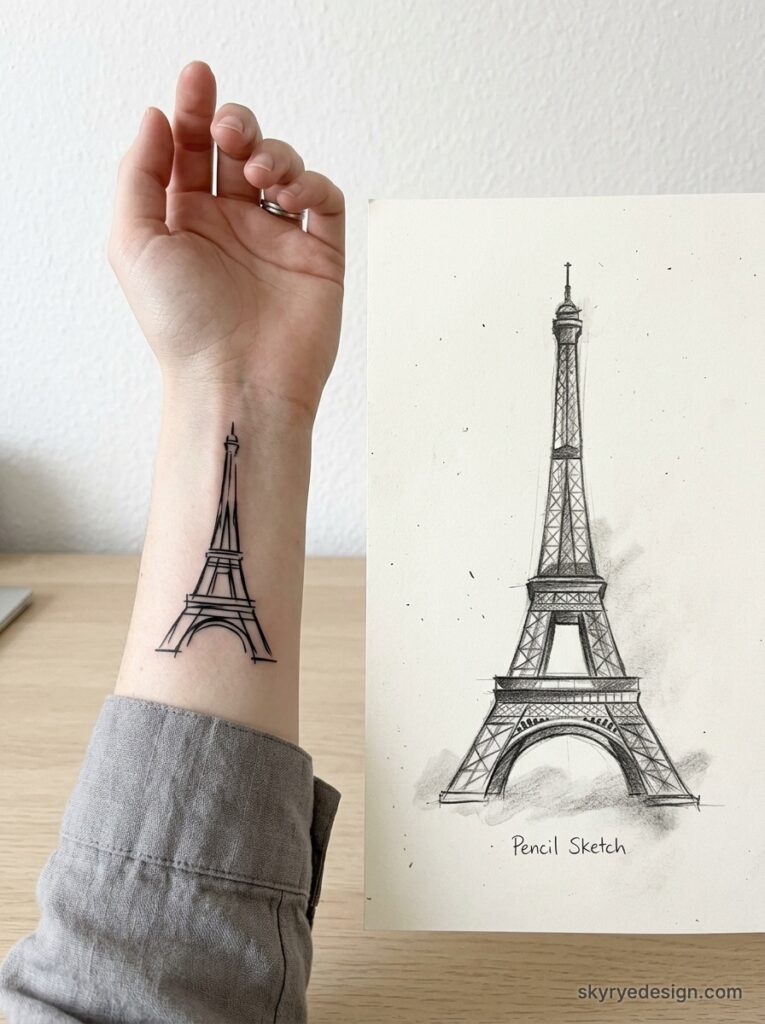
Not the Eiffel Tower done generically — a specific building or landscape feature that holds personal meaning, rendered as a clean black silhouette. The skyline of a particular neighbourhood. The exact shape of a mountain you summited. A lighthouse you passed on a ferry. This works in any size and any placement because the image is inherently yours.
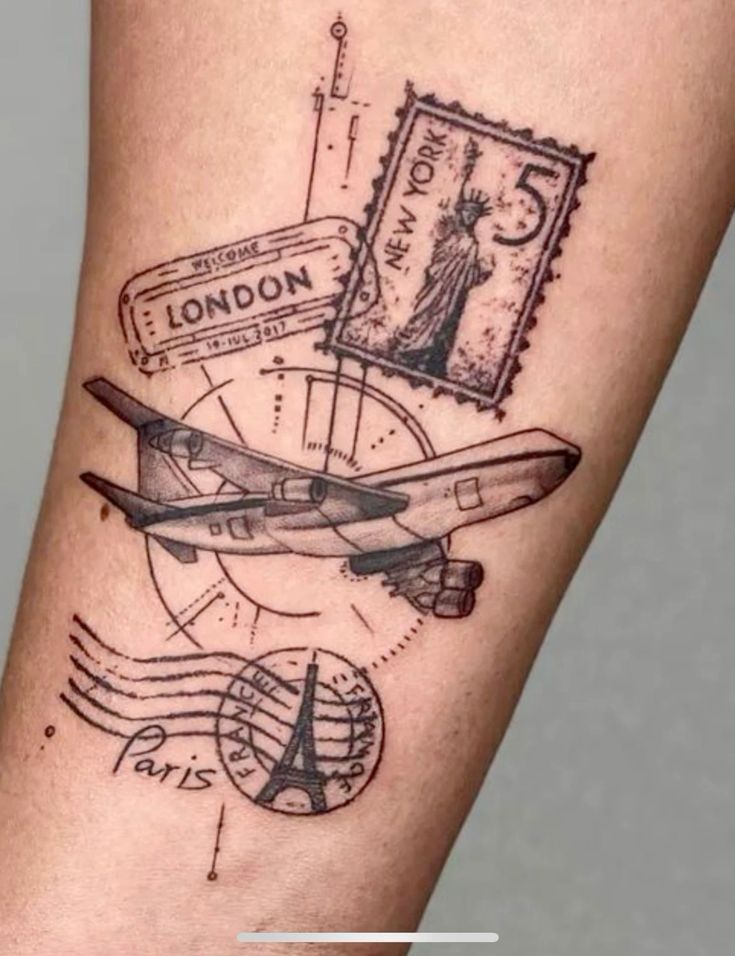
4. Vintage Postcard Frame
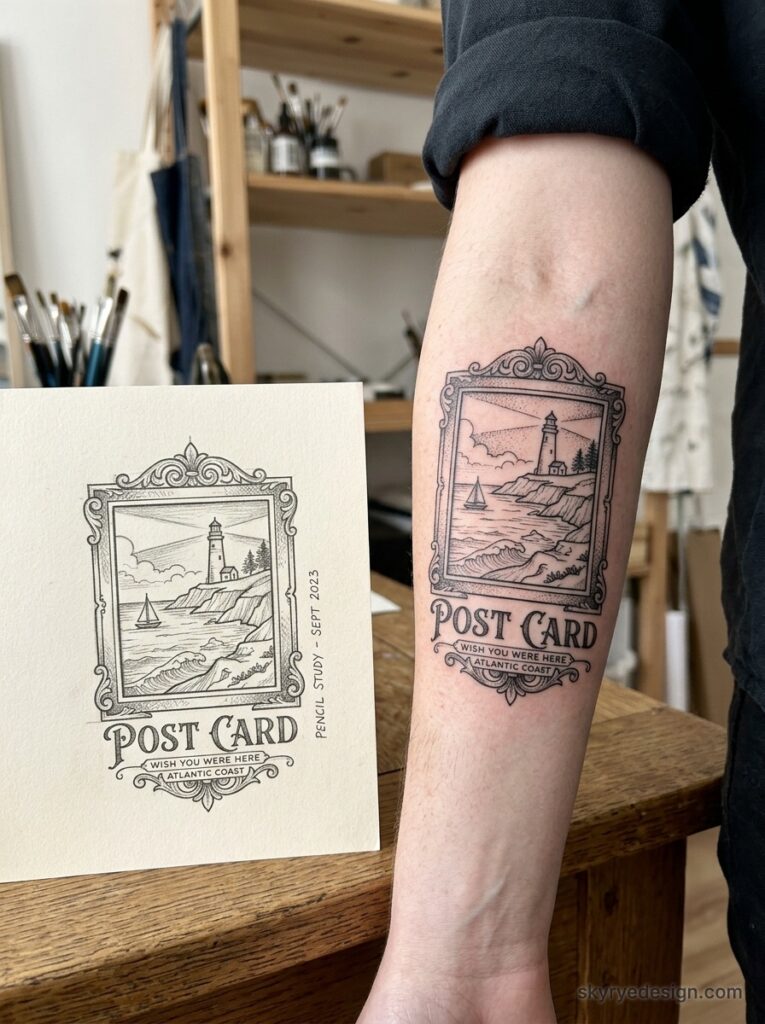
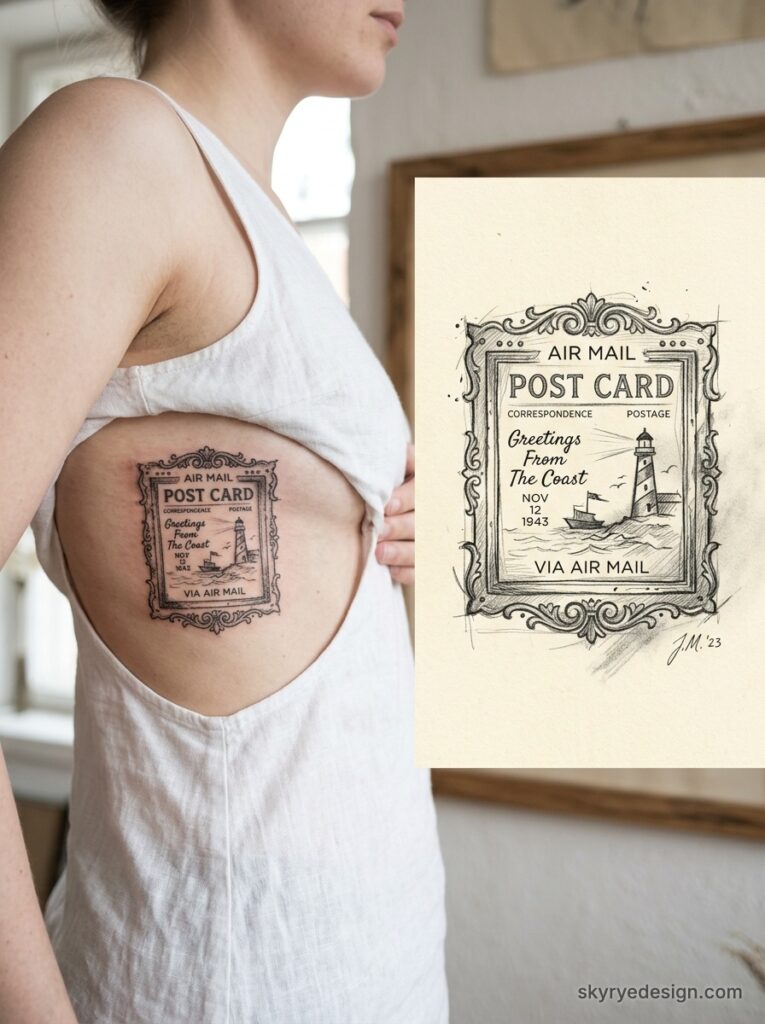
A travel tattoo designed to look like an old postcard — a stamp, a postmark date, a “wish you were here” address block, and a tiny illustrated scene inside. Done well in fineliner style, these look like paper artefacts on the skin. The detail requires a skilled artist and a palm-sized minimum canvas.
5. Horizon Line Landscape
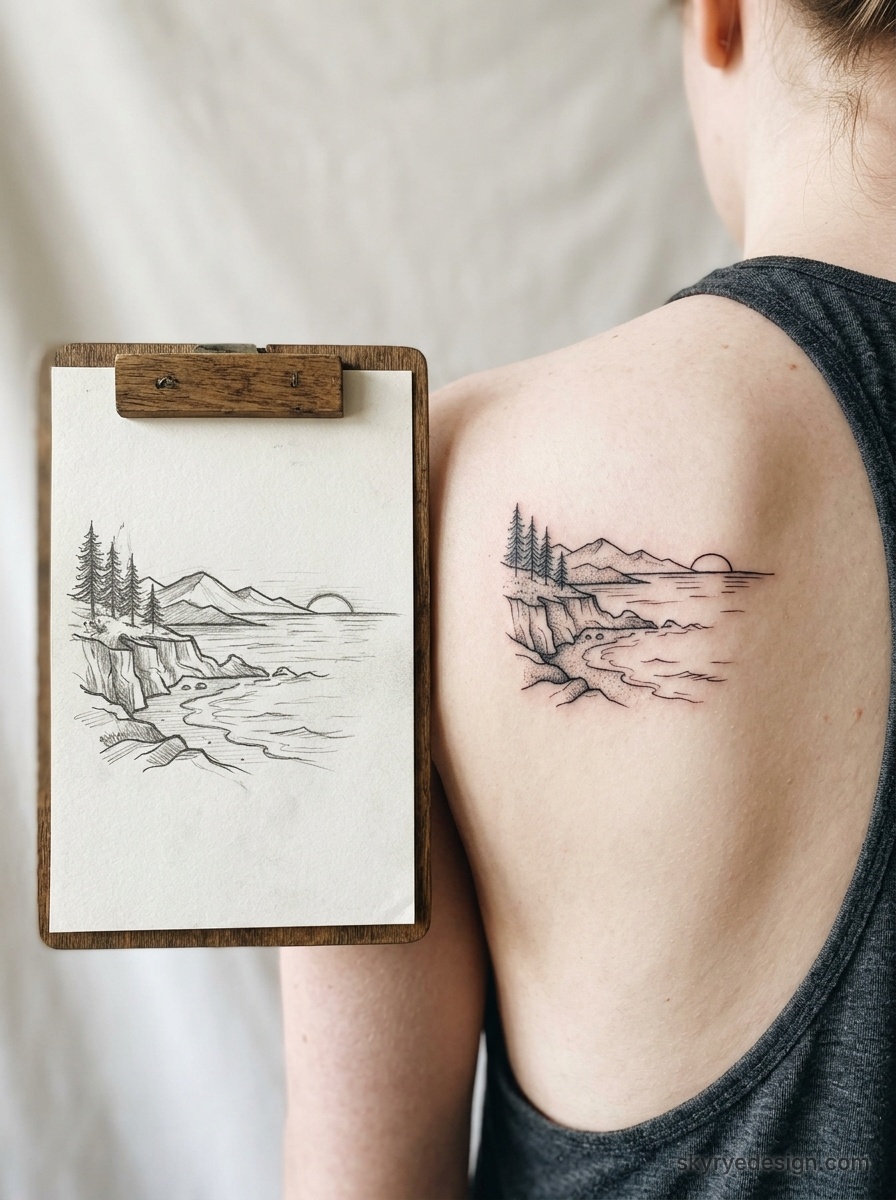
A single continuous fine line tracing a horizon — mountains, ocean, desert — specific enough to be recognisable if you know the place, abstract enough to read as art if you don’t. Popular on the inner forearm. Artists like Dr. Woo (Los Angeles) have built careers on this aesthetic.
6. Route Elevation Profile
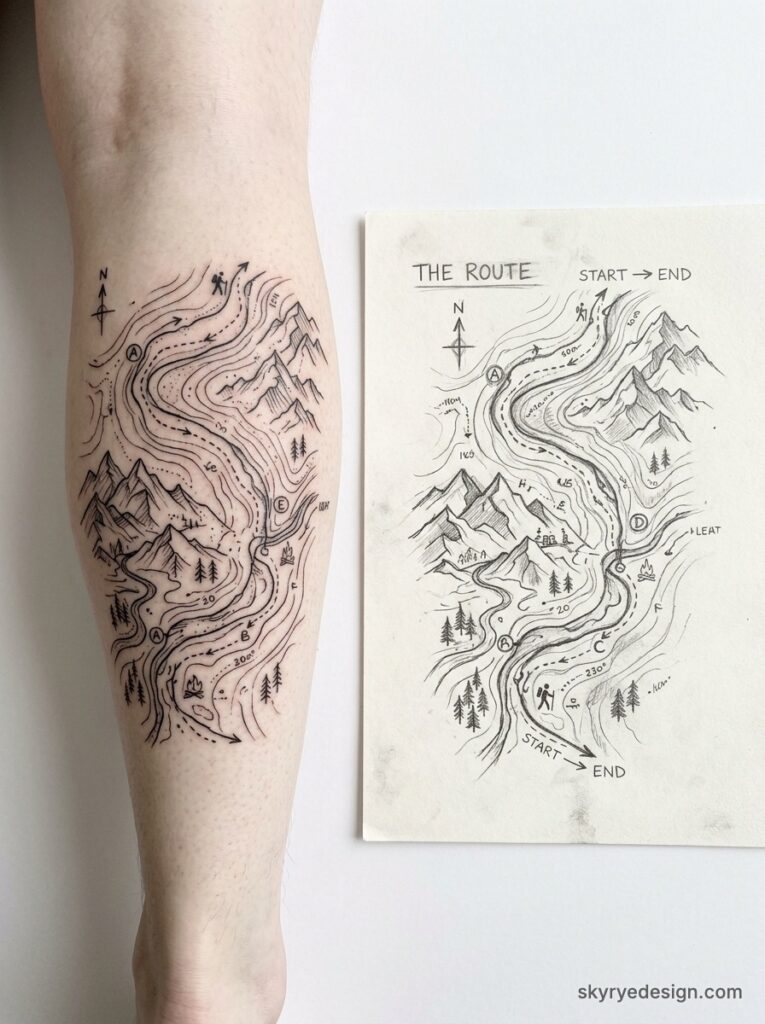
The topographic elevation profile of a specific hike or route — the exact shape of the ascent and descent as a line drawing. If you’ve done the Camino de Santiago, the Tongariro Alpine Crossing in New Zealand, or the Tour du Mont Blanc, the elevation profile is a unique data-driven tattoo. Completely unreplicable without the same experience.
7. Antique Compass Rose
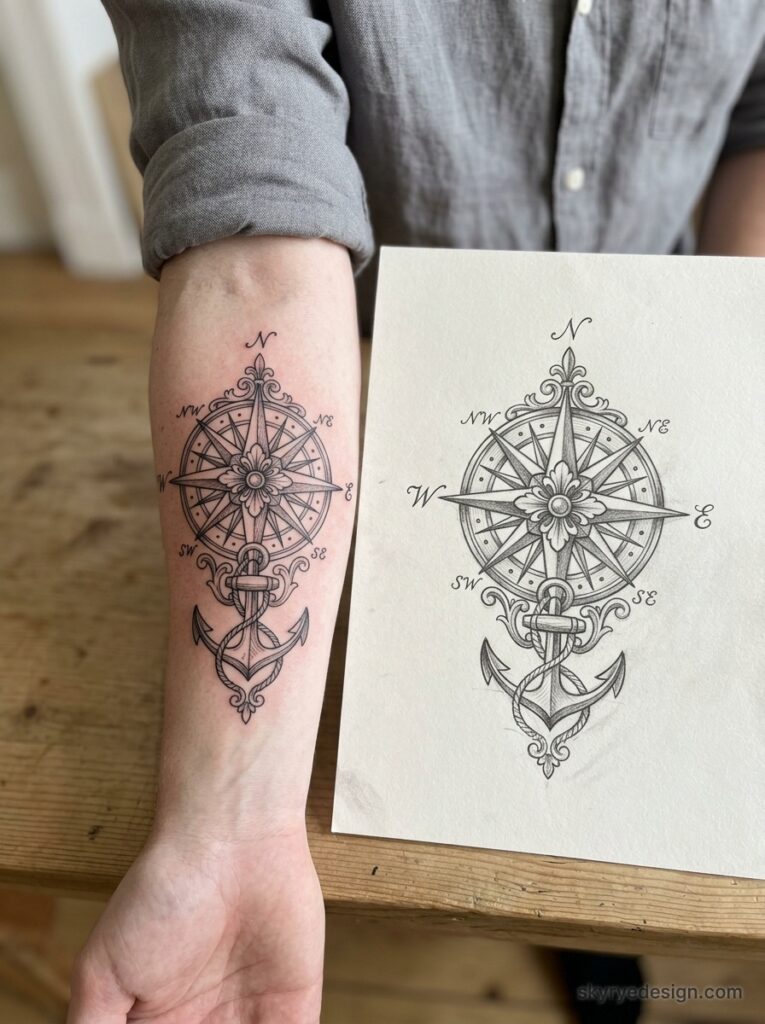
A full compass rose — the decorative star-shaped design used on old nautical charts — rendered in the style of 16th-century cartography. Heavy linework, delicate interior detail, aged texture. This needs space (upper back, chest, or outer thigh) to show its detail, but executed well it’s timeless rather than trendy.
8. Coordinates With Constellation
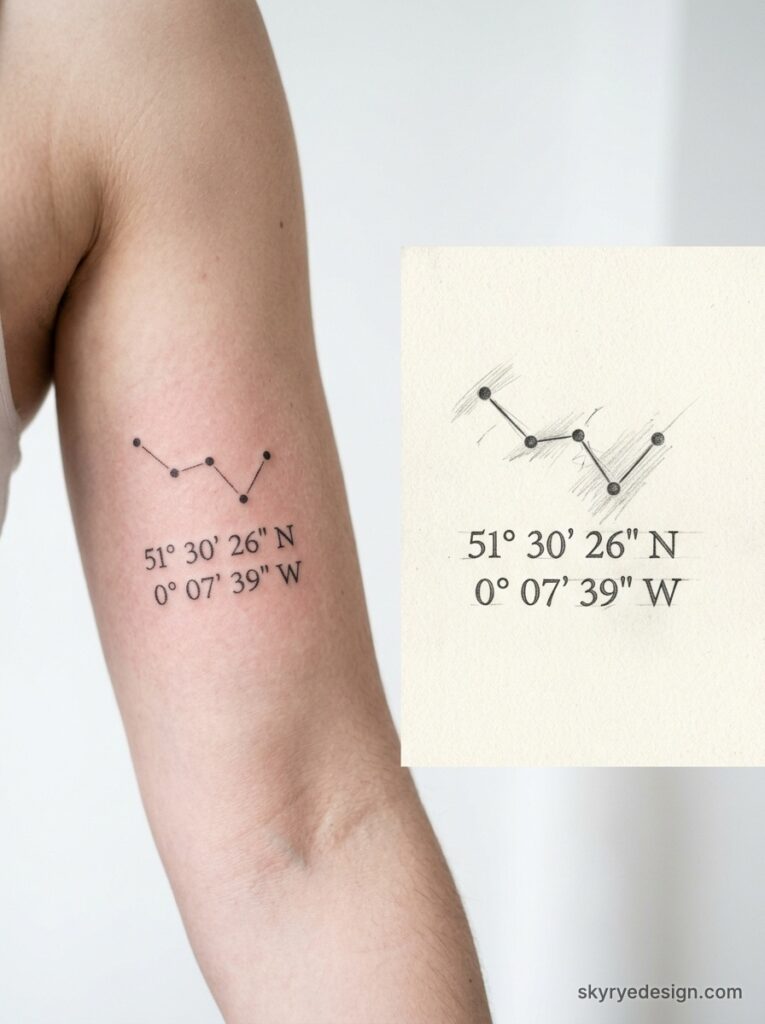
Pair coordinates with the constellation that was visible from that location on that specific night. A site like stellarium.org lets you map any night sky for any date and place. The result is a tattoo that’s doubly specific — the place and the exact moment.
9. Tiny Country Outline Filled Solid
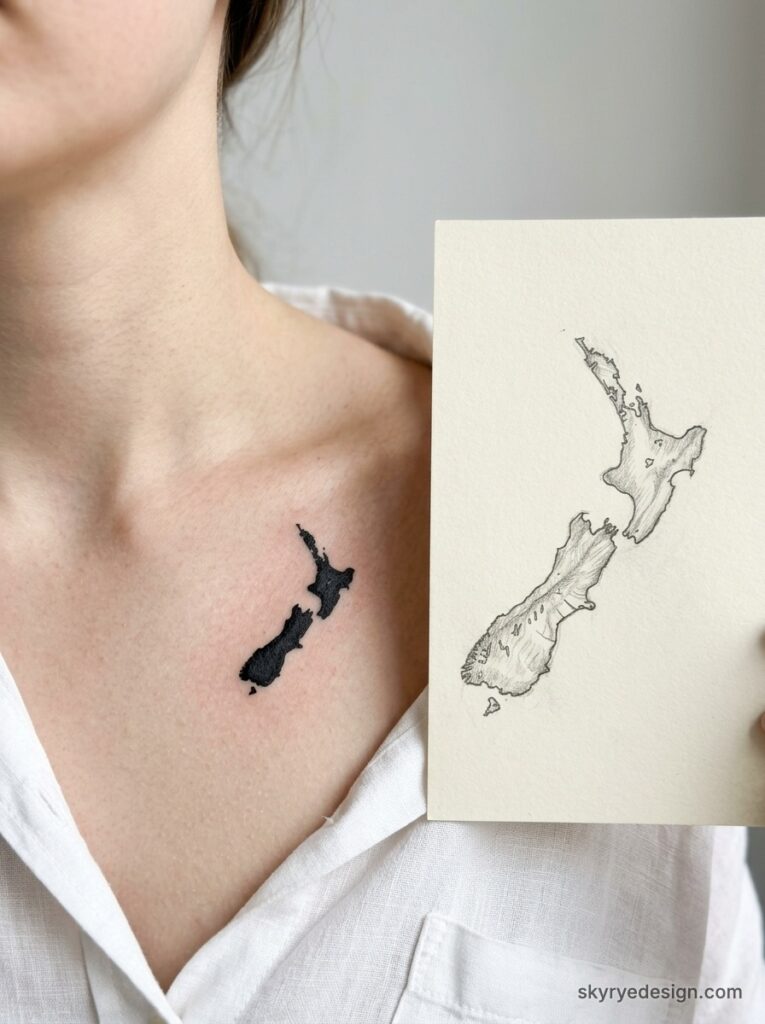
Choose one country — not necessarily the most famous place you’ve been, but the one that changed you — and get its outline filled in solid black. Uruguay. Mongolia. Iceland. The shape alone tells a story without text.
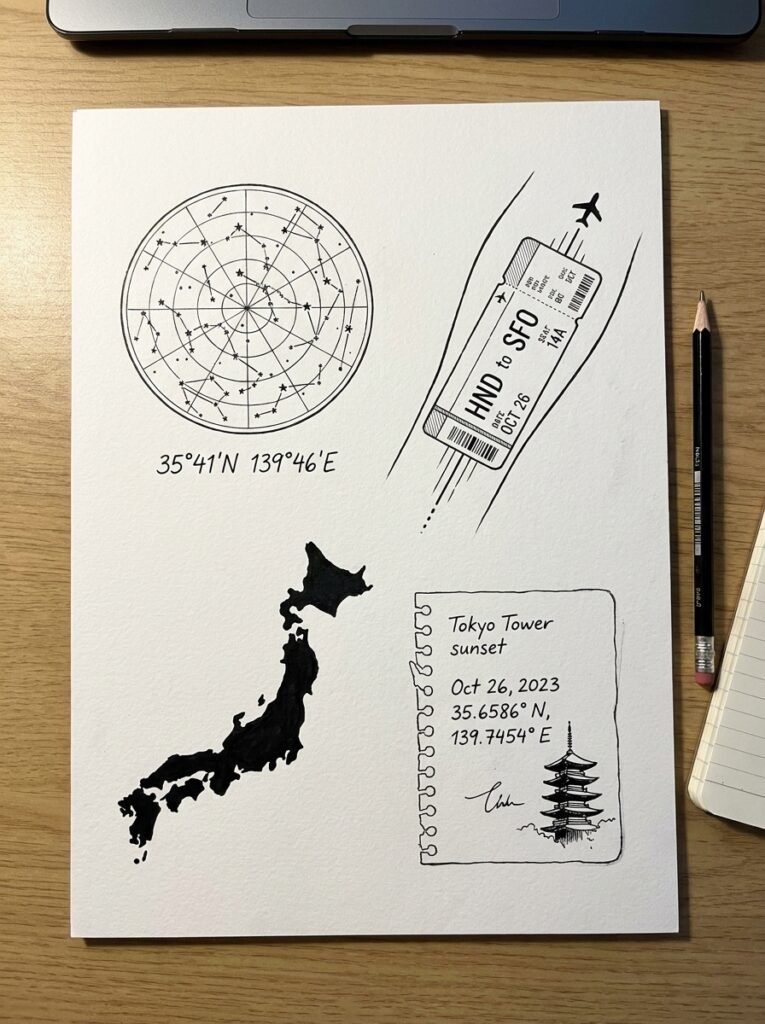
10. Travel Quote in the Writer’s Own Script
A travel quote reproduced in the actual handwriting of the person who wrote it — not a font, but a scan of the original manuscript. Neruda’s handwriting. A line from Sontag’s travel journals.
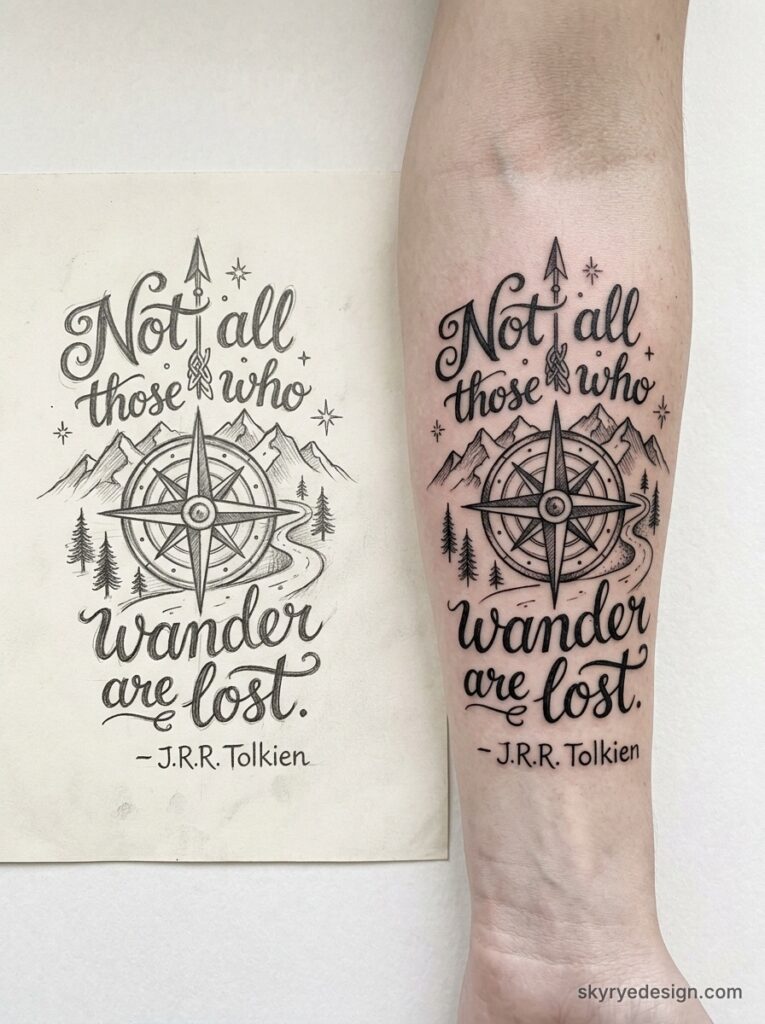
This requires sourcing the original manuscript image and working with a tattoo artist skilled in lettering. The result is a quote that carries the author’s physical presence, not just their words.
3. Travel Tattoo Styles in 2026 — Which to Choose
The style you choose changes everything about how the same idea looks, ages, and reads on your skin.
Fine Line (The Dominant Style in 2026)
Fine-line single-needle work is still the most requested style in tattoo studios globally, and for good reason: it photographs cleanly, sits elegantly on any placement, and suits the minimalist travel aesthetic perfectly.
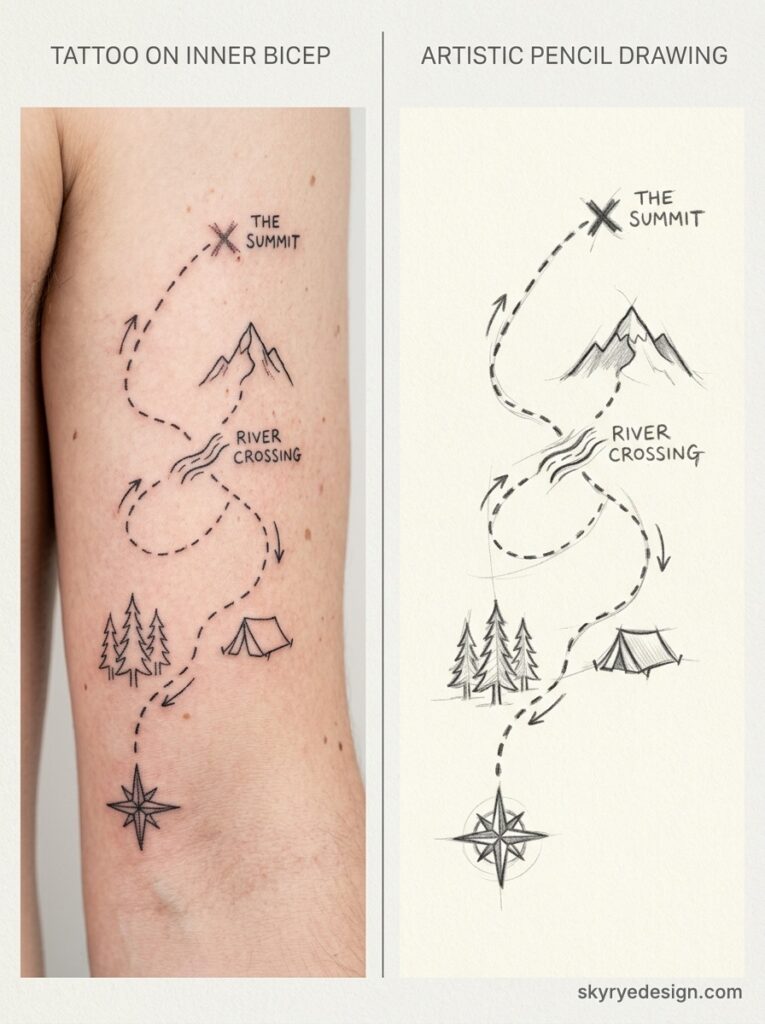
Tiny planes, micro coordinates, dashed route lines — all are naturally fine-line subjects. The catch: ultra-thin lines can blur within a few years if the needle depth isn’t precise. Always ask to see healed work before committing.
Watercolour
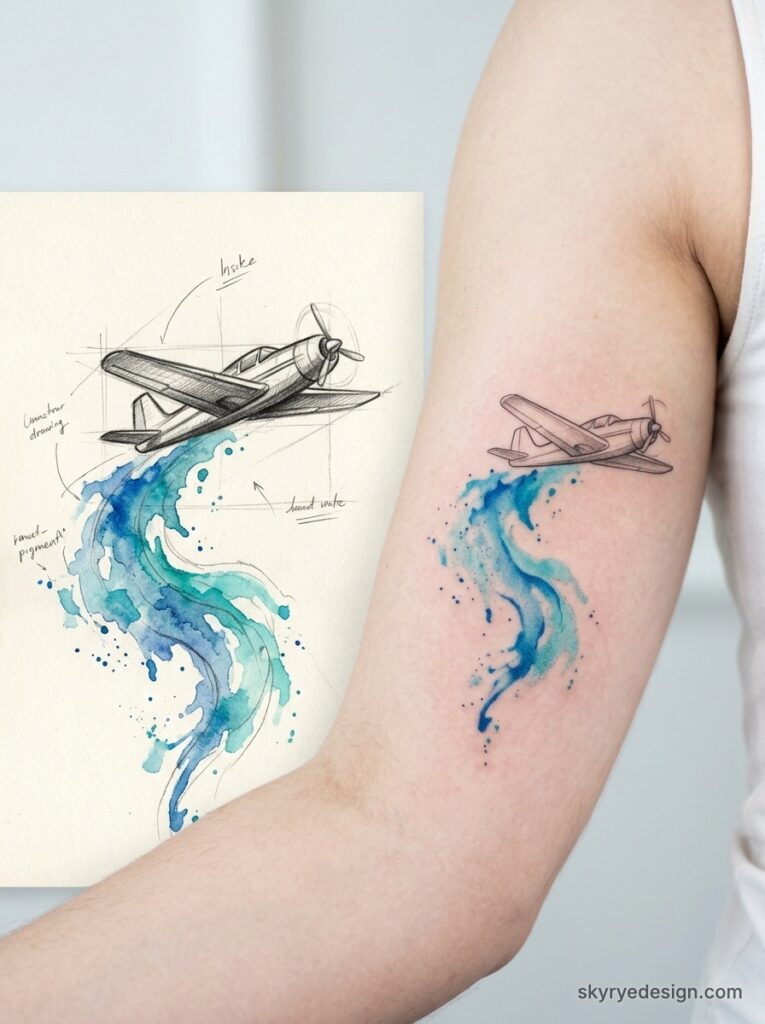
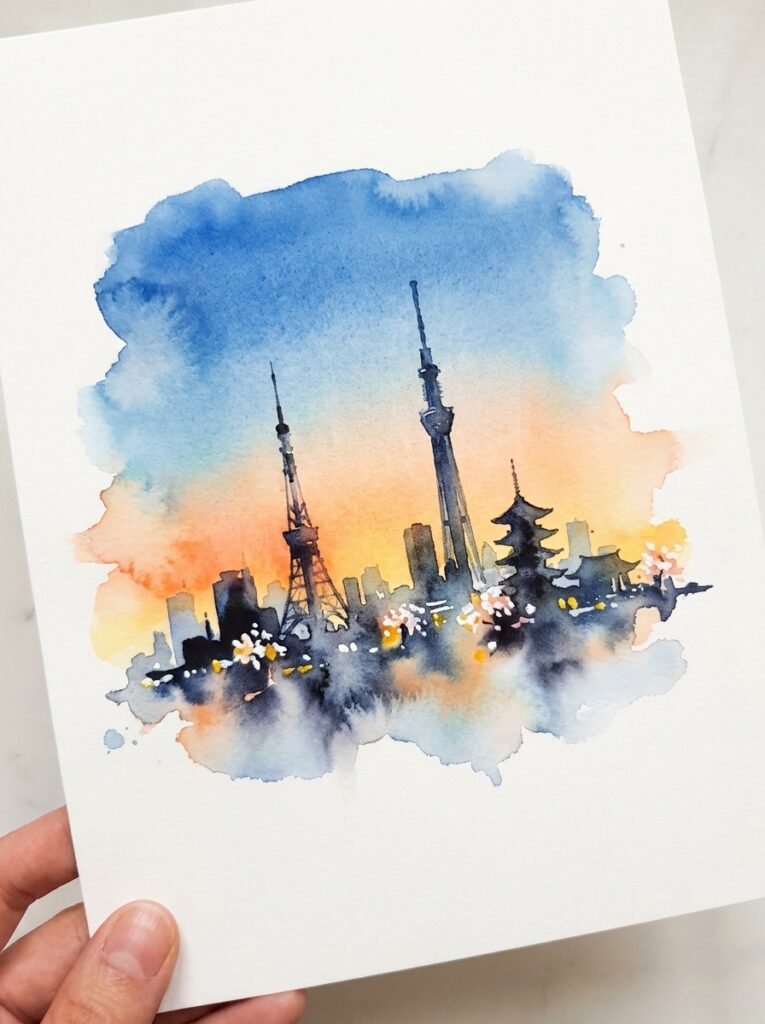
Watercolour tattoos suit travel subjects that benefit from colour and movement: skyline silhouettes, map backgrounds, and landscape horizons. The style mimics paint washes without hard outlines.
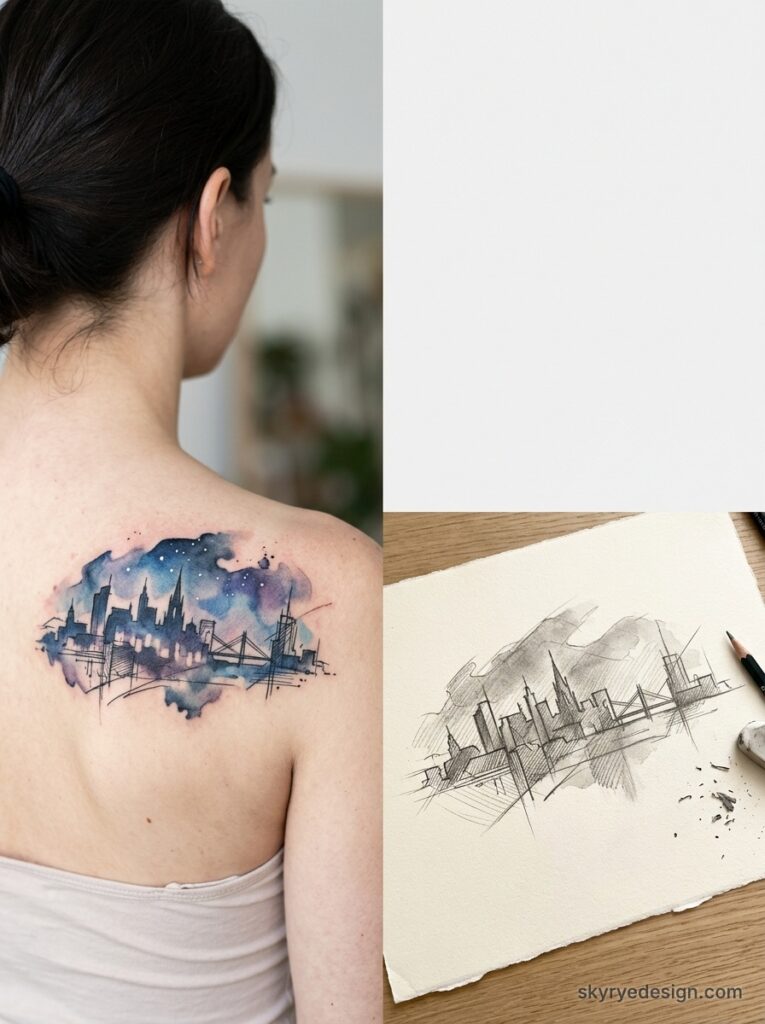
Trade-off: watercolour fades faster than black-and-grey work. Budget for a touch-up every five to seven years, and choose an artist who builds a light black-line foundation under the colour — it holds significantly better than pure pigment alone.
Geometric and Neo-Traditional
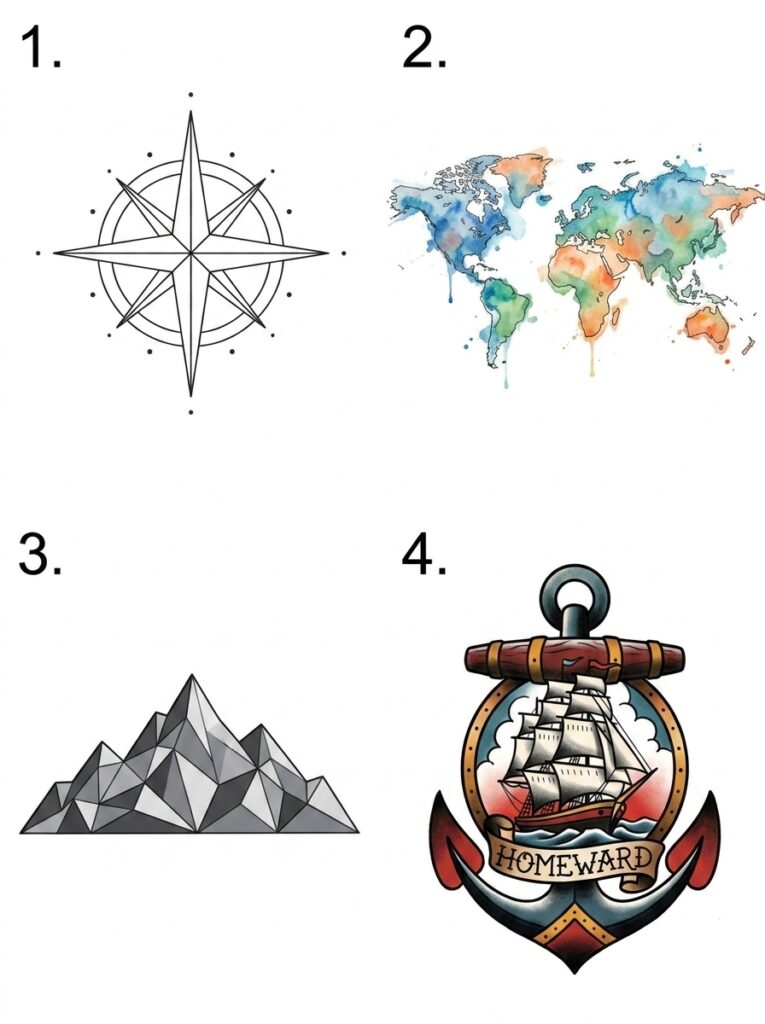
Geometric travel tattoos — compass roses with polygonal architecture, mountain ranges rendered as triangular facets — have aged from trend to established style.
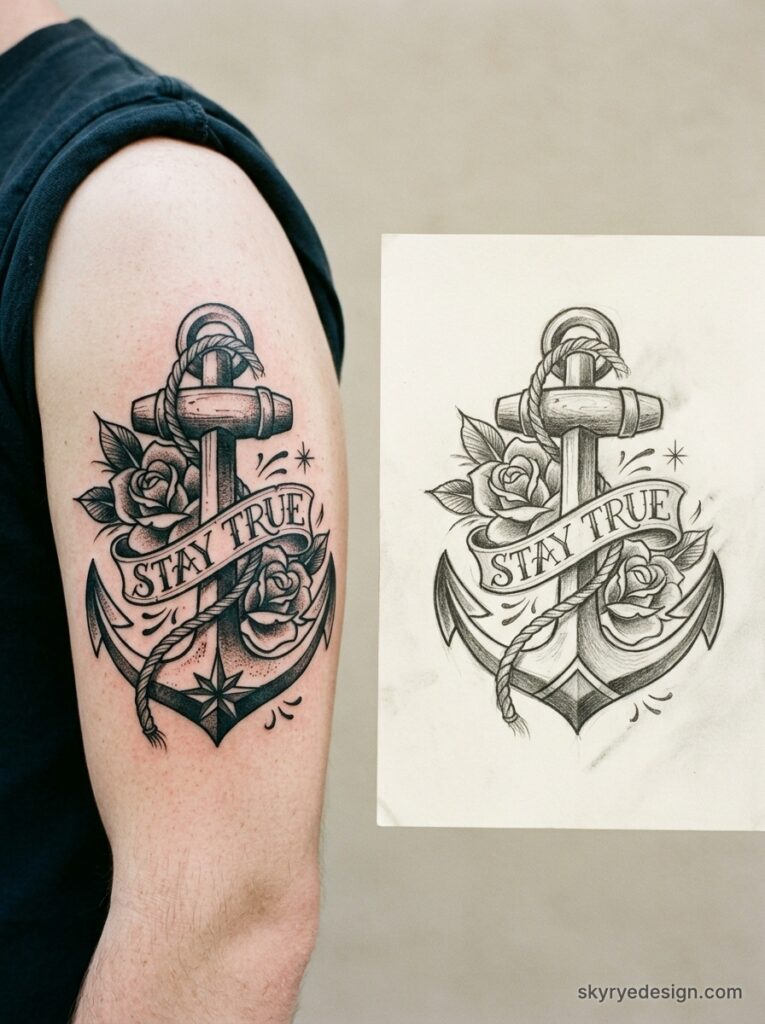
Neo-traditional brings bold outlines and limited colour back to classic travel motifs: anchors, ships, globes. These age exceptionally well — the same trait driving re-appreciation of American Traditional in 2026.
Blackwork and Dotwork
Full blackwork map tattoos make a dramatic statement. Dotwork shading on a compass or landscape creates a texture unlike any other technique.
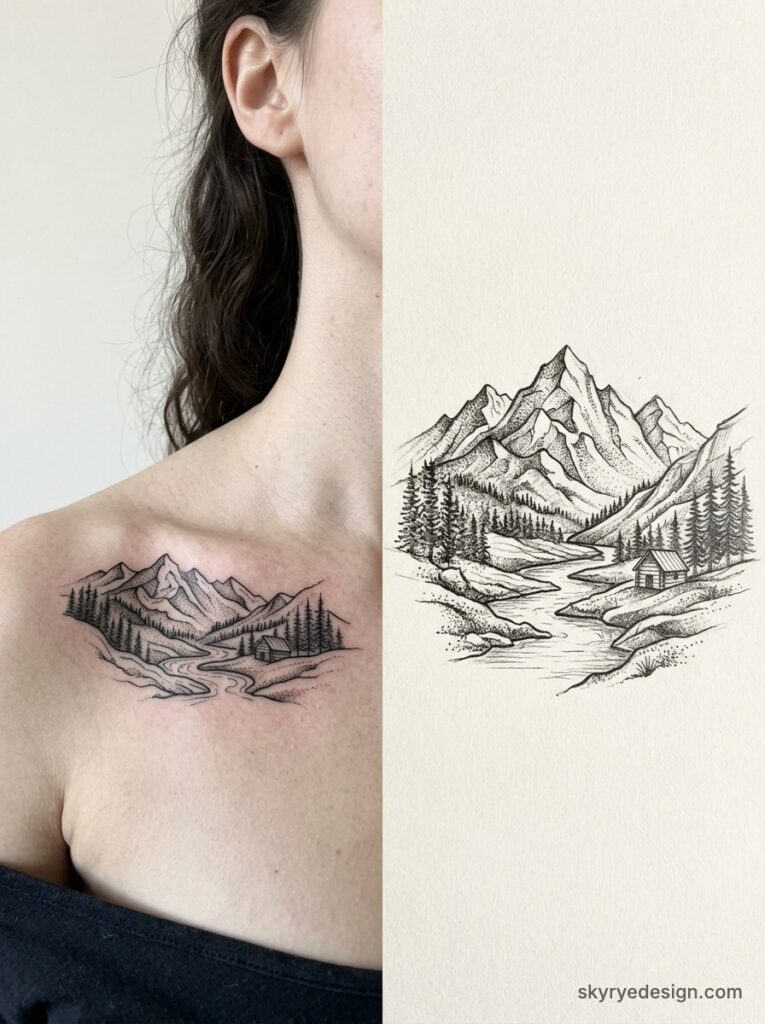
Both require artists who specialise — don’t take these to a generalist. Ask specifically for their blackwork portfolio, not their general work.
4. Placement Guide — Where to Put Your Travel Tattoo
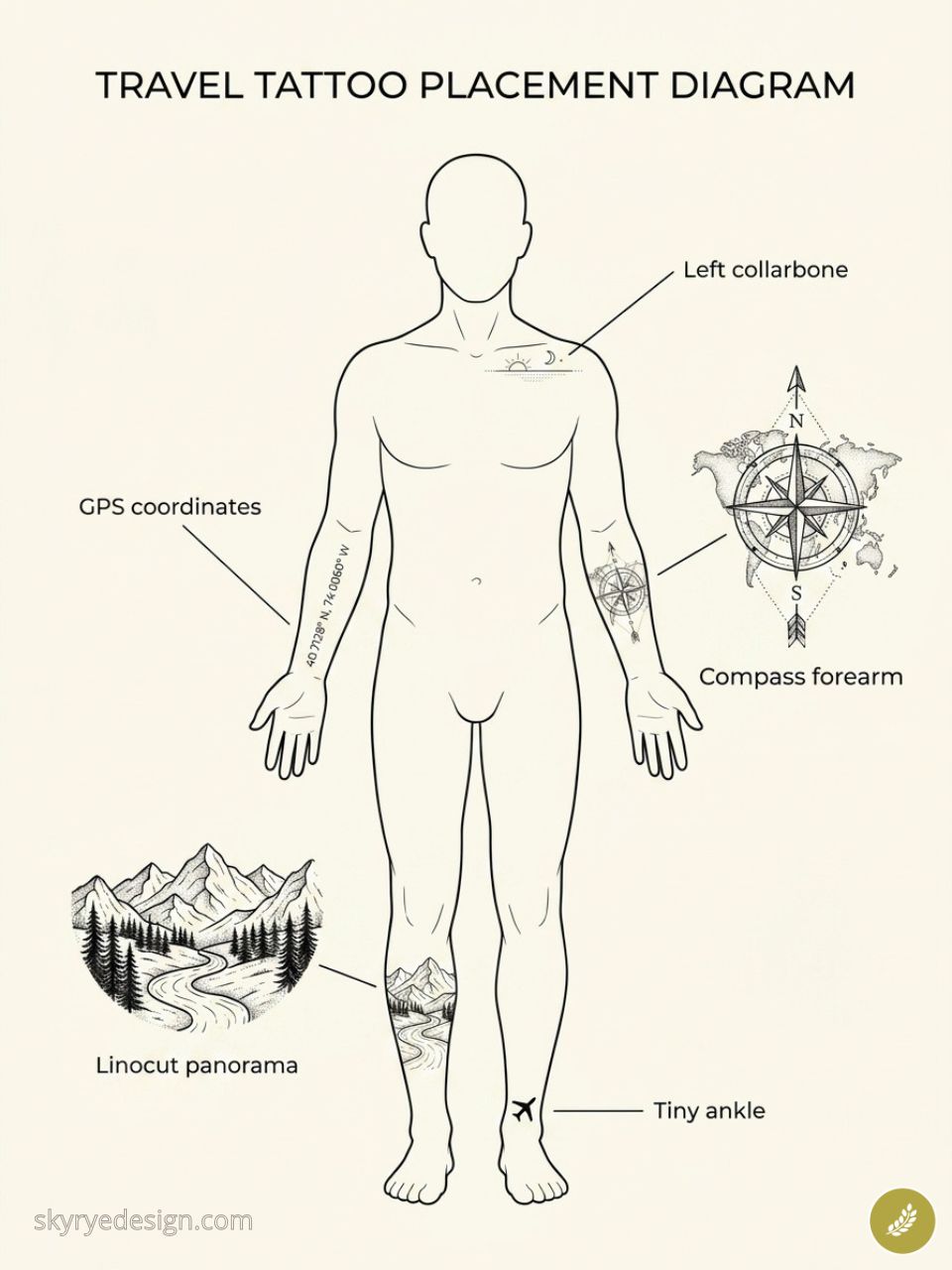
Placement shapes how a tattoo feels as much as what it looks like. Here’s how to think about it for travel-specific designs.
Small and Discreet
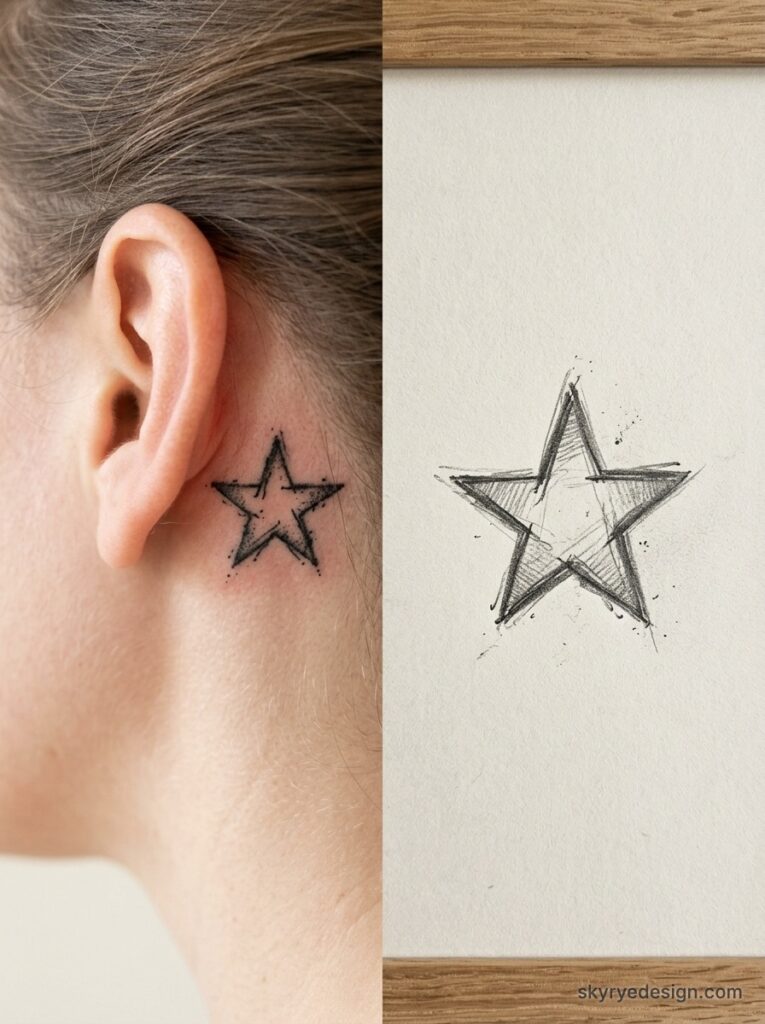
- Wrist — coordinates, tiny planes, dashed routes. Always visible to you, easily hidden with a cuff.
- Ankle — small landmark silhouettes, tiny maps, single words. The ankle bone area is excellent for curved designs.
- Behind the ear — micro-symbols only: a tiny compass needle, a single coordinate number, a star.
- Collarbone — fine-line script quotes and single-line horizon drawings. The bone’s curve gives linear designs a natural arc.
Medium
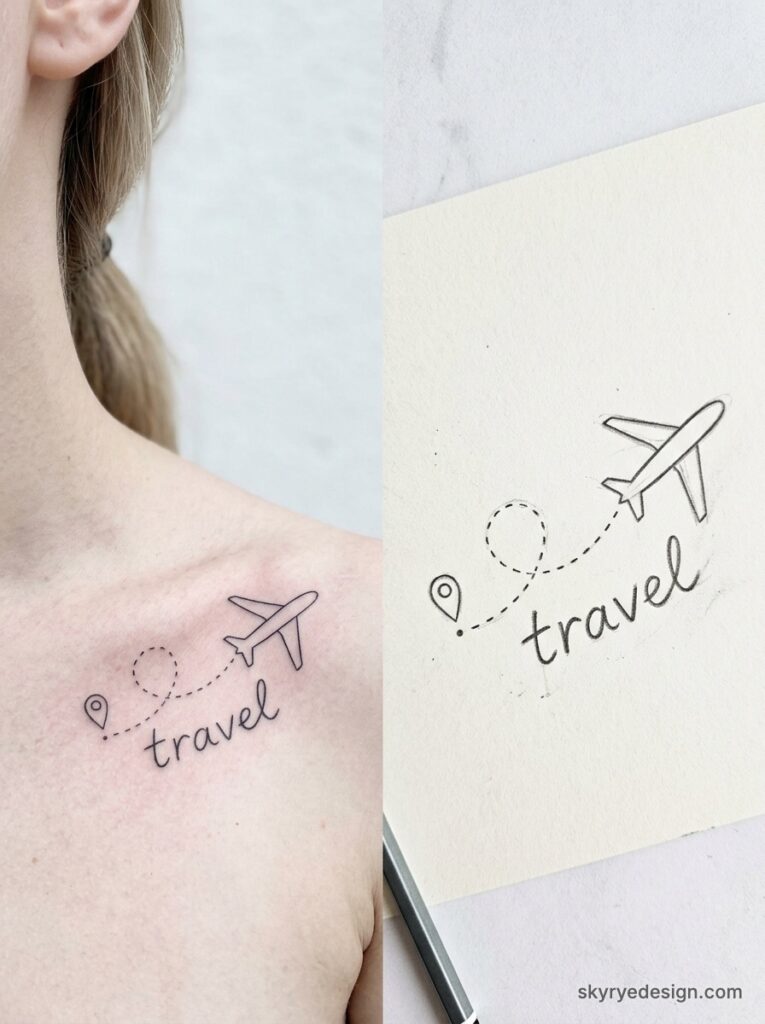
- Inner forearm — the best all-purpose placement. Flat, visible, large enough for detail. Works for everything from coordinates to passport stamps.
- Outer forearm — better for designs meant to be read by others. Modular stamp collections grow naturally toward the elbow.
- Calf — underused. Large, flat surface, excellent for landscape panoramas and elevation profiles. Ages well.
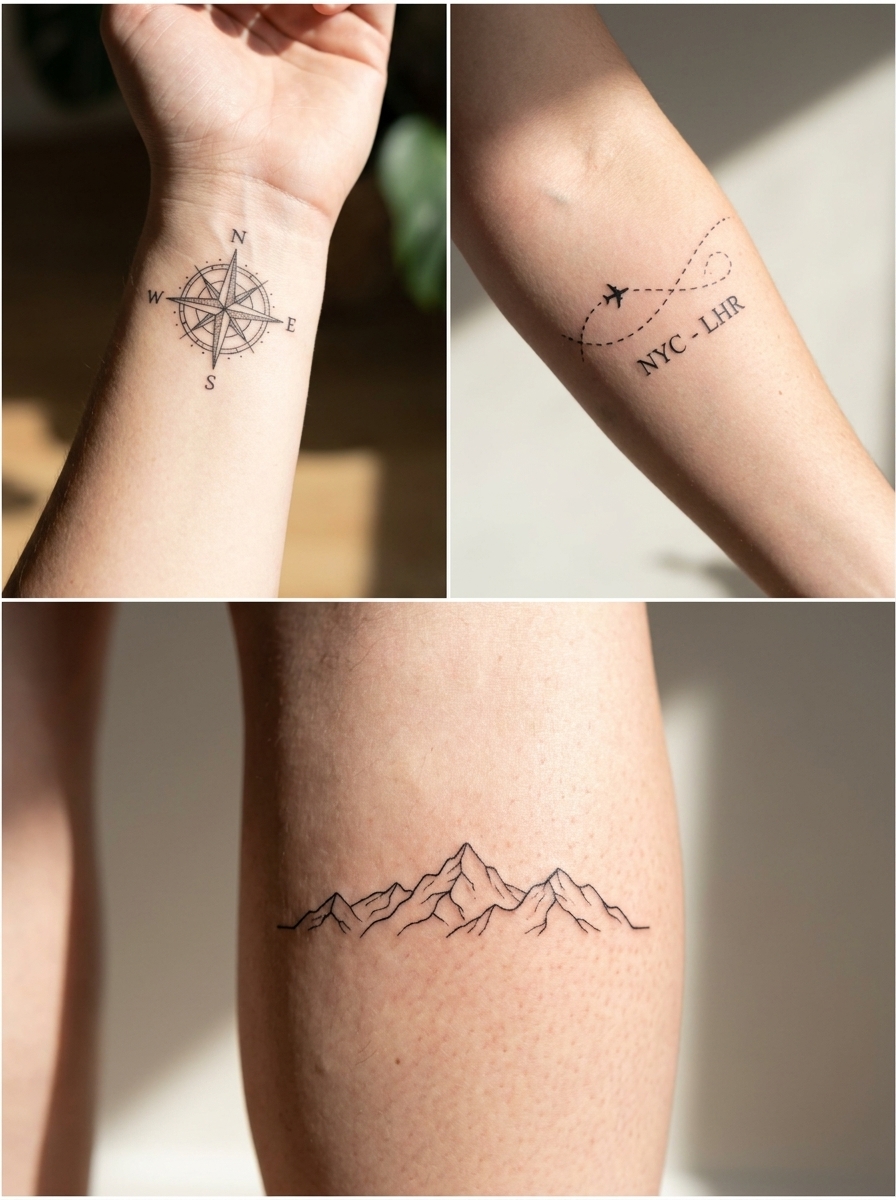
Statement
- Upper back / shoulder blade — for large compass roses, antique maps, and detailed landscape scenes. The canvas is generous.
- Ribcage — intimate, slightly painful, ideal for coordinates or quotes you want to feel rather than constantly display.
- Full sleeve — for serious travelers building a modular passport stamp or map-based collection over the years. Plan the design structure before the first session.
5. How to Make a Travel Tattoo Uniquely Yours
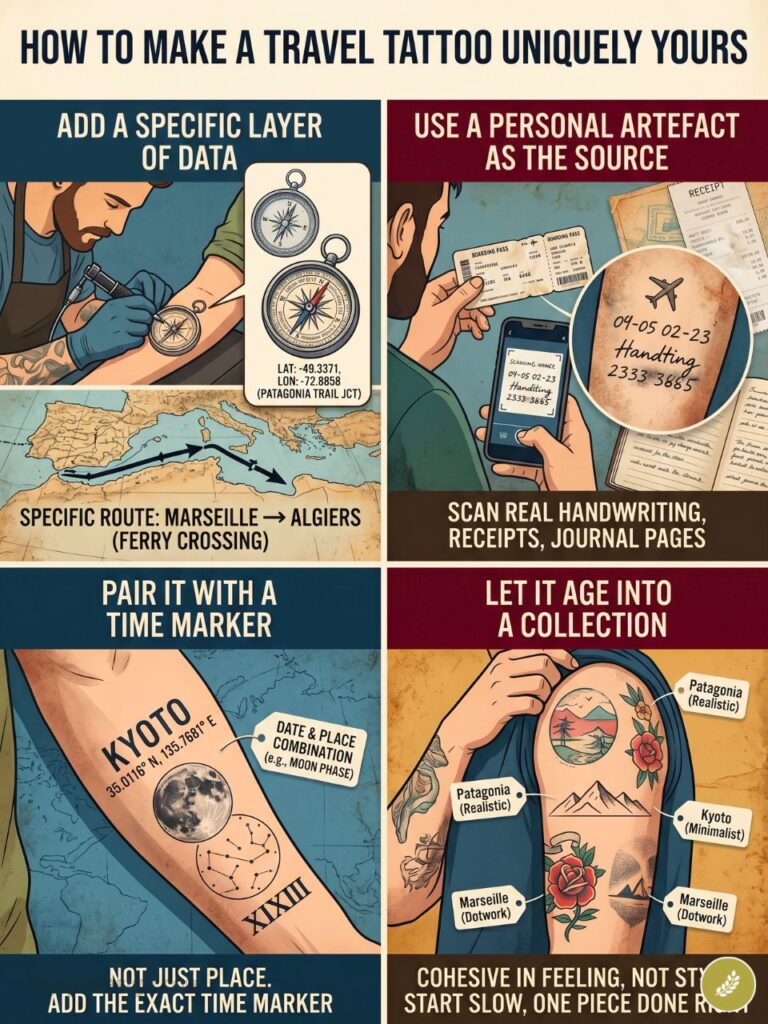
The most common complaint people have about travel tattoos five years after getting them: “It could belong to anyone.” Here’s how to make sure yours doesn’t.
Add a Specific Layer of Data
Any generic symbol becomes personal with the right data attached. A compass becomes yours when it has the coordinates of the exact trail junction where you got lost for three hours in Patagonia. A world map becomes yours when it shows the specific route you took — not “Europe” but the precise ferry crossing from Marseille to Algiers.
Use a Personal Artefact as the Source
Instead of choosing a font, scan something real — a boarding pass stub, a hotel receipt, a page from your travel journal — and incorporate the handwriting or typography from that artefact into the design. The result is a tattoo that literally carries the physical texture of the trip.
Pair It with a Time Marker
Date, not just place. The coordinates of Kyoto mean something different if they’re paired with the exact date of a solo trip taken at a turning point in your life. The date doesn’t have to be visible as numbers — a moon phase for that date, a constellation for that night sky, or a single Roman numeral that only you decode.
Let It Age Into a Collection
The best travel tattoo collections aren’t cohesive in style — they’re cohesive in feeling. Each piece was chosen carefully, placed intentionally, and represents something the person would still choose today. Start slow. One piece done right is worth more than five rushed ones.
6. What to Tell Your Tattoo Artist — And What to Avoid
A travel tattoo is only as good as the brief you give your artist. These are the things that matter.
What to Bring to the Consultation
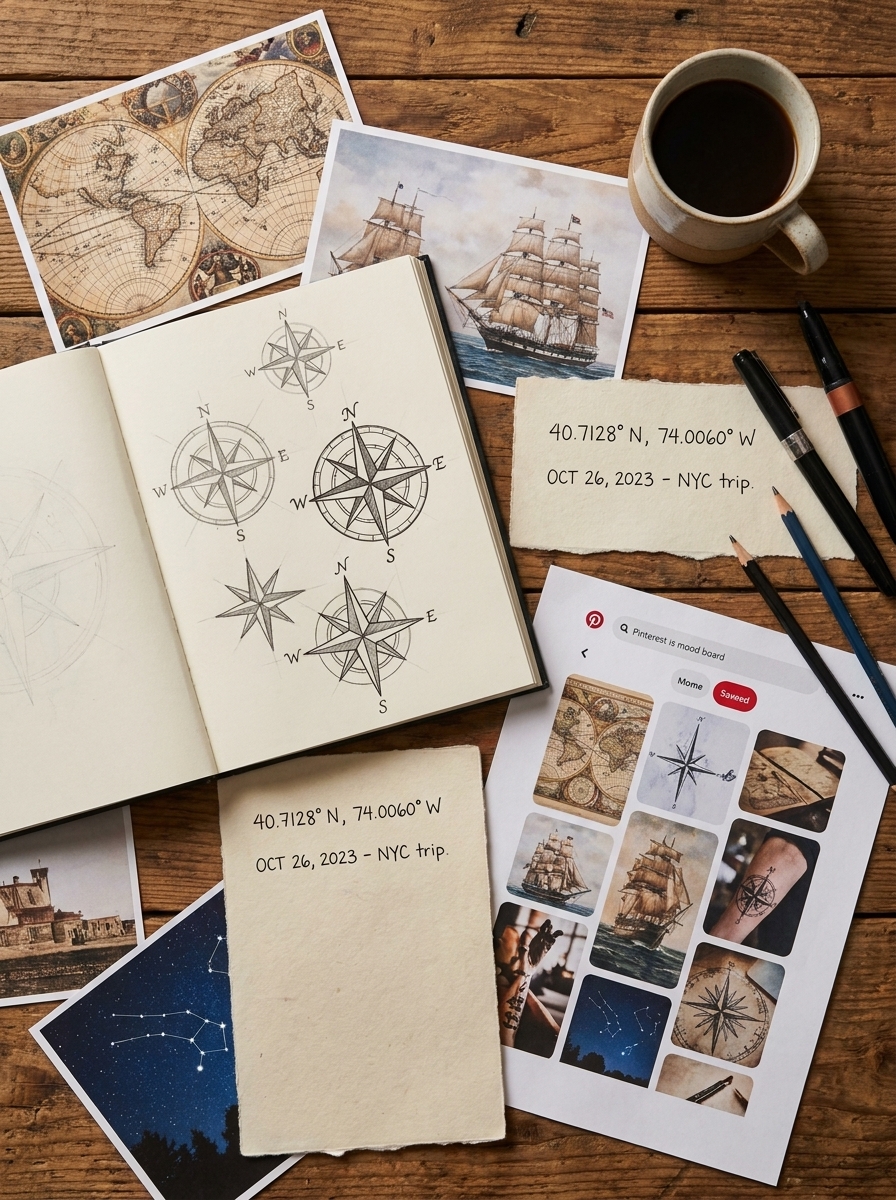
- Reference images — not to copy, but to show style direction. Pinterest boards work; be specific about which elements you want and which you don’t.
- The data — coordinates verified twice, dates double-checked, quotes proofread by someone else. Tattoo spelling errors are permanent.
- Your long-term plan — if you want to add to the piece over time (more stamps, more routes), tell the artist upfront so they leave space.
What to Avoid
Over-specifying the design. Give the artist room to interpret. The best travel tattoos come from a brief that specifies meaning and data, not an exact Pinterest image to copy.
Choosing a trend over a meaning. Fine-line airplane tattoos are everywhere in 2026. If an airplane is meaningful to you, get it. If you’re getting it because it’s popular, wait. Trends date. Meaning doesn’t.
Skipping the healed-work check. Always ask to see photos of healed tattoos from your specific artist, not just fresh work. A tattoo that looks beautiful the day it’s done can look very different six months later if technique isn’t there.
Frequently Asked Questions
What is the most popular travel tattoo?
The compass is the most popular travel tattoo globally, followed by world maps and coordinates. In 2026, fine-line compass tattoos with clean single-needle work are the most requested variation. Passport stamp sleeves are the fastest-growing trend for travelers who want a modular, expandable collection.
What do travel tattoos symbolize?
Travel tattoos symbolize movement, freedom, and the places that have shaped a person. Compasses represent direction and guidance. Coordinates mark specific meaningful places. Maps show a desire to explore the world. The most meaningful travel tattoos combine a universal symbol with personal data — specific coordinates, a real date, a handwritten quote — that makes the design impossible to replicate.
Where is the best placement for a travel tattoo?
The inner forearm is the best all-purpose placement: visible, flat, and large enough for detail. For smaller pieces, the wrist, ankle, and collarbone are clean choices. For statement pieces, the upper back, chest, and full sleeve provide the canvas for large maps and detailed vintage designs.
Do travel tattoos age well?
It depends on the style. Black-and-grey fine line and bold blackwork age best. Watercolour fades fastest — expect touch-ups every 5–7 years. The single most important factor for longevity is artist skill: correct needle depth preserves fine lines for decades. Always check healed work before booking.
How much does a travel tattoo cost?
Small fine-line travel tattoos (coordinates, tiny symbols) typically run $80–$200 at a reputable studio. A detailed compass or mid-sized map piece runs $300–$600. Full sleeve map work from a specialist artist can reach $2,000–$5,000+, depending on the artist’s rate and number of sessions. Never choose a tattoo artist primarily on price.
Can I add to a travel tattoo over time?
Yes — modular travel tattoo designs like passport stamp sleeves and route maps are designed to grow. Tell your artist upfront that you plan to add to the piece so they can leave space and maintain consistent line weight and style across future sessions.
Your Travel Story Deserves Permanent Ink
The best travel tattoo isn’t the most technically impressive or the most trend-forward. It’s the one that still makes you stop when you catch it in a mirror ten years later — because it holds something specific: a place, a moment, a decision you made.
Start with meaning. Choose the one experience that already lives in your body as a memory — the trip that shifted something, the place you’ve returned to in your head more than anywhere else. Then find the symbol or the data point that holds that memory most precisely.
Work with an artist you trust, give them a brief that’s specific about meaning and loose about execution, and resist the pull of whatever design is trending hardest on Pinterest this month.
Your skin is a travel journal with limited pages. Use them on what’s actually true
Travel symbols often look simple until they are scaled down. A tattoo drawing reference can help you simplify maps, coordinates, compasses, mountains, or lettering so the final tattoo stays readable.
- 841shares
- Facebook0
- Pinterest841
- Twitter0
- Reddit0