The apartment I designed in my head for three years — the one with the open kitchen, the timber shelving wall, the reading corner with the good light — was in a building I couldn’t afford. Not by much. But by enough that taking it would have meant no renovation budget, no furniture budget I was happy with, and a general low-level financial anxiety that I’d watched subtly ruin beautiful spaces for other people. The rooms look right in photographs. The people living in them are quietly stressed.
I took a smaller apartment two streets away. Less impressive from the outside. But the monthly cost was 22% of my take-home income rather than 31%, and that 9-point difference turned out to be the entire design budget. Within eighteen months the smaller apartment had the shelving wall, the good reading light, a kitchen I’d specified carefully, and no financial anxiety about any of it. The space worked because the financial structure underneath it worked. That sequence — finances first, then design — is something I’ve believed in professionally ever since.
This is a guide for anyone designing a life that includes a home they actually want to be in. Not a guide for minimising your ambitions or accepting a compromise you’ll resent — but for understanding that the financial decisions you make early, particularly around housing, directly determine how much creative and financial freedom you have for everything else. The mortgage type, the debt-to-income ratio, the renovation sequencing: these are design decisions as much as the finishes and the furniture.
How Mortgage Choices Shape Everyday Life
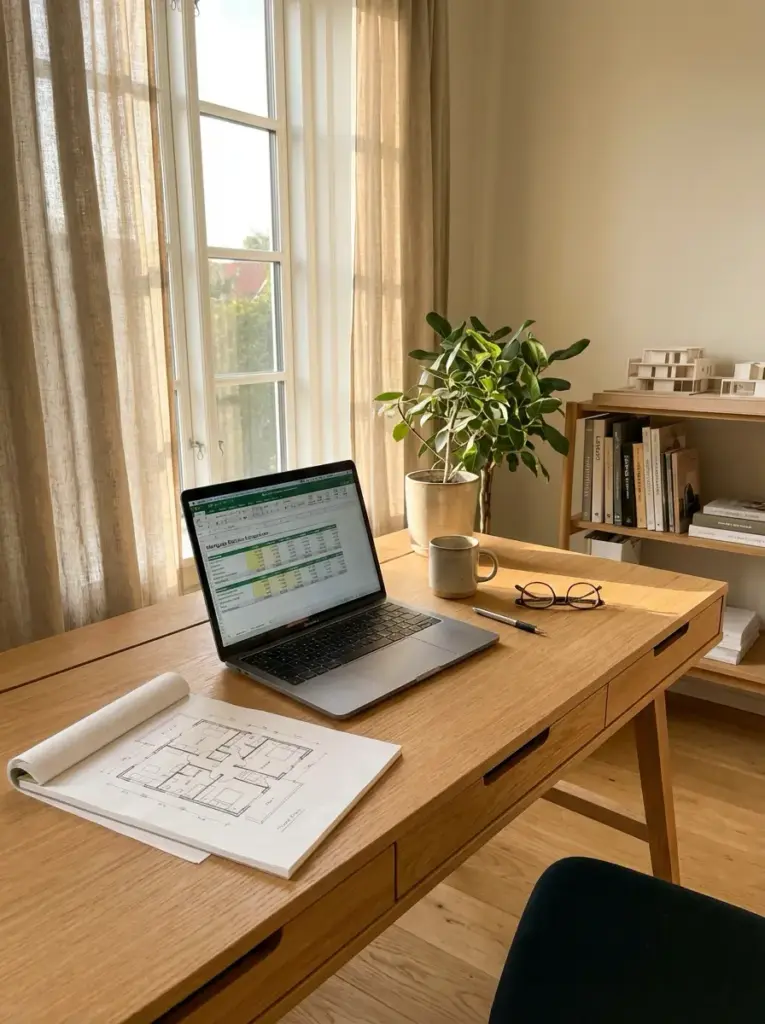
The type of mortgage you choose can influence more than just your monthly payment. It affects how predictable your expenses are, how much flexibility you have in your budget, and how much of your income remains available for the things that make a home feel like yours — the furniture decisions, the renovation priorities, the small improvements that accumulate into a space you’re genuinely proud of.
Some loans offer stability through fixed rates that hold for the life of the loan — you know exactly what you’ll pay in month one and in year twenty-nine. Others provide lower initial costs with adjustments at defined intervals, which can align well with specific life plans but carries the risk of payment increases when those intervals arrive. Understanding how these structures work isn’t just a financial exercise — it’s a planning exercise for the life you want to build in the home you’re buying.
Fixed-Rate Mortgages: The Stability Case
A 30-year fixed mortgage offers one thing above all else: complete payment predictability for three decades. Your principal and interest payment is set at closing and doesn’t change regardless of what happens to interest rates in the broader market. For homeowners who plan to stay long-term, who value budget certainty, or who are in a rate environment where fixed rates are historically reasonable, this predictability has genuine financial value. It allows multi-year renovation planning, confident saving schedules, and the ability to design a life around a number that won’t move.
Adjustable-Rate Mortgages: When Lower Initial Payments Make Sense
Adjustable-rate mortgages typically start with a fixed rate for an initial period — commonly 5, 7, or 10 years — before adjusting at defined intervals. Within the adjustable-rate category, understanding the difference between a difference between 5/1 and 5/6 ARM loans clarifies how frequently your payment can change after the fixed period ends. Both have a 5-year initial fixed rate. The 5/1 ARM adjusts once annually after that. The 5/6 ARM adjusts every six months — twice as often, which in a declining rate environment works in your favour, and in a rising rate environment means more frequent increases.
The question for any ARM is not just ‘will the rate go up?’ but ‘does my plan for this home accommodate the possibility of higher payments?’ If you have strong confidence that you’ll sell or refinance before the adjustment period begins, the lower initial rate of an ARM can translate directly into lower monthly costs and more available budget for the home improvements and design investments that actually matter to daily life. If your timeline is uncertain, the stability of a fixed rate typically outweighs the initial savings.
✏ Planning note: The breakeven calculation for fixed vs adjustable: if your ARM’s initial rate saves $300/month compared to a fixed rate, and the closing costs to refinance later are $6,000, you need 20 months of savings to cover those future refinancing costs. If you plan to stay longer than 20 months in the ARM but less than the full 30 years, the maths favours the ARM — provided the rate adjustments when they come don’t exceed what you would have paid on the fixed rate. Run this calculation with your actual numbers before deciding.
Aligning Financial Decisions With Lifestyle Goals

Designing a life you can afford means thinking beyond the present moment. It requires considering how your financial commitments will evolve alongside your personal goals — whether that’s a career shift, a growing family, pursuing creative projects, or simply the desire to renovate one room a year until the home is exactly what you want it to be. Your housing costs should leave room for those changes. When they don’t, even small adjustments can feel overwhelming.
One way to maintain flexibility is by keeping your fixed expenses within sustainable limits. The 28/36 rule — the standard industry guideline holding that housing costs should not exceed 28% of gross monthly income and total debt obligations should not exceed 36% — exists precisely because living at the limit of what a lender will approve is not the same as living at the limit of what feels sustainable. Lenders will approve mortgages up to 43-45% debt-to-income in many cases. That approval doesn’t mean 43% is a comfortable place to live.
The gap between what you’re approved for and what allows genuine financial breathing room is exactly where design investment lives. A household spending 43% of income on housing debt has almost no budget for renovation, no meaningful emergency fund, and no flexibility for the furniture and finishing decisions that turn a house into a home. A household at 26-28% has surplus that funds all of those things gradually and enjoyably. The design of the home you live in is directly constrained by the financial structure you chose when you bought it.
Lifestyle Considerations That Should Drive Mortgage Choice
- Expected tenure: How long do you genuinely expect to stay? Under 5 years, an ARM’s lower initial rate likely pays off. Over 10 years, fixed-rate predictability becomes more valuable as the adjustment risk compounds.
- Income stability: Variable income (freelance, commission, self-employment) argues strongly for a fixed-rate mortgage — the one certain expense in your budget should not also be variable.
- Renovation plans: If you intend to invest significantly in the property, keeping the mortgage payment manageable preserves the budget to do so. A stretched mortgage that leaves no renovation budget purchases the property but not the home.
- Career and relocation plans: Known relocations within the adjustment period of an ARM can make it the better financial choice. Uncertain relocations argue for fixed-rate stability.
- Rate environment: Buying when fixed rates are historically elevated (above 6-7%) and expecting eventual rate normalisation is a credible argument for an ARM or for a shorter fixed period. Buying at historically low rates is a strong argument for locking them in with a 30-year fixed.
Balancing Design Aspirations With Financial Reality
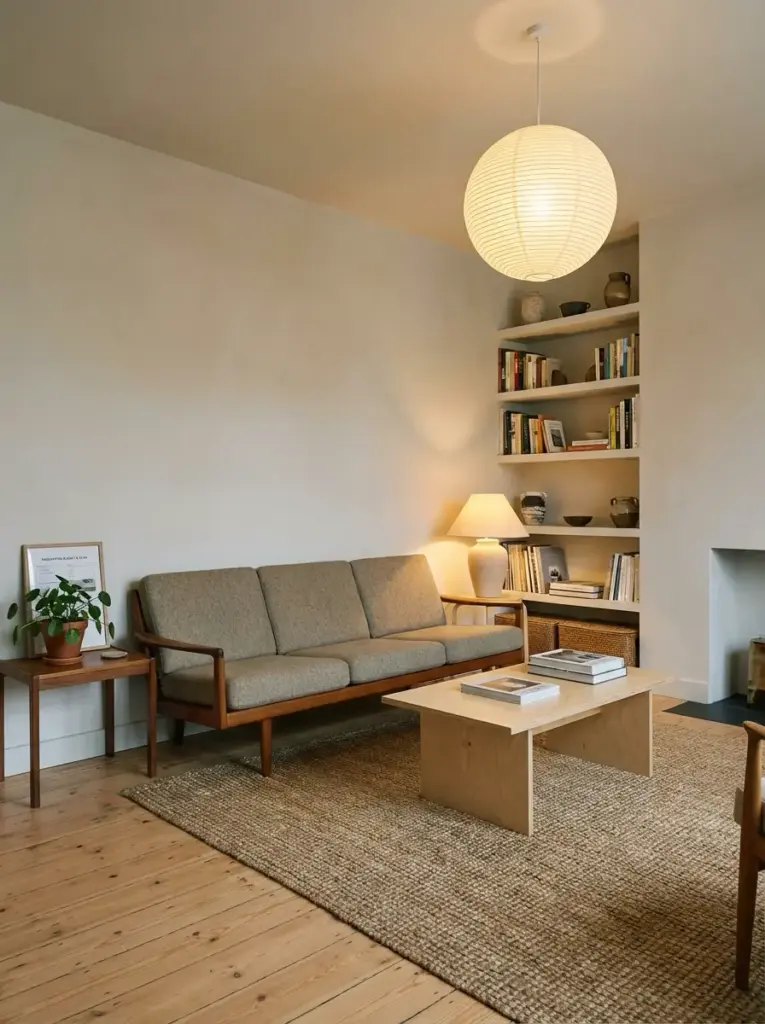
It’s easy to get caught up in the visual and emotional appeal of a home. Open layouts, natural light, carefully considered material palettes, quality fixtures — these things matter genuinely, both aesthetically and for daily quality of life. The research on residential environment and wellbeing is consistent: people who live in spaces they find beautiful and functional report higher overall life satisfaction than those who don’t. The design of your home is not a vanity; it’s an investment in how you experience your daily life.
But the same research consistently shows that financial anxiety about housing undermines the psychological benefits of good design. A beautifully renovated kitchen that was funded by maxing out a home equity line, creating monthly payments that cause ongoing stress, does not deliver the wellbeing improvement that a kitchen renovation should. The financial structure underneath the design decision determines whether the design delivers its intended benefit. This is why financial planning and design planning are the same conversation, not separate ones.
The Phased Renovation Approach
The most sustainable approach to home design investment is phased renovation: prioritise structural and functional improvements first, then cosmetic and aesthetic upgrades as equity builds and budget allows. In practical terms: year one should address anything that affects the property’s integrity or your immediate liveability (roof, HVAC, electrical, plumbing, insulation). Year two onward is where design investment begins — kitchen updates, bathroom renovations, flooring, paint, lighting. This sequencing protects you from discovering a $15,000 roof repair at the same moment you’ve committed your renovation budget to a kitchen.
- Prioritise essential features over purely aesthetic upgrades — a functioning HVAC system improves daily life more than a designer light fixture. Address the necessities before the preferences.
- Plan renovations in phases rather than all at once — phased renovations allow learning from early decisions, adjusting the plan as the space reveals itself, and maintaining financial resilience throughout.
- Allocate a maintenance reserve of 1-2% of property value annually — $6,000-$12,000 on a $600,000 property. This is not renovation budget; it’s insurance against the repairs that arrive without notice.
- Avoid stretching the purchase budget for non-essential additions — an extra $50,000 on the purchase price at 6.5% interest adds $316/month to the mortgage payment for 30 years. That $316/month, retained, funds significant annual design investment.
✏ Planning note: Before committing to any renovation, calculate what the same money earns over 5 years as home equity through principal paydown versus as a design investment that adds to the property’s value or your enjoyment of it. Neither answer is automatically right — but the comparison makes the decision deliberate rather than emotional. A kitchen renovation that adds $40,000 to the property’s value and transforms your daily cooking experience is a different investment than one that costs $40,000 and adds $15,000 in value but is used twice a year for dinner parties.
Building a Foundation for Long-Term Stability
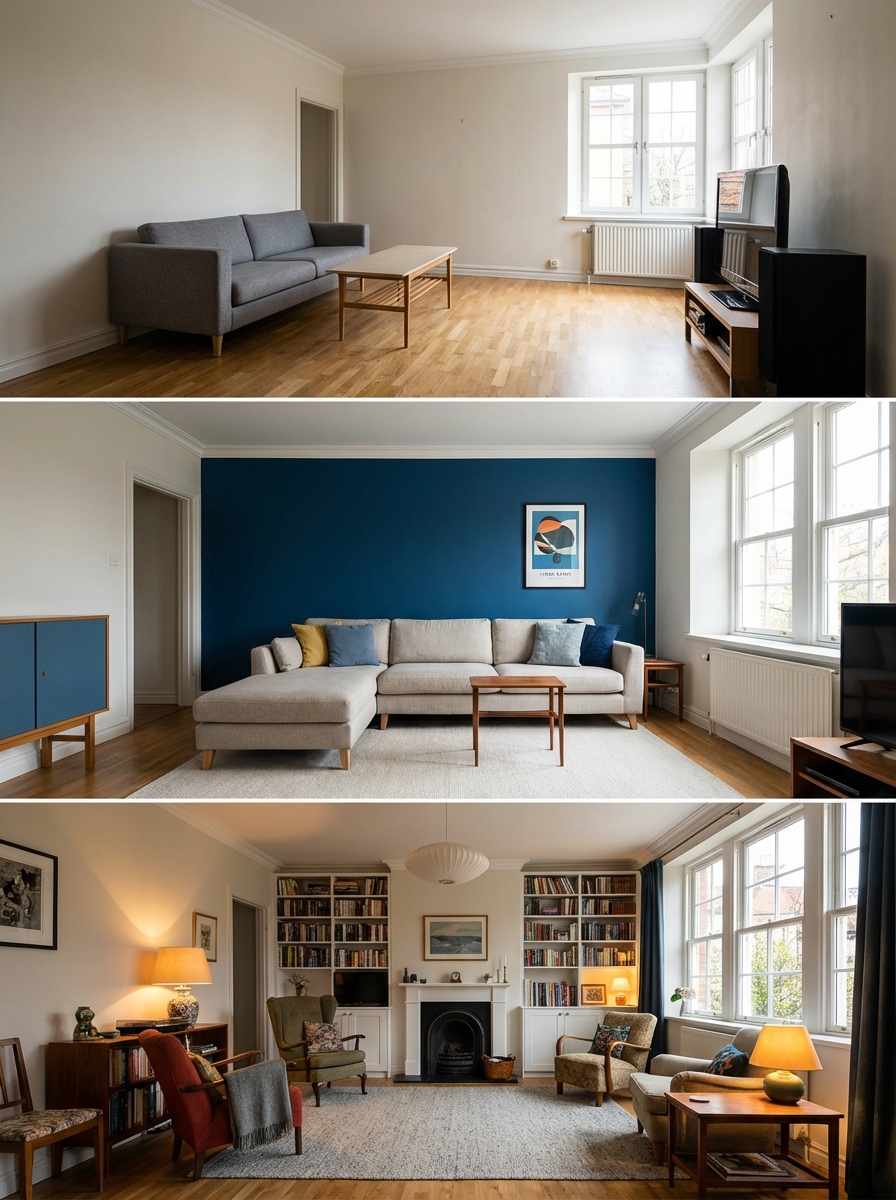
Long-term financial stability in housing doesn’t happen by accident. It’s the result of consistent, intentional decisions made early — and the willingness to revisit those decisions as circumstances change. Your mortgage is one of the most significant of those decisions, but it sits within a broader financial picture that includes savings rate, emergency fund, investment allocation, and the ongoing cost of maintaining and improving the property.
Periodically reviewing your financial position relative to your housing costs is valuable not just as an accounting exercise but as a design planning exercise. When equity has built sufficiently, renovation options that weren’t available at purchase become accessible — a home equity line of credit at a rate well below personal loan rates, or a cash-out refinance in a falling rate environment. Understanding these options means you can plan design investments that align with when they’ll be financially available, rather than being surprised by either the opportunity or its cost.
The goal is not a life constrained by financial caution — it’s a life where financial decisions have been made thoughtfully enough that design and lifestyle choices can be made freely. When your housing cost is genuinely sustainable, the renovation you do is satisfying rather than stressful. The furniture you buy feels like an investment in your environment rather than a guilty extravagance. The home you live in reflects who you are and what you value, because you’ve built the financial foundation that allows it to.
That foundation is what separates a house from a home that genuinely works. And it starts not with the floor plan or the finishes, but with understanding — clearly and honestly — what you can afford to sustain over time, and building from there.
FAQ: Financial Planning and Home Design
Q: What is the difference between a 5/1 and 5/6 ARM?
Both are adjustable-rate mortgages with a 5-year fixed initial period. After that: a 5/1 ARM adjusts annually; a 5/6 ARM adjusts every six months. The 5/6 adjusts twice as often — which benefits you in declining rate environments but means more frequent increases when rates rise. For buyers with clear 5-7 year tenure plans, either can work well. For uncertain timelines, a fixed rate typically offers more protection.
Q: How much of my income should go toward housing costs?
The standard guideline is the 28/36 rule: housing costs (principal, interest, taxes, insurance) should not exceed 28% of gross monthly income; total debt obligations should not exceed 36%. Lenders may approve up to 43-45% debt-to-income, but staying below 36% preserves meaningful budget for savings, emergencies, and the design and renovation investments that make a home genuinely yours.
Q: When does an adjustable-rate mortgage make sense?
An ARM makes sense when you have a credible plan to sell or refinance before the adjustment period begins. Common scenarios: certain relocation within 5-7 years, expected income growth enabling a future refinance, or buying in a high-rate environment expecting eventual rate normalisation. The risk: if you stay longer than planned, adjustments can increase payments significantly. Uncertain timelines argue for fixed-rate stability.
Q: How do I balance home design investment with financial stability?
Phased renovation: structural and functional first (year one), cosmetic and design upgrades as equity builds (years two onwards). Maintain a separate 1-2% annual maintenance reserve — not renovation budget, but protection against unplanned repairs. Design investments made within a stable financial framework are genuinely enjoyable; the same investments made under financial strain produce anxiety that undermines the quality of the living environment they’re meant to improve.
Q: What financial factors should I consider before buying a home?
Beyond purchase price and rate: total monthly cost including taxes, insurance, and HOA (adds 25-40% to principal and interest); maintenance reserve (0.5-2% of value annually depending on home age); expected tenure (buying costs of 8-10% of purchase price require 3-5 years to break even against renting); and career and income stability — mortgage payments are fixed obligations regardless of income changes.
- 19shares
- Facebook0
- Pinterest19
- Twitter0
- Reddit0