What is 3D printed furniture?
3D printed furniture is furniture made by additive manufacturing, where a printer builds a chair, table, stool, lamp, connector, or accessory layer by layer from a digital model. At furniture scale, the process usually uses robotic-arm FDM, selective laser sintering, large-format resin printing, concrete printing, or hybrid systems that combine printed parts with wood, metal, glass, or upholstery. The real advantage is not novelty. It is design control: complex lattice structures, custom dimensions, low-volume production, recycled materials, and digital inventory become practical without expensive molds. The trade-off is equally real: comfort, surface finish, print speed, certification, and cost still decide whether a piece belongs in a home, a gallery, or a prototype lab.
The Chair That Started in a Pile of Old Refrigerators
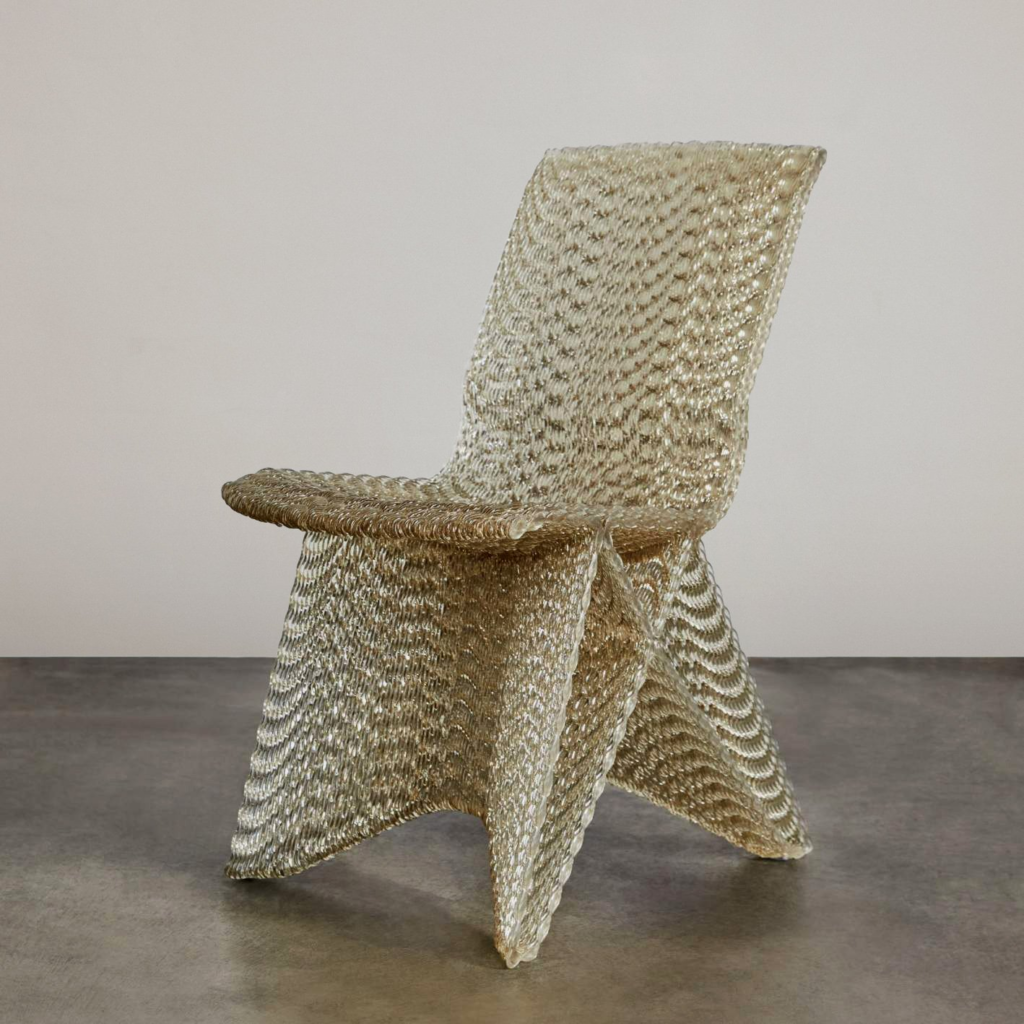
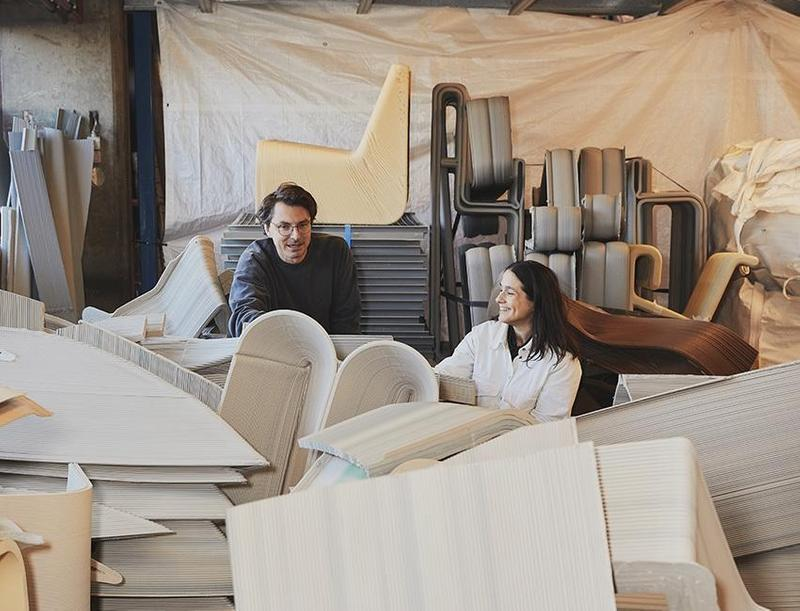
In 2011, a Dutch designer named Dirk van der Kooij wheeled an industrial robot arm into a rented studio space, attached a plastic extruder to it, and fed in the shredded insides of old fridges. Three hours later, he had a chair. Not a prototype — an actual functional chair, made from a single continuous strand of recycled plastic, layered the same way a cross-section of a tree trunk shows its rings. He called it the Endless Chair, and it won the Dutch Design Award that year.
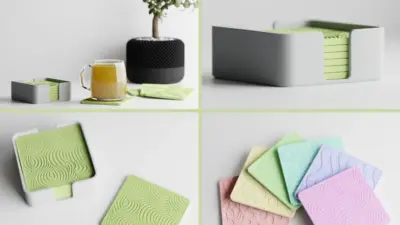
Furniture-scale prints are ambitious, so it helps to warm up with useful objects to 3D print that teach tolerances and material behavior.
I’ve been following 3D printed furniture since that story first circulated in design circles, and what’s struck me most isn’t the technology itself — it’s how slowly the furniture industry moved to catch up. For a decade, 3D printed furniture meant gallery pieces that cost more than a family car. Beautiful, technically astonishing, completely out of reach.
- What 3D Printed Furniture Actually Is (And the Three Main Methods)
- The Designers Who Are Actually Making It Work
- The Materials Revolution: From PLA to Food Waste
- What 3D Printed Furniture Can Do That Traditional Furniture Cannot.
- The Honest Limitations: What 3D Printed Furniture Still Can't Do
- What 3D Printed Furniture Looks Like in a Real Home
- Where 3D Printed Furniture Is Going in the Next Five Years
- FAQ: 3D Printed Furniture
- The Factory Is Changing, One Layer at a Time
That’s changing now. In 2026, 3D printed furniture is crossing from museum installations into actual homes — not everywhere, not cheaply, but meaningfully. The materials are better, the printing scales are larger, and a handful of designers have figured out how to make pieces that don’t look like they came out of a machine. This article is an honest look at where the technology stands, who’s doing the most interesting work, and what it realistically means for the way we furnish our spaces.
Fair warning: I’m going to tell you what 3D printed furniture can’t do as well as what it can. Because the gap between the TED Talk version and the real version is still significant, understanding it is more useful than hype.
What 3D Printed Furniture Actually Is (And the Three Main Methods)
The phrase ‘3D printed furniture’ covers several distinct processes that produce very different results. Understanding the difference matters if you’re trying to evaluate whether a piece is worth buying or whether a designer is doing something genuinely new.
Fused Deposition Modeling (FDM) — The Robot Arm Method
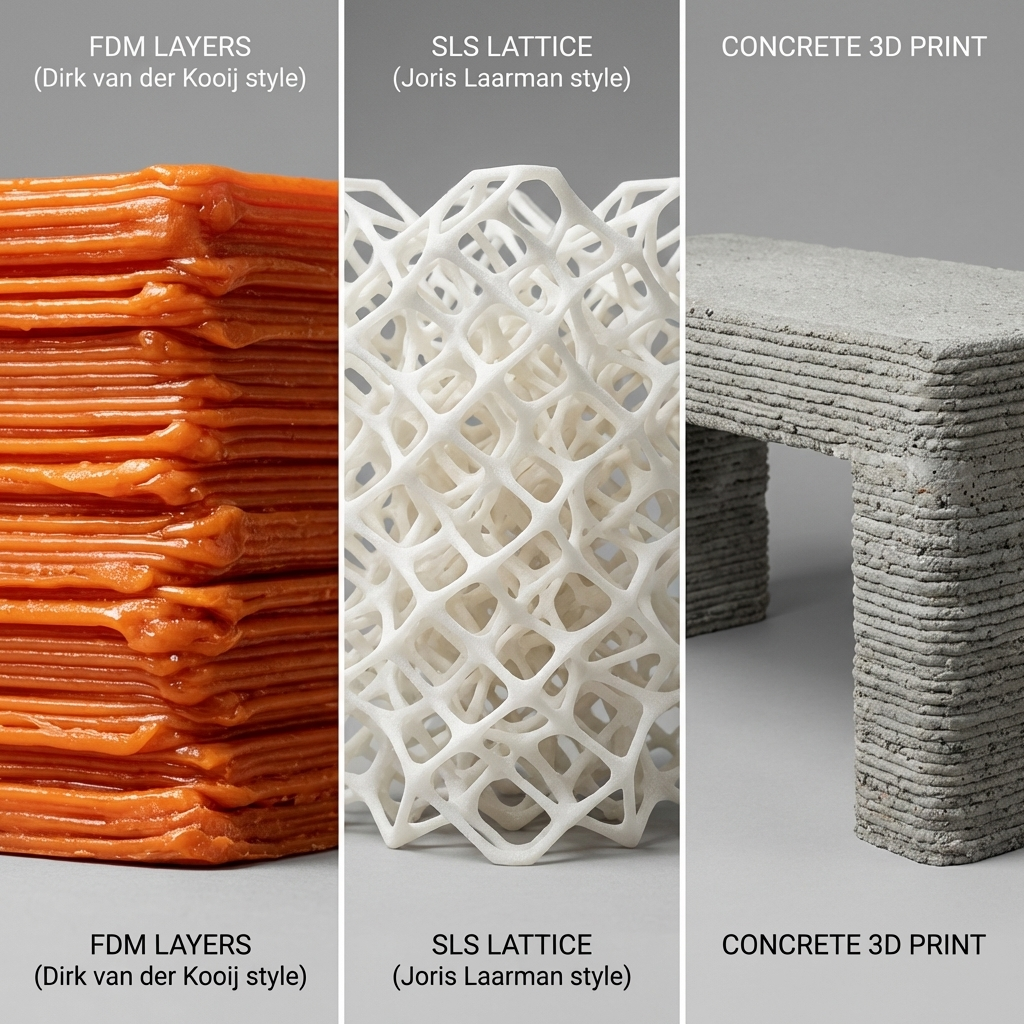
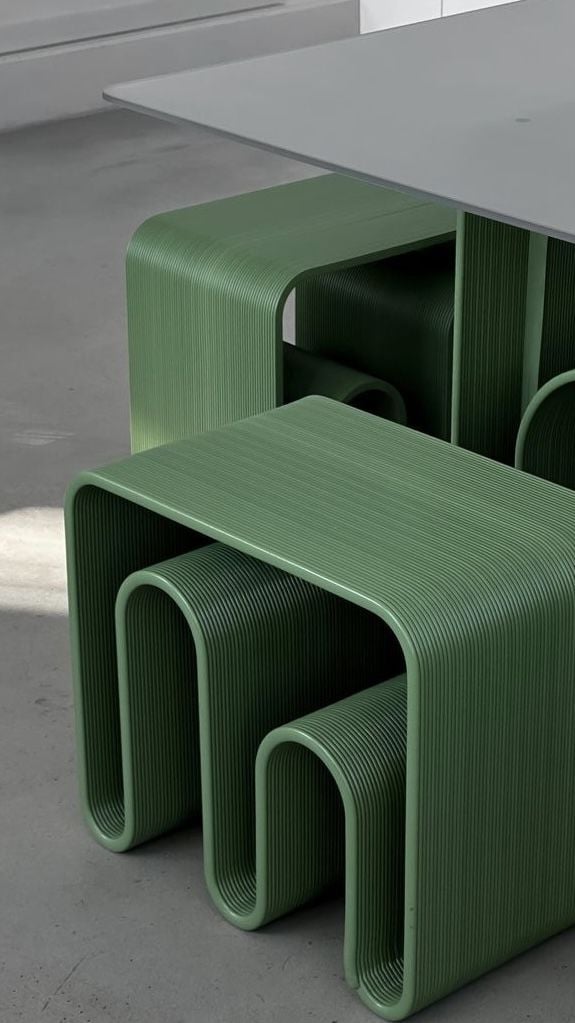
This is the process Dirk van der Kooij uses and the one that’s most responsible for what 3D printed furniture looks and feels like today. A nozzle extrudes molten material — usually plastic, but increasingly recycled polymers, bio-resins, and composite materials — in continuous layers, building up from the bottom. At the furniture scale, this typically means a robotic arm rather than a desktop printer. The characteristic layered, striated texture you see on pieces like van der Kooij’s Chubby Chair or his Melting Pot tables is a direct visual record of this process. He doesn’t try to hide it — the lines are the aesthetic.
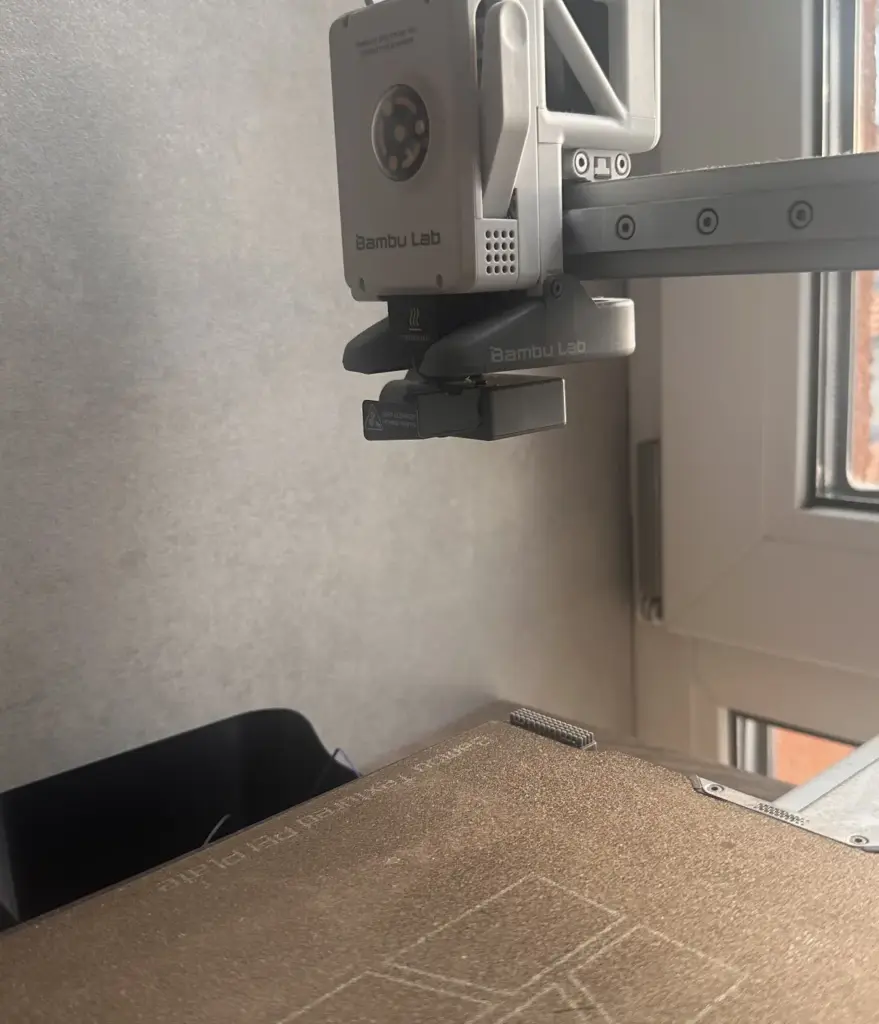
The advantage of FDM at scale: you can print large, structural pieces relatively quickly, and if your material is recycled or bio-based, the waste profile is dramatically better than injection-moulded furniture. The limitation: the resolution is low enough that fine surface detail is difficult, and load-bearing pieces require careful engineering to ensure the layer bonds are strong enough.
Selective Laser Sintering (SLS) — The Powder Method
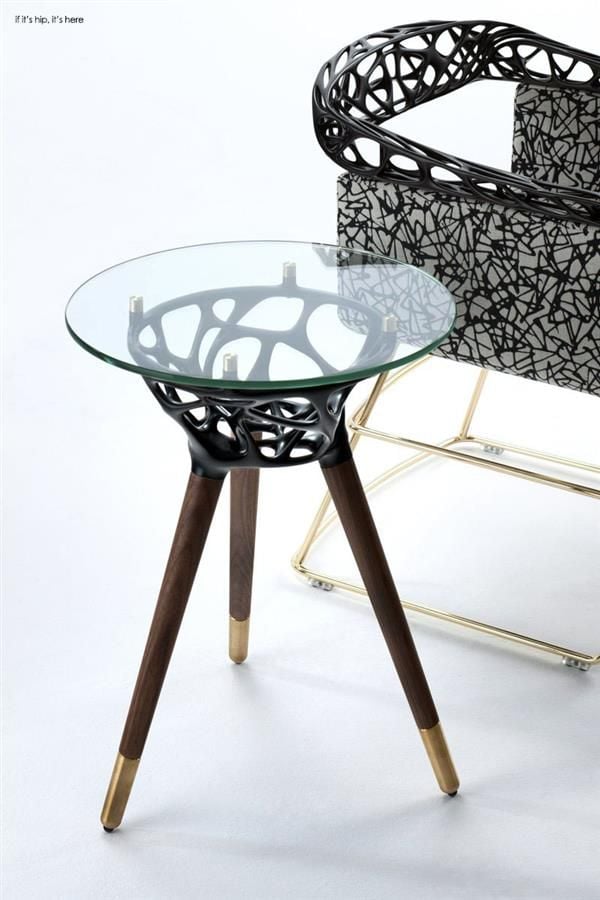
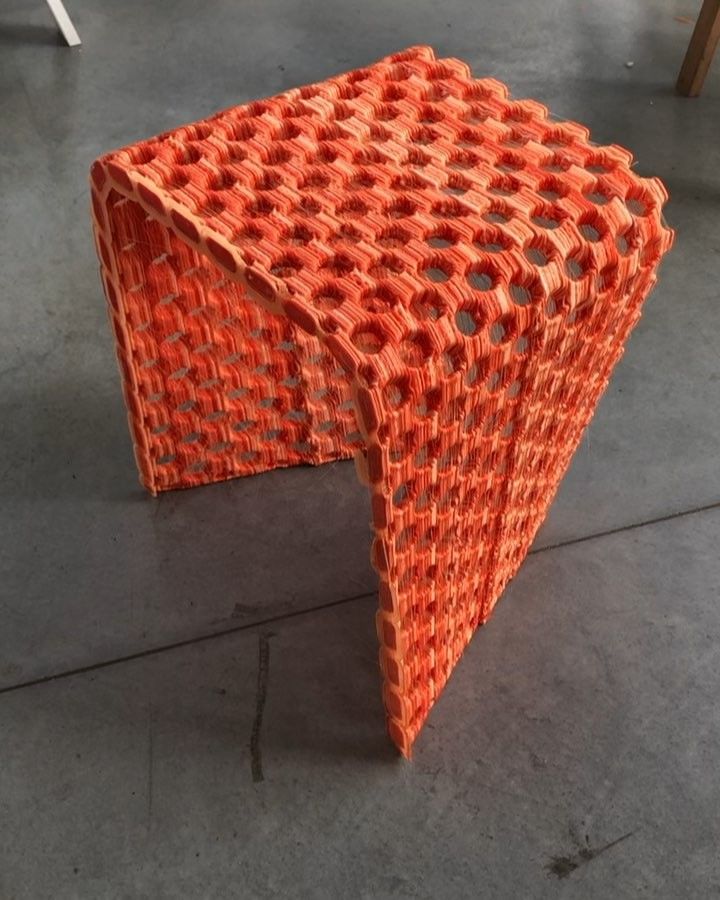
SLS uses a laser to fuse powdered material — typically nylon, but also glass, metal alloys, and increasingly recycled powders — into solid shapes. Because the unfused powder supports the object during printing, you can create complex geometries without support structures: internal channels, lattice infill, and overhangs that would be impossible to mould. Joris Laarman Lab has used SLS processes to produce his Gradient Chair series — aluminum lattice structures that look like they were grown rather than manufactured, with density varying from solid to almost transparent across the piece.
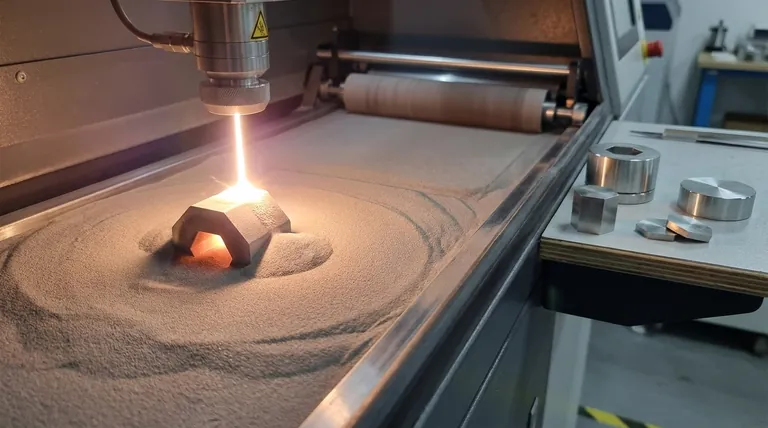
The catch with SLS: cost. Laser sintering equipment is expensive, the process is slow, and post-processing (removing powder, surface finishing) is labour-intensive. This is why most SLS furniture is either museum-quality limited editions or architectural prototypes. The $1,923 price tag on van der Kooij’s Babylon Chair reflects this reality.
Large-Format Resin and Concrete Printing
A third category, growing quickly in 2025–2026: large-format printing using concrete, ceramic, or high-performance resins. Philipp Aduatz collaborated with incremental3D to produce chairs and benches in concrete reinforced with glass-fibre rods and carbon textile — pieces that could not be made by any conventional casting method, with colour gradients and structural integrations only possible through additive manufacturing. These are primarily architectural and outdoor-scale pieces, but the material innovation happening here is feeding back into residential furniture design.
The Designers Who Are Actually Making It Work
There are dozens of studios experimenting with 3D printed furniture. Three are doing work that’s genuinely moved the field forward — not just technically, but in terms of what the furniture means and how it fits into real spaces.
Dirk van der Kooij — The Circular Pioneer
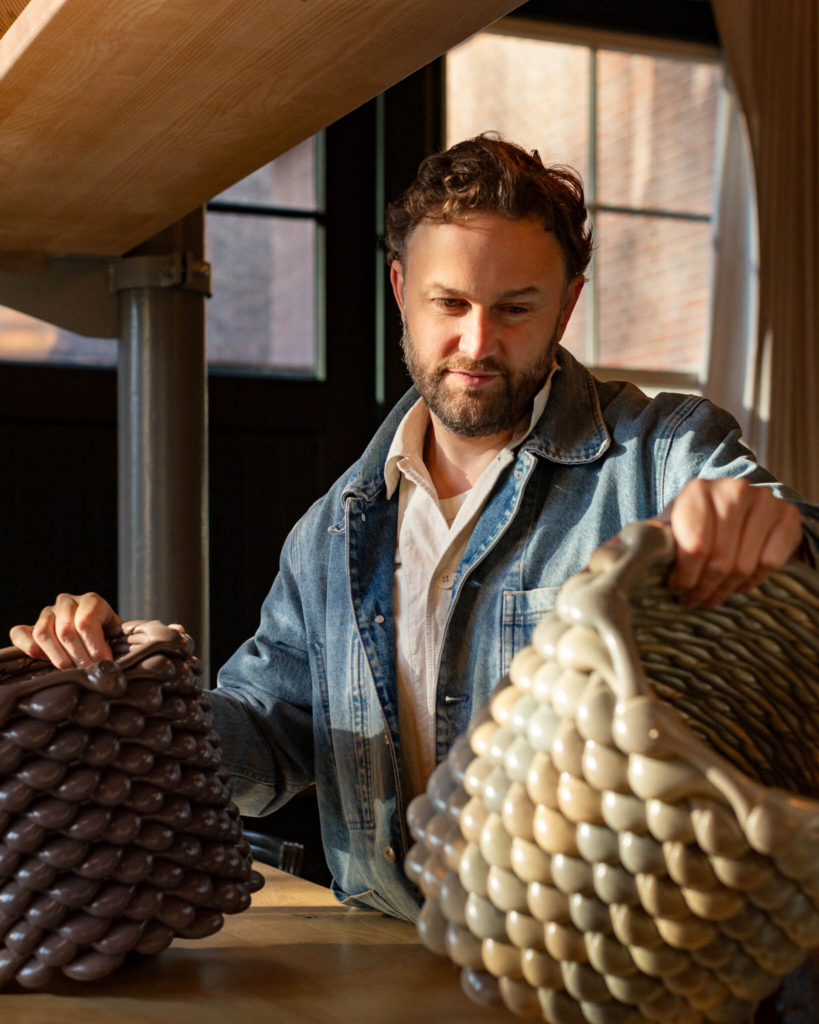
Van der Kooij’s Amsterdam studio — operating from a 1920s ex-military warehouse — is the closest thing the 3D printed furniture world has to a proof of concept. His core philosophy is what he calls ‘forever furniture‘: pieces designed not just to last, but to be reground and reprinted when they eventually wear out. All his work uses single-material construction — no composites, no laminates, no surface coatings — because a piece made of only one material can be recycled without sorting. The Chubby Chair (recycled plastic, from ~€800), the RvR Chair (€357 at launch), and his Melting Pot tables — made from scraps left over from other furniture pieces — are all part of a genuinely closed loop.
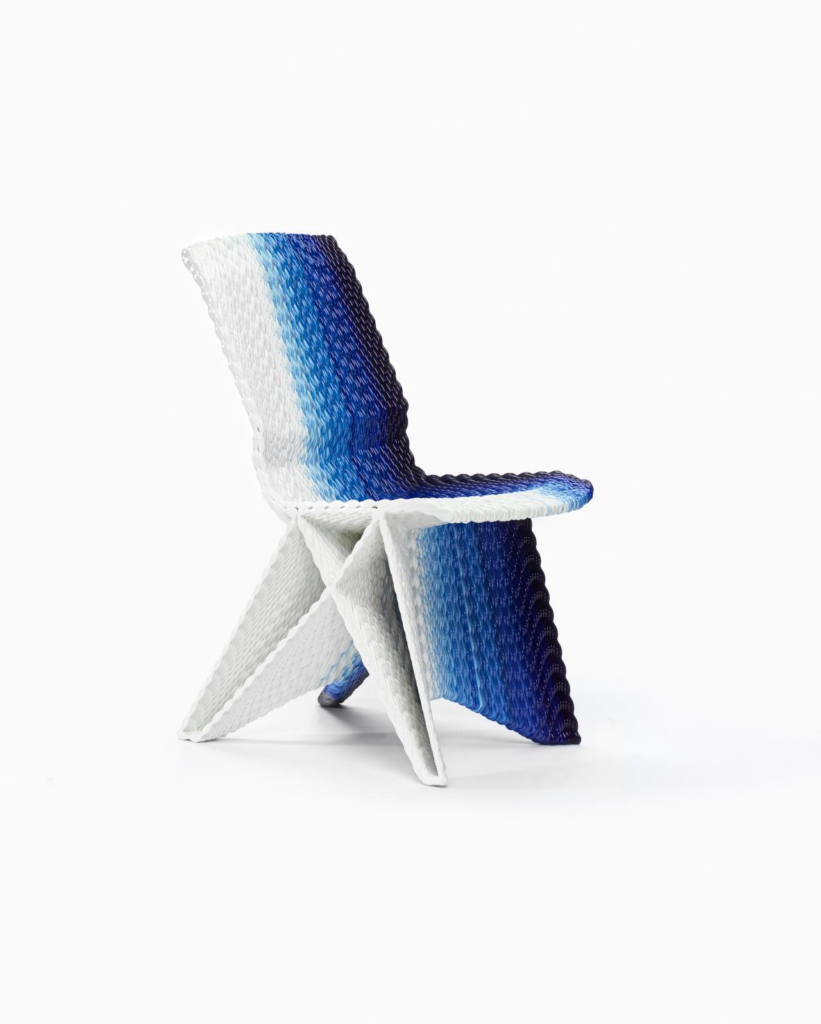
What I find most interesting about his approach is the honesty about limitations. In an interview with Sight Unseen, he noted: ‘There’s a limit to how comfortable a 3D printed chair is going to be, and I’m mostly looking to celebrate processes, materials, and ideas.’ That’s the kind of transparency that builds trust in a field that tends toward overpromising.
His material sources are worth noting: recycled plastic from post-industrial and post-consumer streams in the Netherlands, Germany, and France. Discarded CDs, leather sofas, kitchen appliances, even diseased elm wood. Each material has what he calls ‘a history that can be literally seen in the product’ — which gives pieces a narrative that mass-produced furniture structurally can’t have.
Joris Laarman Lab — The Algorithmic Edge
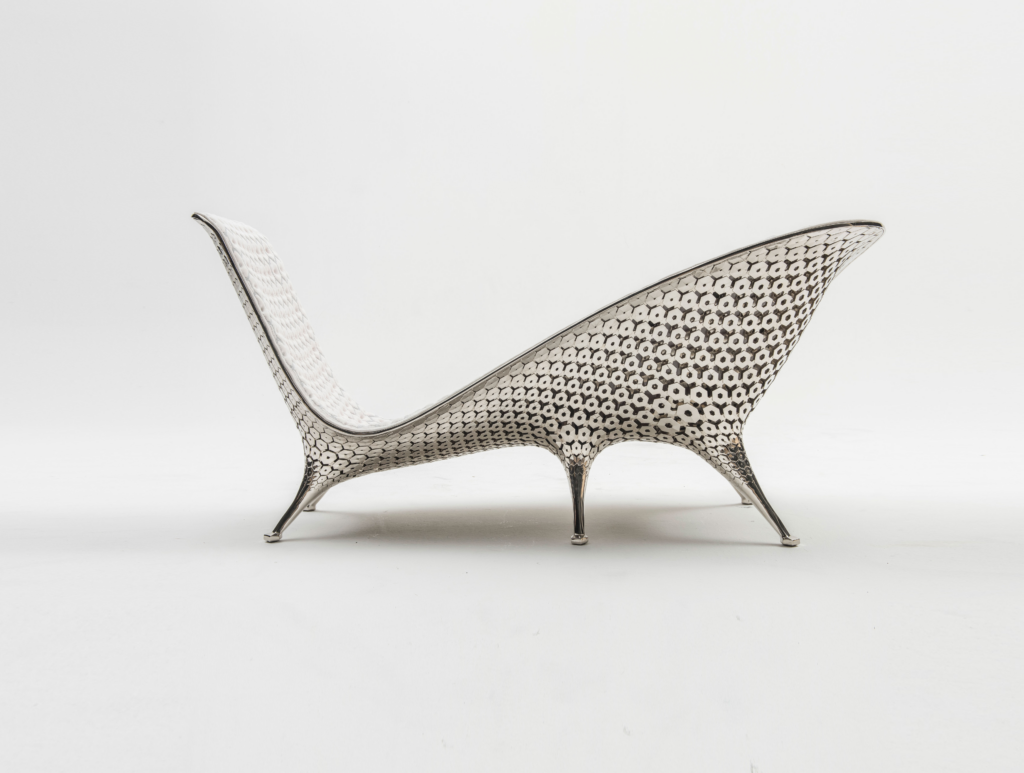
Where van der Kooij works with humble materials and visible process, Joris Laarman works at the opposite extreme: using algorithms derived from natural systems — bone growth, bird flocking behaviour, cellular structures — to generate furniture forms that are structurally optimal and visually unprecedented.
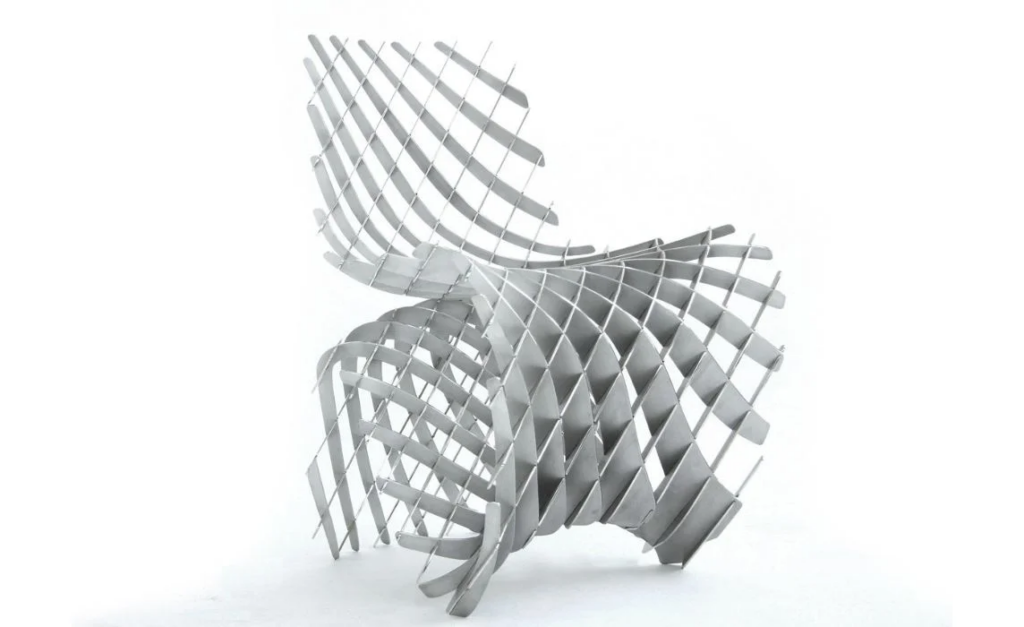
His Gradient Chair in aluminium uses metal density that varies continuously from solid to lattice, placing material only where structural analysis says it’s needed. His Starling Desk is built from stereolithography resins shaped by algorithms modelled on murmuration patterns. These are expensive museum pieces — but they’re also working prototypes for a manufacturing logic that will eventually reach volume production.
The New Raw — Urban Scale
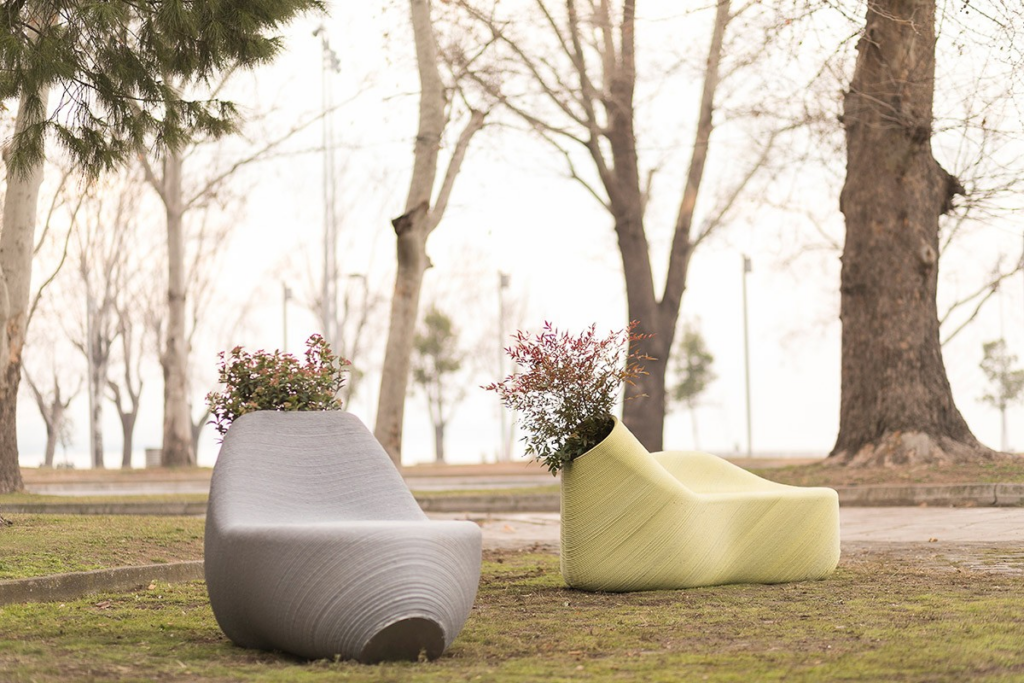
The Greek studio The New Raw takes a different approach entirely: their ‘Print Your City’ initiative collects discarded plastic from urban waste streams. It prints public furniture — benches, planters, street installations — at city scale. Citizens submit design inputs, local waste feeds the printer, and the furniture stays in the neighbourhood. It’s 3D printed furniture as civic infrastructure. The material and social loop is even tighter than van der Kooij’s studio model: the waste comes from the street, and the furniture goes back to the street.
The Materials Revolution: From PLA to Food Waste
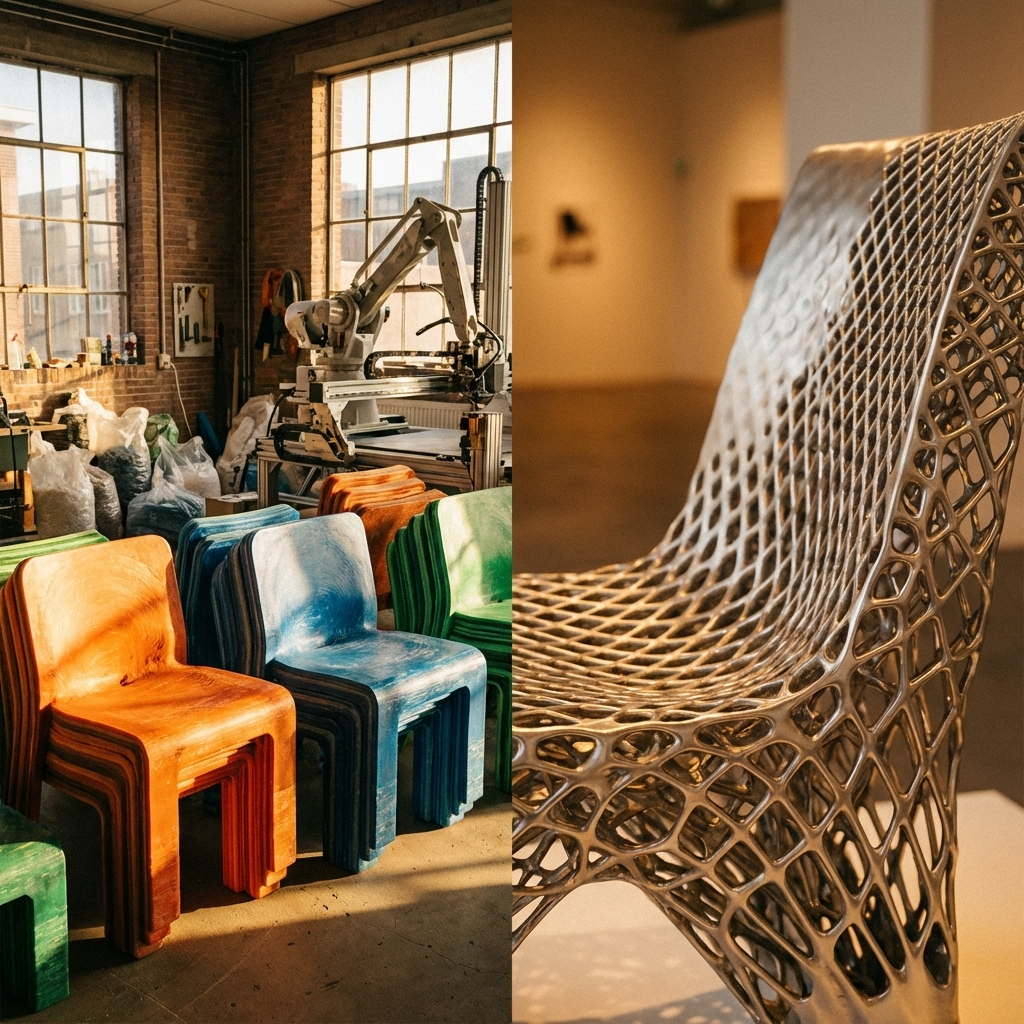
The materials available for 3D printed furniture have changed dramatically in the last three years, and this is where the most interesting development is happening right now.
Recycled and Waste-Derived Plastics
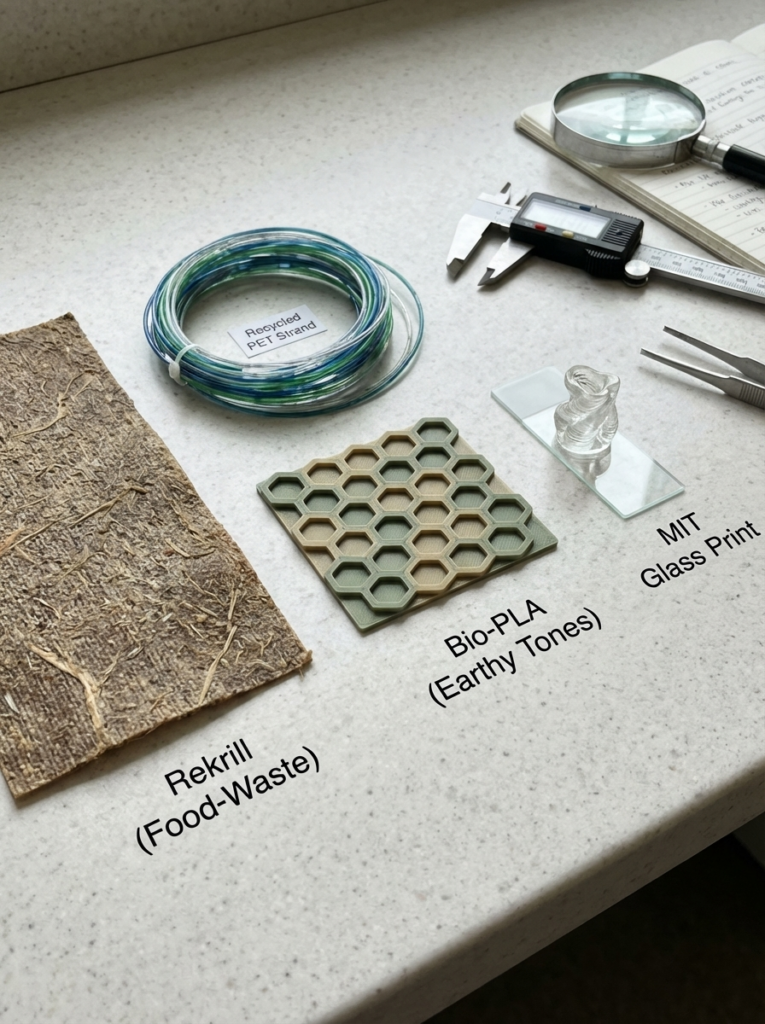
The standard filaments — PLA (polylactic acid, corn-starch-derived), PETG, Nylon — are well-established and increasingly available in recycled forms. But the more interesting territory is waste-derived composites. Krill Design, an Italian company, developed a filament called Rekrill made from food industry waste: orange peels, lemon peels, coffee grounds, and eggshells. The material is bio-based, partially compostable, and creates a distinctive organic texture that’s become aesthetically significant in its own right — the material’s origin is visible in the surface. Sculptur, a Swedish company, takes this further, making filament from fishing equipment salvaged from the sea and coffee waste from local producers.
Bio-Based Resins and Living Materials
Research labs — notably the Mediated Matter Group at MIT — are experimenting with 3D printed glass and bio-composite materials that integrate living organisms or plant-based binders. These are still research-stage, but they’re pointing toward furniture that is not just made from sustainable materials but is itself part of a biological system. The MIT glass printing work, which produces optically clear structural pieces, suggests a near-future where furniture material choices look more like material science than like lumber selection.
Multi-Material Printing — The 2026 Shift
Until recently, most 3D printing was single-material: one filament or powder, one piece. In 2026, multi-material printing systems will become viable at furniture scale. This means a chair could have a rigid structural frame printed simultaneously with a flexible, ergonomic seat surface — no assembly, no separate manufacturing processes. Technologies like High-Area Rapid Printing (HARP), developed at Northwestern University, dramatically increase print speeds without losing detail, making multi-material furniture-scale production economically plausible for the first time.
What 3D Printed Furniture Can Do That Traditional Furniture Cannot.

Geometric Complexity Without Cost Penalty
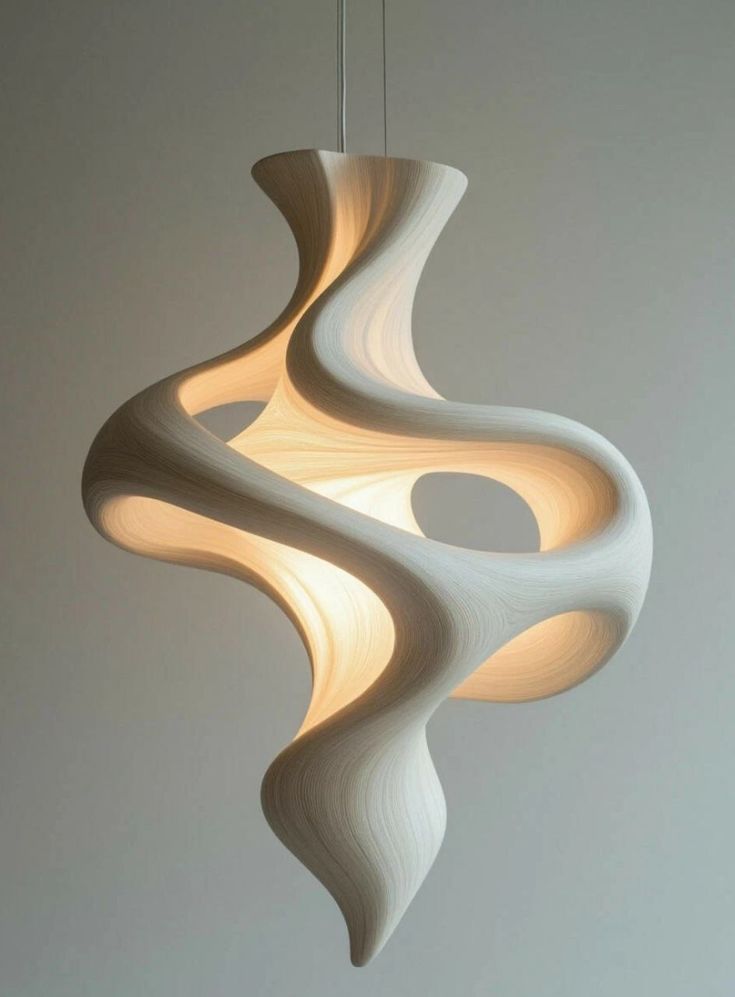
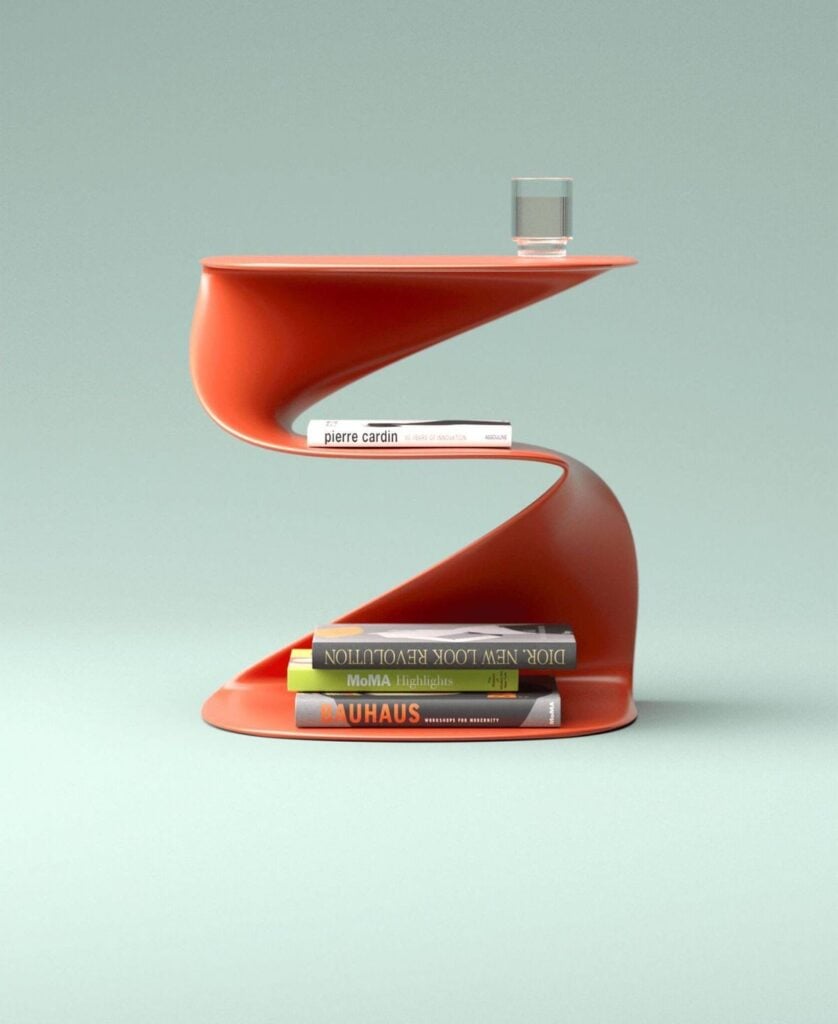
Traditional furniture manufacturing has a fundamental constraint: complex geometry costs more. A curved chair leg requires more machining time; an unusual cross-section requires a custom mould that might cost €50,000 to produce. 3D printing has no mould, no tooling, and no setup cost per geometry. A lattice structure costs the same to print as a solid block of the same volume. This means complexity that would be prohibitively expensive in traditional manufacturing is essentially free, which is why you see 3D printed furniture featuring branching structures, gradient densities, and biomorphic forms that have no analogue in conventionally produced pieces.
True Mass Customisation
In traditional furniture, ‘customisation’ means choosing from a limited set of options: three leg finishes, two upholstery fabrics. In 3D printing, customisation is parametric — every dimension, angle, and surface texture is a variable that can be adjusted without changing the production process. A chair can be printed to your specific seated height, your reach, and your weight distribution. IKEA’s ThisAbles project demonstrated this in a smaller way: 3D-printed accessibility extensions for standard IKEA furniture pieces, designed by users with disabilities, downloadable and printable on demand. The product is the design file, not the physical object — and the physical object follows wherever a printer exists.
On-Demand Production and Digital Inventory
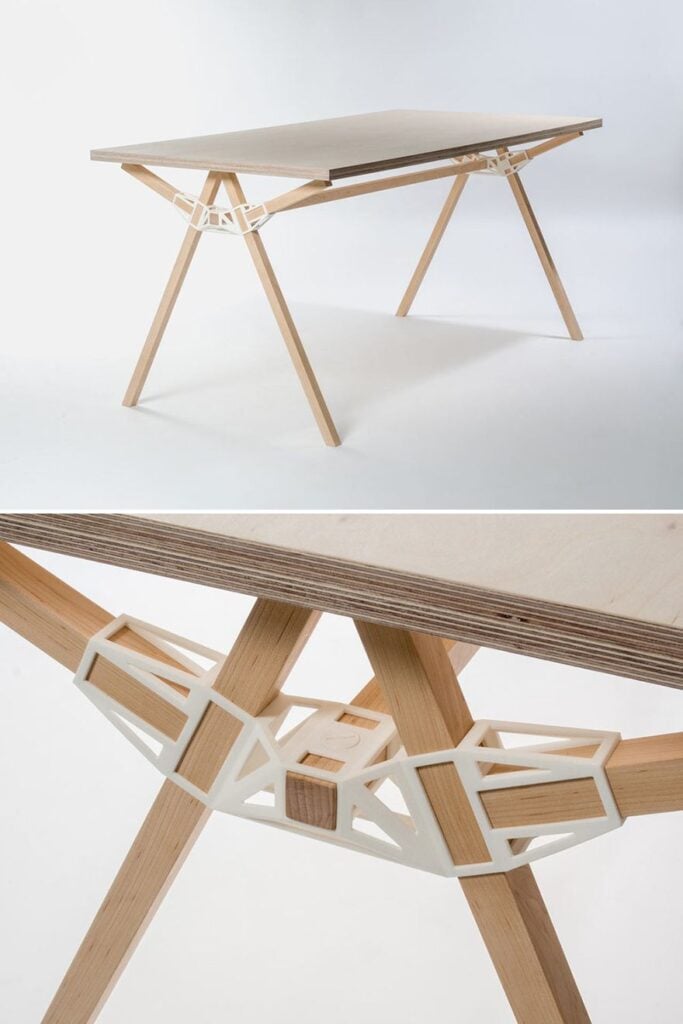
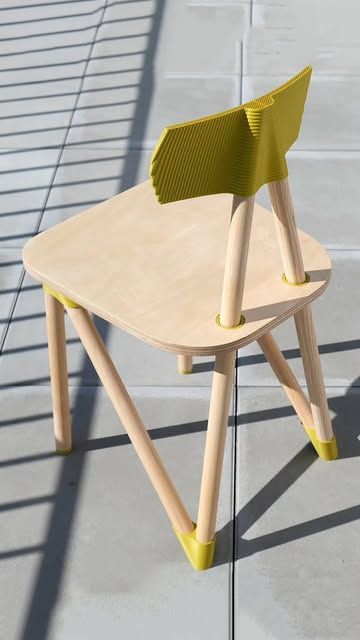
One of the underappreciated implications of 3D printed furniture: the shift from physical inventory to digital inventory. A furniture company with traditional manufacturing must maintain warehouses of physical stock. A 3D printing company maintains a library of design files and prints on order. No stock, no shipping delays, no unsold inventory written off. This changes the economics of small-batch and bespoke furniture production fundamentally — and it’s why some analysts believe 3D printing’s biggest impact on furniture won’t be the premium design market but the long-tail market of replacement parts, accessibility modifications, and regional customisations.
The Honest Limitations: What 3D Printed Furniture Still Can’t Do
The design press tends to skip this section. It’s the most useful one.
Comfort Remains a Challenge
Van der Kooij said it plainly, and it’s worth repeating: there’s a limit to how comfortable a 3D printed chair is going to be. The surface texture of FDM printing — those visible layers — doesn’t have the tactile warmth of wood grain or the give of upholstered foam. Sitting on a 3D printed chair for two hours is different from sitting on a well-made upholstered chair for two hours. Multi-material printing is starting to address this (printing rigid frames with flexible cushioning surfaces simultaneously), but it’s not solved yet at an accessible price point.
Scale and Speed Constraints
Printing a single chair at furniture scale currently takes two to four hours on optimised equipment. A dining table can take eight to twelve hours. That’s manageable for bespoke production, but it’s a fundamental constraint on volume. The furniture industry ships millions of pieces annually — the Wayfair model of cheap, fast, disposable furniture is not going to be replaced by 3D printing anytime soon. What 3D printing is displacing is the middle market: the expensive bespoke, the limited edition, the piece made for a specific space or person.
The Cost Reality
A Dirk van der Kooij Chubby Chair starts at around €800. His Babylon Chair is €1,923. Joris Laarman’s limited edition pieces are gallery prices — €10,000 and above. The accessible end of 3D printed furniture is starting to reach the price range of mid-market designer furniture, but it’s not yet at mass-market pricing. The cost of materials, machine time, and the skilled finishing work that most pieces still require means 3D printed furniture is, for now, a premium product. That will change as printing speeds increase and material costs fall — but the timeline is a decade, not a product cycle.
What 3D Printed Furniture Looks Like in a Real Home
This is the question I get asked most often by people interested in the space: not ‘is it technically impressive?’ but ‘will it actually look good in my living room?’
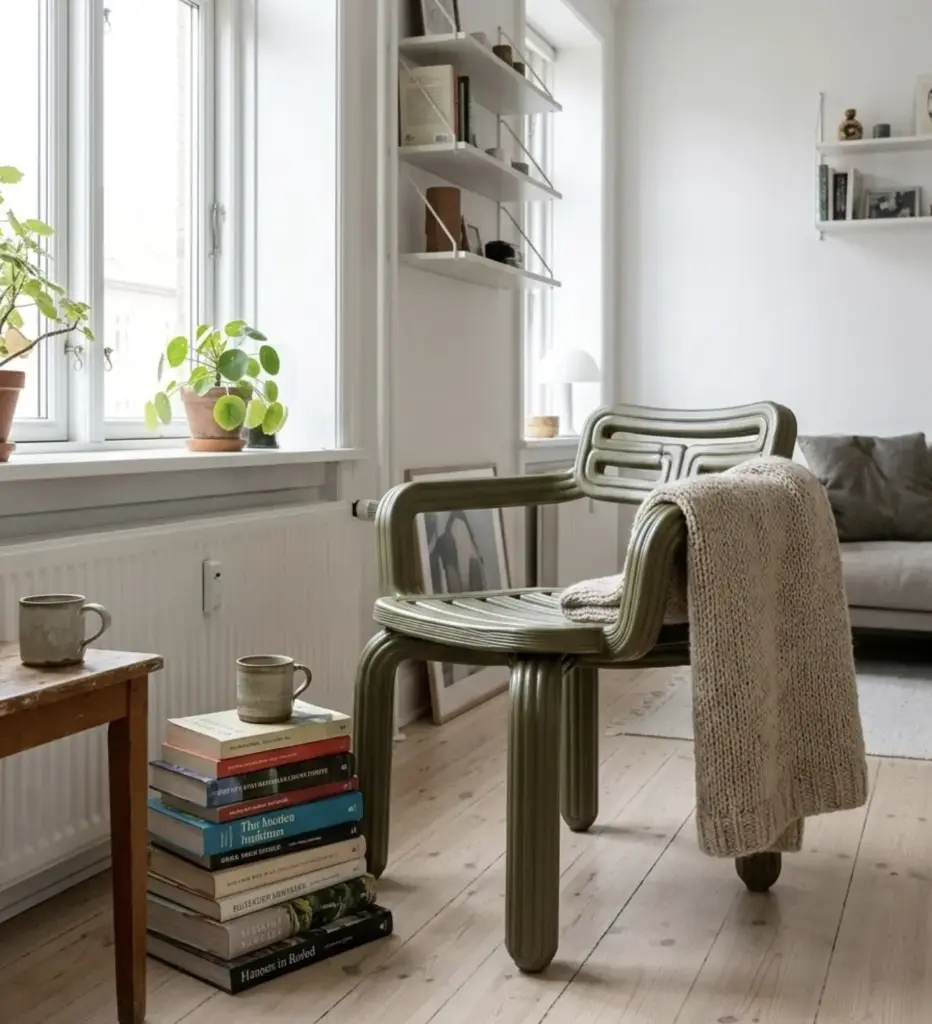
The honest answer is: it depends entirely on which piece and which interior. 3D printed furniture has a strong aesthetic identity — the layered texture, the slightly industrial finish, the forms that don’t reference traditional woodworking or metalwork. It works very well in spaces that already lean toward industrial, brutalist, or contemporary-minimal aesthetics. It works less well in spaces that draw from natural materials, warmth, and traditional craft.
Van der Kooij’s pieces photograph beautifully in white-walled gallery spaces and loft apartments. That same piece in a country kitchen with exposed oak beams would create cognitive dissonance. This isn’t a criticism — it’s just placement intelligence. The same rule applies to any strong-identity design piece.
The Design Pairings That Work
- With exposed concrete, steel, and glass, the layered texture of FDM printing reads as intentional and of a piece with industrial materials. Van der Kooij’s pieces, in particular, belong in these spaces.
- With biophilic interiors: The organic, biomorphic forms of algorithmic 3D printed furniture — Laarman-style lattices, branching structures — echo natural forms without trying to replicate them. A gradient chair beside a living wall reads coherently.
- As a single statement piece, one 3D printed chair in a room of conventional furniture reads as a collector’s item rather than an aesthetic mismatch. The key is treating it as sculpture-meets-furniture rather than trying to build an entire room around the technology.
Where 3D Printed Furniture Is Going in the Next Five Years
Mass Customisation Reaches the Mid-Market
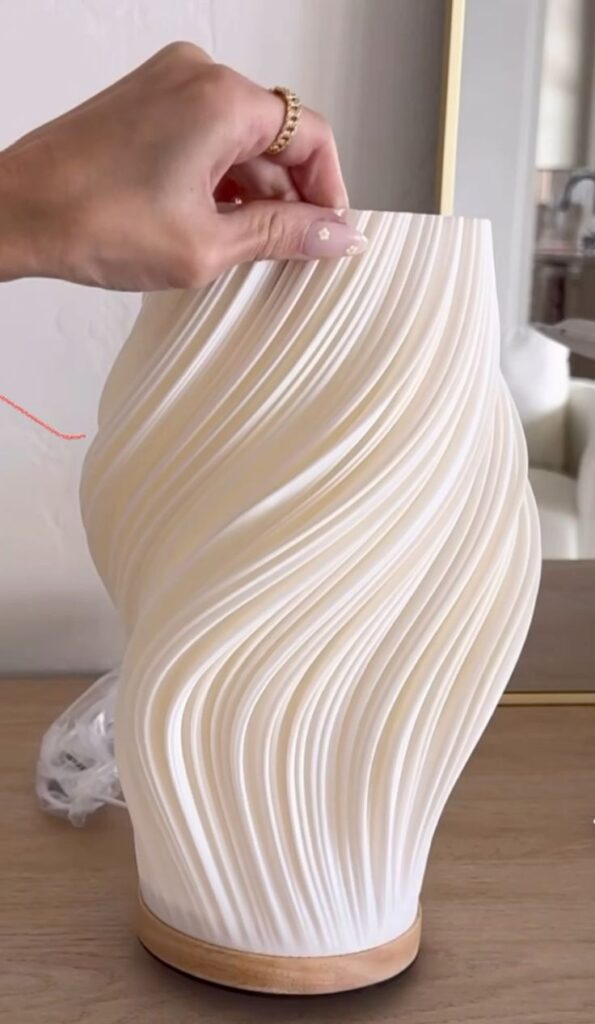
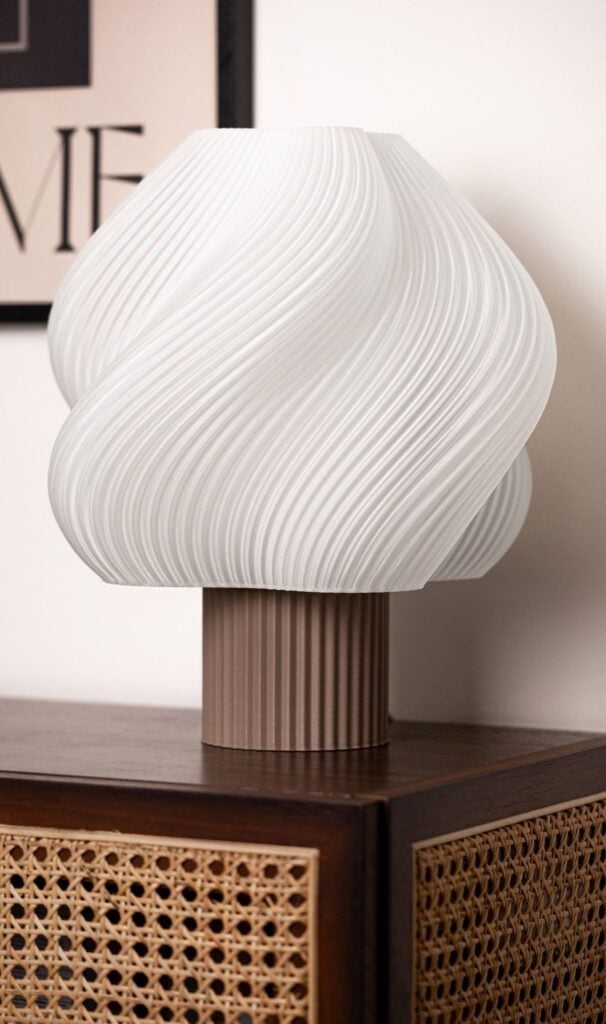
The next significant shift will be parametric mass customisation at mid-market price points. Companies like Prismlab in China and emerging studios in the EU are already scaling FDM furniture production with design software that allows customers to adjust dimensions and surface patterns within a print file. The output is still more expensive than IKEA, but it’s approaching the price of a Herman Miller chair — and it’s built to your specifications rather than averaged measurements.
Sustainable Materials Become the Default
Krill Design’s food-waste filament, Sculptur’s ocean-salvage material, and the broader shift toward recycled polymer filaments are moving from niche to standard. By 2028, most studio-scale 3D printed furniture will likely be made from materials that were waste streams six months earlier. The environmental calculus of 3D printing versus traditional manufacturing is already favourable for complex, low-volume pieces — it will become decisively so as materials improve.
The Accessibility Revolution — Quietly
The most underreported story in 3D printed furniture is accessibility modification. IKEA’s ThisAbles initiative proved the concept: downloadable 3D print files that modify standard furniture for users with specific physical needs. This is already happening informally in the 3D printing community, where users share accessibility adaptations on platforms like Printables and Thingiverse. As home 3D printing becomes more mainstream, the ability to print a handle extension, a leg raiser, or a drawer pull modification designed for limited grip strength will quietly transform the furniture experience for millions of people who currently rely on expensive bespoke adaptations.
AI-Assisted Design Democratises the Process
The most speculative but genuinely plausible near-future development: AI design tools that allow non-designers to generate print-ready furniture from natural language inputs. ‘A side table that fits in a 40cm gap, holds my laptop and a plant, and looks like it belongs with my mid-century furniture.’ Currently, this requires a skilled CAD designer and several rounds of revision. Within three to five years, it will likely require an afternoon and a consumer-level print service. The furniture itself isn’t the product — the design intelligence is.
[Image: Forward-looking concept — designer working on laptop with parametric furniture design software visible on screen, 3D printer running in background, warm studio atmosphere — not sci-fi, plausible and near-future]
FAQ: 3D Printed Furniture
Q: Is 3D printed furniture durable enough for everyday use?
It depends on the material and construction method. FDM furniture made from nylon or PETG is genuinely durable for everyday use — van der Kooij’s pieces are designed to last decades and be recycled when they eventually wear. SLS-printed pieces in nylon are extremely strong. The weak point in most 3D printed furniture is inter-layer bonding in FDM: pieces designed with loads parallel to the print layers are strong; pieces loaded against the layers can be weaker than solid-moulded equivalents. Good designers engineer around this. Cheap, poorly-designed 3D printed furniture does exist, and it’s not durable — the technology isn’t the issue, the design is.
Q: How much does 3D printed furniture cost?
The range is wide. Accessible pieces from designers like Dirk van der Kooij start around €350–800 for chairs. Mid-range limited editions run €1,000–3,000. Gallery-quality pieces from Joris Laarman Lab are priced like art: €10,000 and above. At the entry level, you can find functional 3D printed accessories (legs, handles, shelf brackets) for under €50 from print-on-demand services. Mass-market 3D printed furniture at IKEA price points doesn’t yet exist commercially — the economics of print speed and material cost don’t yet support it, though this will change within the next decade.
Q: What materials are used in 3D printed furniture?
The most common materials are PLA (a corn-starch-derived plastic), PETG, nylon, and ABS — all of which are established, tested, and available in recycled forms. More interesting are the emerging materials: Rekrill (Italian food-waste composite from Krill Design), ocean-salvage polymer filament (Sculptur, Sweden), bio-based resins, concrete and glass for large-format printing. Multi-material printing — printing multiple materials in a single job — is increasingly viable and is where the most interesting material combinations are being developed.
Q: Can 3D printed furniture be customised to fit my space?
Yes — this is one of the genuine advantages of 3D printing over traditional furniture manufacturing. Most designers working in the space offer parametric customisation: dimensions, surface patterns, and structural variants adjusted within a digital model before printing. The process works best for pieces where the customisation is dimensional (size, proportion) rather than material-based (you can’t change the material mid-print without specialised equipment). For fully bespoke pieces, expect to commission a studio directly and allow 4–6 weeks for design iteration and print time.
Q: Is 3D printed furniture sustainable?
More nuanced than a simple yes. The material efficiency is genuinely better than traditional manufacturing: additive processes use only the material that ends up in the piece, with minimal waste. When the material is recycled (as in van der Kooij’s work) or bio-derived (as in Krill Design’s filament), the environmental profile is strong. The concern is energy: large-format FDM printing is energy-intensive, and if that energy comes from fossil sources, the carbon advantage shrinks. The most sustainable 3D printed furniture is made from recycled materials, printed regionally, and designed for eventual recycling, which is exactly what the best studios in the space are doing.
Q: Where can I buy 3D printed furniture?
Dirk van der Kooij’s pieces are available through his own website (dirkvanderkooij.com) and select design retailers. Joris Laarman Lab pieces are gallery-sold through Friedman Benda and similar galleries. For more accessible pieces, platforms like Etsy carry FDM-printed furniture accessories and small functional pieces from independent makers. Print-on-demand services like Shapeways and Materialise offer larger structural pieces in various materials. For bespoke work, searching ‘parametric furniture design studio’ in your region will find local and international studios working in additive manufacturing.
The Factory Is Changing, One Layer at a Time
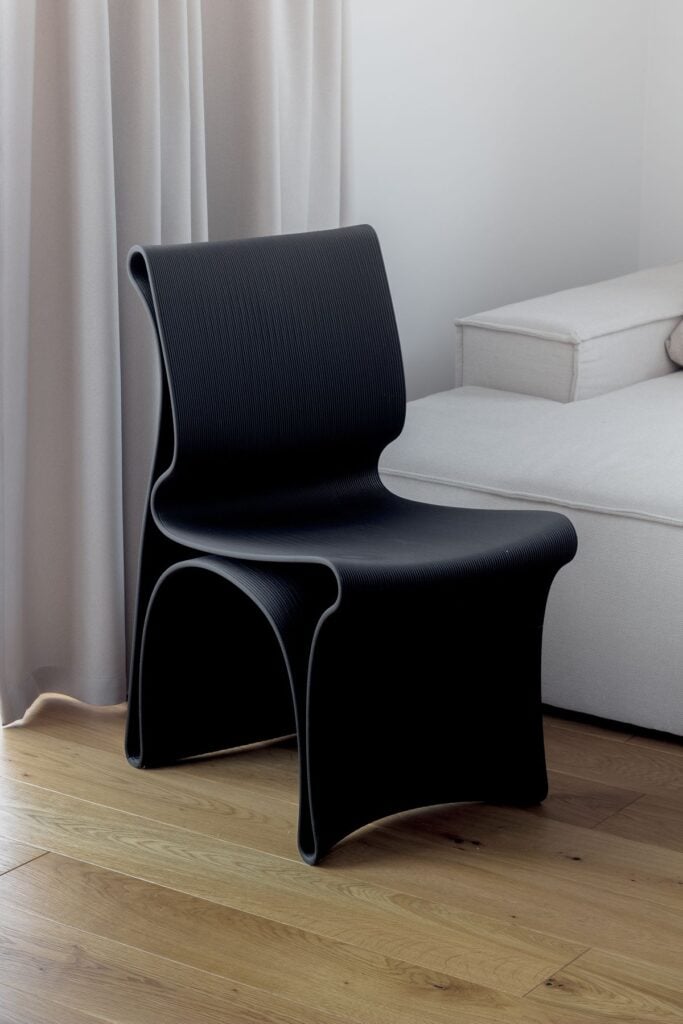
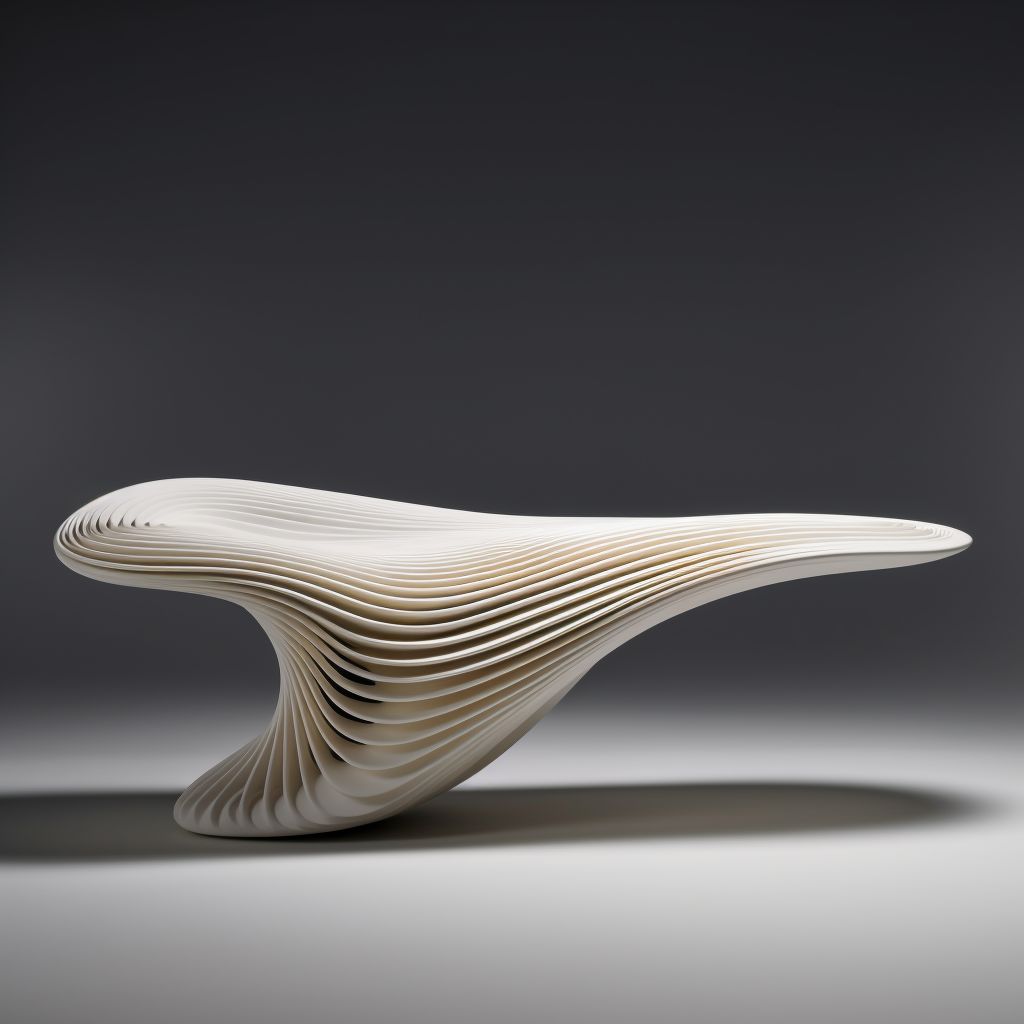
Dirk van der Kooij once described his process as ‘a sausage of plastic squeezed out of a huge tube of toothpaste’ — which is accurate, and also somehow captures why it’s interesting. The unglamorous reality of the process is what makes the output remarkable. A chair that started as discarded refrigerator parts, built by a machine that was itself repurposed from automotive manufacturing, sold as a piece that can eventually be reground and become the next chair. That’s not design philosophy — that’s material engineering with a conscience.
3D printed furniture won’t replace the IKEA model in the next decade. It won’t even replace the mid-market designer furniture model. What it will do is create a parallel track: smaller, more specific, more honest about what it’s made of and how. For design enthusiasts who care about process, material provenance, and geometric possibilities that traditional manufacturing can’t reach, that track is already worth walking.
The best 3D printed furniture doesn’t look like a technology demonstrating itself. It looks like something that could only exist because a particular designer, working with a particular material, through a particular process, made a specific decision about a specific form. That’s what furniture has always been, made one way more. Now there’s another way.
3D printed furniture methods at a glance
| Method | Best for furniture | Main limitation |
|---|---|---|
| Large-format FDM | Chairs, stools, tables, visible recycled-plastic textures | Layer strength, tactile comfort, and coarse surface resolution |
| SLS and powder-bed printing | Complex lattice parts, lightweight structures, experimental seating | High equipment cost and slow finishing workflow |
| Resin and HARP-style systems | Fast large-volume prototypes and detailed polymer forms | Material durability and production economics at furniture scale |
| Concrete, ceramic, and glass printing | Outdoor benches, sculptural tables, lighting, architectural pieces | Weight, brittleness, and specialist post-processing |
Sources worth checking before buying or designing
For technical context, compare the furniture examples with primary additive-manufacturing references from ASTM International’s Additive Manufacturing Center of Excellence, MIT’s work on 3D printed glass, and Northwestern’s HARP printing research. For studio examples, look at Dirk van der Kooij, Joris Laarman Lab, and The New Raw’s Print Your City.
Related 3D printing and design guides
Use these next if you want to move from the future of 3D printed furniture into practical prints, smaller prototypes, and beginner-friendly project ideas:
Furniture concepts become easier to judge when the digital model is structured well. This 3D product design workflow explains how form, materials, and output requirements shape the model.
FAQ: 3D printed furniture
Q: Is 3D printed furniture durable enough for everyday use?
Yes, when the material, layer direction, wall thickness, and load paths are engineered properly. PETG, nylon, reinforced polymers, recycled industrial plastics, and some SLS materials can handle everyday use. The weak point is usually not “3D printing” itself, but poor design: thin walls, bad infill, weak layer bonding, or a chair loaded against the print direction.
Q: How much does 3D printed furniture cost?
Small 3D printed furniture accessories can cost under $50, while studio-made chairs and tables often sit in the mid-market or gallery range. Expect hundreds of dollars for accessible designer pieces, several thousand for limited editions, and much higher prices for metal, glass, or one-off experimental work.
Q: What materials are used in 3D printed furniture?
Common materials include PLA, PETG, nylon, ABS, recycled polymers, bio-based composites, concrete, ceramic, resin, and in experimental cases glass or metal. For home furniture, recycled plastic and durable polymer blends are the most realistic materials because they balance strength, weight, cost, and printability.
Q: Is 3D printed furniture sustainable?
It can be, but the answer depends on material source, energy use, transport, and whether the piece can be repaired or recycled later. The strongest sustainability case comes from single-material furniture made from recycled or waste-derived plastic, printed close to the buyer, and designed to be reground into new material.
Q: Can 3D printed furniture be customized?
Yes. Customization is one of the strongest advantages. A designer can adjust seat height, table diameter, lattice density, surface pattern, leg angle, or connector geometry inside the digital model before printing. It works best for dimensions and structure, not for switching materials mid-print unless the studio has multi-material equipment.
Q: What should I check before buying a 3D printed chair or table?
Check the material, weight rating, layer direction, finish, repair policy, recycling plan, and whether the piece was tested for real sitting or load-bearing use. If the seller cannot explain the material and structural logic, treat the piece as decor first and functional furniture second.
Q: Will 3D printed furniture replace mass-market furniture?
Not soon. The near-term opportunity is smaller and more specific: custom furniture, replacement parts, accessibility modifications, low-volume designer pieces, recycled-material furniture, and local production. Flat-pack furniture will remain cheaper for mainstream buyers, but 3D printing opens a different lane.
- 1.1Kshares
- Facebook0
- Pinterest1.1K
- Twitter0
- Reddit0