I renovated my bathroom three years ago. New tile, new vanity, fresh paint—everything looked perfect in the showroom photos I’d used for inspiration. Then I turned on the lights. The same single overhead fixture that had been there for twenty years cast the same harsh shadows it always had. My expensive renovation looked cheap, and I looked exhausted every time I glanced in the mirror.
The problem wasn’t the renovation. The problem was that I’d changed everything except the one element that actually determines how a space feels: the lighting. Bathroom lighting is the most overlooked aspect of bathroom design, and it’s usually the difference between a space that feels like a gas station restroom and one that feels like a spa retreat.
Here’s what separates beautiful bathrooms from forgettable ones: layered lighting that serves multiple purposes. A single overhead fixture can’t do everything—it can’t provide flattering mirror light, relaxing ambient glow, and functional task illumination simultaneously. Designers understand this. Homeowners usually don’t, which is why most bathrooms feel wrong even when everything else is right.
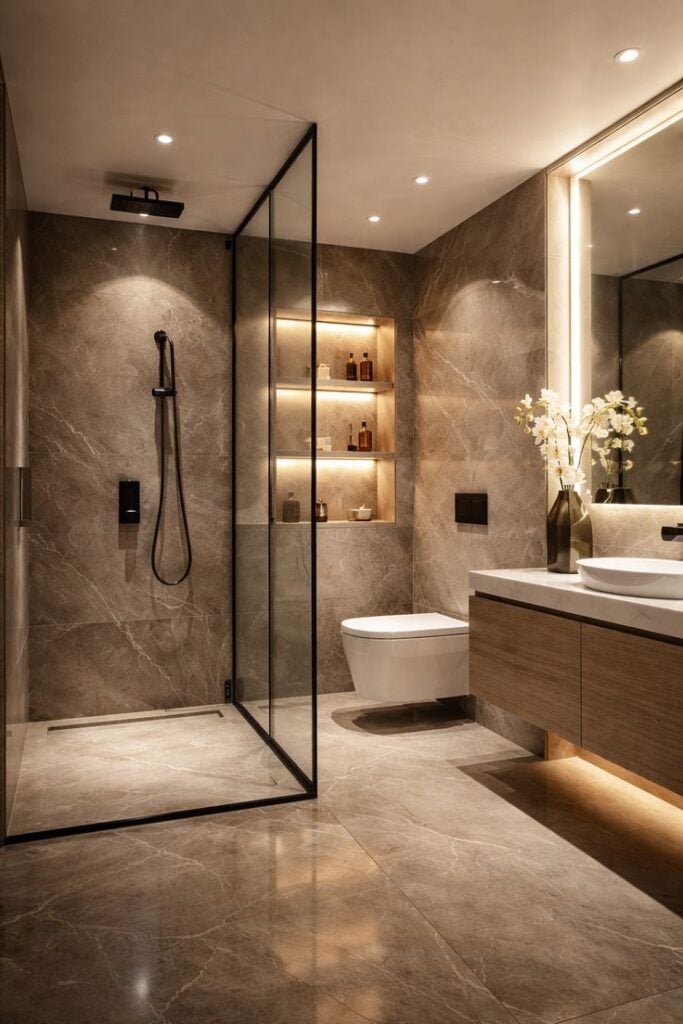
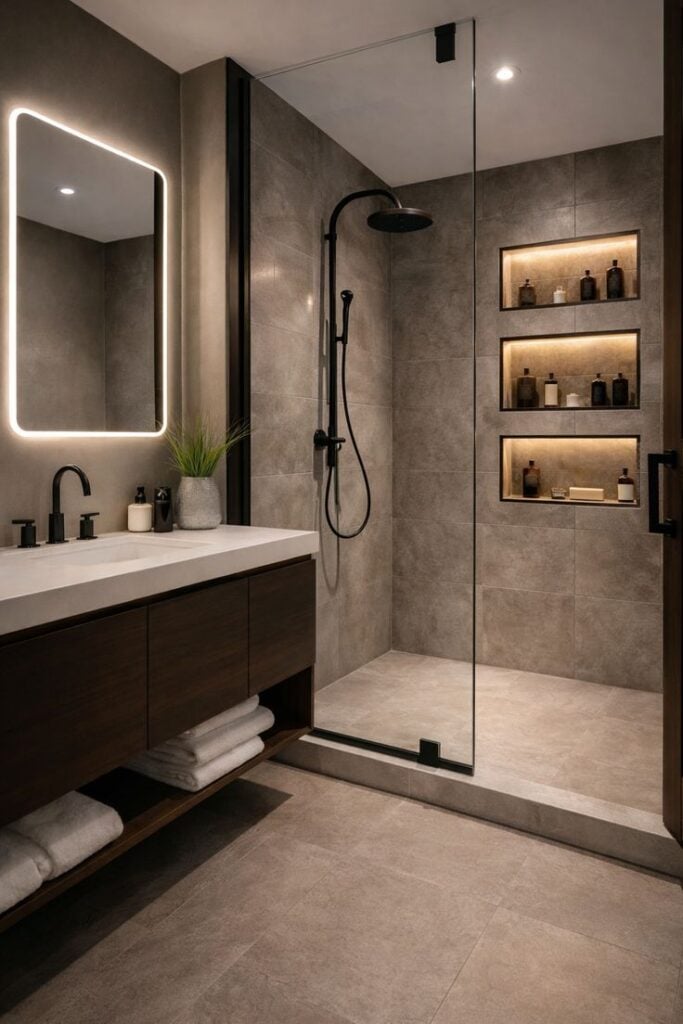
This guide covers lighting design principles I’ve learned through multiple bathroom projects and consultations with lighting designers and electricians. The concepts apply whether you’re planning a full renovation or simply upgrading your existing fixtures.
Why Most Bathroom Lighting Fails
Walk into almost any bathroom built before 2010, and you’ll find the same setup: one ceiling fixture, maybe a basic light bar above the mirror. This approach fails for predictable reasons.
The overhead shadow problem:
A single ceiling light creates shadows under your eyes, nose, and chin. These shadows make everyone look tired and older. When you’re trying to apply makeup, shave, or evaluate your appearance, overhead-only lighting actively works against you. You’re fighting the light instead of working with it.
The color temperature mistake:
Many bathrooms use whatever bulbs came with the fixture—often cool, bluish-white light that makes skin look sallow and unhealthy. Or they swing too far warm, creating a yellowish cast that distorts colors. Neither helps you look your best or see accurately.
The single-purpose limitation:
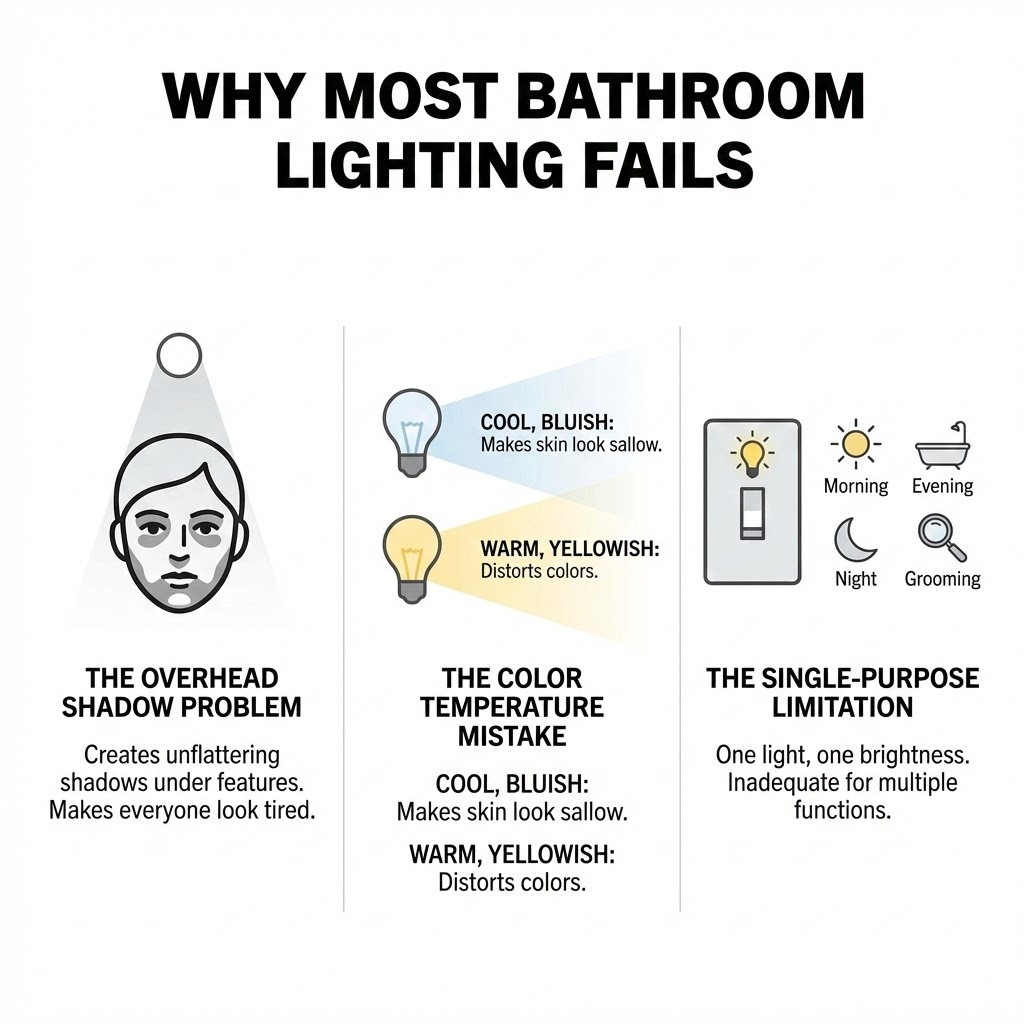
Bathrooms serve multiple functions: energizing morning routines, relaxing evening baths, middle-of-the-night visits, detailed grooming tasks. One light at one brightness level can’t serve all these needs. You end up with a space that’s wrong for most activities.
The Three Layers of Bathroom Lighting
Professional lighting designers work with three layers, each serving a distinct purpose. A well-designed bathroom incorporates all three.
Task Lighting
Task lighting serves specific functions—primarily illuminating the vanity mirror for grooming. This is where most people need improvement.
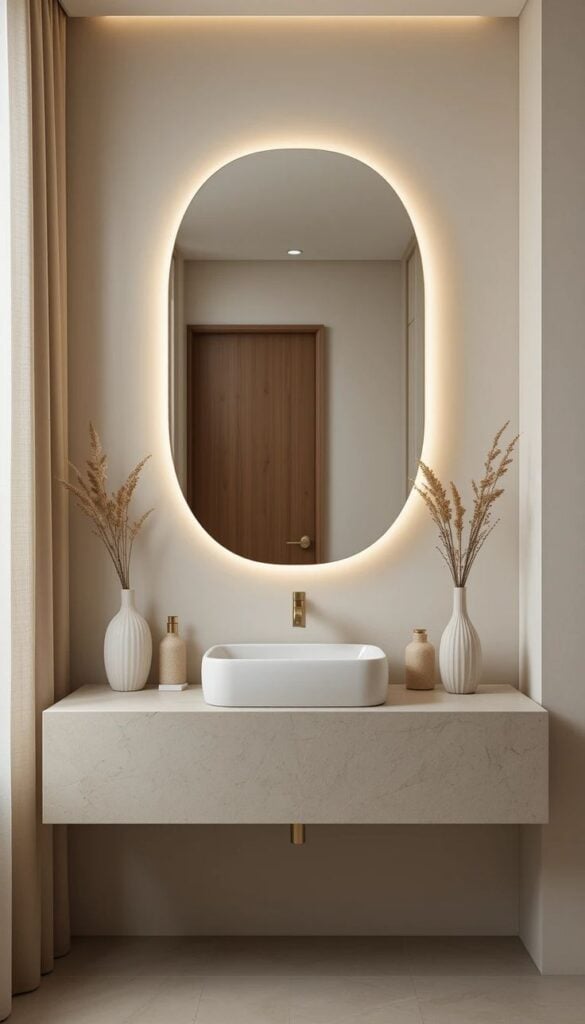
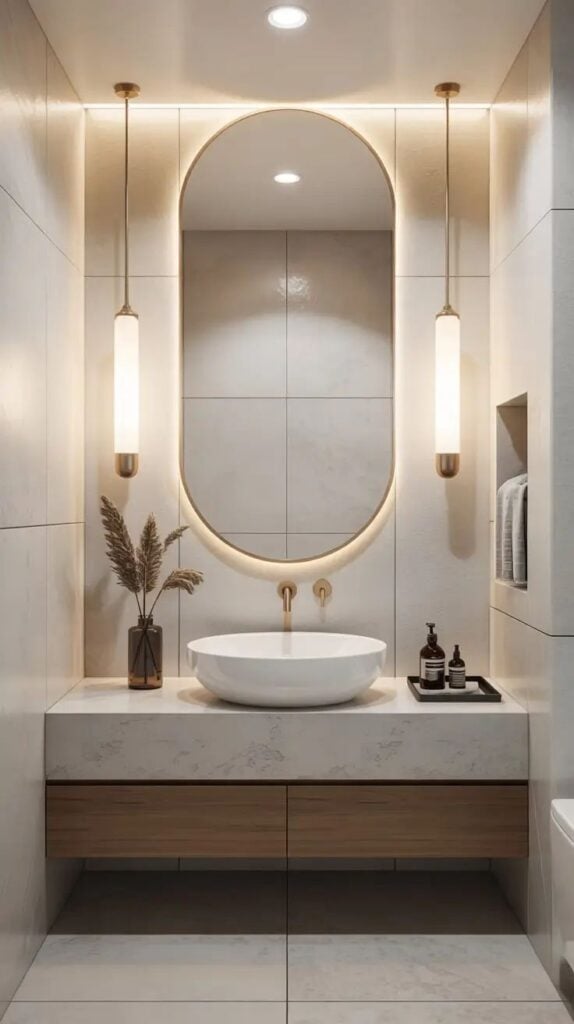
Vanity lighting principles:
The ideal vanity lighting comes from the sides of the mirror, not above it. Side-mounted sconces at eye level (approximately 66 inches from the floor) cast light evenly across the face, eliminating the harsh shadows that overhead lighting creates. If side mounting isn’t possible, a long horizontal fixture mounted above the mirror should extend nearly the full width of the mirror and hang close to it.
Brightness requirements:
Task lighting needs adequate intensity—aim for 75-100 watts equivalent per sconce, or 150+ watts equivalent for over-mirror bars. This sounds bright, but remember: this is working light for detailed tasks. You’ll control intensity through dimming and layering with other sources.
Color accuracy matters:
Choose bulbs with a Color Rendering Index (CRI) of 90 or higher for vanity lighting. High-CRI bulbs show colors accurately, which matters when you’re matching foundation, evaluating skin tone, or checking if that shirt actually goes with those pants. Look for bulbs in the 2700K-3000K range for warm, flattering light that’s still accurate.
Ambient Lighting
Ambient lighting provides overall illumination and sets the room’s mood. This layer does the heavy lifting for atmosphere.
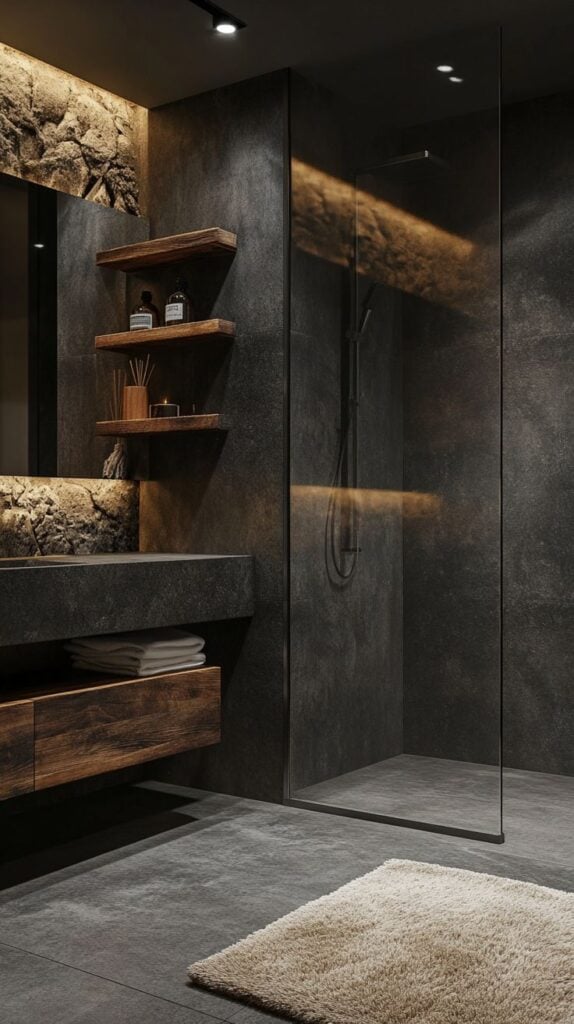
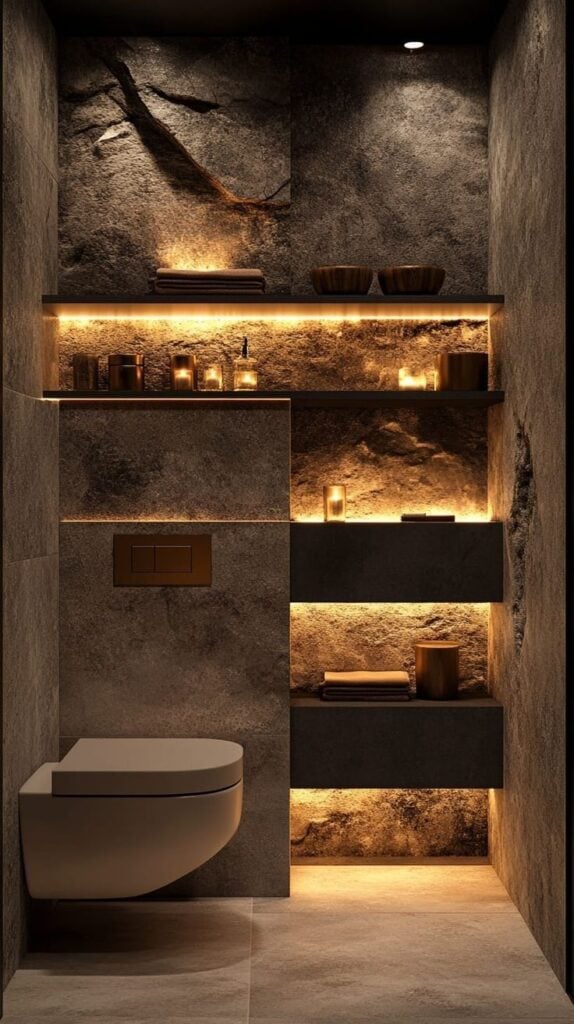
Ceiling fixtures reimagined:
Your ceiling fixture doesn’t disappear in a layered scheme—it becomes one element among several. Recessed lights, flush-mount fixtures, or even a small chandelier in larger bathrooms provide general illumination. The key difference: with proper layering, ambient light doesn’t need to be bright enough for grooming. It just needs to fill the space.
When the renovation includes a new ceiling surface, compare stretch ceiling materials and lighting details before fixing the downlight positions. Confirm moisture suitability, fixture supports, and access with the installer; the membrane does not replace bathroom ventilation.
Dimmer controls are essential:
Ambient lighting absolutely requires dimmer switches. The same bathroom needs bright light for cleaning and soft light for evening baths. Without dimmers, you’re stuck at one level. Modern LED-compatible dimmers work reliably with most fixtures and should be standard in any bathroom lighting plan.
Natural light integration:
If your bathroom has windows or skylights, consider them part of your ambient strategy. Treatments that allow light while maintaining privacy (frosted glass, top-down blinds, or clerestory windows) reduce daytime electrical use and provide the best-quality light available.
Accent Lighting
Accent lighting adds visual interest and can transform a bathroom from functional to luxurious.
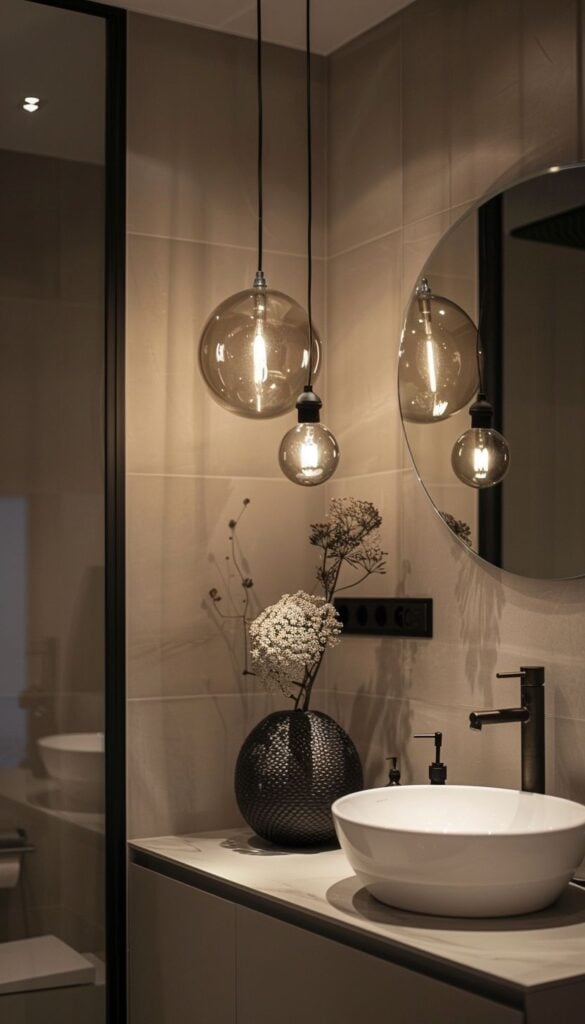
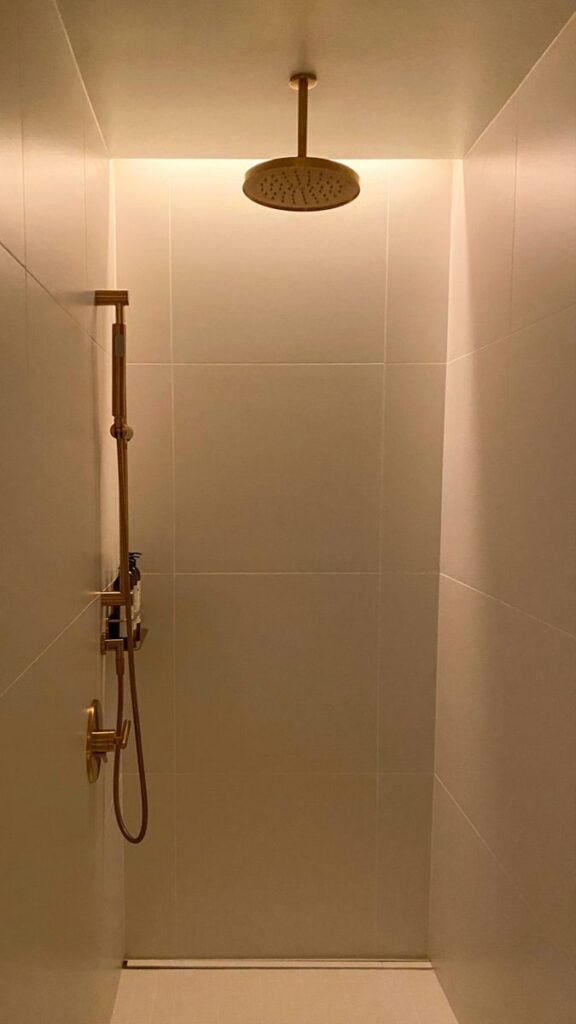
LED strips and coves:
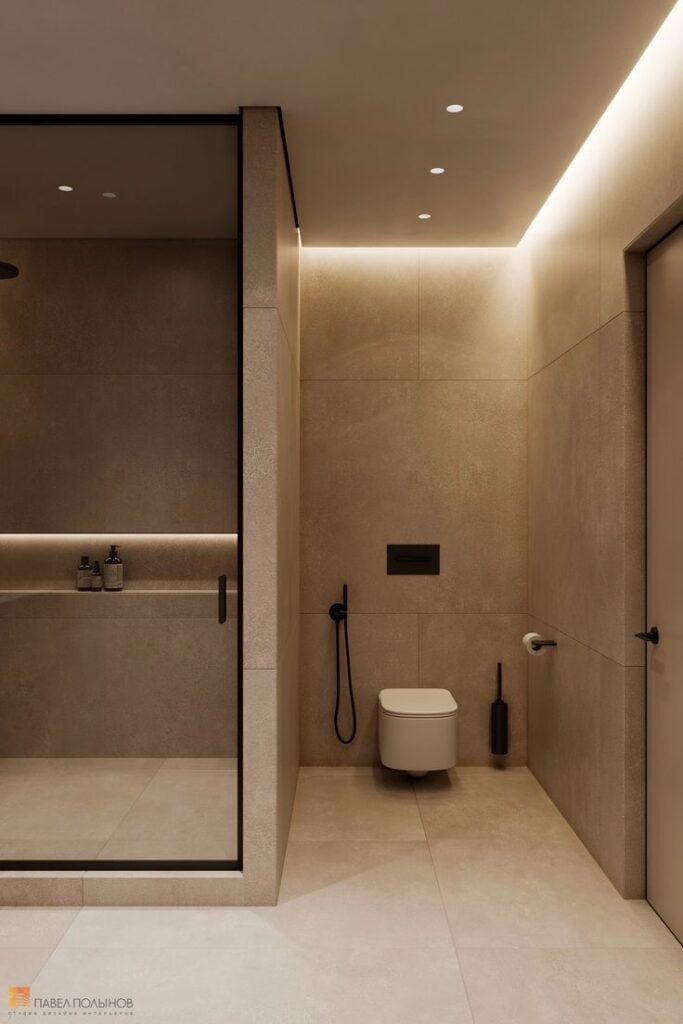
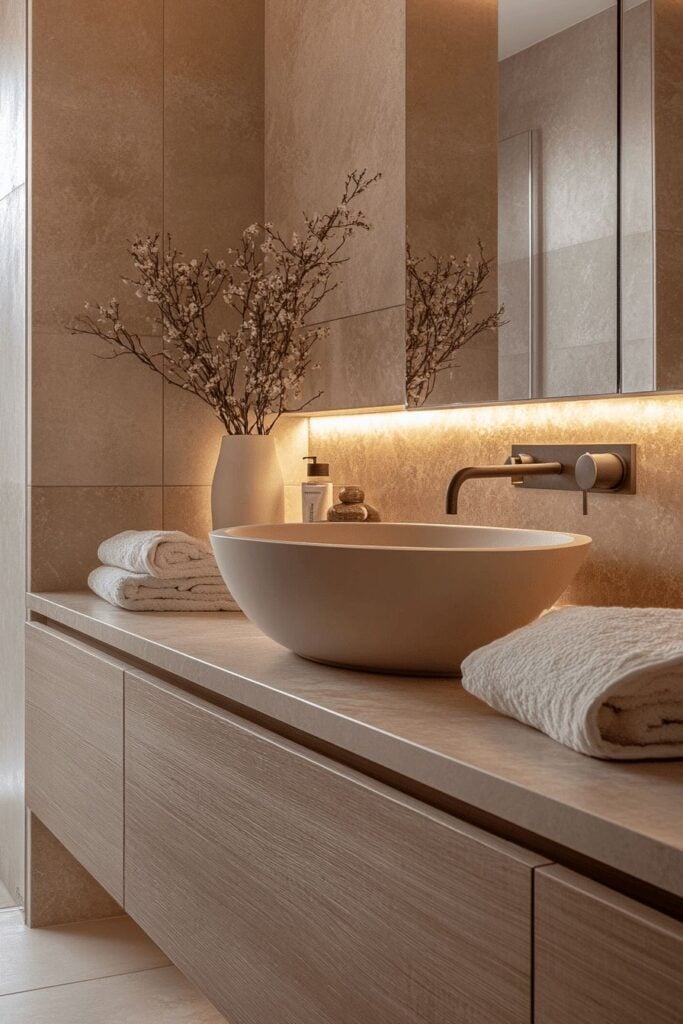
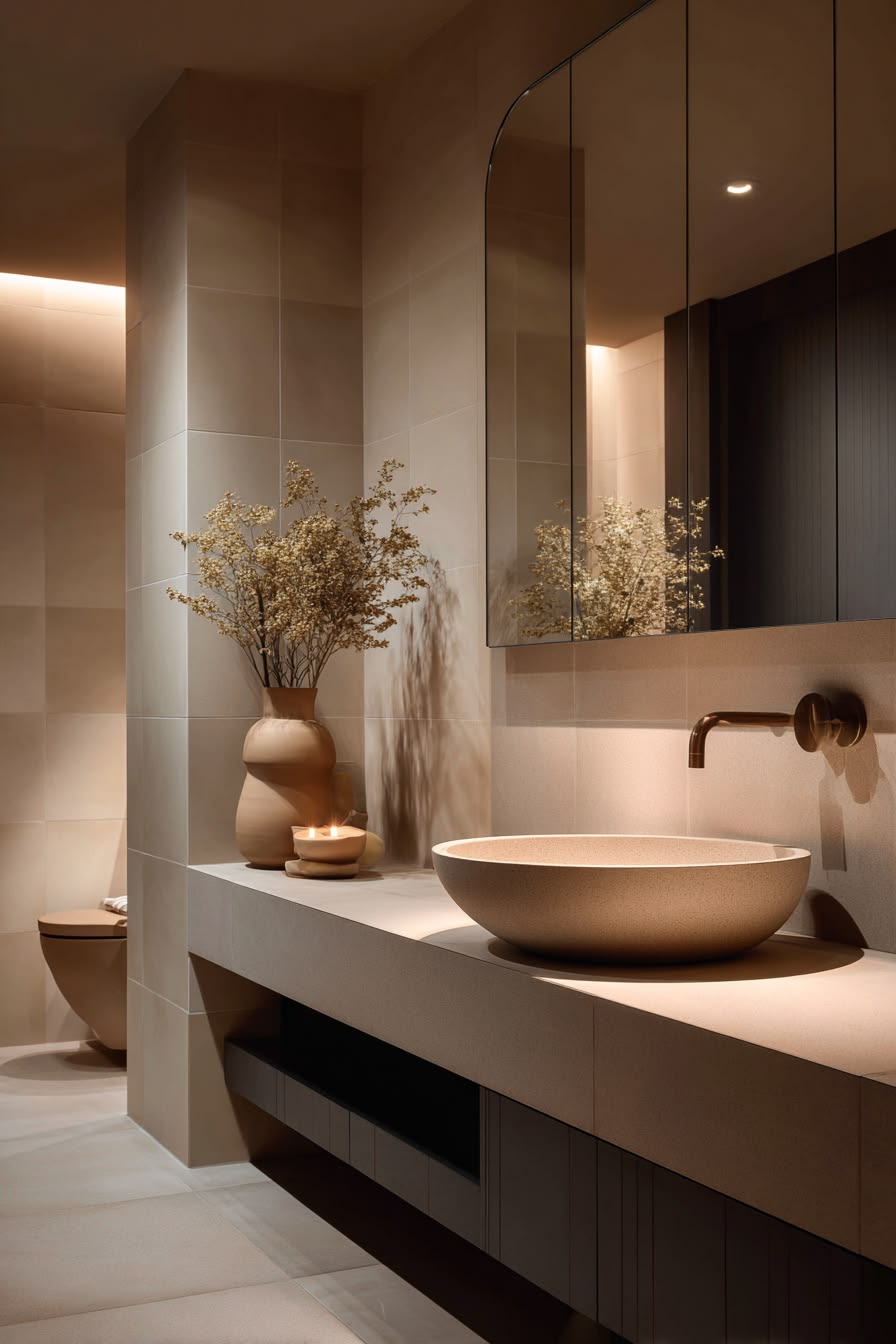
Concealed LED strip lighting under floating vanities, inside niches, or along ceiling coves creates a soft glow that makes spaces feel larger and more refined. This lighting isn’t functional—it’s atmospheric. Warm white strips (2700K-3000K) work best for bathrooms.
Shower lighting:
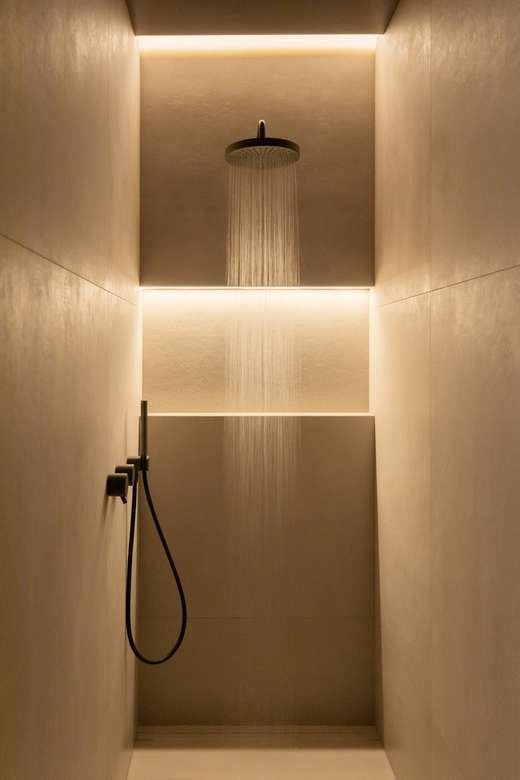
Recessed lights rated for wet locations can illuminate the shower interior—a nice upgrade from the usual shadowy cave. Consider waterproof LED strips in shower niches for a spa-like effect.
Architectural highlights:
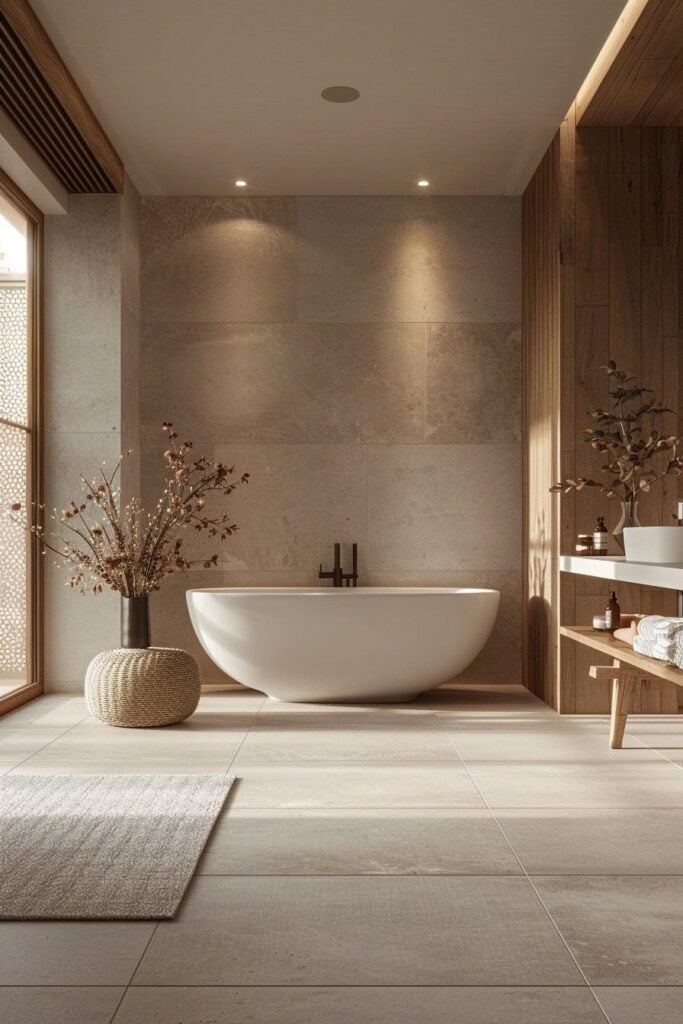
If your bathroom features interesting tile work, a freestanding tub, or artwork, directional accent lighting draws attention to these elements. Small adjustable fixtures or carefully positioned recessed lights create focal points.
Designing Your Lighting Plan
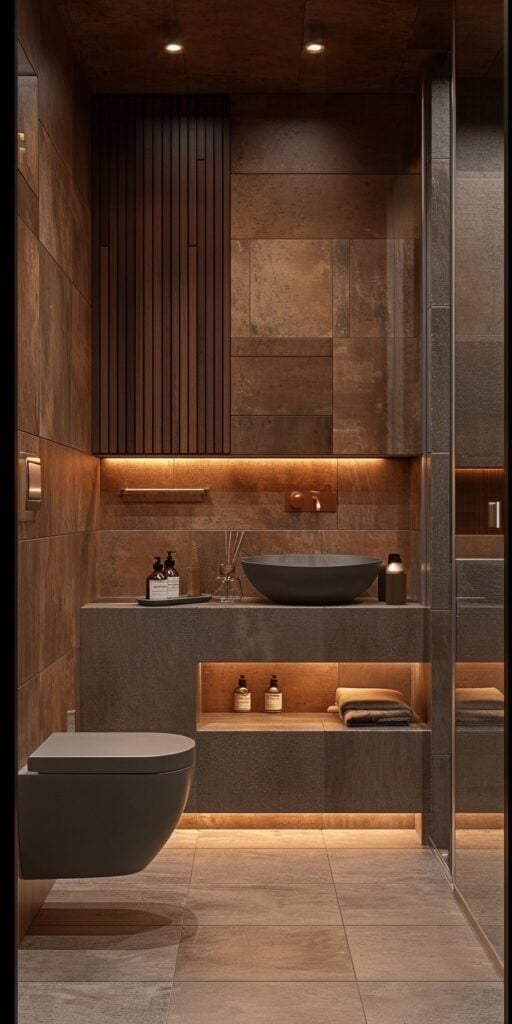
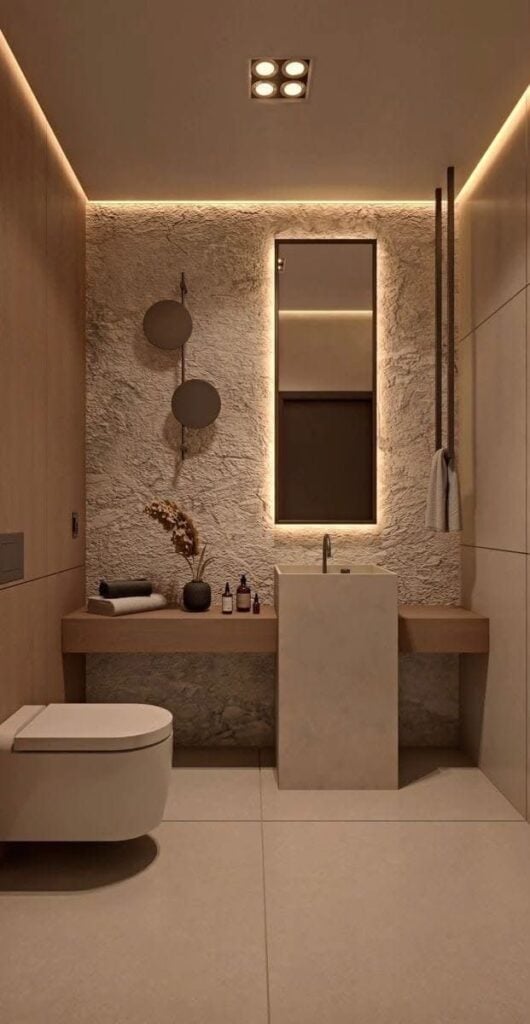
Planning bathroom lighting properly requires thinking through several factors before purchasing fixtures.
Start with tasks:
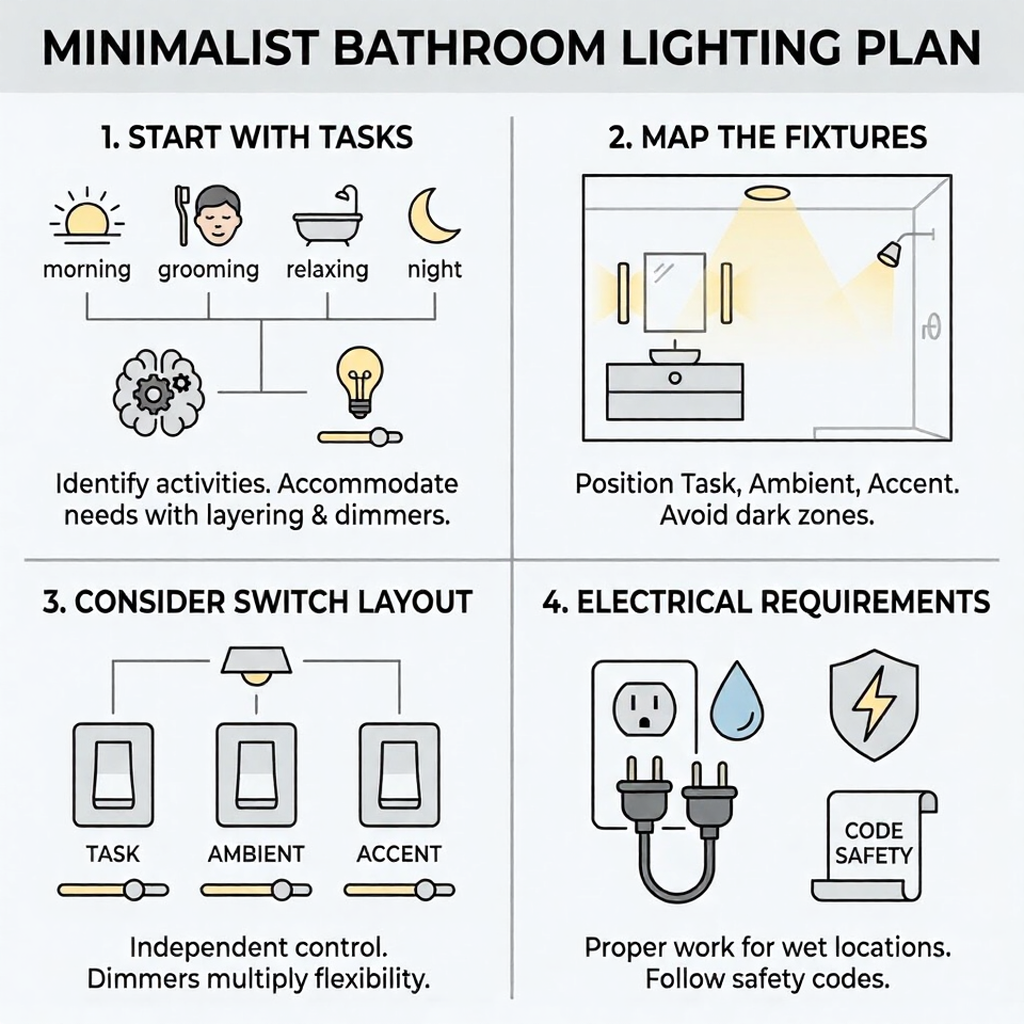
Identify every activity that happens in your bathroom: morning routines, evening skincare, bathing, middle-of-night visits, cleaning. Each activity has different lighting needs. Your design should accommodate all of them, usually through layering and dimmer controls.
Map the fixtures:
Sketch your bathroom layout and position fixtures for each layer. Task lighting flanks the mirror. Ambient lighting provides general coverage. Accent lighting highlights features. Check that no single position leaves dark zones or creates problematic shadows.
Consider the switch layout:
Vanity lighting works hardest when the vanity itself is properly chosen. Before setting mirror lights and sconces, compare the modern bathroom vanity options that suit the room’s storage, material, and basin layout.
Layered lighting requires multiple switches or a smart control system. At minimum, task and ambient lighting should operate independently. Accent lighting can share a circuit with ambient or have its own control. Dimmers multiply flexibility.
Electrical requirements:
Adding new fixtures, especially in wet locations like showers, requires proper electrical work. Bathroom electrical codes exist for safety—moisture and electricity are a dangerous combination. This isn’t the place for DIY experimentation. For any bathroom lighting project involving new wiring, moving fixtures, or adding circuits, work with a Texas Licensed Electrician in Austin who understands both the technical requirements and local codes. Proper installation ensures your beautiful new lighting is also safe.
Fixture Selection Guide
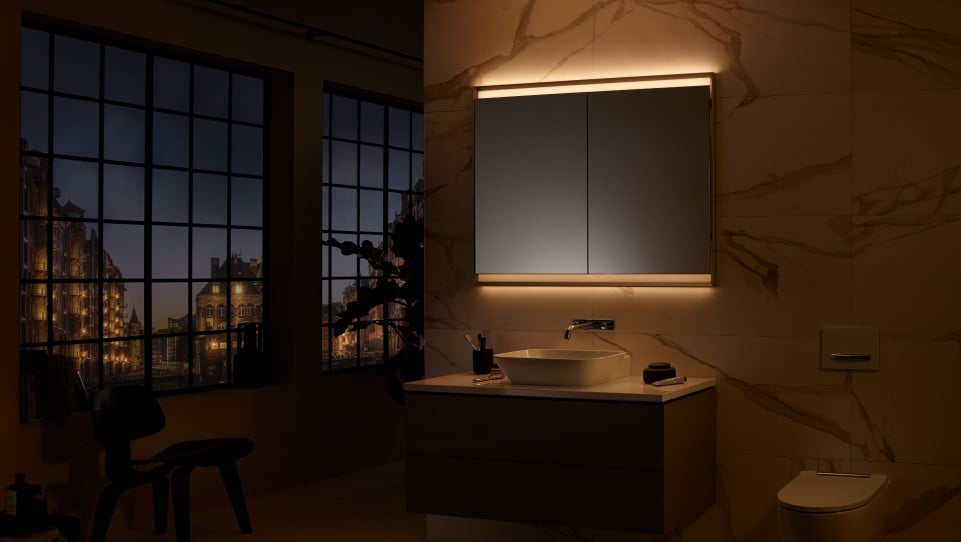
Choosing actual fixtures requires balancing aesthetics, function, and practical constraints.
Vanity fixtures:
For side-mounted sconces, look for fixtures that direct light outward toward your face, not upward toward the ceiling. Frosted or opal glass diffuses light gently. For over-mirror bars, longer is better—short fixtures over wide mirrors create the same shadow problems as overhead lights.
Ceiling fixtures:
Recessed lights offer clean lines and disappear visually. Flush-mount fixtures work in lower ceilings. In larger bathrooms with adequate height, pendant lights or chandeliers add personality. Ensure any fixture above tubs or showers carries appropriate wet-location ratings.
LED considerations:
Modern LED fixtures offer energy efficiency and longevity, but quality varies dramatically. Cheap LEDs may flicker, produce unpleasant color, or fail quickly. Invest in quality fixtures from reputable manufacturers, and check that integrated LED components are replaceable or that the manufacturer offers long warranties.
Common Mistakes to Avoid
Mistake: Relying on recessed lights alone. Recessed ceiling lights create the same unflattering shadows as any overhead source. They’re fine for ambient lighting but fail as primary vanity illumination.
Mistake: Ignoring dimmer compatibility. Not all LED fixtures work with all dimmers. Check compatibility before purchasing, or you’ll deal with flickering, buzzing, or limited dimming range.
Mistake: Choosing style over function. A beautiful fixture that doesn’t provide adequate light fails its primary purpose. Verify lumen output and light distribution patterns, not just appearance.
Mistake: Forgetting night lighting. Consider low-level lighting for nighttime bathroom visits—an LED night light, motion-activated strip under the vanity, or a dimmed accent light. Full-brightness lighting at 3 AM disrupts sleep patterns.
For a whole-home version of the same design problem, this bathroom lighting for 55+ homes explains how entries, bathrooms, lighting, kitchens, flooring, laundry, and outdoor rooms can work together in a 55+ home.
Bathroom lighting also matters in rental property interior design, because a clean, bright bathroom can reduce buyer or tenant doubt faster than another decorative accessory.
FAQ
How bright should bathroom vanity lighting be?
Aim for 75-100 watts equivalent per side sconce or 150+ watts equivalent for over-mirror fixtures. This provides adequate task lighting for grooming. Always install dimmer controls to adjust brightness for different needs.
What color temperature is best for bathroom lighting?
2700K-3000K (warm white) provides flattering light for most skin tones while remaining accurate enough for grooming tasks. Avoid anything below 2700K (too yellow) or above 4000K (too harsh and clinical).
Can I install bathroom lighting myself?
Simple fixture replacements using existing wiring may be DIY-appropriate. Any work involving new circuits, wet-location fixtures, or moving electrical boxes should be handled by a licensed electrician. Bathroom electrical codes are strict for good reason—safety.
How do I light a bathroom with no windows?
Windowless bathrooms benefit most from layered lighting. Increase ambient lighting levels, ensure quality task lighting at the vanity, and consider accent lighting to add depth. Use high-CRI bulbs to compensate for the absence of natural light.
What’s the biggest bathroom lighting mistake?
Relying on a single overhead fixture. One light source cannot provide flattering, functional, and atmospheric lighting simultaneously. Layer multiple sources and install dimmers for a bathroom that works for every situation.
Conclusion
Bathroom lighting determines whether your space feels like a relaxing retreat or a fluorescent-lit afterthought. The difference isn’t expensive fixtures—it’s understanding how light works and applying that knowledge through thoughtful layering.
Start by evaluating your current lighting: where are the shadows? When does the lighting feel wrong? What activities are poorly served? These observations guide your improvement plan.
This week: Replace your vanity bulbs with high-CRI options in the 2700K-3000K range. This single change improves color accuracy and flattering illumination immediately, at minimal cost.
This month: Add dimmer switches to existing fixtures. Even basic lighting becomes more versatile when you control intensity.
When you’re ready for more: Plan a full layered lighting scheme with task, ambient, and accent sources. Consult with a qualified electrician to ensure safe, code-compliant installation.
Your bathroom deserves better than one harsh overhead light. With the right approach, it can become the relaxing, aesthetic space you actually want to spend time in.
To explore more ways to elevate your space beyond lighting, read through our curated collection of contemporary bathroom ideas.
- 1.5Kshares
- Facebook0
- Pinterest1.5K
- Twitter0
- Reddit0