A practical anatomy guide for artists, illustrators, and character designers
- Introduction: This Is Not a Biology Lesson
- Body Proportions in Head Units (The Artist’s Measuring System)
- The Skeleton: The Hidden Structure Behind the Drawing
- Shoulders vs Hips: The Core Proportional Contrast
- Ribcage and Pelvis: How the Torso Is Built
- Muscle Distribution (What Actually Changes Visually)
- Fat Distribution → Flow of Lines (Very Important)
- Waist-to-Hip Relationship (Silhouette Design)
- Legs vs Torso Length
- Center of Gravity (Critical for Gesture Drawing)
- Joint Mobility and Pose Design
- Common Drawing Mistakes (And How to Fix Them)
- Visual Reference Suggestions (For This Article)
- Final Thoughts for Artists
Introduction: This Is Not a Biology Lesson
If you’re an artist, you don’t need medical terminology to draw convincing human body drawing base.
What you do need is a clear understanding of proportions, balance, and visual rhythm.
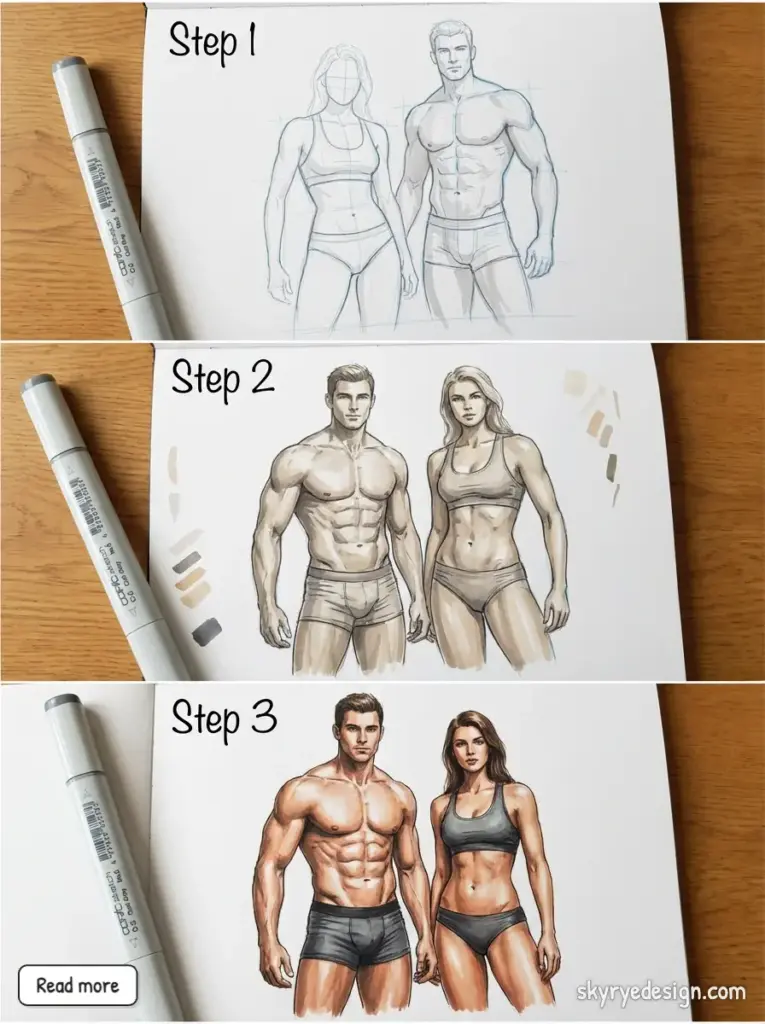
Male and female bodies are built from the same basic parts — the difference lies in how those parts are proportioned, connected, and simplified into shapes. These proportional differences affect:
- Gesture and line of action
- Silhouette readability
- Weight distribution and balance
- Whether a figure feels stiff, soft, powerful, or elegant
This guide explains male vs female body proportions in a way artists actually use — through head units, shape language, and drawing logic. Every section includes a “For Artists” block with direct, practical advice you can apply immediately.
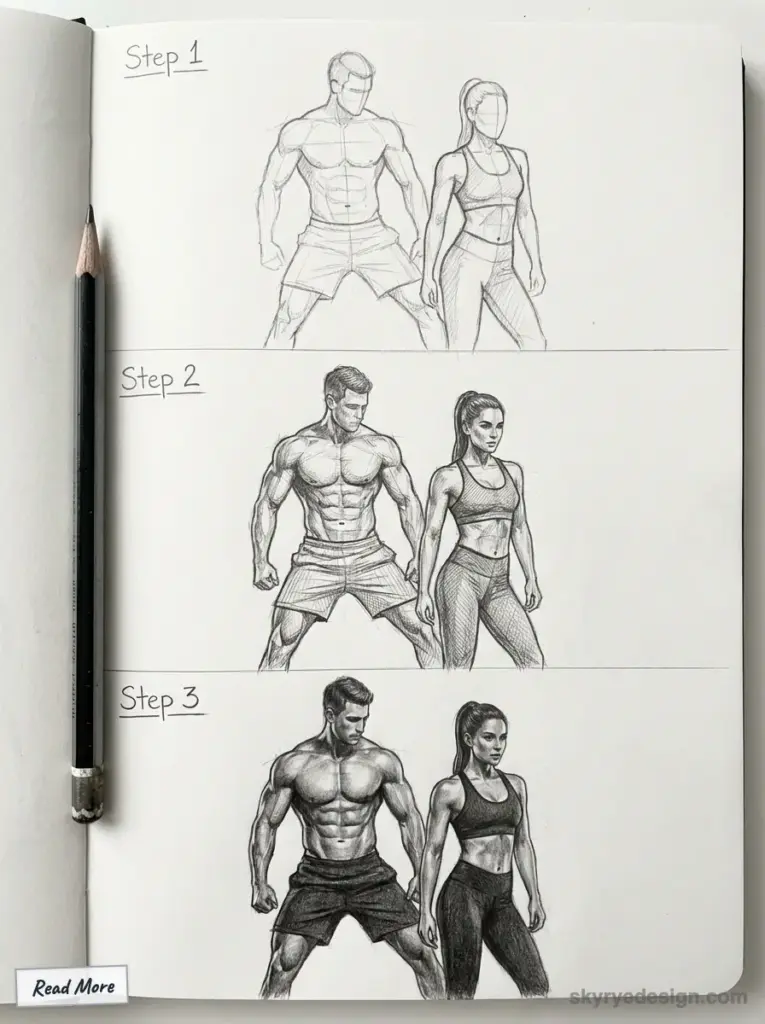
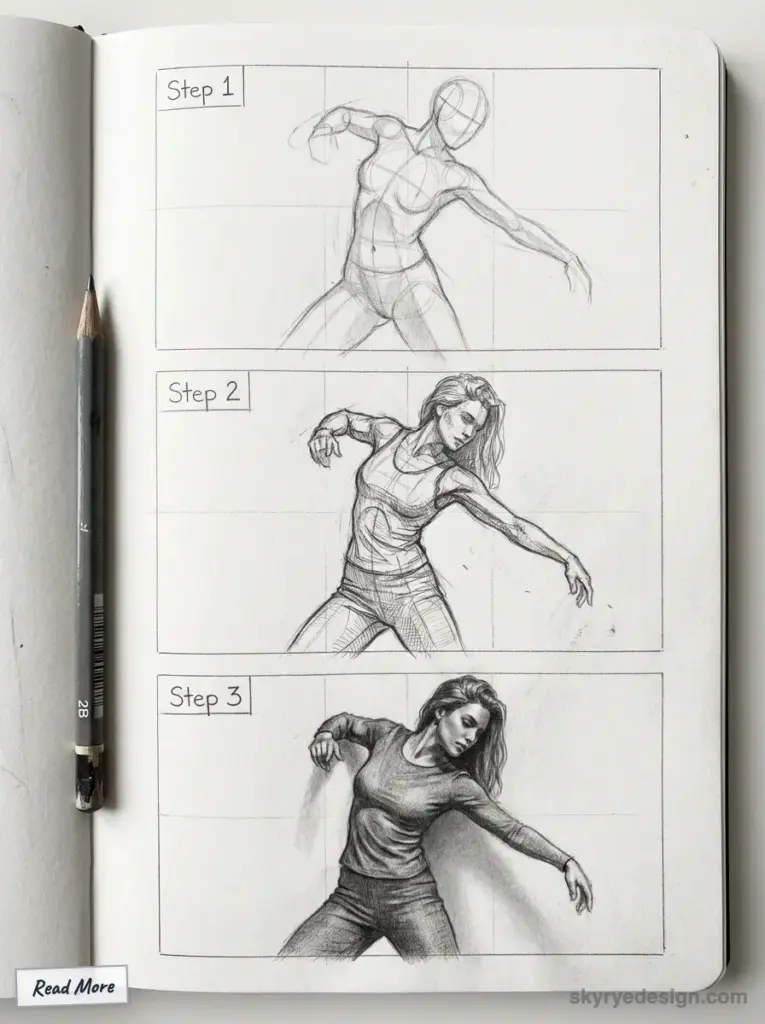
For a practical application of those proportion checks, use this female figure drawing tutorial to move from gesture to rib cage, pelvis, limbs, contour, and final shading.
Body Proportions in Head Units (The Artist’s Measuring System)
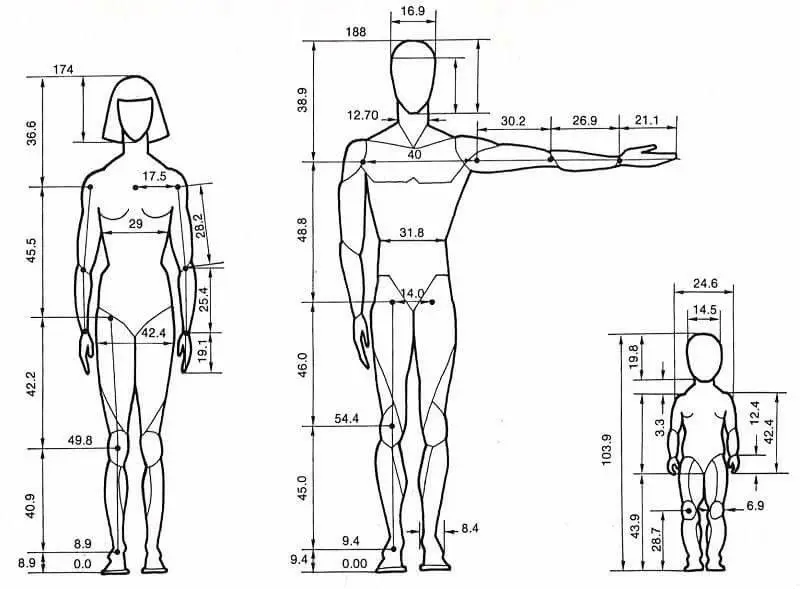
Before we talk about shoulders, hips, or muscles, we need a shared measuring tool.
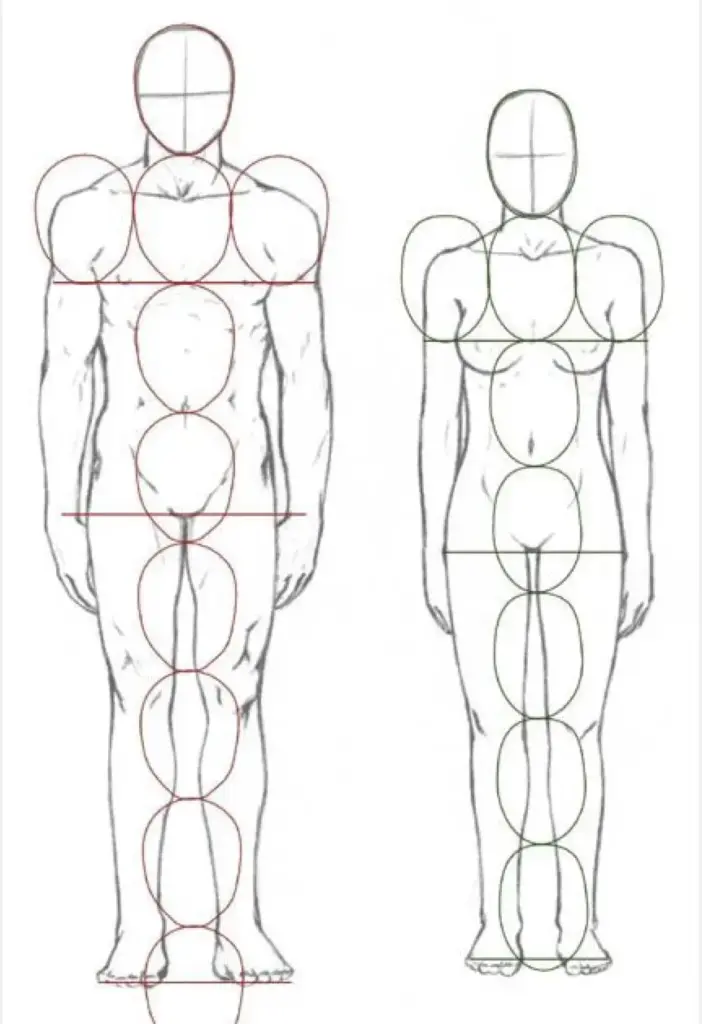
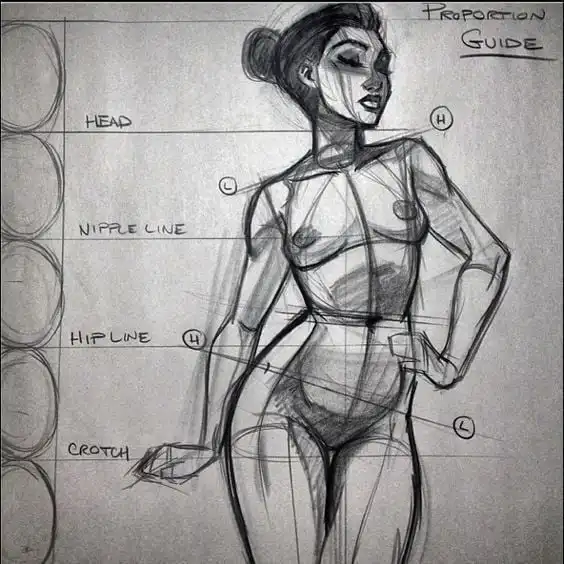
In academic figure drawing, proportions are measured in head units, not centimeters.
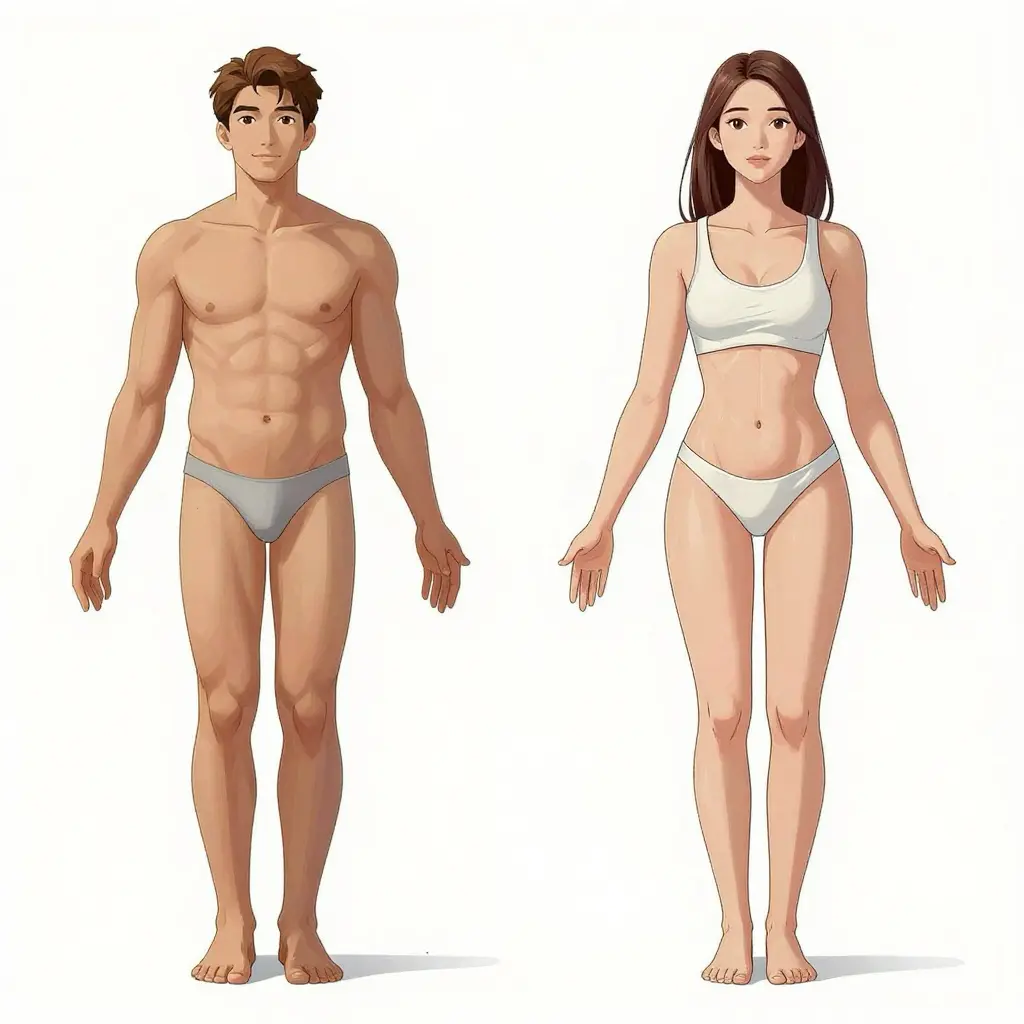
Standard Academic Proportions
- Male figure: ~ 8 heads tall
- Female figure: ~ 7.5 heads tall
This half-head difference might seem small, but visually it changes the entire impression of the figure.
Shoulder width is also measured in heads:
- Male shoulders: ~ 2.0–2.3 head widths
- Female shoulders: ~ 1.5–1.8 head widths
For Artists
- If your male figure looks soft or adolescent, check if the body is closer to 7–7.5 heads.
- If your female figure looks bulky or masculine, the shoulders are often too wide relative to the head.
- Always block in the head first, then build the body outward using head units as your ruler.
The Skeleton: The Hidden Structure Behind the Drawing
You don’t need to draw skeletons every day — but you do need to understand what they imply.
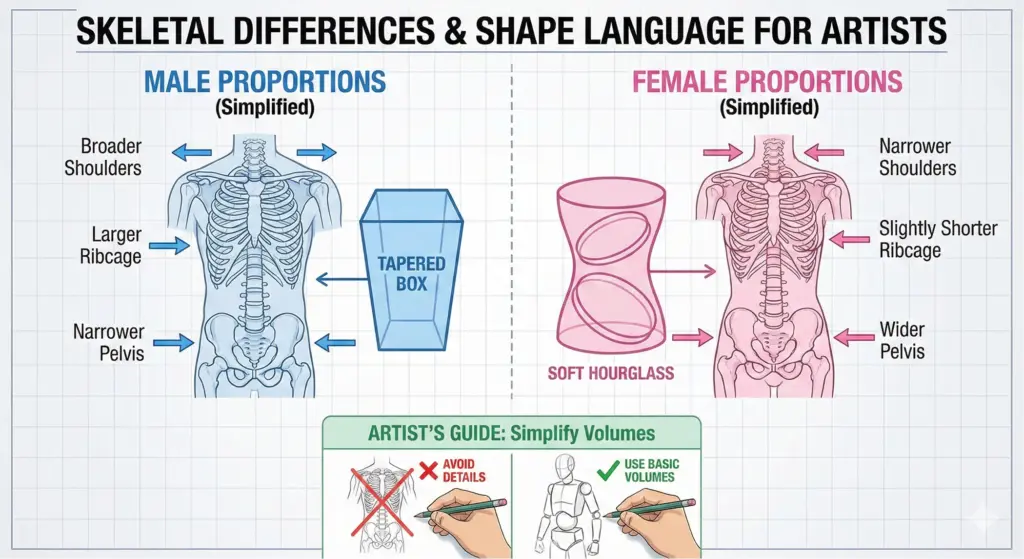
The skeleton determines:
- Width vs height
- Where curves appear
- How weight is supported
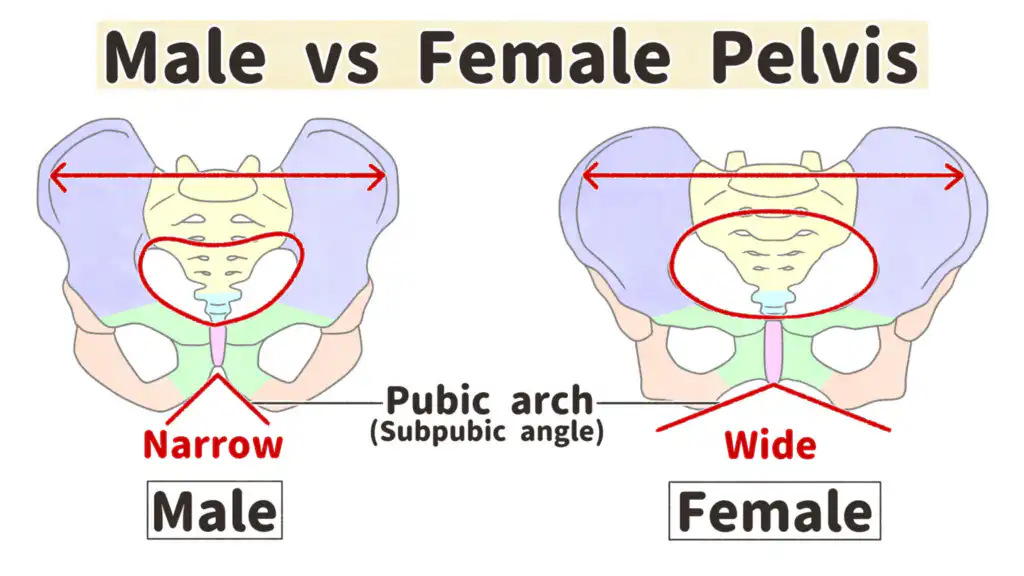
Key Skeletal Differences (Simplified)
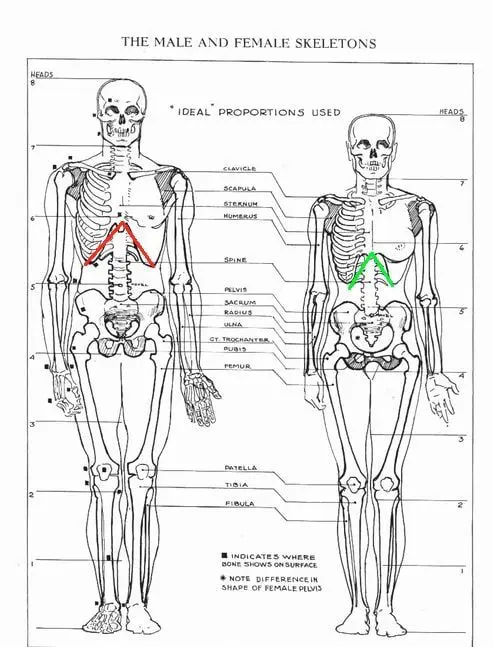
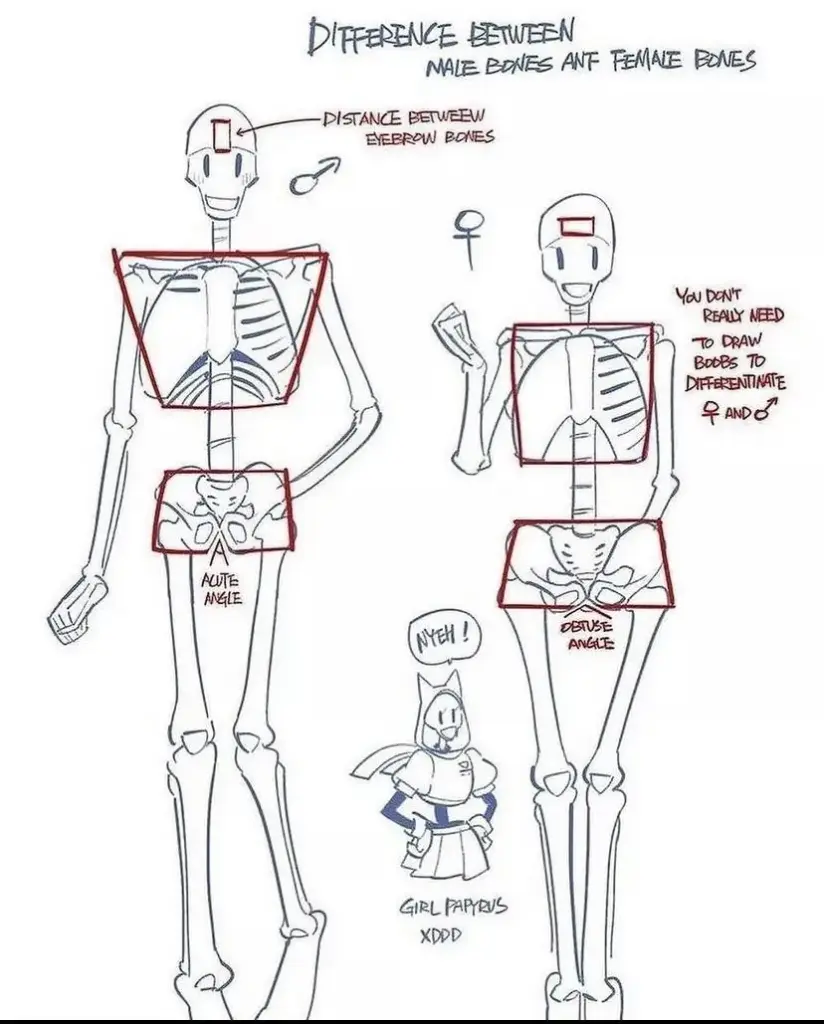
- Male skeleton
- Broader shoulders
- Narrower pelvis
- Larger ribcage
- Female skeleton
- Narrower shoulders
- Wider pelvis
- Slightly shorter ribcage
These differences affect the overall shape language of the figure.
For Artists
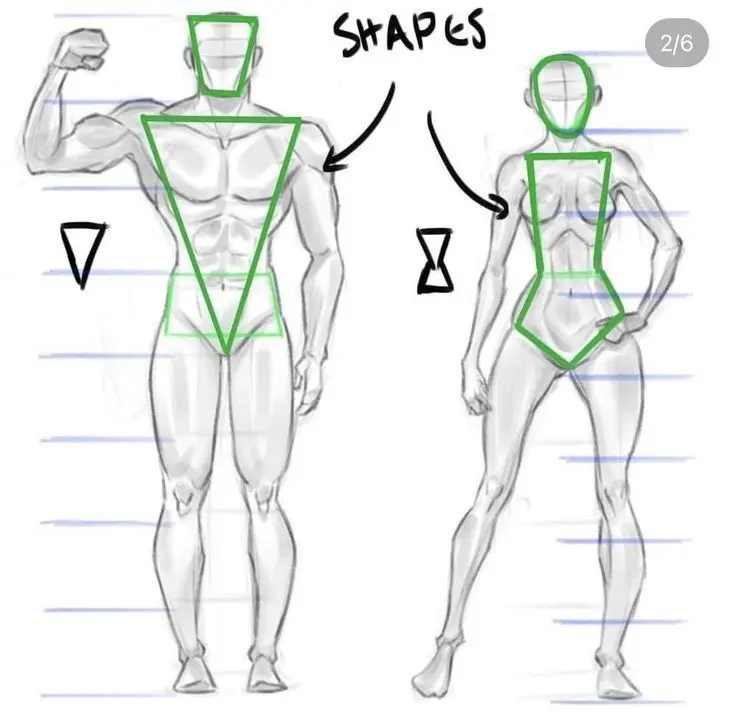
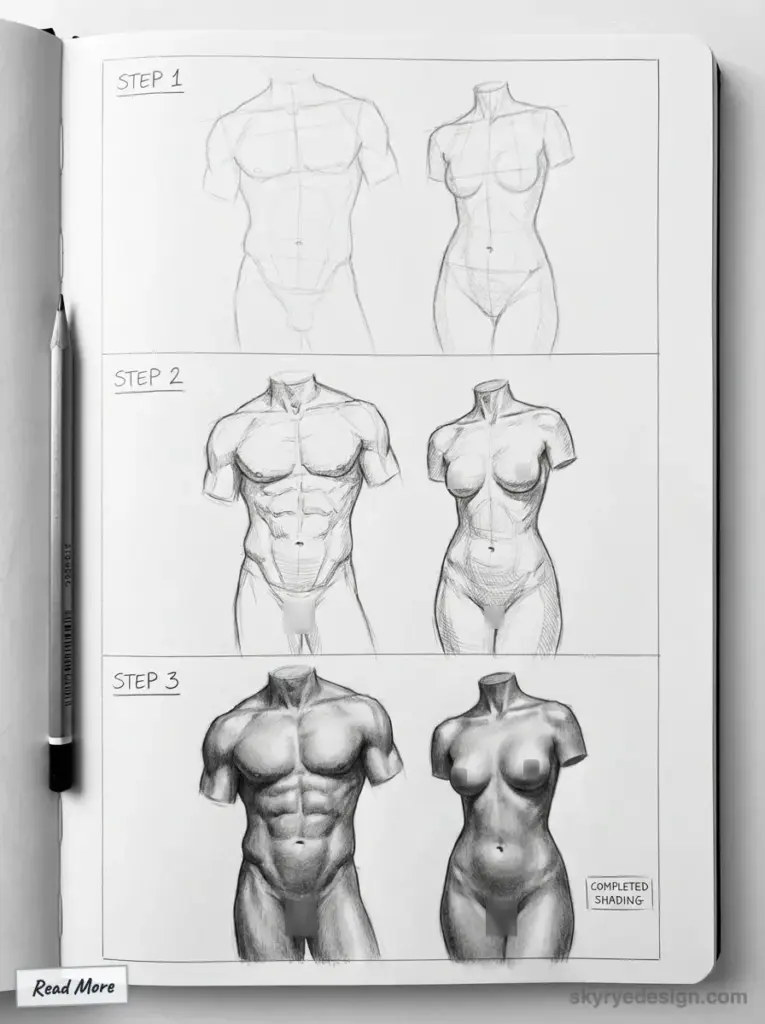
- Think of the male torso as a tapered box (wide top → narrow bottom).
- Think of the female torso as a soft hourglass or two offset ovals.
- Don’t copy details — simplify the skeleton into basic volumes before adding anatomy.
Shoulders vs Hips: The Core Proportional Contrast
This is one of the most important visual differences.
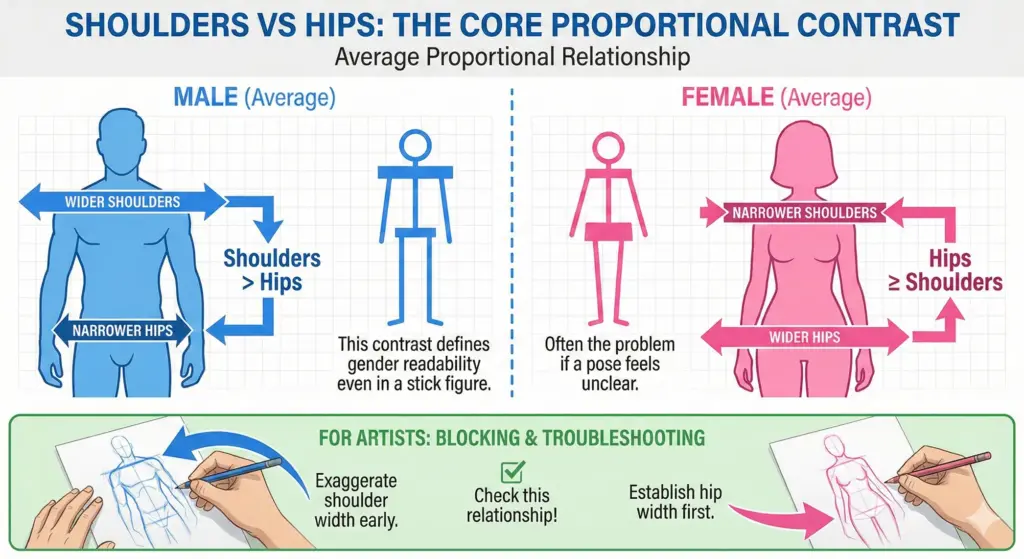
Average Proportional Relationship
- Male: Shoulders wider than hips
- Female: Hips wider than shoulders (or roughly equal)
This contrast alone can define gender readability even in a stick figure.
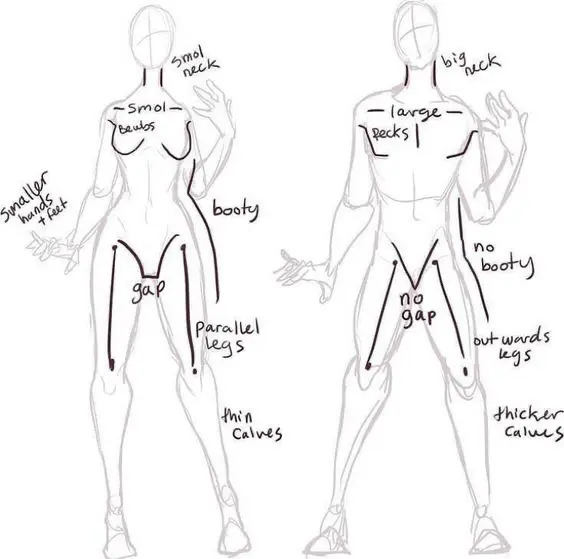
For Artists
- When blocking a male figure, exaggerate the shoulder width early.
- When blocking a female figure, establish the hip width first.
- If a pose feels unclear, check this relationship — it’s often the problem.
Ribcage and Pelvis: How the Torso Is Built
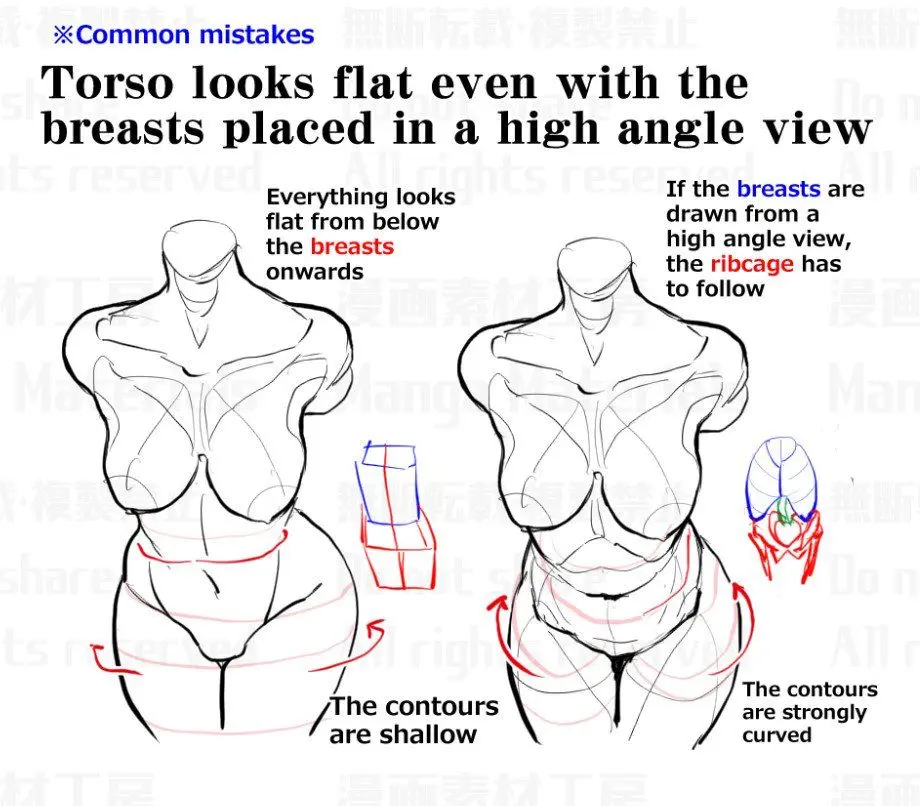
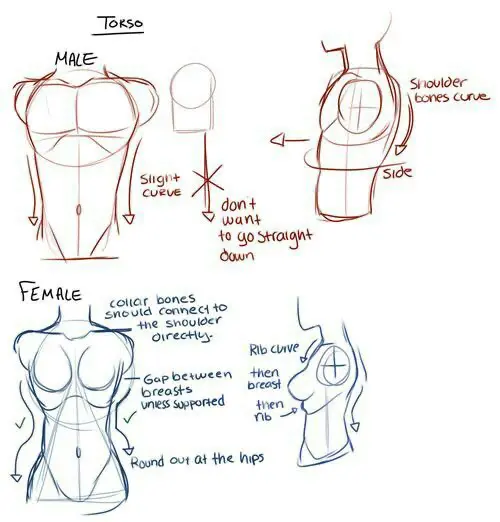
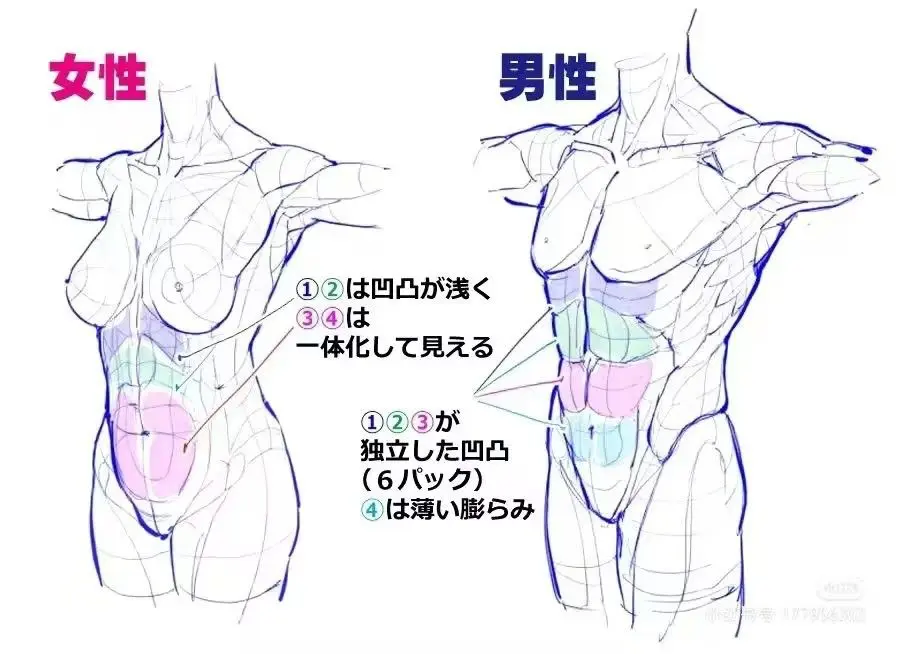
The torso isn’t one shape — it’s two masses:
- Ribcage
- Pelvis
Structural Differences
- Male
- Larger ribcage
- Ribcage and pelvis align more vertically
- Female
- Smaller ribcage
- Ribcage often tilts relative to the pelvis
This tilt creates natural curves and rhythm.
For Artists
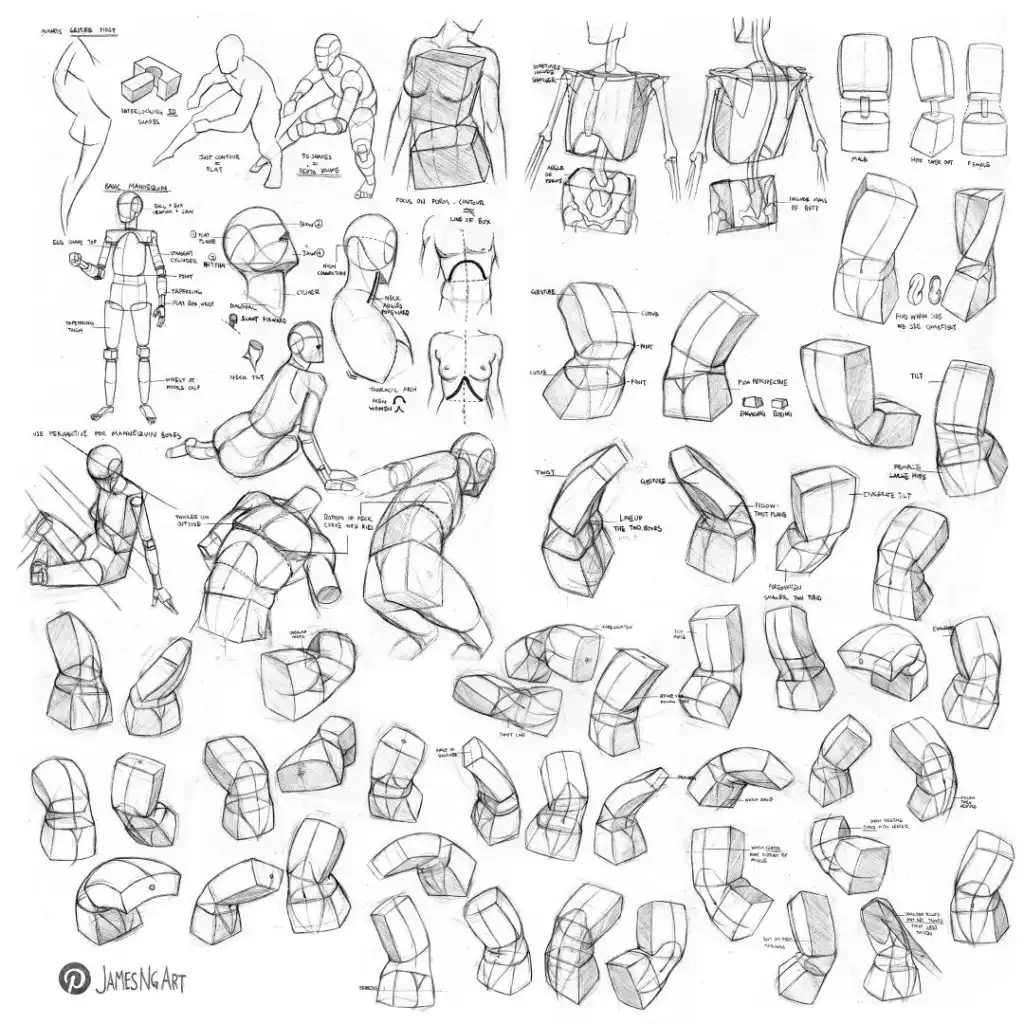
- Draw the ribcage and pelvis as separate forms.
- In female figures, allow more twist and offset between them.
- In male figures, keep them more stacked and aligned for solidity.
Muscle Distribution (What Actually Changes Visually)
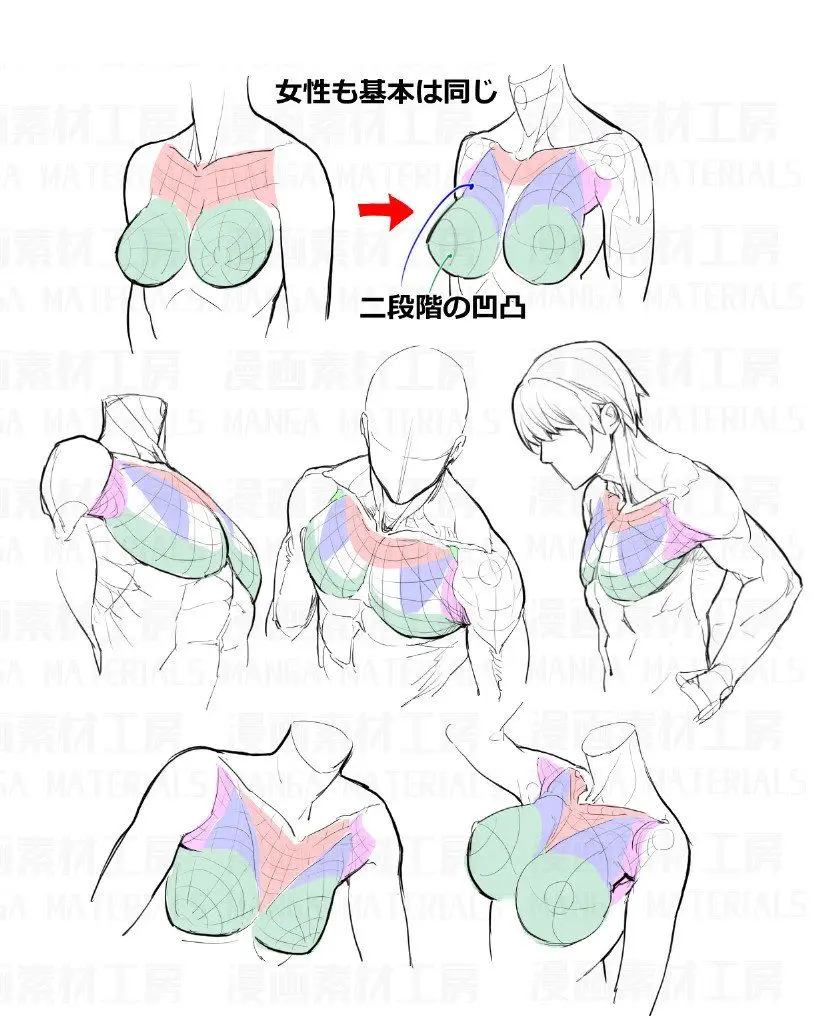
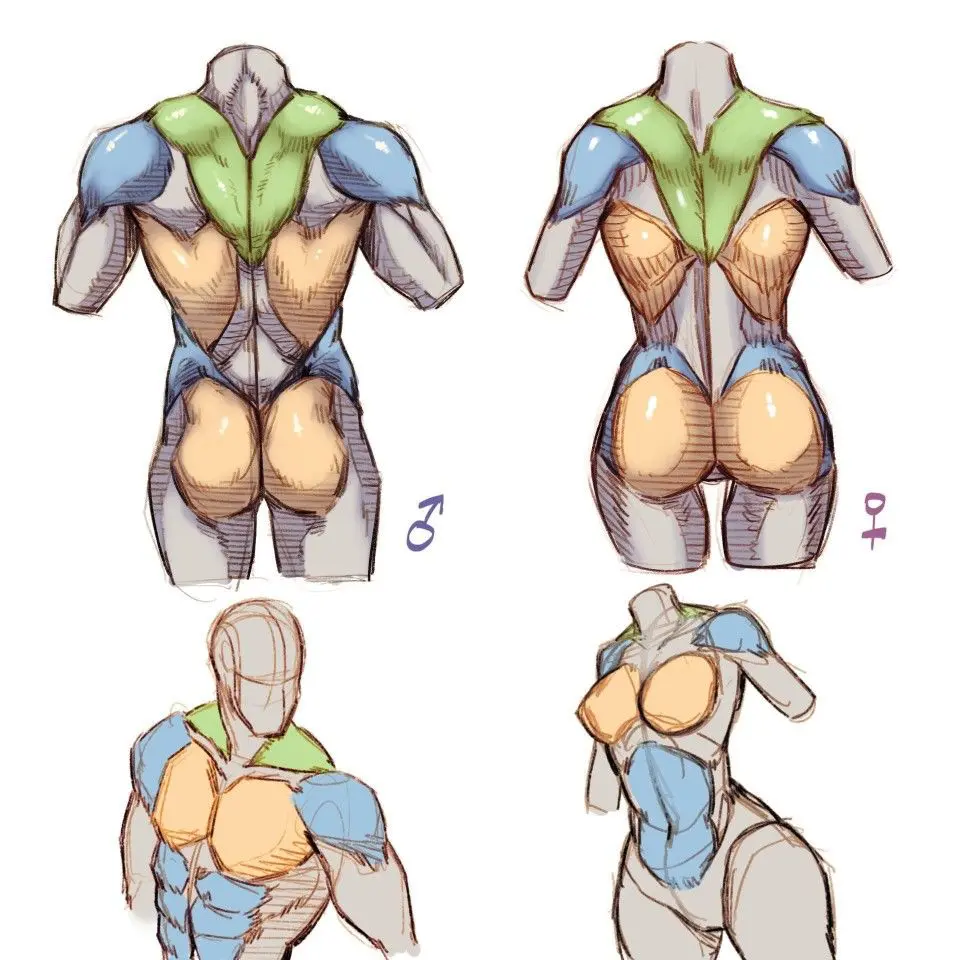
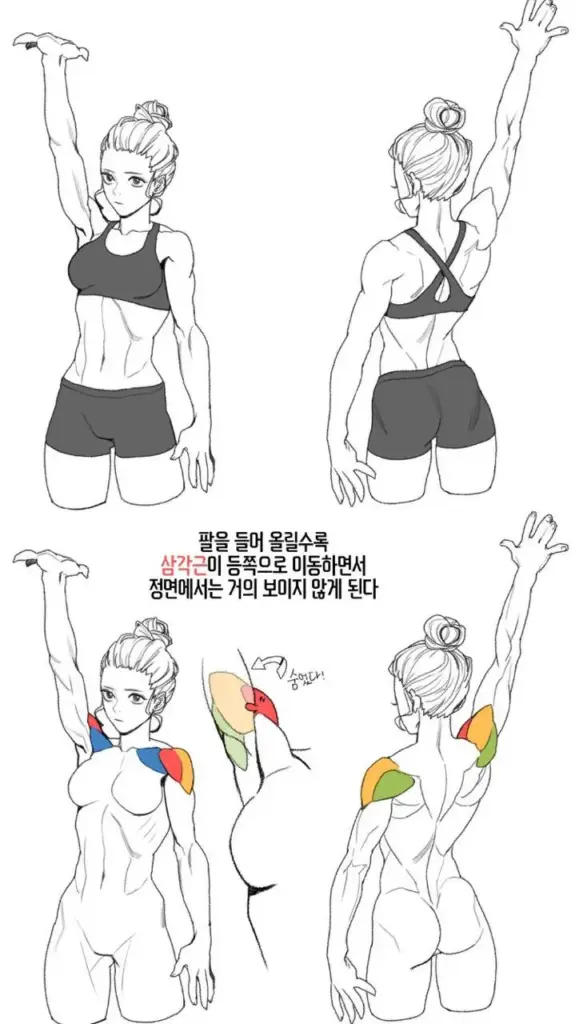
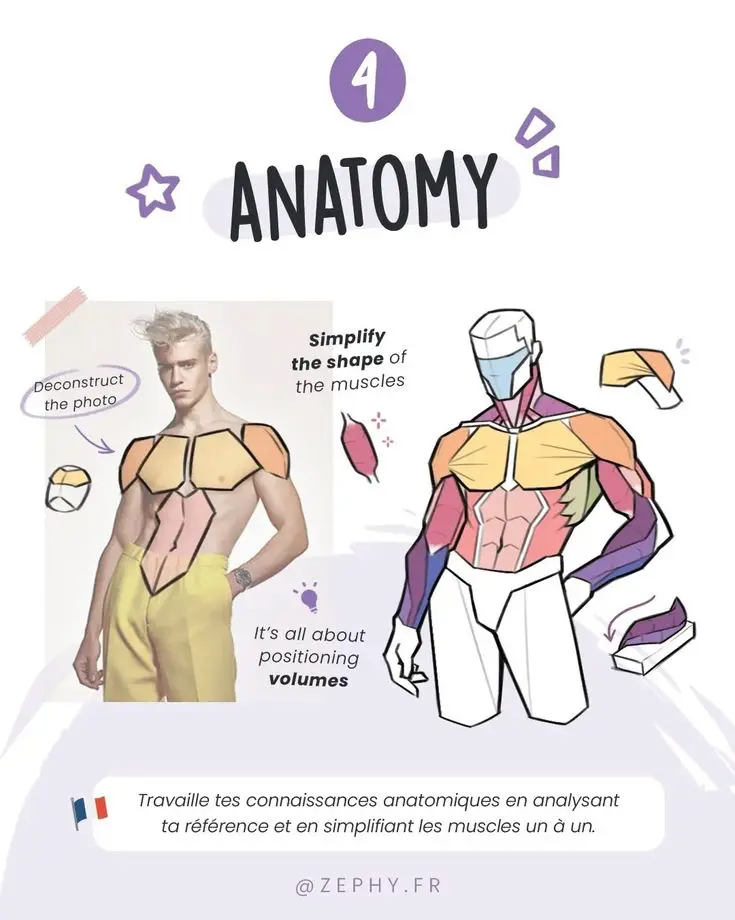
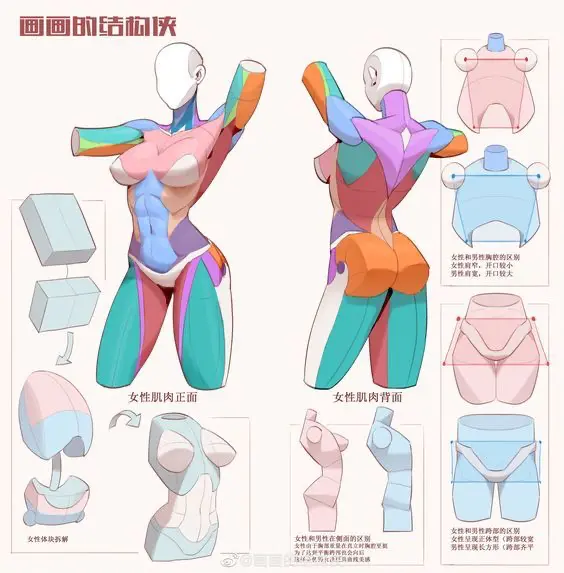
Muscle isn’t just about size — it’s about where mass appears.
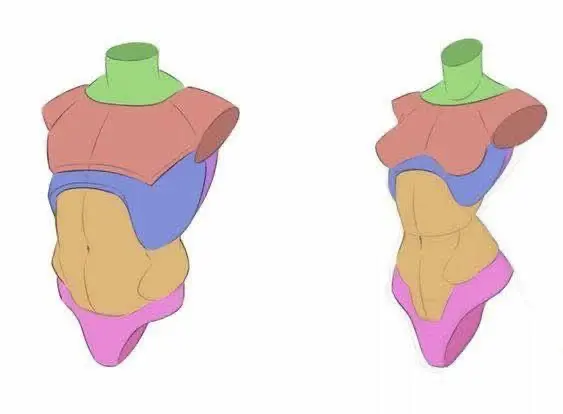
General Pattern
- Male bodies
- More mass in chest, shoulders, arms
- Female bodies
- More mass in hips, thighs, glutes
For Artists
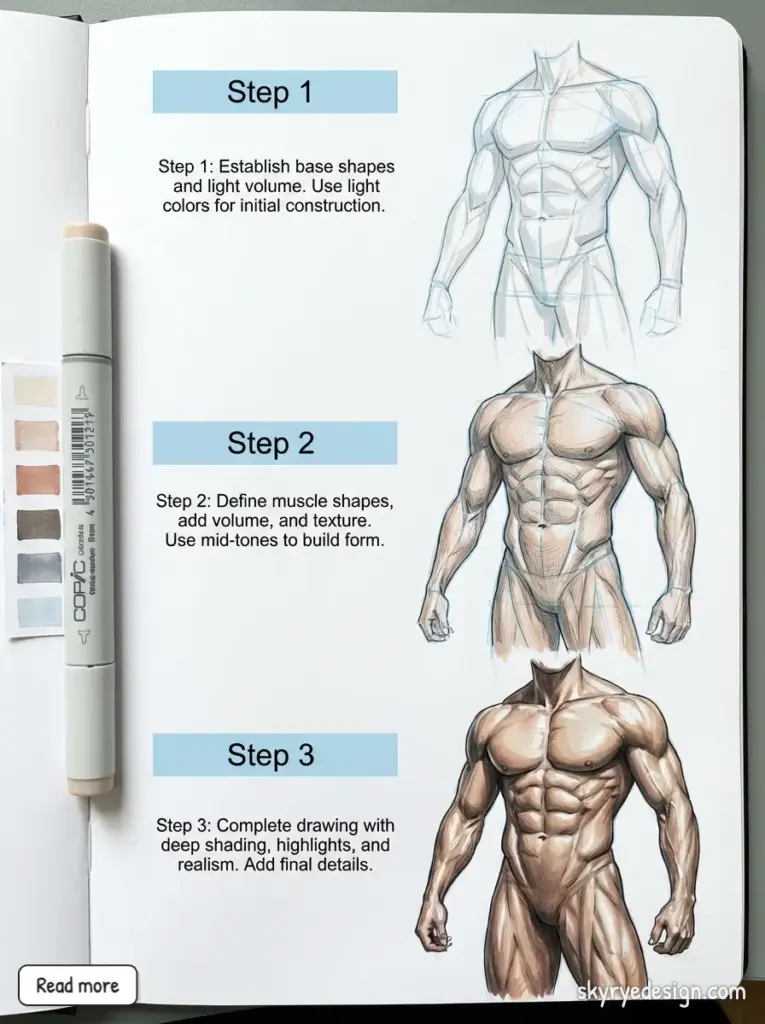
- Male figures read stronger when upper-body forms are emphasized.
- Female figures read more natural when lower-body volume is respected.
- Avoid copying bodybuilding anatomy — think in simple mass placement.
Fat Distribution → Flow of Lines (Very Important)
Forget the medical terms.
For artists, fat distribution matters because it affects line quality.
Visual Difference
- Male bodies
- Straighter lines
- Sharper transitions
- Boxier shapes
- Female bodies
- Softer transitions
- Continuous curves
- S-shaped flow
For Artists
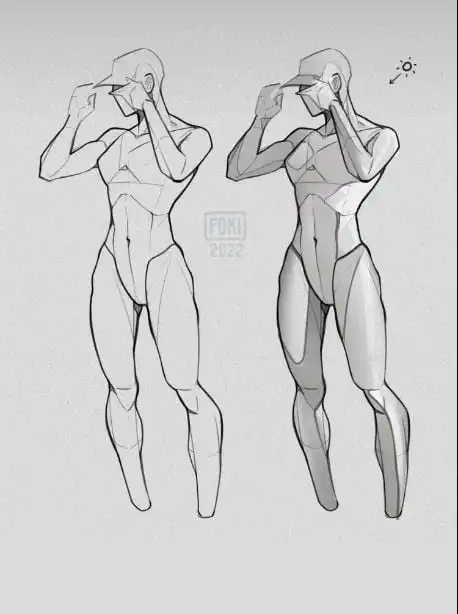
- Use straight lines and angles when blocking male figures.
- Use curved, flowing lines when sketching female figures.
- If your female drawing feels stiff, you’re likely overusing straight lines.
- If your male drawing feels soft, you’re likely overusing curves.
This alone can dramatically improve your sketches.
Waist-to-Hip Relationship (Silhouette Design)
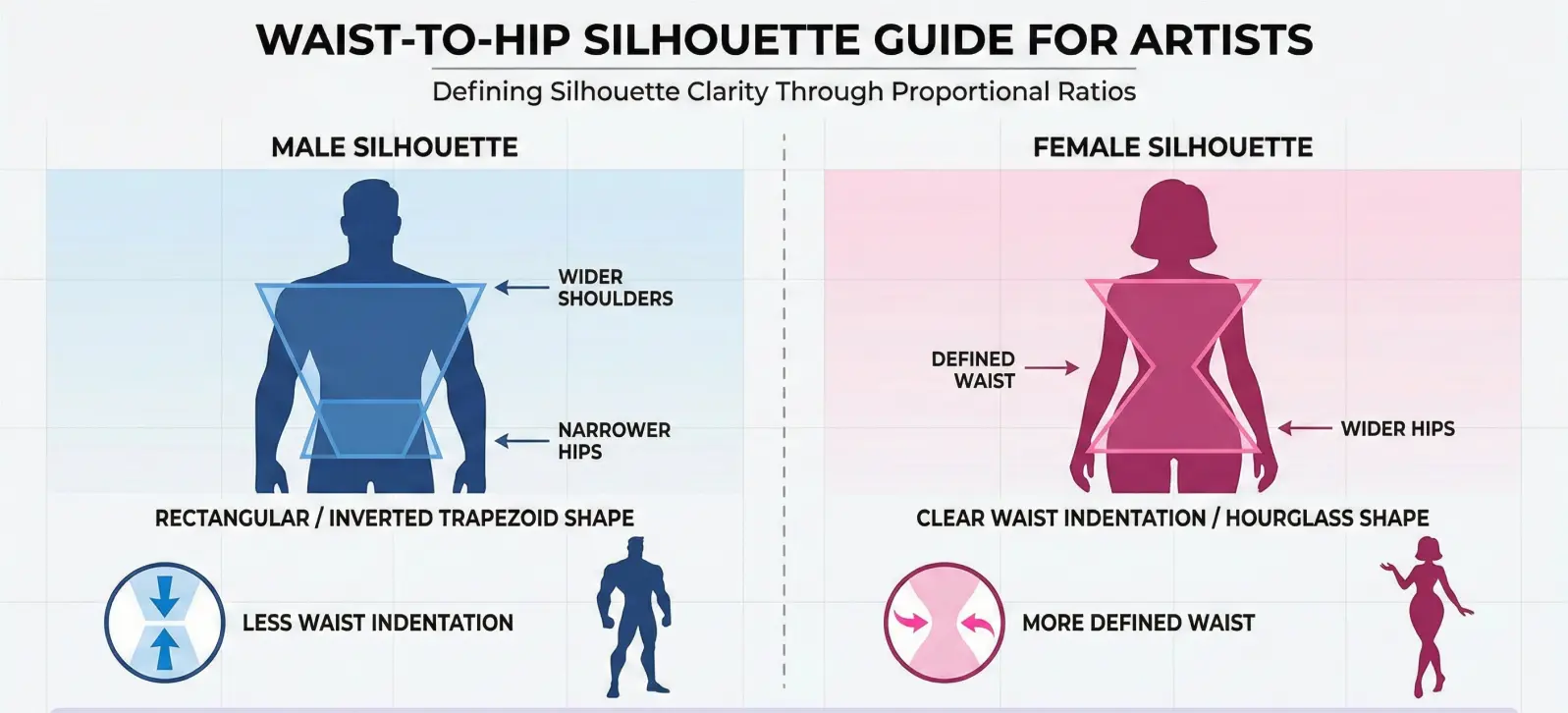
This ratio defines silhouette clarity.
- Male silhouette: more rectangular or inverted trapezoid
- Female silhouette: clearer waist indentation
For Artists
- Step back and check the silhouette only.
- A good silhouette should read clearly without internal details.
- Strong characters often rely on exaggerated but believable ratios.
Legs vs Torso Length
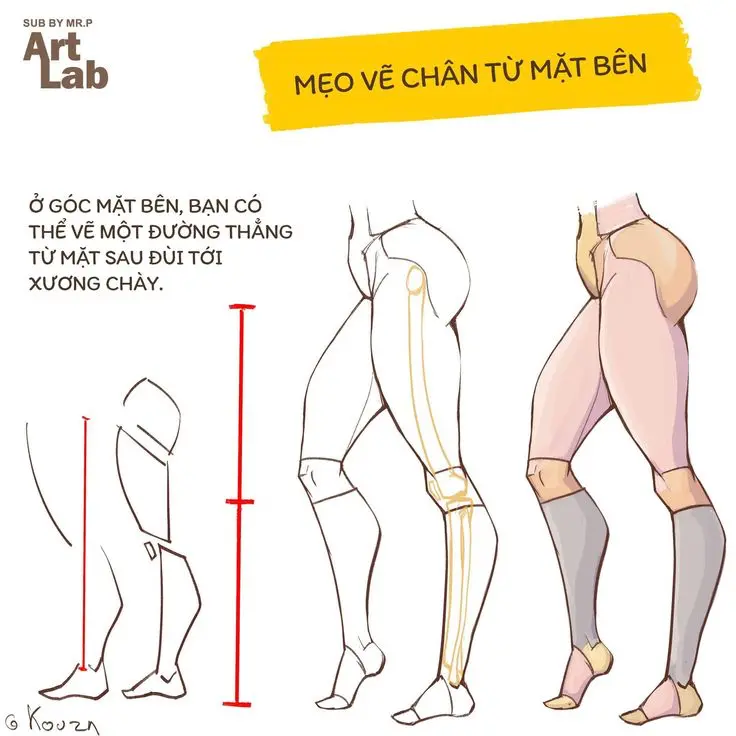
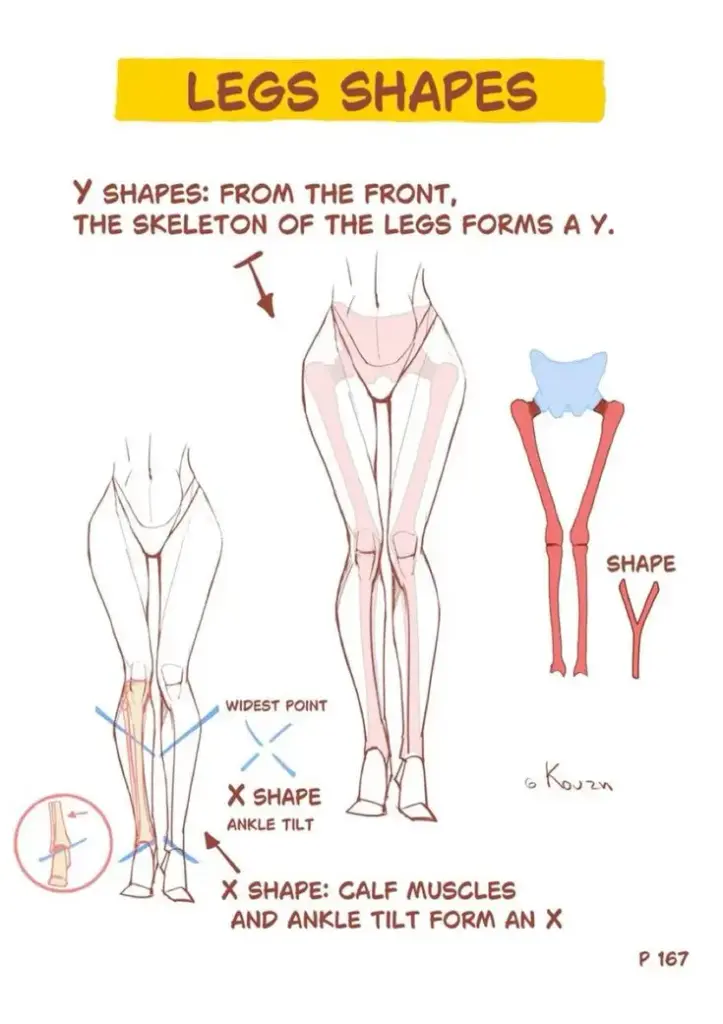
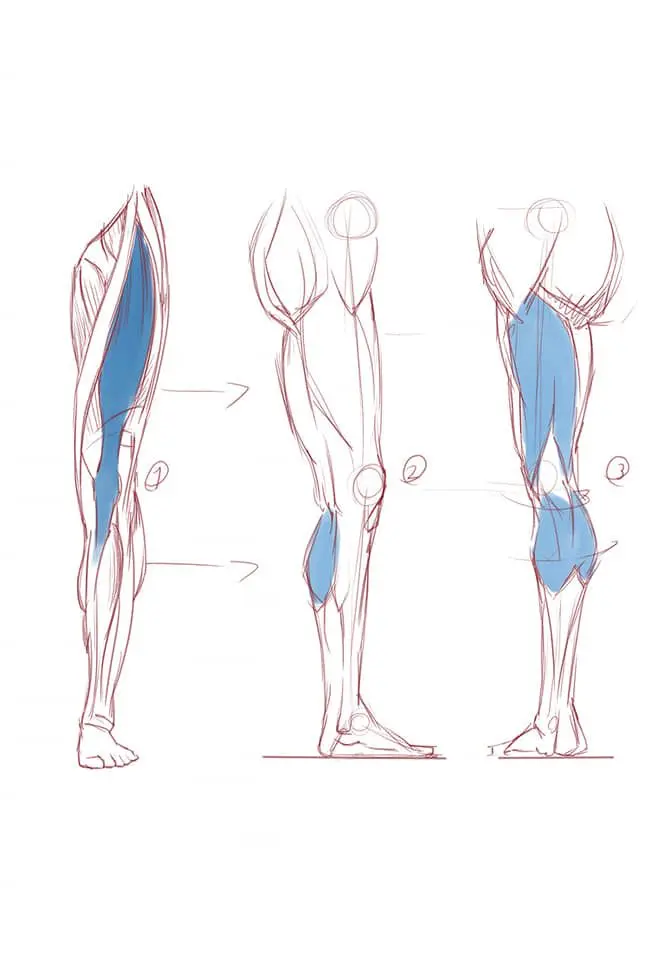
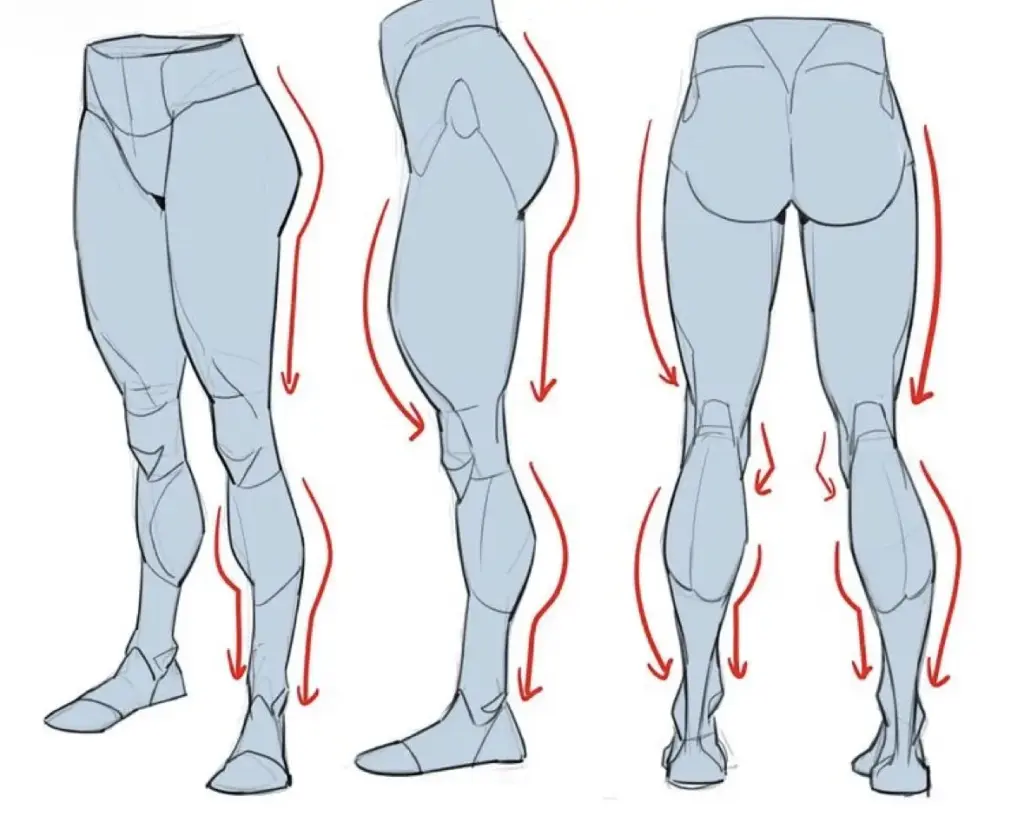
This difference is subtle but powerful.
- Male figures
- Slightly longer legs relative to torso
- Female figures
- Slightly longer torso relative to legs
For Artists
- Longer legs enhance a heroic or dynamic male look.
- A slightly longer torso gives female figures a grounded, elegant feel.
- Use this intentionally in character design, not randomly.
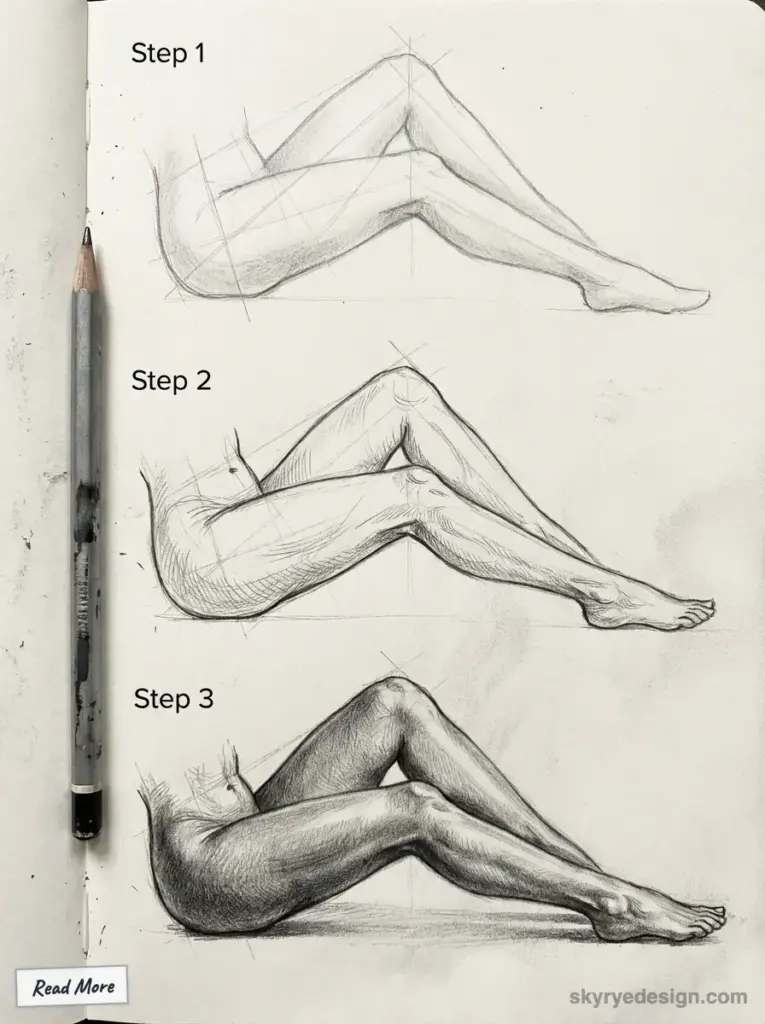
Center of Gravity (Critical for Gesture Drawing)
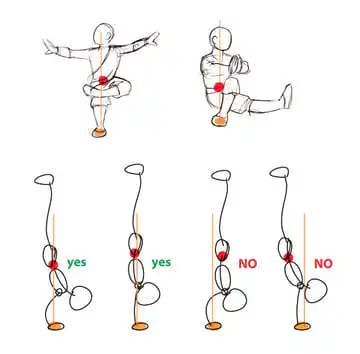
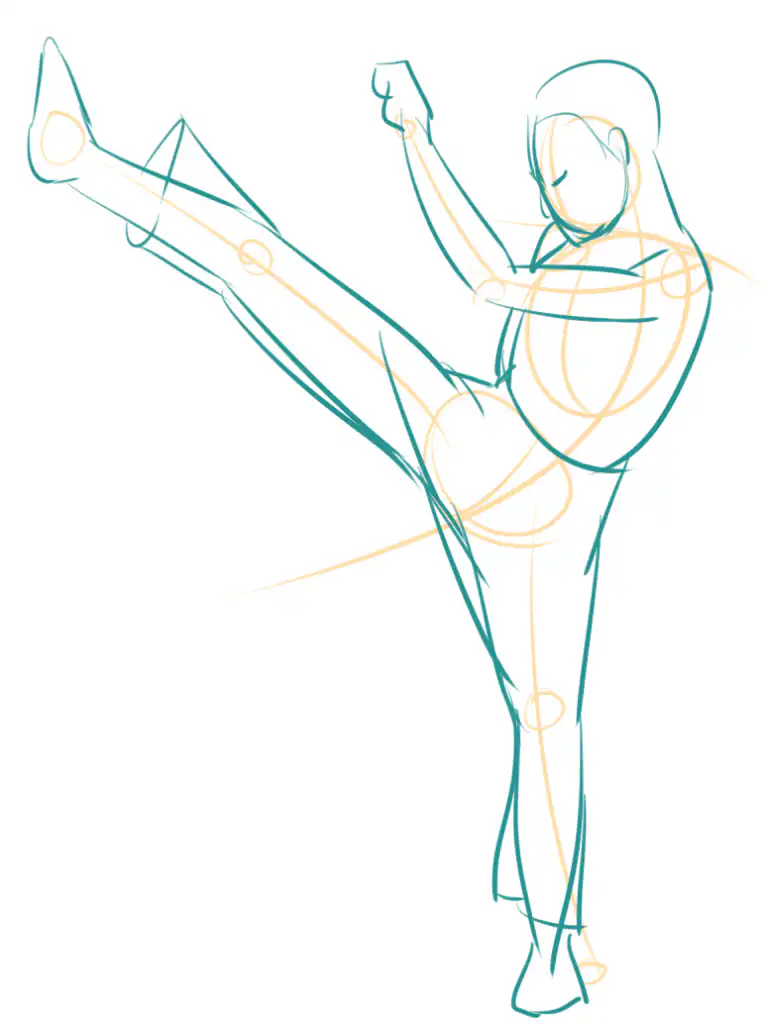
This is one of the most important concepts for artists.
Structural Difference
- Male center of gravity: higher (closer to chest)
- Female center of gravity: lower (closer to hips)
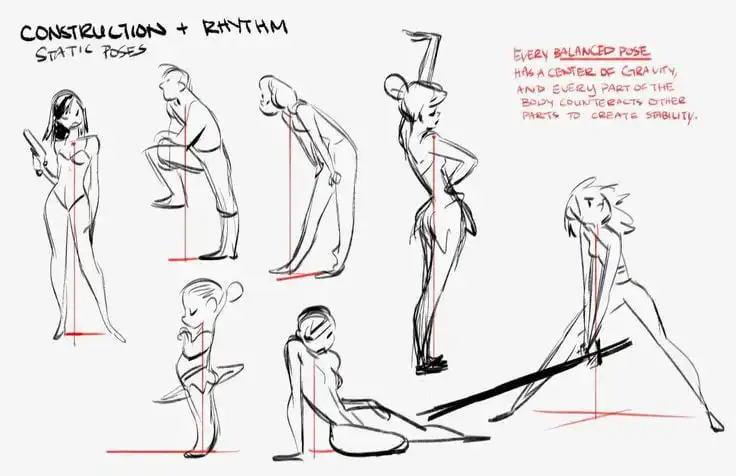
For Artists
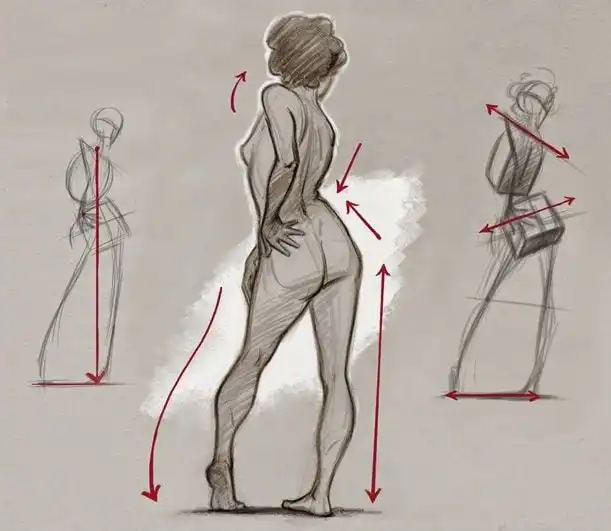
This directly affects your Line of Action.
- Male poses often feel top-heavy, driven by shoulders and chest.
- Female poses feel grounded, with motion flowing through hips and legs.
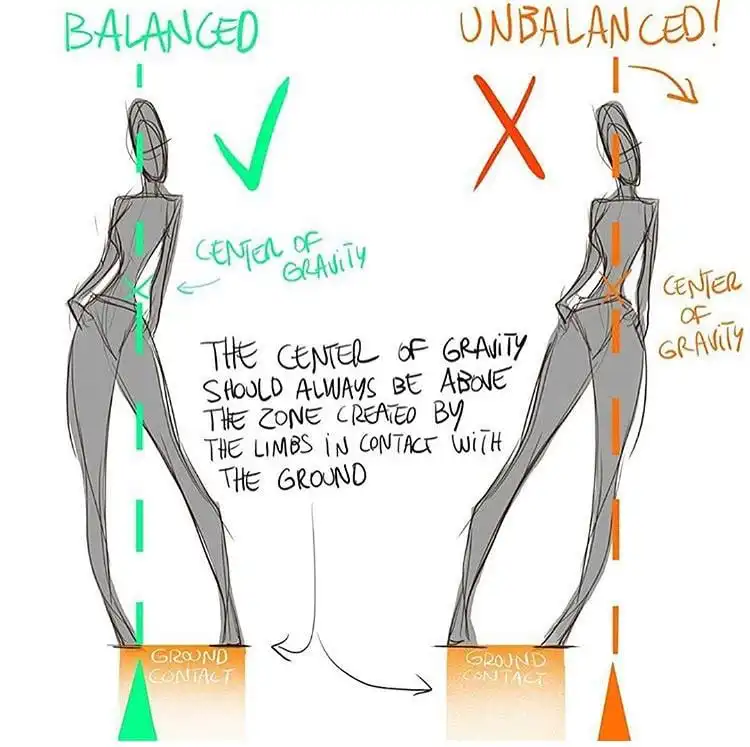
When drawing gestures:
- Drop the balance point lower for female figures.
- Let male poses initiate movement from the upper torso.
If a pose feels unstable, the center of gravity is usually wrong.
Joint Mobility and Pose Design
Female bodies generally allow more visible flexibility, especially in the hips and spine.
For Artists
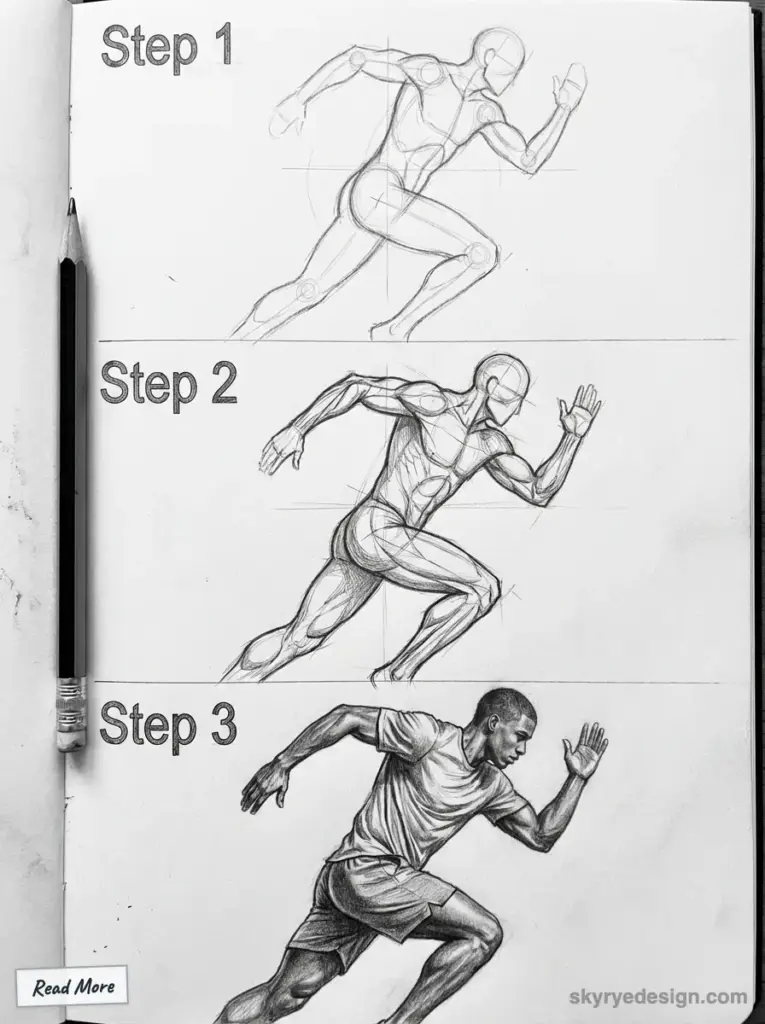
- Female poses can comfortably use deeper curves and twists.
- Male poses often look better with controlled, powerful motion.
- This is not a rule — it’s a tendency you can use or break intentionally.
Common Drawing Mistakes (And How to Fix Them)
Mistake 1: Same body, different chest
👉 Fix: Rebuild proportions from the skeleton and head units.
Mistake 2: Over-detailing anatomy
👉 Fix: Simplify into boxes, cylinders, and curves first.
Mistake 3: Ignoring silhouette
👉 Fix: Check readability in solid black.
Visual Reference Suggestions (For This Article)
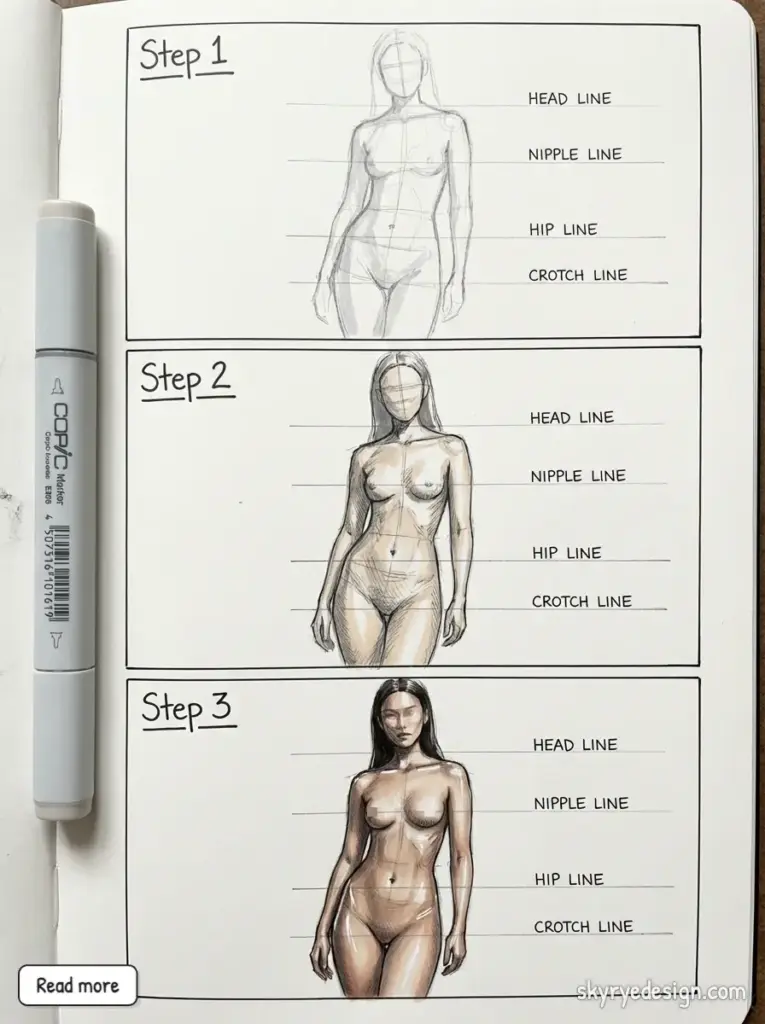
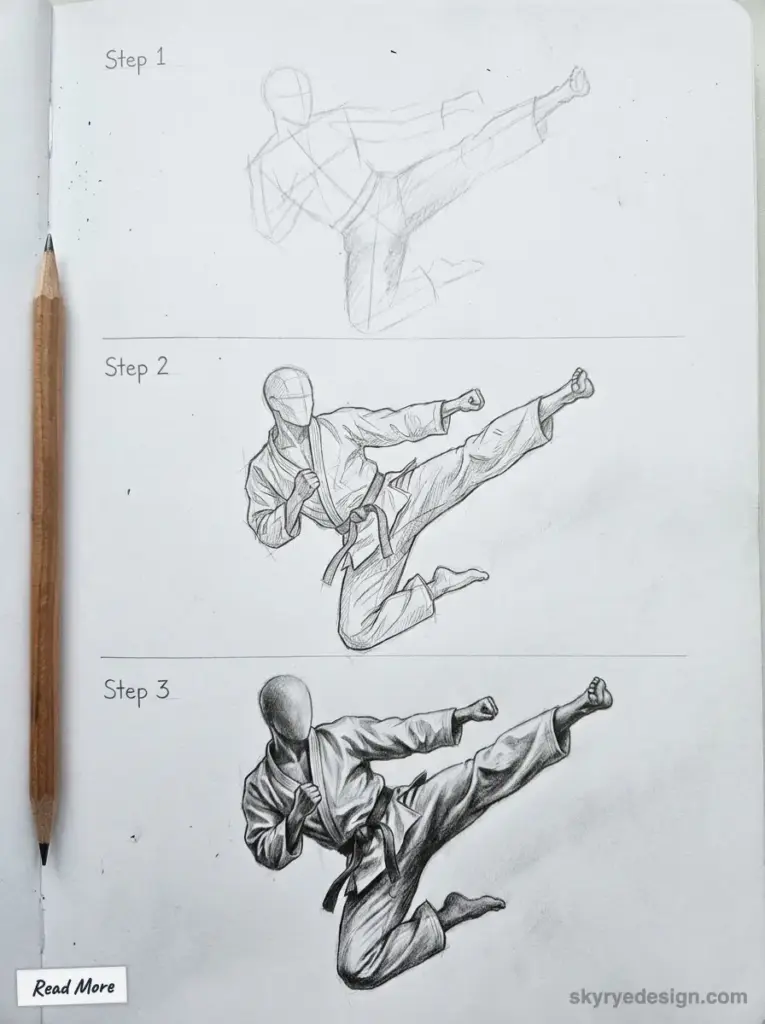
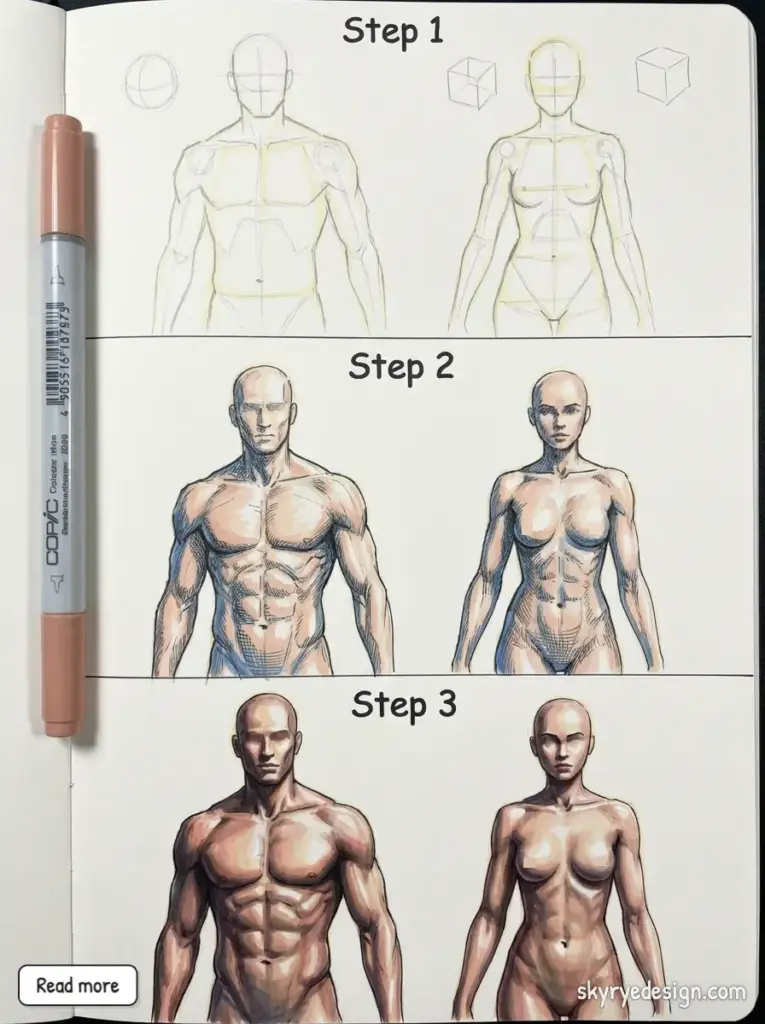
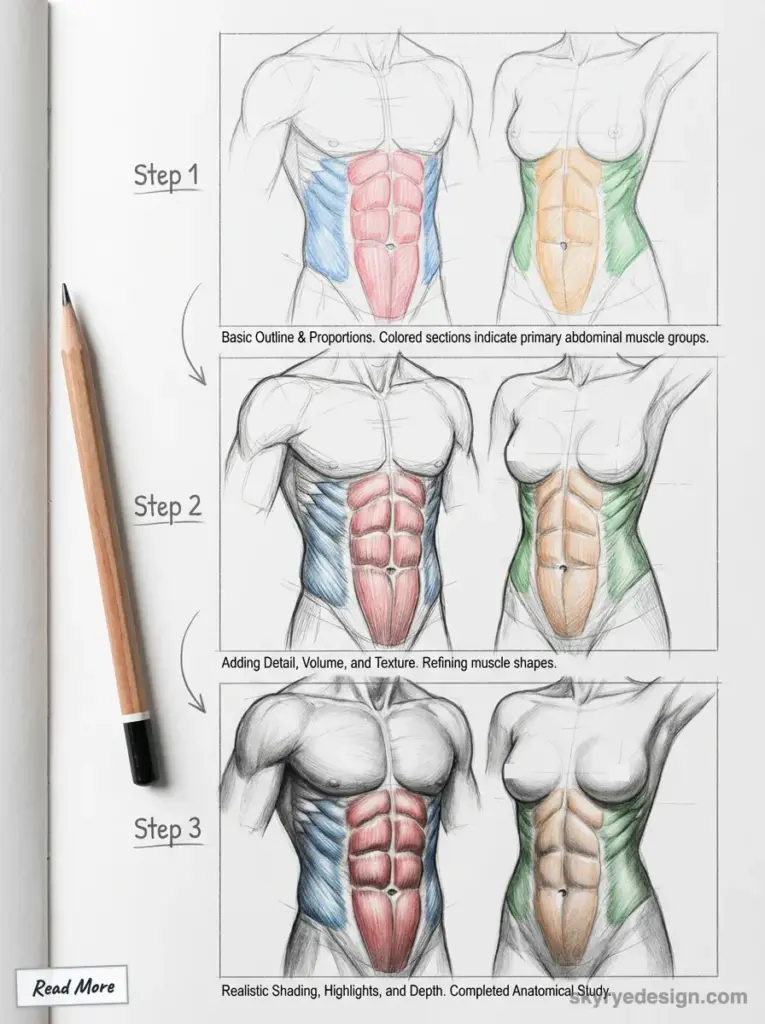
Best visuals to include:
- Male vs female figure at the same height
- Head-unit proportion overlays
- Boxy vs curvy torso simplification
- Line of action comparison
Final Thoughts for Artists
Male vs female body proportions are not about stereotypes — they’re about visual logic.
Once you understand:
- Head units
- Shape language
- Balance and center of gravity
You can stylize, exaggerate, or break the rules on purpose.
That’s when anatomy stops being restrictive — and starts being a tool.
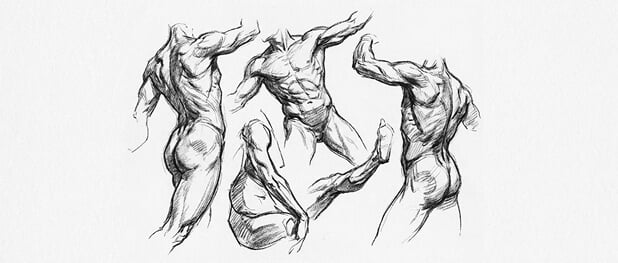
Proportion differences become easier to read when you spend time studying nude figure poses from front, side, and three-quarter views.
If you want a winged figure to practice next, try this angel pose reference for wings guide for wing placement, silhouette, and gesture ideas.
- 2.6Kshares
- Facebook0
- Pinterest2.6K
- Twitter0
- Reddit0