The priority for any artist eager to master how to draw a samurai mask is understanding both its form and cultural significance. This tutorial breaks down the process into seven clear steps, guiding the artist from initial material gathering through final texturing, all in a formal, methodical style. By following these instructions, the artist will produce a historically informed, visually compelling sketch of a traditional samurai mask, or menpō.
Below is an overview of the article’s structure for quick reference.
Table Of Contents
- Step 1: Gather Drawing Materials
- Step 2: Understand Mask Types
- Step 3: Sketch Basic Structure
- Step 4: Refine Facial Features
- Step 5: Add Decorative Details
- Step 6: Render Shading And Depth
- Step 7: Apply Final Touches
- Frequently Asked Questions
Step 1: Gather Drawing Materials
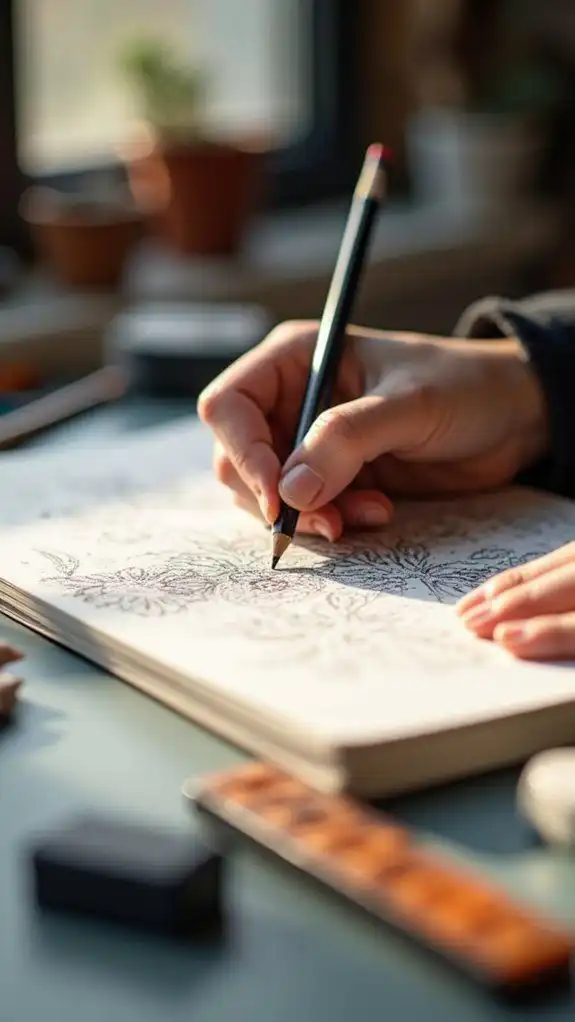
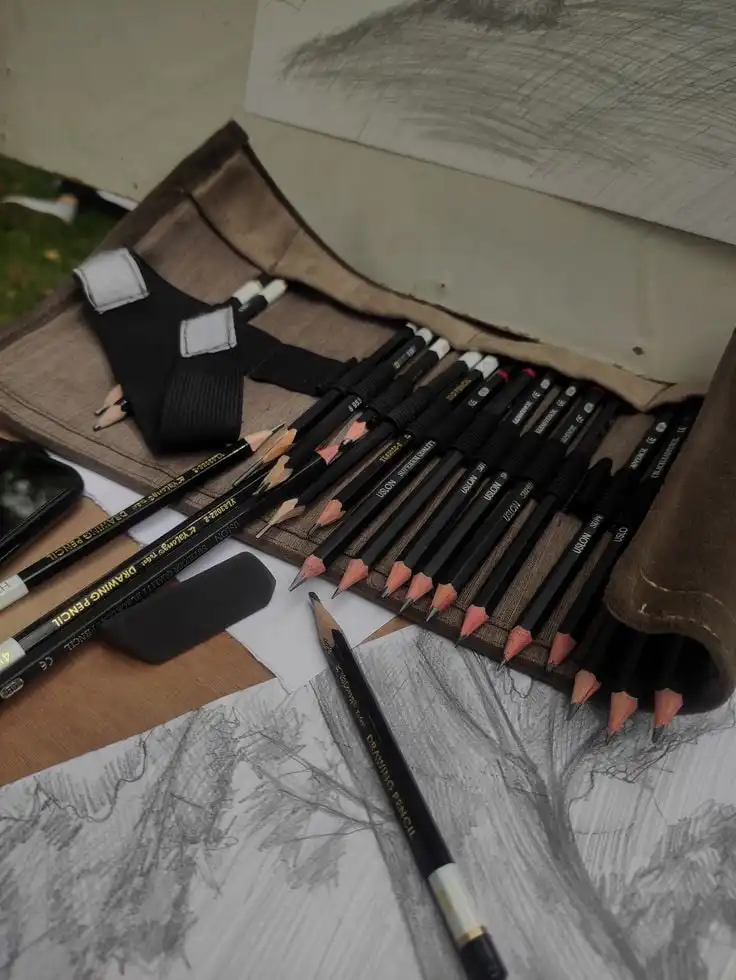
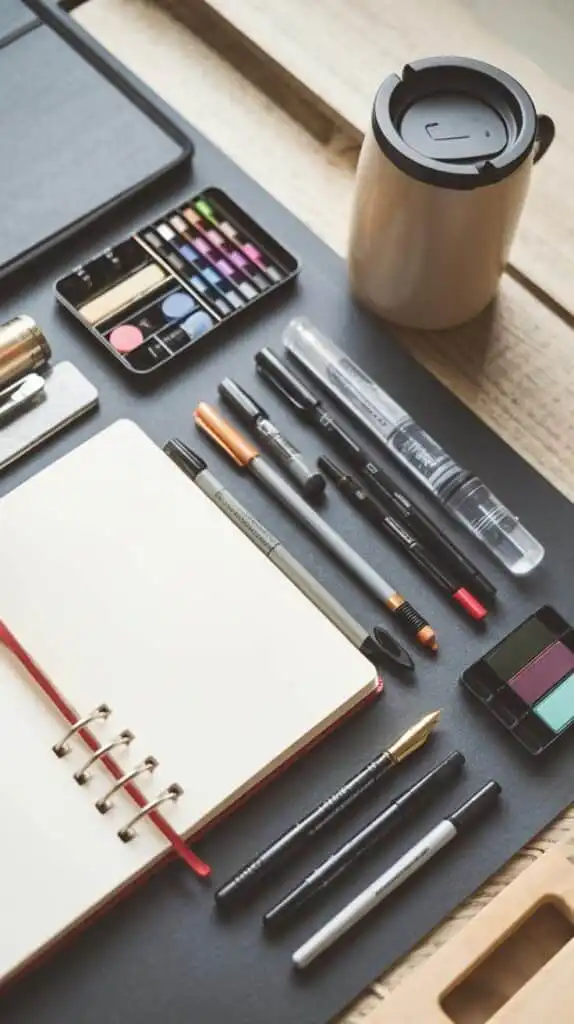
Before beginning the sketch, the artist must assemble reliable tools and reference images. Quality materials ensure clean lines, accurate shading, and faithful detail reproduction.
Required Supplies
- Graphite pencils (HB, 2B, 4B, 6B)
- Mechanical pencil or fine-point drafting pencil
- Kneaded eraser and precision eraser
- Smooth, heavyweight drawing paper (80–100 lb)
- Ruler and compass for accurate guides
- Blending stump or tortillon
- Fine-tip ink pen (optional)
- Colored pencils or markers for final touches
Reference Collection
- High-resolution photographs of historical samurai masks
- Illustrations of mask types such as Sōmen, Menpō, Hanbō, and Happuri (JapaneseOniMasks)
- Close-up shots showing decorative lacquering and metalwork
By securing these materials and references, the artist establishes a foundation for precision and authenticity in a samurai mask drawing.
Step 2: Understand Mask Types
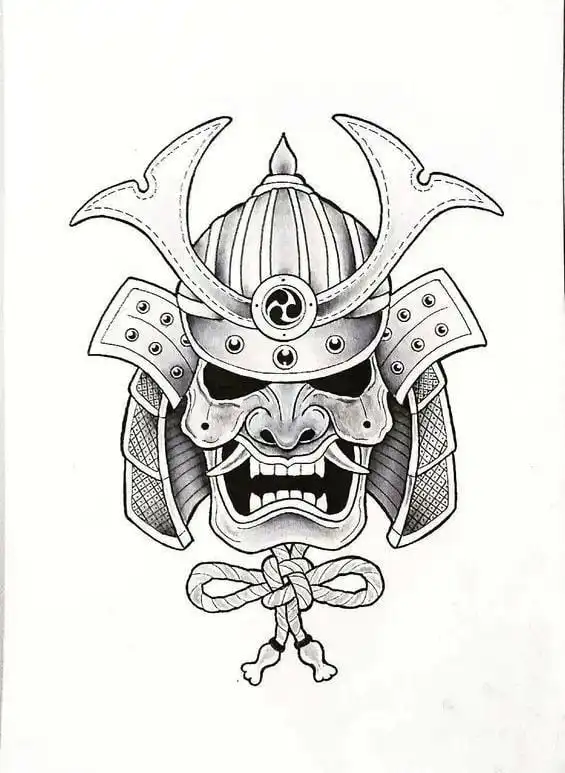
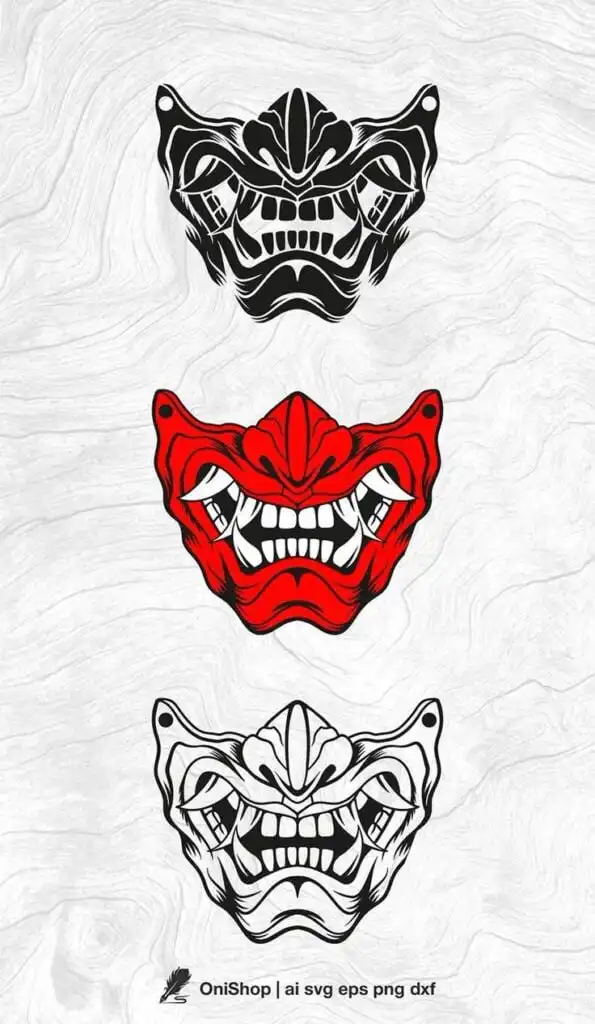
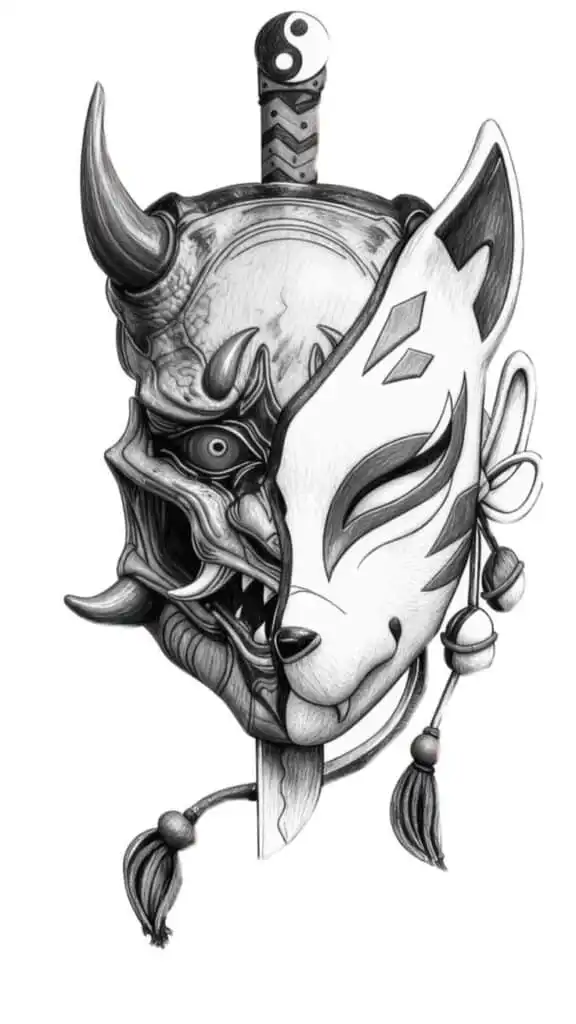
A clear grasp of different samurai mask forms informs proportion choices and decorative motifs. Traditional masks, or men yoroi, served both protective and psychological functions on the battlefield.
Sōmen Full-Face Mask
The most imposing variation, the Sōmen, covers the entire face and often features demonic or animalistic elements. Constructed from iron or leather, it blends protection with intimidation (JapaneseOniMasks).
Menpō And Hanbō Variations
- Menpō: Covers nose and cheeks, leaves eyes and mouth open. Commonly triangular in shape and embellished with lacquer.
- Hanbō: Extends from below the nose to the chin. Decorated with metal inlays in gold or silver, granting an aura of rank and mystery (JapaneseOniMasks).
Happuri Rank Masks
Cloth-based, folded in an “M” shape to cover the forehead and cheeks. These signified status rather than served as armor, but influenced helmet attachments and ceremonial designs.
By selecting a type—full-face, half-face, or cloth—the artist tailors proportions and ornamentation in subsequent steps.
Step 3: Sketch Basic Structure
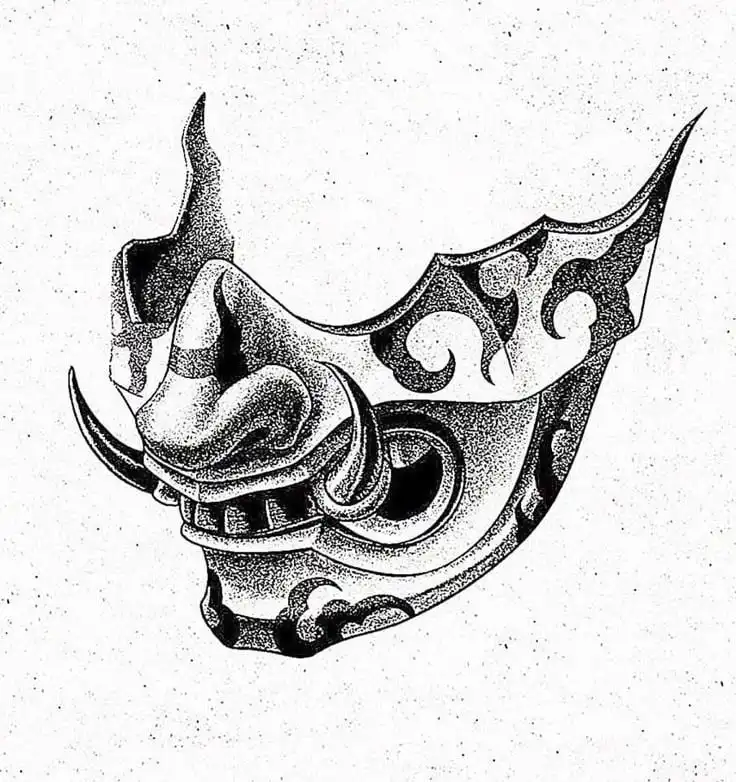
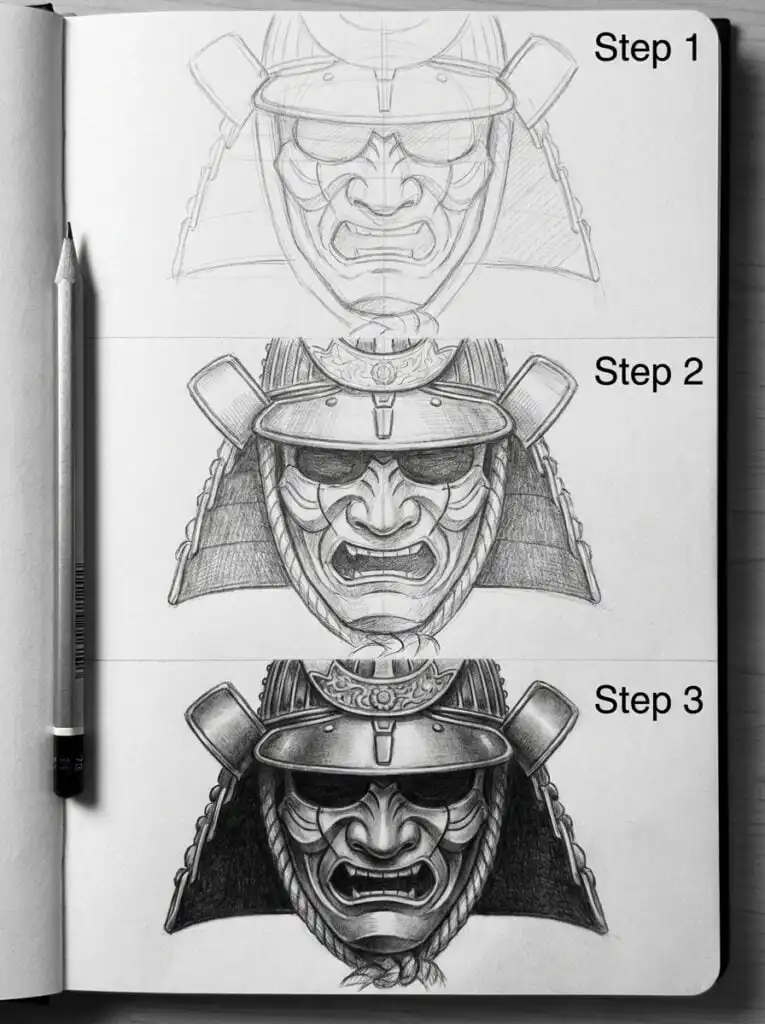
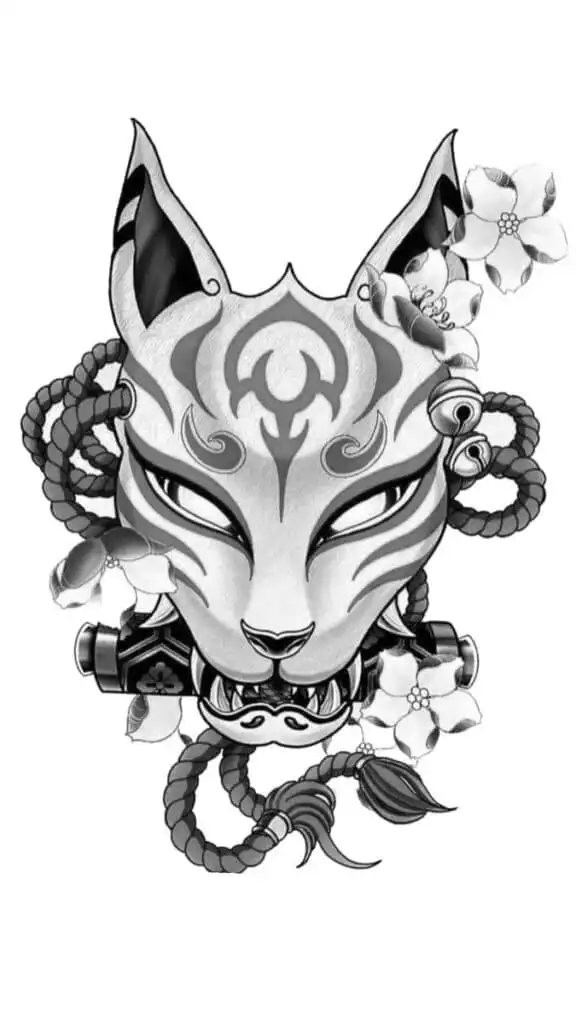
With materials and mask style chosen, the artist begins by mapping key shapes and symmetry lines. This foundational framework keeps proportions accurate.
- Establish Guidelines
- Lightly draw an oval representing the wearer’s head.
- Add a vertical centerline and horizontal eye line dividing the oval in half.
- Outline Mask Silhouette
- For Sōmen, sketch a slightly wider oval.
- For Menpō or Hanbō, focus on the lower third of the face, drawing a trapezoid shape aligned with the cheekbones.
- Mark Key Features
- Indicate eye openings as elongated ovals on the horizontal line.
- Draw a simplified nose ridge extending from the centerline to just above the mask’s lower edge.
- Verify Proportions
- Compare the width between eye openings to the overall mask width (average 1/3 of the total).
- Adjust the jawline or cheek flares to reflect the chosen mask type.
At this stage, all lines remain light. The aim is structural accuracy, not detail.
Step 4: Refine Facial Features
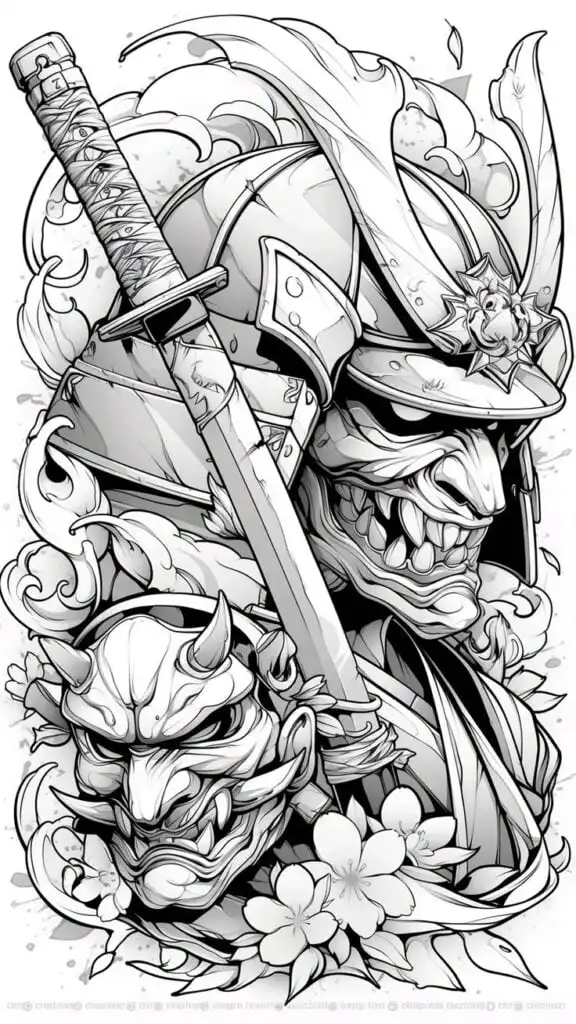
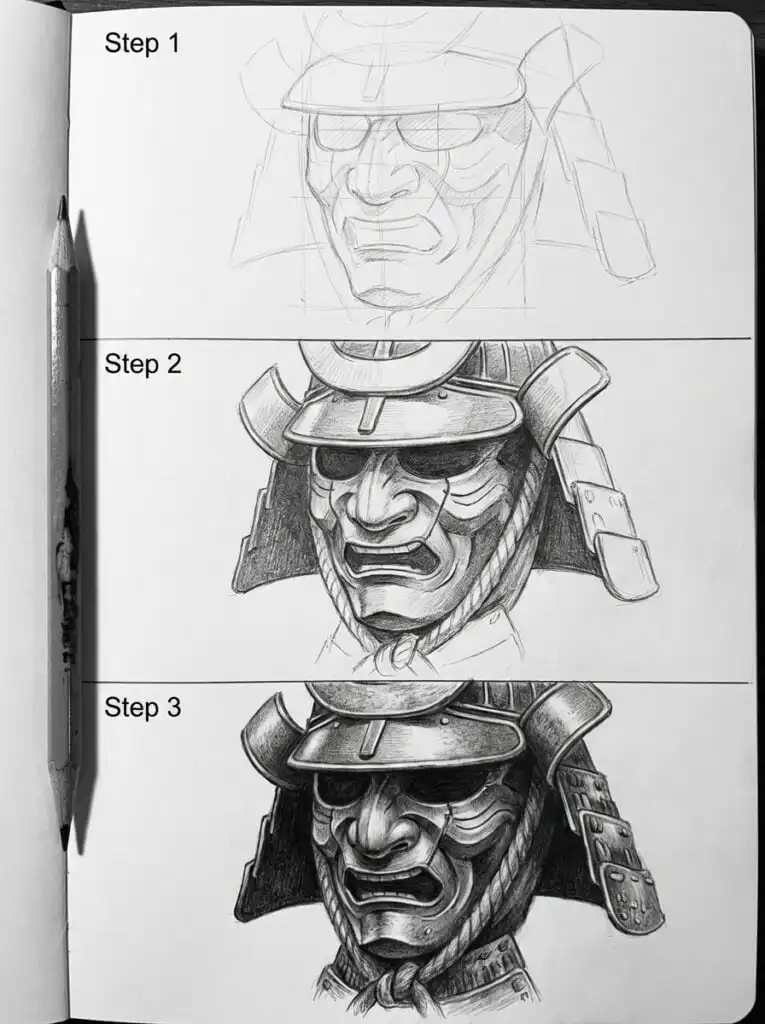
Building on the framework, the artist refines anatomical cues and armor contours. Careful adjustment of curves and planes brings the mask to life.
- Define Eye Apertures
- Thicken the outline around the eye holes, adding slight bevels to suggest metal edges.
- Draw small rivet circles or decorative studs around the perimeter.
- Sculpt Nose And Cheek Areas
- Refine the nasal ridge with a tapered ridge line and subtle flares at the base.
- Emphasize cheek plates by drawing concave curves that hug the curvature of the wearer’s face.
- Shape Jaw Or Chin Guard
- For a full-face Sōmen, continue lines downward to form a pointed chin or stylized fangs.
- For Menpō/Hanbō, draw a pronounced moustache flange or detachable throat guard.
Throughout this stage, the artist alternates between harder (2B) and softer (4B) pencils to capture crisp edges and gentle transitions.
Step 5: Add Decorative Details
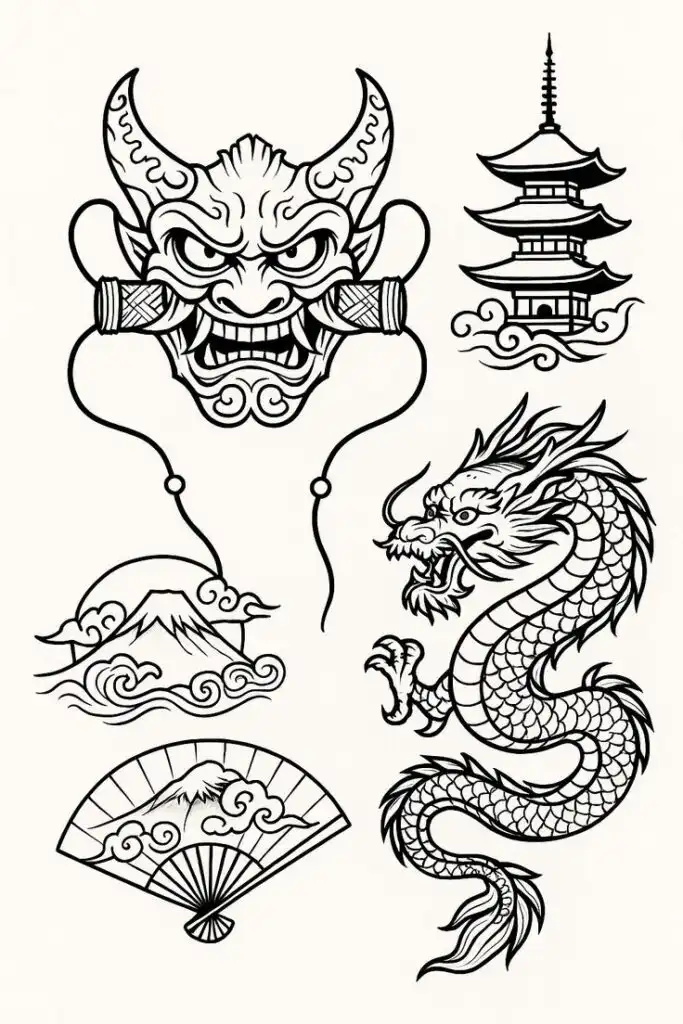
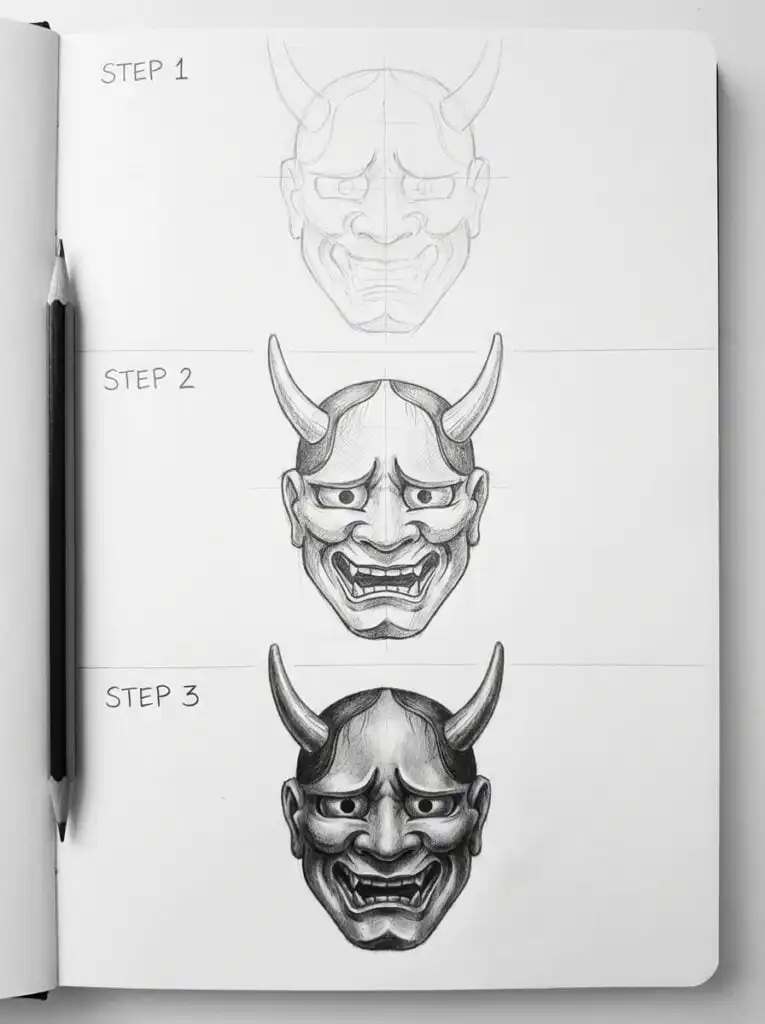
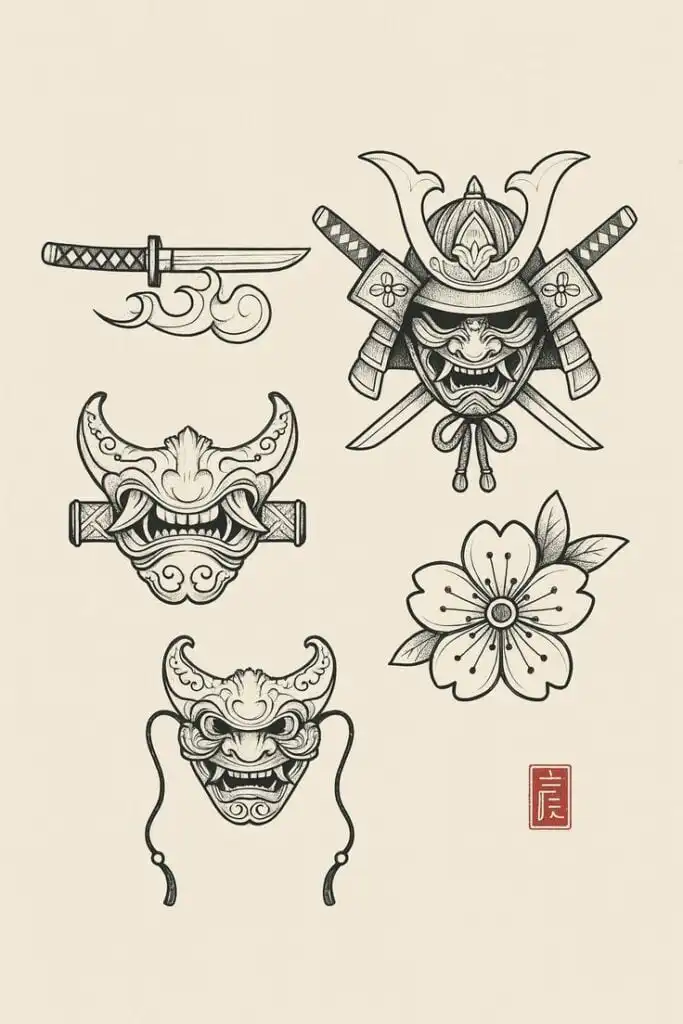
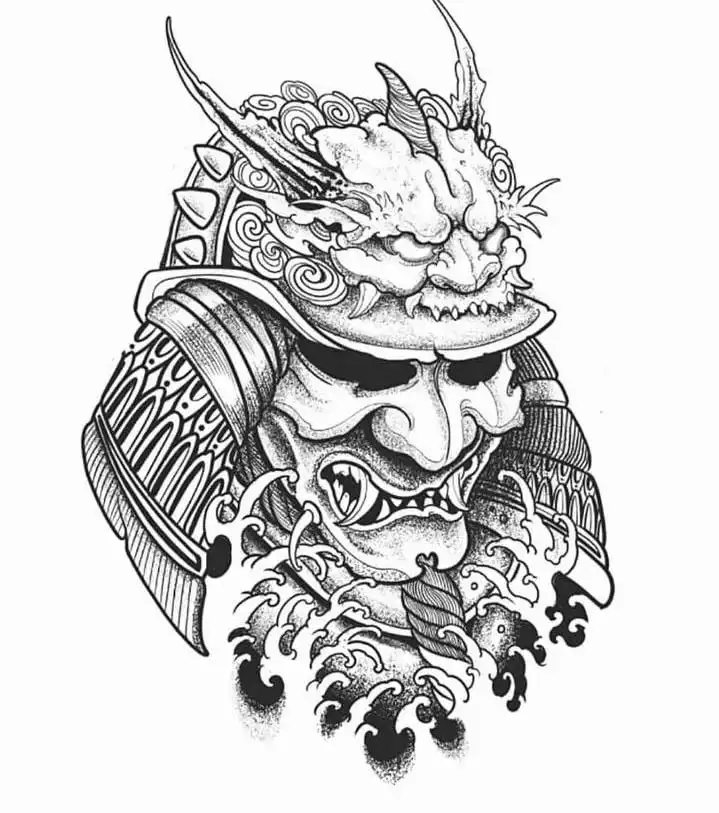
Authentic samurai masks feature intricate ornamentation—lacquer patterns, mythical motifs, and rope ties. These elements convey rank and cultural symbolism.
Carve Ornate Edges
- Use fine lines to depict engraved patterns along the brow and cheek ridges.
- Add repeating motifs such as waves, clouds, or stylized flames.
Sketch Rope And Ties
- Represent cords securing the mask by drawing twisted lines alongside the jaw.
- Maintain uniform thickness and curvature. For digital sculptors, Egor Ivanov reused curve-based meshes to model rope detail in ZBrush; similarly, the artist may practice repetitive strokes for consistency (80.lv).
Embellish Surface Finish
- Indicate lacquer sheen by leaving small, precise white highlights on raised areas.
- For metal studs or gold inlays, hatch sparsely around edges to suggest reflectivity.
Decorative flourishes turn the basic sketch into a period-accurate samurai mask drawing.
Step 6: Render Shading And Depth
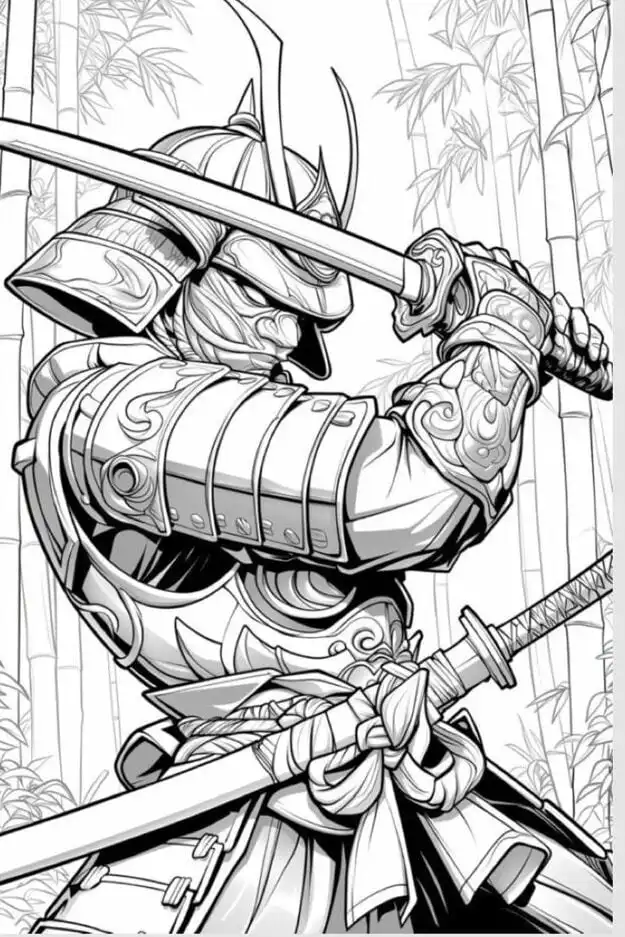
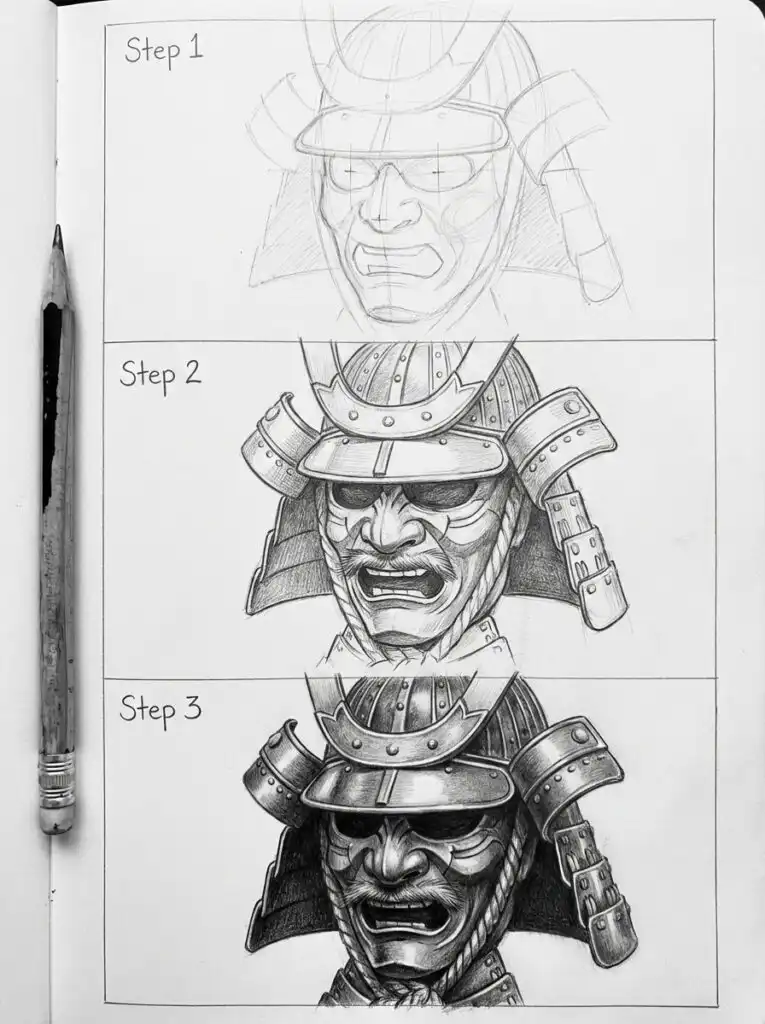
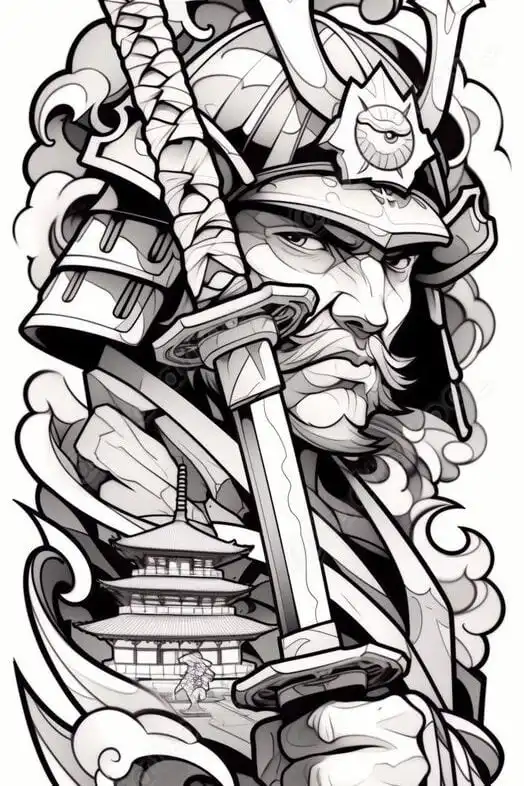
Shading transforms flat line work into a three-dimensional form. The artist now commits to light source consistency and graduated tonal values.
- Determine Light Direction
- Choose a primary light source (e.g., top-left) and mark it with a small arrow off to the side.
- Apply Core Shadows
- Darken areas under brows, around rivets, and beneath cheek plates using a 6B pencil.
- Use a blending stump to smooth transitions from dark to mid-tone.
- Layer Mid-Tones
- Employ 2B or HB to fill broad surfaces, leaving highlights untouched.
- Cross-hatch in opposing directions for textured metal or lacquer.
- Emphasize Highlights
- Erase tiny spots to create crisp highlights on edges and raised rivets.
- Reserve white paper for the strongest reflections.
Consistent light and shadow reinforce the illusion of solid iron or lacquered leather.
Step 7: Apply Final Touches
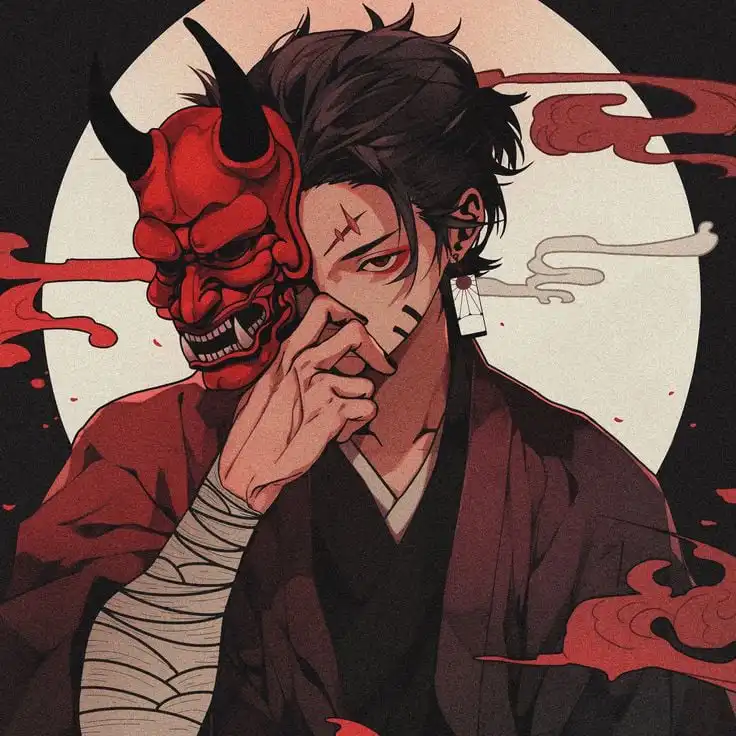
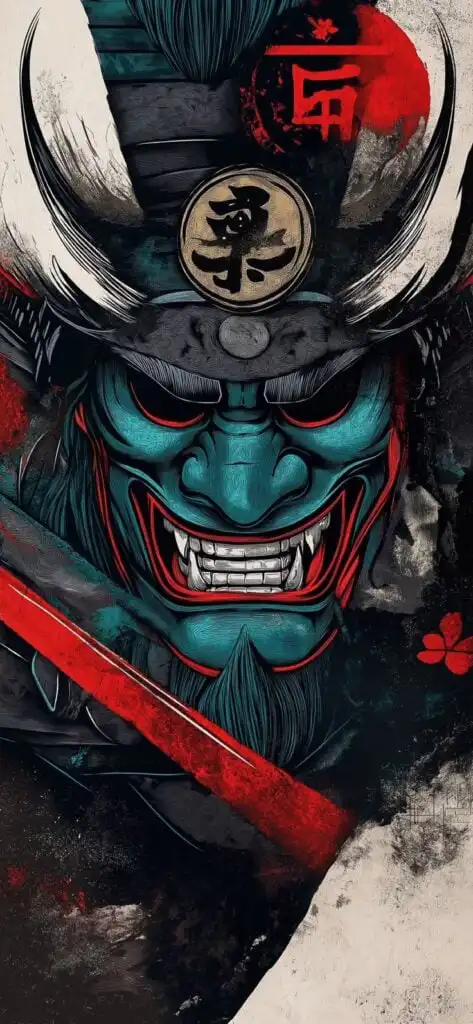
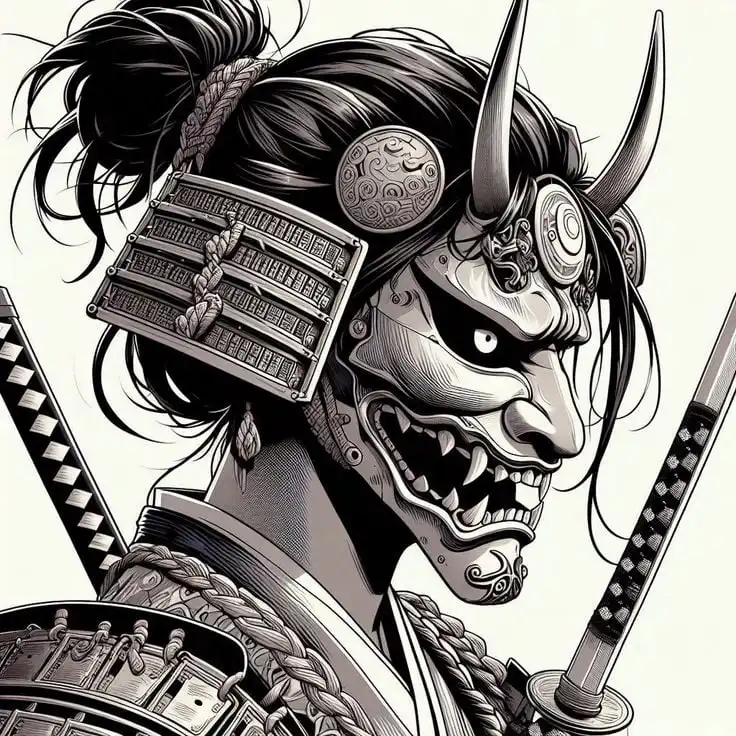
In the concluding phase, the artist polishes line work, reinforces contrast, and optionally adds color or ink.
- Clean Up Guidelines
- Gently erase all construction lines without disturbing shaded areas.
- Refine any uneven curves or intersections.
- Ink Or Color Accents
- Use a fine-tip pen to outline final contours if a graphic style is desired.
- Apply muted reds, blacks, or metallic pencils to suggest authentic finishes.
- Add Surface Textures
- Flick small pencil strokes to mimic aged patina or chipped paint.
- Introduce subtle scratches with the tip of an HB pencil for realism.
At completion, the artwork should convey both structural integrity and the storied elegance of samurai armor.
If the mask study feels too portrait-focused, switch to a clean samurai sword drawing next and practice the katana silhouette, tsuba guard, and handle wrap as separate shapes.
Frequently Asked Questions
1. What pencils work best for shading metal surfaces?
Soft graphite (4B–6B) yields deep shadows, while harder grades (HB–2B) fill mid-tones. Blending stumps aid in creating seamless gradients.
2. How can the artist ensure mask symmetry?
Beginning with precise centerlines and measuring the distance between key points (eyes, cheek flares) helps maintain mirrored proportions.
3. Is digital drawing preferable for samurai masks?
Both analog and digital methods yield high-quality results. Digital tools allow for easy corrections and layering, while hand-drawn works offer tactile authenticity.
4. How does one depict copper or gold inlays realistically?
Reserve bright highlights and use subtle, warm‐toned pencils or markers. Lightly hatch adjacent shadows to simulate reflective metal.
5. Where can the artist find additional mask references?
Historical archives, specialized books on Japanese armor, and online collections such as JapaneseOniMasks provide extensive visual resources.
By following these seven steps, the artist gains confidence in how to draw a samurai mask with both technical precision and historical sensitivity.
- 479shares
- Facebook0
- Pinterest479
- Twitter0
- Reddit0