Why Build A DIY Pallet Coffee Table
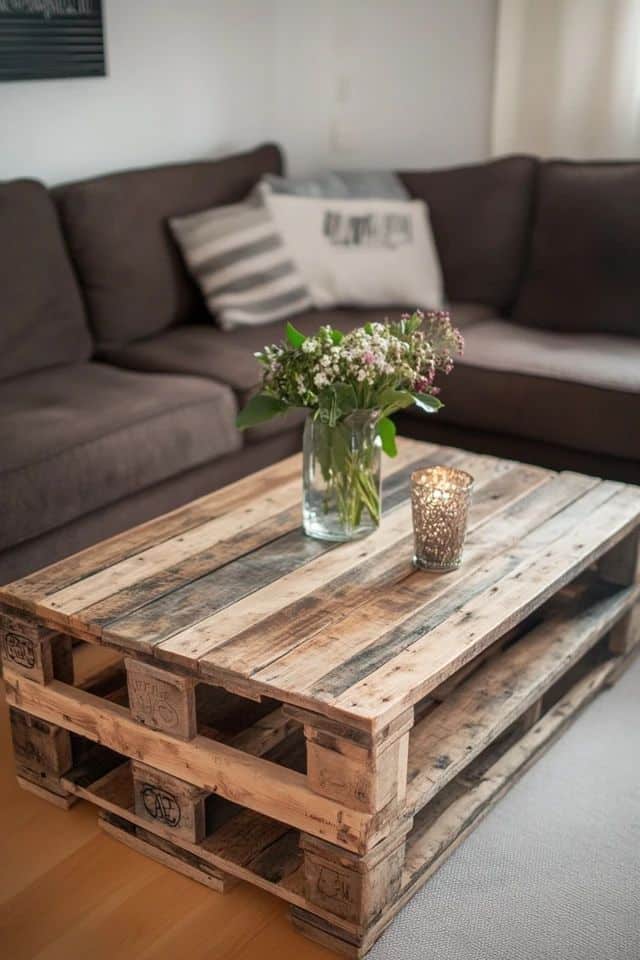
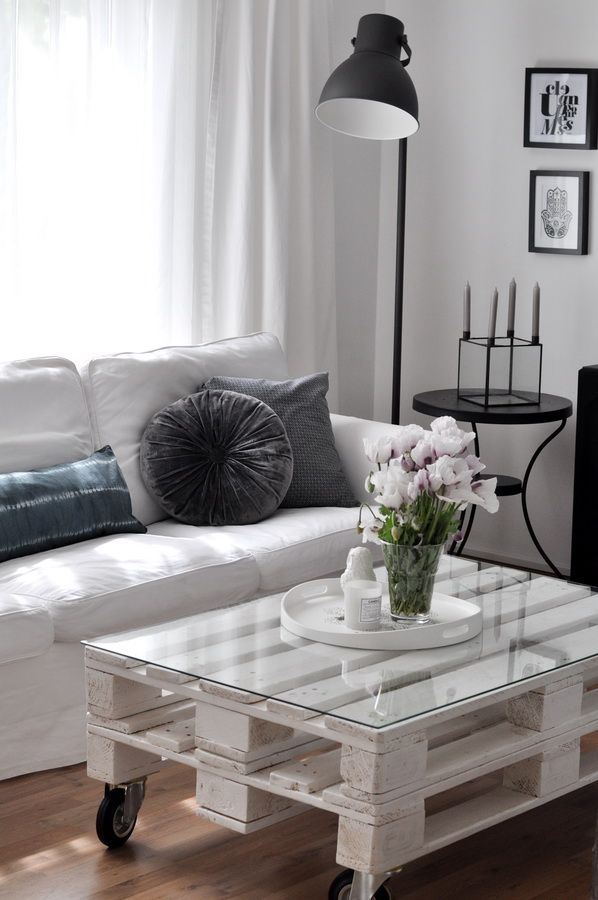
A diy pallet coffee table is one of the quickest ways to transform your living room or patio with a custom piece that looks expensive but costs very little. You get the rustic charm of reclaimed wood, the satisfaction of building something with your own hands, and a piece that fits your space perfectly.
With a couple of reclaimed pallets, some basic tools, and an afternoon of work, you can build a sturdy, stylish table that feels right at home in a modern, farmhouse, or industrial style space. You do not need advanced woodworking skills. If you can measure, drill, and sand, you can do this.

In this tutorial, you will:
- Break down pallets safely
- Build a simple but solid frame
- Create a smooth tabletop from pallet boards
- Add an optional lower shelf for storage
- Finish the wood so it is durable and easy to clean
Use this project as a first step into diy pallet ideas. Once you see what you can do with a coffee table, you will spot possibilities every time you see an old pallet.
Plan Your Pallet Coffee Table
A little planning saves you from frustration later. Before you grab a saw, decide on the style, size, and where the table will live.


Choose A Style And Use
Ask yourself a few quick questions:
- Will this live indoors or outdoors?
- Do you prefer a clean, modern look or a more rustic, weathered style?
- Do you want a simple top, or something more decorative like a chevron pattern?
- Do you need storage for books, toys, or blankets?
If you want a straightforward, fast build, go with:
- A simple rectangular top
- Four chunky legs
- Optional flat shelf underneath for storage
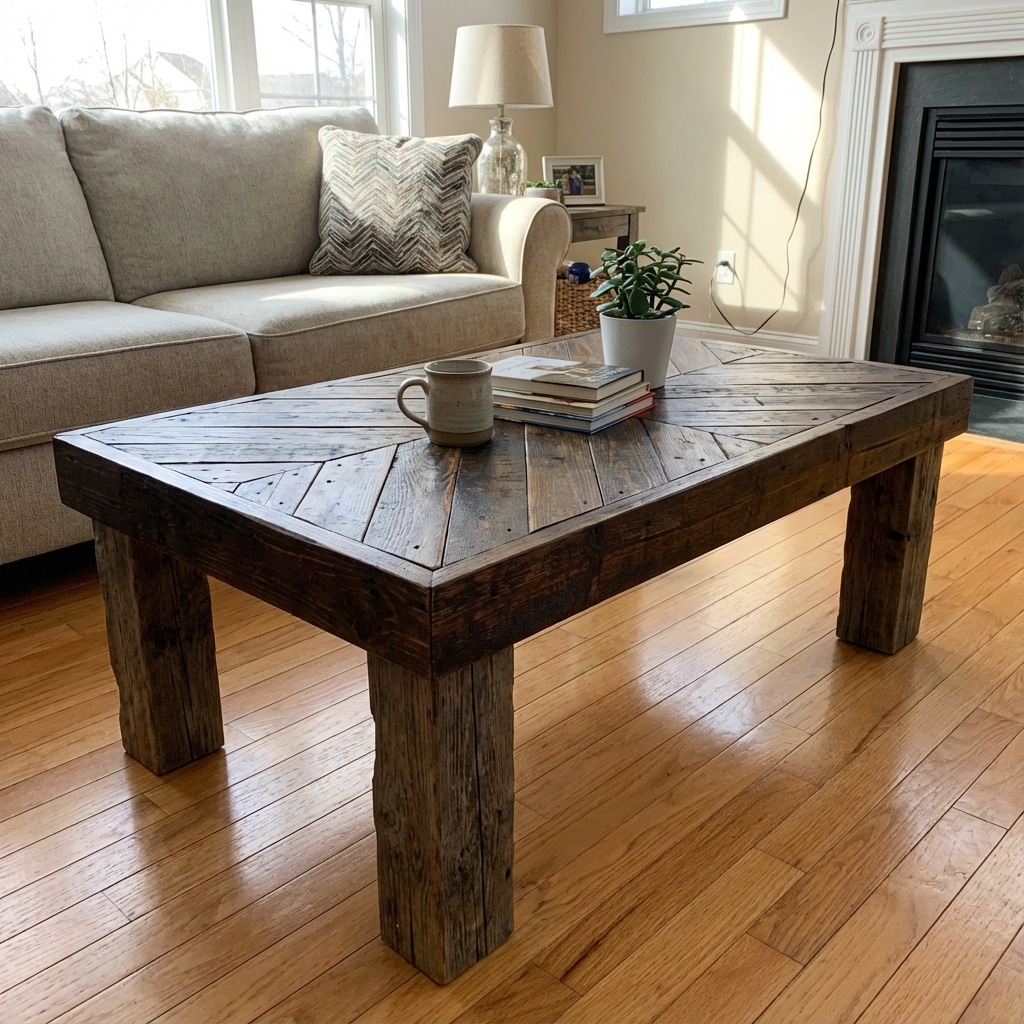
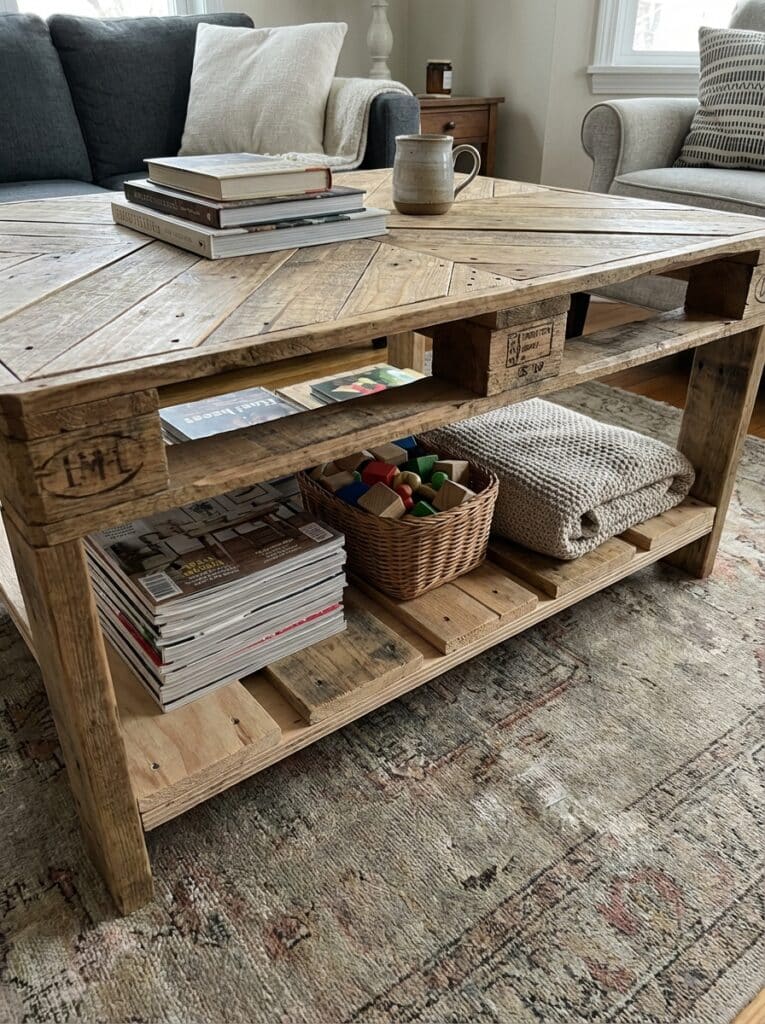
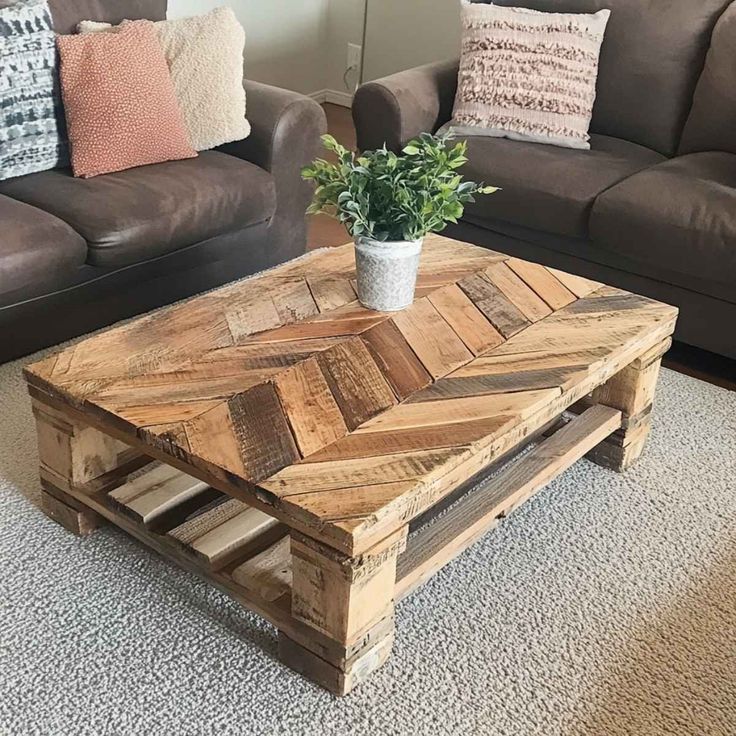
If you are willing to spend a bit more time on looks, you can upgrade to a chevron or herringbone pattern top, as shown in this detailed project from The Merrythought, where pallet boards are cut into strips and attached in a pattern on a plywood base (The Merrythought).
Decide On Size And Height
Most coffee tables follow a few simple rules:
- Length: about half to two-thirds the length of your sofa
- Width: 18 to 24 inches works well for most rooms
- Height: roughly the same as your sofa seat, usually 16 to 18 inches
One common frame size from a pallet coffee table project is about 23 by 36 inches for the top, with 16 inch legs (Instructables). Use those as starting numbers, then tweak based on your space.
Gather Materials And Tools
You will need only basic supplies for your diy pallet coffee table.
Materials
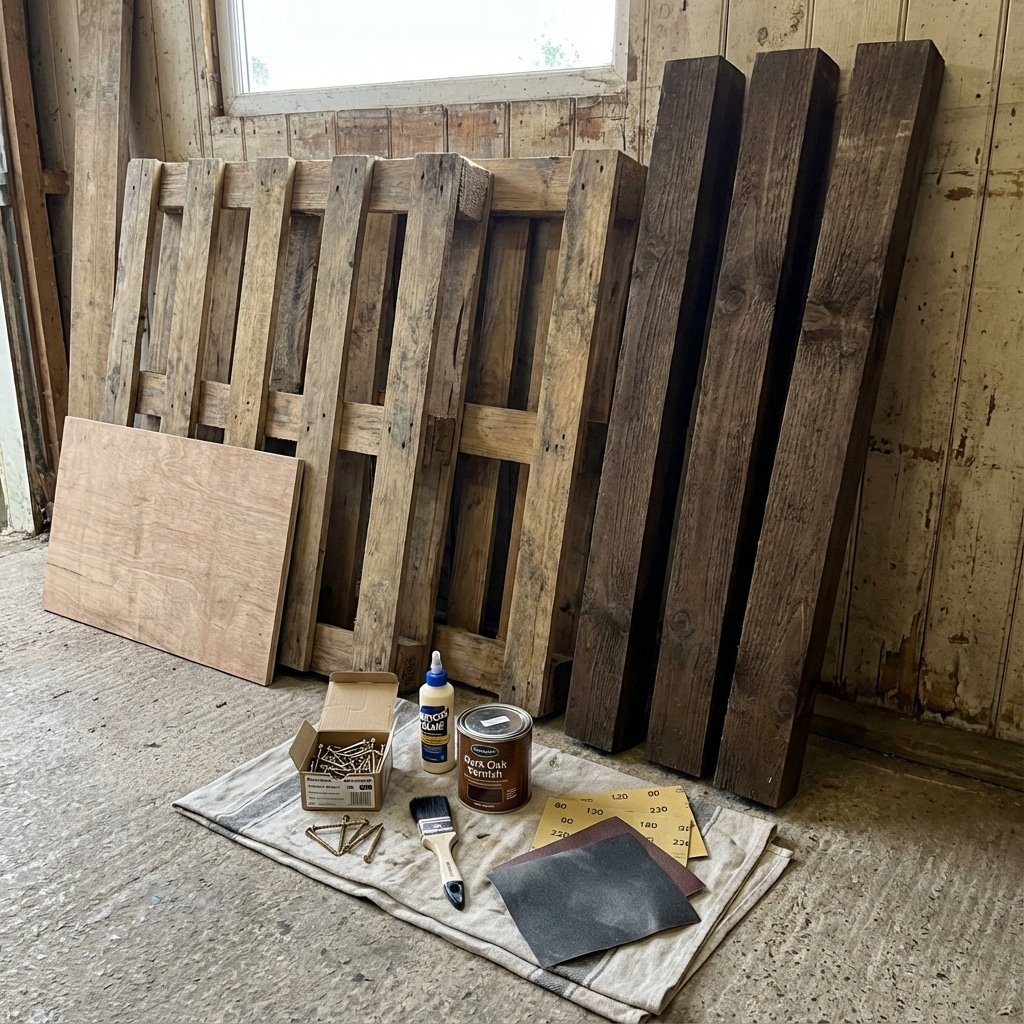
- 1 to 2 reclaimed pallets, preferably in good condition
- Wood for legs, such as chunky old fence posts or 4×4 offcuts
- Plywood for the tabletop base if you plan a pattern like chevron (optional but recommended)
- Screws (wood screws for frame and legs)
- Wood glue
- Wood finish, such as dark oak satin varnish or polyurethane
- Sandpaper in several grits, for example 80, 120, 180, 220
One popular build used reclaimed pallets, chunky leg wood, screws, wood glue, and dark oak satin varnish to create a rustic but durable coffee table (Instructables).
Essential Tools
You do not need a full workshop for this. These basics are enough:
- Hand saw or circular saw
- Tape measure and pencil
- Drill and drill bits
- Screwdriver bit for your drill
- Hammer and pry bar or a multi tool for cutting nails
- Clamps if you have them, they help keep boards tight while glue dries
- Paint brush or foam brush for applying finish
According to a step by step build using pallet wood, a hand saw, tape measure, drill, screwdriver, and paint brush are enough to complete the project without advanced skills (Instructables).
Safety First With Pallet Wood
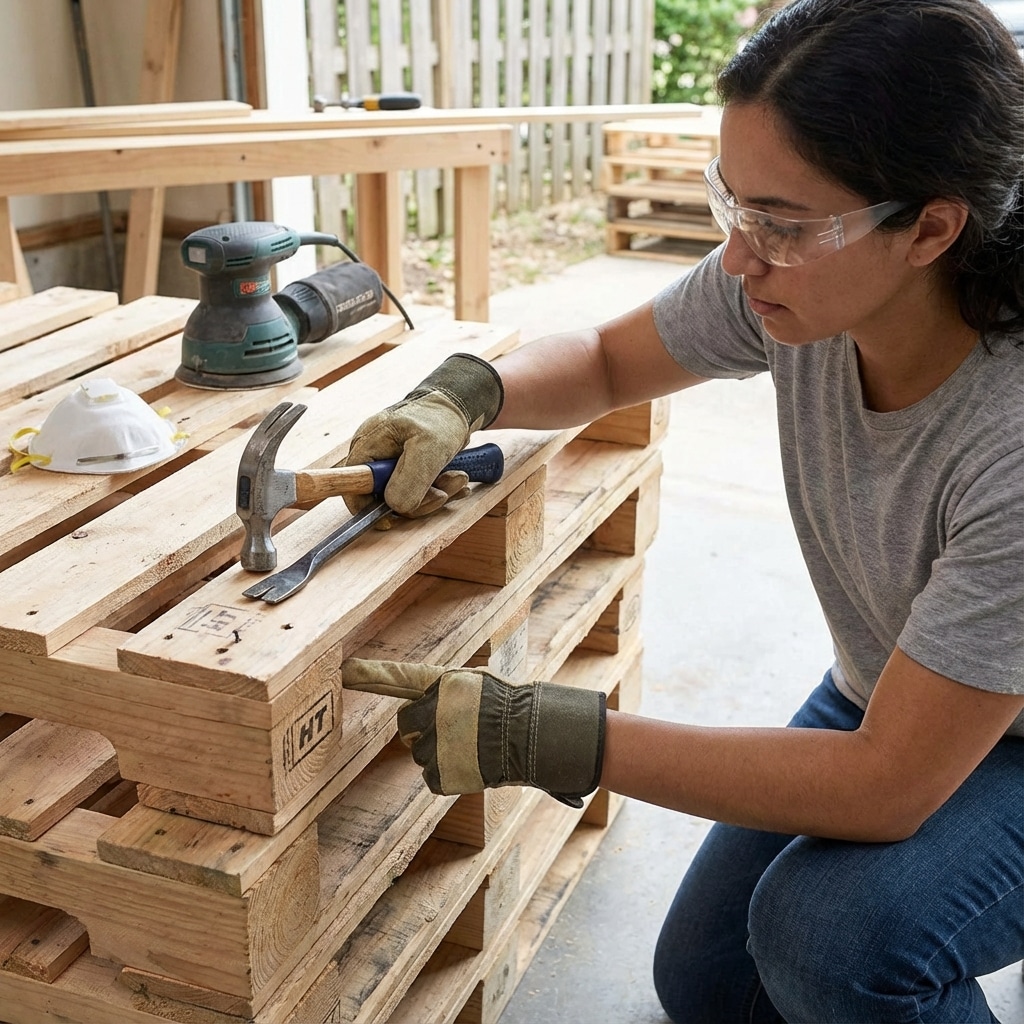
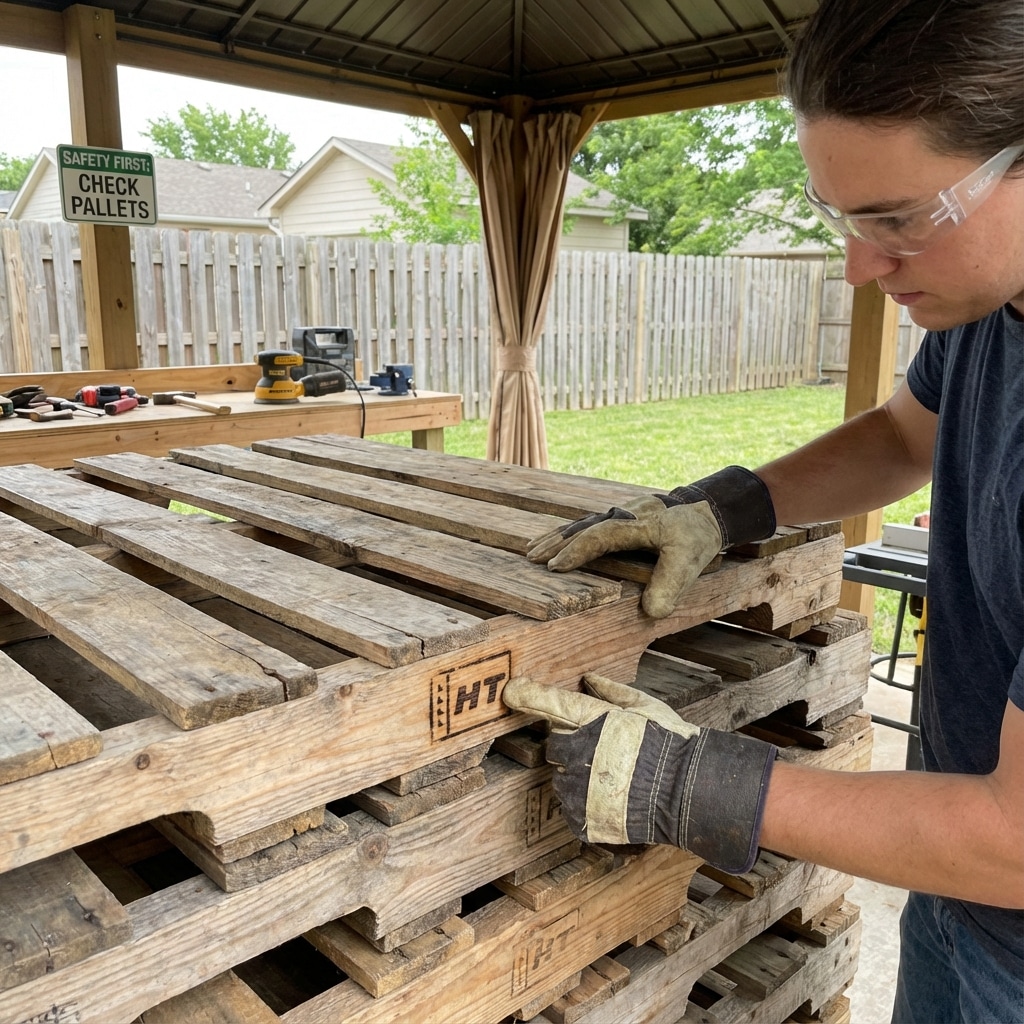
Before you start cutting, take a few precautions:
- Wear safety glasses and work gloves
- Check pallets for loose nails, screws, or damaged boards
- If the pallet is very rough, watch for splinters
- Work outside or in a well ventilated area when sanding or applying finish
If you can, look for pallets that are stamped “HT” (heat treated) instead of “MB,” which indicates methyl bromide treatment. HT pallets are generally safer for indoor use.
Break Down And Prep Your Pallets
How you dismantle the pallet will affect how many usable boards you get and how much effort it takes.
Remove Boards Without Splitting Them
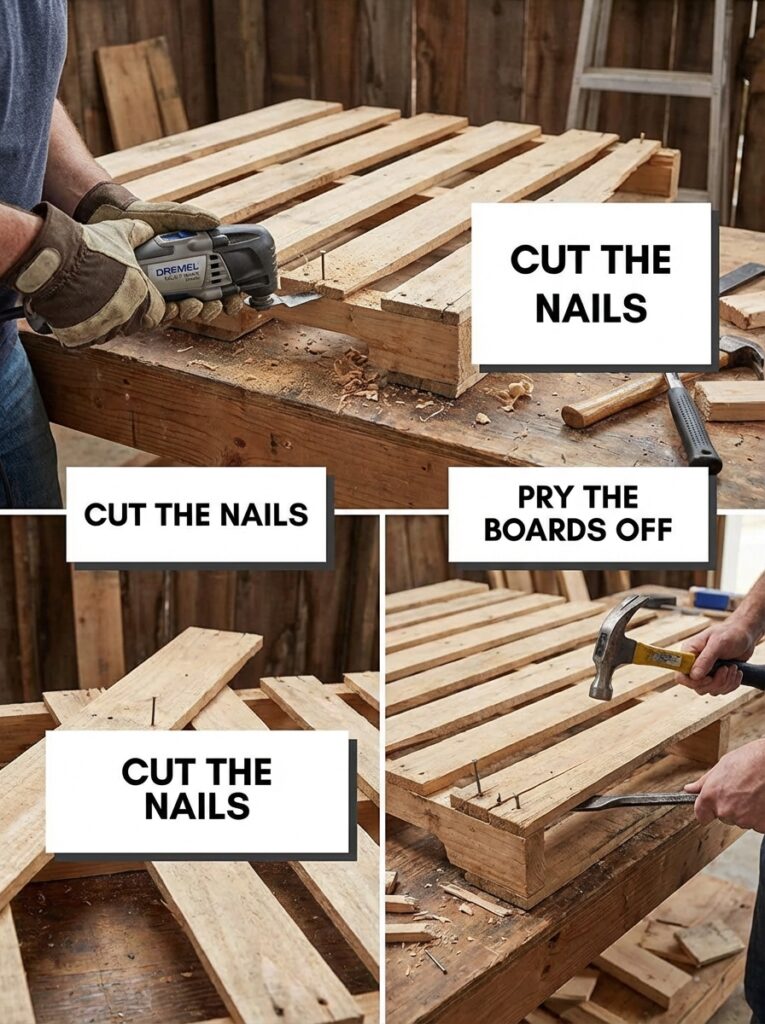
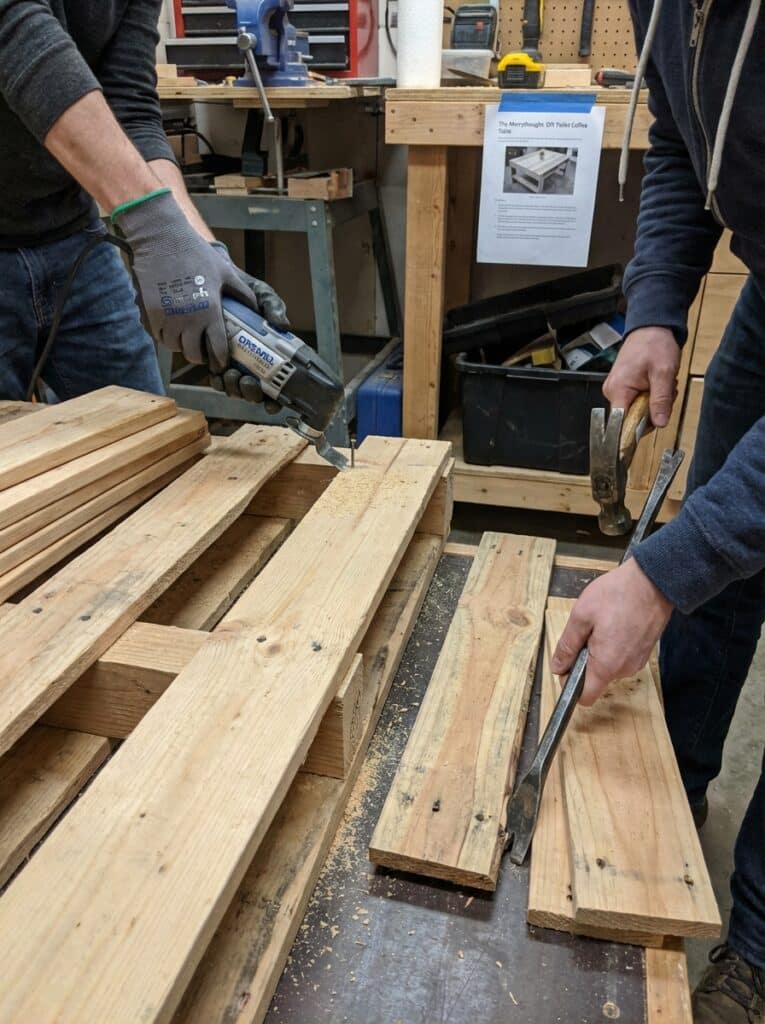
You have two main approaches for breaking down pallets:
- Cut the nails
- Use a multi tool such as a Dremel Multi Max to slice through nails between boards and runners, as suggested in a detailed diy pallet coffee table guide (The Merrythought).
- This method keeps the boards intact and saves time wrestling with stubborn nails.
- Pry the boards off
- Use a hammer and pry bar to gently work boards free.
- Start at one end, loosen a little at each nail point instead of trying to lift the entire board at once.
Take your time here. Straight, unbroken boards will make your tabletop look cleaner and go together faster.
Clear Out Nails And Screws
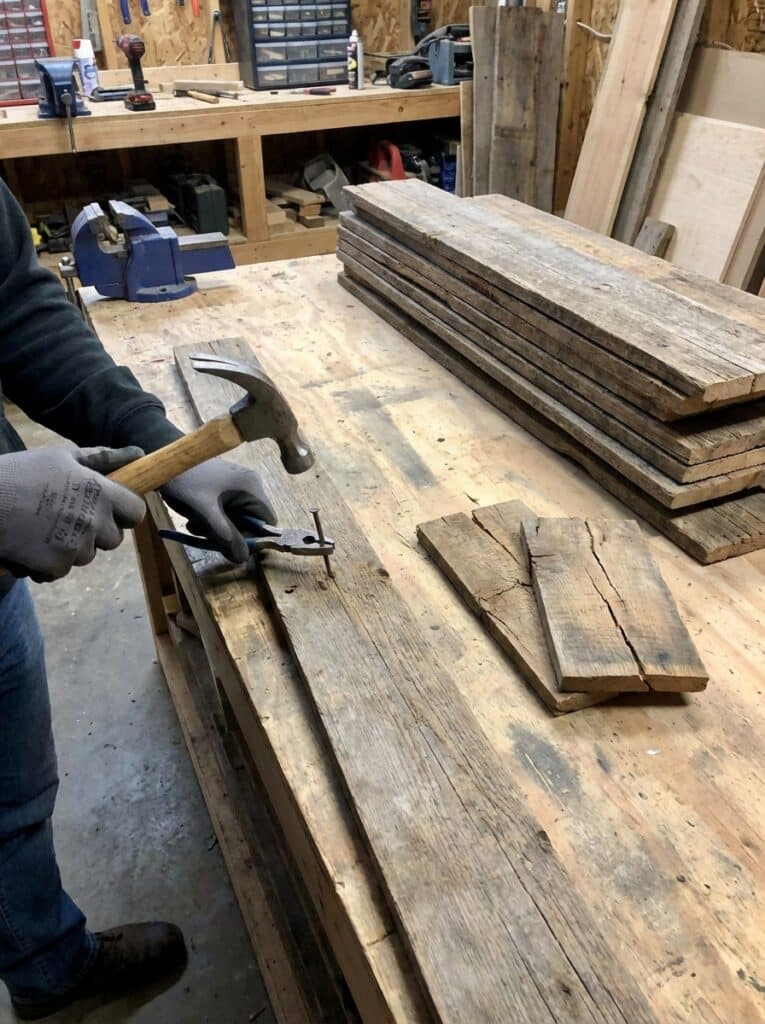
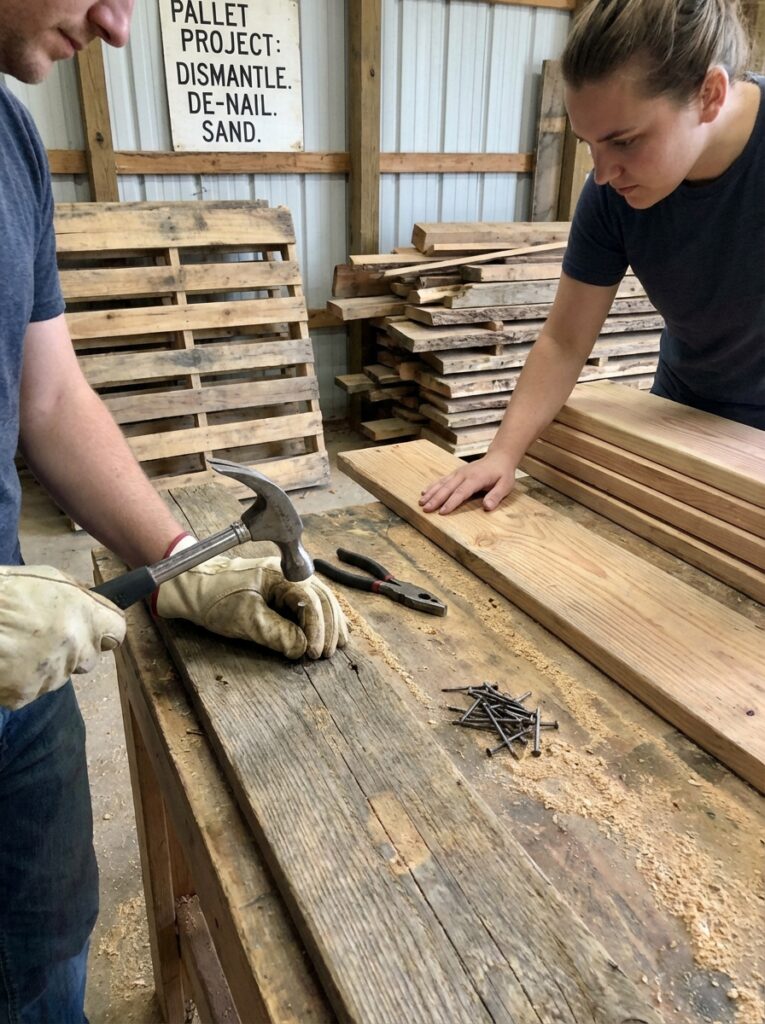
Once boards are off the pallet:
- Remove any stray nails or screws with a hammer or pliers.
- Run your hand lightly along each board to feel for anything you missed.
- Set aside any cracked or badly warped pieces for smaller cuts or discard them.
One build specifically begins by dismantling pallets, removing all nails and screws, and then sanding thoroughly before assembly (Instructables).
Sand Boards For A Smooth Surface
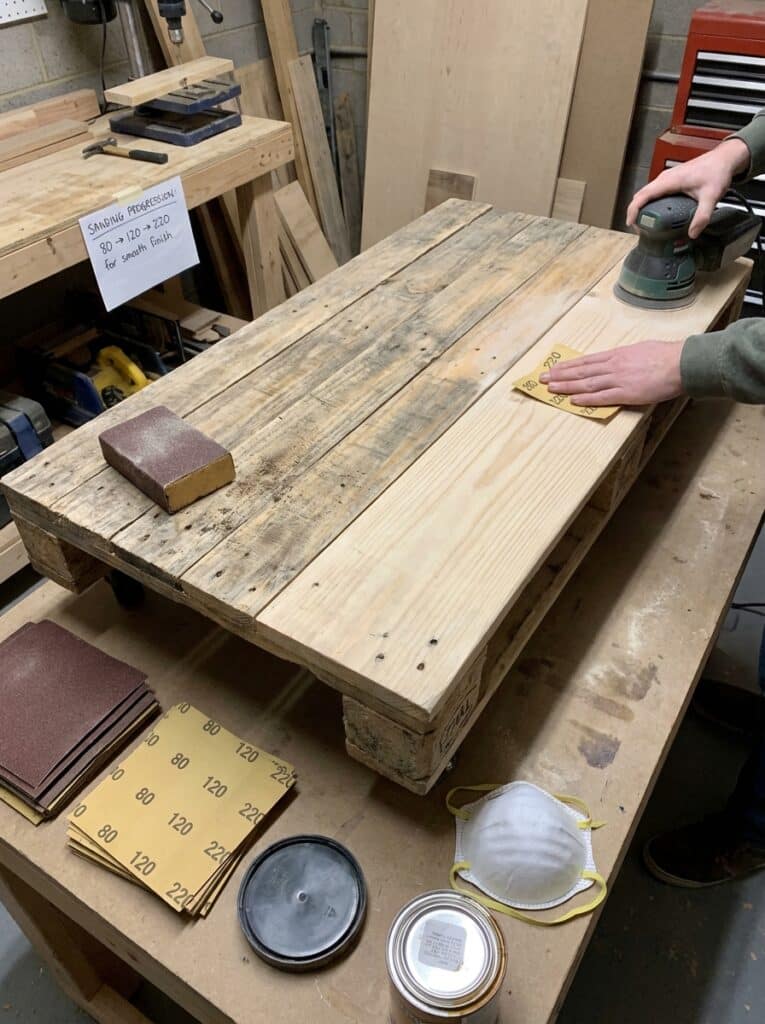
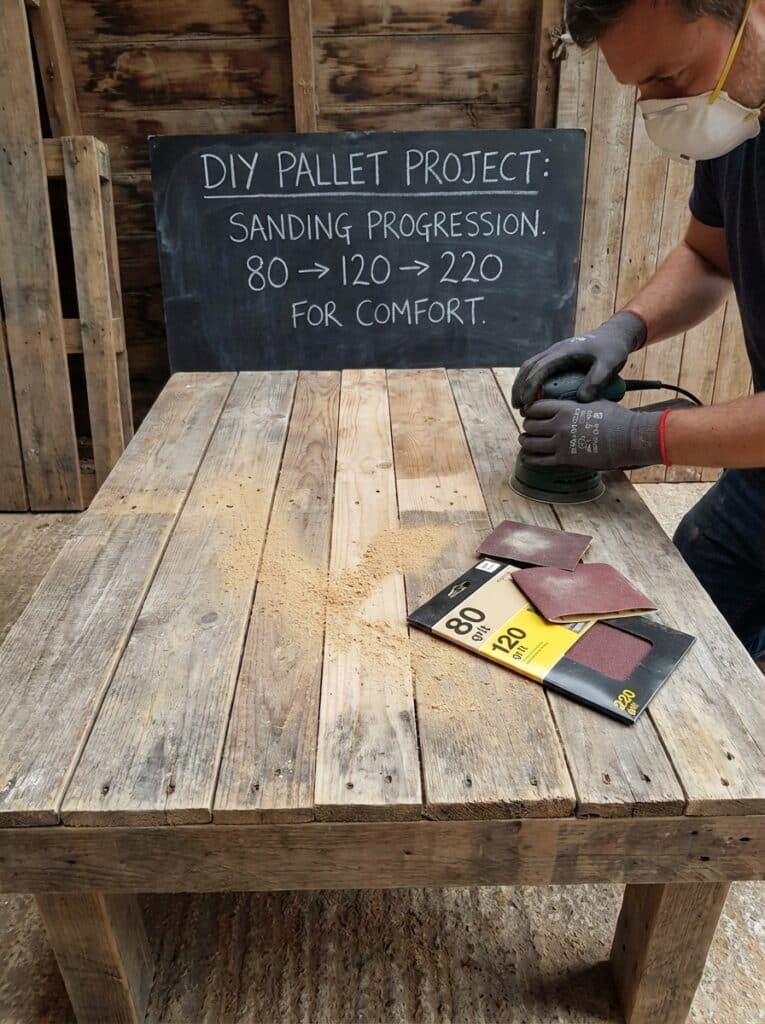
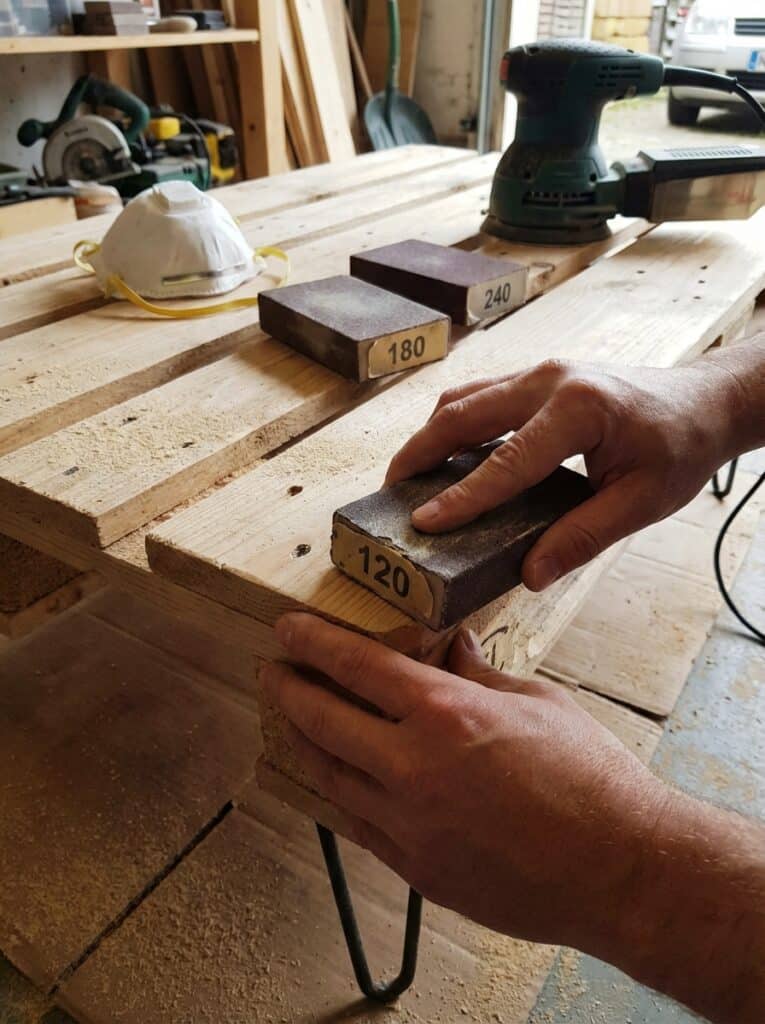
Even if you like a rustic look, a bit of sanding makes your diy pallet coffee table more comfortable and safer.
A good sanding progression:
- Start with 80 grit sandpaper to remove rough spots, saw marks, and dirt.
- Move to 120 grit to even out the surface.
- Finish with 180 or 220 grit for a smooth feel.
One detailed pallet table project sands progressively up to 240 grit for a very smooth finish before applying varnish (Instructables).
If you truly want a very fast and rustic build, you can do what one diy builder did and simply choose the smoothest, oldest pallets and skip sanding. That saved a lot of work, but they accepted a rougher feel and used it outdoors (Redeem Your Ground).
Build The Frame And Legs
With your boards prepped, it is time to create a strong base for your diy pallet coffee table.
Cut And Prepare The Legs
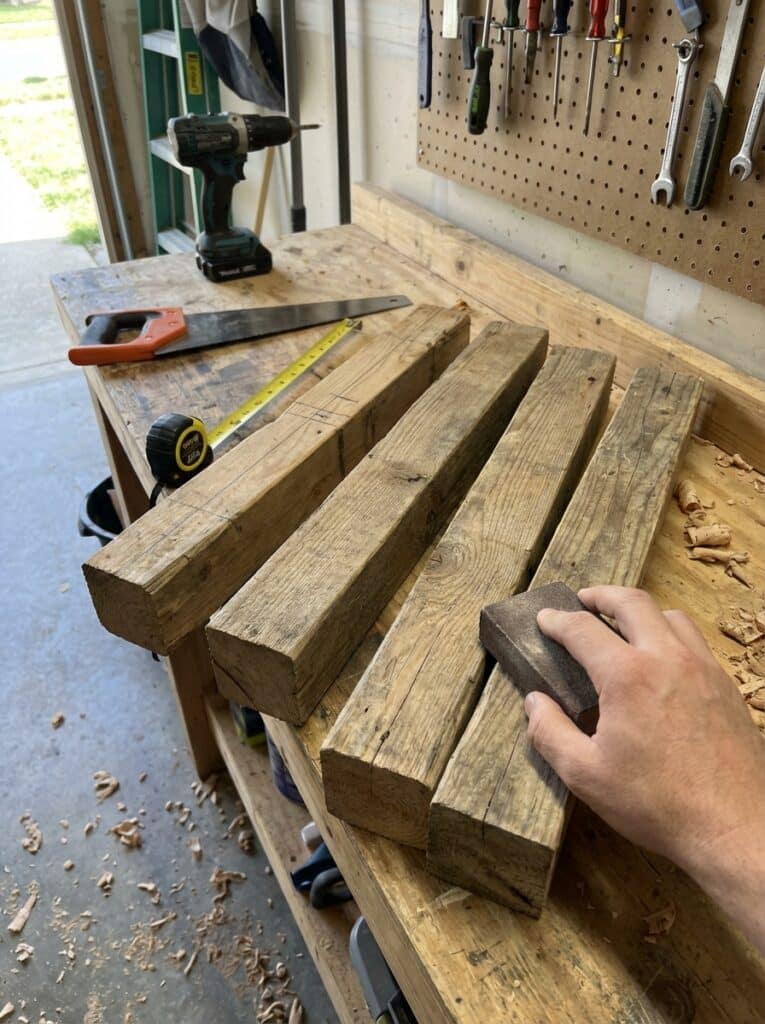
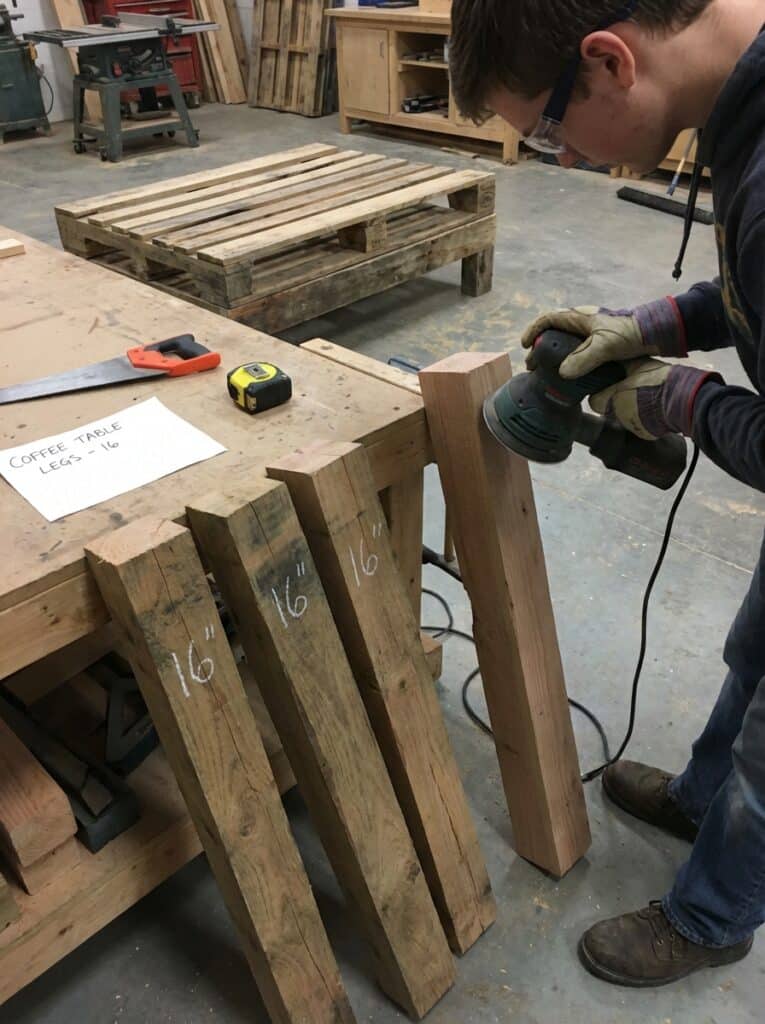
For a standard coffee table height:
- Mark and cut four legs at about 16 inches long.
- Use chunky wood, such as 4x4s or old fence posts, to give the table a sturdy, grounded look.
One pallet table frame uses 16 inch legs as a base measurement, which works well with typical sofas (Instructables).
Lightly sand the legs, especially the top and bottom where they will connect with other wood.
Assemble The Rectangular Frame
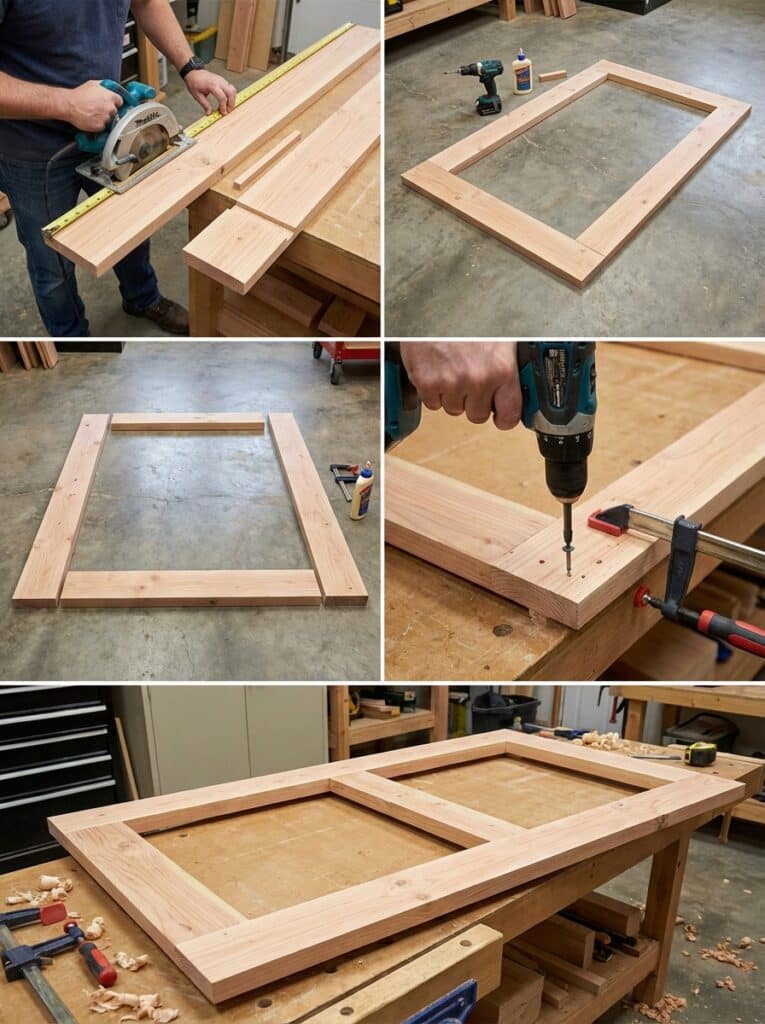
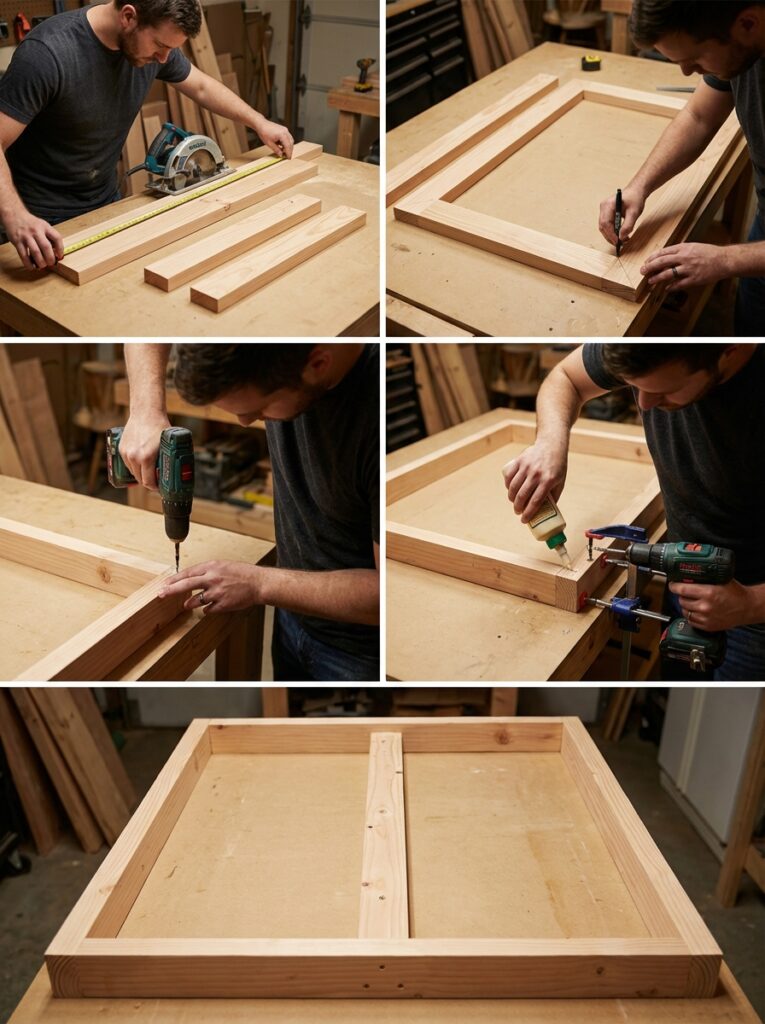
Next, build the outer frame that will support your tabletop.
- Cut two long rails to match your desired table length. For example, 36 inches.
- Cut two shorter rails to match your desired width, such as 23 inches.
- Arrange them into a rectangle on a flat surface.
- Pre drill screw holes at each corner to prevent splitting.
- Glue and screw the corners together so the frame is square.
Many diy builders add a middle support beam made from leftover leg wood for extra strength. One popular build uses a center beam running the long way between the two shorter rails so the tabletop does not sag over time (Instructables).
Attach Legs To The Frame

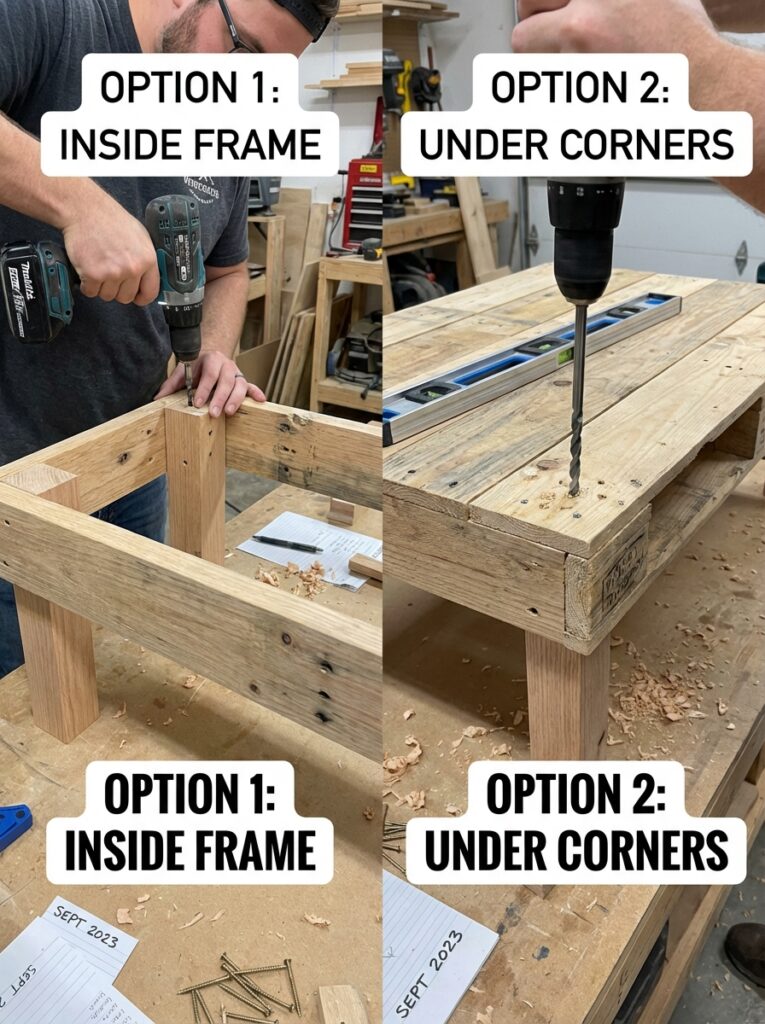
You have two common options for attaching the legs:
- Legs inside the frame corners
- Position each leg just inside the frame corner.
- Drill pilot holes through the frame into the leg.
- Use two or three screws from each side to secure.
- Legs directly under the corners
- Stand each leg underneath a frame corner.
- Drill down through the frame into the leg and drive long screws.
A pallet coffee table project from 2023 attaches legs by drilling holes through the pallet boards or plywood and screwing the legs firmly in place (The Merrythought).
Check that your table base stands level. Adjust by sanding or trimming a leg if needed.
Build The Tabletop From Pallet Boards
Now you will turn your loose pallet boards into a solid, attractive surface.
Option 1: Simple Straight Board Top
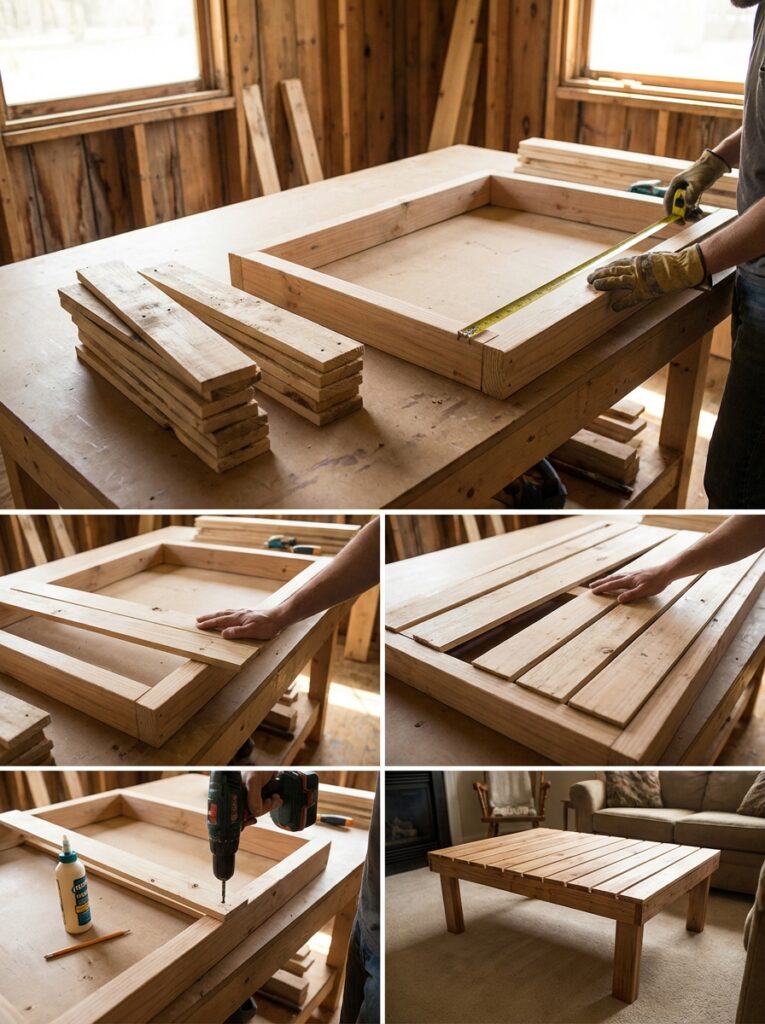
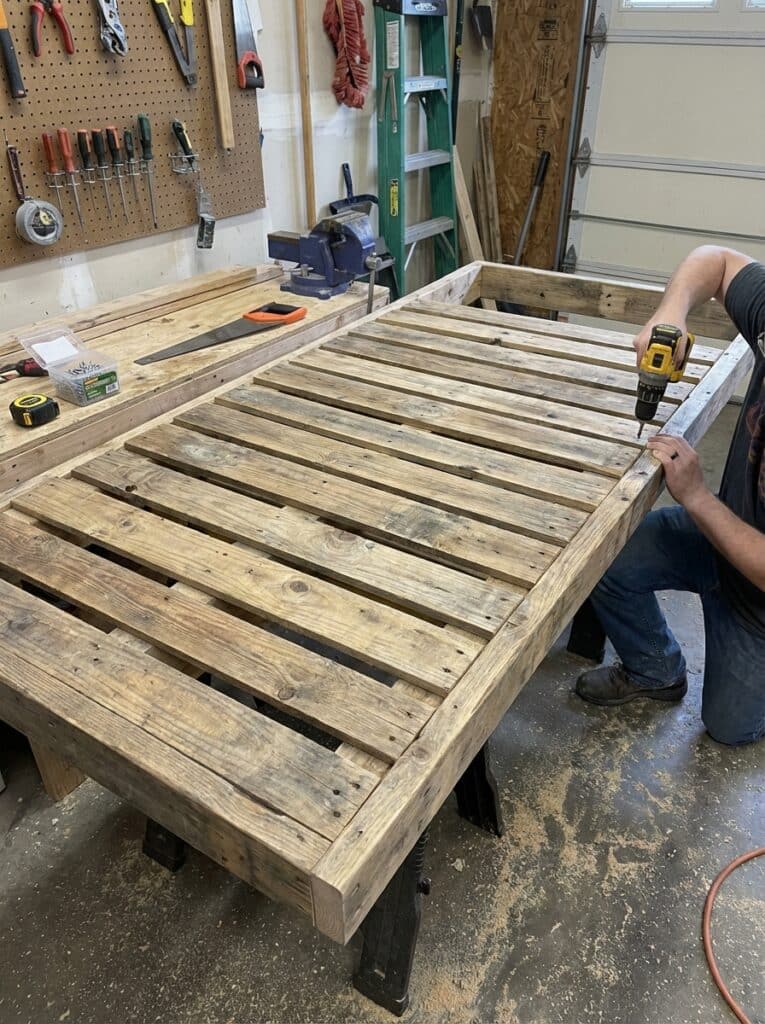
If you want a fast, classic diy pallet coffee table, go with straight boards:
- Measure the frame dimensions.
- Cut pallet boards to match the length or width of the frame.
- Lay the boards side by side on top of the frame, leaving a small gap if you like a slatted look.
- Adjust the layout so knots and grain patterns look balanced.
- Glue and screw or nail the boards to the frame and center support beam.
This approach mirrors a basic pallet coffee table build that consists mainly of a base and top and is quick and simple to complete (Redeem Your Ground).
Option 2: Chevron Or Patterned Top
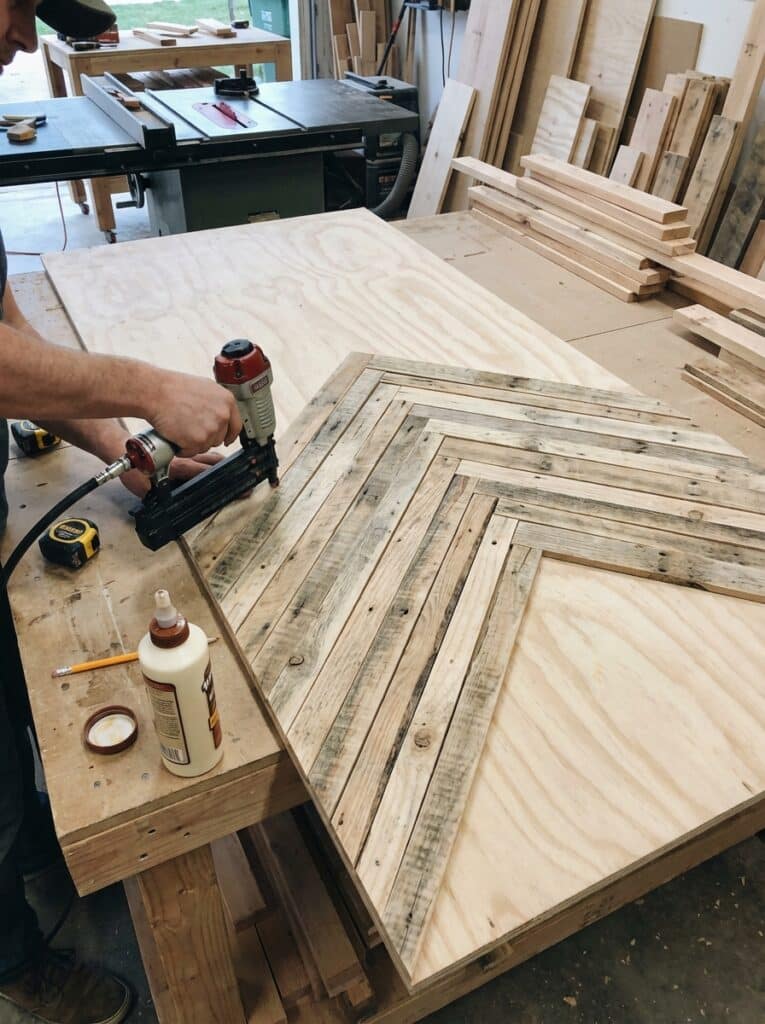
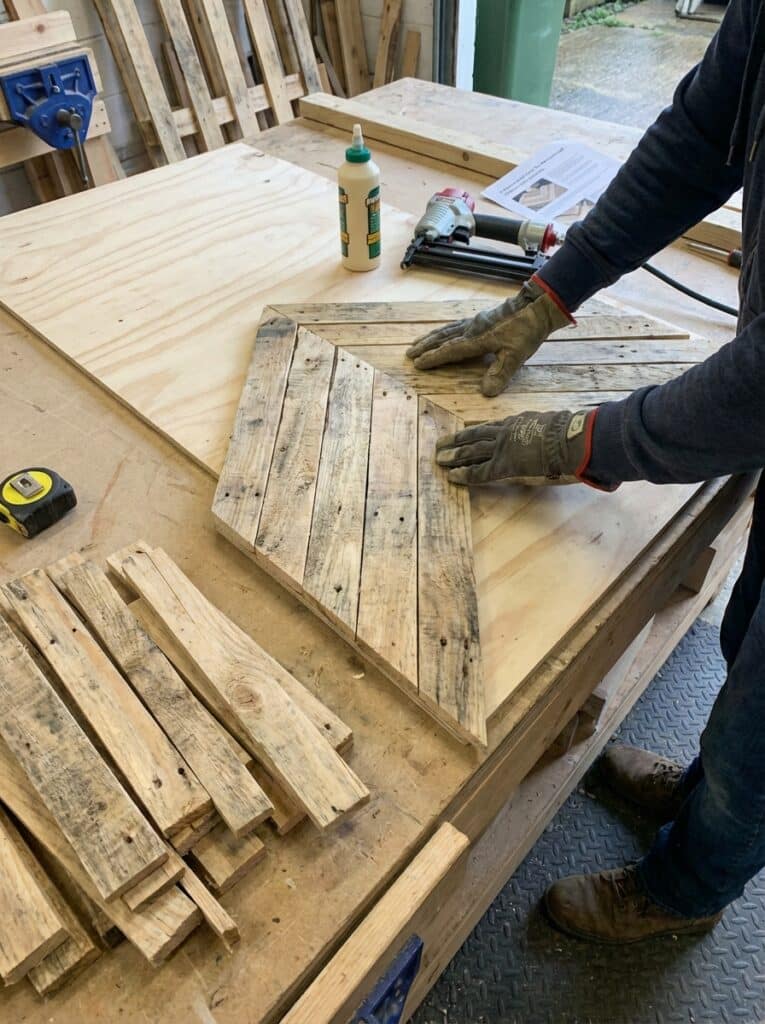
If you want more of a “wow” factor and still stay within diy pallet ideas, a pattern such as chevron is worth the extra steps.
A chevron build from The Merrythought follows this process (The Merrythought):
- Cut a piece of plywood to your desired tabletop size.
- Rip pallet boards into uniform strips, for example 2.5 inches wide.
- Lay out the strips diagonally in a chevron pattern across the plywood, adjusting until you like the look.
- Use wood glue and brad nails to attach each strip to the plywood.
- Once covered, flip the top and trim excess wood along the edges so everything is flush.
This method gives you a very stable top and lets you create patterns without worrying about gaps between boards.
Add A Framed Edge For A Finished Look
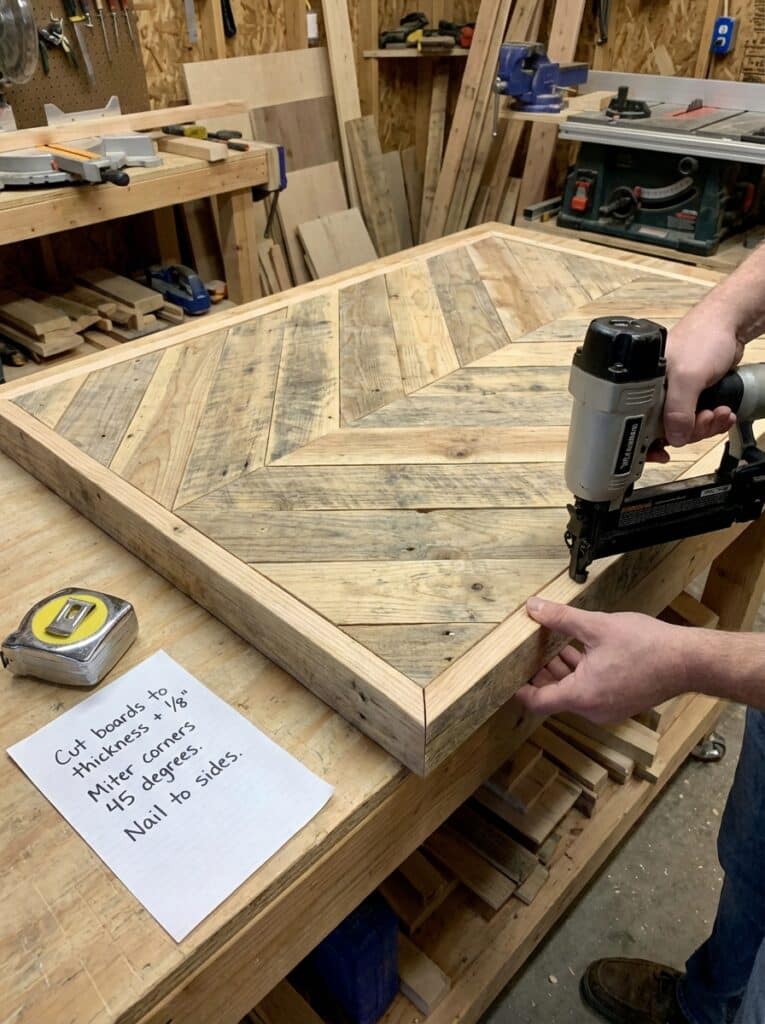
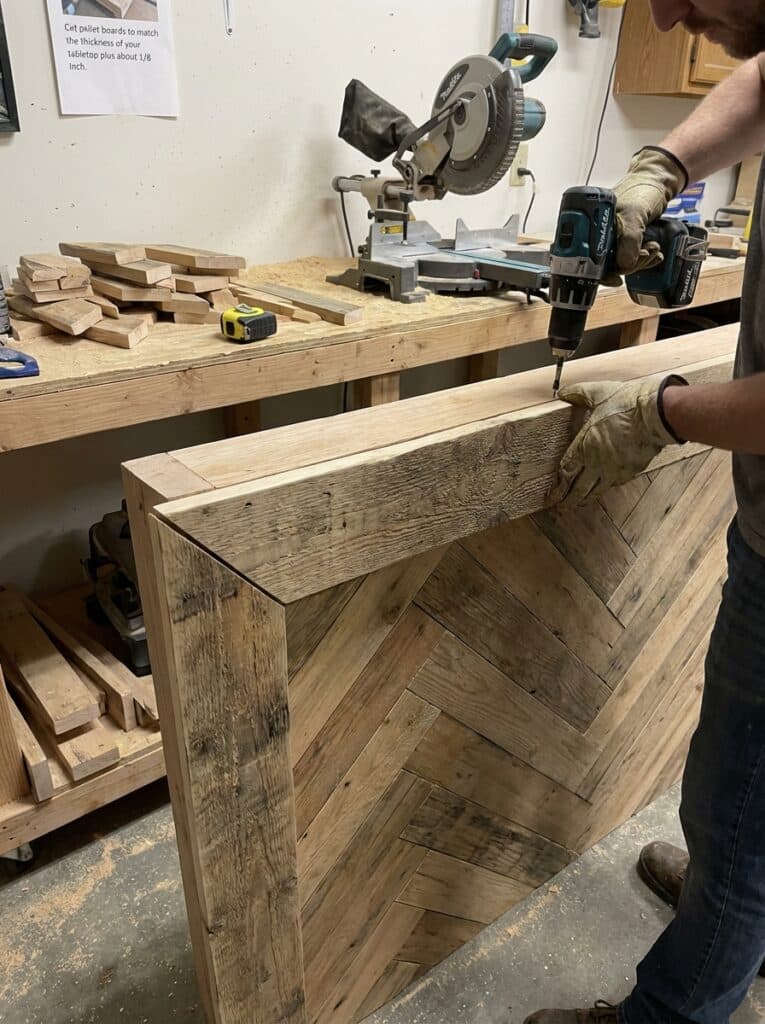
You can frame the edges of your tabletop to make it look more like a piece from a furniture store:
- Cut pallet boards to match the thickness of your tabletop plus about 1/8 inch.
- Miter the corners at 45 degrees so they meet neatly.
- Nail or screw the edging boards to the sides of the top.
In the chevron project, this framed edge is created by cutting boards to the thickness of the top plus 1/8 inch and mitering each corner, which gives a polished outline around the rustic boards (The Merrythought).
Add An Optional Storage Shelf
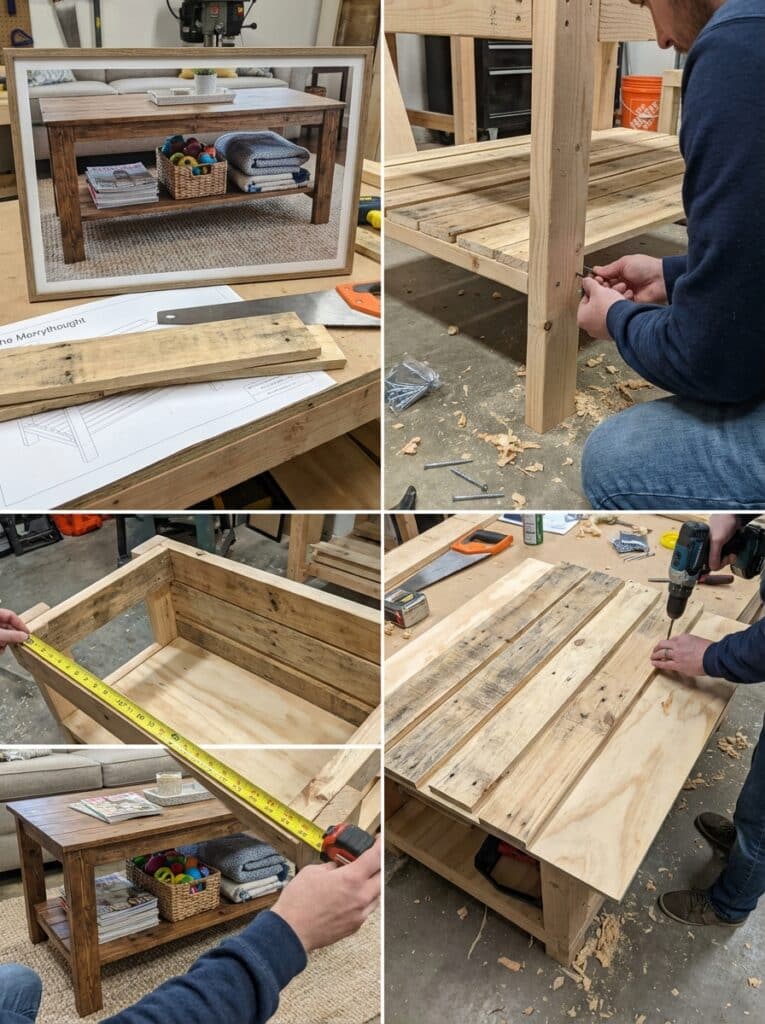
A lower shelf turns your diy pallet coffee table into storage for magazines, kids’ toys, or blankets.
Here is one simple way to add it:
- Measure the inside of your frame.
- Cut three pallet boards to match the length or width.
- Attach these boards to a piece of plywood cut to fit the space, similar to how the tabletop base is built in the chevron project (The Merrythought).
- Screw this shelf unit to the inside of the legs or frame, a few inches up from the floor.
In the 2023 chevron pallet coffee table build, the shelf is made from three pallet boards attached to plywood underneath the main top. This design keeps the shelf strong enough to hold books and toys without sagging (The Merrythought).
Attach The Top To The Base
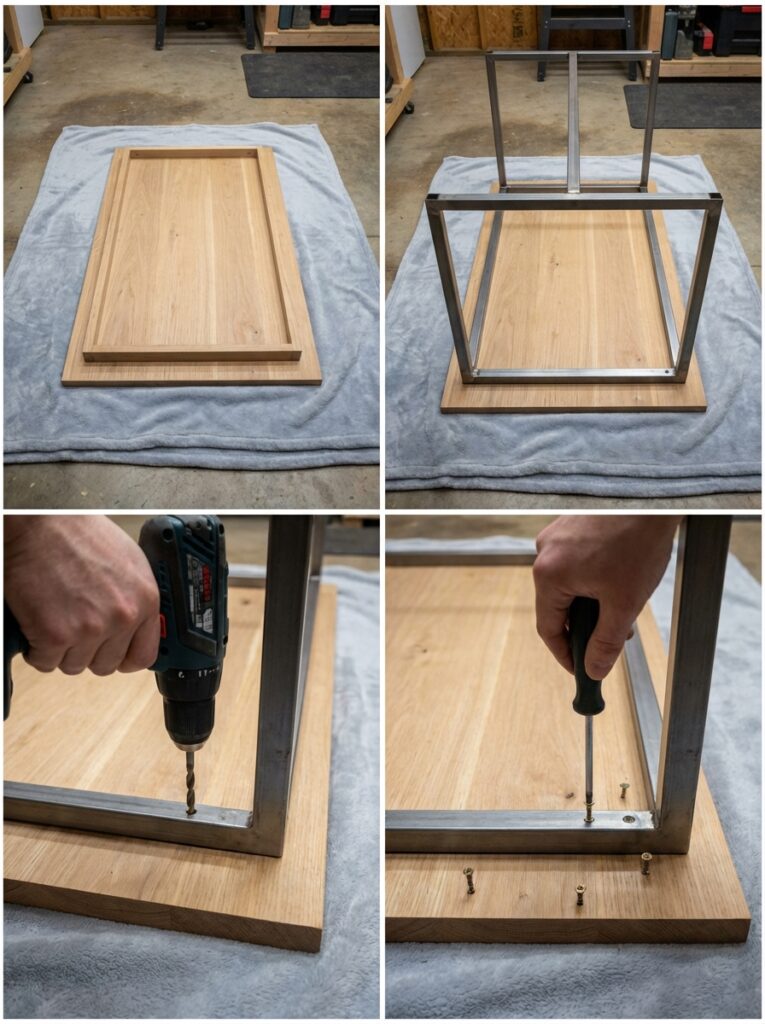
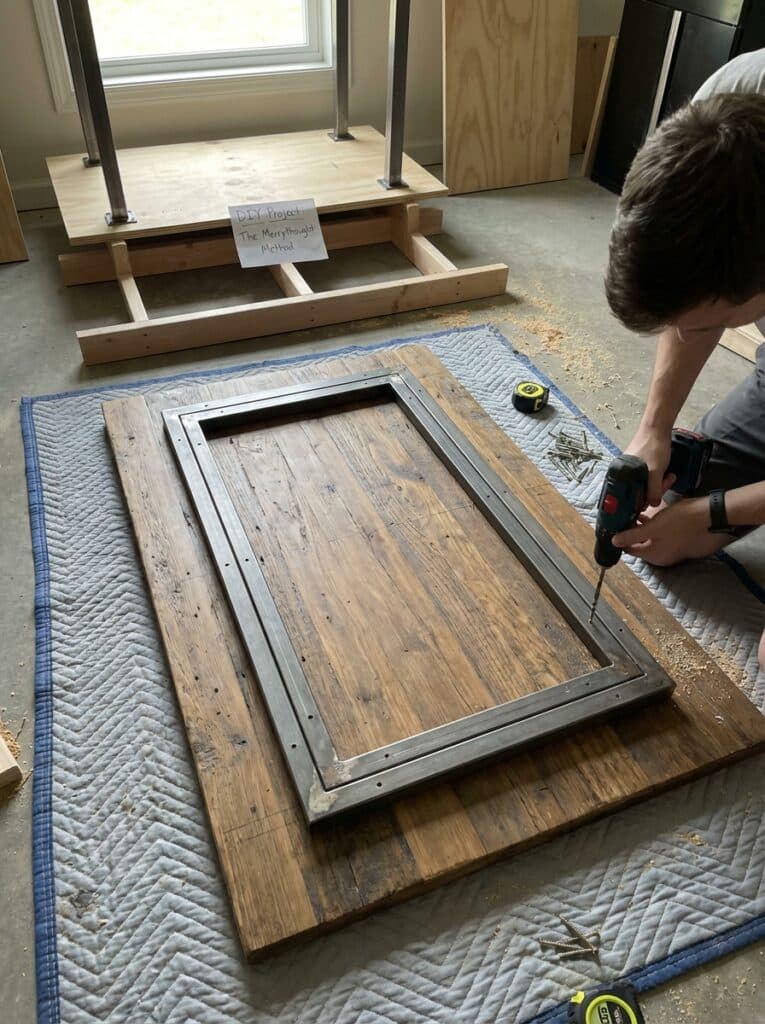
Once your tabletop and base are complete, you will bring them together.
- Place the tabletop upside down on a soft surface.
- Center the base upside down on top of it.
- Pre drill through the frame into the top, spacing holes every 6 to 8 inches.
- Secure with wood screws.
Some builders instead start by attaching legs directly through plywood or pallet boards, then building the bottom part separately. This method is used in a diy project that drills holes in the boards, screws the legs in place, and then adds the remaining structure below (The Merrythought).
As long as the base is firmly attached and the top does not shift or rock, you are in good shape.
Sand And Finish Your Coffee Table
Your diy pallet coffee table is built. Now you will smooth it out and protect it so it lasts.
Final Sanding For A Comfortable Surface
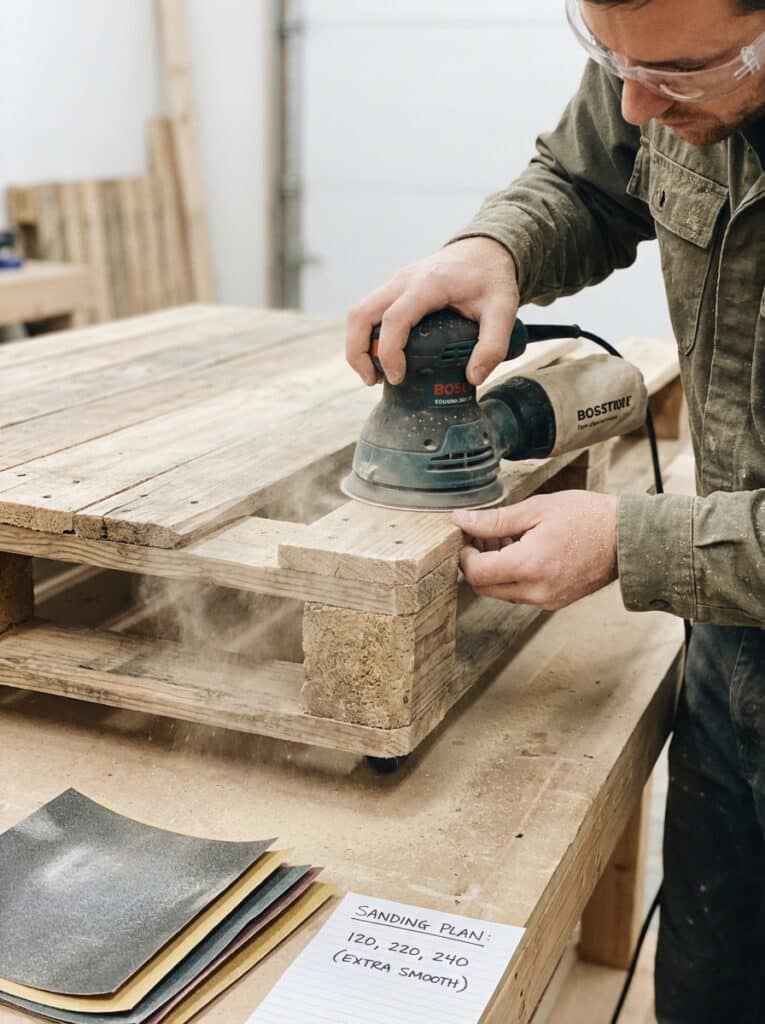
Give the entire piece a final overall sand:
- Start with 120 grit, paying attention to corners and edges.
- Move up to 180 or 220 grit for the tabletop and shelf surface.
One popular pallet table build sands up to 240 grit for an extra smooth feel before finishing (Instructables). If you expect people to rest their feet or even sit on the table, a smoother finish is worth the extra few minutes.
Choose Your Finish
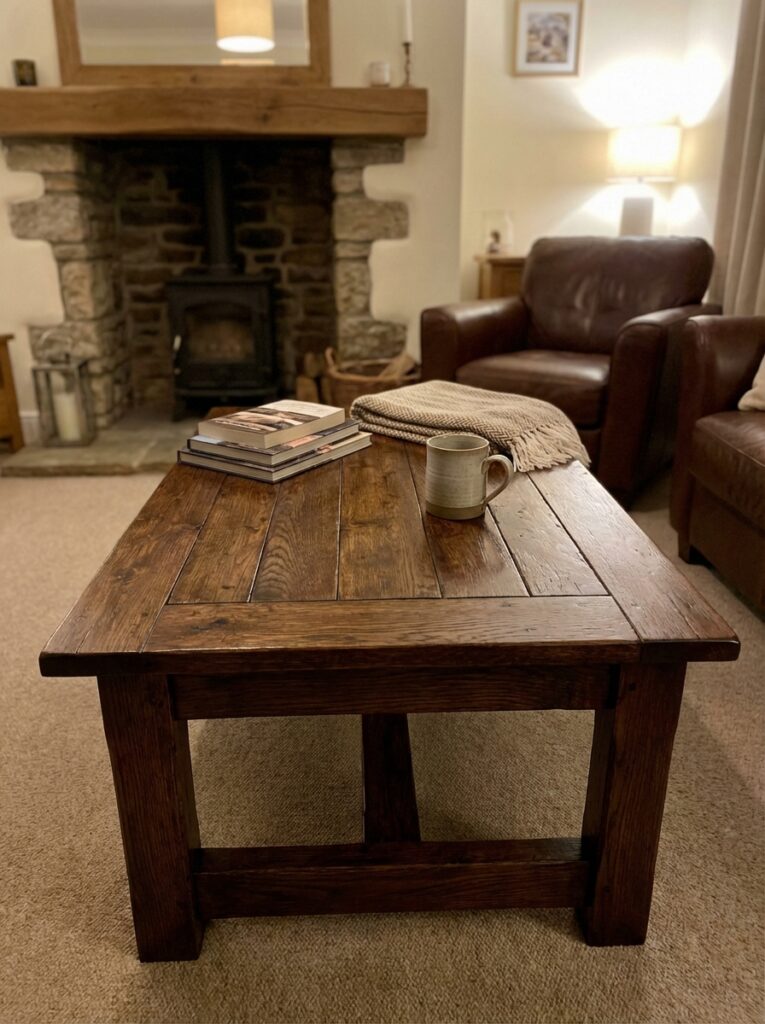
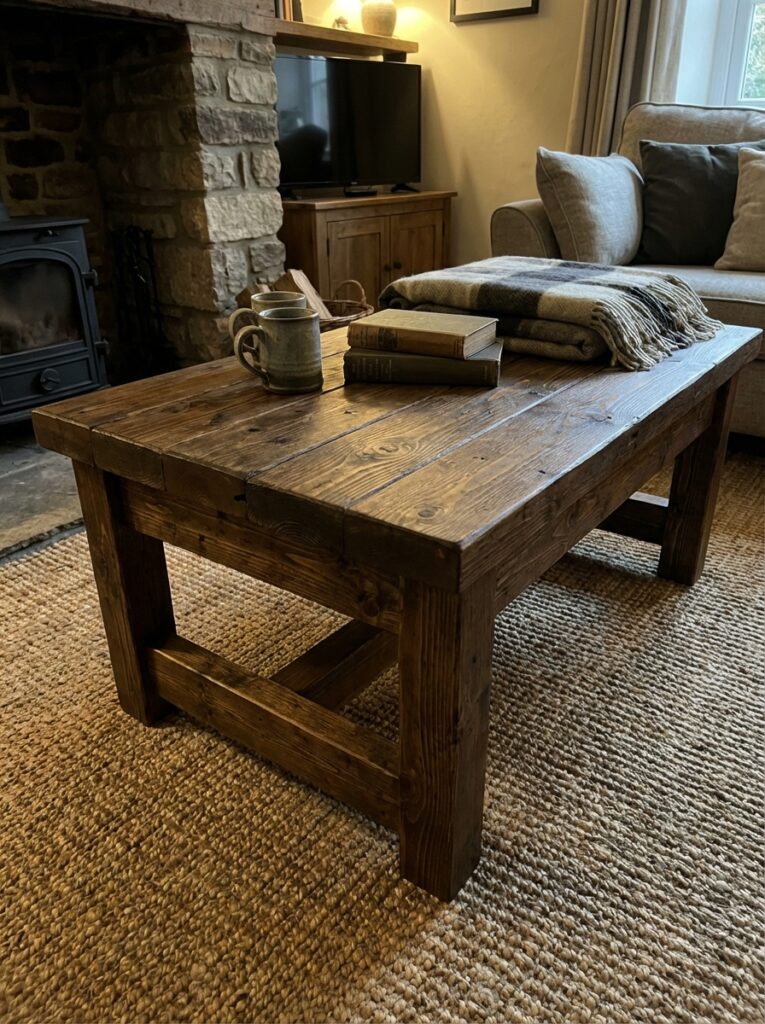
You have three main directions for finishing:
Rich rustic look
Use a darker stain or varnish like dark oak satin varnish, as in the Instructables pallet table project. They applied two coats for a durable, attractive finish (Instructables).Natural, light wood
Use a clear satin polyurethane. This keeps the wood tone close to its natural color but protects against spills.Painted finish
If your wood is mismatched or very rough, paint can unify everything. One diy builder constructed a pallet board coffee table with free pallets and lumber, then spent money only on paint to improve the look and make it work with the porch space (Redeem Your Ground).
Whatever you choose, follow a few standard steps:
- Wipe off dust with a slightly damp cloth and let the wood dry.
- Stir your finish gently instead of shaking to avoid bubbles.
- Apply a thin, even coat with a brush or foam applicator.
- Let it dry fully according to the product directions.
- Lightly sand with very fine grit (220 or 320) between coats if you want a smoother result.
- Add a second coat, and a third if the table will see heavy use or live outdoors.
Styling And Daily Use Tips
Once your diy pallet coffee table is in place, a few small touches can make it both practical and pretty.
Keep The Surface Protected
- Use coasters for drinks, even with a good finish.
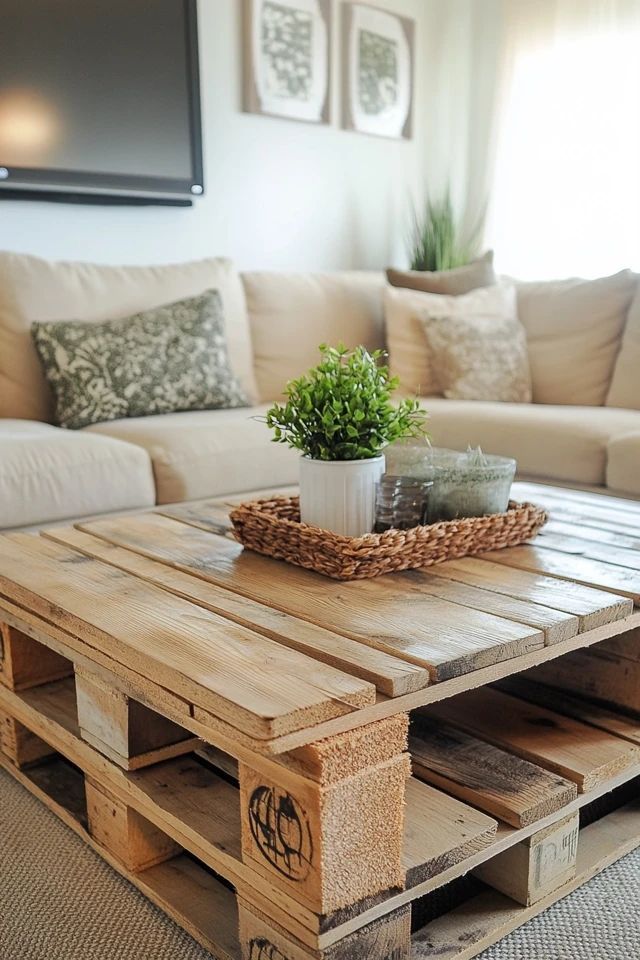
- Add a tray for remotes, candles, or small decor to group items neatly.
- If your table lives outside, consider a furniture cover during heavy rain or snow.
Style It To Suit Your Room
Try one or two simple ideas:
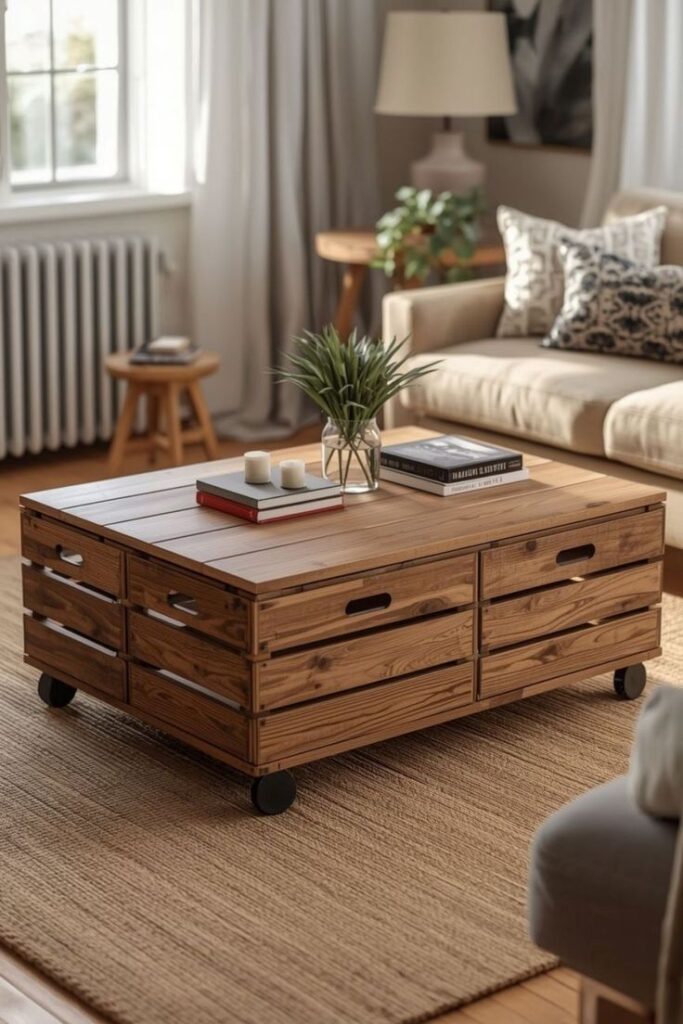
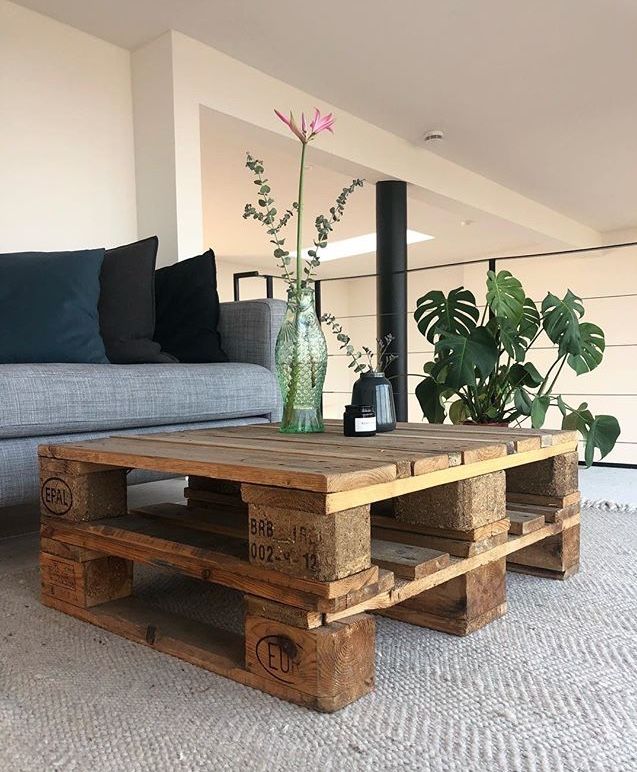
- Stack a couple of coffee table books and top them with a small plant.
- Use a woven basket on the shelf for throw blankets or kids’ toys.
- For a minimalist look, keep decor very light and let the wood grain be the star.
If the table feels too rustic for your space, a neutral runner or small tablecloth down the center can soften it without hiding your hard work completely.
Troubleshooting Common Problems
Things do not always go perfectly on the first build. Here are a few common issues and easy fixes.
| Symptom | Likely Cause | Quick Fix |
|---|---|---|
| Table rocks or wobbles | Legs not exactly equal in length | Place table on a flat floor, mark the longest leg, and sand or trim slightly until stable. |
| Gaps between tabletop boards | Boards warped or uneven | Clamp boards tighter while gluing, or fill small gaps with wood filler before final sanding. |
| Rough spots after finishing | Skipped fine sanding between coats | Lightly sand with fine grit and apply another thin coat of finish. |
| Visible screw heads on top | Screws set too shallow | Countersink screws, fill with wood filler, sand smooth, and touch up finish. |
| Boards splitting near screws | No pilot holes or screws too close to edge | Pre drill holes in future boards, and keep screws at least 1 inch from board edges. |
FAQ About DIY Pallet Coffee Tables

1. Is pallet wood safe to use indoors?
Pallets marked “HT” for heat treated are generally better for indoor furniture than those marked “MB” for chemical treatment. Always inspect pallets for spills, stains, mold, or strong odors. If you are unsure about a pallet’s history, it is safer to skip that one and find a cleaner option.
2. How long does it take to build a diy pallet coffee table?
If your pallets are in good shape and you choose a simple straight board top, you can usually build the table in a day or over a weekend. More decorative patterns like chevron or extra sanding and finishing steps will add some time, but you will still finish much faster than most furniture projects.
3. Do I really need power tools for this project?
Power tools make the job faster, but they are not strictly required. One detailed pallet table build relies on simple tools like a hand saw, tape measure, drill, screwdriver, and paint brush to complete the project without advanced equipment (Instructables). If you have a drill and a way to cut wood accurately, you are set.
4. Can I skip sanding if I like a rough, rustic look?
You can, especially if the table will live outside and you use smoother boards. One diy builder chose the smoothest, oldest pallets and skipped sanding to save effort, then used the table outdoors (Redeem Your Ground). For indoor tables, at least give the top and edges a quick sand so they are comfortable to touch and less likely to splinter.
5. How do I protect my pallet coffee table from spills and stains?
Use a protective finish that is suited to your space. Dark oak satin varnish, clear polyurethane, or a durable paint are all solid options, as shown in several pallet coffee table builds (Instructables, Redeem Your Ground). Apply at least two thin coats and keep coasters nearby for drinks. Wipe up spills promptly, and your diy pallet coffee table should age gracefully instead of looking damaged.
Once you finish your first table, you will see why diy pallet ideas are so popular. The materials are almost free, the skills are accessible, and the final piece tells a story every time someone asks, “Where did you get that coffee table?”
- 171shares
- Facebook0
- Pinterest168
- Twitter3
- Reddit0