When I started my diy pallet bookshelf, I honestly thought it would be “just another project.” You know, something fun for the weekend, maybe a cute place to stash a few paperbacks, and then on to the next thing. Instead, this little diy pallet bookshelf completely stole my heart and became my favorite project yet.
It checked all my boxes at once. It was budget friendly, beginner friendly, eco conscious, and it instantly gave my space that warm, rustic personality I had been craving. Along the way, I learned a lot about working with pallets, what to look out for, and how to avoid a few mistakes that almost derailed the whole thing.
If you have been flirting with diy pallet ideas and especially the idea of building a pallet bookshelf, consider this your cozy, step by step guide from someone who has been in the sawdust and survived to tell the tale.
Why I fell in love with pallet projects
Before I dive into the how, I want to talk about the why, because honestly, that is what kept me motivated when my arms were sore from sanding.
Stretching my budget without sacrificing style
Store bought bookshelves can get expensive fast, especially anything made of solid wood or that has real character. I wanted something:
- Sturdy enough to actually hold a lot of books
- Stylish enough that it did not scream “temporary dorm furniture”
- Affordable enough that my wallet would not side eye me for a month
Pallet wood let me check all three boxes. With just one pallet, wood screws, sandpaper, and a bit of stain, I could create something that looked custom and high end without the custom price tag. Projects like Jenna Burger’s pallet bookshelf can be built quickly from a single pallet, and she estimates it took around 40 minutes of building time for hers, not counting finishing and stain (Jenna Burger). Knowing it did not need to be a huge time commitment made it feel doable.
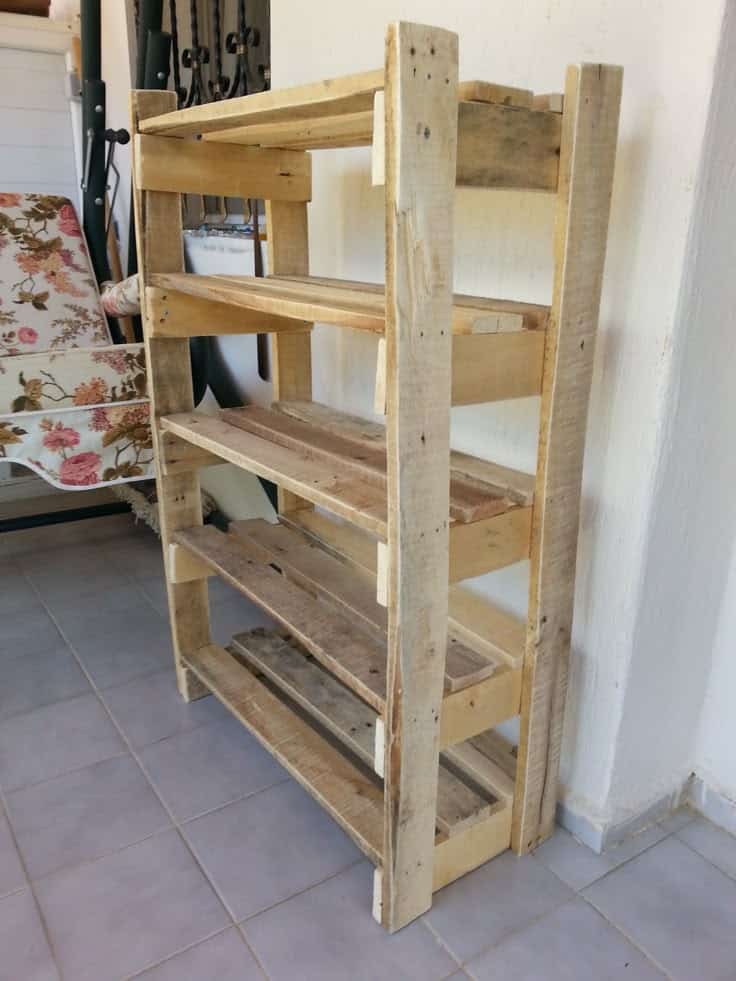
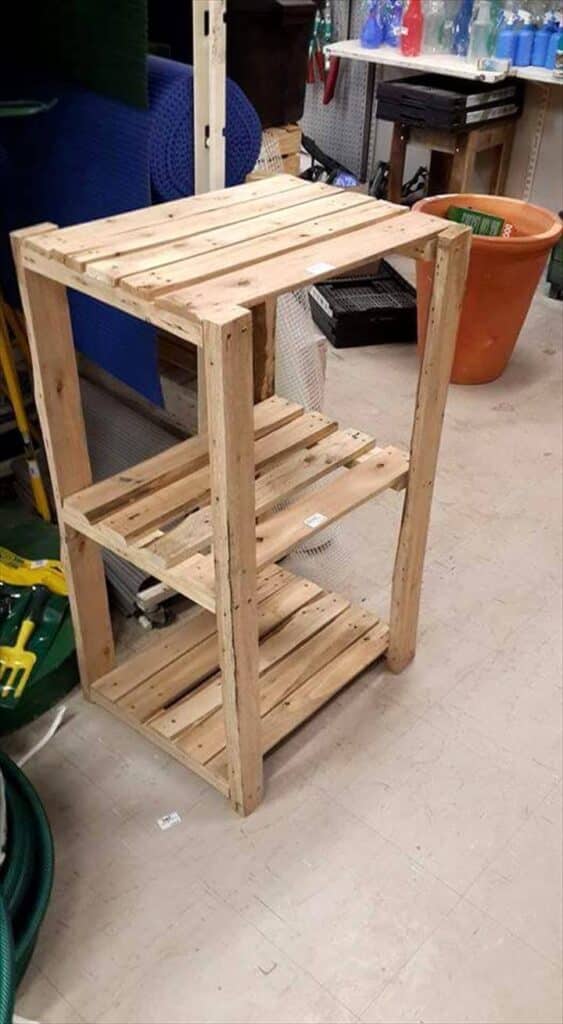
Giving old wood a fresh story
There is something strangely meaningful about taking wood that once hauled boxes in a warehouse and turning it into a home for my favorite novels and kids’ storybooks. Instead of buying new, I got to:
- Reduce waste and give material a second life
- Add pieces with actual texture and history, instead of flat laminate
- Create a bookshelf that feels like it has a story, even before I put a single book on it
It sounds cheesy, but every knot and dent in that pallet wood now feels like part of my home’s personality.
The “I actually built that” feeling
I still get a tiny thrill every time someone points at the bookshelf and says, “Where did you get that?” and I get to reply, “I made it.” There is a quiet confidence that comes from using your hands and watching a pile of scruffy boards become something solid and beautiful.
If you have ever doubted your own “handy” skills, a diy pallet bookshelf is such a gentle introduction. The cuts are straightforward, the layout is simple, and even if you mess up a little, the rustic finish hides a lot.
Safety first when choosing pallet wood
Now for the part I almost ignored, and I am very glad I did not. Not all pallets are safe for indoor furniture, especially for something like a bookshelf that might end up in a bedroom or kids’ room.
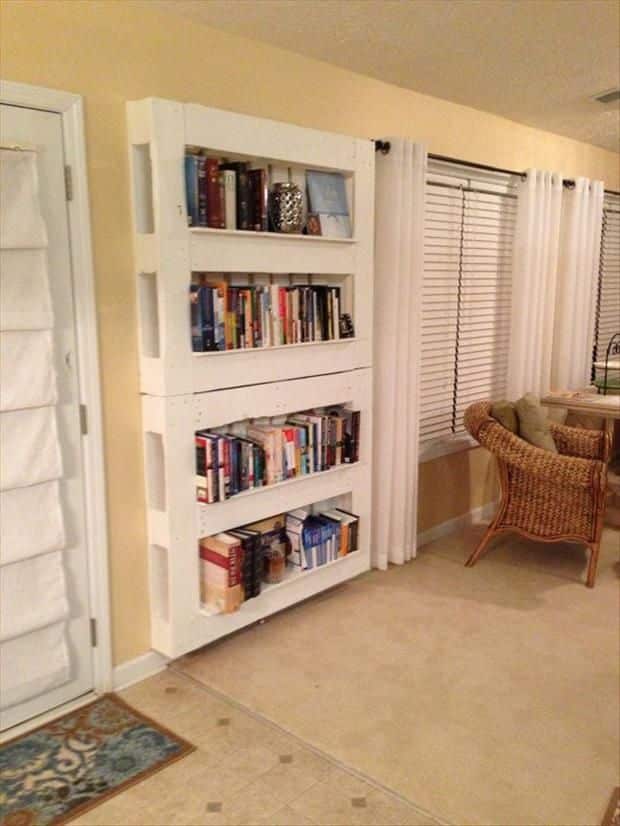
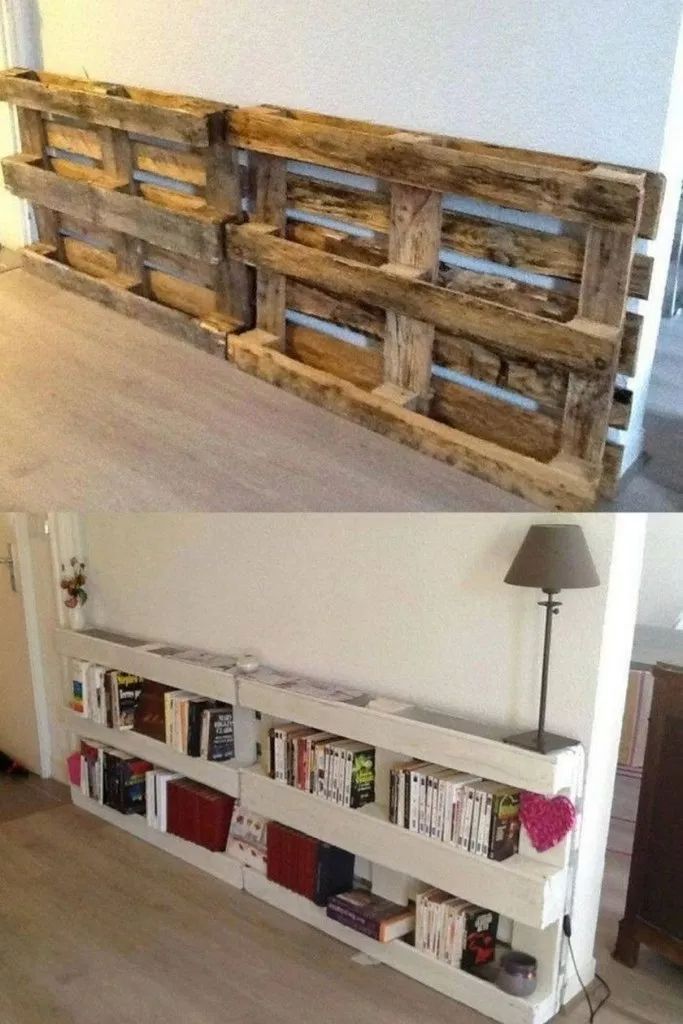
Why I skipped random free pallets
I was very tempted to grab the first free pallet I saw leaning against a dumpster. Free is free, right? Then I learned that pallets can be:
- Treated with harsh chemicals
- Exposed to spills, oils, and unknown contaminants
- Stored in places that are not exactly “clean”
The tutorial that first opened my eyes was by Jen Woodhouse. She specifically warns against using random pallets from unknown sources because they can contain toxic chemicals or contaminants. Instead, she recommends purchasing heat treated, sterilized reclaimed pallets if you are building indoor projects like her rustic pallet bookshelf (Jen Woodhouse).
Once I read that, I knew I did not want to cut corners.
How I found safer pallets
When I went hunting for wood, here is what I looked for:
- Heat treated (HT) stamp instead of chemically treated marks
- Clean, dry boards with no obvious oil stains or weird smells
- Reputable sources that actually know where their pallets come from
I ended up buying reclaimed pallets that were already heat treated and sterilized, very similar to what Jen recommends in her project. I paid a bit more than “free” of course, but I also felt way better bringing that wood into my home.
If your bookshelf is going in a child’s room or anywhere you will spend a lot of time, this extra step is worth it.
Choosing the right style of pallet bookshelf
One of the reasons this became my favorite project is that I realized just how many different diy pallet bookshelf styles exist. I had to choose what worked best for my space and my skills.
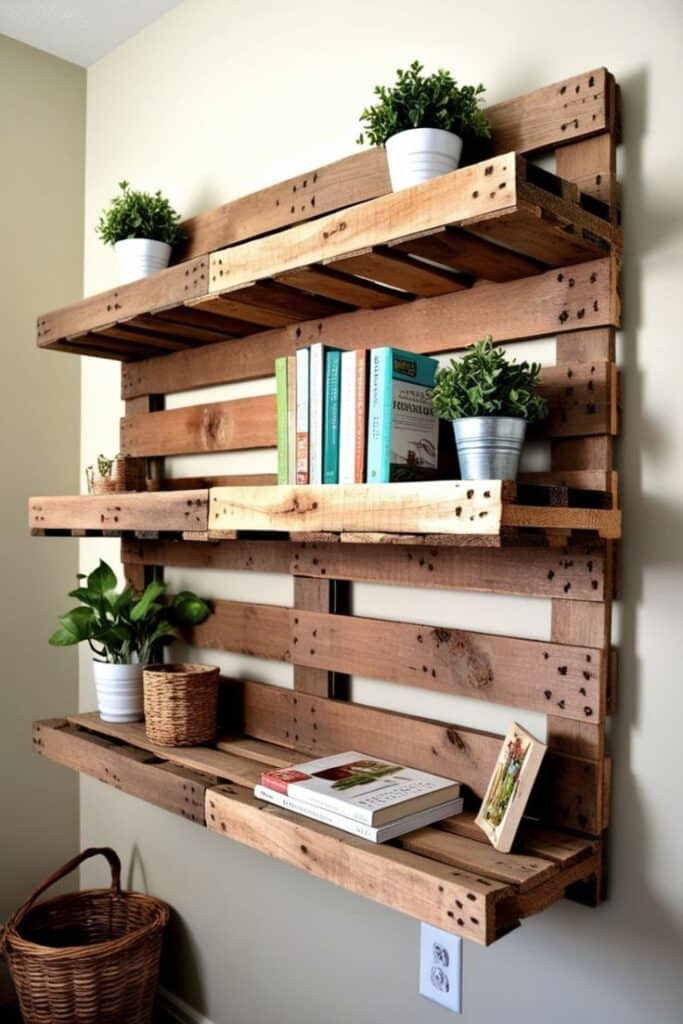
Option 1: Slim wall mounted pallet bookshelf
The first style that caught my eye was the simple wall mounted bookshelf made from one pallet, like the one Jenna Burger built. The idea is genius:
- You repurpose each end of a pallet to create two shallow bookshelves.
- Each finished shelf ends up about 4 inches deep.
- They are perfect for kids’ books, which you can display facing forward so the covers are visible (Jenna Burger).
This style is ideal if:
- You are short on floor space.
- You want a “gallery” style look for children’s books or beautiful covers.
- You like quick wins and want something you can knock out in a day.
Jenna rated the difficulty as easy to medium and said a single person can complete the main building in about 40 minutes, not including time for stain or paint (Jenna Burger). That alone made my beginner brain relax.
Option 2: Big rustic crate and pallet bookshelf
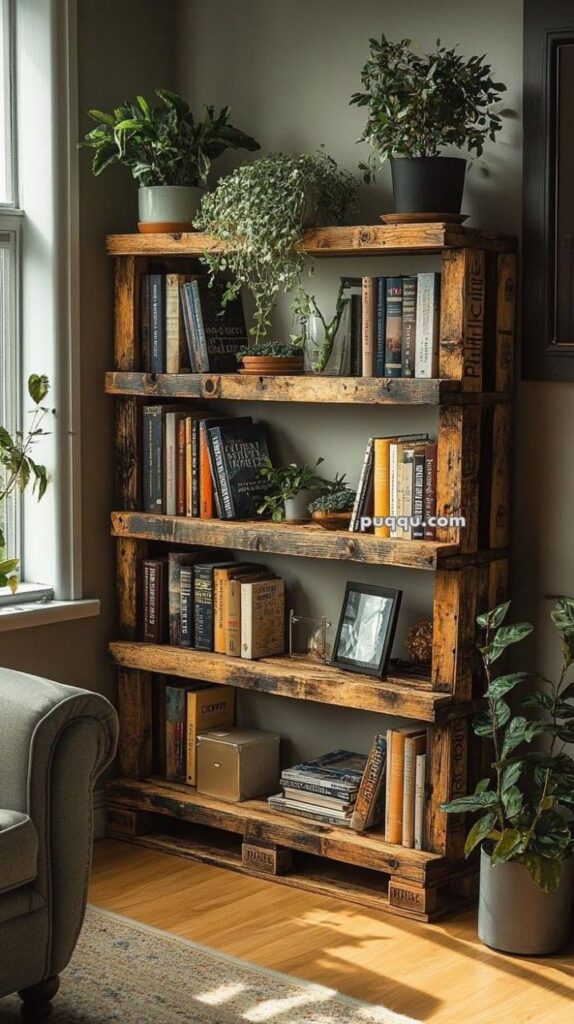
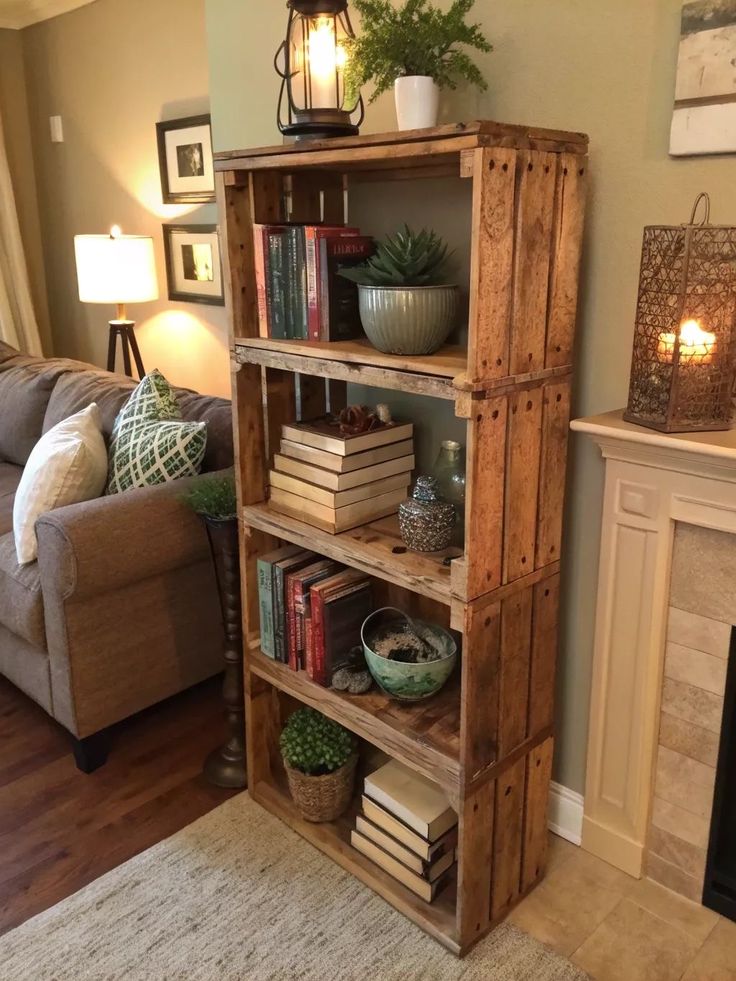
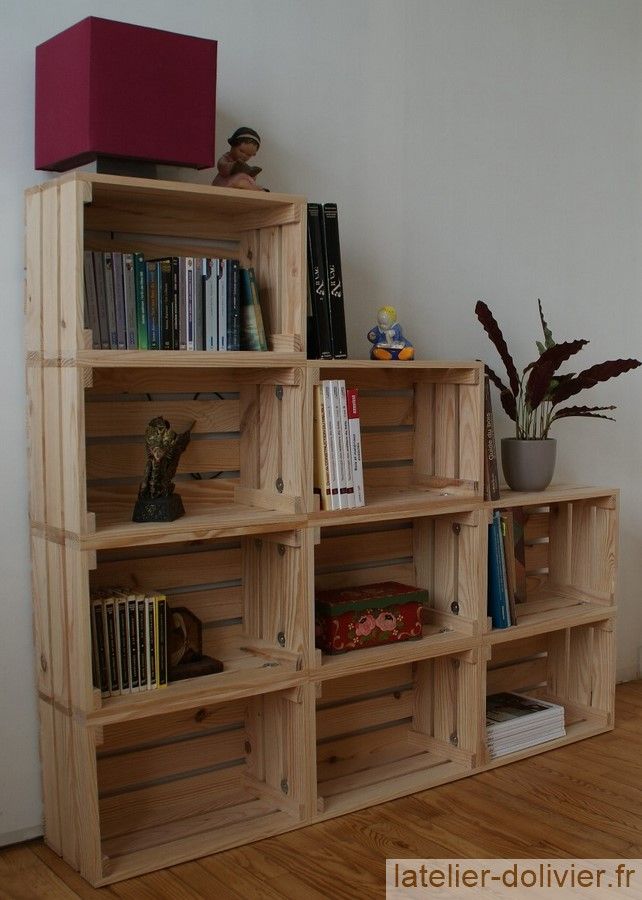
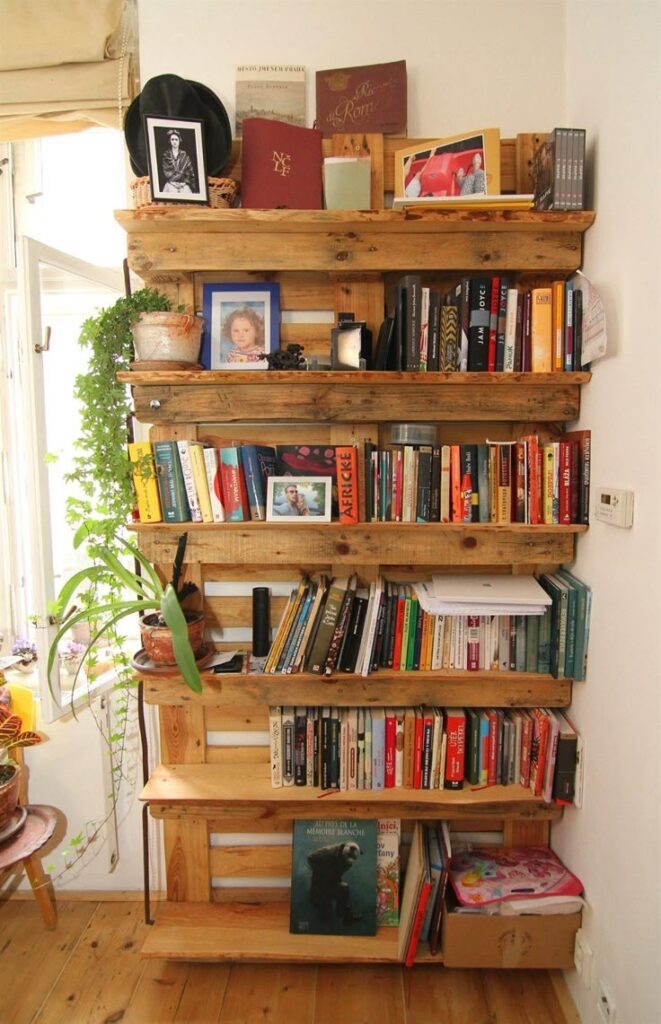
On the other end of the spectrum was a more substantial, furniture style piece based on Jen Woodhouse’s plans. Her diy rustic pallet bookshelf is:
- Built with a solid frame of 2x10s and 2x4s
- Joined with pocket hole joinery for stability
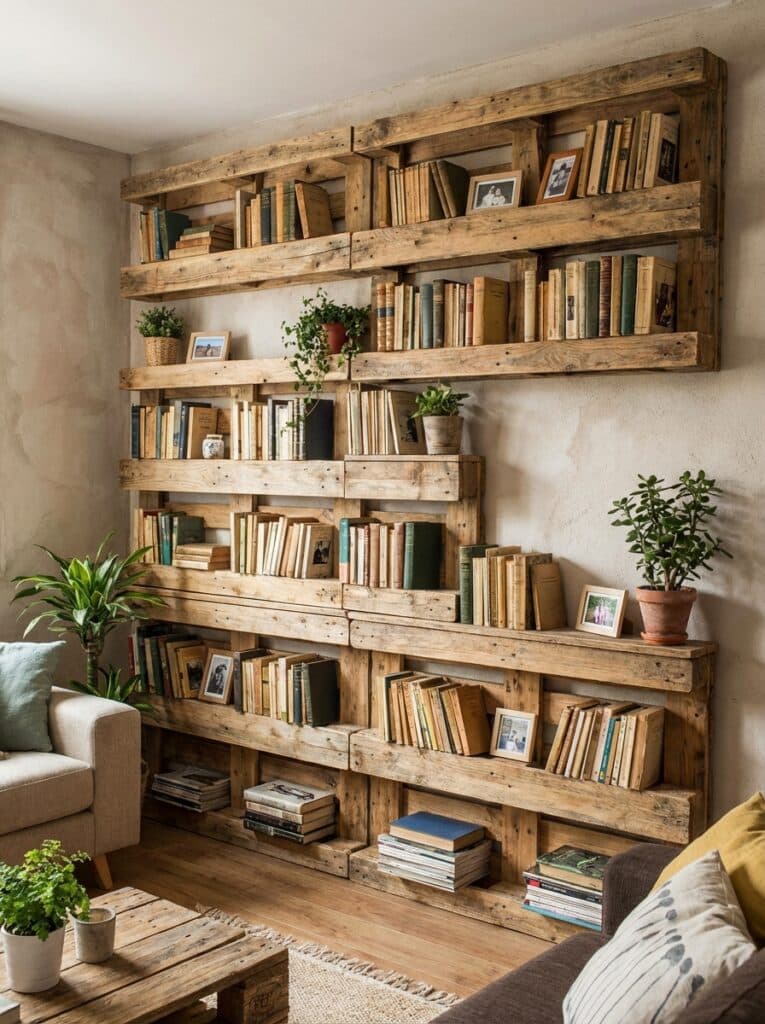
- Wrapped in reclaimed pallet boards glued and nailed in staggered random lengths, which creates this gorgeous, rustic patchwork look (Jen Woodhouse)
It is designed to accommodate Crates & Pallet’s Large and Extra Large pre made crates, so you can slide them in for storage or leave them out for open shelves. The fixed shelves and dividers make the layout super versatile (Jen Woodhouse).
This style is ideal if:
- You want a major statement piece that anchors a room
- You need real storage, not just display space
- You are comfortable using a drill, pocket hole jig, and basic saws
The style I chose
I am the kind of person who wants it all. I wanted the slim, wall mounted feel for a tight hallway, but I also loved the seriousness of a big, rustic bookshelf. In the end, I started small.
My first build was a wall mounted pallet bookshelf, very similar to Jenna’s. I did that first to build my confidence and learn how pallet wood behaves. Once I saw how quickly it came together, I started sketching ideas for a larger, crate style piece for my living room.
So if you are on the fence, there is nothing wrong with starting with the simpler version. It gives you quick gratification and a much lower chance of frustration.
Tools and materials I actually used
I am not a professional woodworker, and I did not want a shopping list that sounded like a hardware store catalog. Here is what my diy pallet bookshelf really required.
Basic tools
For the smaller, wall mounted pallet bookshelf, I used:
- Measuring tape and pencil
- Circular saw or hand saw
- Drill and drill bits
- Screwdriver bit for the drill
- Hammer or pry bar
- Sandpaper in multiple grits or a small orbital sander
- Level
For a larger, crate style bookshelf, I added:
- Pocket hole jig and pocket hole screws for the frame
- Miter saw or circular saw for more precise cuts
- Wood glue
- Clamps if possible, to keep boards tight while glue dried
Nothing here is overly fancy. I either already owned most of it, or I borrowed from a friend.
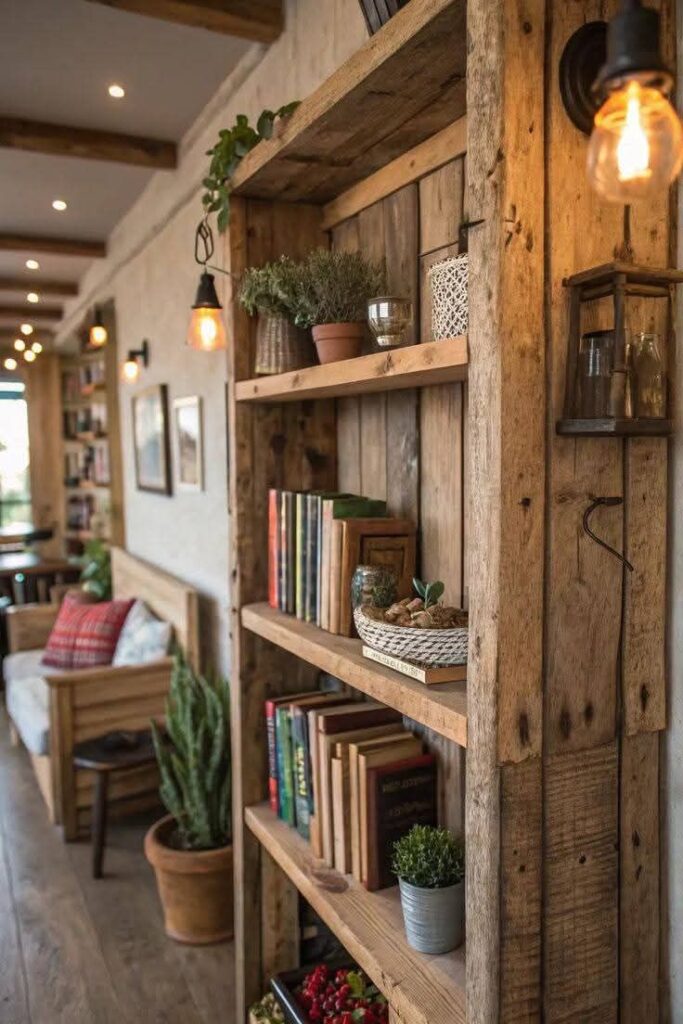
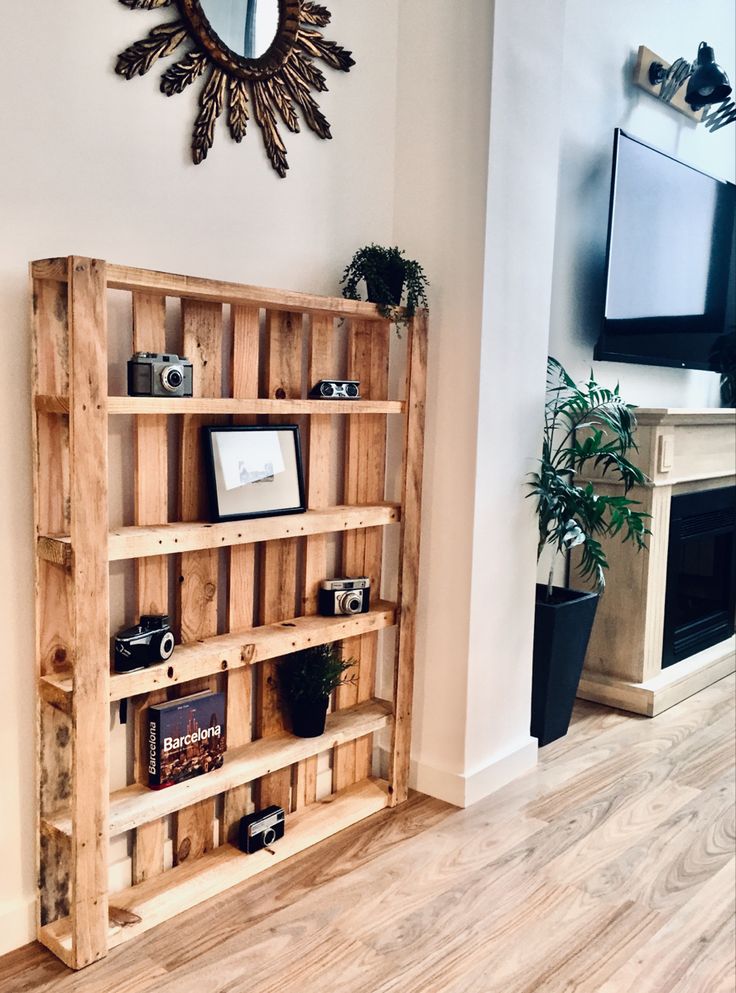
Wood and hardware
For my wall shelf, I followed the same basic material approach that Jenna describes:
- One pallet, which gave me enough wood for two shelves if I wanted them
- Wood screws
- Stain, I loved a darker color similar to Minwax Jacobean, which Jenna used on hers for a rich, dark finish (Jenna Burger)
- Polyurethane or a clear sealant to protect the wood
For mounting the finished shelf, I used:
- Self drilling drywall anchors, especially helpful because I did not hit studs exactly where I wanted the shelf (Jenna Burger)
For the larger style bookshelf, I would add:
- 2×10 and 2×4 boards for the internal frame like Jen’s design
- Pocket hole screws
- Additional reclaimed pallet boards for the outer cladding
- Brackets or long screws to anchor the finished piece to the wall
How I built my diy pallet bookshelf
Here is the part where I roll up my sleeves with you. I will walk through the wall mounted style, since that was my first and favorite “gateway” project.
Step 1: Prep and disassemble the pallet
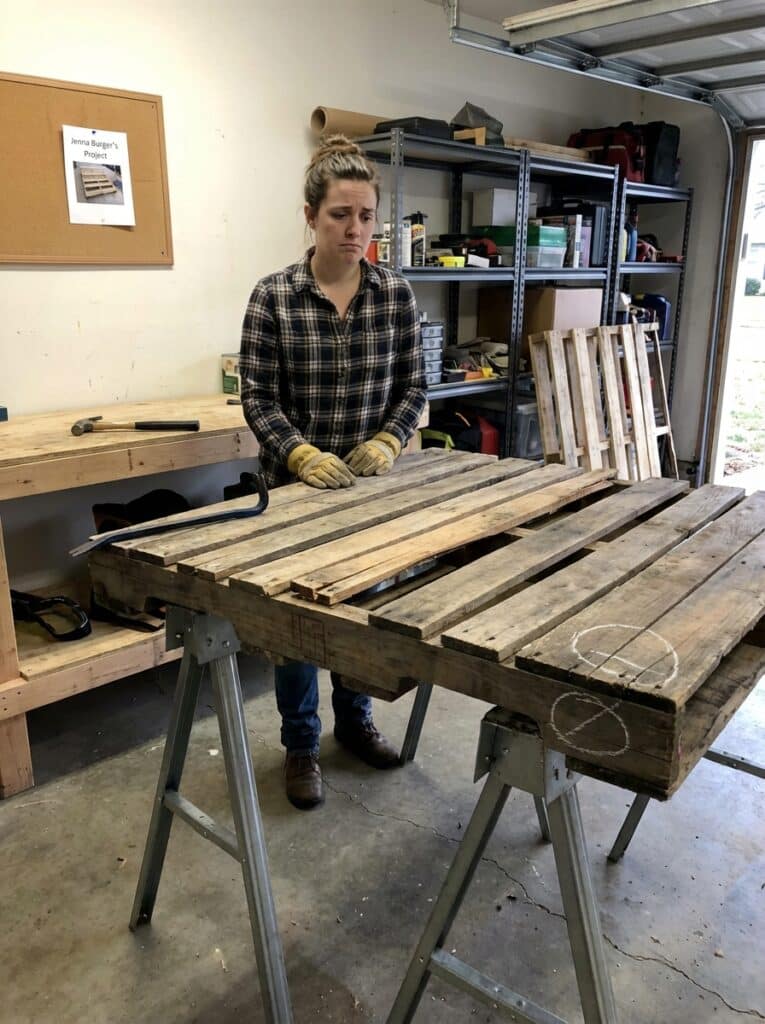
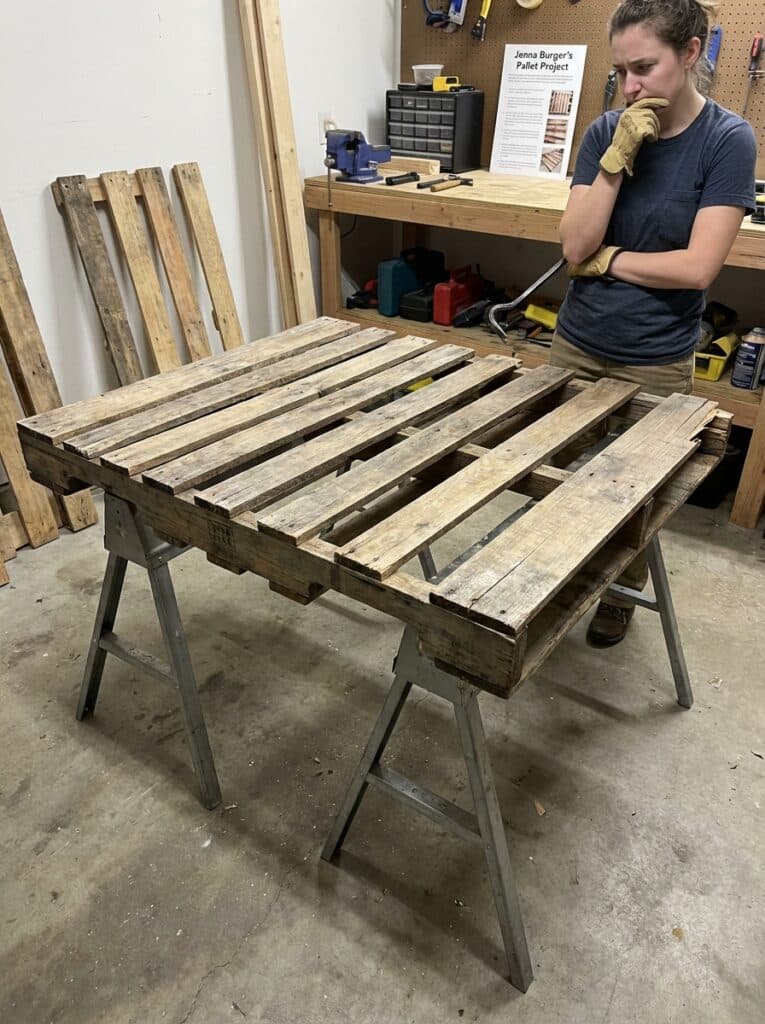
The very first thing I did was set my pallet on sawhorses and stare at it, slightly terrified. Then I remembered I did not have to use all of it at once.
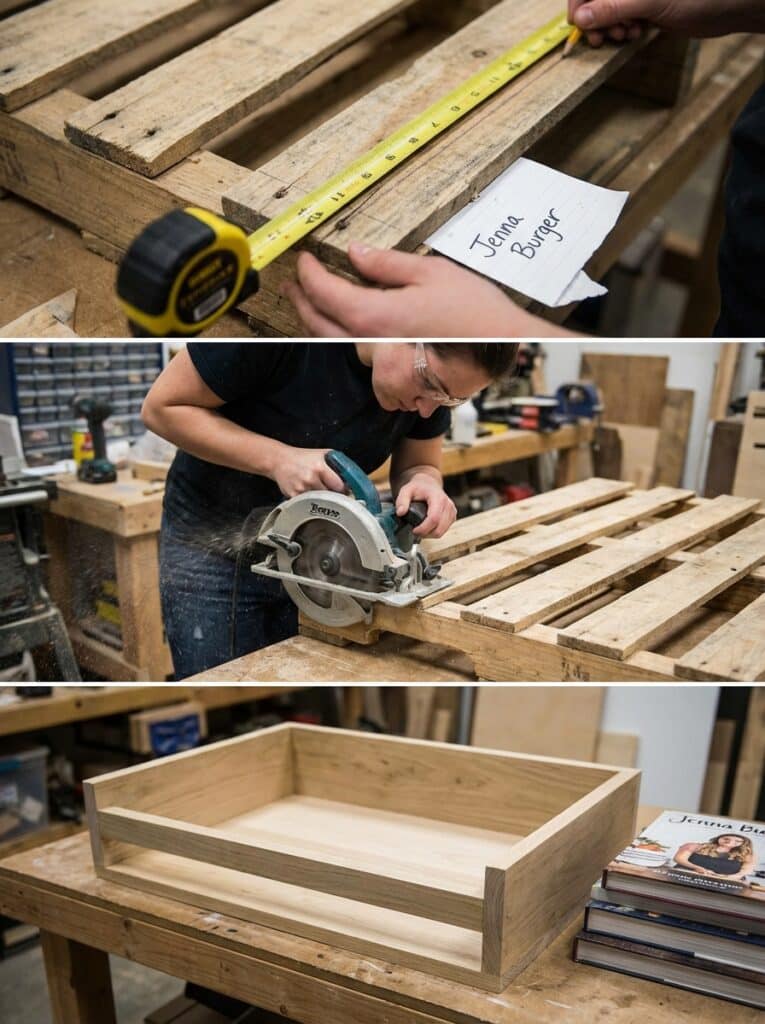
Following the approach in Jenna Burger’s project, I focused on using each end of the pallet as a mini bookshelf. That meant:
- Identifying the “ends” of the pallet. These sections already had a front and back board with vertical supports.
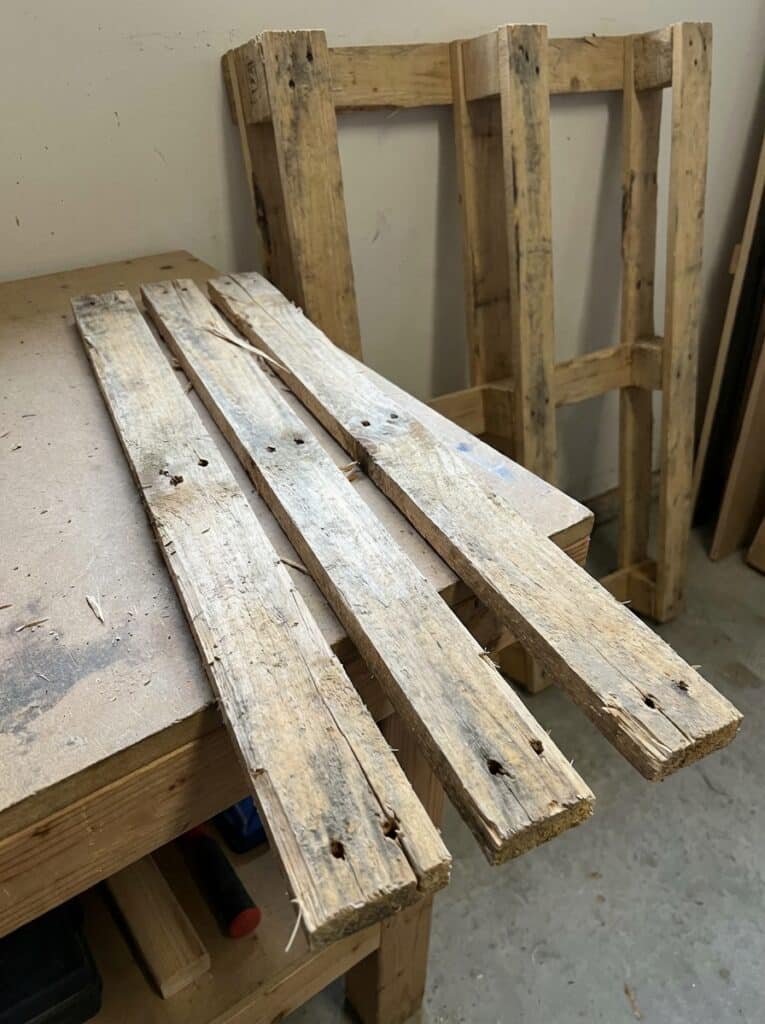
- Removing the center wood strips from the pallet so I could reuse them as the bottom shelf piece later (Jenna Burger).
A combination of pry bar and hammer worked, but I had to be patient to avoid cracking boards. A few minor splits happened, which honestly just added to the rustic look.
Step 2: Cut the pallet to create the shelf body
Next, I made the key cut that turns “random pallet” into “actual bookshelf shape.”
- I measured about 1 to 2 inches above the higher wood strip on the pallet end, exactly like Jenna recommends.
- I drew a straight line across the pallet end at that mark.
- I used a circular saw to cut along that line, separating the end section from the rest of the pallet (Jenna Burger).
That cut gave me a shallow, box like structure. The existing front board would eventually act as the front book rail, while the back would rest against the wall.
If I had wanted two shelves, I could repeat the process on the other end of the pallet.

Step 3: Attach the bottom board
Remember the center wood strips I pried out earlier? Those became the bottom of my bookshelf.
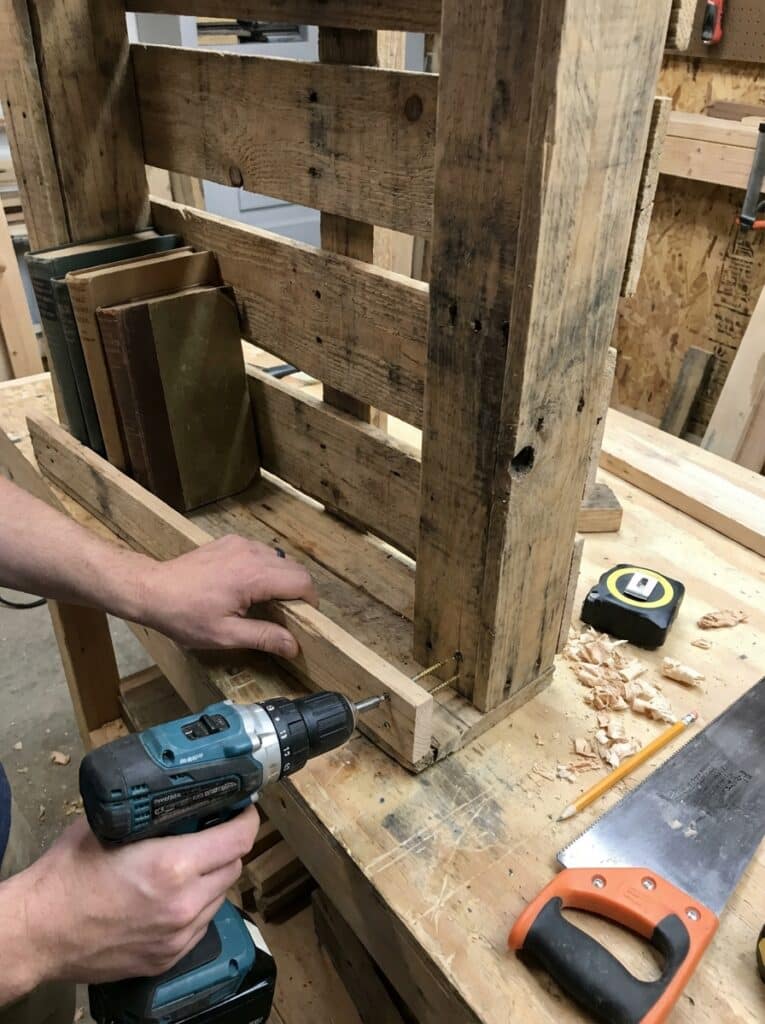
- I measured the inside width of the cut pallet section.
- I cut one of the center boards to that length.
- I set it along the bottom edges, between the front board and the back board.
- I secured it with screws driven through the sides into the board.
That simple step turned a frame into a functional shelf. Books now had something to rest on instead of falling straight through.
Step 4: Sand away the splinters
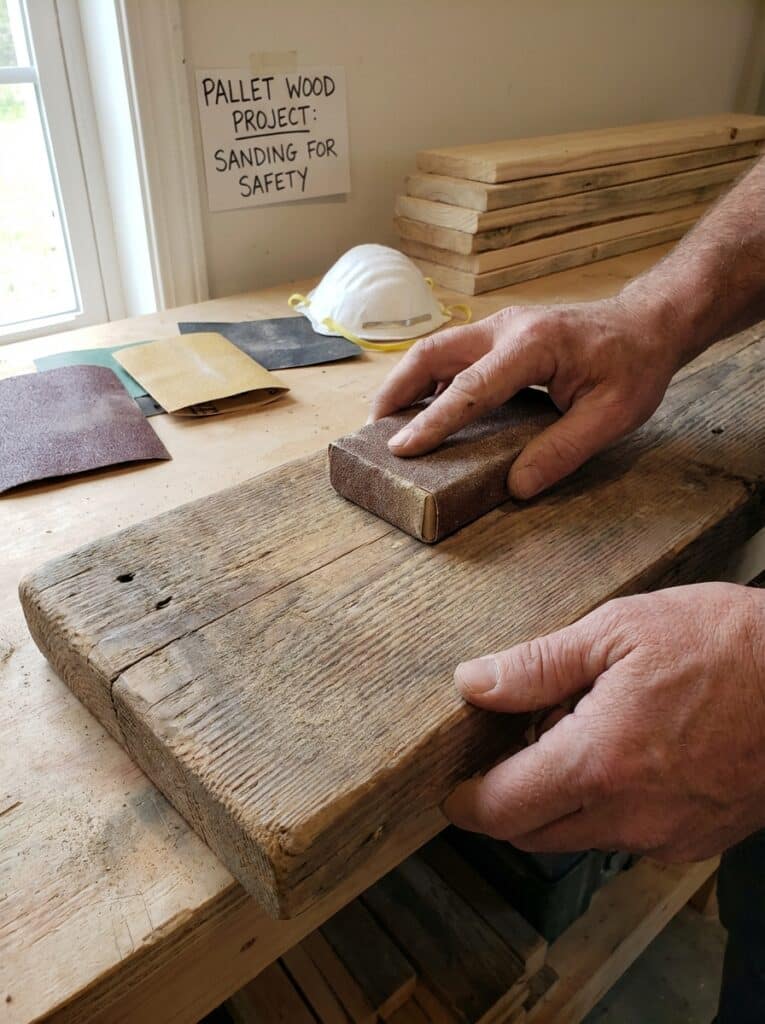
Pallet wood can be a splinter factory. I did not want anyone grabbing a book and coming away with a handful of splinters, least of all a child.
So I:
- Started with a rougher grit sandpaper to knock down rough edges.
- Rounded off all corners and edges where hands might touch.
- Finished with a finer grit for overall smoothness.
This part took more time than the cutting, but it made such a difference. The wood still looked rustic and imperfect, but it felt safe.

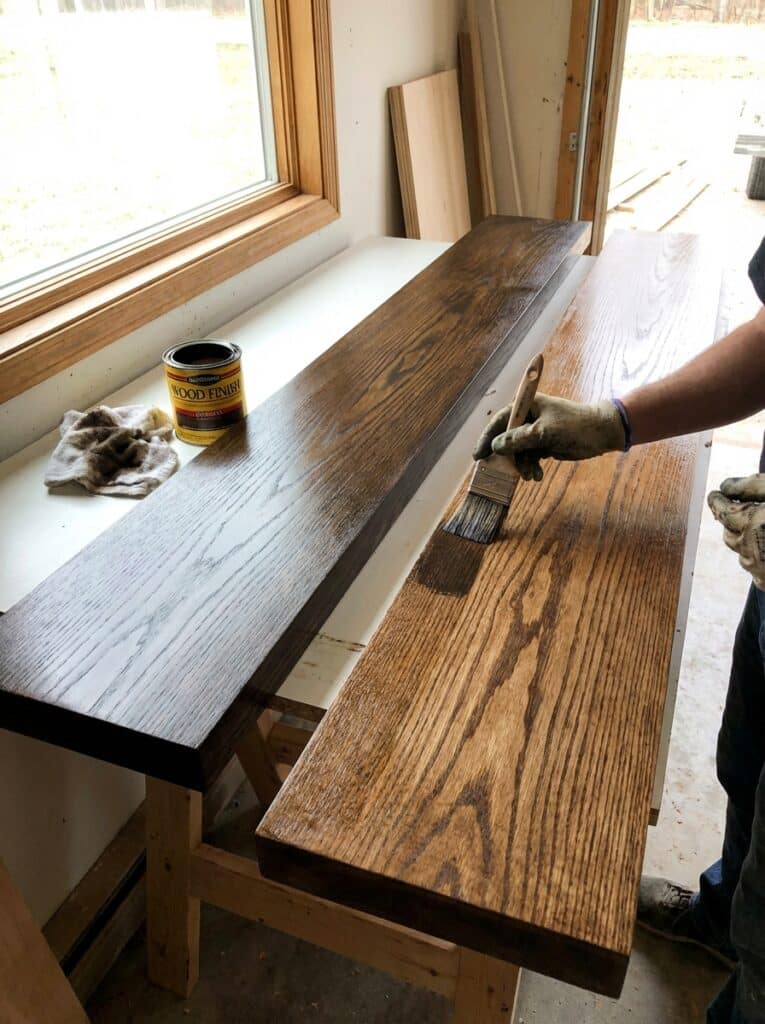
Step 5: Add stain or paint
This was the moment the shelf really came alive.
I wanted a deep, moody wood tone similar to the Jacobean stain Jenna used on her project, which gave hers a beautiful dark finish (Jenna Burger). So I:
- Wiped the entire shelf clean of dust.
- Applied stain with a brush in long strokes, going with the grain.
- Let it sit briefly, then wiped the excess with a rag to avoid sticky buildup.
- Allowed it to dry fully according to the product instructions.
Once the stain was dry, I added a clear protective coat. That helps with:
- Durability
- Easier cleaning
- Less chance of the wood absorbing moisture

Step 6: Hang the bookshelf securely
This part matters as much as the building. A bookshelf is only charming if it stays on the wall.
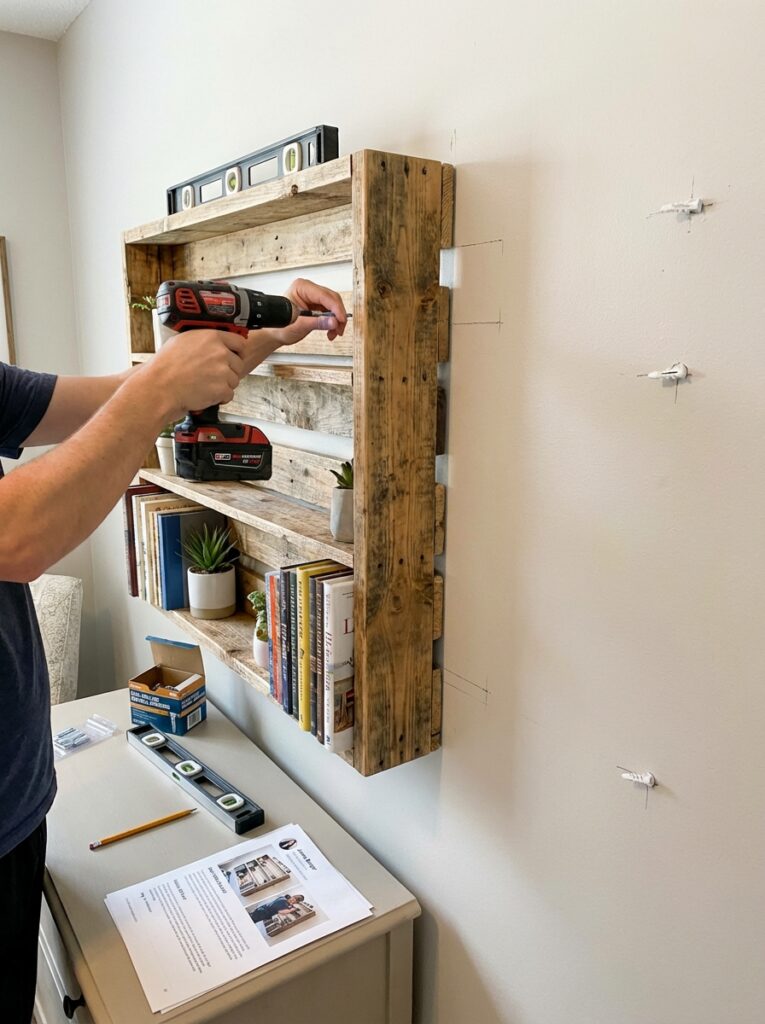
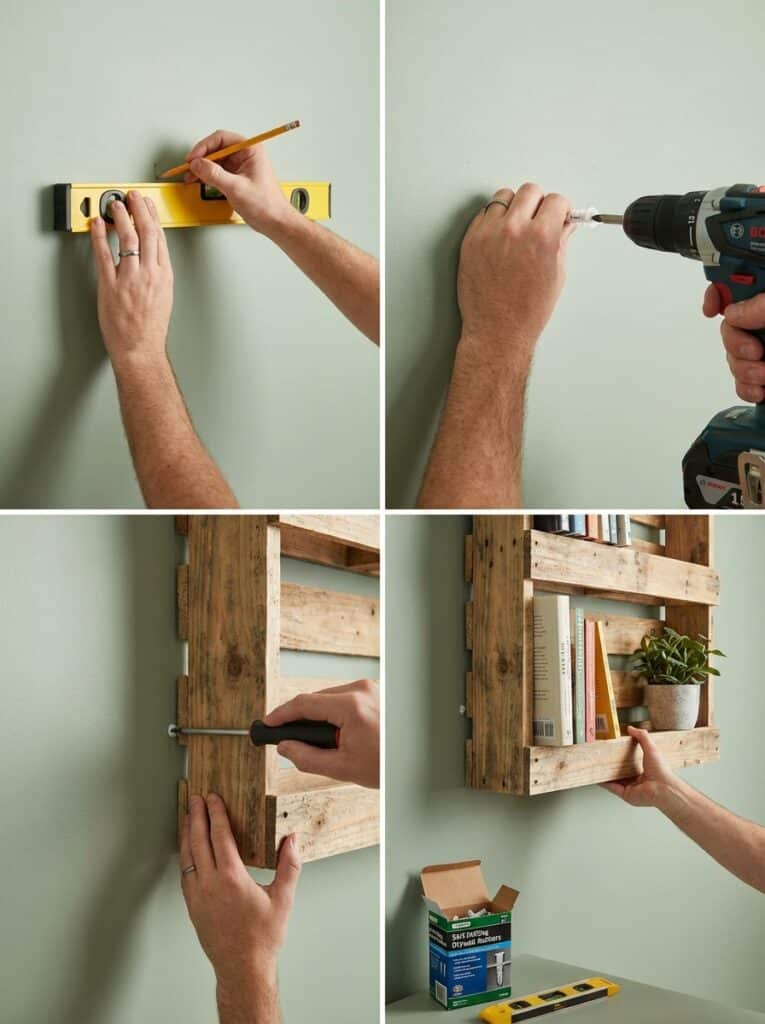
Because my shelf was relatively shallow and not extremely heavy, I followed Jenna Burger’s recommendation and used self drilling drywall anchors. These are especially helpful when you cannot easily find studs in just the right place (Jenna Burger).
Here is exactly what I did:
- Held the shelf up to the wall and marked the mounting points with a pencil.
- Checked with a level to make sure the marks were straight.
- Installed drywall anchors at those marks.
- Drove screws through the back of the shelf into the anchors.
Once it was secure, I gave it a gentle tug test to make sure nothing budged.
For larger, heavier pallet bookshelves, such as Jen Woodhouse’s big crate style design, anchoring is even more important. She specifically recommends anchoring that bookshelf to the wall to prevent it from toppling, since it is solid, heavy, and tall (Jen Woodhouse). If you ever build a floor standing pallet bookshelf, do not skip that safety step.
How it changed my space and my habits
I expected a practical shelf. I did not expect a subtle mindset shift. This project ended up nudging my home and my habits in a few surprising ways.
Creating a reading corner that invites me in
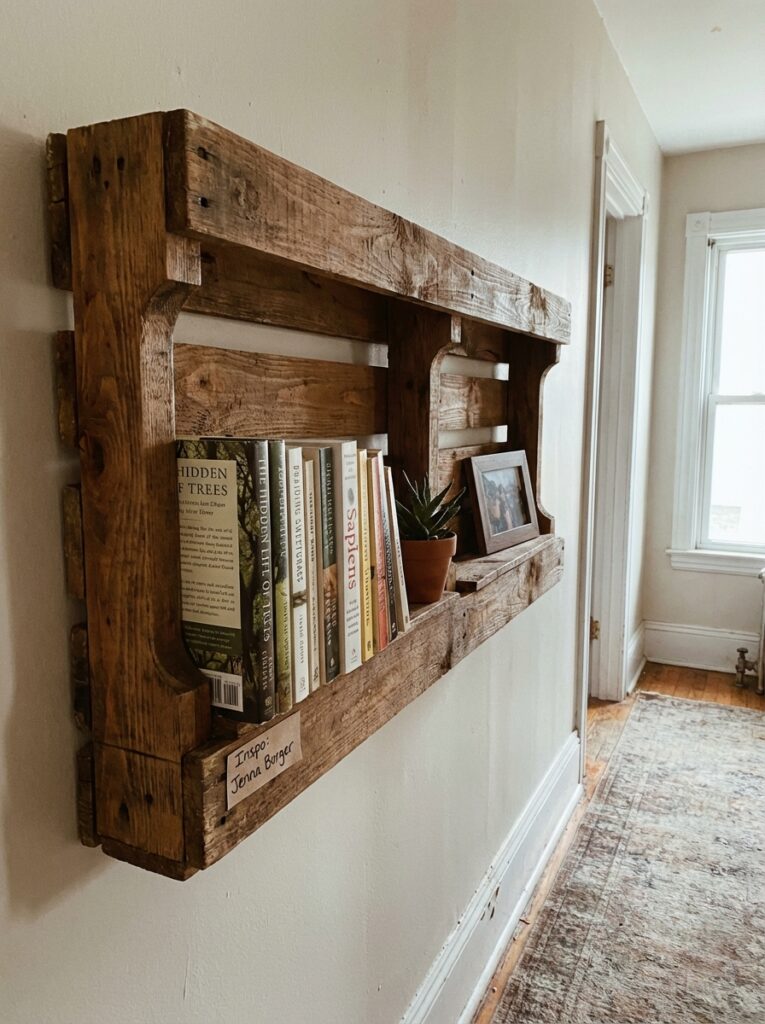
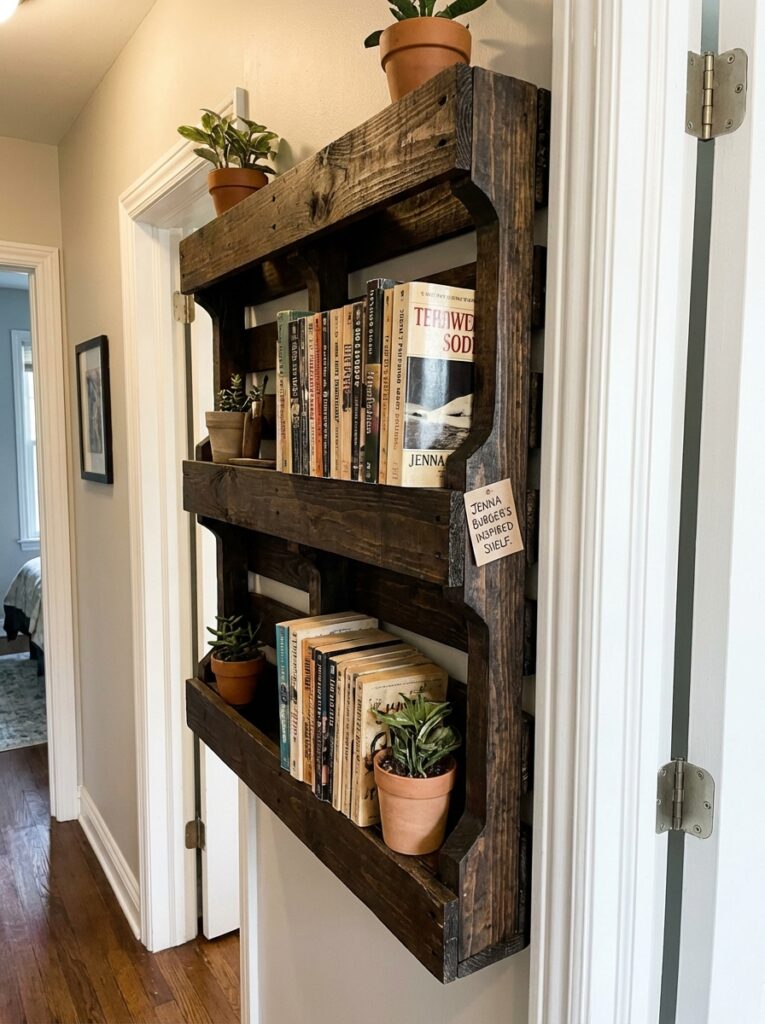
The finished shelf is only about 4 inches deep, similar to Jenna’s, which makes it perfect for tight spaces like hallways or small bedrooms (Jenna Burger). It forced me to choose my favorite books rather than hoarding everything.
By displaying books with the covers facing out, especially children’s titles, I noticed:
- It is easier to spot what I actually want to read.
- Kids are naturally drawn to the bright covers at eye level.
- The books themselves become part of the decor.
It transformed a blank wall into a cozy, lived in reading nook with almost zero footprint on the floor.
Inspiring me to tackle bigger builds
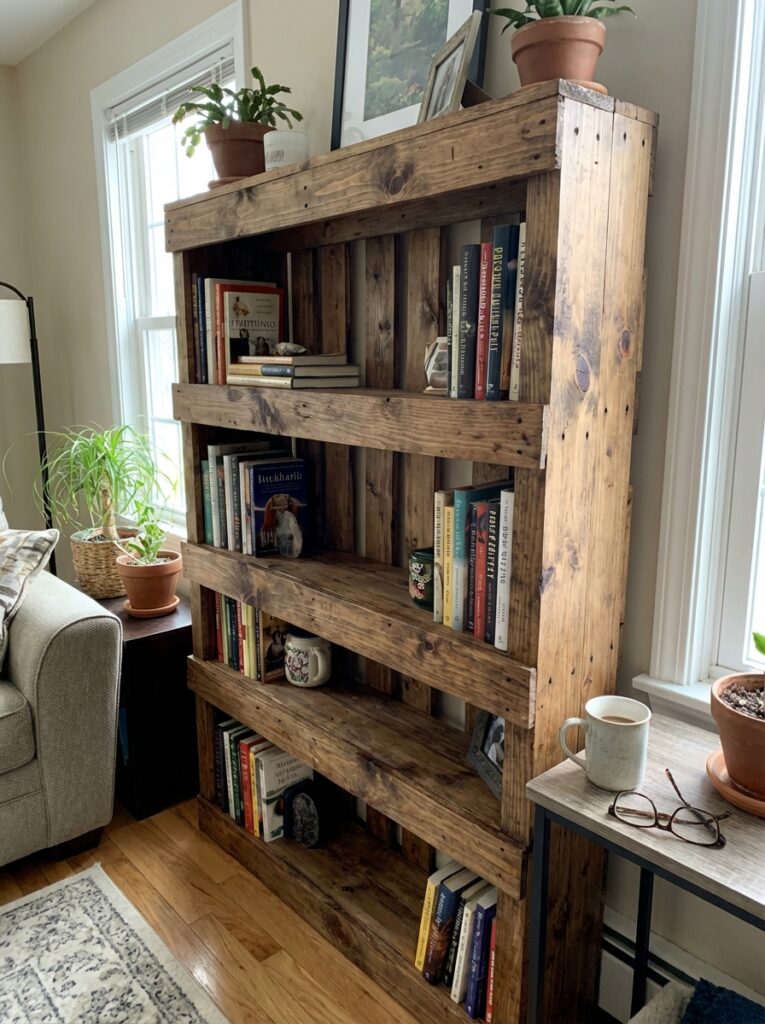
After finishing the smaller shelf and realizing it did not collapse, I suddenly felt bolder. That confidence is what pushed me to seriously consider a full size, crate based rustic pallet bookshelf inspired by Jen’s design.
Her method of building a sturdy frame with 2x10s and 2x4s using pocket hole joinery, then wrapping it with random length pallet planks, showed me that I could scale up my skills. The idea that I could also slide in crates for storage or leave them out to change the look was incredibly appealing (Jen Woodhouse).
My little wall shelf ended up being the first step into a bigger diy identity.
Helping me appreciate “good enough”
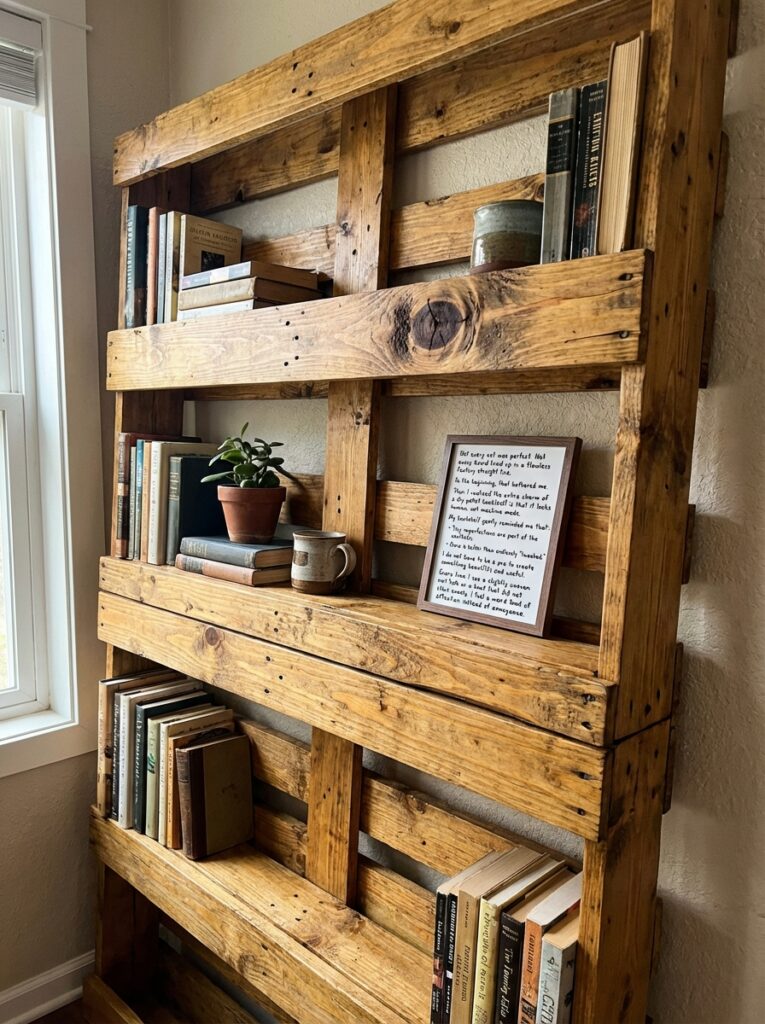
Not every cut was perfect. Not every board lined up in a flawless factory straight line. In the beginning, that bothered me. Then I realized the entire charm of a diy pallet bookshelf is that it looks human, not machine made.
My bookshelf gently reminded me that:
- Tiny imperfections are part of the aesthetic.
- Done is better than endlessly “tweaked.”
- I do not have to be a pro to create something beautiful and useful.
Every time I see a slightly uneven nail hole or a knot that did not stain evenly, I feel a weird kind of affection instead of annoyance.
Tips I wish I had known before I started
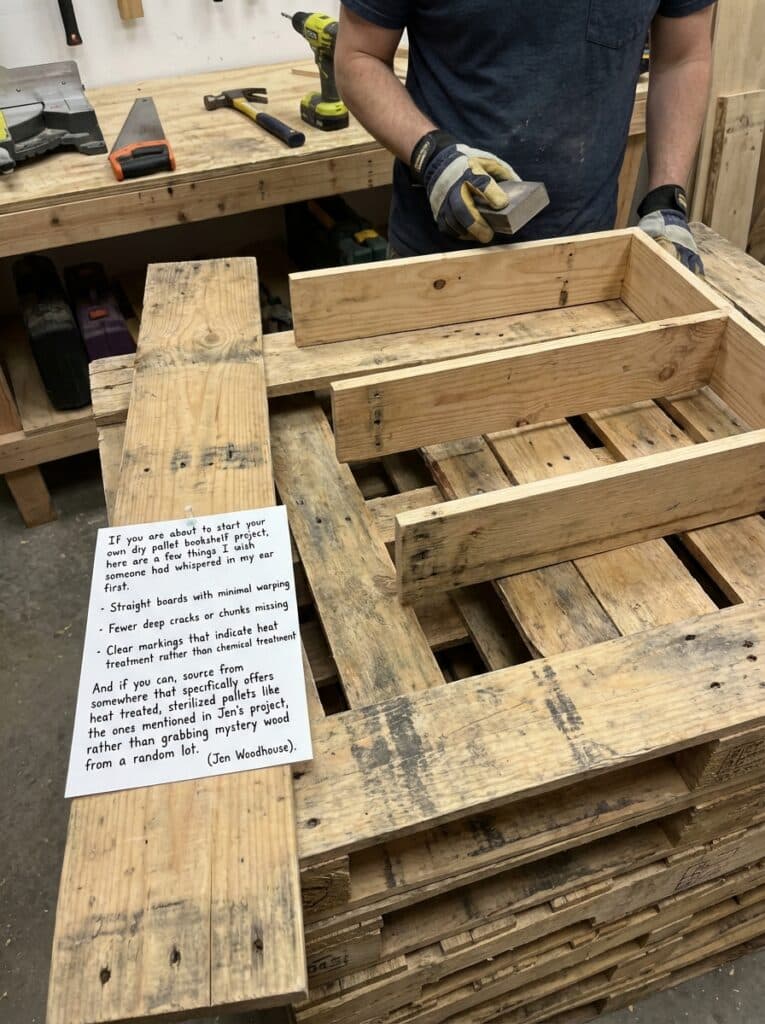
If you are about to start your own diy pallet bookshelf project, here are a few things I wish someone had whispered in my ear first.
Be picky about your pallet
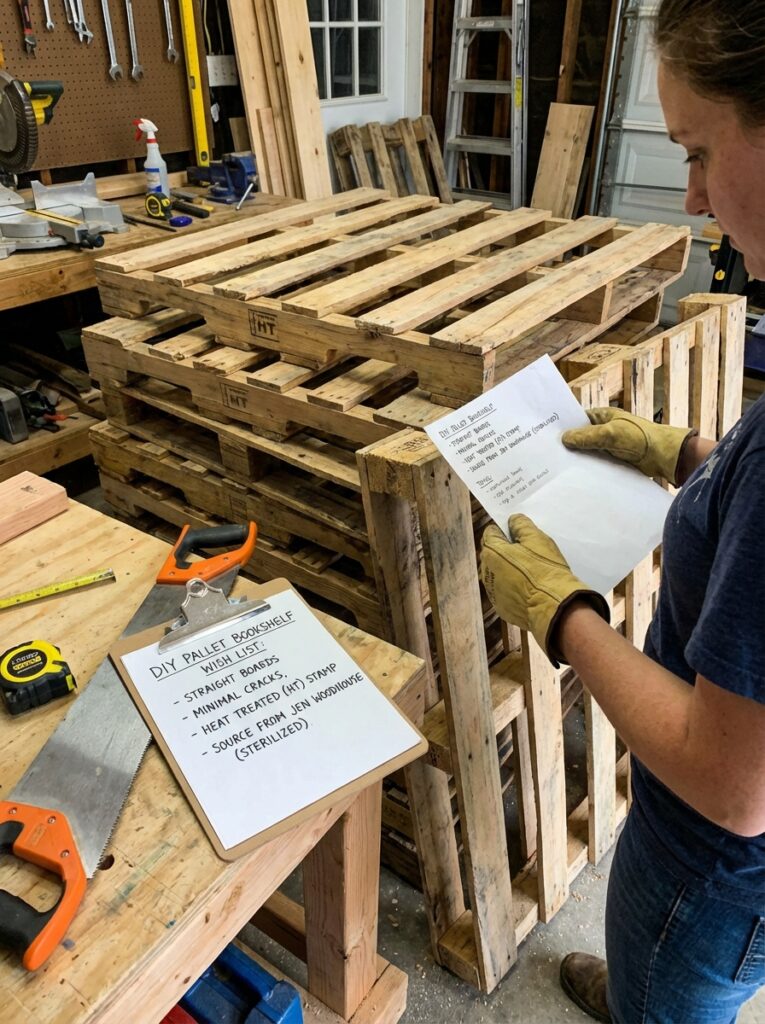
Do not settle for the very first pallet you see. Look for:
- Straight boards with minimal warping
- Fewer deep cracks or chunks missing
- Clear markings that indicate heat treatment rather than chemical treatment
And if you can, source from somewhere that specifically offers heat treated, sterilized pallets like the ones mentioned in Jen’s project, rather than grabbing mystery wood from a random lot (Jen Woodhouse).
Plan your mounting before you build
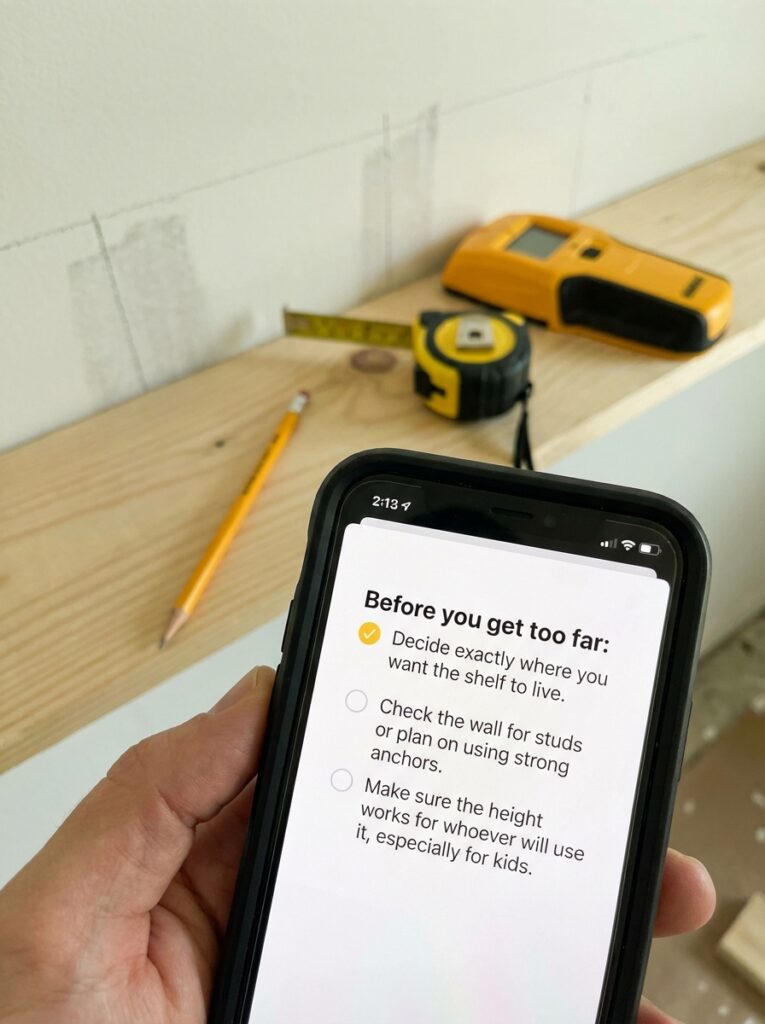
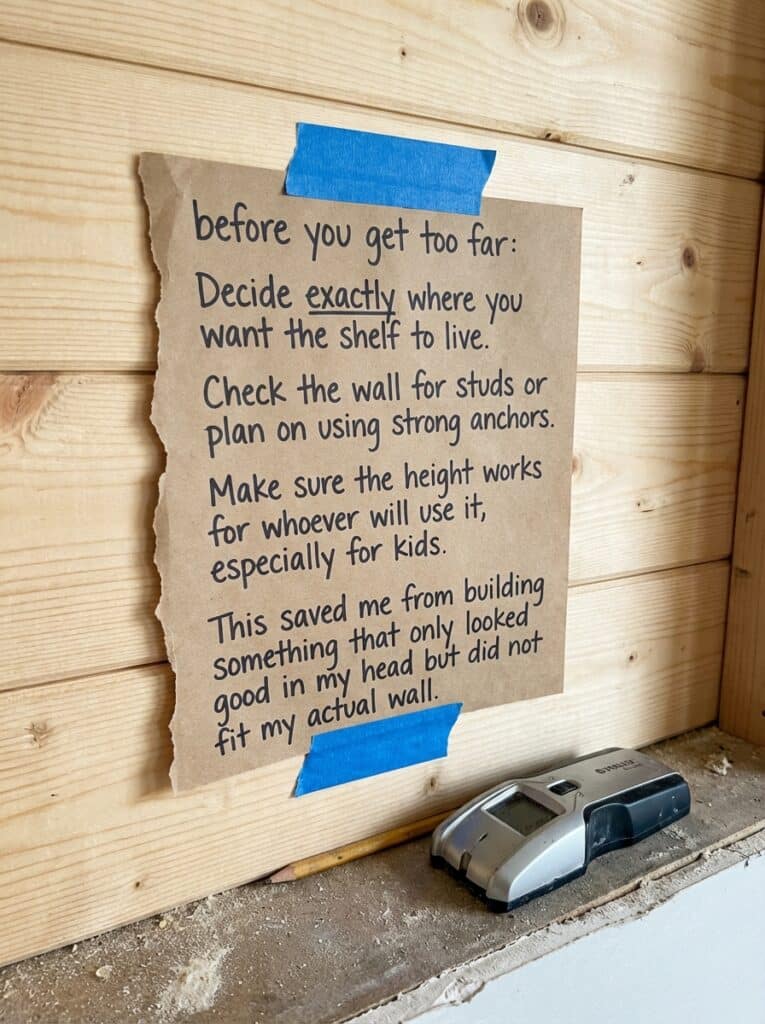
Before you get too far:
- Decide exactly where you want the shelf to live.
- Check the wall for studs or plan on using strong anchors.
- Make sure the height works for whoever will use it, especially for kids.
This saved me from building something that only looked good in my head but did not fit my actual wall.
Do not underestimate sanding time
I know, sanding is the most boring part. I tried to rush it and immediately regretted it when I brushed my hand across a sharp edge.
Plan for:
- Extra time smoothing all surfaces, especially for kids’ shelves.
- Rounding off every corner.
- A final pass before staining to remove any raised grain.
Your future fingers will thank you.
Anchor anything heavy or tall
If, like me, you start daydreaming about a tall, crate style pallet bookshelf, make anchoring non negotiable. As Jen emphasizes, a solid, heavy piece should always be anchored to the wall to prevent tipping, particularly in homes with children or pets (Jen Woodhouse).
Even my smaller shelf got a security check. The peace of mind is worth the extra few screws.
Frequently asked questions about diy pallet bookshelves
1. Are pallet bookshelves safe to use indoors?
They can be, as long as you are careful about the type of pallet wood you use. I avoided random pallets from dumpsters or unknown sources because they might have been treated with chemicals or exposed to contaminants. Jen Woodhouse strongly advises using heat treated, sterilized reclaimed pallets for indoor projects, rather than questionable freebies (Jen Woodhouse).
If you are unsure about a pallet’s history or markings, I personally would skip it for indoor furniture.
2. How long does it take to build a diy pallet bookshelf?
It depends on the style. For a simple wall mounted pallet bookshelf, Jenna Burger estimates the building portion of her project took around 40 minutes. Staining or painting can extend the total time into a day or more, because of drying time (Jenna Burger).
A larger, floor standing pallet bookshelf with a full frame and multiple shelves will naturally take longer, especially if you are adding crates, pocket hole joinery, and more detailed finishing.
3. Is a pallet bookshelf strong enough to hold real books?
Yes, if it is built and mounted correctly. My wall mounted shelf is only about 4 inches deep, so it is best for lighter items or children’s books but it is surprisingly sturdy when attached with proper drywall anchors, like Jenna used (Jenna Burger).
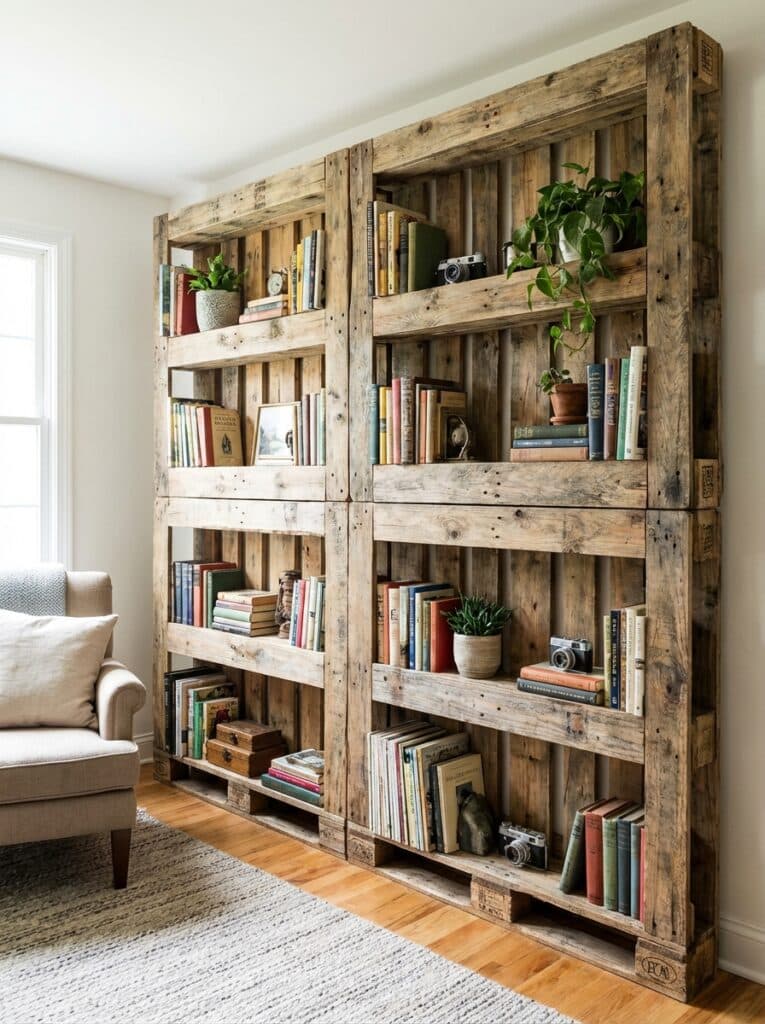
Heavier, floor standing designs like the crate style pallet bookshelf from Jen Woodhouse are built on a robust frame and designed to be solid and heavy. Those absolutely can handle weight, but they must be anchored to the wall for safety (Jen Woodhouse).
4. Can I customize the design for crates or baskets?
Definitely. One of the things I love about pallet bookshelves is how flexible they are. Jen’s rustic pallet bookshelf is actually built to accommodate Crates & Pallet’s Large and Extra Large pre made crates. You can slide them in for hidden storage or leave them out for open shelves, and the fixed shelves and dividers give you options to change up the look over time (Jen Woodhouse).
Even a smaller wall shelf can hold baskets or jars for art supplies, toys, or mail.
5. What if I am a total beginner with tools?
You are exactly the kind of person a simple pallet bookshelf is perfect for. The wall mounted style I built uses basic, beginner friendly cuts and tools. Jenna rated her pallet bookshelf as easy to medium difficulty and something one person can complete (Jenna Burger).
If you can measure, sand, drill a pilot hole, and drive a screw, you can absolutely handle this project. Start small, take your time, and allow some imperfections. That is part of the charm.
My diy pallet bookshelf is my favorite project not because it is the fanciest or the biggest, but because it quietly changed how I see my own creativity. It taught me to work with what I have, to value safety and intention, and to accept “good enough” as more than enough.
If you have been staring at pictures of diy pallet ideas and wondering if you could really pull one off, let me say this as someone who once felt the exact same hesitation: you can. Start with one pallet. One shelf. One weekend. Then let your bookshelf hold not just your favorite stories, but the proof that you are more capable with your own two hands than you might think.
- 865shares
- Facebook0
- Pinterest862
- Twitter3
- Reddit0