The brief said ‘minimalist.’ I delivered a white background, a centred logo, and one line of copy. The client came back the next day and said it felt ’empty and cold — like a hospital.’ They were right. I’d made the most common minimalist design mistake: I’d removed things until the screen was mostly blank and called that simplicity. It wasn’t. It was an absence masquerading as intention.
If you are applying minimalism to branding, compare the principle with these business logo design ideas before removing too much detail.
Real minimalism is harder than decoration. Anyone can add — you add until it looks full, until it feels finished. Minimalism requires something more demanding: you have to decide what each element is doing, whether it’s earning its place, and what happens to the communication if you remove it. That decision process is the skill. The white space is just what’s left.
- What Minimalism in Design Actually Means
- The Four Core Principles of Minimalist Design
- Minimalism Across Five Design Disciplines
- How to Apply Minimalist Principles: A Practical Framework
- 5 Minimalist Design Mistakes (and Their Fixes)
- References and Further Reading
- The Point of Reduction
- FAQ: Minimalism in Design
- Q: What is minimalism in design?
- Q: What are the core principles of minimalist design?
- Q: Is minimalism in design still relevant in 2026?
- Q: What's the difference between minimalism and empty design?
- Q: How is minimalism used in UI and UX design?
- Q: What's the biggest mistake in minimalist interior design?
This guide covers what minimalism in design actually means in 2026 — its origins, its core mechanics, how it operates differently across five major design disciplines, where the 2026 shift is taking it, and the specific mistakes that produce cold, empty work instead of intentional, resonant work. The distinction matters because minimalist design is the dominant visual language across product, graphic, digital, interior, and fashion design right now — and most of the work bearing that label is doing it wrong.
What Minimalism in Design Actually Means
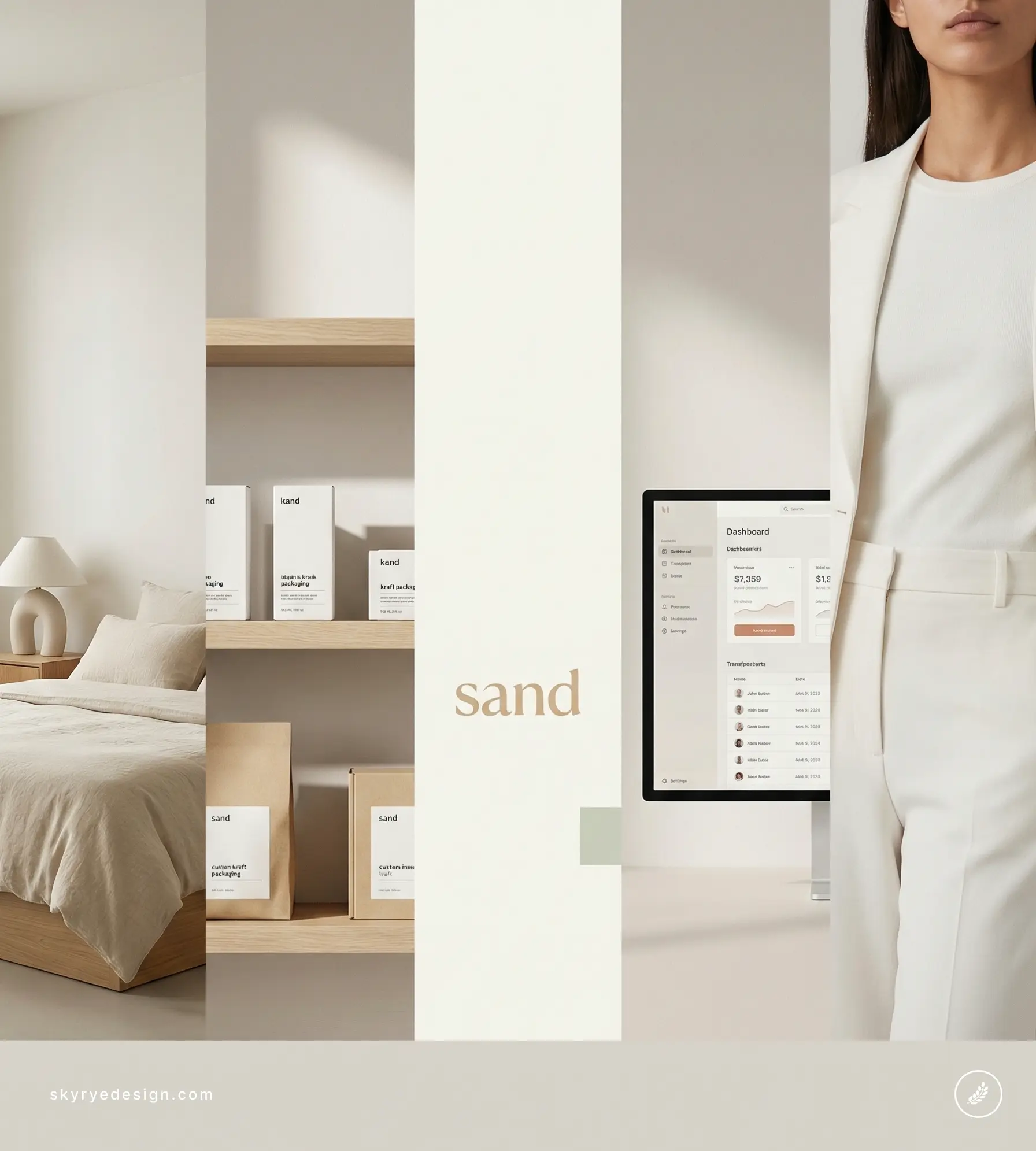
Minimalism is not a style. It’s a decision framework. The surface characteristics — white space, limited colour palettes, clean typography, simple geometric forms — are the output of applying that framework rigorously. Copying the surface characteristics without the underlying logic is how you get work that looks minimal but communicates nothing.
The framework has one governing question: does this element earn its place? If an element doesn’t clarify, reinforce, or improve the communication, it belongs elsewhere.
This applies to a font choice, a decorative border, a sofa in a living room, a navigation item in a UI, a button label in a product. The discipline is not in the removal — it’s in the evaluation that precedes removal.
Where Minimalism Came From
The intellectual roots run through two parallel tracks. The first is the Bauhaus movement (Germany, 1920s–1930s), where Mies van der Rohe, Walter Gropius, and their colleagues established that form should follow function — that decoration without purpose was a design failure, not a design choice. Mies’s phrase ‘less is more’ was not a stylistic preference; it was a functional argument.
The second track is Japanese wabi-sabi philosophy, which finds beauty in restraint, imperfection, and material honesty. Tadao Ando and later John Pawson brought this sensibility into architecture as a counterpoint to postmodern excess — spaces that breathe, where light and material do the work that ornament once did.
Both traditions converge on the same operational principle: every element you add to a design carries a cognitive cost. The viewer or user has to process it, evaluate it, and integrate it. When every element earns its place, the cognitive load is manageable and the communication is clear. When elements accumulate without purpose, the cognitive load becomes noise — and noise obscures the message.
Minimalism in 2026: The Shift from Sterile to Human
The design world in 2026 is in the middle of a significant recalibration of minimalism. The hyper-sterile version that dominated the late 2010s is being replaced by something warmer and more expressive — what some are calling ‘welcoming minimalism’ or ‘bold minimalism.’ Brands that had stripped everything back to white space and generic sans-serif fonts are now reintroducing subtle warmth: slightly rounded corners, optical spacing adjustments, warmer background tones, and typography with genuine personality.
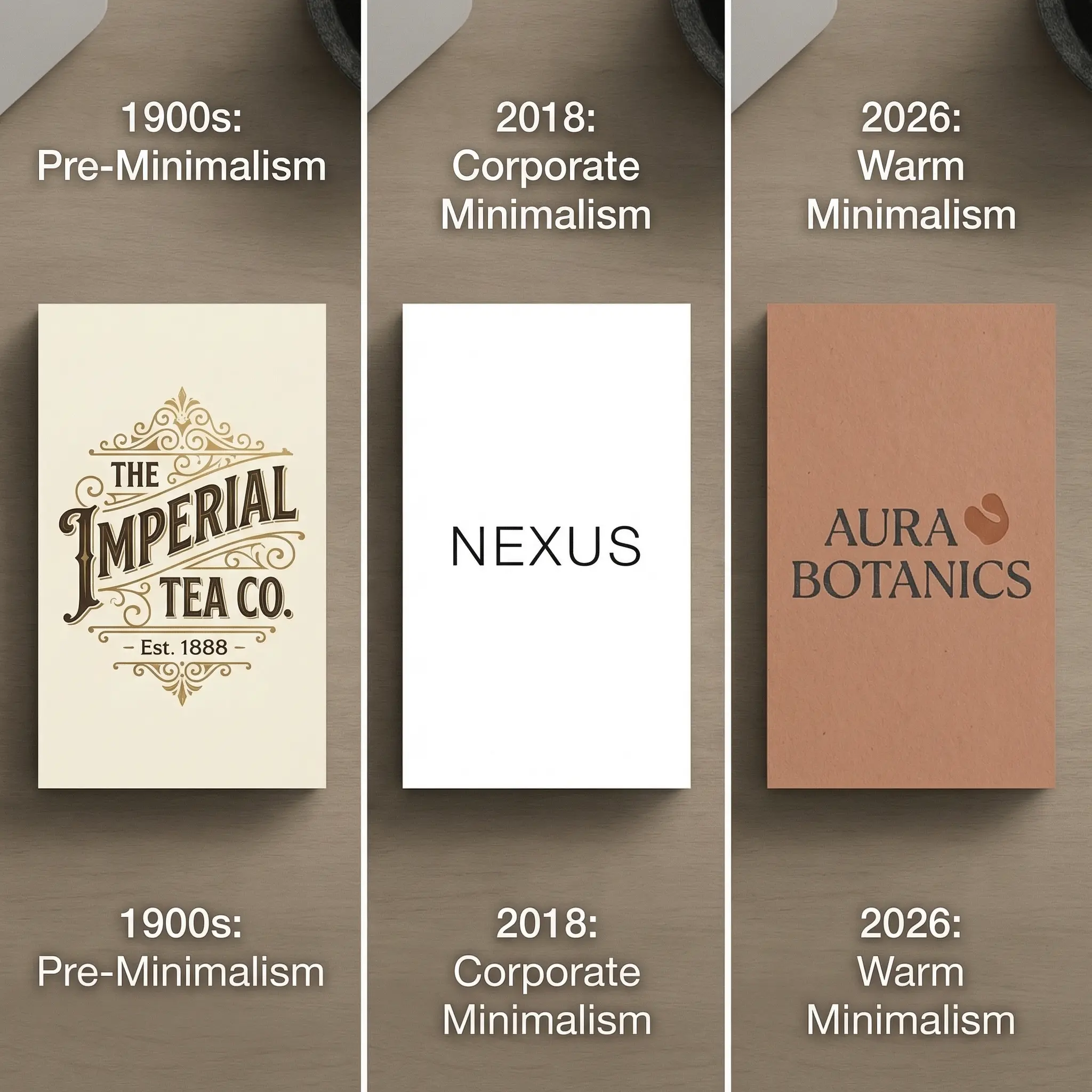
Burberry is the clearest example — after embracing extreme minimalism in 2018, the brand has gradually reintroduced heritage typography and expressive detailing, arriving at something that feels confident rather than clinical. Brands like Aesop, Everlane, and Ritual demonstrate the same shift in packaging: muted palettes, thoughtful spacing, but material texture and handcraft as the warmth layer.
✏ Note: The 2026 shift has a precise description: minimalism is becoming more assertive, not more complex. Strong colour choices, confident typography, and high contrast are replacing softness. The result is clarity with presence — minimal, yet unmistakably bold. This is different from abandoning minimalist principles; it’s applying them at a higher resolution.
The Four Core Principles of Minimalist Design
These four principles operate in every design discipline. Understanding them separately is important because they interact — and violating any one of them produces the ‘cold and empty’ result that gives minimalism a bad reputation.
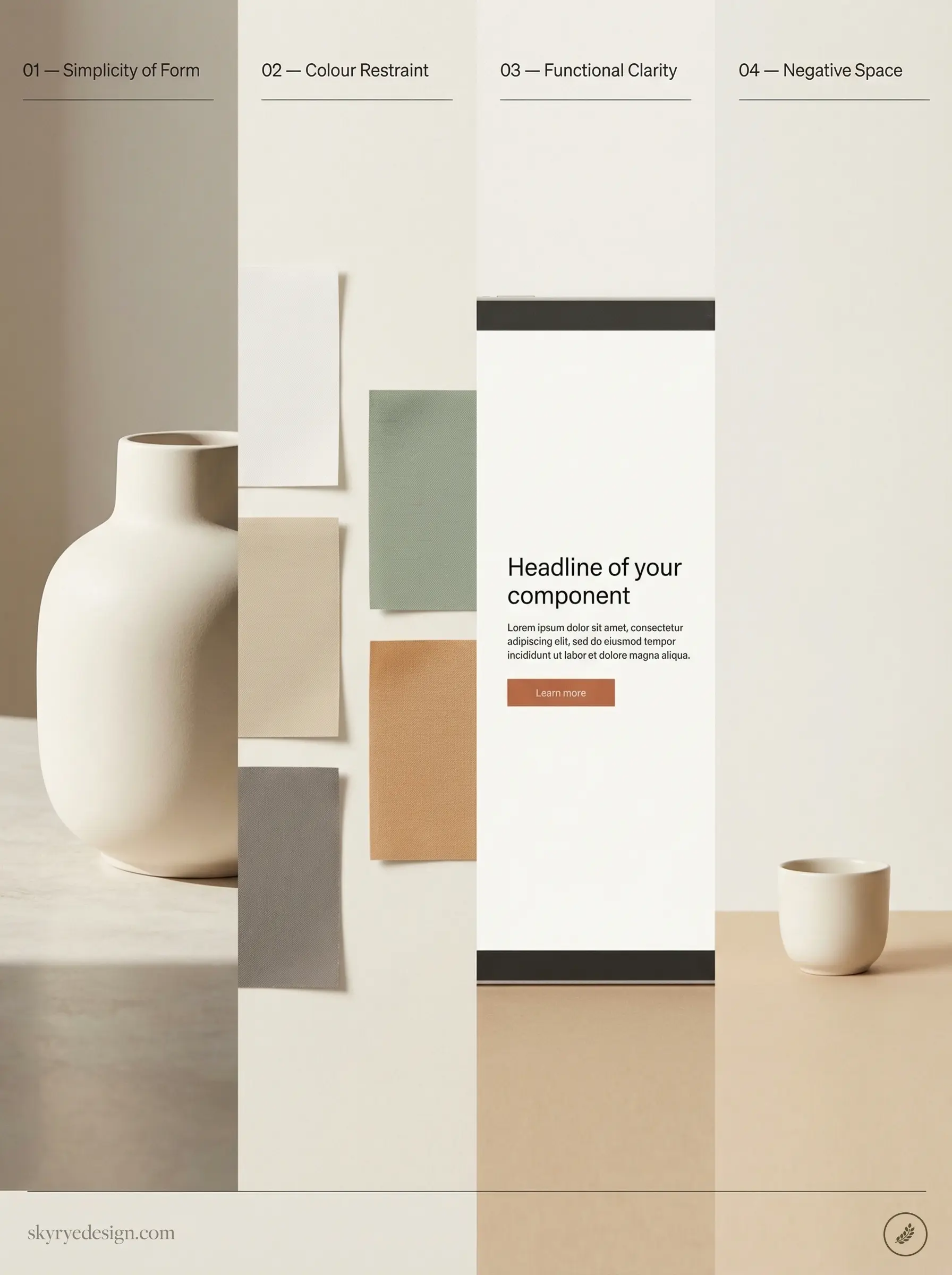
1. Simplicity of Form
Visual elements are reduced to their essential geometry. Circles, rectangles, clean curves — shapes that communicate clearly without requiring interpretation. In graphic design, this means typefaces with deliberate construction rather than decorative embellishment.
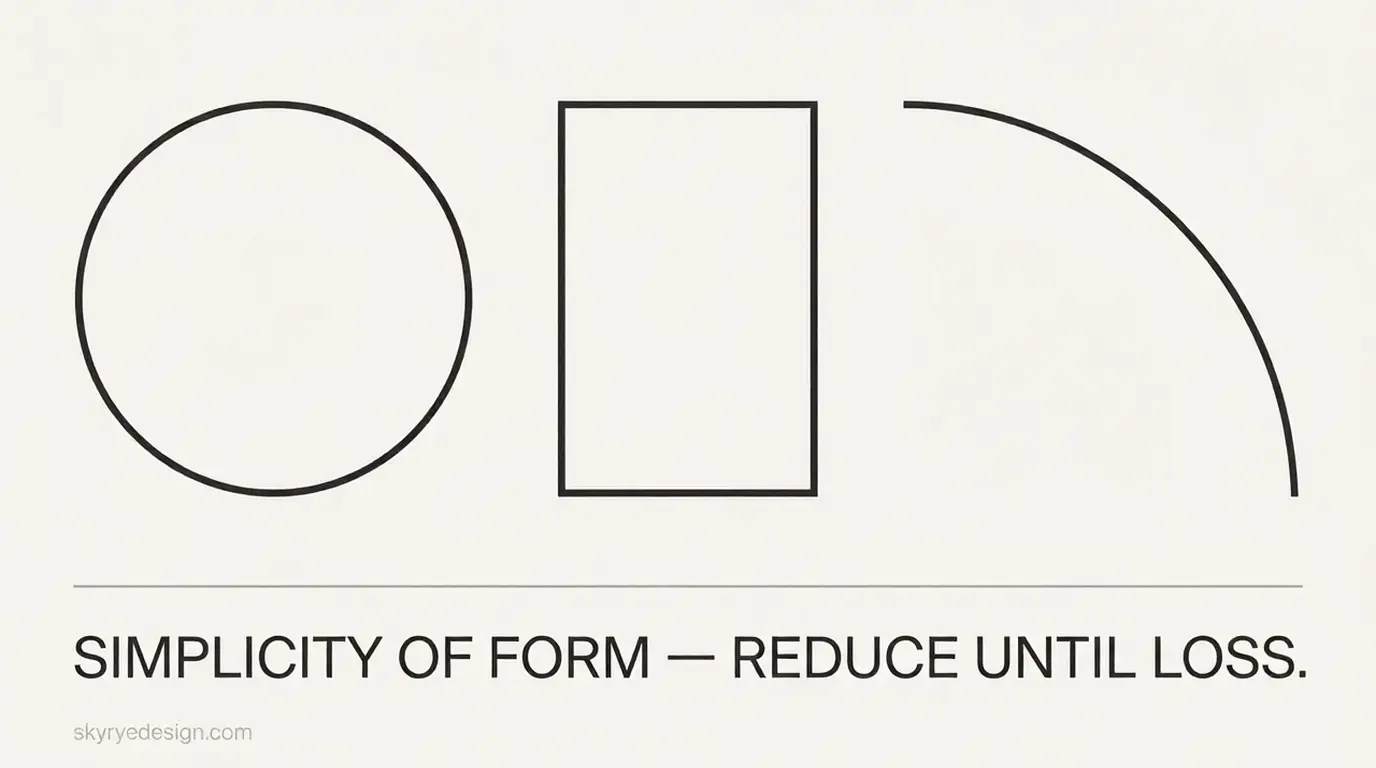
In product design, it means surfaces that serve structural or functional purposes rather than decorative ones. In interior design, it means furniture profiles that are resolved to their minimum necessary geometry. The test: if you simplified this element further, would it lose something essential? If yes, you’ve reached the minimum necessary form.
2. Colour Restraint
A minimalist palette is not a monochromatic palette. It’s a controlled, intentional palette in which every colour has a purpose. Three colours with clear roles — background, structure, accent — communicate more efficiently than eight colours applied intuitively.
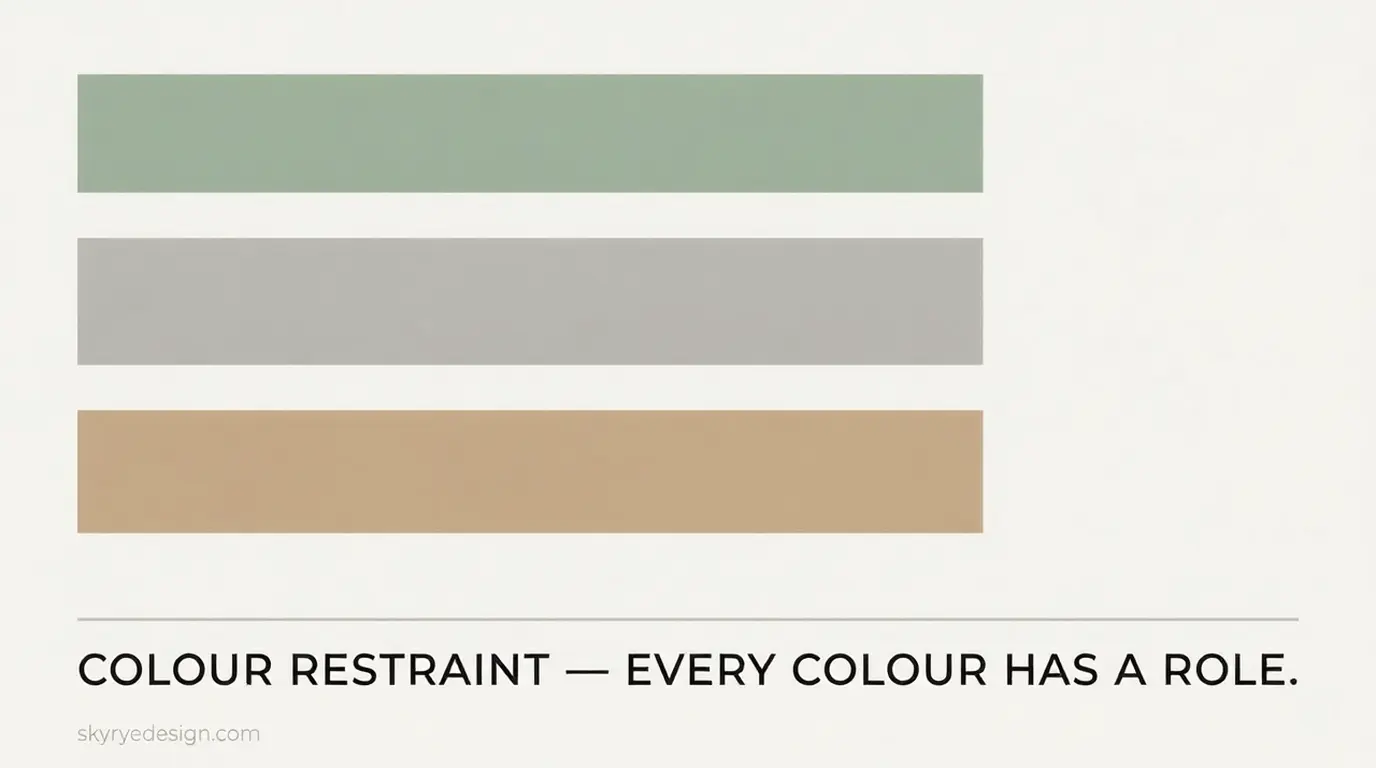
The 2026 version of this principle has evolved from pure white-and-black toward what trend forecasters are calling ‘rooted earth tones’: sage, cement, lavender, warm grey, soft caramel. These tones create visual calm without the clinical coldness of pure white. Nothing Tech’s website demonstrates this well: generous negative space and high contrast, but on a warm rather than cold background — the focus stays on the product without the starkness.
3. Functional Clarity
In minimalist design, every element has a clearly assigned role, and those roles don’t overlap. Navigation navigates. Headlines announce. Body copy explains. A button triggers one action.
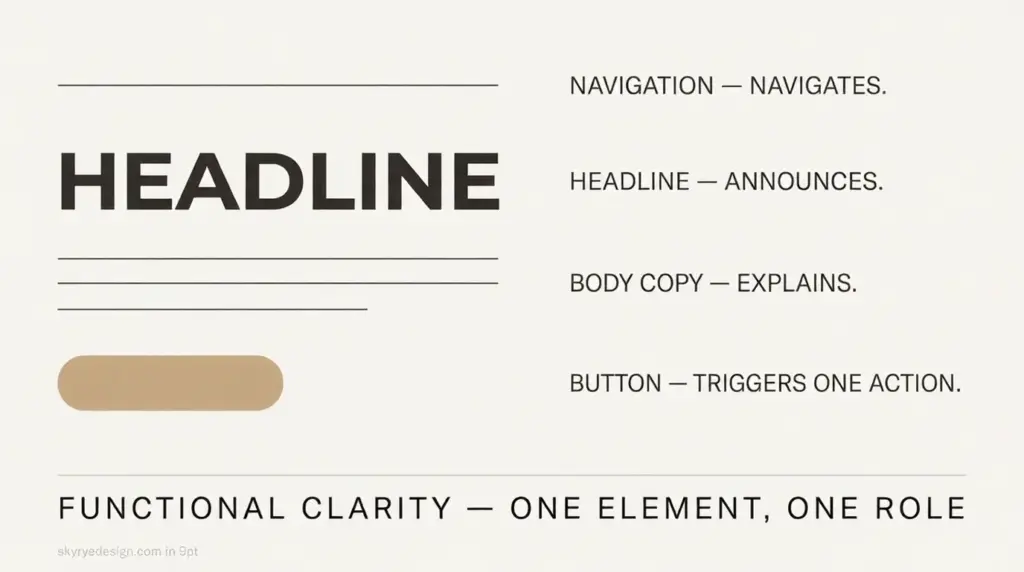
When elements accumulate multiple competing roles — a headline that also decorates, a background that also communicates information — the design loses its clarity. This principle is why minimalism is functionally superior in digital interfaces: a UI with clear role separation is faster to use, has lower error rates, and is easier to update than one where visual decisions are made intuitively.
4. Negative Space as an Active Element
The mistake beginners make is treating negative space as the absence of design — the parts of the page or room or screen that ‘haven’t been filled yet.’ In minimalist design, negative space is designed deliberately. It controls attention, creates breathing room, establishes hierarchy, and communicates calm or urgency depending on its amount and distribution.
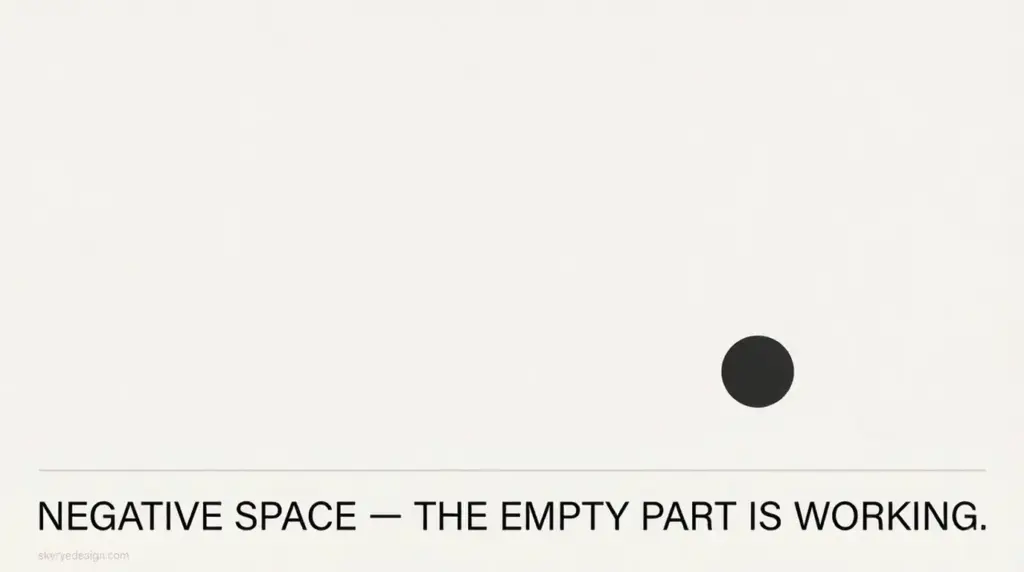
Apple’s product pages use negative space to isolate the product and direct 100% of attention to it. Muji’s retail environments use negative space to create the experience of restraint and quality before you’ve looked at a single product. The white space is not empty — it’s working.
Minimalism Across Five Design Disciplines
Minimalism operates differently in each discipline because the medium has different constraints, the audience has different expectations, and ‘essential’ means something different depending on what the design is doing.
Interior Design: Warmth Through Reduction
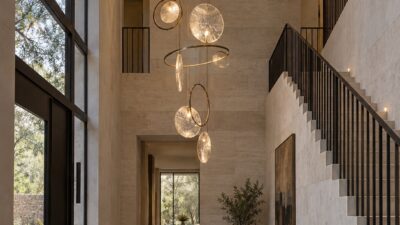
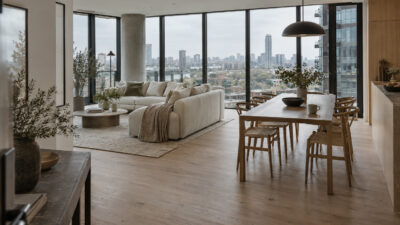
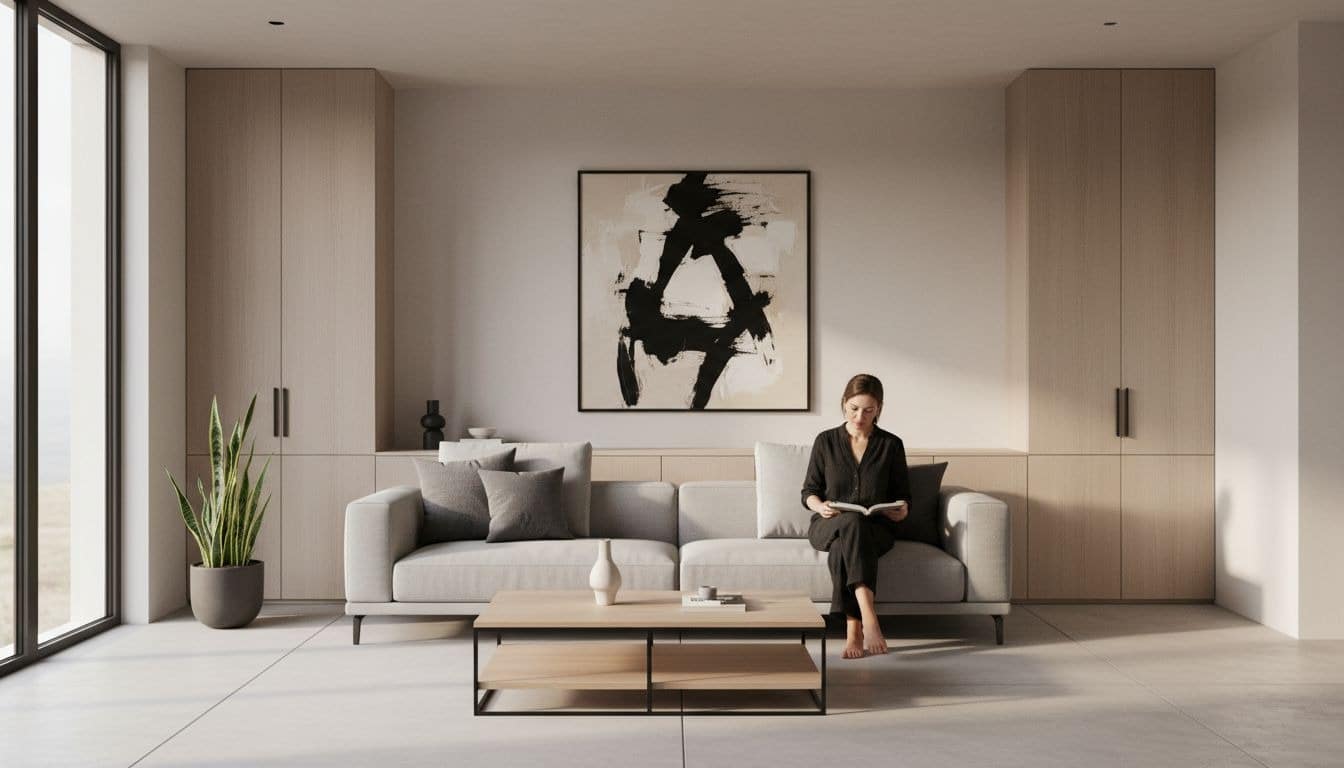
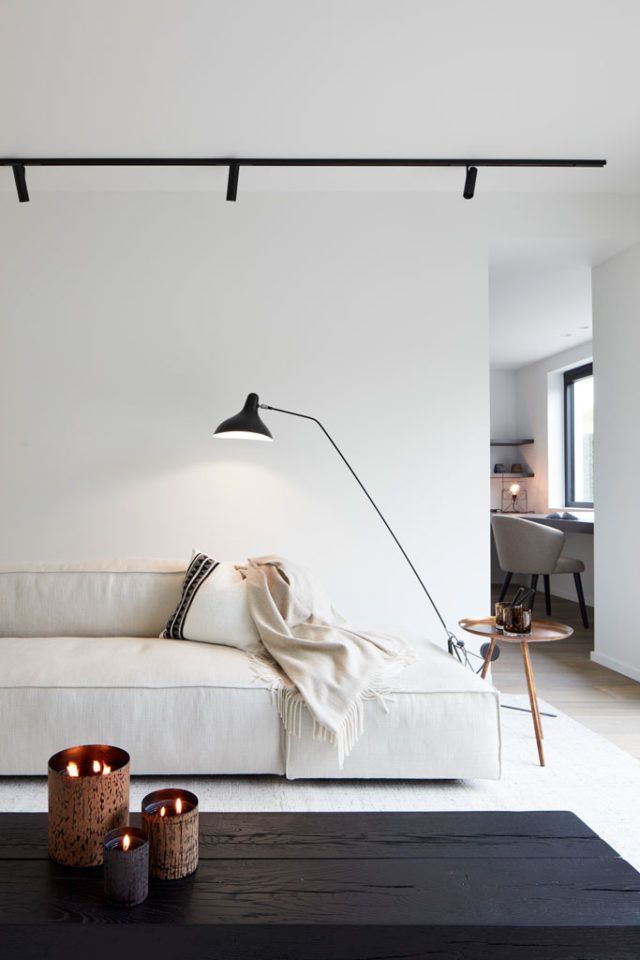
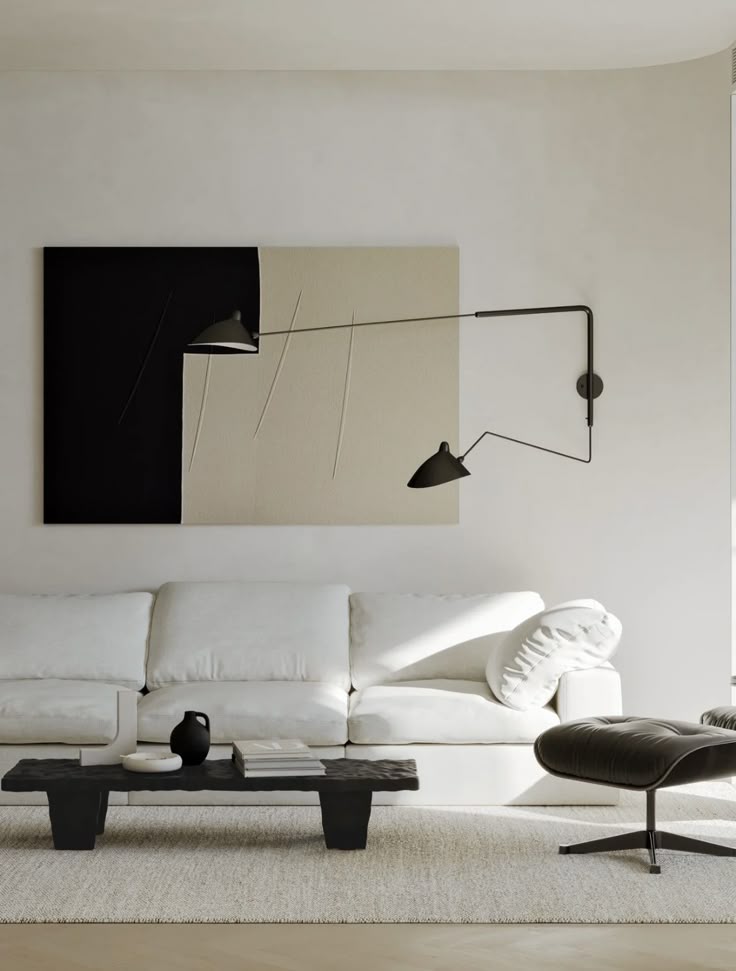
Minimalist interior design in 2026 is defined by what Metercube’s trend report describes as ‘spaces that feel lighter to live in, easier to maintain, and emotionally calming.’ The practical principles: low furniture that keeps the room visually stable (a low platform bed versus a tall frame); seamless storage that hides everyday objects without hiding them behind visible door handles (handle-less cabinetry, flush shutters); a palette of warm neutrals rather than pure white (soft beige, sand, warm grey, muted terracotta); and texture as the warmth layer — linen, oak, travertine, raw cotton.
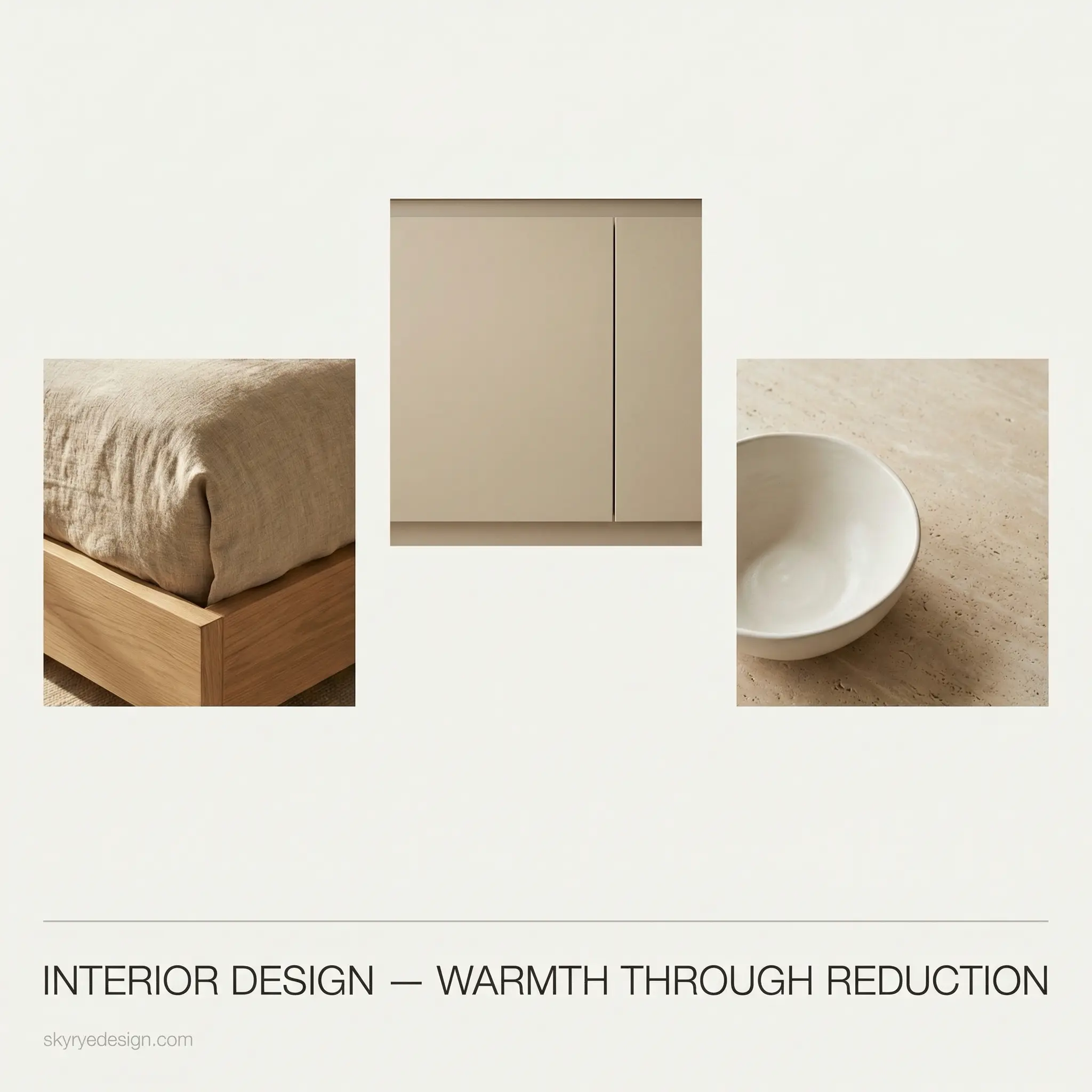
The specific error in minimalist interior work is reduced to the point of impersonality: a room that looks photographed for a showroom rather than lived in. The fix is curation — fewer objects on display, but objects that have genuine meaning or utility. One well-chosen piece of ceramics does more for a minimalist room than five generic decorative objects.
Graphic Design: Typography as the Brand
In 2026, graphic minimalism, typography is no longer supporting the brand — it is the brand. Brands like Glossier, Skims, and Notion rely on custom or character-rich type systems as their primary visual signal, with icons and illustration playing a secondary role.
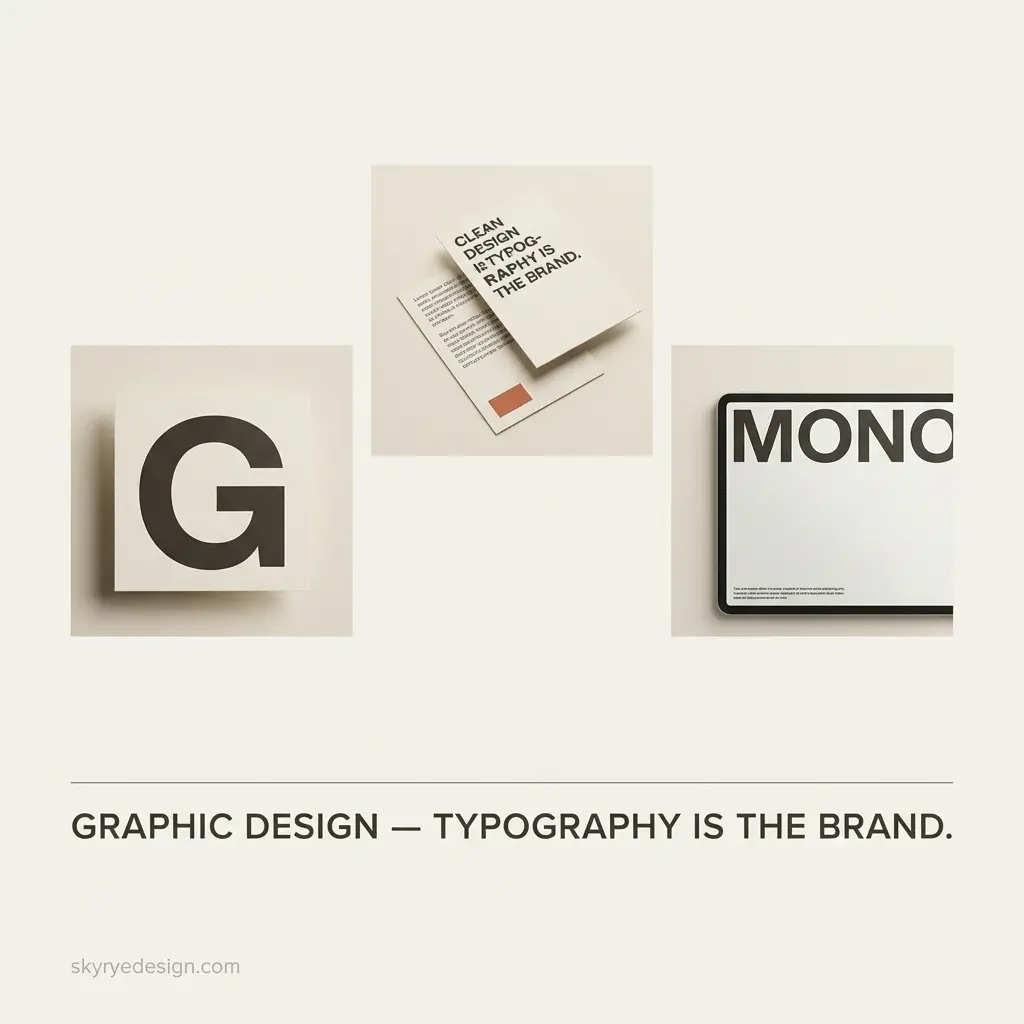
The Dropbox rebrand demonstrated this shift: the identity relies on custom typography that scales across products, marketing, and interfaces without losing clarity, rather than a dominant symbol. Minimalist graphic design in 2026 means: one or two typefaces with clearly differentiated roles; a colour palette of two to three tones with assigned functions; negative space that isn’t filled because a layout seems ‘too bare’; and photography or illustration used as focal points within an otherwise quiet composition, not as wallpaper behind text.
Product Design: Muji and the Honest Object
Muji (‘no brand quality goods’) is the clearest case study in minimalist product design philosophy applied at scale. The principles: products are designed around function first, with aesthetic decisions made in service of the function rather than in addition to it. Materials are used honestly — wood looks like wood, steel looks like steel, no simulation of premium through surface treatment.
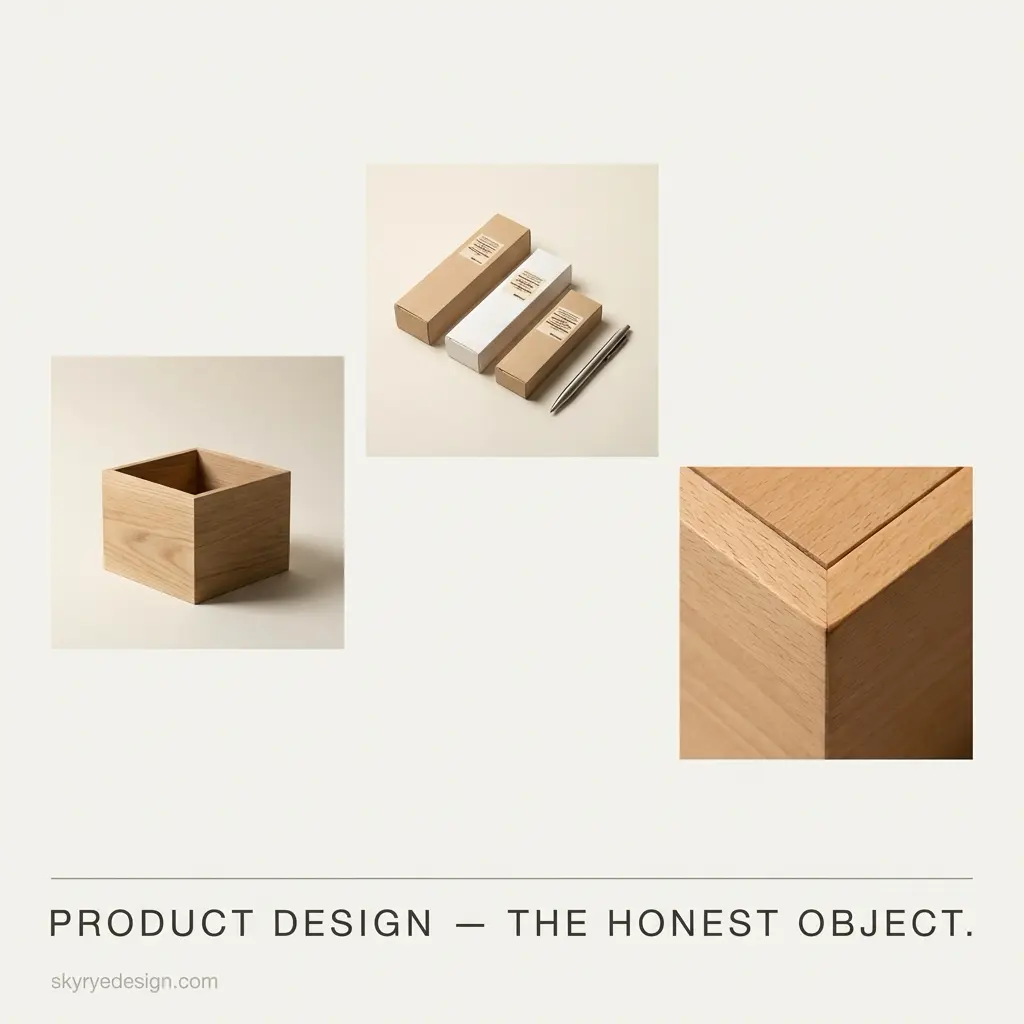
Forms are resolved to their structural minimum without visual complexity added for differentiation. The result is a product range that is simultaneously generic and distinctive — generic in that no individual product shouts for attention, distinctive in that the entire range has a recognisable philosophy. This is the advanced form of minimalist product design: not the absence of personality, but the coherence of a very specific, consistent personality applied across everything.
UI/UX Design: Minimalism and Usability
In digital interfaces, minimalism is measurable. Studies consistently show that interfaces with fewer visual elements and clearer role separation have lower cognitive load, faster task completion times, and lower error rates.
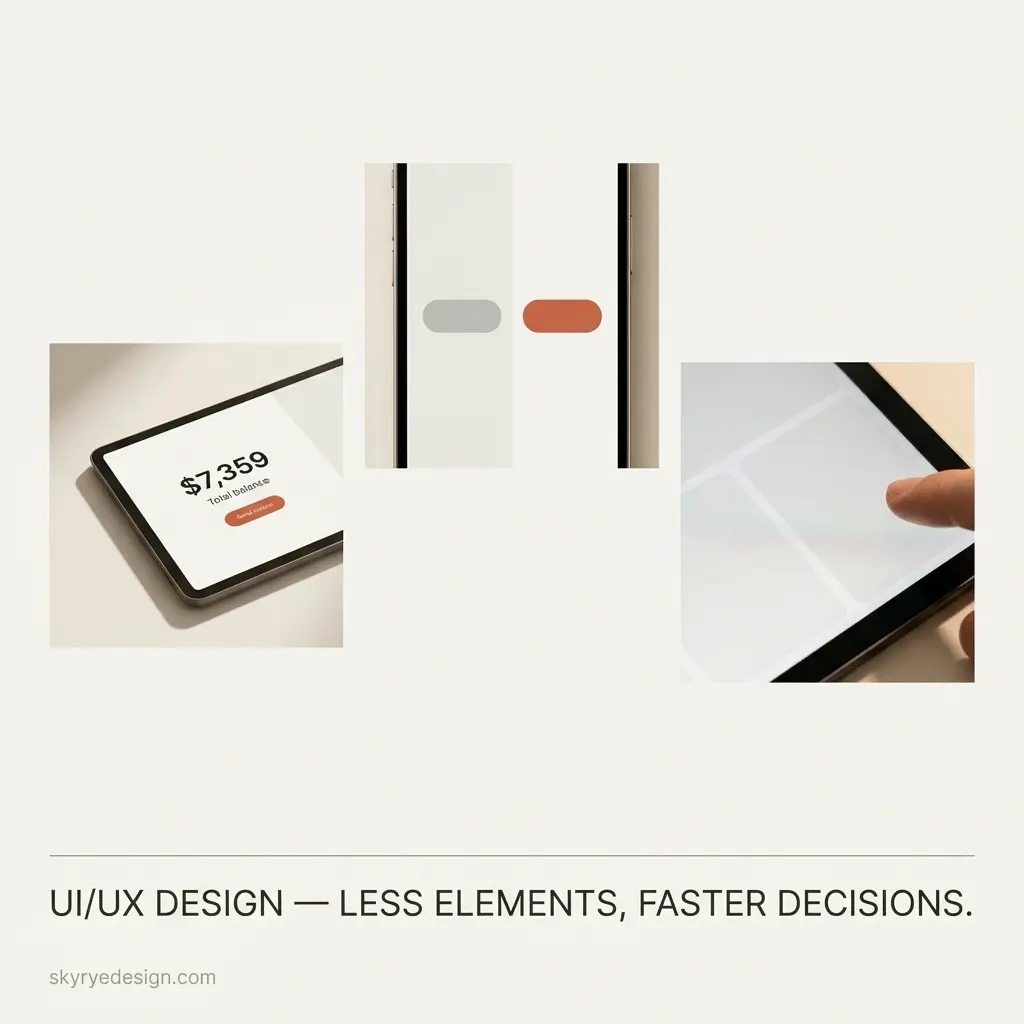
The practical principles: every UI element present because removing it would impair a user’s ability to complete a task (not because it looks nice); a visual hierarchy with a maximum of three or four levels so users always know where they are and what to do next; colour used to communicate state (active/inactive, error/success, primary/secondary) rather than decoration; and white space between interactive elements sized to prevent accidental activation on touch interfaces.
The 2026 update: minimalist UI has become the industry baseline, but the frontier is motion — subtle micro-animations that confirm state changes and guide attention without adding visual complexity.
Fashion Design: The Quiet Luxury Shift
Minimalist fashion in 2026 operates under the ‘quiet luxury’ framing: clothing designed around perfect fit, exceptional material, and restrained detail, with brand identity communicated through quality of construction rather than visible branding. The Phoebe Philo approach at Celine — clean tailoring, muted palette, architectural silhouettes — established the aesthetic template that brands like The Row, Loro Piana, and Toteme have developed into a viable luxury positioning.
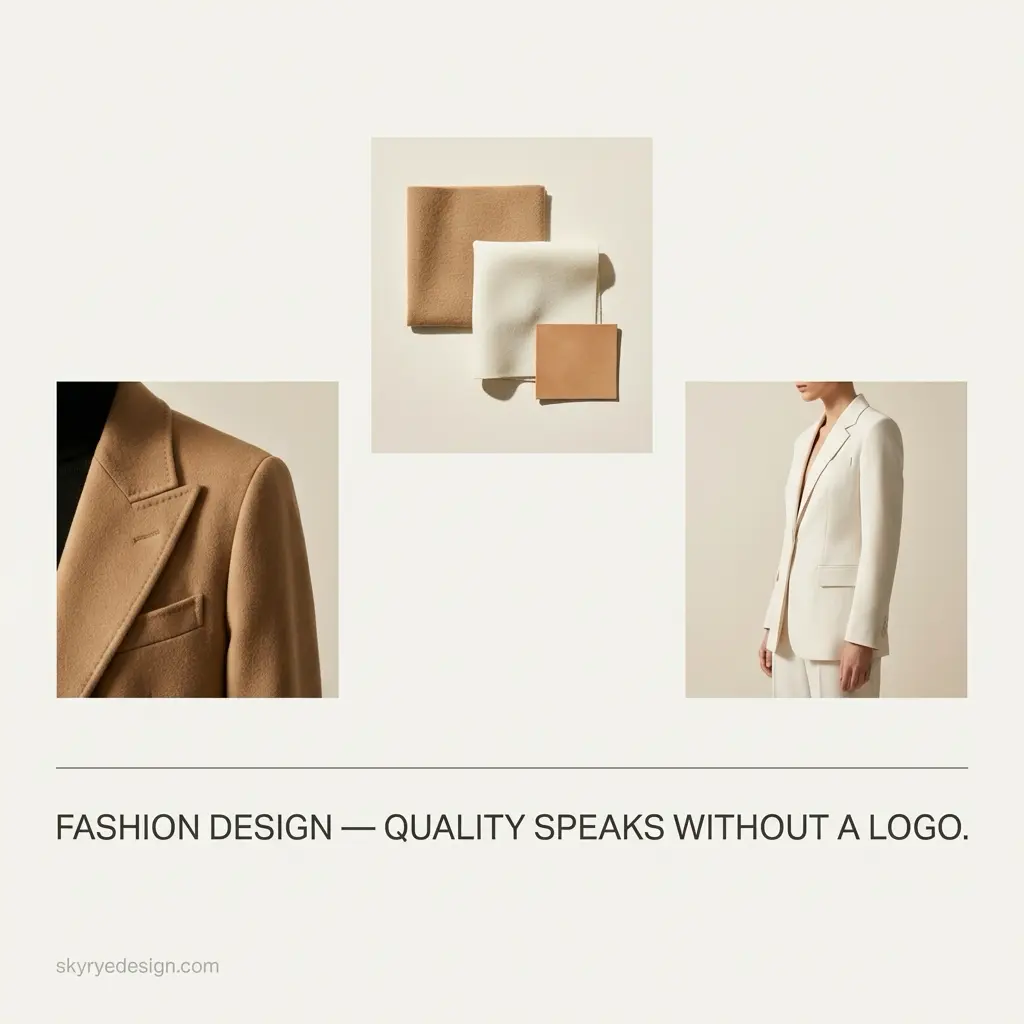
The consumer proposition is the inverse of logomania: the person who can identify quality without a visible brand signal. For designers, minimalist fashion means: fewer garments with more considered construction; materials that reward touch and use (cashmere, thick twill, uncoated leather) rather than materials that perform visually; and silhouettes that rely on cut and proportion rather than embellishment for their effect.
How to Apply Minimalist Principles: A Practical Framework
The decision framework for applying minimalism to any design problem has four stages. They work in order — skipping stages is where the cold, empty work comes from.
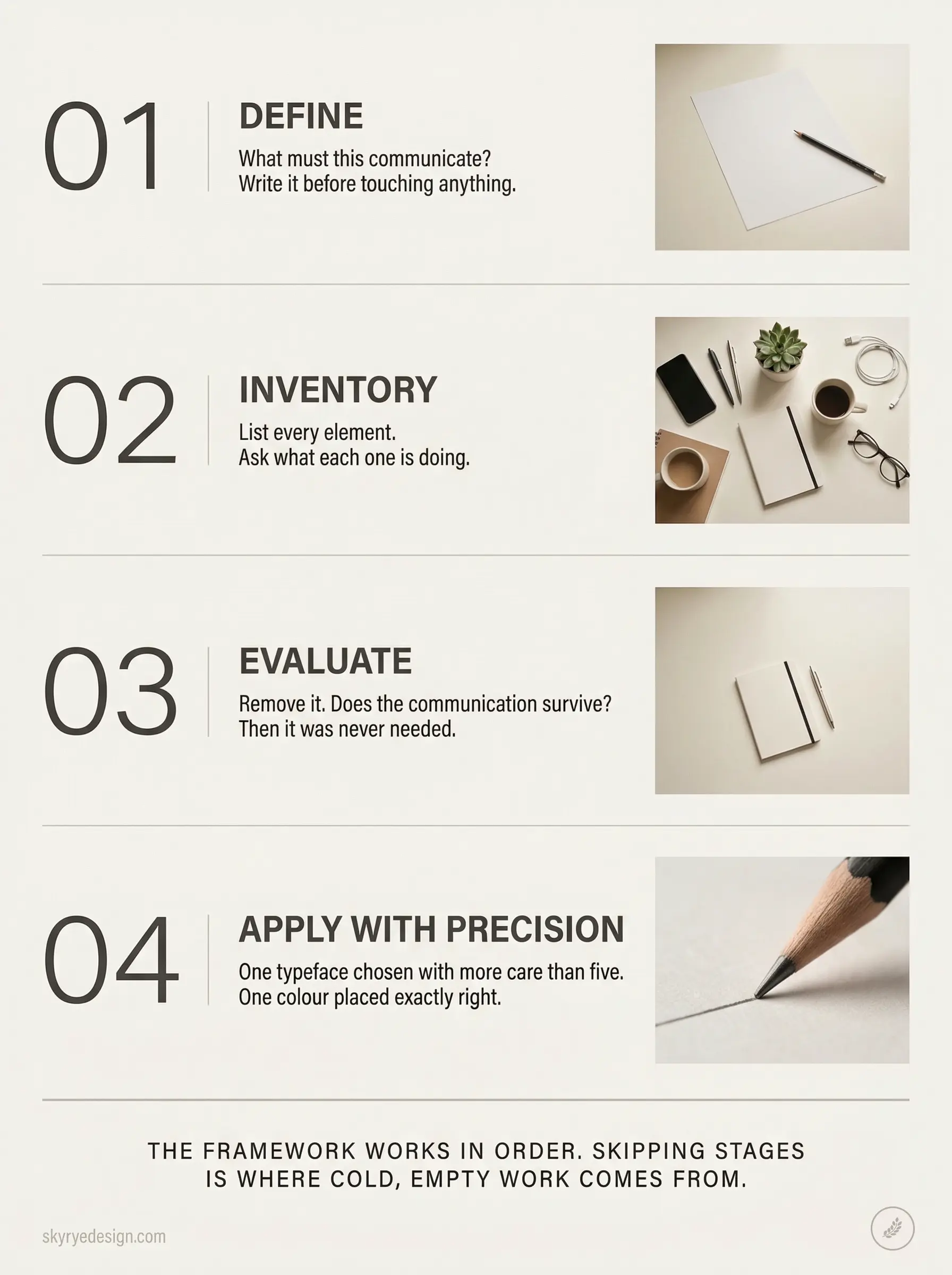
Stage 1: Define the Essential Communication
Before removing anything, be precise about what the design must communicate. Not ‘it should look clean’ — that’s an aesthetic preference, not a communication goal. What information does the user or viewer need? What action should they take? What feeling should the design produce? A minimalist interior must communicate ‘this is a calm, well-considered space for a specific kind of life.’
A minimalist brand identity must communicate ‘this brand is trustworthy, positioned at this level, intended for this person.’ Write it down. The essential communication is the filter through which every subsequent element is evaluated.
Stage 2: Inventory Every Element
List everything currently in the design — every typeface, every colour, every decorative element, every piece of furniture, every navigation item, every icon. For each element, ask: what is this doing? What communication role does it serve? A sofa serves a functional and atmospheric role simultaneously. A decorative border serves an aesthetic role. A navigation label serves an informational role. If the role isn’t clear, or if the same role is served by two elements, something can be removed or consolidated.
Stage 3: Evaluate Against the Essential Communication
For each element from your inventory: does removing this impair the essential communication? If yes, the element stays. If no, or if you’re uncertain, remove it and test with the essential communication still in view. The uncertainty case almost always resolves toward removal once you see the design without the element.
The thing you were worried about removing turns out to be invisible in its absence. This is the core insight of minimalism: most of what we add to designs is visible only in its presence, not in its absence. The viewer doesn’t miss what was never needed.
Stage 4: Use What Remains with Precision
Once the inventory is reduced to the essential elements, the remaining work is craft: applying each element with maximum precision. A single typeface in a minimalist design must be chosen with more care than five typefaces in a complex one, because it bears the full typographic weight of the communication.
A single accent colour must be placed exactly right because there’s no other colour movement to mask imprecise placement. Negative space must be distributed deliberately rather than left wherever elements happened not to be placed. This is why truly good minimalist design is harder than complex design — there’s nowhere to hide.
✏ Note: A practical test for any element you’re unsure about: cover it in your design file or mockup. Look at the design without it for ten seconds. Now look at it for ten seconds. Did it add something you’d miss? Or did it add something you only notice because it’s there? The latter is a candidate for removal.
5 Minimalist Design Mistakes (and Their Fixes)
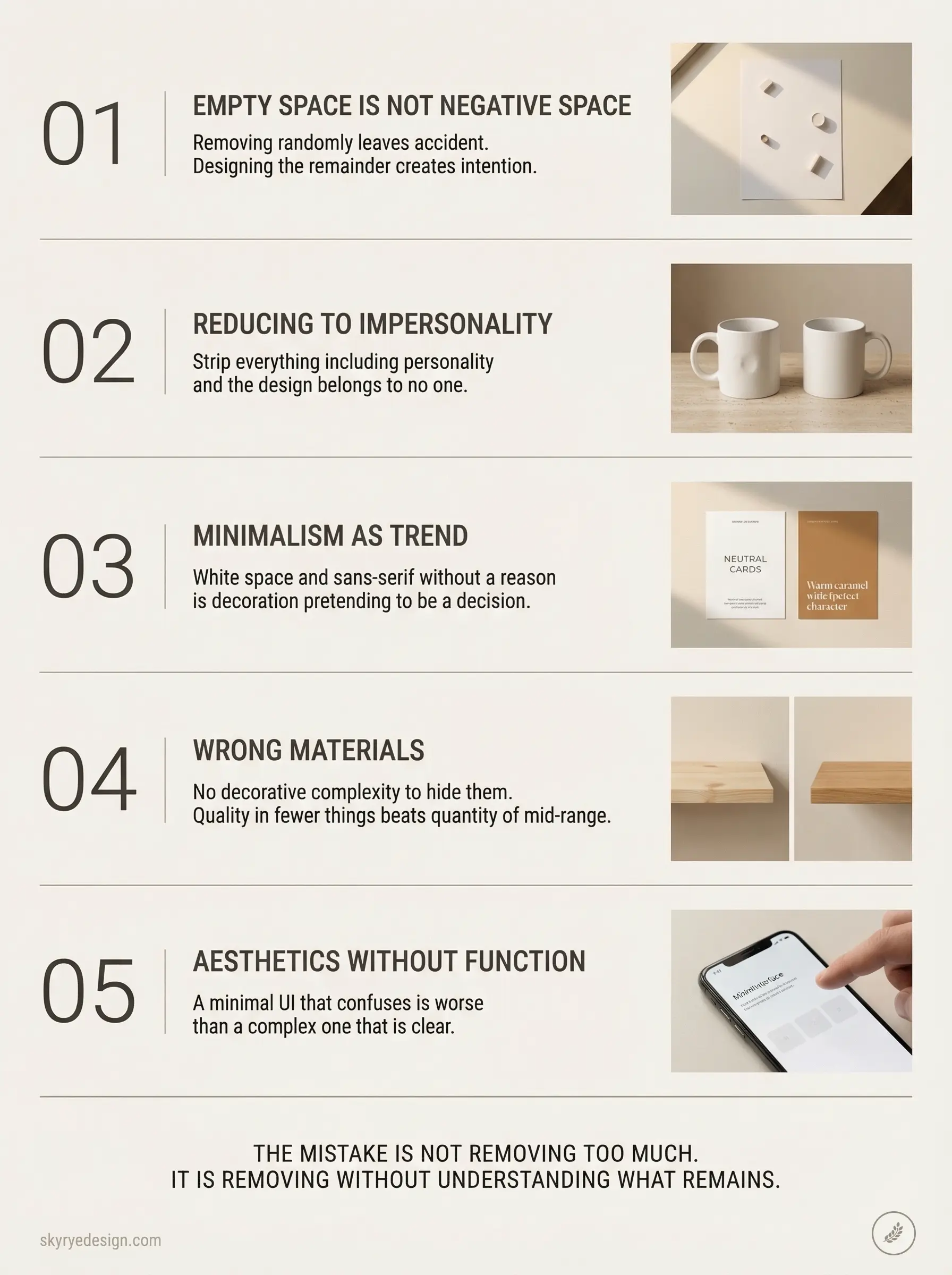
1. Confusing Empty Space with Negative Space
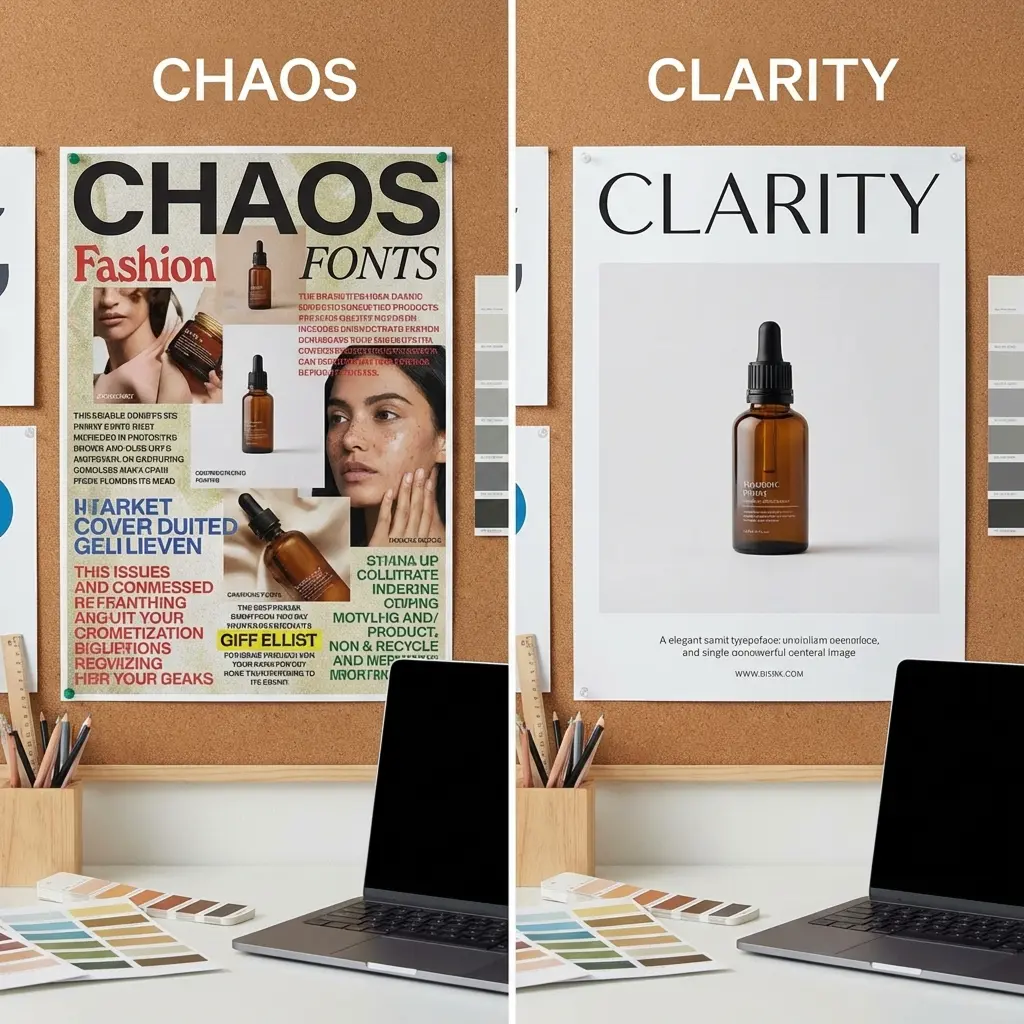
Empty space is what’s left when you remove elements randomly. Negative space is designed — deliberately sized and positioned to control attention and create breathing room. Empty space looks accidental and unsettling. Negative space looks calm and intentional. The fix: after removing elements, actively redesign the remaining space. Redistribute margins, adjust element sizing, and make explicit decisions about where the eye should rest.
2. Reducing to Impersonality
The most common critique of minimalist design: ‘it could belong to anyone.’ If a brand identity, interior, or UI has been stripped of everything that carries personality — distinctive typeface, material texture, a specific colour temperature, curation evidence — it becomes generic rather than minimal. The fix is to identify the one to three elements that carry the design’s personality and protect them rigorously while everything else is stripped back. Burberry protected its heritage typography. Aesop protected its material texture and bottle form. The Row protects its fabric quality and cut. These protected elements are the personality; everything else is reduced.
3. Applying Minimalism as a Trend Rather Than a Decision
Minimalism applied because it’s fashionable rather than because the communication demands it produces work that feels like a trend costume rather than a resolved design position. The visual markers of minimalism (white space, sans-serif type, neutral palette) are recognisable, but the work lacks the coherence that comes from genuine editorial decision-making.
The fix: start with the communication goal, derive the visual decisions from that goal, and verify each decision against it. If the communication goal genuinely calls for complexity — a rich, layered visual narrative — then minimalism is the wrong approach.
4. Wrong Material or Texture Choices in Interiors
Minimalist interiors fail most often not in spatial organisation but in material selection. Cheap materials in a minimal space are immediately exposed — there’s no decorative complexity to draw attention away from them. A thin pine shelf looks cheap in a minimal room; a solid oak shelf looks intentional. The fix: in a minimalist interior, budget for quality in the materials you do use rather than quantity of objects.
Three exceptional materials used consistently throughout a space (oak floor, linen upholstery, textured plaster wall) create more cohesion than ten mid-range materials used indiscriminately.
5. Minimal Aesthetics Without Functional Follow-Through
A minimal UI that looks clean but is confusing to use has failed the core minimalist test: function first. The visual simplicity of a minimalist interface is only as good as the clarity of its underlying interaction design. A single clean screen with unclear affordances — you can’t tell what’s clickable, you don’t know where you are in the flow — is worse than a visually complex screen where everything is legible. The fix: evaluate minimalist digital design primarily on usability metrics (task completion rate, error rate, time-on-task) rather than visual cleanliness.
References and Further Reading
- Mies van der Rohe — ‘Less is More’ — the original functional argument for minimalism, in architecture and product design. Read his writing directly; most summaries miss the functional basis for the aesthetic position.
- ‘The Life-Changing Magic of Tidying Up’ by Marie Kondo (~$12) — not a design book, but the clearest popular articulation of the evaluation framework at the heart of minimalism: does this earn its place? Most useful for interior and product design applications.
- ‘Thinking with Type’ by Ellen Lupton (~$25) — the foundational typographic reference for minimalist graphic design, where type carries the full communicative weight of the design.
- Nothing Tech — nothin.tech — the current benchmark for minimalist brand design applied across hardware, packaging, and digital touch points simultaneously. Study the website and the brand system in detail.
- Muji Global (muji.com) — the definitive product design case study for minimalist philosophy applied at scale. The product catalogue is more instructive than any textbook.
- Burberry 2024–2026 rebrand — the clearest current example of the shift from hyper-sterile minimalism to ‘warm minimalism’ in luxury branding. Compare the 2018 logo refresh with the 2024 direction.
The Point of Reduction
The client who said my white background felt ‘like a hospital’ was identifying a real problem: I had removed elements without replacing them with intention. The space wasn’t designed — it was just cleared. The difference between that and genuinely good minimalist design is the same as the difference between an empty room and a considered one: the empty room happens by default, the considered one is the result of specific decisions about every square metre.
Minimalism in design is demanding precisely because it’s unforgiving. In a complex design, a weak element is masked by everything around it. In a minimal design, every element is exposed — its quality, its appropriateness, its precision. The discipline rewards exactness and penalises approximation.
In 2026, minimalism is not disappearing — it’s maturing. The sterile, generic version is being replaced by work that is minimal and warm, reduced and characterful, quiet and unmistakable. Getting there requires the same decision framework it always has: define what the design must communicate, evaluate every element against that communication, remove what doesn’t earn its place, and apply what remains with precision. The white space is just what’s left.
FAQ: Minimalism in Design
Q: What is minimalism in design?
Minimalism in design is a decision framework — not a style — built on the question: does this element earn its place? Applied to a logo, an interior, a UI, or a product, the framework removes elements that don’t clarify, reinforce, or improve the communication and retains only what’s essential. The surface characteristics associated with minimalism (white space, limited colour palettes, clean geometric forms, restrained typography) are the result of applying this framework rigorously. Copying the surface without the underlying logic produces empty or generic work rather than genuinely minimalist design.
Q: What are the core principles of minimalist design?
Four principles govern minimalist design across all disciplines. Simplicity of form: visual elements reduced to their essential geometry, where every shape serves a structural or communicative purpose. Colour restraint: a controlled palette in which each colour has an assigned role, rather than colours applied intuitively. Functional clarity: every element has a single, clearly assigned communication role with no overlap or redundancy. Negative space as an active element: white space or empty space that is deliberately sized and positioned to control attention and create hierarchy, not space that remains by default after other elements are placed.
Q: Is minimalism in design still relevant in 2026?
Minimalism is the dominant visual language across product, graphic, digital, interior, and fashion design in 2026, but it has evolved. The hyper-sterile version — pure white, generic sans-serif, clinical emptiness — is being replaced by what designers are calling ‘warm minimalism‘ or ‘bold minimalism’: still reduced, still clean, but with character-rich typography, material texture, and warmer colour temperatures as the personality layer. Burberry’s gradual reintroduction of heritage typography, Nothing Tech’s product design, and brands like Aesop and Everlane all exemplify this direction: minimal but unmistakably themselves.
Q: What’s the difference between minimalism and empty design?
Empty design is what results when you remove elements randomly until the composition looks sparse. Minimalist design is what results when you evaluate each element against a clear communication goal and remove only what doesn’t earn its place. The difference is visible in the work: empty design has negative space that looks accidental and unsettling; minimalist design has negative space that looks deliberate and calm. Empty design lacks personality because everything that carried personality was removed indiscriminately; minimalist design has a strong, specific personality because the key elements that carry that personality were identified and protected.
Q: How is minimalism used in UI and UX design?
In digital interfaces, minimalism is both an aesthetic and a functional approach, and the functional argument is stronger. Interfaces with fewer visual elements, clearer role separation, and deliberate negative space have lower cognitive load, faster task completion times, and lower error rates — these are measurable. The practical application: every UI element present because removing it would impair the user’s ability to complete a task; a visual hierarchy of three to four levels maximum; colour used to communicate state (active/inactive, primary/secondary action) rather than decoration; and micro-animations used to confirm state changes without adding visual complexity. The 2026 evolution in minimalist UI is the integration of subtle motion as a design element within otherwise still compositions.
Q: What’s the biggest mistake in minimalist interior design?
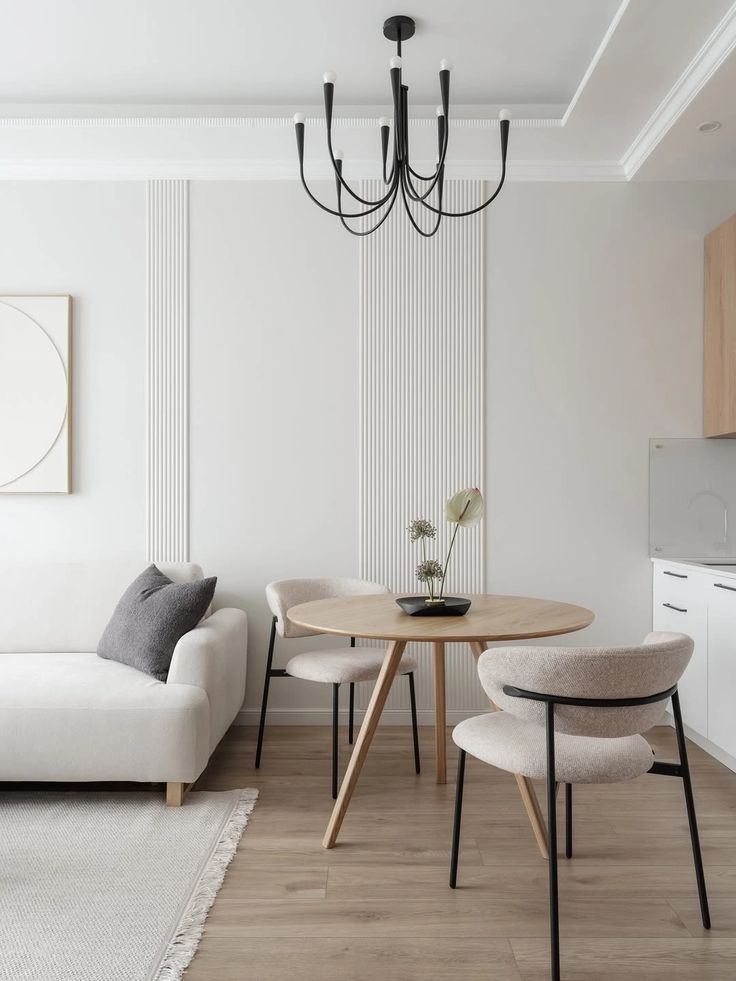
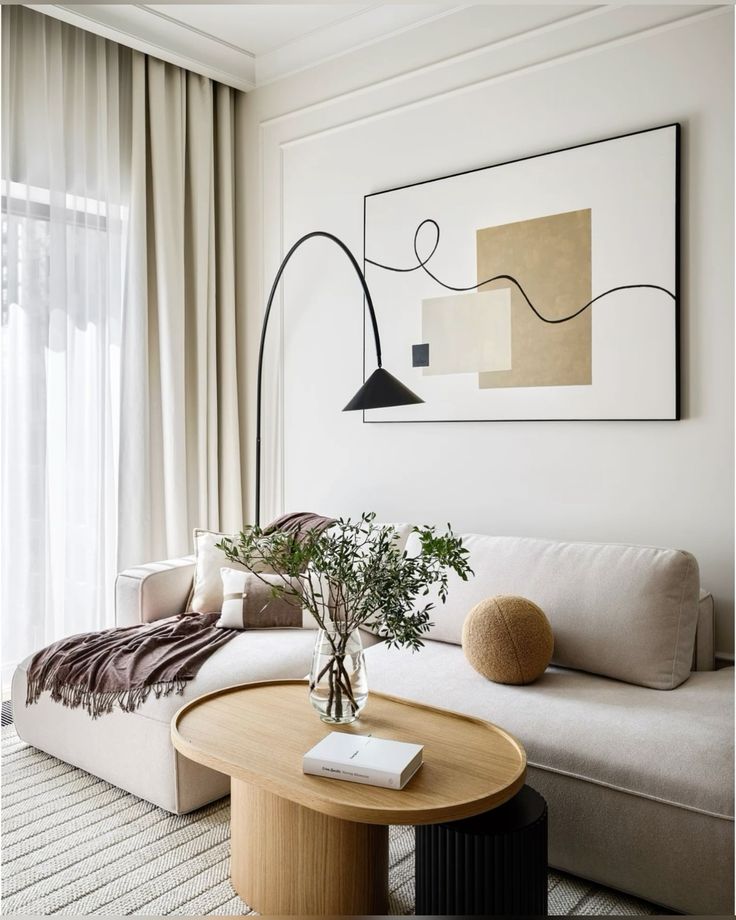
The most common mistake is reducing to impersonality: removing everything that carries character until the space looks like a showroom rather than a home. The fix is curation rather than pure reduction — fewer objects on display, but objects that have genuine meaning, exceptional material quality, or clear functional purpose. In a minimalist interior, material quality is directly exposed because there’s no decorative complexity to mask cheap choices.
A single exception material — solid oak, textured plaster, heavy linen — does more work in a minimal space than the same budget distributed across many mid-range materials. The personality of a minimal interior comes from the precision of these choices, not from the addition of decorative objects.
Minimal logos look simple only when the proportions are disciplined; a logo maker tool can start the process, but the final reduction still needs careful editing.
- 41shares
- Facebook0
- Pinterest41
- Twitter0
- Reddit0