My neighbour bought a beautiful oxblood leather wingback three years ago. It looked perfect in her sitting room — the kind of chair that makes a room feel settled and serious. Then her cat discovered it.
Within six months, the armrests had a texture that can only be described as aggressively distressed. The chair still looks expensive from across the room. Up close, it’s a different story.
That’s the thing about wingback chairs: most people choose them for how they look and realise too late that upholstery is actually the decision that matters. The silhouette is almost always beautiful — the tall back, the side wings, the deep seat. But whether that structure is covered in leather or fabric determines how the chair ages, how it feels in February, what happens when a child spills squash, and whether you’re still happy with it in 2035.
- Leather or Fabric: What You’re Actually Choosing Between
- Why So Many UK Buyers Choose Leather
- Fabric Wingback Chairs: Where They Win
- UK Climate and Humidity: Why It Matters More Than You Think
- Maintenance Routine Comparison
- Leather vs Fabric Wingback Chairs: Side-by-Side
- When to Choose Leather vs Fabric
- Practical Buying Checklist
- Classic vs Modern Interiors: Which Material Fits Where
- Eco Considerations: Longevity vs Reupholstery
- FAQ: Leather vs Fabric Wingback Chairs
- The Right Chair for Your Actual Home
This guide goes through both materials honestly — durability, scratch and stain resistance, maintenance, allergies, UK climate performance, and long-term cost — so you can make the right call for your actual home, not a showroom version of it.
Leather or Fabric: What You’re Actually Choosing Between
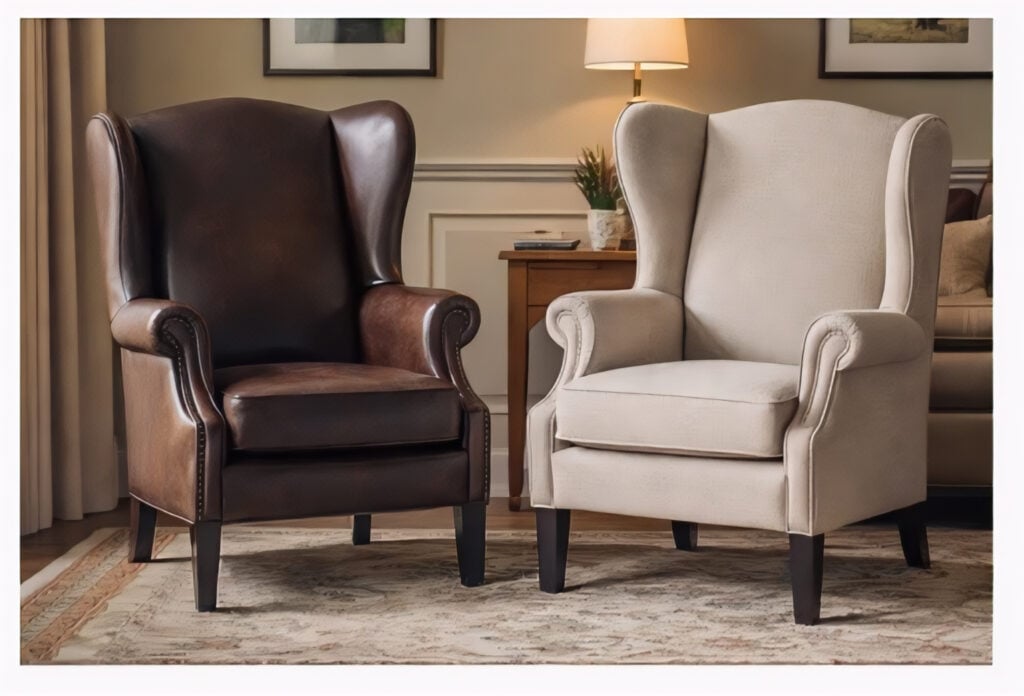
From across the room, a leather wingback and a fabric wingback look almost identical. Same high back, same protective side wings, same deep seat. The structure is the same. What you’re choosing is a surface — and surfaces are where all the real-world performance differences live.
Leather gives you a smooth, sealed finish. Liquid sits on top of it until you wipe it away. Fabric gives you a woven, tactile surface that breathes and feels warmer against skin, but also absorbs more of what lands on it. Both are typically built on hardwood frames, which is what gives a quality wingback its structural longevity. But the upholstery is what deals with your pets, your children, your central heating, and your morning coffee.
Getting that choice right from the start saves you from an expensive lesson a few years later.
Why So Many UK Buyers Choose Leather
Durability That Actually Delivers
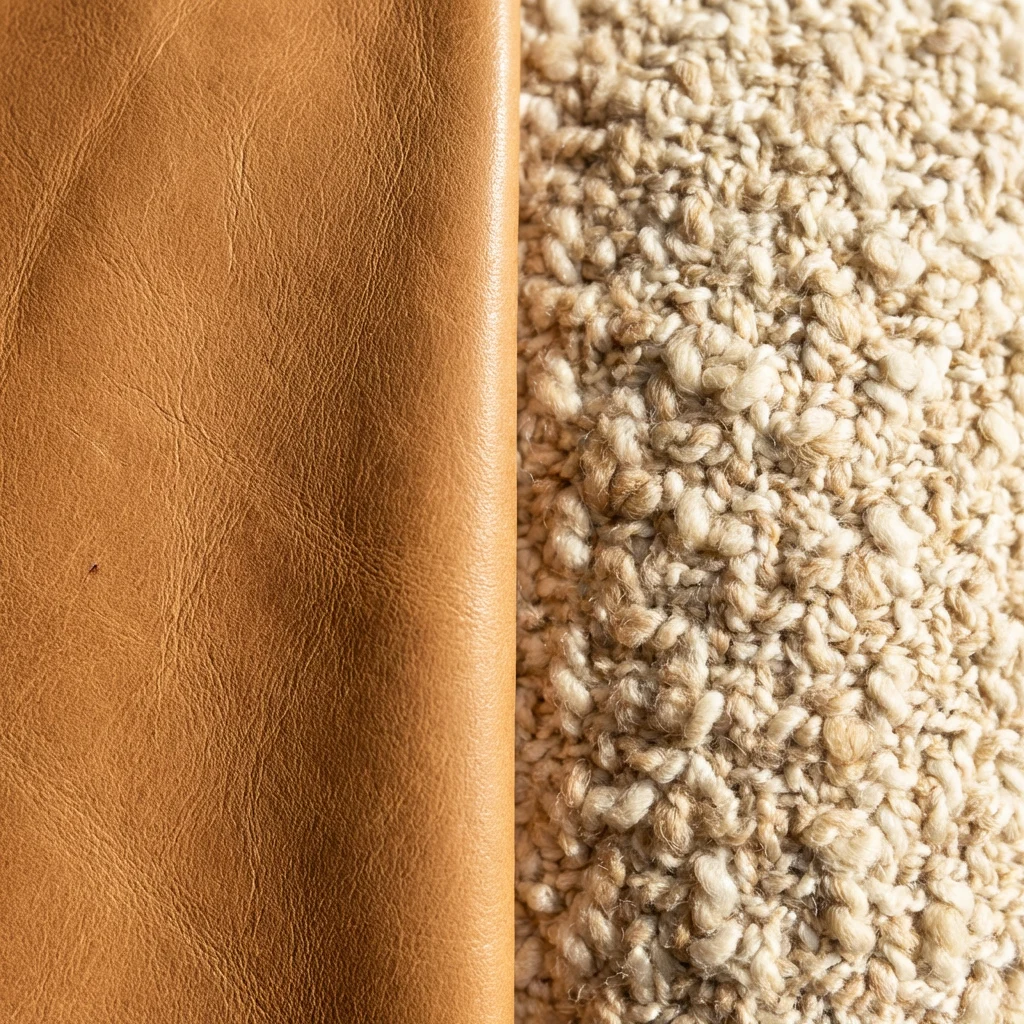
A well-maintained leather wingback can realistically last 15 to 20 years — longer if it’s full-grain hide rather than bonded or PU leather. Unlike fabric, it doesn’t pill or thin out at friction points. The armrests stay intact, where a fabric equivalent would start showing wear within a few years. For a statement piece you want to keep, longevity matters.
The caveat is that ‘well-maintained’ is doing real work in that sentence. Leather isn’t maintenance-free — it’s maintenance-specific. Neglect it, and you’ll see cracking within five years. Condition it properly, and it genuinely improves with age.
Wipe-Clean Convenience for Busy Households
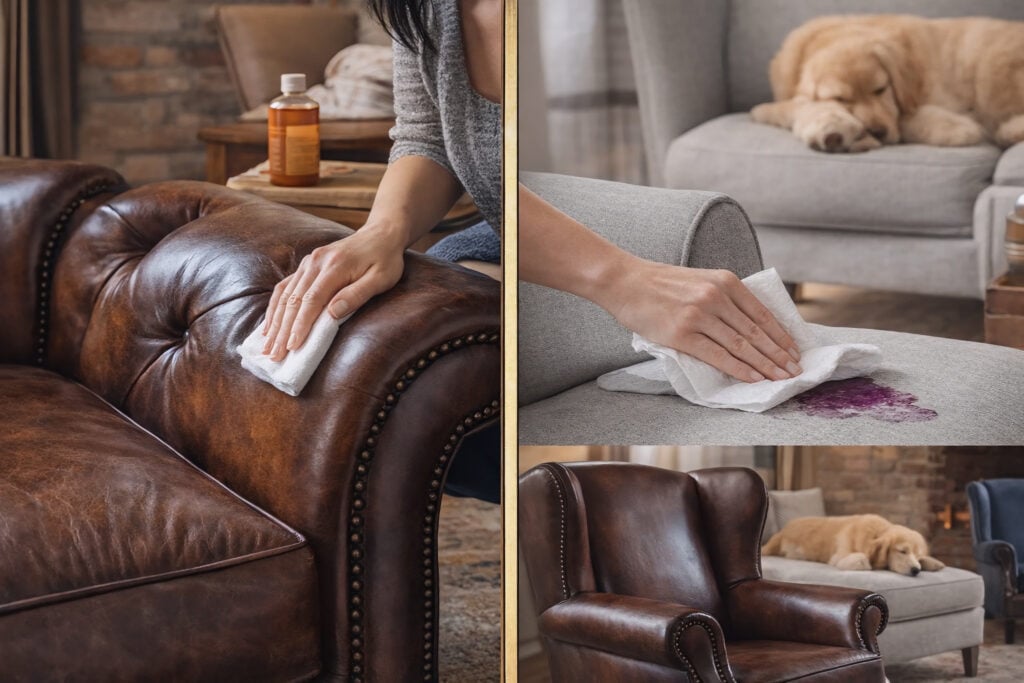
This is the feature that closes most sales. Spilled tea, muddy paws, a child with jam on their hands — wipe-clean leather handles all of it with a damp cloth, provided you catch the spill quickly. Nothing needs to soak in. No panic about whether a stain is setting. For households where this kind of thing happens daily, that convenience is worth the higher upfront cost on its own.
Patina: The Case for Ageing Leather
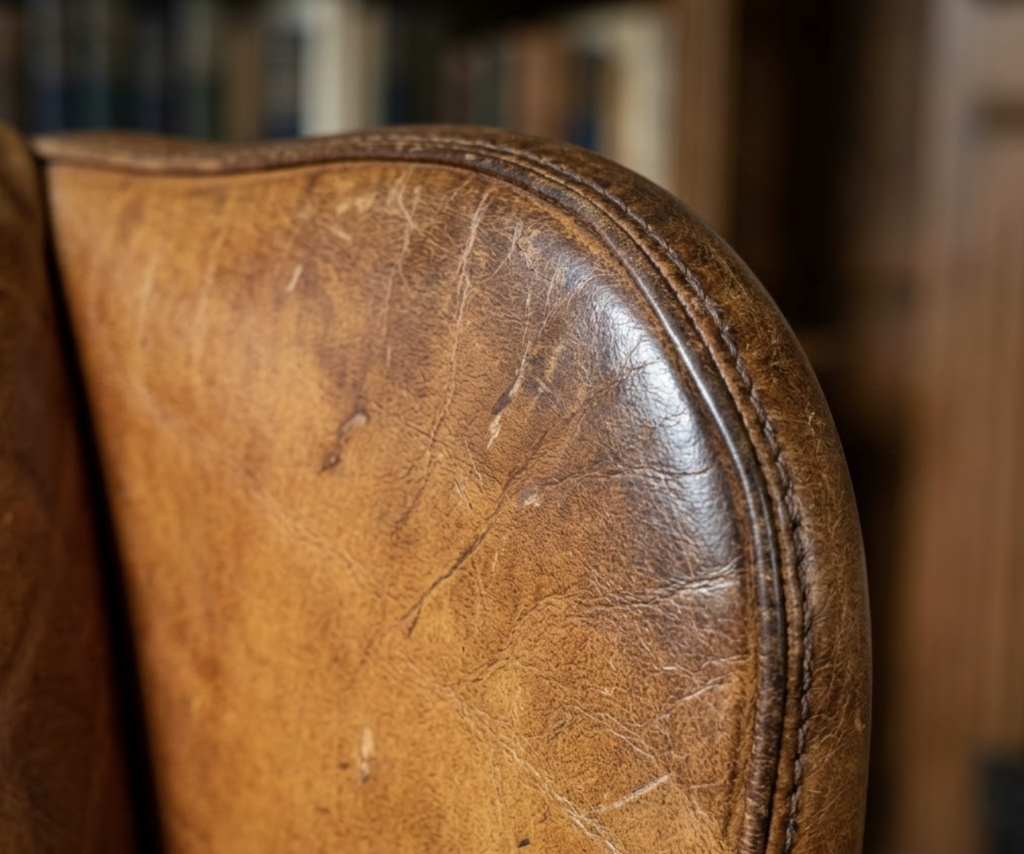
Good leather doesn’t just survive use — it records it. The slight darkening at the armrests, the soft buffed texture that develops from years of contact, the way the colour deepens in areas of regular touch: this is patina, and it’s genuinely beautiful when it develops on quality hide. It’s also the reason a fifty-year-old Chesterfield in a law firm library looks more authoritative than a brand-new one.
This doesn’t happen with synthetic or bonded leather, which peels and flakes instead of developing character. If patina is part of the appeal, full-grain is worth the investment.
Allergy Considerations
Woven fabric holds onto dust, pet dander, and pollen in a way smooth leather doesn’t. For households with hay fever sufferers or mild pet allergies, this is a practical advantage. Leather wipes clean; fabric requires vacuuming and occasional deep cleaning to stay allergen-low.
The Honest Drawbacks
Leather is cold in winter and warm in summer in a way that fabric never is. Sit down on a leather wingback in January in a centrally heated British home, and the first few minutes are unpleasant until the chair adjusts to body temperature. It’s a small thing that becomes less small when it’s every morning.
Scratch resistance is also more limited than the material’s reputation suggests. A dog’s claws or a cat that treats armrests as a scratching post will leave marks. Leather can be repaired — surface scuffs polished out, small scratches touched up — but claw damage on armrests is a different scale of problem.
And the conditioning routine is non-negotiable. Every three to six months, apply a proper leather conditioner. Not optional; structural.
Fabric Wingback Chairs: Where They Win
Warmth and Comfort Through UK Seasons
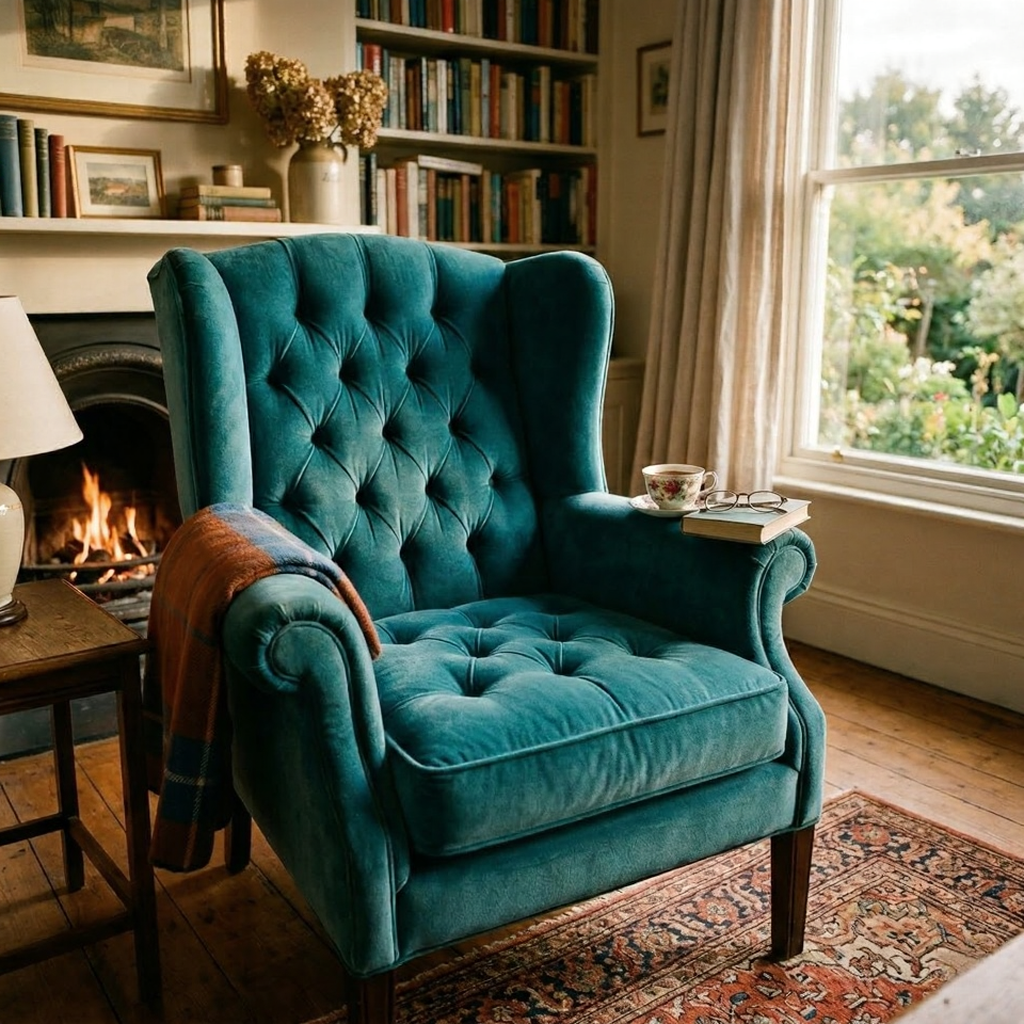
Fabric is more pleasant to sit against for longer periods. It breathes, it doesn’t hold cold or heat the way leather does, and it feels warm immediately rather than after an adjustment period. In a reading chair used for hours at a stretch, this matters more than it sounds. A velvet wingback in a British winter is genuinely comforting in a way a leather equivalent struggles to match.
Design Freedom
Leather comes in a relatively narrow range of colours and finishes. Fabric opens up the entire spectrum — every colour, pattern, and texture from checked wool to plush velvet to performance boucle. A fabric wingback can work in a traditional sitting room, a contemporary flat, or a maximalist bedroom in a way that leather, which carries its own strong aesthetic, sometimes can’t.
Velvet in particular has become one of the most popular choices for wingbacks: it creates real visual depth, photographs beautifully, and holds colour intensely. The trade-off is that velvet shows every pet hair and requires more consistent maintenance.
Pet-Friendly and Child-Friendly Options
Modern performance fabrics have changed this category significantly. Treatments like Aquaclean, Stain Shield, and similar technologies allow fabric to repel liquid and resist staining without feeling synthetic. Tightly woven fabrics — microfibre, performance boucle — also resist claw snagging better than loosely woven weaves. If pets are the primary concern, the choice between leather and fabric is less clear-cut than it was ten years ago.
For families with young children, fabric paired with a quality fabric protector spray handles daily life well. Some wingback designs also offer removable covers, which makes deep cleaning practical rather than theoretical.
The Real Drawbacks
Fabric stain resistance varies enormously by weave, treatment, and how quickly you act. An untreated linen wingback and a performance-treated microfibre one are completely different propositions. Buy on aesthetics alone without checking the specification, and you’ll find this out the hard way.
Pilling happens at friction points on looser weaves. Direct sunlight fades colour over time more visibly than it does with leather. And deep cleaning — not just vacuuming, but actual professional upholstery cleaning — should happen annually in a household with regular use.
UK Climate and Humidity: Why It Matters More Than You Think
British homes cycle through humidity fluctuations in a way that most furniture guides written for other climates don’t account for. Central heating in winter drives indoor humidity down sharply. Damp summers push it back up. This ongoing cycle affects both upholstery materials, just differently.
Leather in a centrally heated room without conditioning will dry and crack faster than leather in a stable environment. The heating isn’t just making the room warm; it’s actively drying out the hide. A conditioning routine isn’t optional in British homes — it’s compensating for the climate.
Fabric in a poorly ventilated room can absorb ambient moisture and hold odours over time — less dramatic than cracking leather, but worth considering in older houses with limited airflow. Both materials benefit from being placed away from direct radiator heat and not in positions where they receive prolonged direct sunlight through south-facing windows, which fades colour and accelerates material degradation.
Stable indoor humidity — somewhere between 40–60% — is genuinely protective for both. A basic hygrometer costs under £15 and tells you more about your chair’s longevity than most care guides do.
Maintenance Routine Comparison
Leather Care Checklist
- Dust weekly with a soft, dry cloth — microfibre works best
- Apply leather conditioner every 3–6 months (Leather Honey or Connolly are reliable UK choices)
- Wipe spills immediately with a barely damp cloth; dry thoroughly after
- Keep away from direct radiator heat and prolonged sunlight
- Maintain indoor humidity between 40–60% during heating season
- Address surface scuffs with a matching leather repair kit before they worsen
Fabric Care Checklist
- Vacuum weekly using an upholstery attachment, including under cushions
- Apply fabric protector spray on purchase and renew annually
- Rotate and flip cushions monthly to even out compression and wear
- Treat spills immediately — blot, never rub; test any cleaner on a hidden area first
- Address pilling with a fabric shaver before it becomes widespread
- Book professional upholstery cleaning annually for households with pets or children
The maintenance gap between the two isn’t enormous — both require consistent attention. The difference is that leather care is less frequent but more specific, while fabric care is more regular but more forgiving if you miss a week.
Leather vs Fabric Wingback Chairs: Side-by-Side
| Feature | Leather Wingback Chair | Fabric Wingback Chair |
| Durability | 15–20 years with proper conditioning | 5–15 years depending on fabric grade |
| Scratch Resistance | Good — surface scuffs repairable, claw damage harder to fix | Varies — tightly woven performance fabrics resist snagging well |
| Stain Resistance | High — wipe-clean if caught quickly | Depends on treatment — performance fabrics close the gap significantly |
| Allergy Performance | Low dust retention, easy to wipe | Can trap allergens — requires regular vacuuming |
| Seasonal Comfort | Cold in winter, warm in summer — takes time to adjust | Breathable and warm immediately — better for UK winters |
| Maintenance | Conditioning every 3–6 months, wipe spills fast | Weekly vacuuming, annual professional clean |
| Colour Fading | Can fade in direct sunlight | More susceptible to fading without UV protection |
| Repairability | Surface damage repairable; major damage needs specialist | Professional reupholstery is straightforward option |
| Entry Cost | Higher initial investment | Lower entry point; wide price range |
| Long-Term Value | Strong — longevity offsets higher purchase price | Good if fabric grade is high and maintained well |
| Eco Considerations | Long lifespan reduces replacement frequency | Easier to reupholster; natural fibres more biodegradable |
Leather or Fabric: What’s The Best Choice For Your Furniture? (A head-to-head comparison)
When to Choose Leather vs Fabric
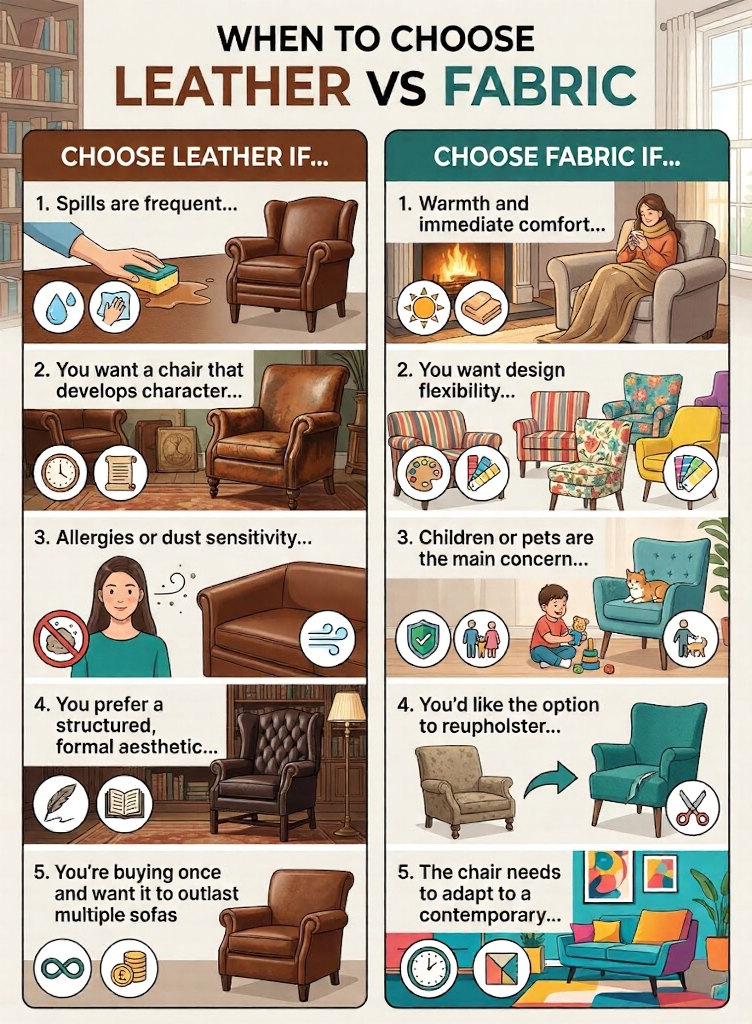
Choose Leather If…
- Spills are frequent, and you need a wipe-clean surface without anxiety
- You want a chair that develops character over decades rather than dates
- Allergies or dust sensitivity are a factor in your household
- You prefer a structured, formal aesthetic — library, study, or traditional sitting room
- You’re buying once and want it to outlast multiple sofas
Choose Fabric If…
- Warmth and immediate comfort are priorities — especially in colder months
- You want design flexibility: colour, pattern, or texture that leather can’t offer
- Children or pets are the main concern, and you want performance-treated upholstery
- You’d like the option to reupholster in the future without replacing the chair
- The chair needs to adapt to a contemporary or maximalist interior
Practical Buying Checklist
Before committing to either material, run through these before you purchase:
- Frame construction — hardwood jointed, not stapled or glued
- Leather grade (full-grain, top-grain, corrected-grain, bonded) or fabric durability rating
- Scratch resistance — honest assessment of pets’ habits
- Stain resistance level and whether a treatment is included or needs adding
- Your realistic maintenance commitment — conditioning schedule or vacuuming routine
- Allergy profile of your household
- Chair’s placement relative to radiators and south-facing windows
- Reupholstery potential if you want to refresh the look in ten years
- Budget against expected lifespan — cost per year often favours leather
If you want to compare finishes side by side with real interiors as a reference, browsing the best wingback chair UK collection gives you a useful visual anchor before making a final decision.
Classic vs Modern Interiors: Which Material Fits Where
Material choice and interior style are more linked than most buyers realise when they’re choosing by colour alone.
Leather wingbacks — particularly in oxblood, conker brown, or deep navy — carry a formal, authoritative quality that suits traditional sitting rooms, home libraries, and period properties. They read as permanent fixtures rather than decorative choices. That’s not a limitation; it’s a strength in the right context.
Fabric wingbacks are more contextually flexible. A tightly woven wool check sits comfortably in a Scottish farmhouse or a London Georgian flat. A velvet wingback in dusty pink or forest green works in a contemporary bedroom or a maximalist sitting room in a way that leather rarely does. Textured neutrals — boucle, linen, oatmeal weave — read as modern without being trendy, which is a harder thing to achieve than it sounds.
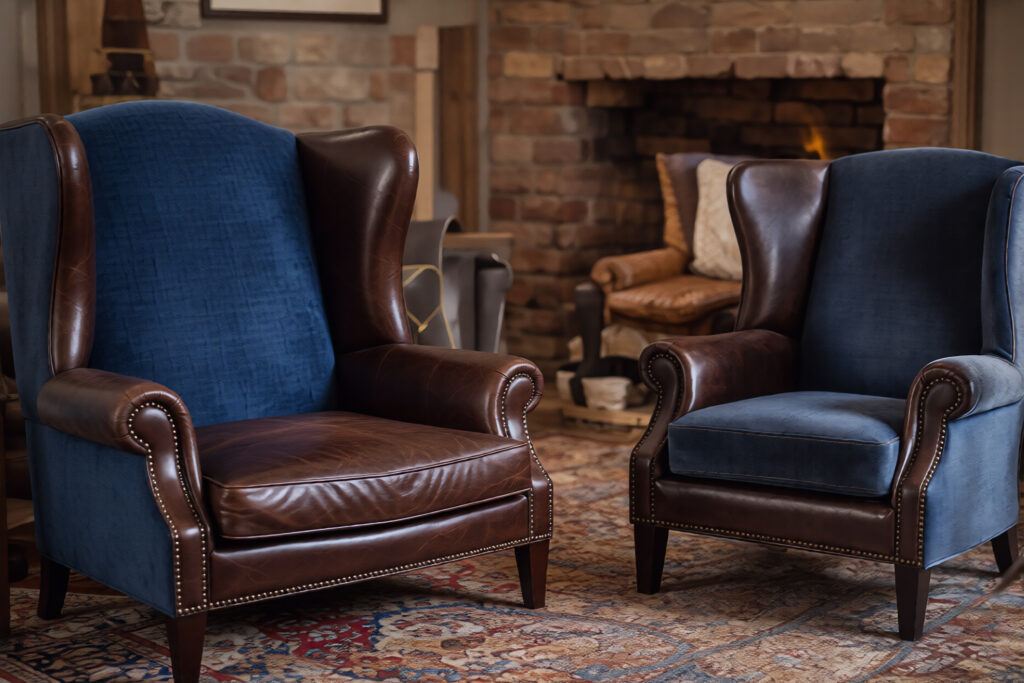
The chair’s upholstery doesn’t just affect how it looks. It determines whether it reads as formal or relaxed, graphic or soft, permanent or adaptable. Getting that right for your specific room is as important as getting the material performance right for your household.
Eco Considerations: Longevity vs Reupholstery
Sustainability in furniture is less about material origin than most marketing suggests — it’s primarily about how long the piece lasts and what happens to it afterward.
Leather’s case for sustainability is longevity. A chair that lasts 20 years and never goes to landfill has a substantially lower environmental impact than three cheaper chairs over the same period, regardless of what they’re made from. Full-grain leather from a tannery with responsible sourcing (look for Leather Working Group certification) strengthens that case considerably.
Fabric’s case is reupholstery. When the surface wears out, the chair doesn’t have to. A solid hardwood frame can be stripped and recovered multiple times — different fabric, same chair, zero waste. Natural fibres — wool, linen, cotton — are also more biodegradable at the end of life than synthetic alternatives.
Neither is definitively more sustainable. Both are significantly more sustainable than cheap furniture bought to be replaced.
FAQ: Leather vs Fabric Wingback Chairs
Is leather or fabric better for a home with pets?
It depends on the pet and the problem. For spills and general mess, wipe-clean leather is the easier option. For scratch resistance, modern performance fabrics — tightly woven microfibre or treated boucle — often perform better than leather against cats with active claws. If your pet does both, leather edges ahead because spill damage is harder to live with than light surface scratching.
Which lasts longer in a UK home: leather or fabric?
Quality leather, properly conditioned, typically outlasts even good fabric — 15 to 20 years versus 8 to 12 for most fabric grades in regular use. The gap narrows significantly with high-performance commercial-grade fabric and a consistent care routine. Budget leather (bonded or PU) lasts considerably less than quality fabric, so grade matters more than material category.
Can UK humidity damage a leather wingback?
Yes. Central heating drops indoor humidity sharply in winter, which dries leather and accelerates cracking without regular conditioning. Aim to condition every three to six months during the heating season. A humidifier in the room helps maintain the 40–60% relative humidity that keeps leather stable. This is particularly relevant in older UK properties with draughty windows and high heating output.
What’s the most important thing to check before buying a wingback chair?
Frame construction. Upholstery can be replaced; a frame cannot. Look for kiln-dried hardwood (beech, oak, ash) with mortise-and-tenon or dowel jointing rather than stapled or glued construction. A quality frame is what turns a wingback chair into a 20-year purchase rather than a 5-year one, regardless of what it’s covered in.
How do I choose between leather and fabric for a reading chair?
For a reading chair used for several hours at a stretch, fabric almost always wins on comfort. It’s warmer against the skin immediately, breathes better during longer sits, and doesn’t create the temperature adjustment issue leather does. Unless spill resistance is a particular priority — tea and reading often go together, admittedly — fabric with a good protector treatment is the more comfortable long-term choice for reading.
For a curated selection of both materials in real home settings, the best wingback chair UK guide shows how leather and fabric perform differently across a range of styles and price points.
The Right Chair for Your Actual Home
My neighbour eventually got her leather chair repaired and bought a scratch deterrent spray for the armrests. The cat remains unconvinced by the spray. The chair still looks good from across the room.
The point isn’t that leather was the wrong choice — it’s that a fabric with scratch-resistant treatment might have been a more considered one, given what she already knew about her cat. The material decision that looks like a minor detail at the point of purchase shapes how you live with the chair for the next decade.
Leather rewards commitment: to a maintenance routine, to a formal aesthetic, to longevity over flexibility. Fabric rewards lifestyle fit: to warmth, to design freedom, to adapt the chair as the room changes. Neither is universally better. Both are significantly better than choosing purely on how something looks in a showroom on a Tuesday afternoon.
Take the time to compare upholstery grades, frame construction, and real-world performance. The best wingback chair UK options span both materials — seeing them side by side makes the choice considerably easier.
- 17shares
- Facebook0
- Pinterest17
- Twitter0
- Reddit0