I lived in a fourth-floor Bushwick apartment with south-facing windows and zero window treatments for six weeks. Not by choice — my custom shades were backordered. I learned more about NYC light in those six weeks than in the previous three years of living here. Summer sunrise hit the bed at 5:47 am. The Con Ed transformer across the street cast a permanent amber glow through the glass at night. The neighbor’s kitchen was close enough that I could read her grocery list.
New York windows are not a mild inconvenience. They’re a design problem that compounds: light, privacy, drafts, noise, lease restrictions, co-op rules, and the reality that your apartment will probably have six different window sizes across four different exposure directions. Getting this right changes how you sleep, how your space feels, and — in older buildings — what your energy bills look like.
I tested eleven solutions against the specific conditions of NYC apartment life. Here’s what actually works.
- The Ultimate Urban Design Test: How We Ranked These
- 1. Motorized Smart Shades: Voice-Controlled Comfort on Demand
- 2. Custom Blackout Shades with Side Tracks: Total Darkness for the City That Never Sleeps
- 3. Top-Down Bottom-Up Cellular Shades: Sunshine Up High, Privacy Down Low
- 4. Peel-and-Stick Paper Shades: Privacy Tonight for the Price of Takeout
- 5. Thermal Blackout Curtains: Softer Style, Harder Light Stop
- 6. Frosted Privacy Window Film: Clear Light, Blurred Views
- 7. Sheer curtains: daylight without exposure
- 8. Solar Screen Shades: Skyline Views Without Glare
- 9. Vertical Blinds and Panel Tracks: The Wide-Window Workhorse
- 10. Roman Shades: Tailored Fabric That Folds Up Neatly
- 11. Wood and faux-wood blinds: adjustable classic that cleans up nicely
- Smart Buying Tips for NYC Apartments
- Mini-FAQ: Quick Answers to Common NYC Window Questions
- NYC Rules and Safety Snapshot
- Conclusion
When it comes to interior design, a New York apartment is a complete testing ground. Small spaces, strict landlord rules (no drills!), new light from the streets and windows, and close-knit dining spaces—you’re looking for the smartest solutions. We’ve compiled 11 of the best window treatments, inspired by New York apartments, that are perfect for any bustling metropolis, from London to Tokyo.

The Ultimate Urban Design Test: How We Ranked These
A product that photographs well in a Connecticut farmhouse is not the same product that survives a Midtown bedroom facing Times Square neon or a ground-floor garden apartment on a busy Brooklyn block. So before testing anything, I built a scoring framework around the actual problems NYC renters face.
The criteria — weighted by what renters consistently ranked as most important on StreetEasy forums and Reddit’s r/NYCApartments — covered eight factors: light blocking and privacy, no-drill installation ease, cost-to-value, energy performance, smart home compatibility, visual style flexibility, physical durability, and noise reduction. Products that failed on child safety (exposed cord loops) or co-op uniformity requirements (non-neutral street-facing backing) were cut before scoring.
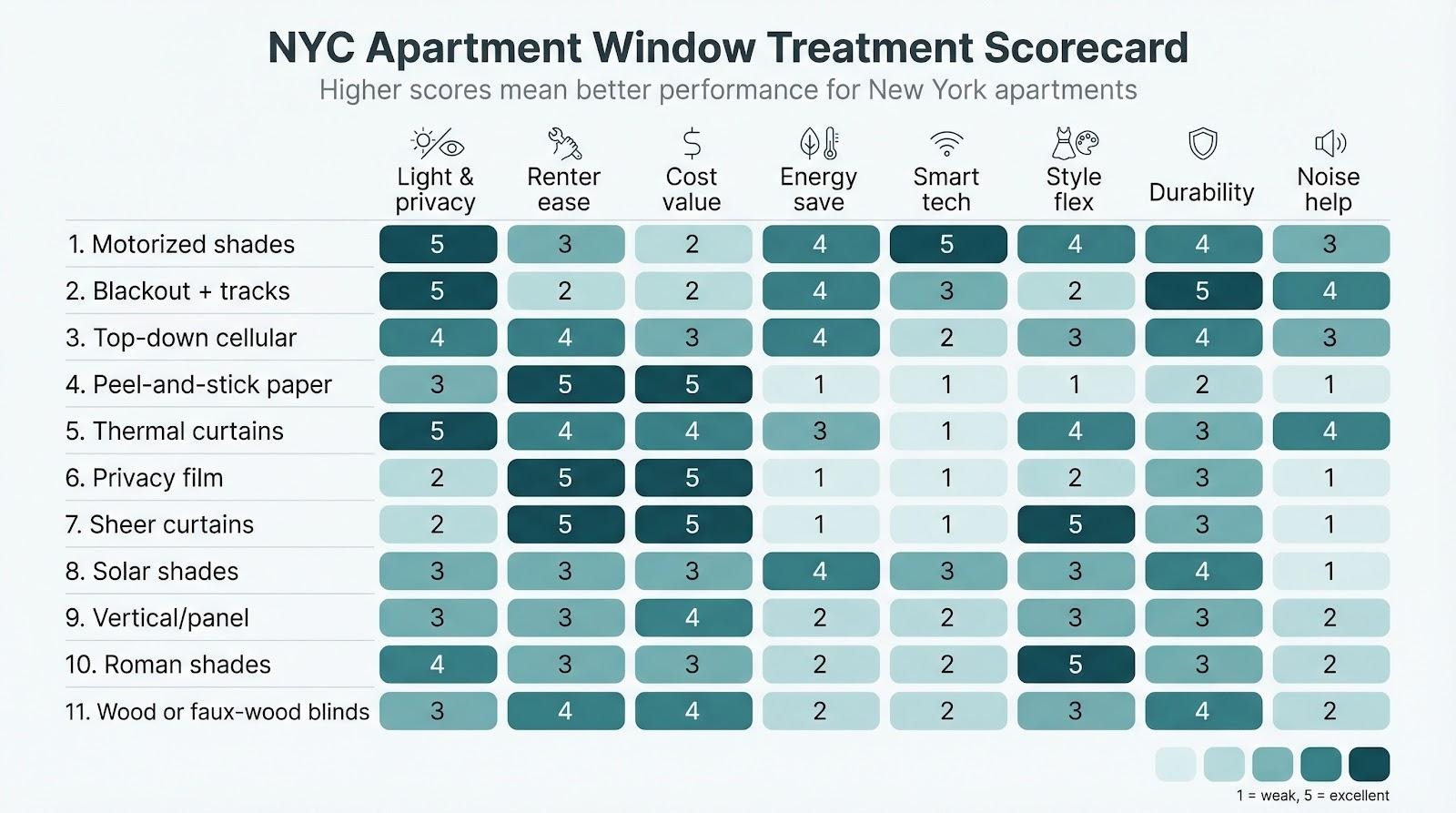
Scorecard: higher numbers mean stronger performance in each category.
| Treatment | Light & privacy | Renter ease | Cost value | Energy save | Smart tech | Style flex | Durability | Noise help |
| Motorized shades | 5 | 3 | 2 | 4 | 5 | 4 | 4 | 3 |
| Blackout + tracks | 5 | 2 | 2 | 4 | 3 | 2 | 5 | 4 |
| Top-down cellular | 4 | 4 | 3 | 4 | 2 | 3 | 4 | 3 |
| Peel-and-stick paper | 3 | 5 | 5 | 1 | 1 | 1 | 2 | 1 |
| Thermal curtains | 5 | 4 | 4 | 3 | 1 | 4 | 3 | 4 |
| Privacy film | 2 | 5 | 5 | 1 | 1 | 2 | 3 | 1 |
| Sheer curtains | 2 | 5 | 5 | 1 | 1 | 5 | 3 | 1 |
| Solar shades | 3 | 3 | 3 | 4 | 3 | 3 | 4 | 1 |
| Vertical/panel | 3 | 3 | 4 | 2 | 2 | 3 | 3 | 2 |
| Roman shades | 4 | 3 | 3 | 2 | 2 | 5 | 3 | 2 |
| Wood or faux-wood blinds | 3 | 4 | 4 | 2 | 2 | 3 | 4 | 2 |
Keep this table nearby as we break down each solution; the stories behind the numbers show how every treatment earns its spot.
1. Motorized Smart Shades: Voice-Controlled Comfort on Demand
The first time I asked Alexa to close the west-facing shades at 3 pm, and they actually did it, I understood why motorized shades score a 5 on smart tech. Not because the technology is impressive — it is — but because the problem it solves is so specifically annoying. West light in a New York apartment from June through August is relentless. You can’t be home every afternoon to manually close shades before the room turns into a solar oven.
Motorized rollers or honeycomb shades arrive custom-cut, cordless by design, and battery powered — no wiring, no drilling beyond the standard bracket install. A 38 dB motor (quieter than a normal conversation) handles shades too wide or too high to reach comfortably, which covers a lot of ground in lofts and pre-war apartments with unusually tall windows.
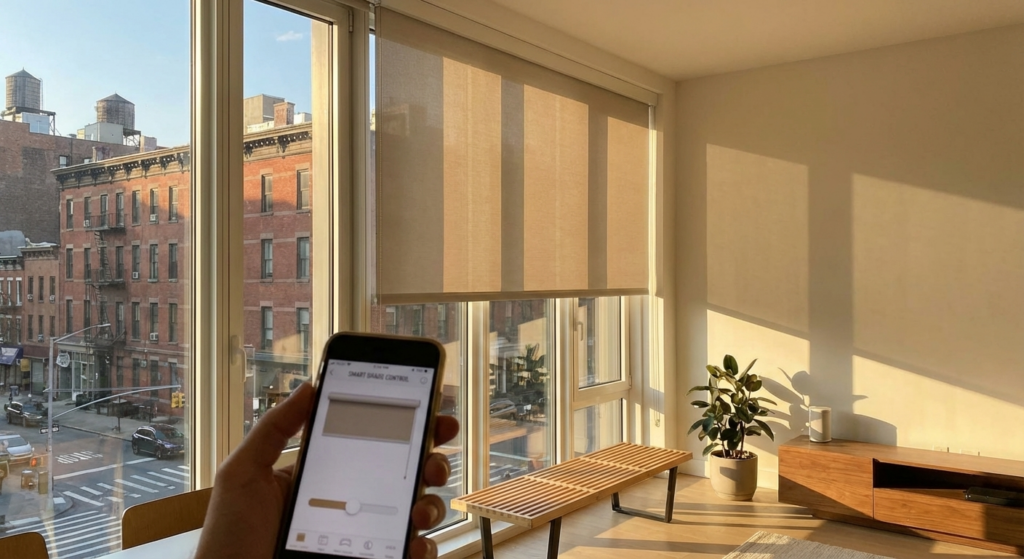
Automation is where the value compounds. Program west-facing windows to close at 3 pm daily. Set random movements while you travel — a minor deterrence, but psychologically useful in a city where apartment burglaries follow patterns. Sync with your thermostat, and you’ve got a genuinely functional smart-home setup without any extra drilling. Cost range: $160 for an IKEA Fyrtur smart roller to $900+ for a custom Lutron Serena panel. Both deliver the same core gain: a window you’ll actually manage instead of ignoring because it’s inconvenient.
2. Custom Blackout Shades with Side Tracks: Total Darkness for the City That Never Sleeps
Times Square at night pumps up to 15 lux into a Midtown bedroom — bright enough to genuinely disrupt sleep cycles. Even in quieter neighborhoods, street lights, car headlights, and that one neighbor who leaves their kitchen light on until 2 am add up to an environment your body can’t fully ignore. A standard blackout shade handles most of this. A blackout shade with fitted side tracks eliminates it.
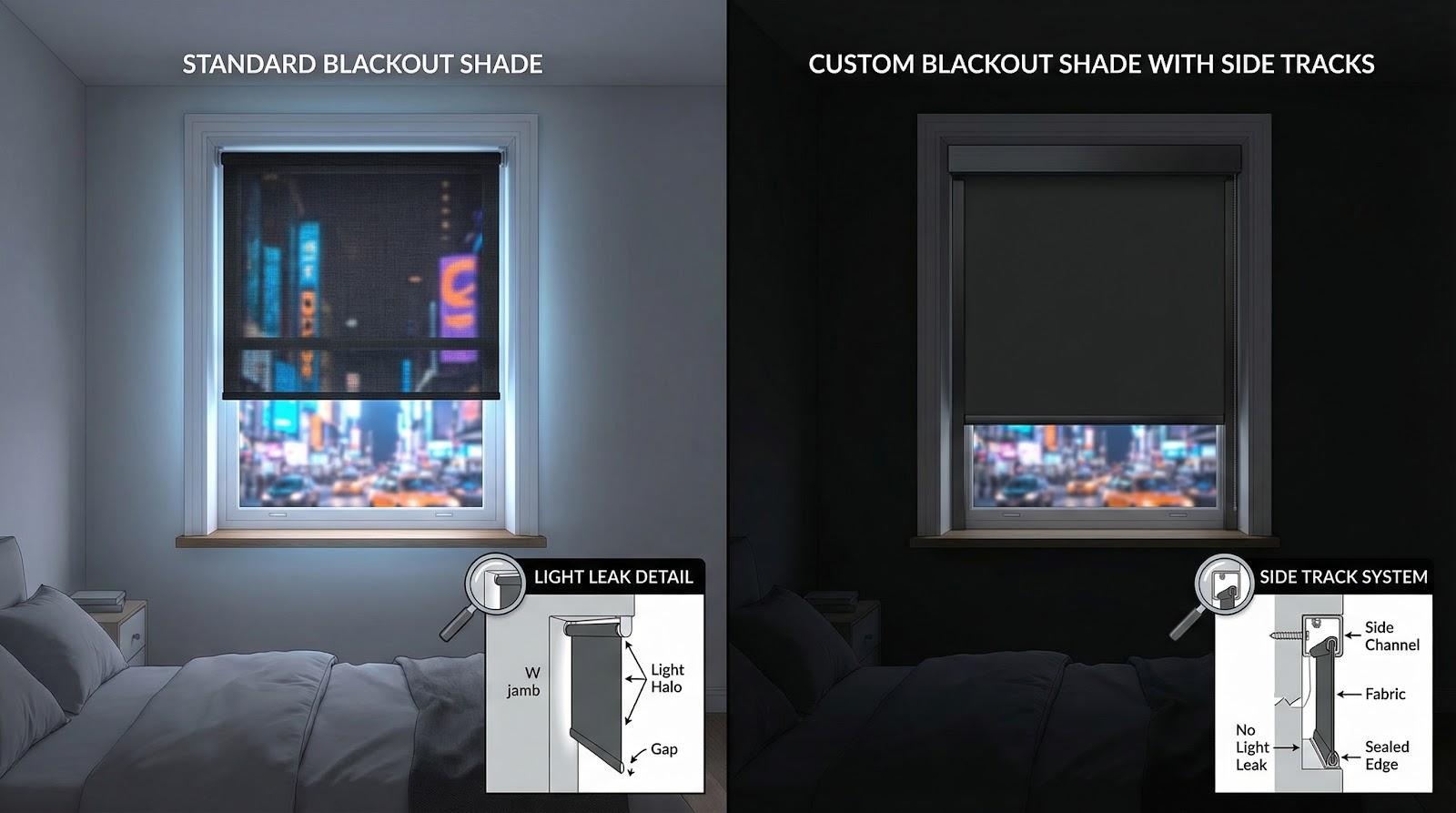
The physics are simple: any gap is a light source. A tightly fitted blackout shade with U-shaped aluminum channels on both jambs closes those gaps. An installer measures every warp in the frame — pre-war apartments are almost never square — trims fabric an eighth-inch short, and locks tracks to both sides so there’s no halo. Add a sealed headbox and a magnetic bottom bar and the window closes like a camera shutter.
The secondary benefits are real: dense blackout fabric drops peak traffic noise by roughly seven decibels (measurable in a fourth-floor apartment), slows winter drafts through single-pane glass, and blocks summer heat before it loads the AC.Cost: Around $600 per window installed. High for a single treatment, but this is the one-and-done solution for anyone building a nursery, working night shifts, or simply done losing the light battle.
3. Top-Down Bottom-Up Cellular Shades: Sunshine Up High, Privacy Down Low
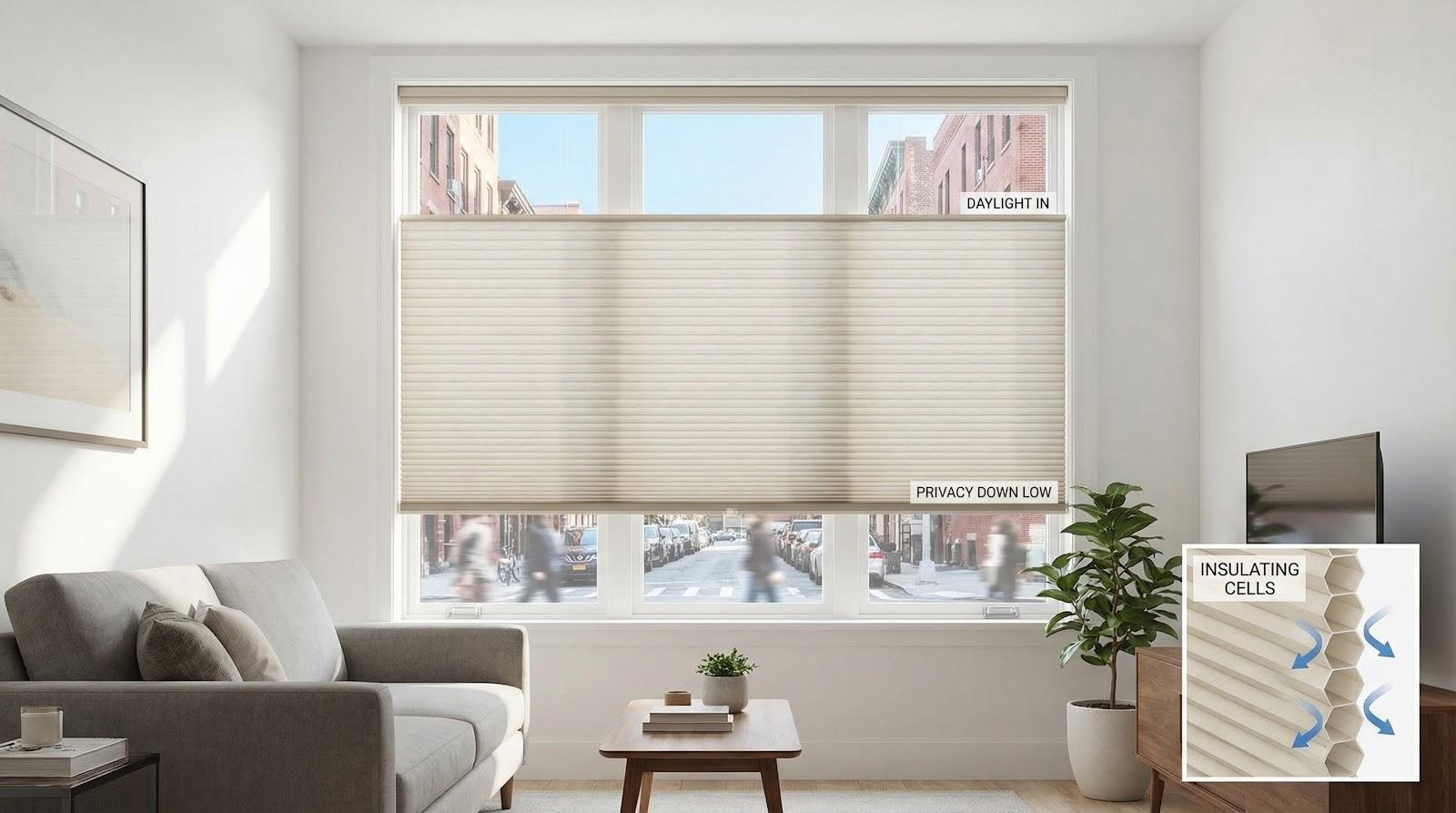
Ground-floor apartments have the cruelest window problem: the view you’d want to see is at eye level for everyone walking by. Standard shades solve privacy by blocking the window entirely. Top-down cellular shades solve it without losing light — drop the upper rail to let sky in, raise the lower rail to block the street, and you’ve got natural light without a sidewalk audience.
The honeycomb structure does real work beyond the mechanism. Each cell traps a still air pocket, which slows thermal transfer through the window assembly. In my experience, a quality double-cell 3/8″ shade (Levolor and Bali both make reliable versions) makes a noticeable difference against the drafts that come through century-old frames in winter — not transformative, but measurable.
Operation is cordless: grip either rail and slide. No lift strings to tangle, nothing for pets to chew. The shade holds wherever you place it.Cost: $80 for a trim-to-fit single-cell version from Home Depot, up to $250 for a custom double-cell dyed to match specific wall colors. The ground-floor trade-off — light versus privacy — gets resolved before your coffee brews.
4. Peel-and-Stick Paper Shades: Privacy Tonight for the Price of Takeout
Move-in day ends at 11 pm. The boxes aren’t unpacked. The bedroom window faces a lit hallway. You have scissors and a phone charger, and nothing else. This is exactly the problem peel-and-stick paper shades exist to solve.
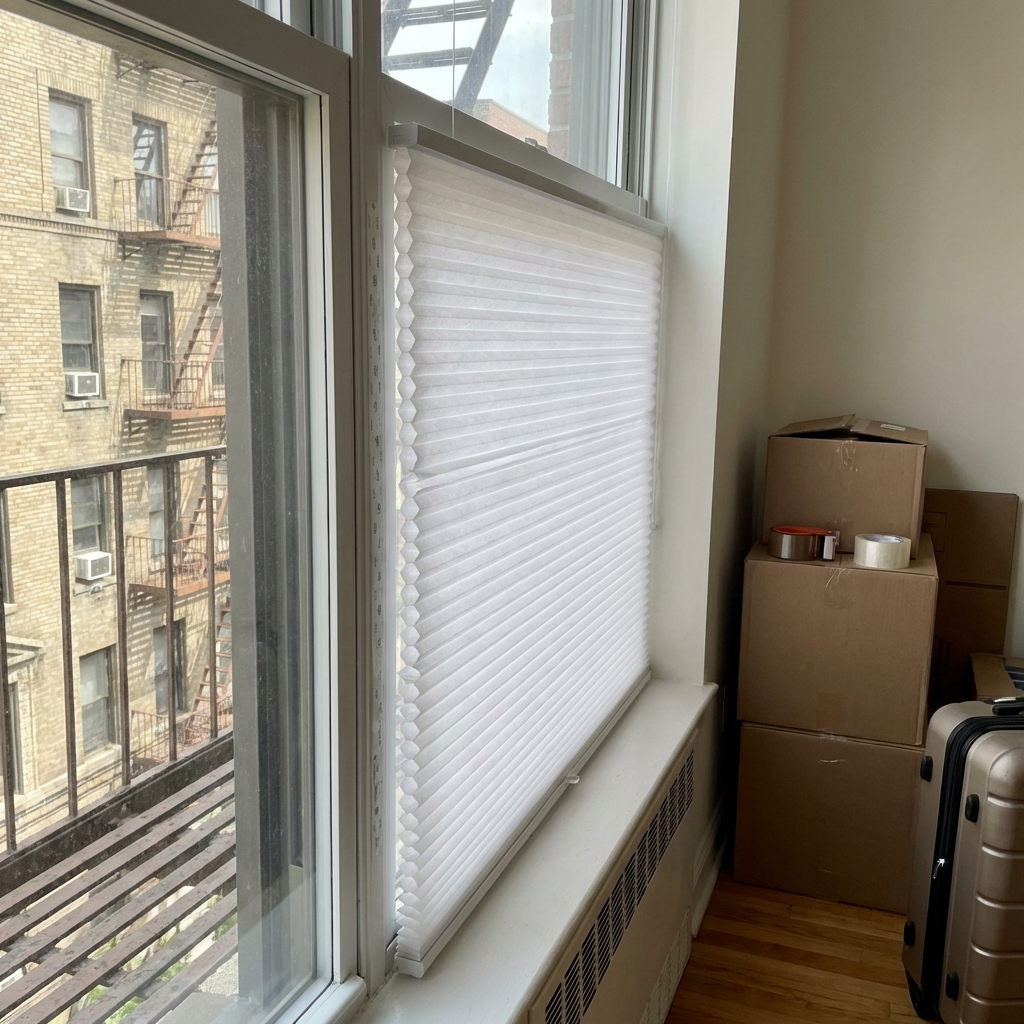
Trim the pleated sheet to width, peel the backing, press to the frame, and you’re done in under five minutes. No landlord email, no drill, no tools. Clip the pleats up for daylight; drop them for near-blackout. Cost: about $10 per window at Target or Amazon.
They last two to four months before humidity and daily handling degrade the adhesive. That’s not a flaw — it’s the use case. They buy breathing room while custom shades ship, protect your deposit while you assess drilling rules, and cover for overnight guests in a pinch. I keep a spare pack in the closet next to the extra light bulbs.
5. Thermal Blackout Curtains: Softer Style, Harder Light Stop
Blackout curtains get dismissed as heavy and unfashionable, which was fair about ten years ago. The current generation — brands like Lush Decor, NICETOWN, and Deconovo — come in 50+ colorways, look legitimately good when hung correctly, and do real work on light, noise, and drafts simultaneously.

The hang matters as much as the fabric. Mount the rod 4–6 inches above the frame and 6–8 inches wider on each side. That overlap seals light leaks, makes the ceiling look taller in a ten-by-twelve studio, and creates the visual impression of larger windows — which is never a bad thing in a New York apartment.
Thick fibers dampen honks and sirens (not dramatically, but noticeably). The insulated liner slows drafts through single-pane glass.
Renter installation stays easy: tension rods for narrow jambs, adhesive brackets for plaster walls that won’t take anchors, both rated for 8+ pounds per pair if you buy the right hardware. Cost: About $100 for a quality pair of panels plus a rod. Machine-washable, which matters in a city where soot settles on everything.
6. Frosted Privacy Window Film: Clear Light, Blurred Views
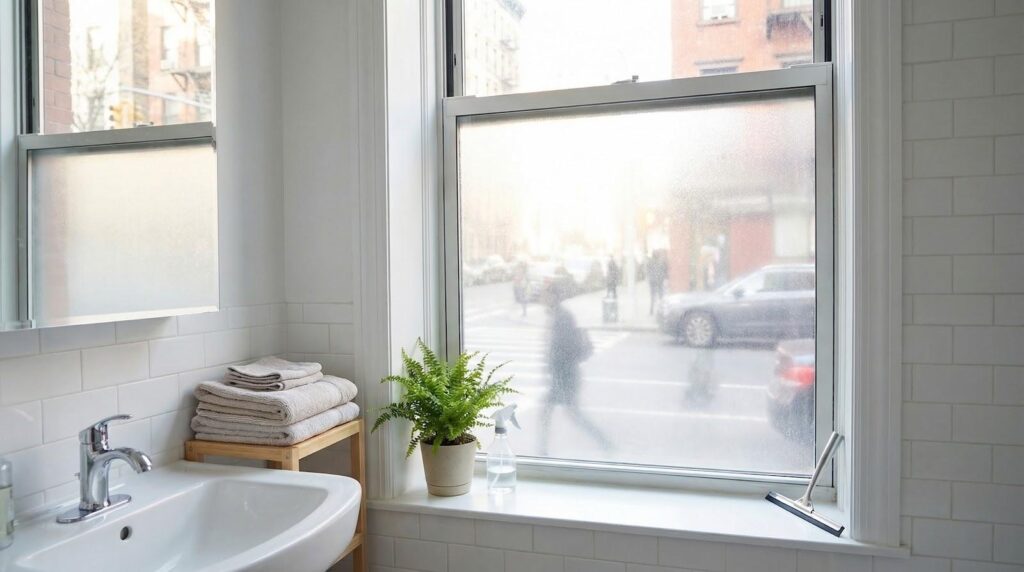
Privacy film is the most underrated window treatment in this entire list. It’s a $15–$20 roll from Amazon, it installs in fifteen minutes, and it converts a glass pane that faces a brick airshaft or a busy sidewalk into something that feels private without losing any natural light.
Spray the glass with soapy water, smooth the film with a squeegee (included), trim the edges with a utility knife, done. No hardware, no landlord approval, no drill holes. When you move out, it peels off in one piece with zero residue if applied correctly.
Because the film never moves, you get full diffused daylight all day — no stripes from slats, no blocked edges from curtains. Passersby see a soft blur. That makes it ideal for bathroom windows, garden-level bedrooms, and any room that faces a brick shaft where a view holds no value but privacy matters.
Pair it with sheer curtains for texture, or with blackout drapes for after-dark coverage. On its own, it’s the fastest way to stop the fishbowl effect while keeping every lumen you’re paying Manhattan rent for.
7. Sheer curtains: daylight without exposure
Small rooms need brightness, yet bare glass feels exposed. A sheer panel fixes the tension. The loose weave diffuses sunlight, softens edges, and blurs whoever is across the airshaft.
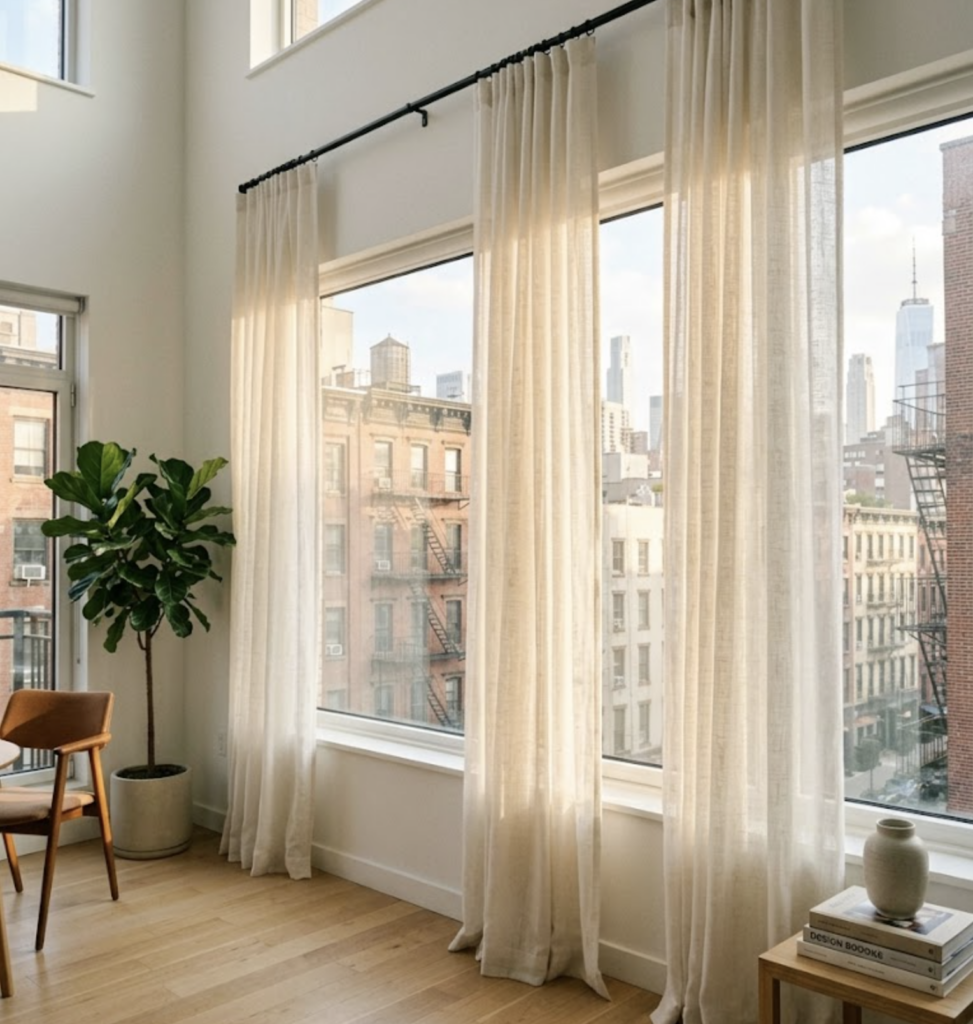
Hang panels high and wide so the window looks taller, walls feel broader, and opening takes one gentle tug. Daytime privacy lasts while outdoor light stays brighter than indoor, letting you work, read, or join video calls without closing blackout layers.
After dark, add coverage. Draw heavier drapes or tilt blinds; the sheer stays in place, adding texture while other treatments block glare. Washable poly-linen blends go straight into the machine when city dust collects, then return wrinkle-free to the rod.
Panels often cost under $30 each, and installation is as simple as sliding a café rod through grommets. For renters who want instant style and maximum natural light, sheers provide the quickest upgrade.
8. Solar Screen Shades: Skyline Views Without Glare
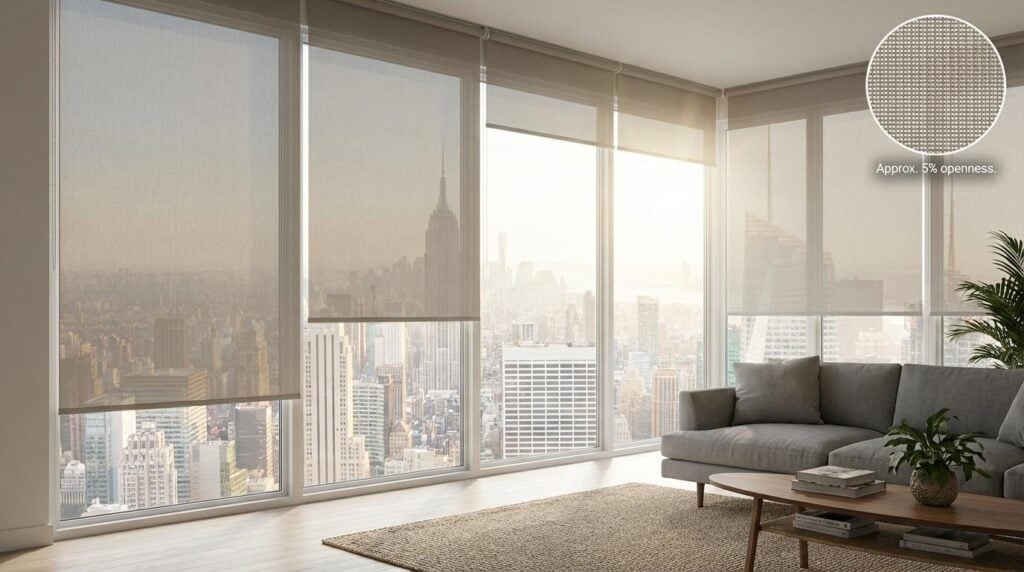
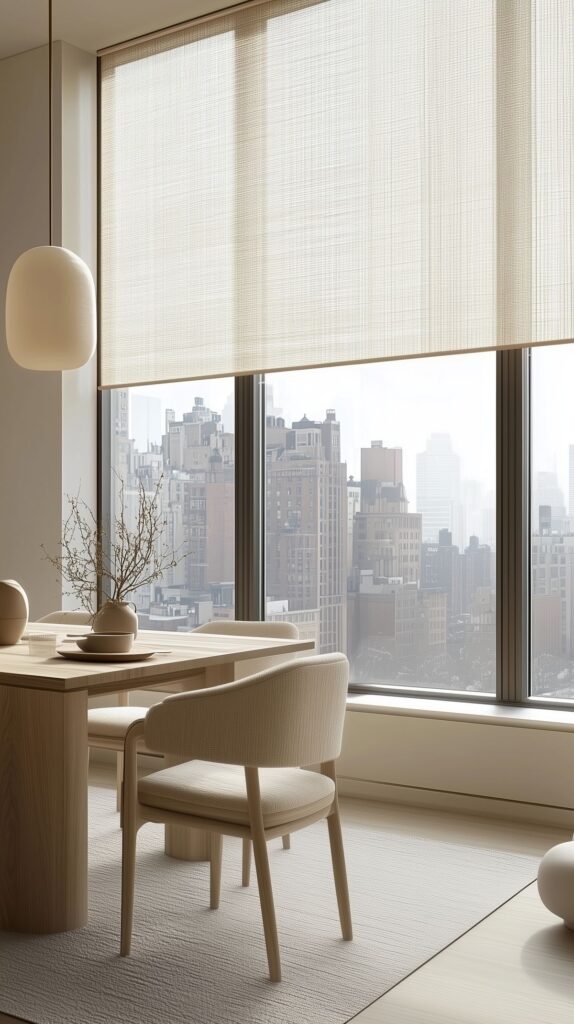
Floor-to-ceiling glass in a high-floor apartment is genuinely one of the best things New York has to offer — until afternoon sun turns the room into a greenhouse and you have to choose between squinting at your screen and closing the shades entirely. Solar screens are the designed solution to exactly this problem.
The mesh fabric filters up to 95% of heat-making UV rays while maintaining outward visibility. A 5% openness factor is the NYC standard: clear enough to see the Empire State Building from a midtown apartment, tight enough to make afternoon work at a desk tolerable. Your sofa keeps its color; the AC cycles less frequently.
Daytime privacy is a bonus: passersby see a dark mirror instead of your living room.
After dark, the effect reverses — interior light makes you visible — so most New Yorkers pair solar shades with a second blackout roller on the same cassette, or with curtains that close at night. Cost: $120–$200 per large window, more with a quiet motor. For high-floor apartments where the view is the point, solar shades protect the investment in both the space and the furniture.
9. Vertical Blinds and Panel Tracks: The Wide-Window Workhorse
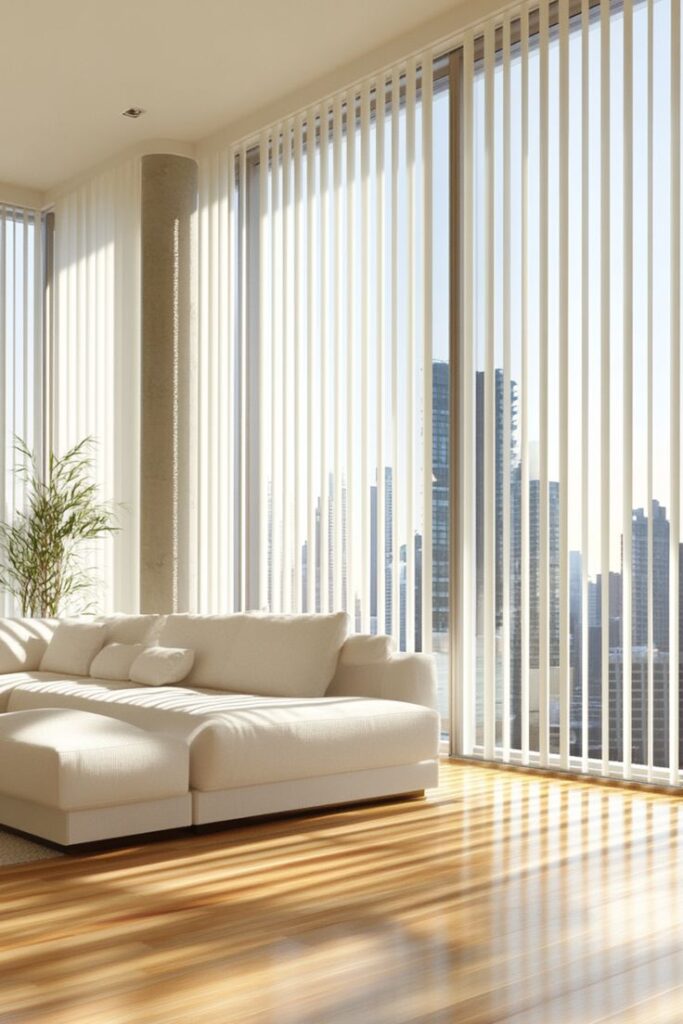
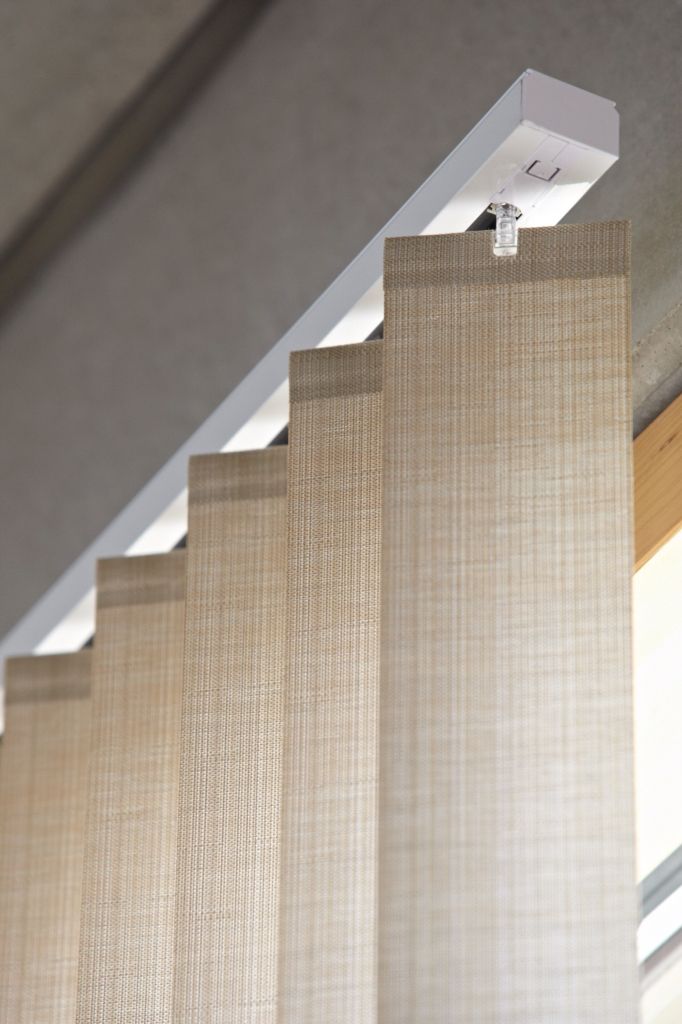
Sliding glass doors to a balcony, loft-wide windows, or any opening wider than five feet needs a treatment that moves horizontally, not vertically. Vertical blinds have handled this for decades — and the motel-era association is finally fading.
Today’s vanes curve like drapery folds rather than hanging flat, which softens light and adds a fabric quality to what used to be purely functional. Fabric S-curve vanes tilt to bounce daylight off the ceiling or draw fully to one side for terrace access. A cordless wand replaces the old chain pull.
Panel tracks take the concept further: three-foot fabric boards stack behind each other to span ten-foot openings, then slide into a tidy stack the width of a floor lamp. Linen and textured cotton panels make the system look like sliding screens rather than blinds. Cost: Basic vinyl verticals for an eight-foot span: $140. Fabric S-curve vanes or panel-track linen: under $400. If your rental still has yellowed PVC slats, swap in fresh vanes and store the originals in a closet to protect the deposit.
10. Roman Shades: Tailored Fabric That Folds Up Neatly
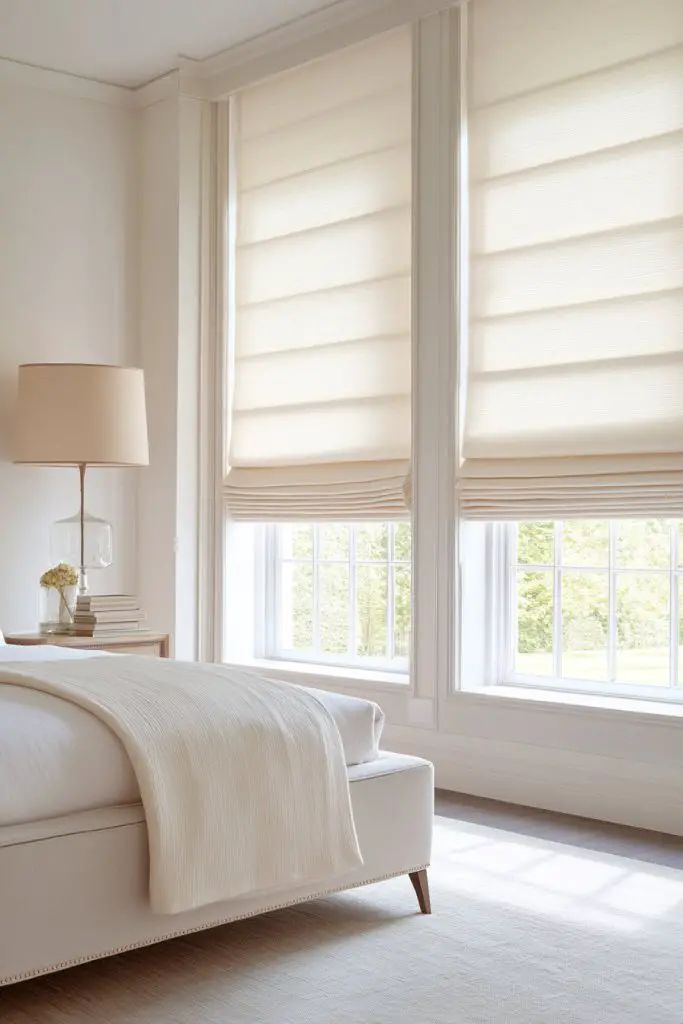
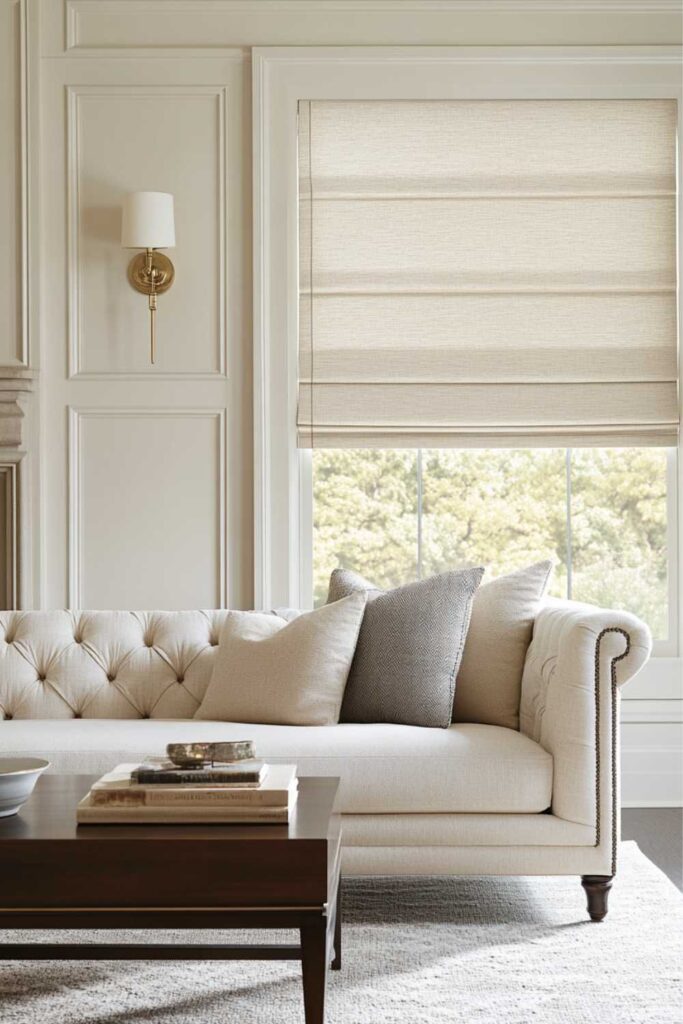
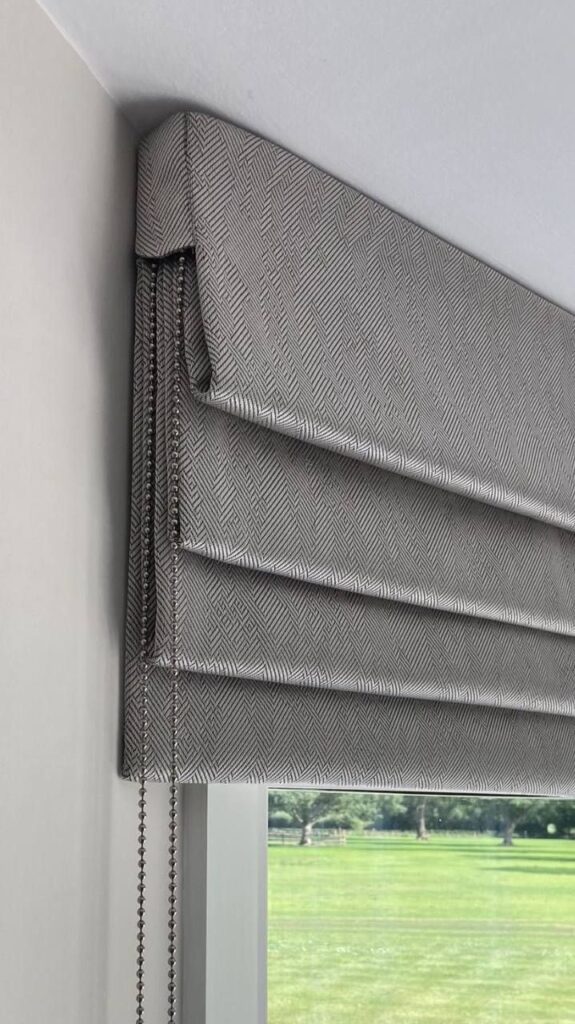
Roman shades solve the problem that most fabric treatments ignore: where does the material go when you open the window? Curtains pile on the floor or stack at the sides. Rollers scroll into a cylinder. Romans fold into crisp horizontal pleats that become a built-in valance — polished, deliberate, taking up no extra space.
Fabric choices run wide. Outside-mount a few inches above the frame to clear the glass fully when raised and to hide the uneven molding that’s essentially universal in pre-war stock. Add blackout lining and edge light reduces to a faint halo. Add a small motor and you gain push-button control for shades above radiators or bookcases.
The single limitation: Romans don’t work well on windows you need to open frequently, since the fabric stack at the top interferes with casement cranks and double-hung pulls on some frame styles. For fixed windows and casements you rarely open, they’re the most polished option on this list. Cost: Ready-made cotton Romans from $60 (IKEA’s SANELA adjacent options). Custom workroom shades in designer prints: around $300. The design payoff per dollar is high.
11. Wood and Faux-Wood Blinds: Adjustable Classic That Cleans Up Nicely
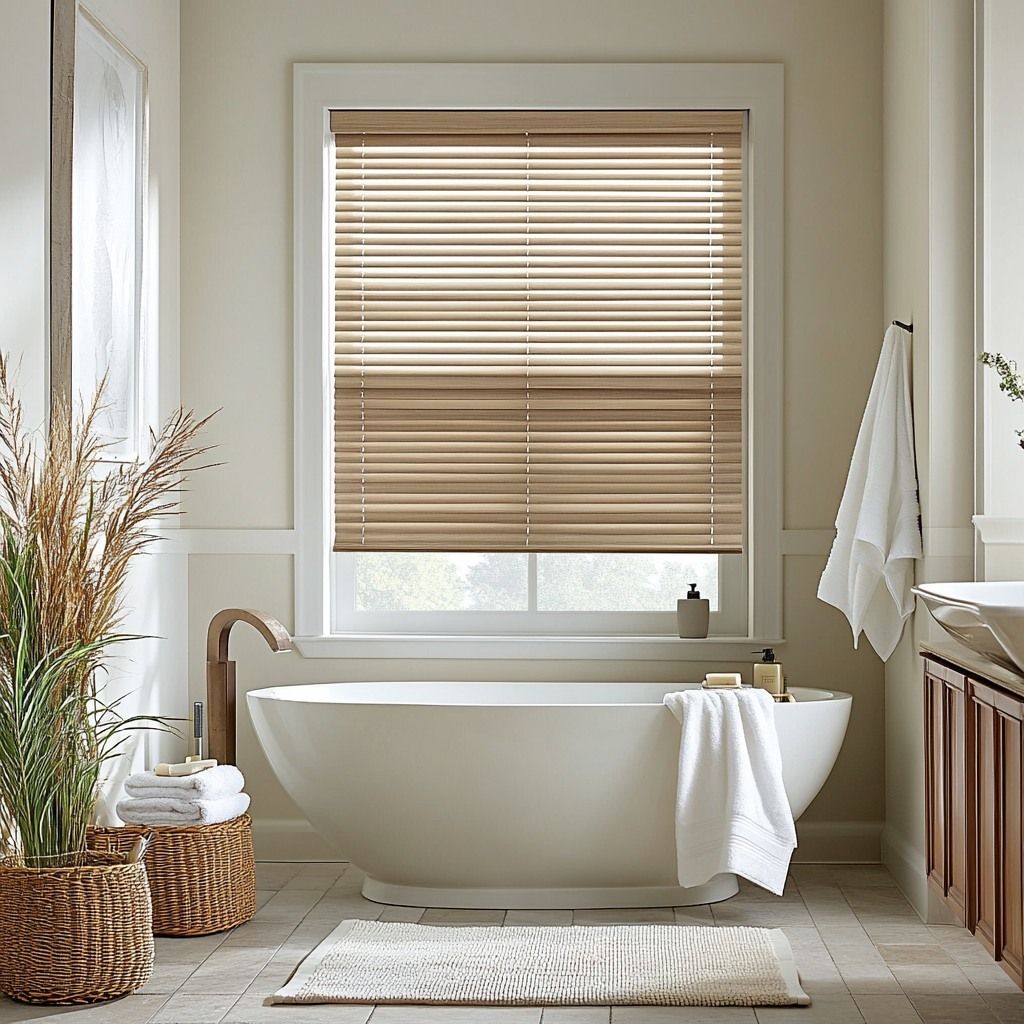
Most rental apartments come with thin aluminum mini-blinds that rattle in the wind, bend when you look at them, and communicate exactly nothing about design intention. Swapping them for two-inch wood or faux-wood slats is the highest return-per-dollar upgrade on this list — the difference is immediately visible and immediately significant.
Slat angle gives you real control. Tilt up: daylight grazes the ceiling while neighbors see only white backs. Tilt down: evening view returns without lifting a cord. That adjustability handles the constant NYC light-versus-privacy calculation without committing to fully open or fully closed.
Faux wood resists steam in kitchens and bathrooms. Real basswood lifts more easily on tall windows where accumulated weight matters. Both come cordless (federal standard since 2024), both dust in five minutes with a microfiber glove, and both store the original cheap blinds in a closet for deposit protection. Cost: Off-the-shelf blinds trimmed in-store: $50. Custom routeless versions with decorative tapes: $120. For renters who want durability, precise control, and a polished result on a moderate budget, this is the practical choice.
Smart Buying Tips for NYC Apartments
Measure Before You Buy
Pre-war frames warp. Loft lintels hide steel. Most sills dip a quarter-inch from left to right. Check width and height in three spots and use the smallest number so inside-mount shades clear the frame on day one. A $10 tape measure protects a $200 order.
Think in Layers, Not Single Moves
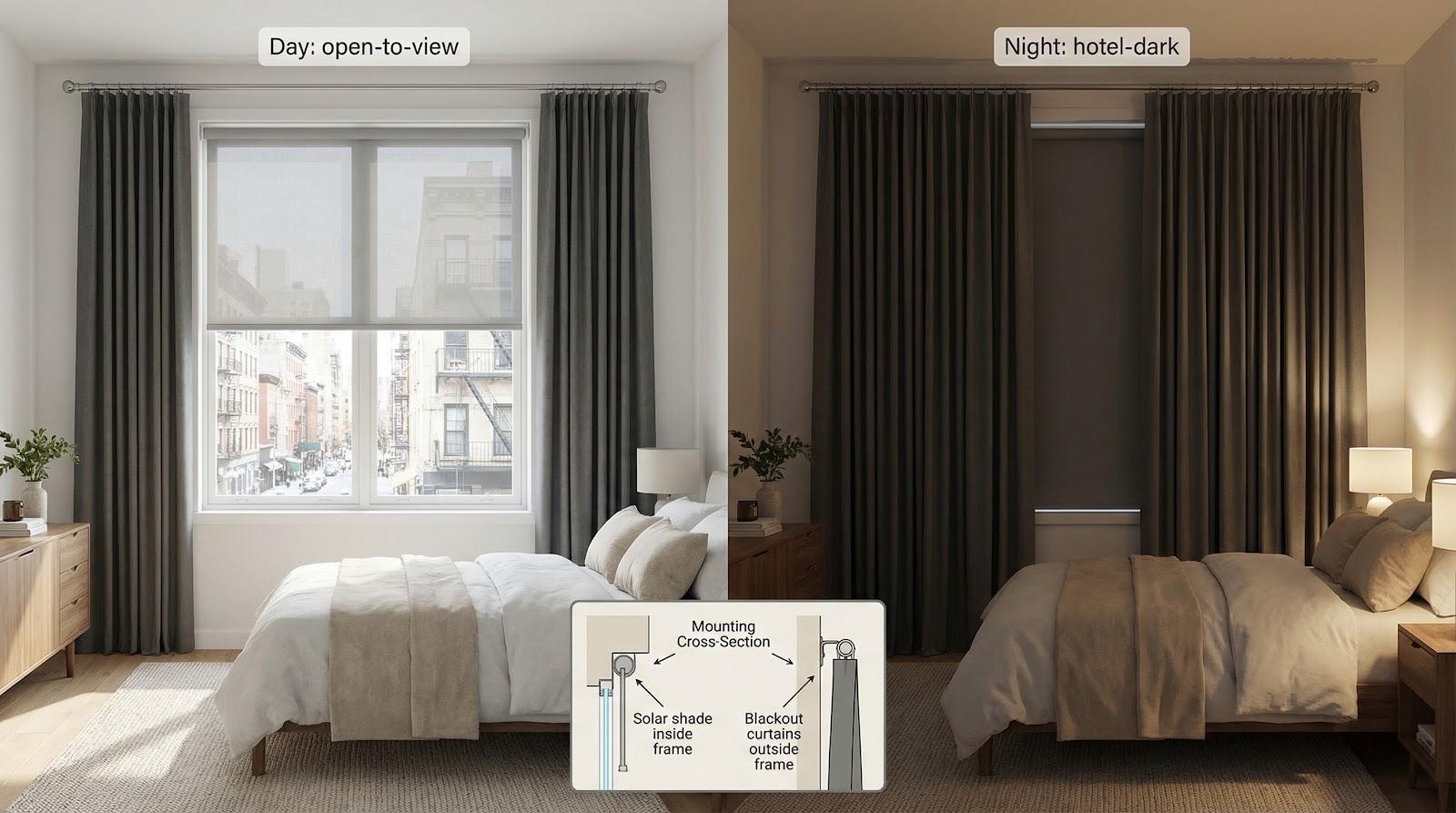
A solar screen handles daytime glare. Blackout curtains handle sleep. Pair them on the same window and you’ve covered every lighting condition without buying a single expensive product that tries to do everything. The ‘open-to-view by day, hotel-dark by night’ setup costs less than a motorized shade and outperforms most single solutions.
Match Treatment to Exposure
South- and west-facing glass needs solar fabric or blackout strength against afternoon and evening heat. East bedrooms need blackout against 6 am sunrise. North windows rarely overheat, so sheer curtains can capture the scarce, diffuse light without blocking it. Exposure drives the spec, not aesthetic preference.
Respect Landlord and Co-op Rules
Most co-ops require a white or off-white street-facing backing. Every product on this list ships with a neutral street side — confirm this detail before ordering. If drilling is banned, tension rods rated for 8+ lbs, adhesive brackets, or magnetic curtain rods (which grip metal frames without any hardware) all solve the mount problem cleanly.
Budget Where It Matters
Spend on the room that protects your sleep — usually the bedroom. Save in the kitchen or a guest room where privacy matters less. Many treatments travel to your next lease; buying at the right size for your current windows saves money at the next move.
Sample Before You Swipe
Order free swatches and tape them up for a full day under real NYC light. A gray that looks sophisticated on a monitor can read blue against a brick wall. Once a custom shade ships, returns are rare and sometimes impossible.
Mini-FAQ: Quick Answers to Common NYC Window Questions
How do I layer treatments without bulking up the window?
Use a slim solar shade inside the frame for daytime glare, paired with blackout drapes that close only at night. The hardware stays nearly invisible while covering every lighting need. Both treatments ride on separate hardware — the solar shade inside the frame, the curtain rod above it — so neither interferes with the other.
Can I install blinds if my lease bans drilling?
Yes. Tension-fit cellular shades sit inside the frame with no hardware at all. Adhesive brackets rated for 8 lbs per pair work on plaster and drywall, hold securely, and come off cleanly with a hair dryer. Magnetic curtain rods grip metal window frames directly. All three options satisfy strict management rules.
Do window treatments cut energy bills?
Measurably so. Cellular shades can trim heat loss by about 20% according to DOE research. Reflective solar fabrics reduce summer heat gain, which means the AC cycles less. In a Con Ed billing zone, that adds up across a New York summer.
What works around a window AC?
Mount two separate shades: one above the unit on the upper sash and a separate panel beside it if the frame is split. In winter, add an insulated AC cover and let a full-length curtain hide the whole assembly. Cellular shades cut around the unit profile particularly cleanly.
How do I keep treatments child-safe?
Buy cordless — it’s the federal standard for all stock blinds sold in the U.S. since 2024. If your rental still has old loop cords (common in apartments that haven’t been updated), ask the landlord to replace them under NYC Local Law requirements. Retrofit cord cleats are a legal minimum stopgap.
Will sheer curtains give privacy at night?
No. Once interior lights are on and outdoor light drops, sheers transmit light like a lampshade and offer no privacy. Combine them with blinds, frosted film, or blackout drapes if you need after-dark coverage. Sheer is a daytime-only privacy solution.
NYC Rules and Safety Snapshot
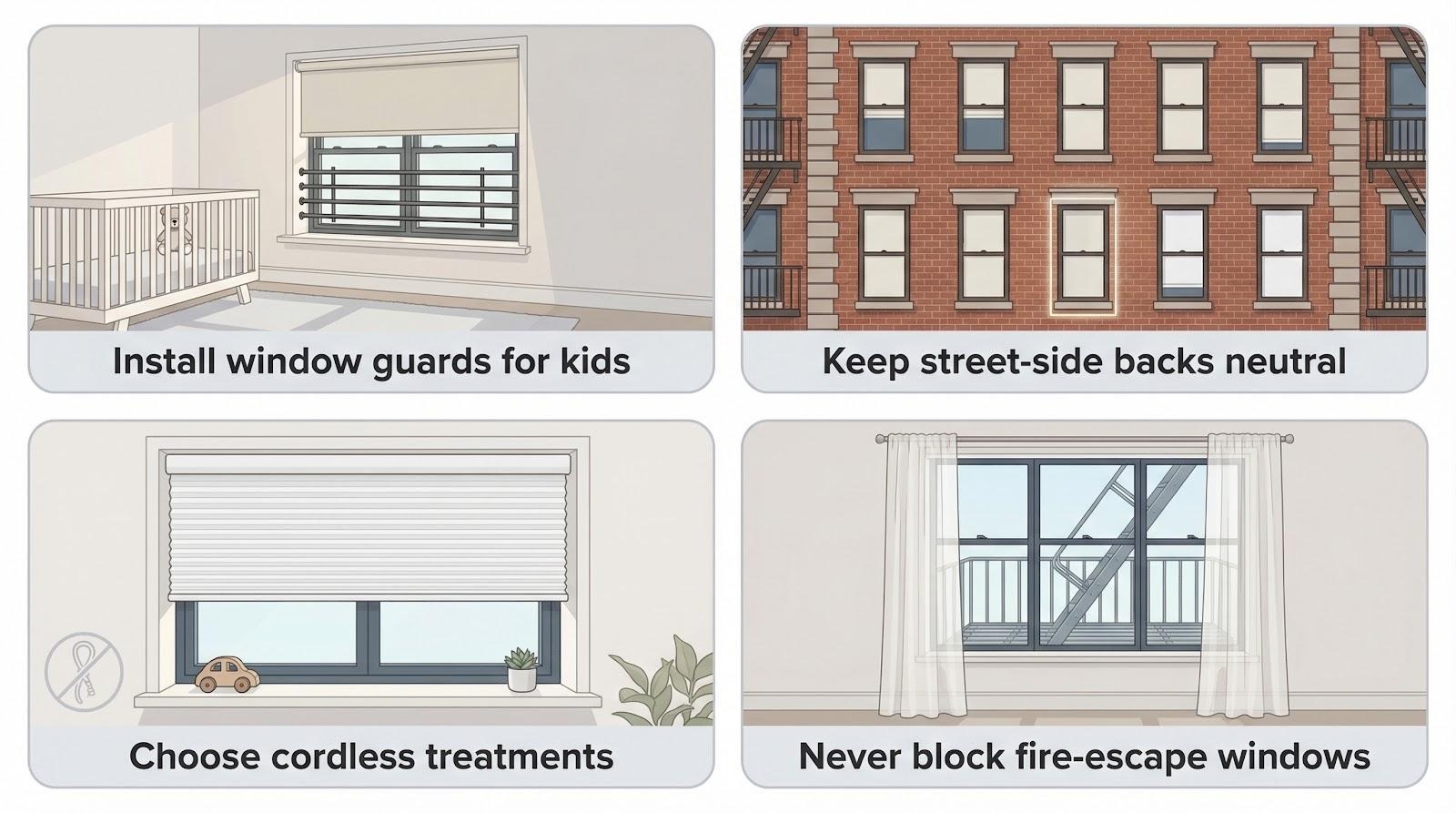
Window guards: Landlords must install approved metal window guards in apartments where a child 10 or younger lives. The rule covers every window except fire-escape routes. Measure shades to clear the horizontal bars, or outside-mount treatments above the guard frame entirely.
Street-side uniformity: Most co-ops and condos require white or off-white exterior backing. Confirm this before ordering custom — it’s listed on every reputable supplier’s product page.
Cordless standard: All stock blinds sold in U.S. stores since 2024 are cordless or have short, inaccessible cords. If your apartment has loop cords, replace or retrofit them before children or pets are present. Fire egress: Never block a fire-escape window with a treatment that requires effort to clear. Choose easy-slide shades, lightweight curtains, or any option that folds away in seconds. Unobstructed egress matters more than any design choice on this list.
Conclusion
New York windows are a layered problem — light, privacy, drafts, noise, lease rules, building codes, and the reality that every exposure behaves differently. The treatments that work best are the ones designed for the specific conditions of city apartment life, not just the ones that photograph well in a catalog.
Match your exposure to the right light-blocking specification. Layer where your lifestyle demands it. Respect the rules that keep your deposit safe and your neighbors happy. And measure three times — pre-war frames will humble you if you don’t.
For more inspiration on window design, check out our guide on best types of blinds for modern homes
- 41shares
- Facebook0
- Pinterest41
- Twitter0
- Reddit0