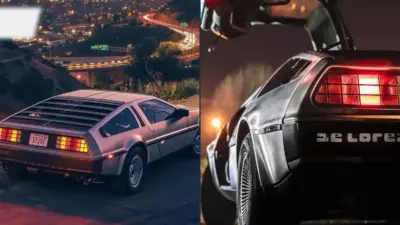
A friend of mine spent eighteen months saving for what he called his ‘sports car fund.’ He had a number in his head — $25,000 — and he was convinced that amount would buy him something genuinely exciting. The first time he sat in a new Mazda MX-5 Miata, he turned to me and said: ‘This is it. This is exactly what I wanted.’ Then he found out the sticker price: $30,430. He walked out deflated.
He ended up buying a 2019 Mazda MX-5 Club with 22,000 miles on it for $22,500. It was identical in almost every way to the new one. He’s done four track days in it since.
- What 'Affordable Sports Car' Actually Means in 2026
- The Top 10 Affordable Sports Cars of 2026
- #1 — Mazda MX-5 Miata (ND) — 2016–present
- #2 — Toyota GR86 — 2022–present
- #3 — Subaru BRZ — 2022–present
- #4 — Ford Mustang EcoBoost — 2024–present (S650)
- #5 — Nissan 370Z — used (2009–2020)
- #6 — Porsche Boxster 987 — used (2005–2012)
- #7 — Hyundai Genesis Coupe 3.8 V6 — used (2013–2016)
- #8 — BMW Z4 E85/E86 — used (2003–2008)
- #9 — Fiat 124 Spider Abarth — used (2017–2020)
- #10 — Audi TT Mk2 (8J) Quattro — used (2006–2014)
- Quick Comparison: All 10 Cars
- Five Things to Know Before You Buy
- The Bottom Line
- FAQ: Affordable Sports Cars 2026
- Q: What is the cheapest new sports car you can buy in 2026?
- Q: Is the Toyota GR86 or Subaru BRZ better value in 2026?
- Q: What's the best used sports car under $20,000 in 2026?
- Q: Are used European sports cars (Boxster, Z4) reliable enough to daily drive?
- Q: Does the 2026 Ford Mustang EcoBoost come with a manual transmission?
- Q: What sports car is best for track days on a budget?
That story captures what shopping for an affordable sports car in 2026 actually looks like. The market is genuinely good right now — new cars have crept up in price but used values have softened nicely, and the range of real sports cars you can buy for under $35,000 new (or under $20,000 used) is wider than it’s been in years.
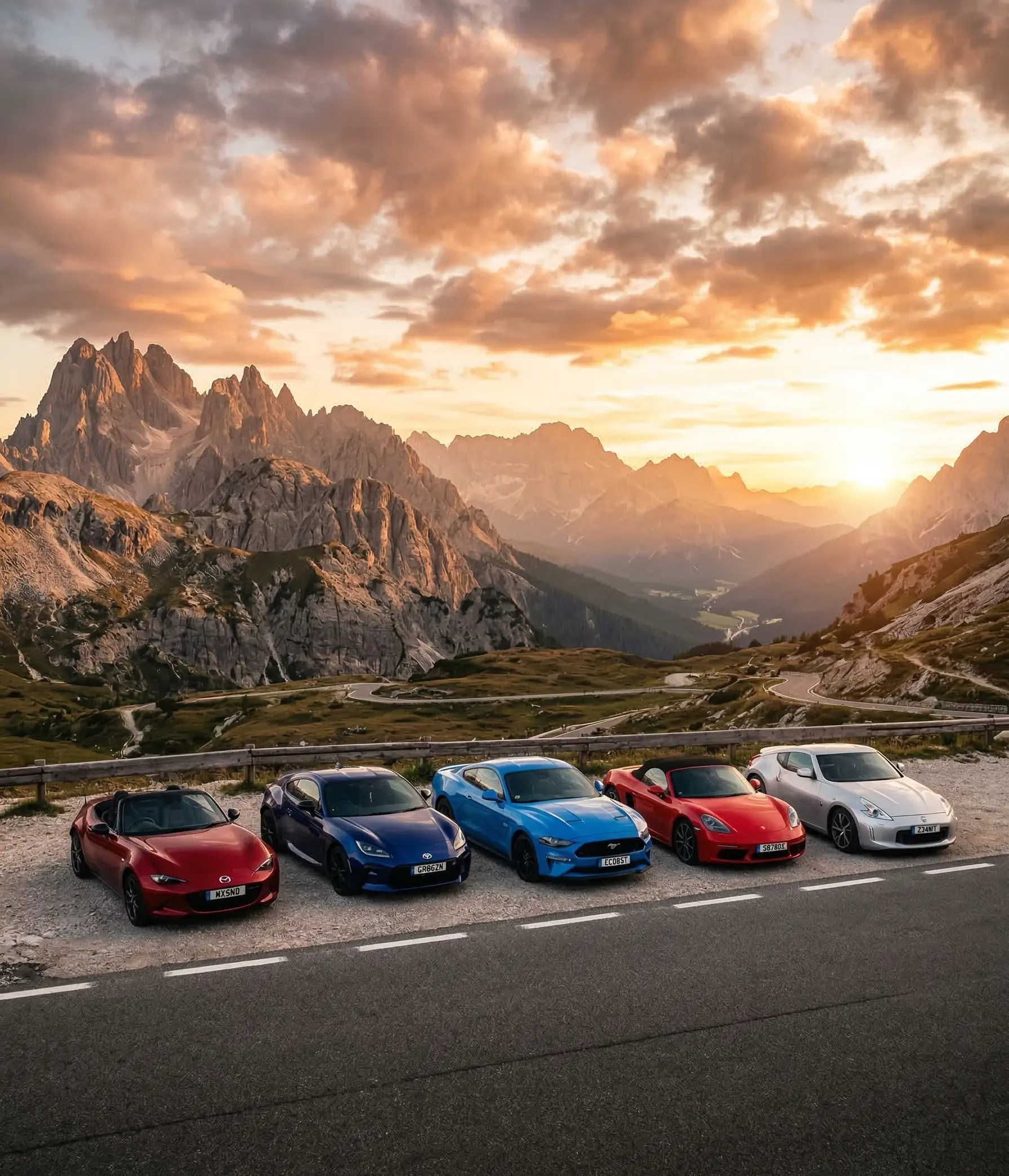
This list covers ten cars across that entire spectrum: cars I’ve driven, tracked, or researched thoroughly enough to give you an honest verdict rather than a press-release summary. Prices are current as of March 2026.
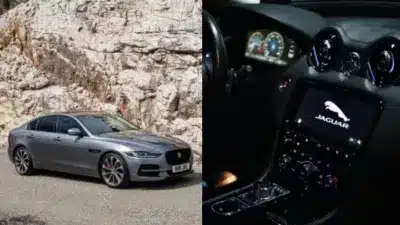
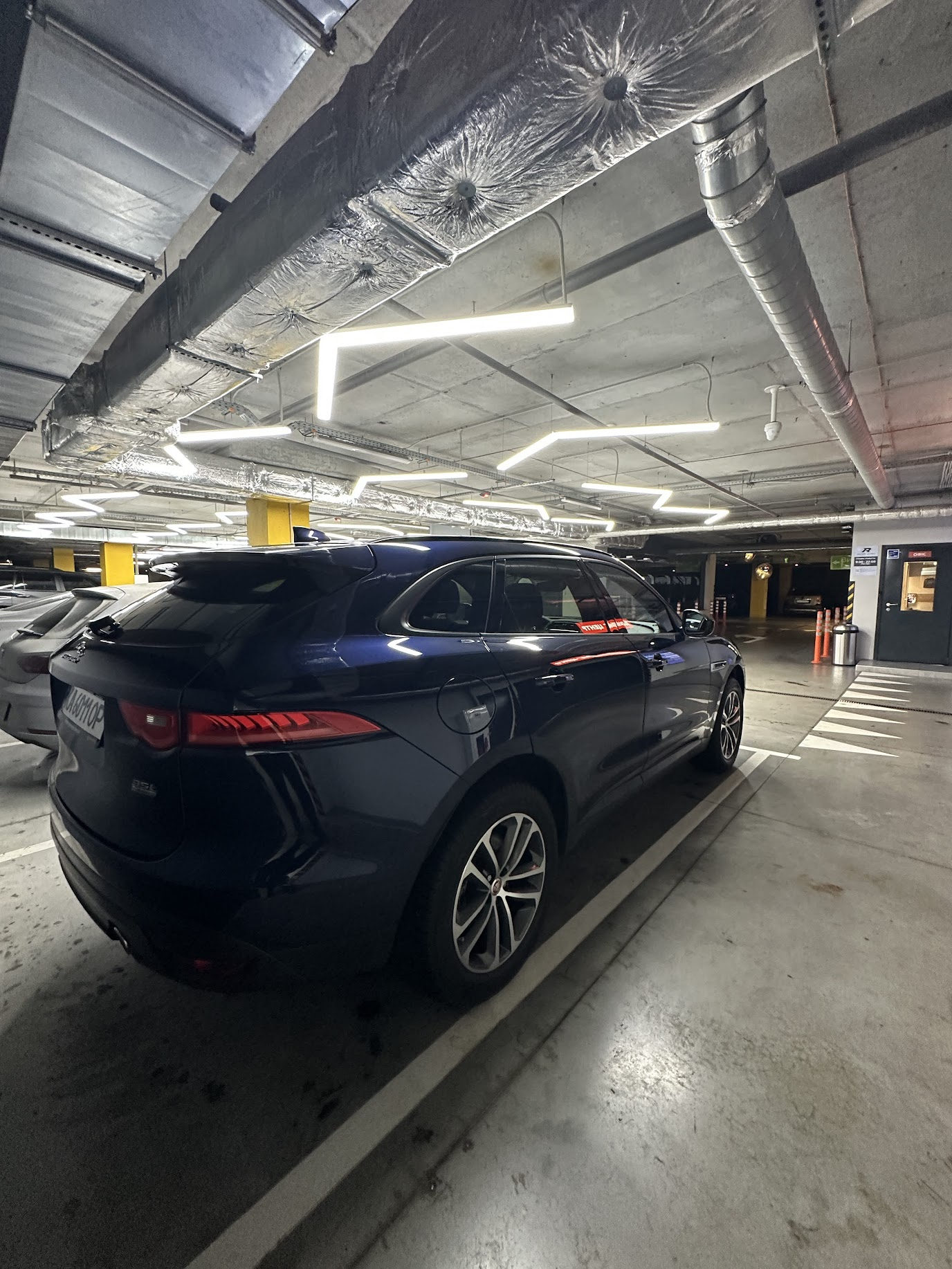
The only thing I didn’t add was my beloved Jaguar F Type. Prices for it are very volatile. But after driving my F Pace crossover for two years, I fell in love with this brand of car. They’re dynamic, graceful, and stylish. But let’s get back to our list of cars.
What ‘Affordable Sports Car’ Actually Means in 2026
The phrase gets thrown around loosely. For this list, ‘affordable’ means one of two things: under $40,000 new, or under $25,000 on the used market for a recent clean example. But there’s a second filter that matters just as much as price — design integrity.
The cars on this list were designed as sports cars from the first sketch on the page: proportions dictated by rear-wheel drive, cabins built around driver position, exterior surfaces that follow mechanical logic rather than marketing briefs. A crossover with a sport badge is not a sports car. A hot hatch with a body kit is not a sports car. The cars here are.
In 2026, the boundary between ‘sports car’ and ‘performance car’ matters too. I’m looking for cars where the design — exterior and interior — is a genuine expression of the engineering underneath. The Porsche Boxster’s silhouette is the shape it is because of the mid-engine layout. The Miata’s hood length is what it is because of the front-engine rear-drive weight distribution.
The GR86’s low stance is the visual consequence of a flat-four engine sitting below the bonnet line. Good automotive design and good engineering reinforce each other, and every car on this list demonstrates that relationship — at prices that don’t require a second mortgage.
- New budget: $29,000–$40,000 MSRP. Covers the MX-5, GR86, BRZ, base Mustang EcoBoost.
- Used sweet spot: $12,000–$25,000 for cars 4–12 years old. Gets you a 370Z, Genesis Coupe, Boxster 986/987, early BRZ, or BMW Z4.
- What you’re giving up: infotainment sophistication, modern driver aids, warranty peace of mind. What you’re gaining: a purer driving experience, lower depreciation hit, and often — a better chassis.
The Top 10 Affordable Sports Cars of 2026
#1 — Mazda MX-5 Miata (ND) — 2016–present
Price: From $30,430 new (2026); $18,000–$26,000 used | Power: 181 hp / 151 lb-ft | 0–60: ~5.7 sec (manual)
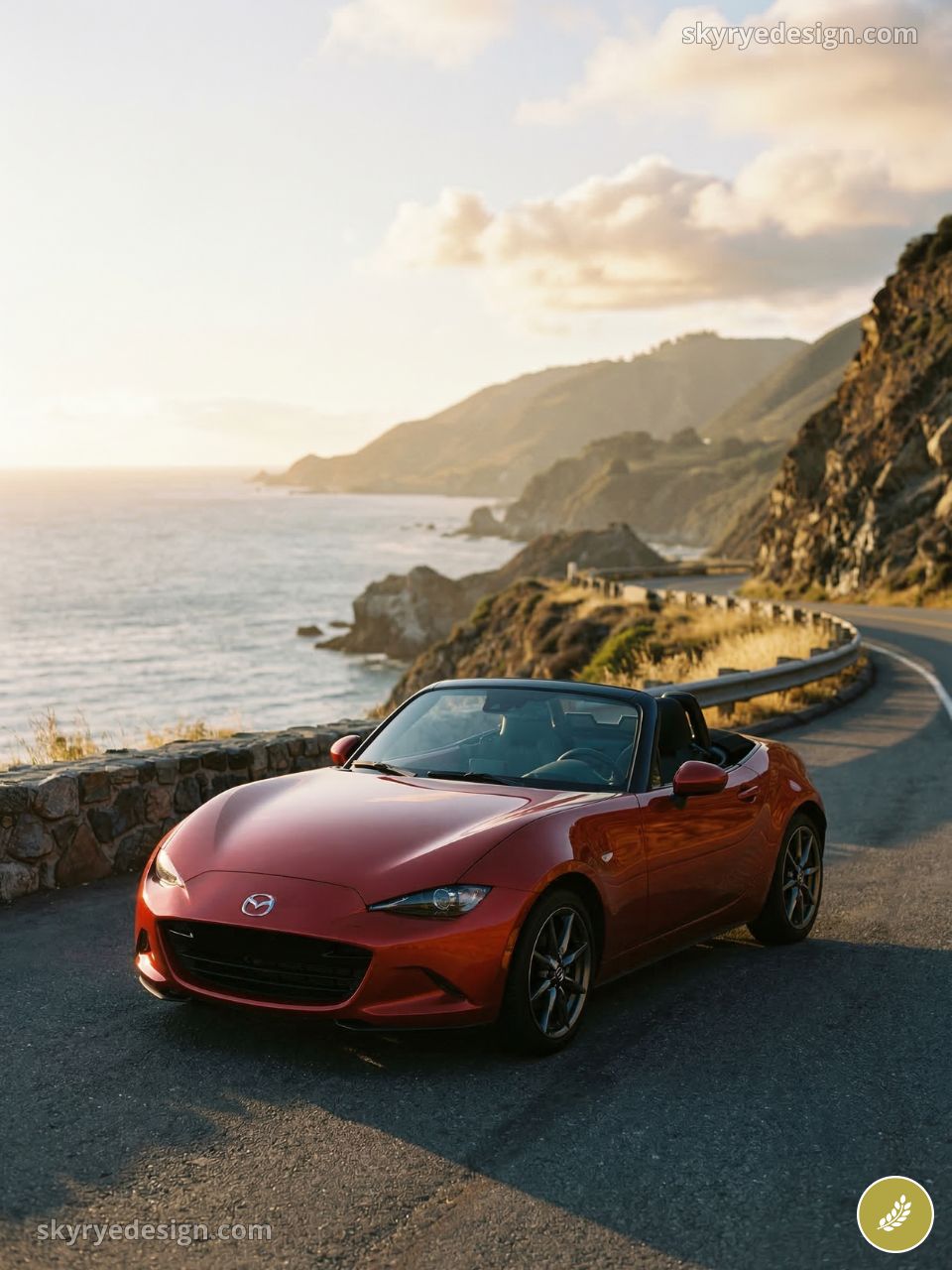
Verdict: The definitive answer. Buy with confidence.
Design first: the ND Miata’s proportions are a textbook exercise in what automotive designers call the long-hood/short-deck formula — a short tail, a cab pushed rearward, and a bonnet that implies rear-wheel drive before you’ve seen the badge. It’s not a coincidence that the car looks exactly right from every angle; Mazda’s KODO ‘Soul of Motion’ design language reached its clearest expression here, in a car that costs $30,430.
The RF Retractable Fastback variant is arguably even stronger as a design object — the powered hardtop closes in 13 seconds and creates a coupe silhouette that rivals cars costing twice as much to look at.
Mechanically: 181 hp, 2,366 lbs, 50/50 weight distribution, and one of the best six-speed manuals under $50,000. Club trim ($33,930) adds Bilstein shocks and a limited-slip differential. Miata sales rose 7.7% in 2025 despite the car being a decade into its generation, because the design and the dynamics are still correct.
#2 — Toyota GR86 — 2022–present
Price: From $32,395 new (2026) | Power: 228 hp / 184 lb-ft | 0–60: ~6.1 sec (manual)
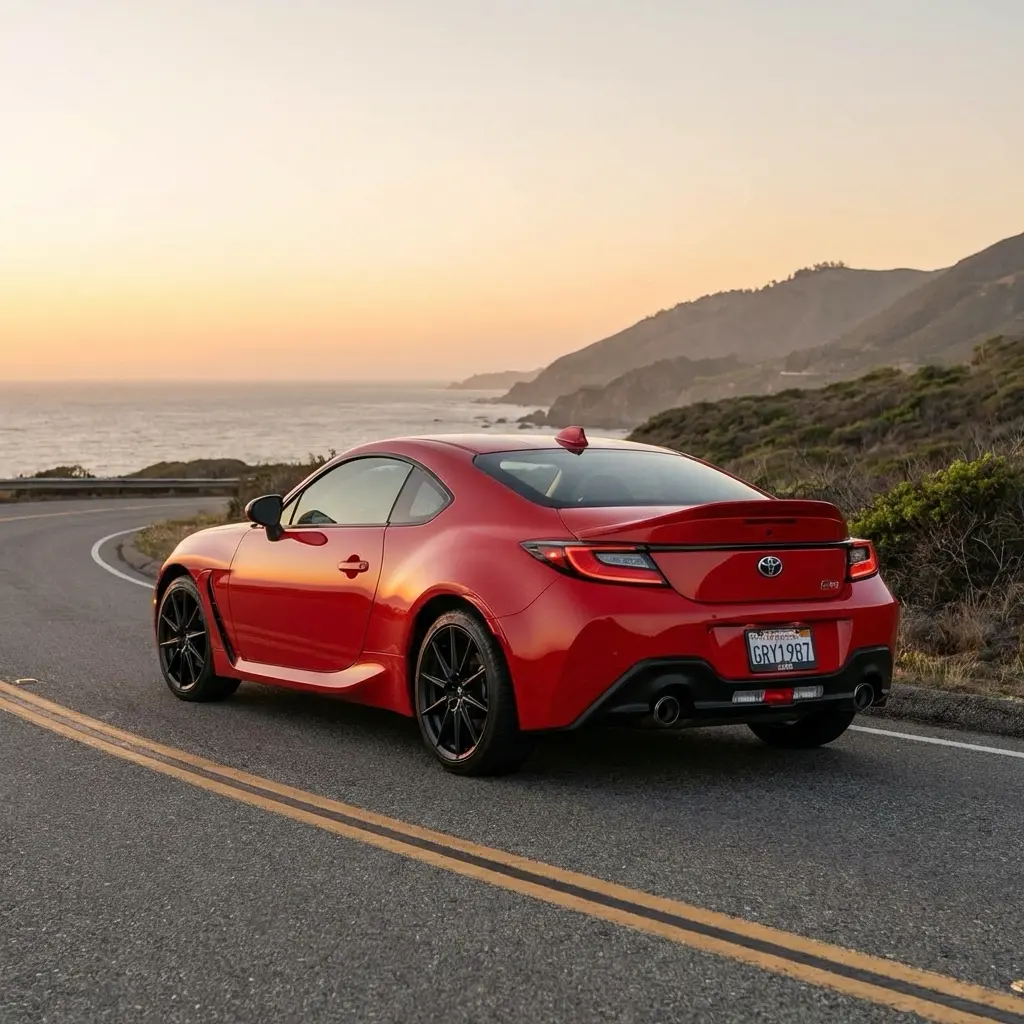
Verdict: Best chassis for the money. Full stop.
The GR86’s design brief was blunt: build a sports coupe with the lowest possible centre of gravity and the shortest possible nose. Toyota achieved both by using a horizontally opposed (boxer) engine that sits lower in the bay than any conventional inline or V configuration — and the exterior proportions follow that mechanical logic directly. The wide, low stance isn’t styling; it’s the visual consequence of the engineering.
The second-generation bodywork (2022) sharpened the character: cleaner flanks, a more aggressive front splitter, and a rear that reads genuinely athletic rather than decorative. U.S. News named it the 2026 Best Sports Car for the Money. The 2.4-litre flat-four now produces 228 hp with a real torque curve; the six-speed manual is excellent; and the chassis delivers a quality of steering feedback you normally associate with cars costing $15,000 more. Small rear seats and a usable trunk make this the most livable design on the new-car list.
#3 — Subaru BRZ — 2022–present
Price: From $37,055 new (2026) — significant price increase | Power: 228 hp / 184 lb-ft | 0–60: ~6.1 sec (manual)
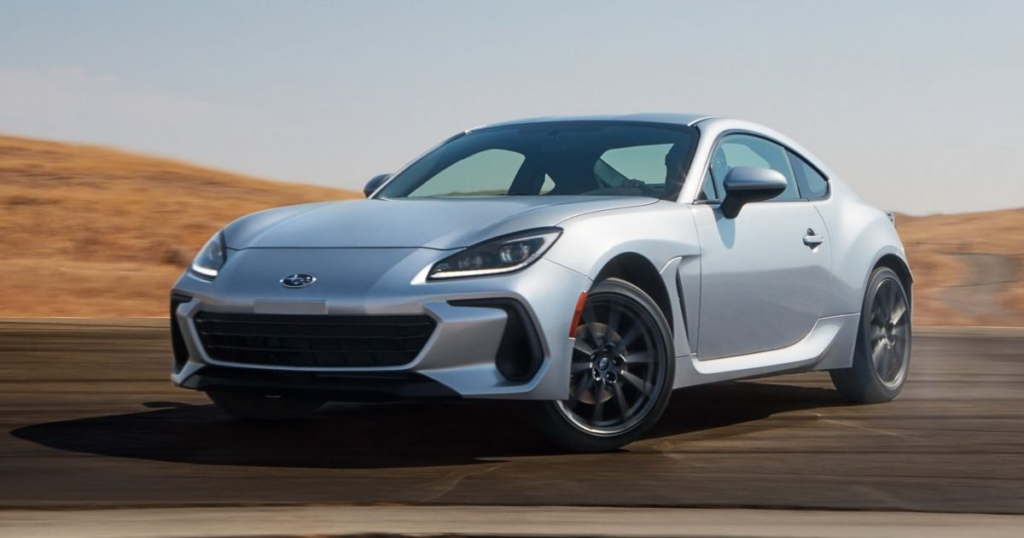
Verdict: Identical to the GR86 but $4,600 pricier in 2026. Shop used.
Where the GR86 reads aggressive, the BRZ makes slightly different design choices — softer hood lines, a more restrained rear treatment, and an interior that prioritises texture and warmth over the GR86’s sportier graphics.
Neither is objectively better; they appeal to different design temperaments. The mechanical package is identical: same 228 hp boxer engine, same rear-wheel-drive platform, same superb six-speed manual.
The 2026 problem is price: Subaru discontinued the entry-level Premium trim, pushing the starting point to $37,055 — $4,660 more than the GR86 for the same running gear. As a new car purchase, that’s hard to defend on value. As a used buy, it’s compelling: 2022–2023 BRZ Premiums in good condition are $26,000–$30,000, and the slightly softer suspension tune makes them arguably better suited to everyday road use than the GR86’s track-biased setup.
#4 — Ford Mustang EcoBoost — 2024–present (S650)
Price: From $34,635 new (2026 EcoBoost Fastback) | Power: 315 hp / 350 lb-ft | 0–60: ~5.8 sec (auto only)
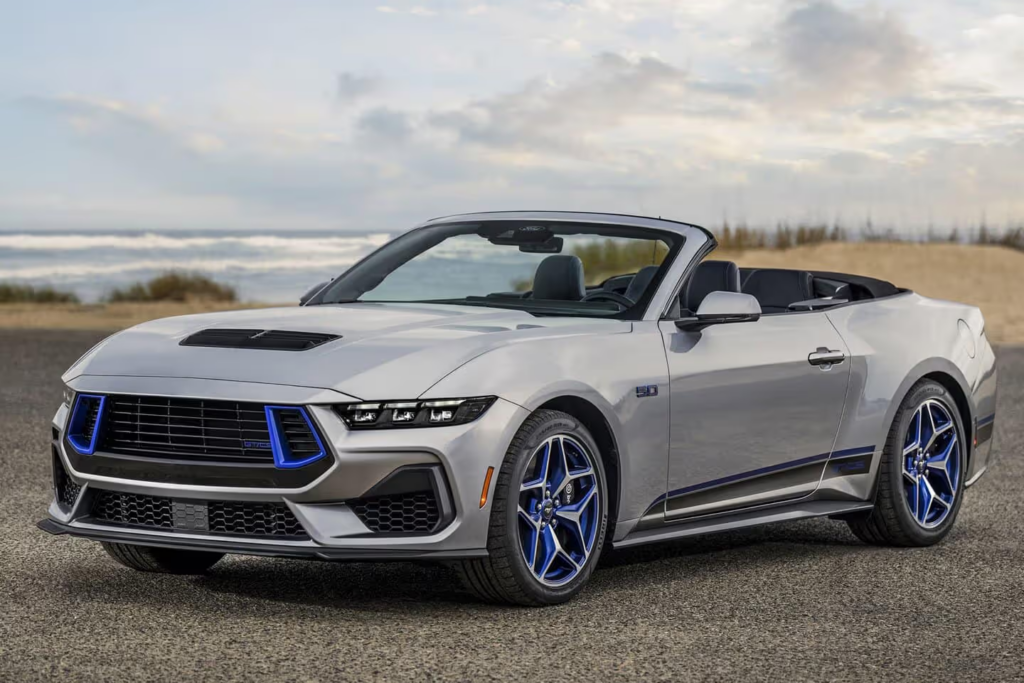
Verdict: Most horsepower per dollar. Important caveat on the manual.
The S650 Mustang’s design is a deliberate act of continuity. Ford’s chief designer retained the fastback silhouette, the wide haunches, and the tri-bar taillights that make a Mustang readable from 200 metres away — while updating the surface language to read as contemporary rather than retro. The result is one of the most resolved examples of heritage design in current production: a car that looks exactly like a Mustang should, without looking like a museum piece.
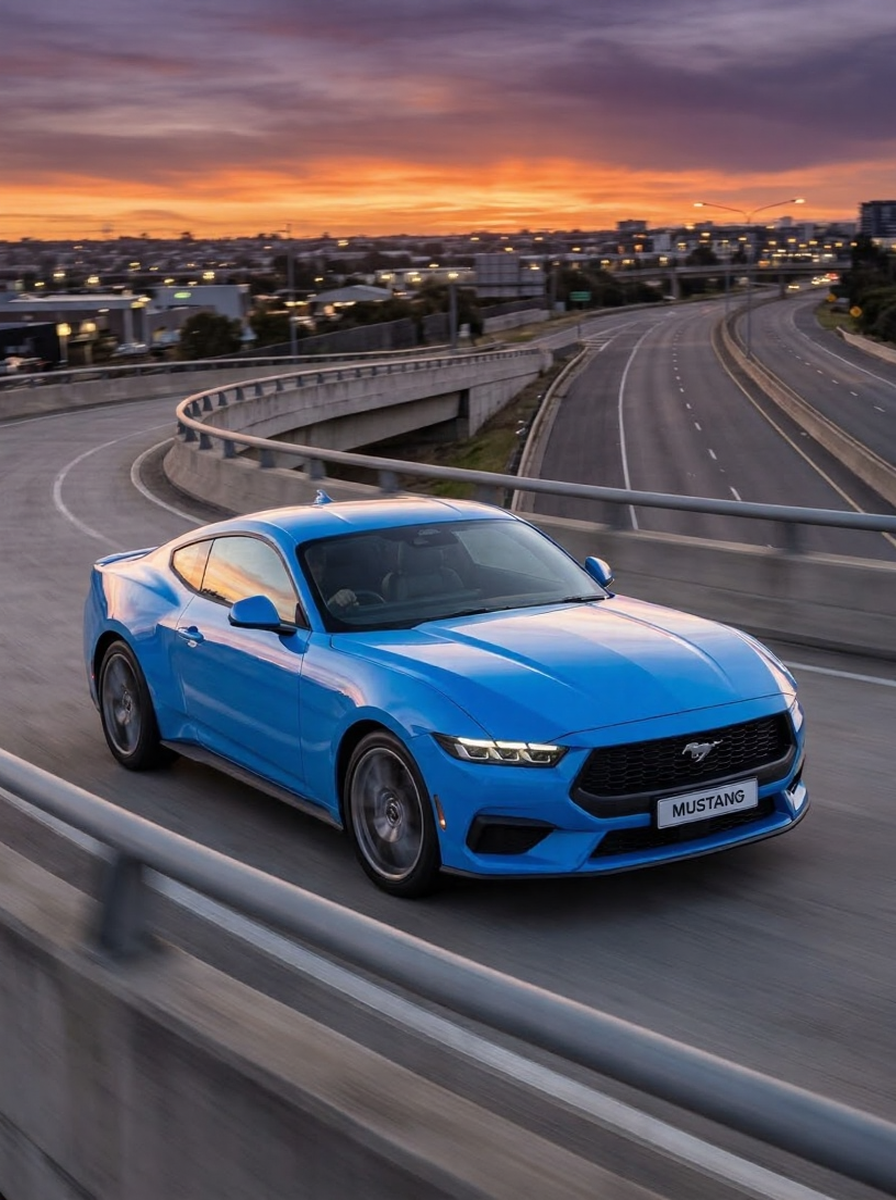
The wide, flat hood gives the car visual mass; the short rear deck completes the pony car proportions. Under that hood, the EcoBoost produces 315 hp and 350 lb-ft from a 2.3-litre turbo-four — the most output on the new-car section of this list. The caveat: Ford dropped the manual option on the EcoBoost for 2026 (auto-only). If a gearbox matters to you, a used S550 EcoBoost (2021–2023) with a six-speed manual is available for $22,000–$28,000 and is the better enthusiast buy.
#5 — Nissan 370Z — used (2009–2020)
Price: $14,000–$28,000 depending on year/condition | Power: 332 hp / 270 lb-ft (350 hp NISMO) | 0–60: ~5.0 sec
Verdict: The most V6 soundtrack per dollar available.
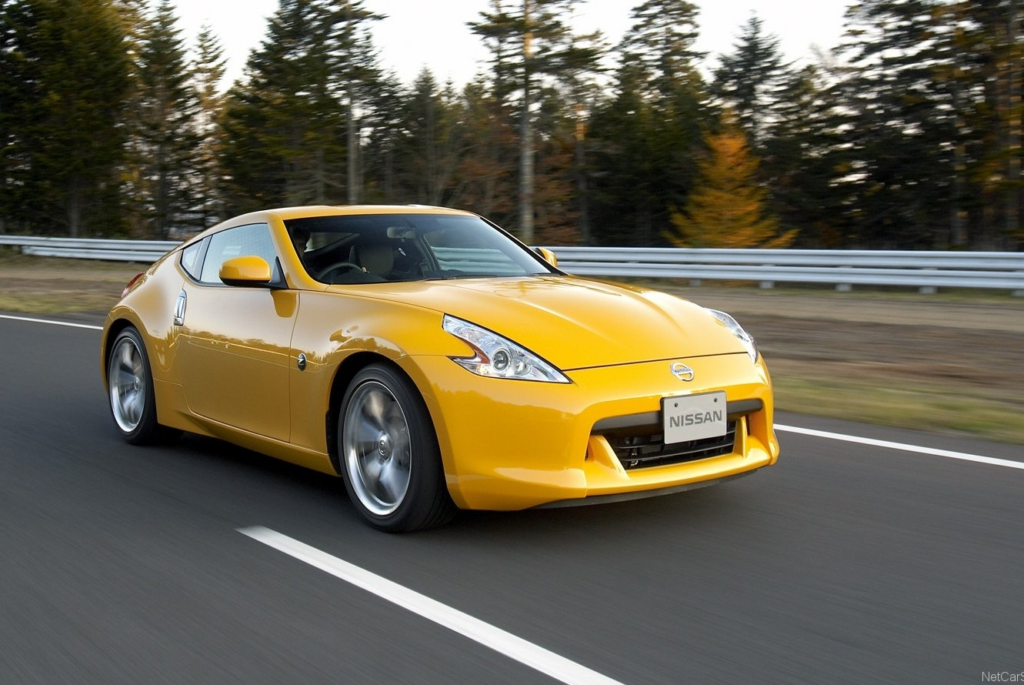
Designed by Ajay Panchal at Nissan’s California studio in 2008, the 370Z established a design language that was deliberately more muscular and compact than the longer, softer 350Z it replaced. The wide fenders — particularly at the rear — are functional: they cover a 225/50-front and 245/45-rear tyre combination, and the visual width they create is earned rather than decorative.
The short wheelbase and the dramatically raked windscreen give the car a cab-forward tension that still reads as purposeful in 2026. Mechanically, it remains genuinely special: a naturally aspirated 3.7-litre V6 producing 332 hp with hydraulic power steering — feedback that electronic systems have not yet convincingly replicated. I’ve had the 370Z on track twice. It’s eager at the limit, communicative, and the exhaust note at 6,500 rpm is one of the better sounds available under $25,000. The interior is dated. The dynamics are not.
#6 — Porsche Boxster 987 — used (2005–2012)
Price: $12,000–$28,000 depending on spec | Power: 240–310 hp (Boxster S) | 0–60: ~5.5–6.5 sec
Verdict: The best chassis on this list. Budget for maintenance.
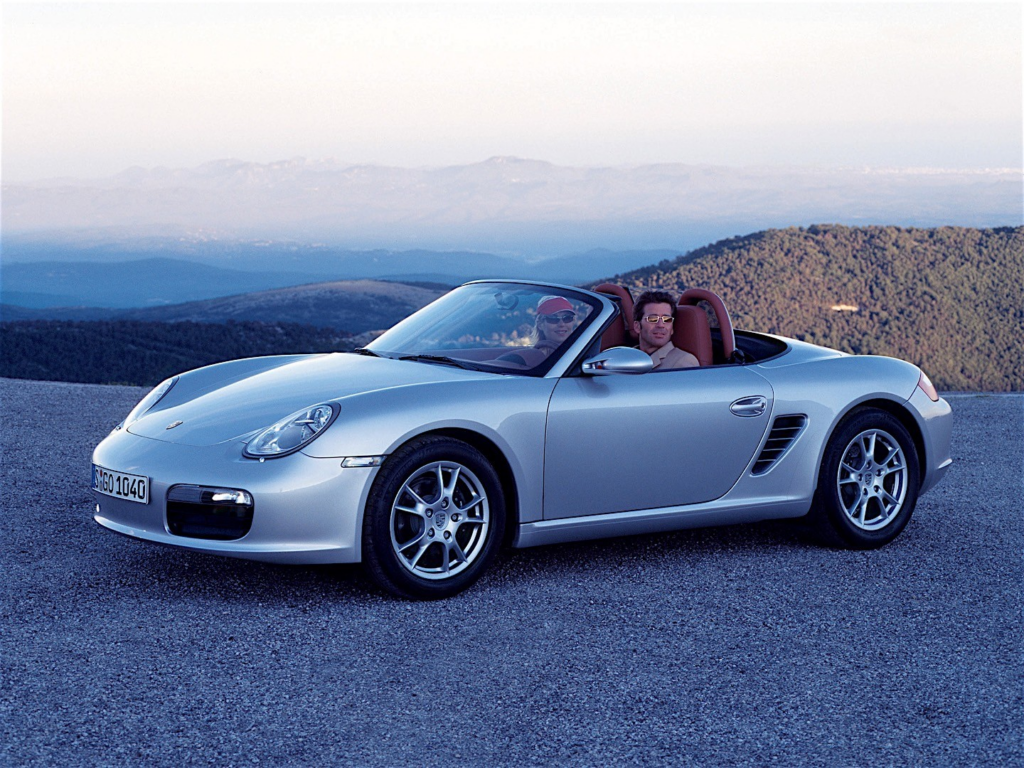
The 987 Boxster’s silhouette is a triumph of functional minimalism. Every curve is load-bearing: the wide front and rear overhangs exist to channel cooling air to the mid-mounted flat-six; the low roofline is dictated by the occupant position required for a mid-engine weight distribution; the absence of a B-pillar is a structural consequence rather than a styling choice. Harm Lagaay and his team at Weissach produced a shape in 1996 (refined for the 987 in 2005) that has aged almost imperceptibly — partly because it was never fashionable, only correct.
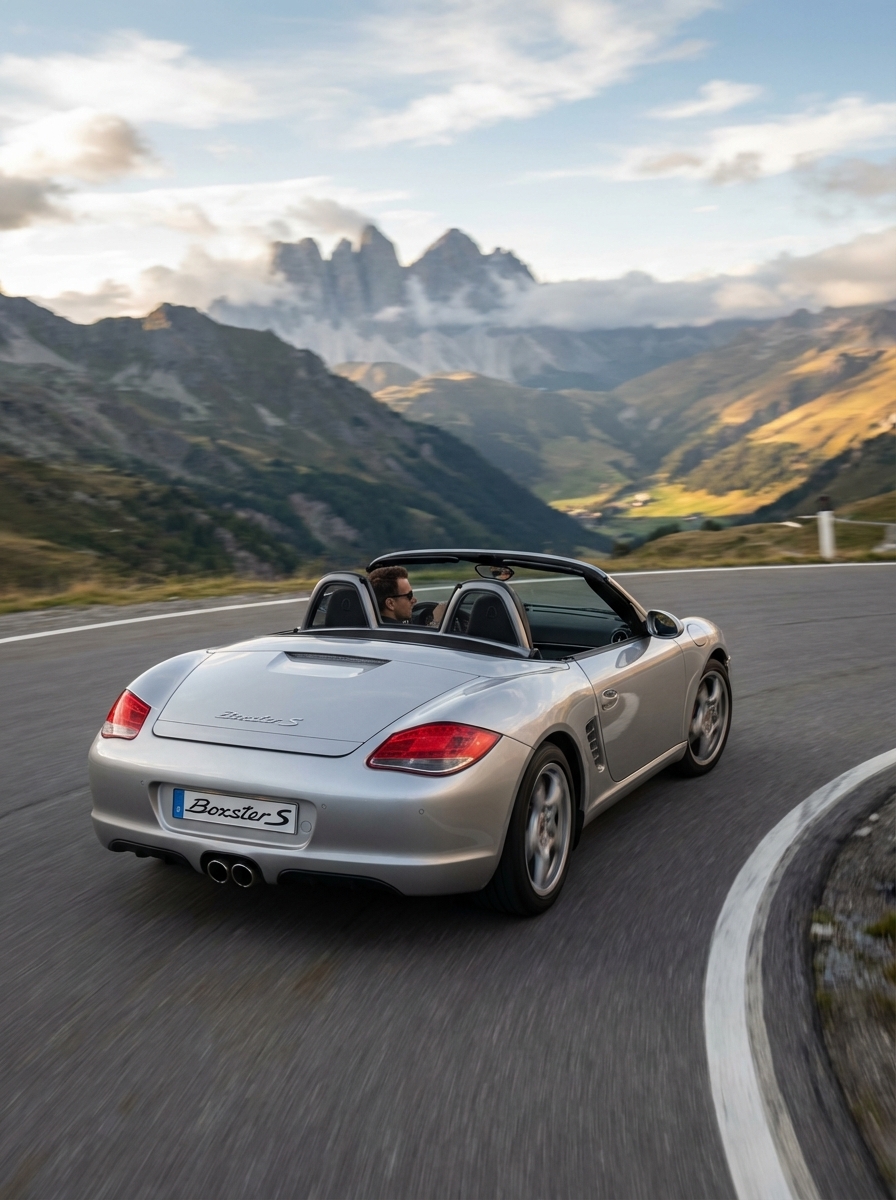
The 987’s proportions follow a single governing logic: everything serves the mid-engine layout, and the mid-engine layout serves handling. With the flat-six sitting directly behind the driver’s head, weight distribution is near-perfect, and the chassis communicates in a way no front-engine car on this list can match. I’ve owned a 987 Boxster S for two years. The exhaust note at 6,000 rpm is one of the great sounds in motoring at any price. Budget $1,500–$2,500/year for maintenance; pre-purchase inspection ($200–$300) is non-negotiable.
#7 — Hyundai Genesis Coupe 3.8 V6 — used (2013–2016)
Price: $10,000–$22,000 depending on condition | Power: 348 hp / 295 lb-ft | 0–60: ~5.3 sec
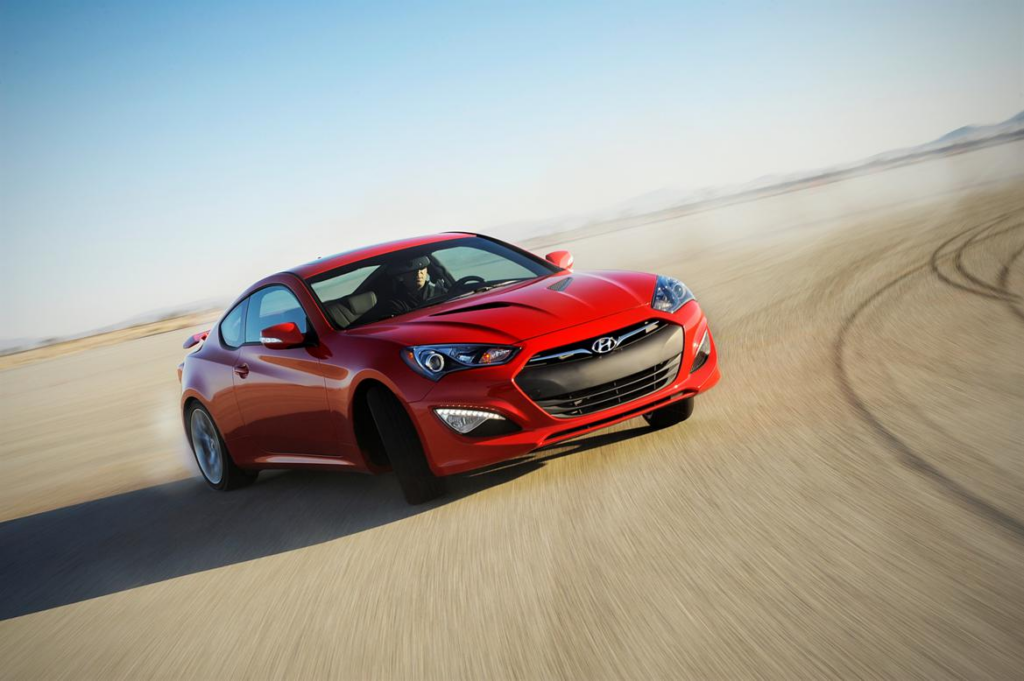
Verdict: Underrated, underpriced, and genuinely fast.
The Genesis Coupe BK2 (2013–2016) is a case study in what happens when a manufacturer takes design seriously on a budget product. The fluidic sculpture language Hyundai introduced under designer Peter Schreyer — the cascading grille, the sharp character line running from the headlights across the door and into the tail — gave the Genesis Coupe a visual coherence that most sports cars at its price point lacked entirely.
The long hood, short trunk, and wide rear haunches communicate rear-wheel drive correctly; the proportions aren’t faked. Mechanically, it backs that up: the 3.8-litre V6 produces 348 hp, making it the most powerful car on the used section of this list.
The Track pack (Brembo brakes, LSD, stiffer suspension) turns it into something genuinely quick. Its reputation suffered from unfair comparisons to Porsches it never claimed to rival. Evaluated on its own terms — a properly designed, powerful sports coupe available for $10,000–$22,000 — it’s an exceptional buy.
#8 — BMW Z4 E85/E86 — used (2003–2008)
Price: $10,000–$20,000 (Z4 M models: $22,000–$32,000) | Power: 189–330 hp (engine dependent) | 0–60: ~5.0–7.0 sec
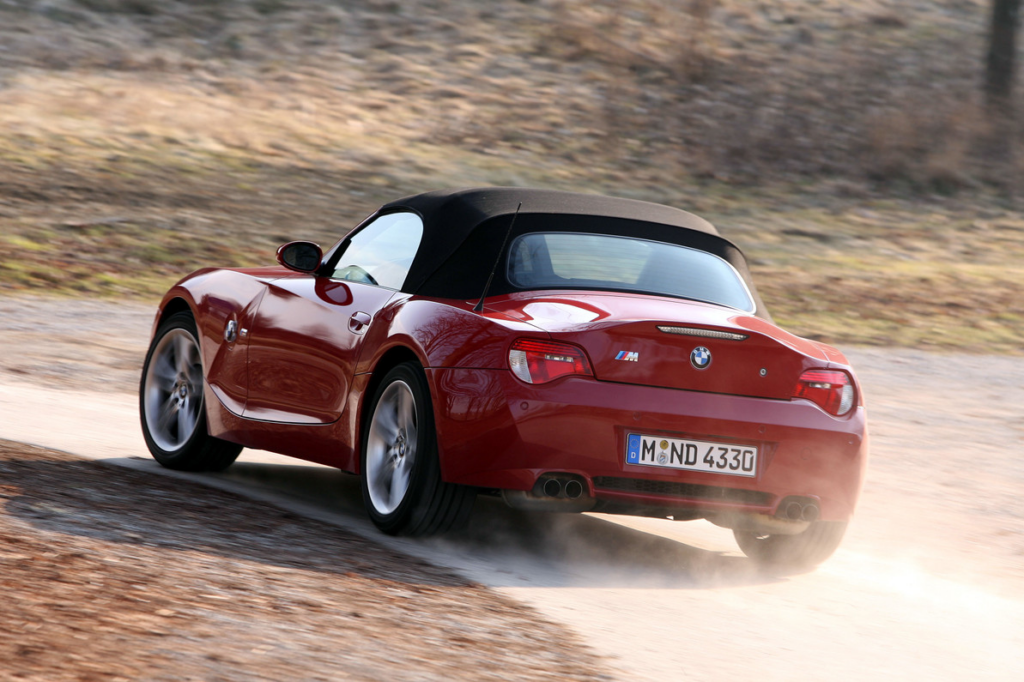
Verdict: German inline-six magic at Japanese car prices.
Chris Bangle’s E85 Z4 was divisive when it arrived in 2003 — the flame surfacing, the dramatic crease line running from the front wheel arch to the tail, the compressed rear deck. In 2026, with twenty years of distance, it reads differently: as one of the most genuinely original roadster designs of its era, and the E86 coupe (2006–2008) more so.
The coupe’s roofline creates a profile that has no exact precedent — the Shooting Brake reference was always too reductive — and it’s now sought after specifically as a design artefact.
Both E85 and E86 benefit from BMW’s naturally aspirated inline-six engines, which are the mechanical equivalent of the exterior design: technically accomplished in a way that reveals itself progressively rather than immediately. The 3.0i (225 hp) and 3.0si (255 hp) are the correct choices for their linearity and soundtrack.
The S54-engined Z4 M (330 hp) is a modern classic at $22,000–$32,000. Maintenance runs $1,000–$2,000 per year for a well-sorted example; service records and a PPI are essential.
#9 — Fiat 124 Spider Abarth — used (2017–2020)
Price: $16,000–$24,000 for a clean example | Power: 164 hp / 184 lb-ft (Abarth) | 0–60: ~6.5 sec
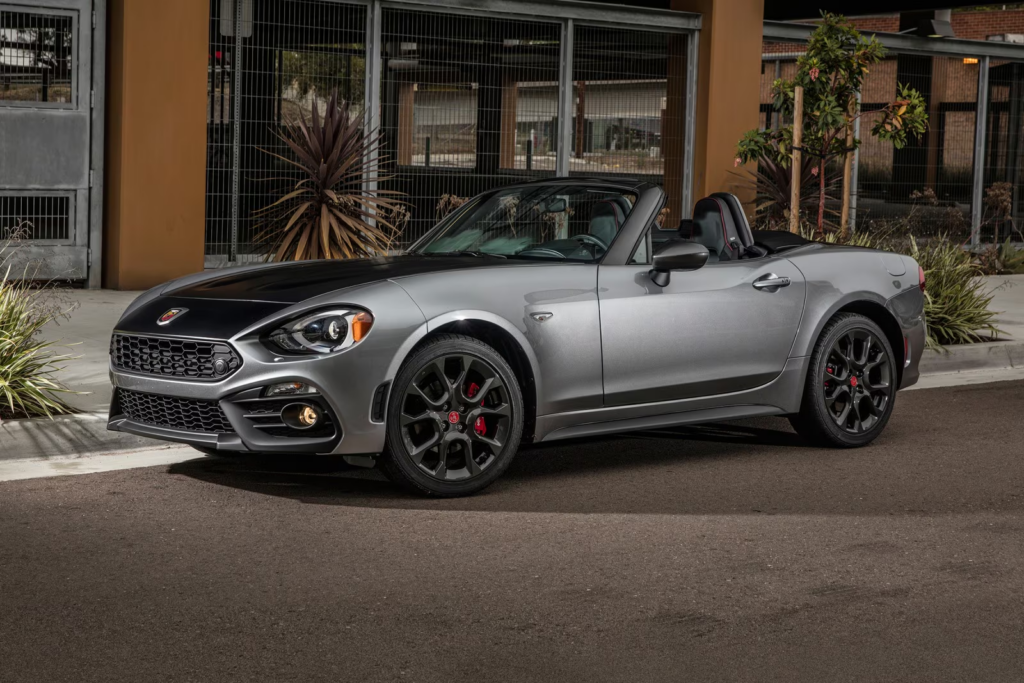
Verdict: Italian styling, Miata reliability, unique character.
The 124 Spider’s design brief was essentially an act of archaeology. Fiat’s Centro Stile team studied the original 1966 Fiat 124 Sport Spider — designed by Tom Tjaarda at Pininfarina — and extracted its defining proportions: the long nose, the gentle Kamm-tail treatment, the grille geometry. What they built in 2016 is not a retro pastiche; it’s a contemporary roadster that carries the visual DNA of the original without imitating it directly.
The nose is longer than the Miata’s (it shares the platform but not the bodywork), which gives it a distinctly Italian silhouette — more relaxed, less aggressive, more concerned with elegance than attitude. Underneath: the ND Miata’s chassis and convertible mechanism, which is one of the great compliments one car can pay another.
The Abarth version adds a turbocharged 1.4-litre MultiAir engine (164 hp), a more assertive exhaust note, and a Scorpion badge that signals intent without shouting. It was discontinued in 2020 and didn’t sell in volume, which makes clean used examples an unusual opportunity.
#10 — Audi TT Mk2 (8J) Quattro — used (2006–2014)
Price: $10,000–$22,000 depending on spec | Power: 200–268 hp (TTS) | 0–60: ~5.7–6.5 sec
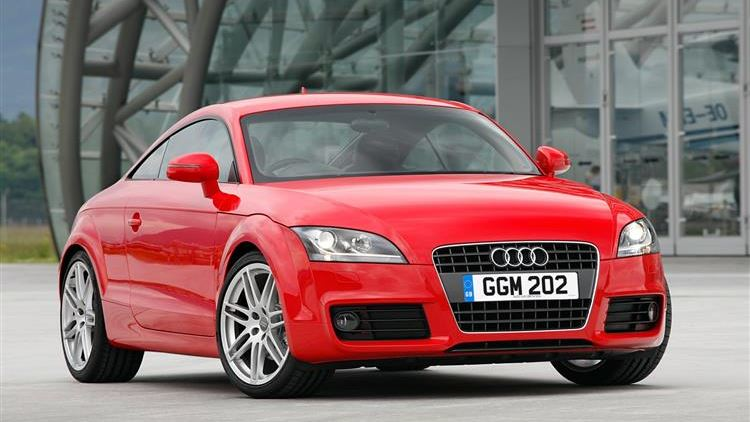
Verdict: The practical daily driver that still feels like a sports car.
The Mk2 Audi TT (8J, 2006–2014) is one of the most studied interior design exercises in production cars of its era. Walter de’Silva and Stefan Sielaff’s team produced a cabin in which every element follows a single geometric logic — the circular air vents reference the steering wheel boss, the instrument cluster housing mirrors the vent rings, and the centre console is a resolved continuation of the dash plane.
It doesn’t feel designed so much as derived from a single decision made early and followed to its conclusion. It holds up completely in 2026.
The exterior is similarly disciplined: the egg-shaped greenhouse, the rising rear haunches, the absence of decorative detailing. Clean form rather than complex surface. This design integrity is what justifies the TT’s place on a sports car list despite its AWD, front-heavy layout, and modest driver involvement compared to the 370Z or Boxster.
It’s the car you buy when the experience of being in and around the object matters as much as the experience of driving it at the limit. The 2.0 TFSI engine (200–211 hp) is strong; the quattro system makes it genuinely usable year-round; the TTS (268 hp) is the one to find for the best balance of performance and price.
Quick Comparison: All 10 Cars
Use this as a shortlist guide. ‘New’ prices are 2026 MSRP; ‘used’ prices are mid-market for a clean example in March 2026.
- Mazda MX-5 Miata (new): $30,430 — 181 hp — Best convertible experience
- Toyota GR86 (new): $32,395 — 228 hp — Best new car chassis
- Subaru BRZ (new/used): $37,055 new / $26–30K used — 228 hp — Buy used
- Ford Mustang EcoBoost (new): $34,635 — 315 hp — Most power, auto only
- Nissan 370Z (used): $14–28K — 332 hp — Best V6 soundtrack
- Porsche Boxster 987 (used): $12–28K — 240–310 hp — Best chassis
- Hyundai Genesis Coupe 3.8 (used): $10–22K — 348 hp — Best value per hp
- BMW Z4 E85 (used): $10–20K — 189–330 hp — Best inline-six
- Fiat 124 Spider Abarth (used): $16–24K — 164 hp — Most character
- Audi TT Mk2 Quattro (used): $10–22K — 200–268 hp — Most practical
Five Things to Know Before You Buy
1. Insurance Adds Up Fast
Sports cars carry higher premiums than equivalent saloons. Before falling in love with a 370Z or Mustang, run a real insurance quote for your age and postcode. I’ve seen buyers budget carefully for the car and then discover the insurance adds $150–$300/month they hadn’t accounted for. The Miata tends to insure cheapest of the group due to its modest power output.
2. Used European Cars: Budget for Maintenance
The Boxster and Z4 are extraordinary driving machines at their current prices. They’re also Porsches and BMWs — maintenance is more expensive than a Japanese equivalent. A pre-purchase inspection ($200–$300) is non-negotiable, service records are essential, and annual maintenance budgets of $1,500–$2,500 are realistic for well-maintained examples. The ownership cost is higher, but the driving reward is also higher. Price accordingly.
3. The Manual Transmission Question
If driving engagement matters to you — and if you’re reading this list, it probably does — check the manual availability before committing. The 2026 Mustang EcoBoost is automatic-only. The 2026 BRZ and GR86 both offer excellent six-speed manuals. The 370Z and Boxster manual transmissions are highlights of their respective cars. This is not a small distinction.
4. Track Use Changes the Ownership Calculation
If you’re planning track days, factor in consumable costs: brake pads, tyres, and fluid changes add up quickly. The Miata is the cheapest to run on track — parts are inexpensive and the car is gentle on consumables relative to heavier cars. The Mustang and Genesis Coupe are hardest on brakes and tyres due to their weight.
5. Depreciation Varies Enormously
New sports cars depreciate — but at very different rates. The Miata holds its value better than almost any sports car in this class due to consistent demand. The first-gen BRZ and GR86 have depreciated sharply since the second-gen launch, making 2019–2021 examples excellent used buys. Porsche Boxsters depreciated heavily through the 2010s and have now stabilised — some 987 Boxster S models are starting to appreciate.
✏ Editor’s note: The single best-value move on this list in March 2026: a 2019–2021 Toyota GR86 (first-gen, then called GT86) or Subaru BRZ with under 40,000 miles. These can be found for $20,000–$26,000. The second-generation car is better, but the first-gen chassis is still excellent — and you’re saving $10,000+ over a new GR86 for a car that’s at most five years old.
The Bottom Line
The sports car market in 2026 is genuinely exciting for buyers with realistic budgets. If you want new: the Mazda MX-5 Miata at $30,430 is the most satisfying car on this list for pure driving enjoyment. The Toyota GR86 at $32,395 is the most complete package — more power, more practicality, outstanding chassis. If you’re open to used: a 987 Porsche Boxster S in the $18,000–$22,000 range is the most rewarding car you can buy at that price in terms of driving experience, with the caveat that you need to buy the right car and budget for maintenance.
What all ten of these cars share: they make driving the point, not a side effect. In a market increasingly dominated by crossovers and driver-assistance systems, that’s rarer and more valuable than it used to be. Any of these ten will reward you for paying attention to the road.
FAQ: Affordable Sports Cars 2026
Q: What is the cheapest new sports car you can buy in 2026?
The Mazda MX-5 Miata is the cheapest new sports car in the US market in 2026, starting at $30,430 (Sport trim, manual, before destination). That’s $900 more than 2025 but still $4,000 less than the next cheapest convertible on sale. It’s also, arguably, the best sports car on sale at any price for pure driving involvement.
Q: Is the Toyota GR86 or Subaru BRZ better value in 2026?
In 2026, the GR86 is the better value for new purchases. Subaru discontinued the BRZ entry-level Premium trim, pushing the starting price to $37,055 — nearly $4,660 more than the GR86’s $32,395. The cars share the same platform and 228 hp flat-four engine. The differences in suspension tuning are subtle. Unless you specifically prefer the BRZ’s slightly softer setup, the GR86 is the smarter buy at current pricing.
Q: What’s the best used sports car under $20,000 in 2026?
Three strong options. A Nissan 370Z (2015–2018) in clean condition can be found for $18,000–$22,000 — 332 hp, rear-wheel drive, hydraulic steering, great soundtrack. A Porsche Boxster 987 (2009–2012, post-IMS-bearing revision) in the $16,000–$20,000 range offers the best chassis dynamics of any car at this price point. A first-generation Subaru BRZ or Toyota GT86 (2017–2021) with documented service history: $18,000–$24,000 for an excellent rear-wheel-drive sports coupe.
Q: Are used European sports cars (Boxster, Z4) reliable enough to daily drive?
Yes, with conditions. A well-maintained Porsche Boxster 987 (2009 onward, with the IMS bearing concern addressed) or BMW Z4 E85 3.0i with full service history is a reliable daily driver. The key variables are service records and a pre-purchase inspection — skip either and you’re gambling. Annual maintenance costs are $1,500–$2,500, versus $500–$1,000 for a Mazda or Toyota. That’s the trade-off for the driving experience: it costs more to keep a German sports car in good condition, and the reward is commensurately higher.
Q: Does the 2026 Ford Mustang EcoBoost come with a manual transmission?
No — and this is the most important caveat about the current Mustang for driving enthusiasts. Ford only offers the 2026 EcoBoost (2.3L, 315 hp) with a 10-speed automatic. The manual transmission is reserved for the GT V8, which starts at $48,555. If a manual is important to you, the better move is a used S550 EcoBoost (2015–2023), which was available with a six-speed manual and can be found for $20,000–$28,000 in clean condition.
Q: What sports car is best for track days on a budget?
The Mazda MX-5 Miata Club is the definitive track-day budget car. Its Bilstein suspension, limited-slip differential, and light weight (2,366 lbs) make it genuinely fast on a circuit despite only 181 hp — it’s exploitable at real-world speeds. Brake pads and tyres are cheap. The GR86 is a close second with more power and comparable handling. Both are far cheaper to run on track than the heavier Mustang or Genesis Coupe.
- 18shares
- Facebook0
- Pinterest18
- Twitter0
- Reddit0