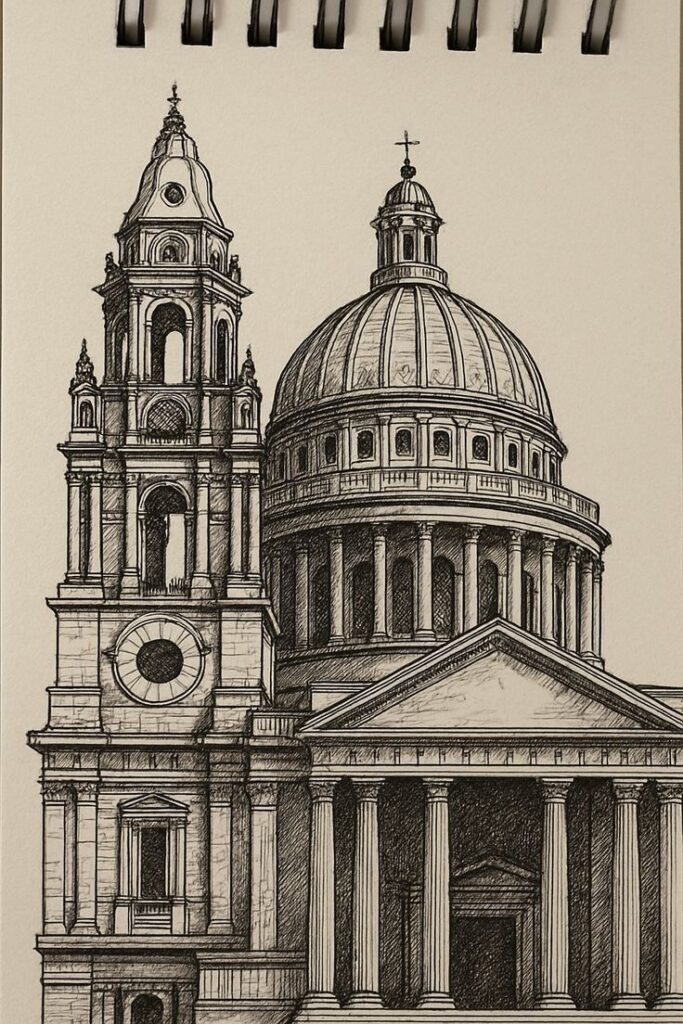
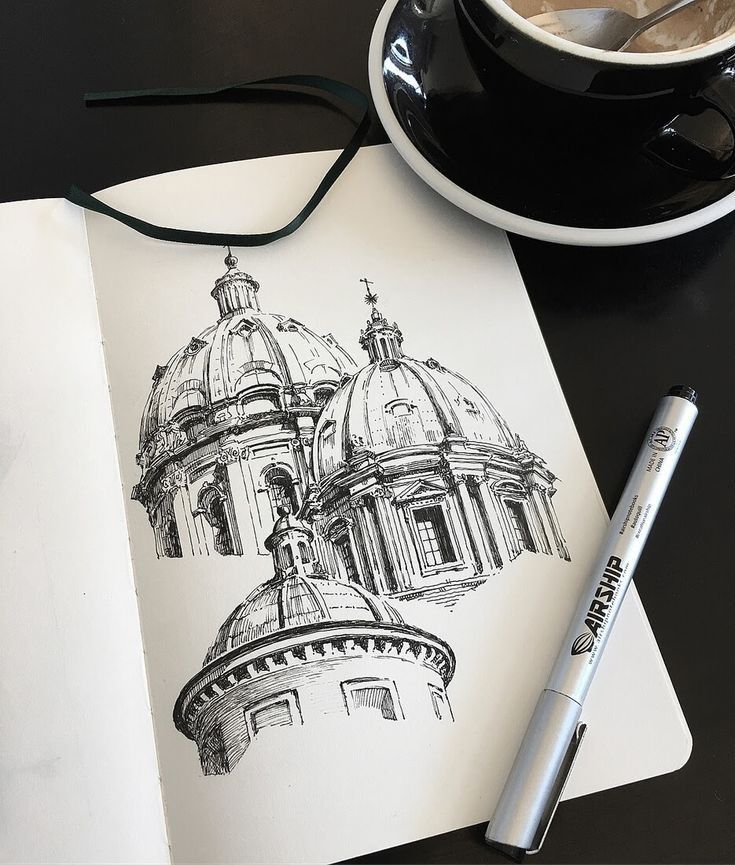
Architectural sketching demands a precise blend of technical skill and creative insight. Learning how to sketch buildings effectively involves mastering perspective drawing, maintaining correct proportions, and avoiding common pitfalls that undermine clarity and depth. This tutorial guides the artist through each stage—from gathering tools to final review—so they can produce confident, compelling building sketches.
1. Gather essential materials
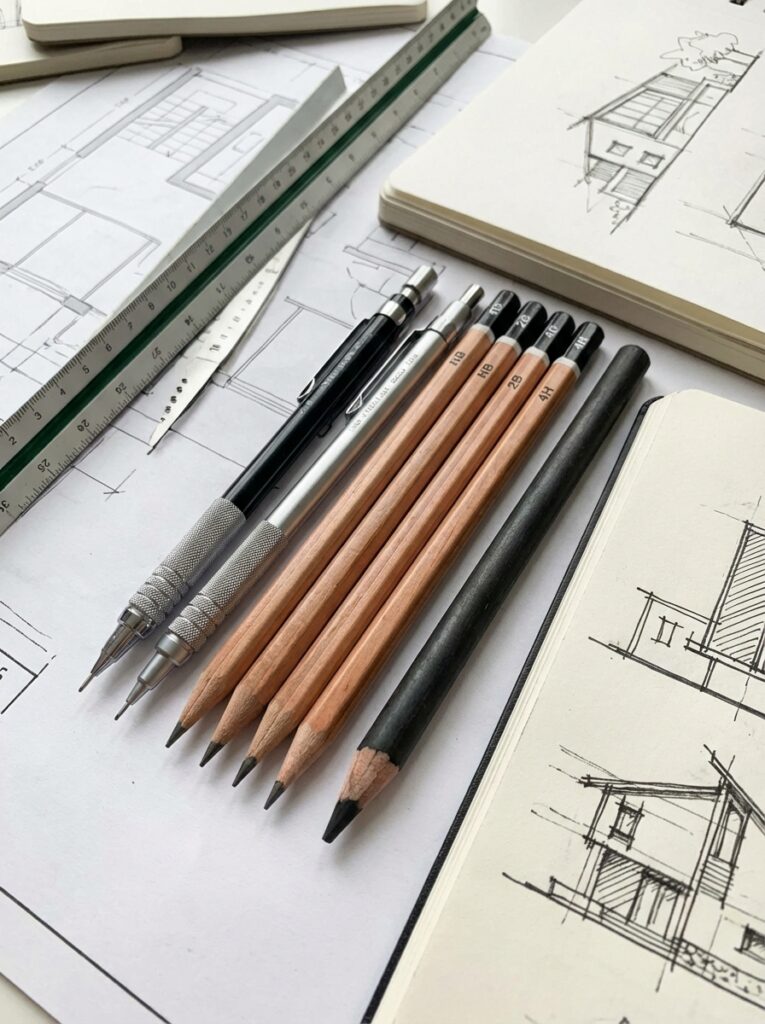
Before beginning an architectural sketch, the artist should assemble tools tailored to building drawing. While creativity remains paramount, the following materials are recommended:
- Pencils: Arteza Expert Pencils, ranging from 4H to 6B, valued for high-density graphite cores that resist breaking (Sketch Like An Architect).
- Fineliners: Staedtler Pigment Liners (0.05–1.2 mm), Uni Pin Fine Liners (0.05–0.8 mm), Arteza Fineliners (0.4 mm) for crisp line work (Sketch Like An Architect).
- Markers: Copic (sets of 12 or 72), Touch Markers (set of 60), Arteza Markers (sets of 60 or 120) to add selective color accents (Sketch Like An Architect).
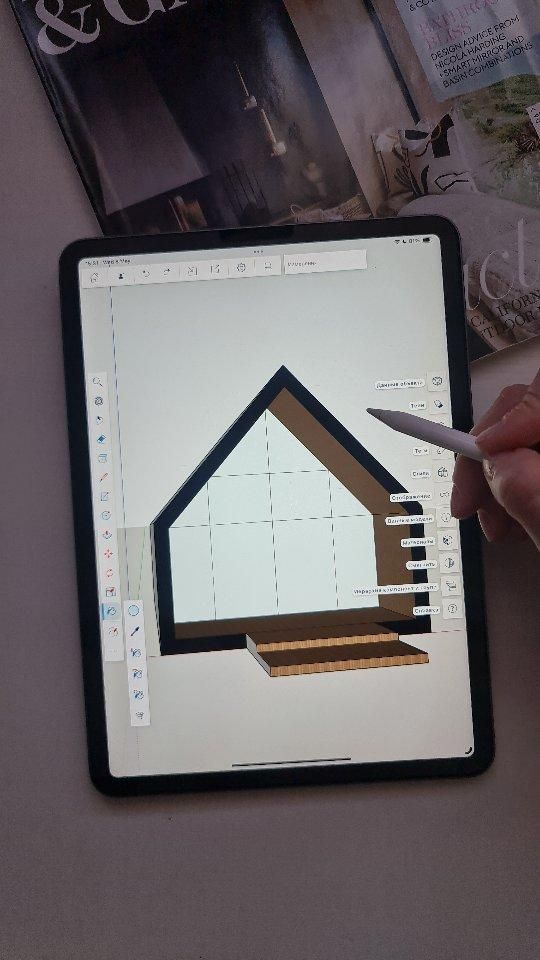
- Digital tools (optional): Procreate on iPad, offering over 130 brushes and blend modes, and Apple Pencil 2 for precision (Architizer).
- Paper: Tracing paper for layering ideas, Moleskine sketchbook for portability, and marker-safe pages (Sketch Like An Architect).
- Reference guide: Francis Ching’s “Architectural Graphics” for foundational hand-drawing techniques (Architizer).
2. Establish a perspective framework
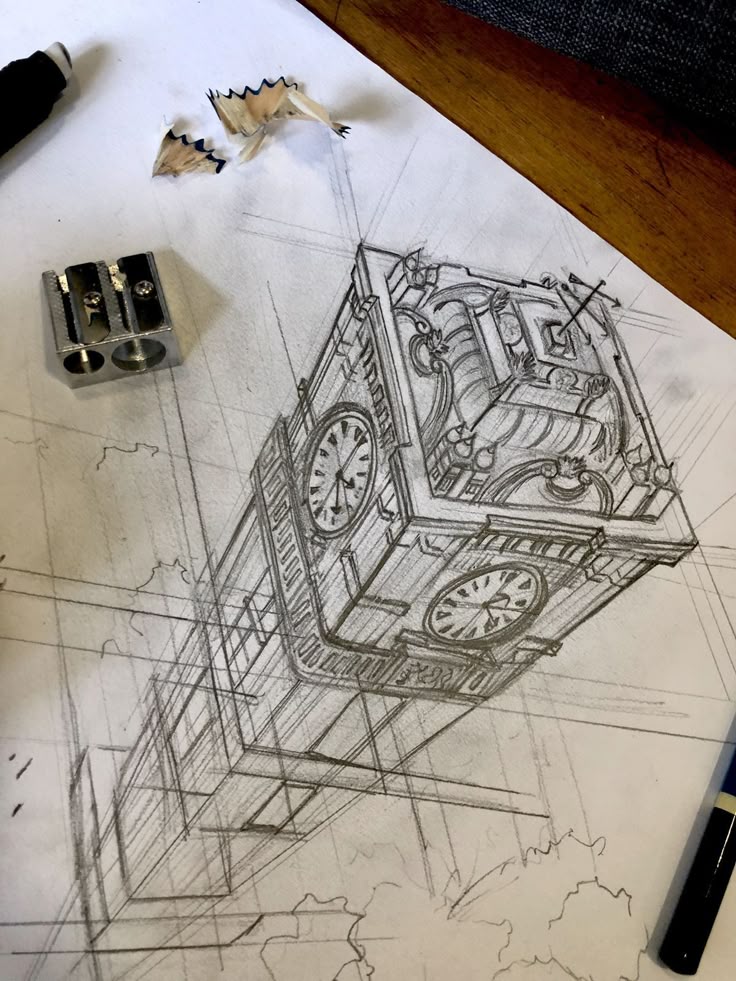
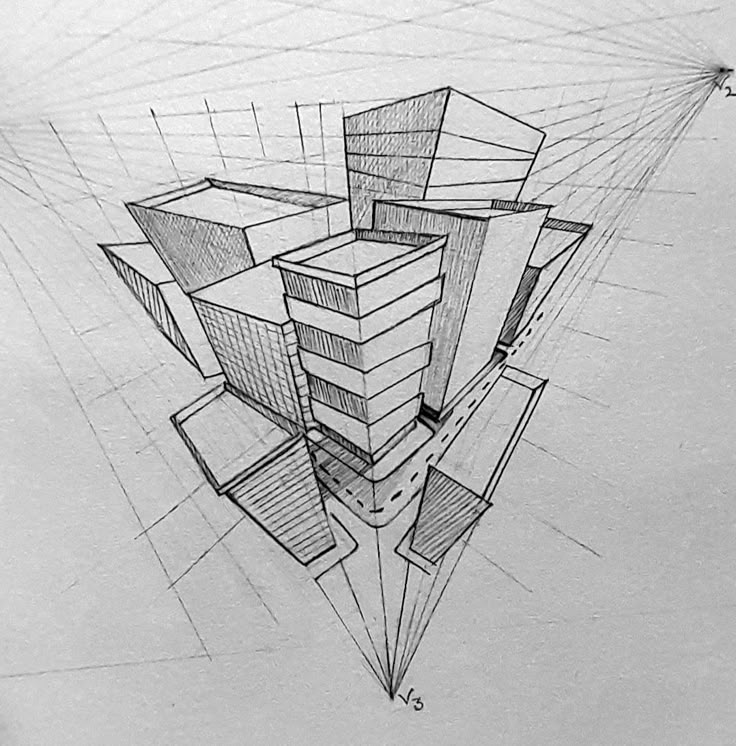
Accurate perspective drawing ensures sketches look realistic and convey depth. The artist should:
Identify the horizon line and vanishing points
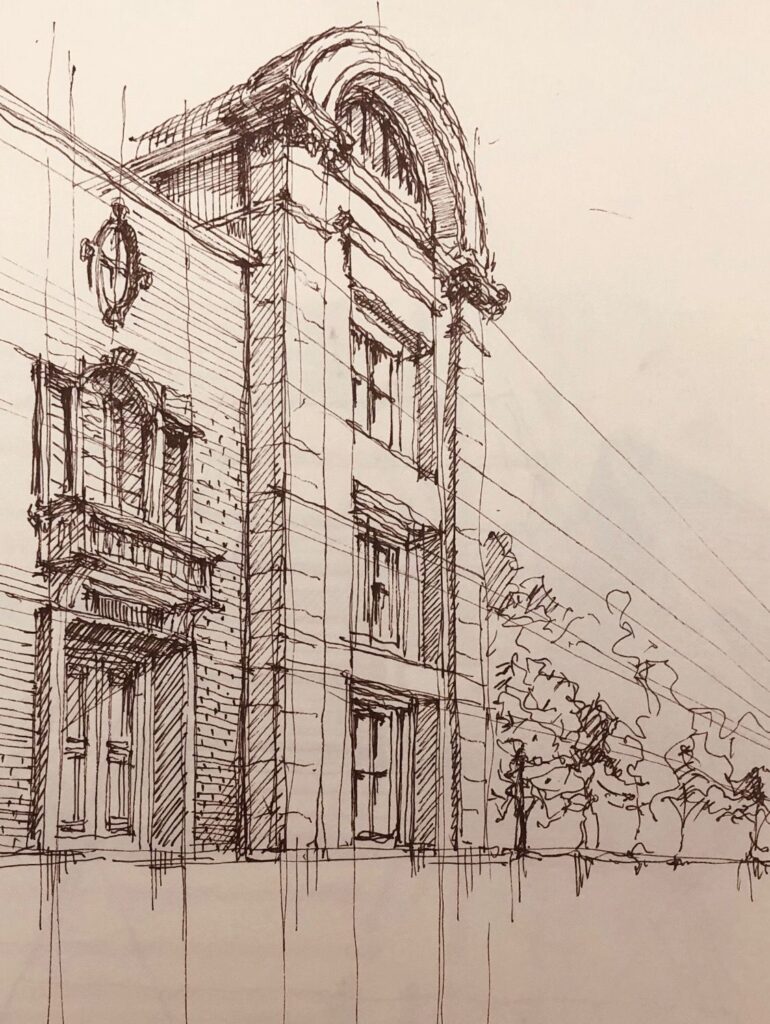
Determine the horizon line at eye level and select one or more vanishing points where parallel lines converge. This foundation anchors all receding lines (Artists Network).
Choose perspective type
- One-point perspective for frontal views
- Two-point perspective for angled views
- Three-point perspective for dramatic low or high vantage points (Artists Network).
Adjust the field of view
Set the angle between vanishing points to 40°–60° for a natural appearance, or widen it up to 90° for dynamic distortion (Sketch Like An Architect).
3. Block in primary shapes
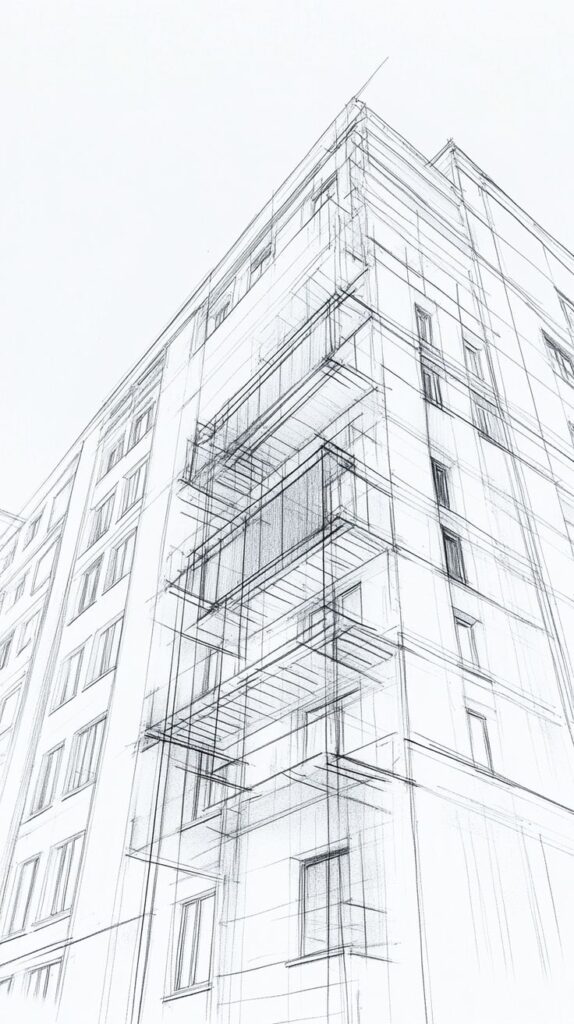
A strong foundation begins with basic forms. The artist should:
Rough in the largest building form
Start by sketching the tallest or widest mass to ensure the building fits the page and avoid unintended cropping (Urban Sketching World).
Use dividing lines for proportions
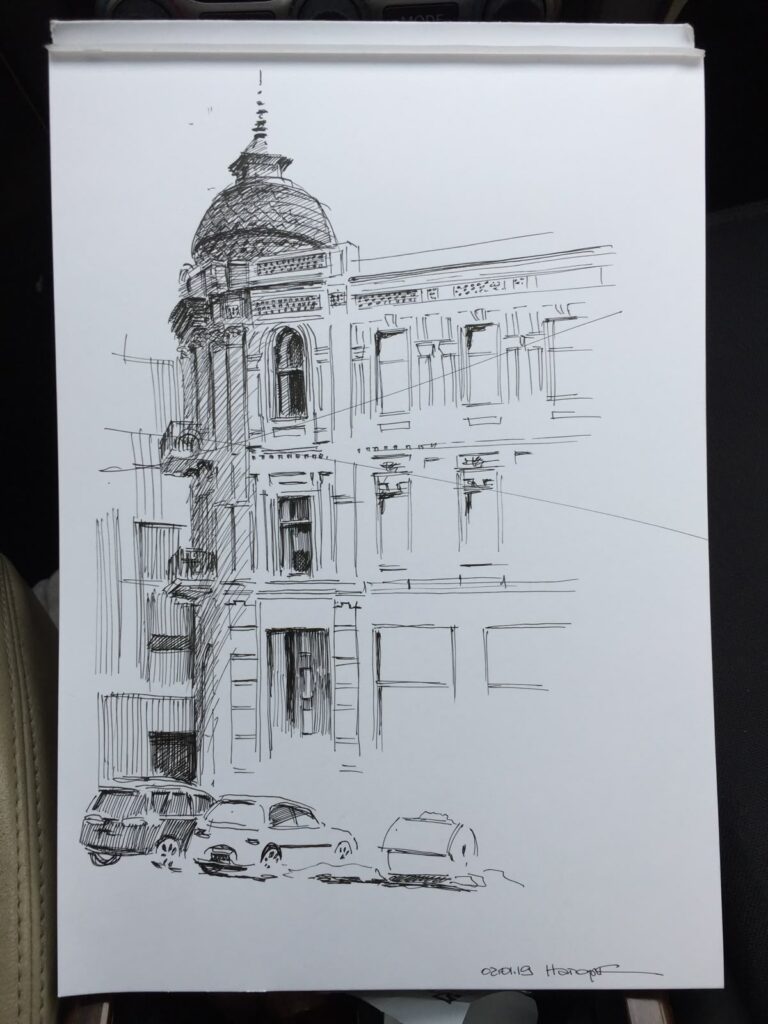
Break the facade into horizontal and vertical sections using natural landmarks such as windows and ornamentation to maintain accurate proportions (Urban Sketching World).
4. Refine architectural details
After establishing the framework, the artist adds defining elements:
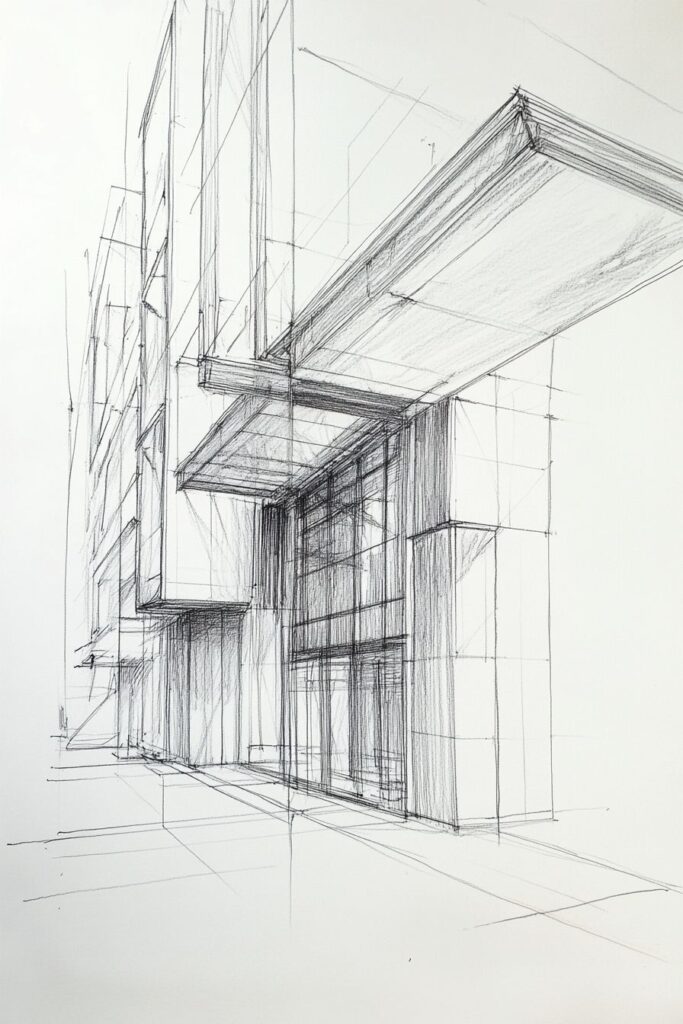
Balance focal elements
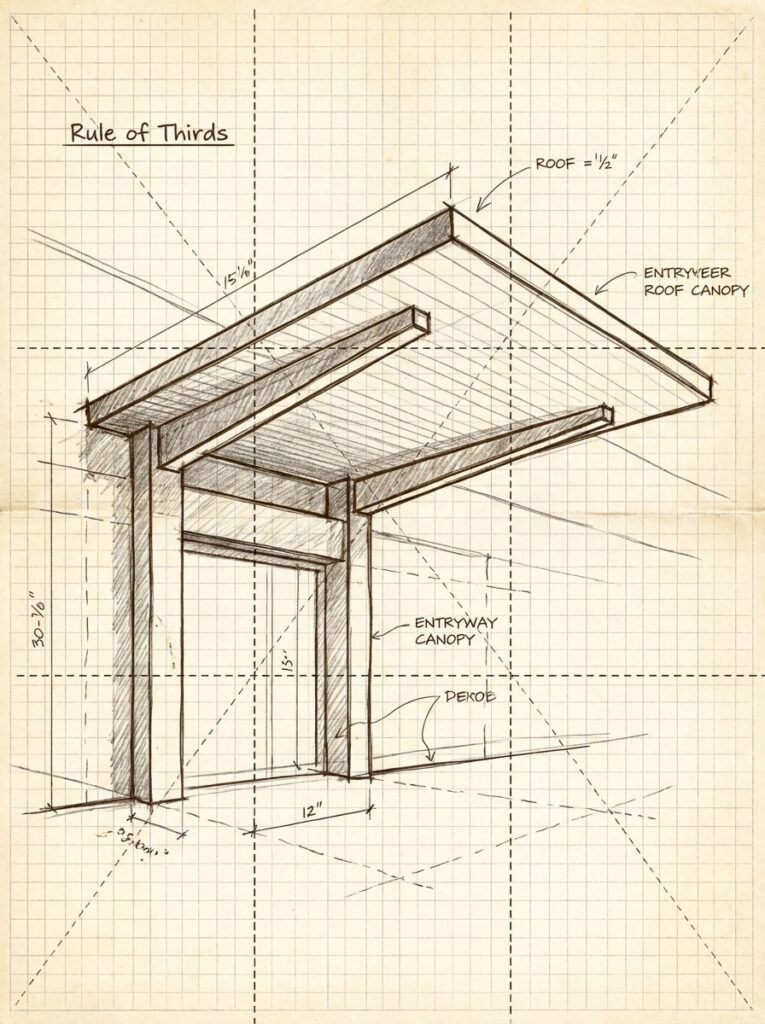
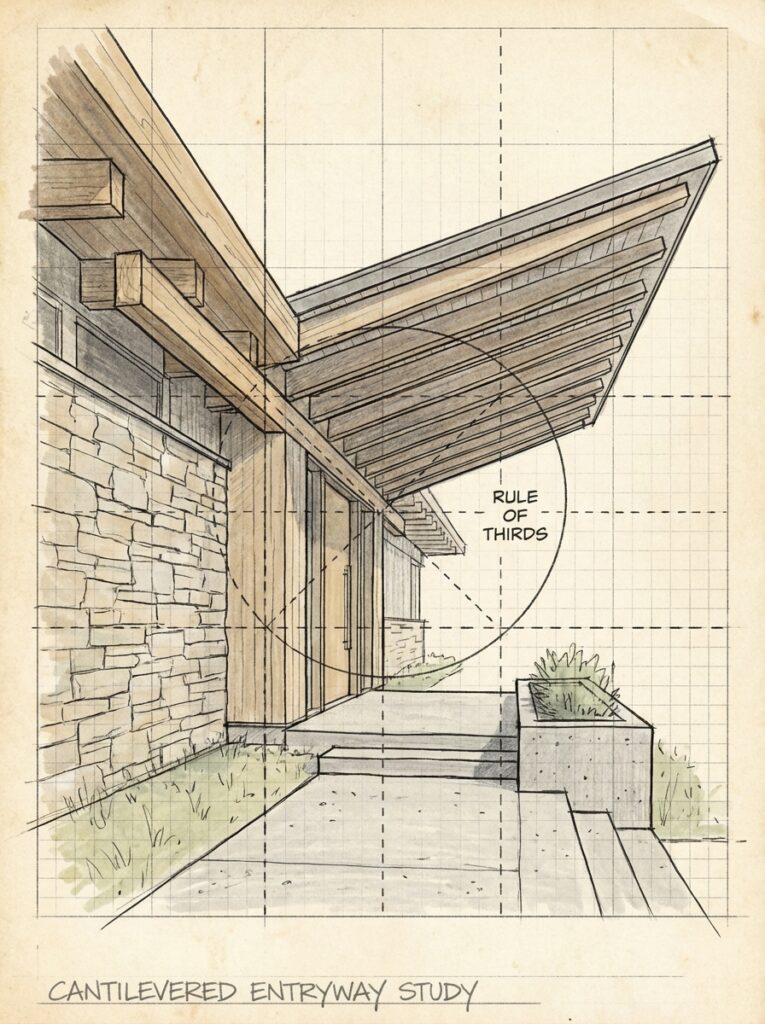
Apply the Rule of Thirds to position key features—such as a cantilevered roof or entryway—at intersecting lines, guiding the viewer’s eye (Sketch Like An Architect).
Embrace organic line work
Allow slight irregularities in line quality to convey character and confidence. Perfectly straight lines are not mandatory and may reduce the sketch’s dynamic feel (Urban Sketching World).
5. Add depth and emphasis
Depth arises from varying line weight, detail, and shading:
Vary line weight and detail
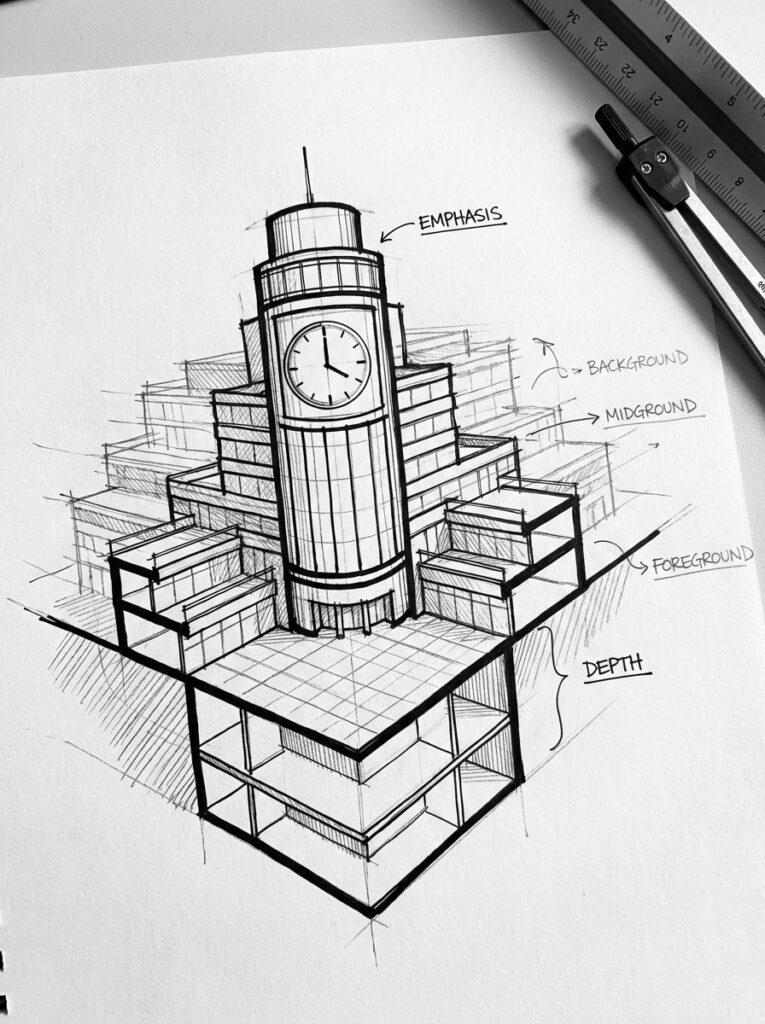
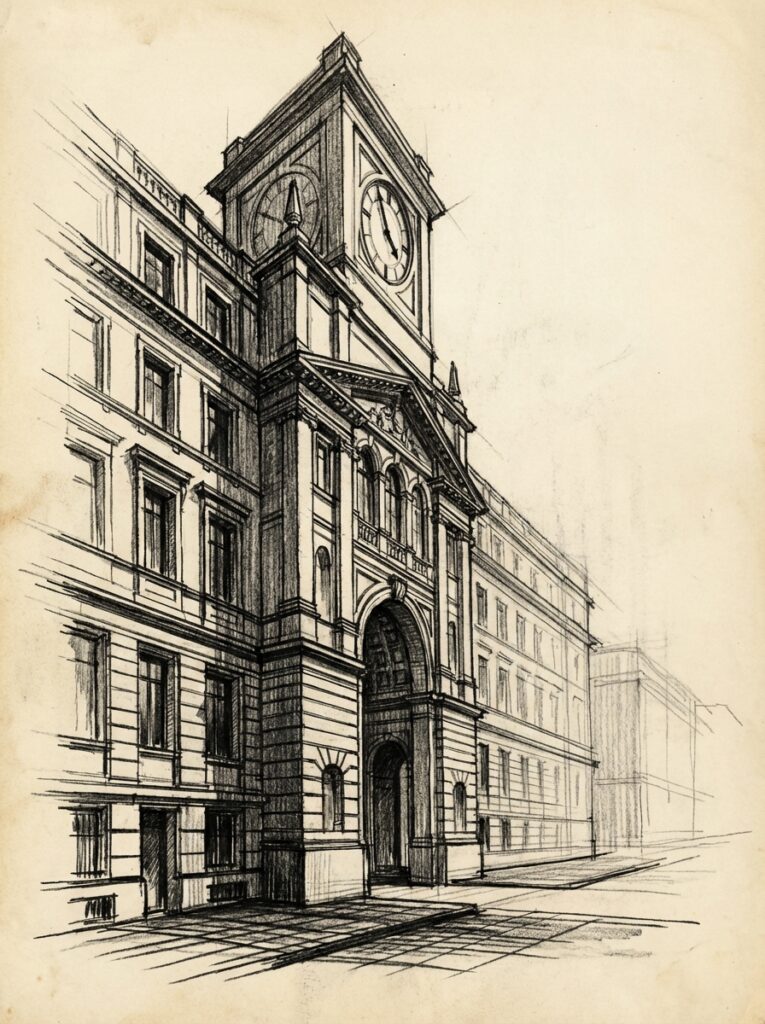
Use thicker, darker lines and more detailed textures in the foreground, transitioning to thinner, lighter strokes and less detail for background elements (Urban Sketching World).
Apply shading and color accents
Introduce selective shading to suggest form and light direction. For hand sketches, watercolor pencils or light marker washes can enrich shadow areas. Digital artists may use Multiply blending and “Eraser Magic” to polish shadows (Sketch Like An Architect). Complementary color accents—blue and orange, for example—help emphasize focal points.
6. Review and correct mistakes
A final audit ensures accuracy and clarity:
Check perspective and proportions
Verify that all orthogonal lines converge correctly, the horizon line remains consistent, and the divided sections align with the intended ratios.
Avoid common drawing mistakes
- Cropping key elements by sketching without planning
- Overemphasizing minor details at the expense of overall composition
- Using a uniform line weight that flattens the sketch
- Misplacing vanishing points leading to skewed forms
7. Frequently asked questions
What tools are essential for sketching buildings?
Fundamental tools include a range of pencils (4H–6B), fine-tip pens, markers for accents, quality paper or sketchbook, and an optional digital setup such as Procreate with Apple Pencil 2.
How does one choose the right perspective type?
Select one-point perspective for direct frontal views, two-point for corner angles, and three-point to dramatize vertical convergence from high or low vantage points (Artists Network).
How can an artist maintain correct proportions?
Break the design into sections using natural landmarks like windows, doors, and cornices. Measuring with dividing lines ensures each segment aligns with real-world dimensions (Urban Sketching World).
How does one avoid common drawing mistakes?
Plan the layout to prevent cropping, vary line weight for depth, resist over-detailing secondary areas, and confirm all parallel lines converge at the correct vanishing points.
Is digital sketching better than hand drawing?
Neither method is inherently superior. Hand drawing and digital sketching each offer unique advantages. Skill, observation, and creativity remain the primary drivers of a compelling architectural sketch (Sketch Like An Architect), cited by Sir Norman Foster’s emphasis on ideas over tools.
- 752shares
- Facebook0
- Pinterest752
- Twitter0
- Reddit0