Understand the basics of drawing Christmas lights
If you want to learn how to draw Christmas lights, it helps to break the design into simple, repeatable shapes. Christmas light drawings look intricate at first glance, but they are mostly made up of curves, small rectangles, and teardrop or oval shapes. Once you see the pattern, you can sketch strings of lights on holiday cards, gift tags, or in your sketchbook without feeling overwhelmed.
In this guide, you will walk through multiple ways to draw Christmas lights, from a single strand to a full-page design. You will also learn how to add glowing effects, choose colors, and use your drawings in different holiday projects.
Choose your style and supplies
Before you put pencil to paper, decide how you want your Christmas light drawing to look and what supplies you want to use. A clear plan keeps you from feeling stuck halfway through.
Pick a drawing style
You can draw Christmas lights in several styles:
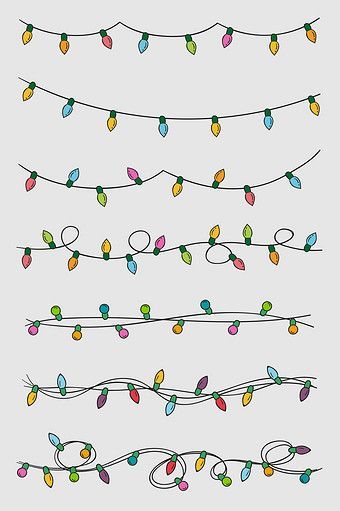
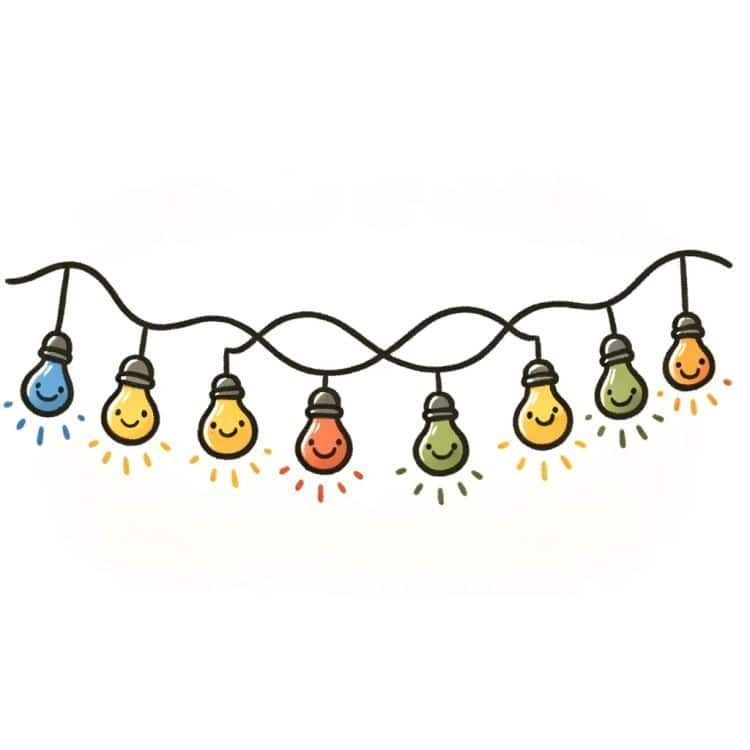
Cartoon and cute
Simple teardrop or oval bulbs
Chunky wire and big sockets
Great for kids, doodle art, and playful cards
Minimal and graphic
Thin line for the cord
Small, uniform bulbs
Ideal for pattern backgrounds and borders
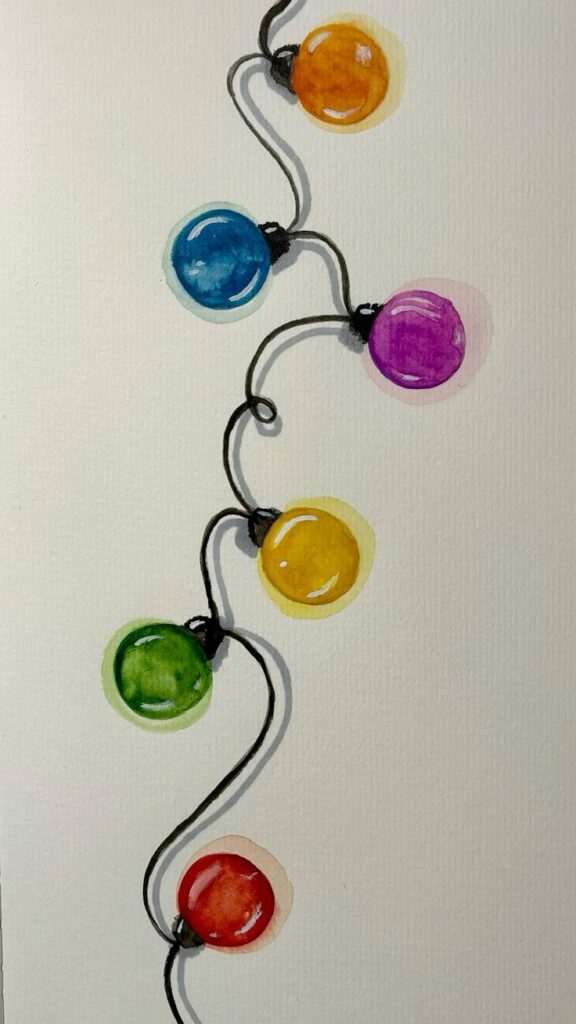
Realistic and shaded
Careful light and shadow
Transparent glass effect
Works well for stand-alone illustrations or detailed art projects
You can start with a cartoon look and then layer in more detail once you feel comfortable.
Gather simple materials
You do not need fancy tools to draw Christmas lights. You can start with:
- Pencil and eraser
- Smooth drawing paper or sketchbook
- Black fineliner or pen for outlines
- Colored pencils, markers, or crayons
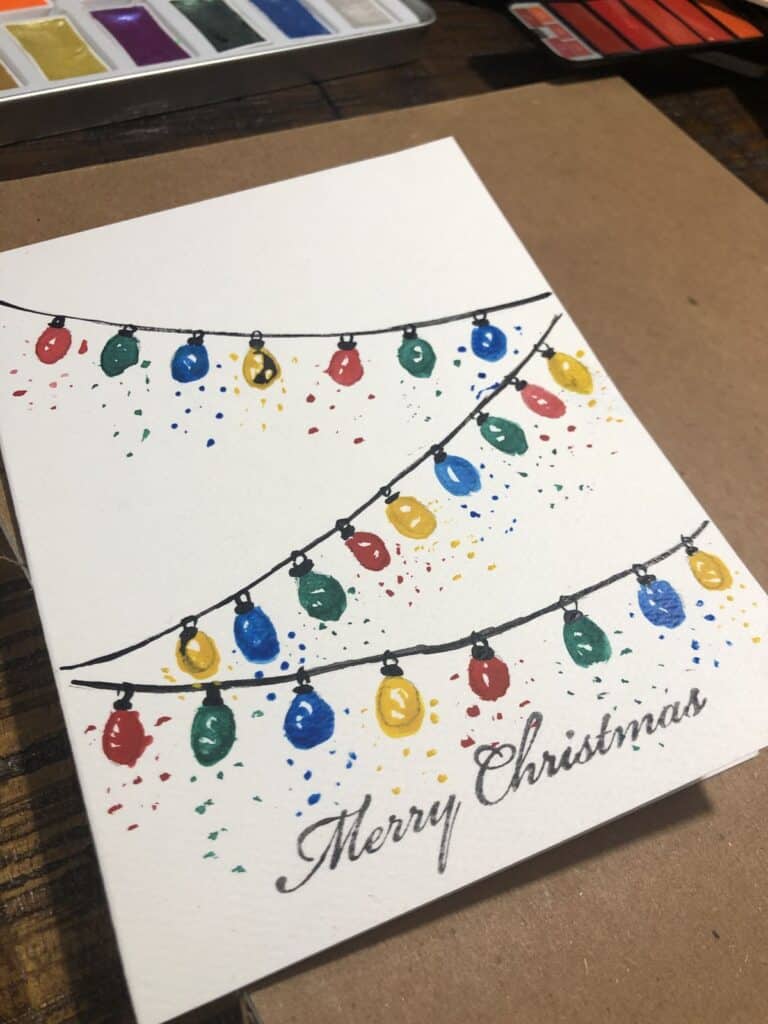
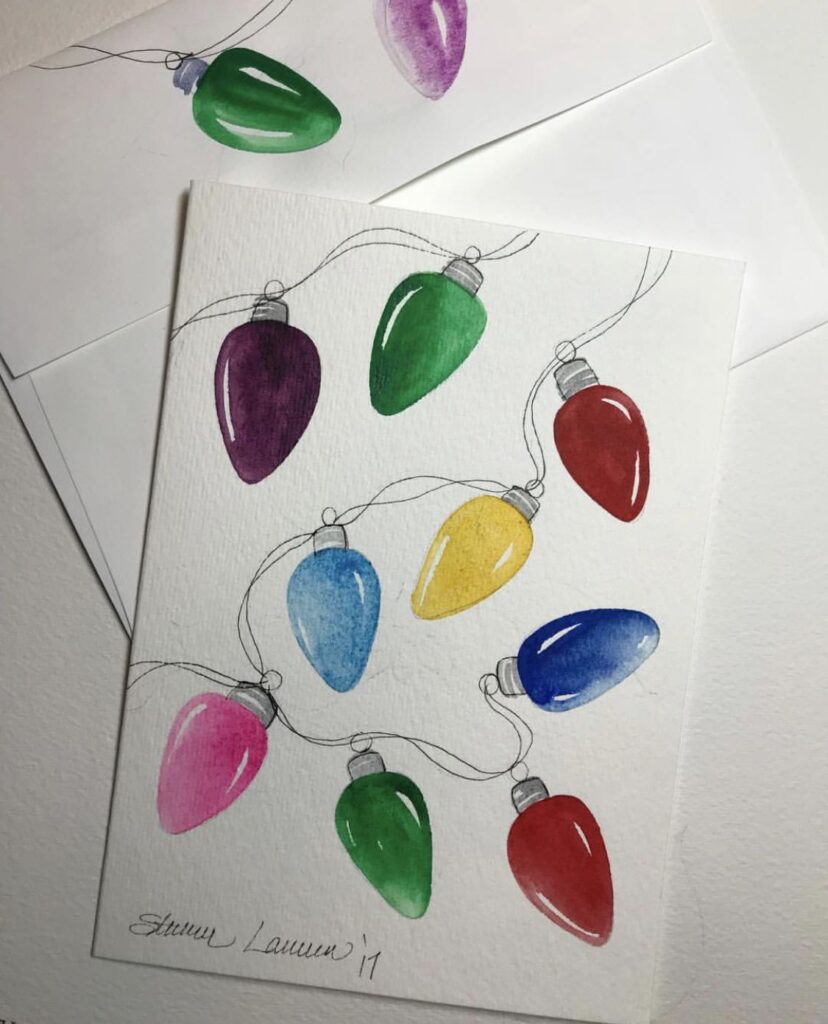
If you want a glowing finish, a white gel pen is useful for adding highlights, as suggested in tutorials from Coco Wyo that focus on making Christmas lights shine in a drawing (Coco Wyo).
Learn the core structure of Christmas lights
Almost every method for how to draw Christmas lights starts with the same basic elements: a wire, sockets, and bulbs. Once you understand these parts, you can vary the composition any way you like.
Break down the three main parts
The wire or string
- This is a long, curved line that connects all the bulbs.
- You can draw it as a loose “u” shape, zigzag line, or looping pattern around the page.
- Amy Latta Creations recommends starting with a wide “u” shaped wire that you can bend into any direction you need for your decoration (Amy Latta Creations).
The light socket or base
- These are small rectangles or short, rounded shapes that sit along the wire.
- They usually alternate above and below the wire so the strand looks more natural.
- Keeping them evenly spaced gives your drawing a clean, planned feel.
The bulb
- This is the part that actually “glows” in your drawing.
- You might use a teardrop, oval, circle, or classic pointed shape.
- You can mix shapes or keep them all the same for a uniform look.
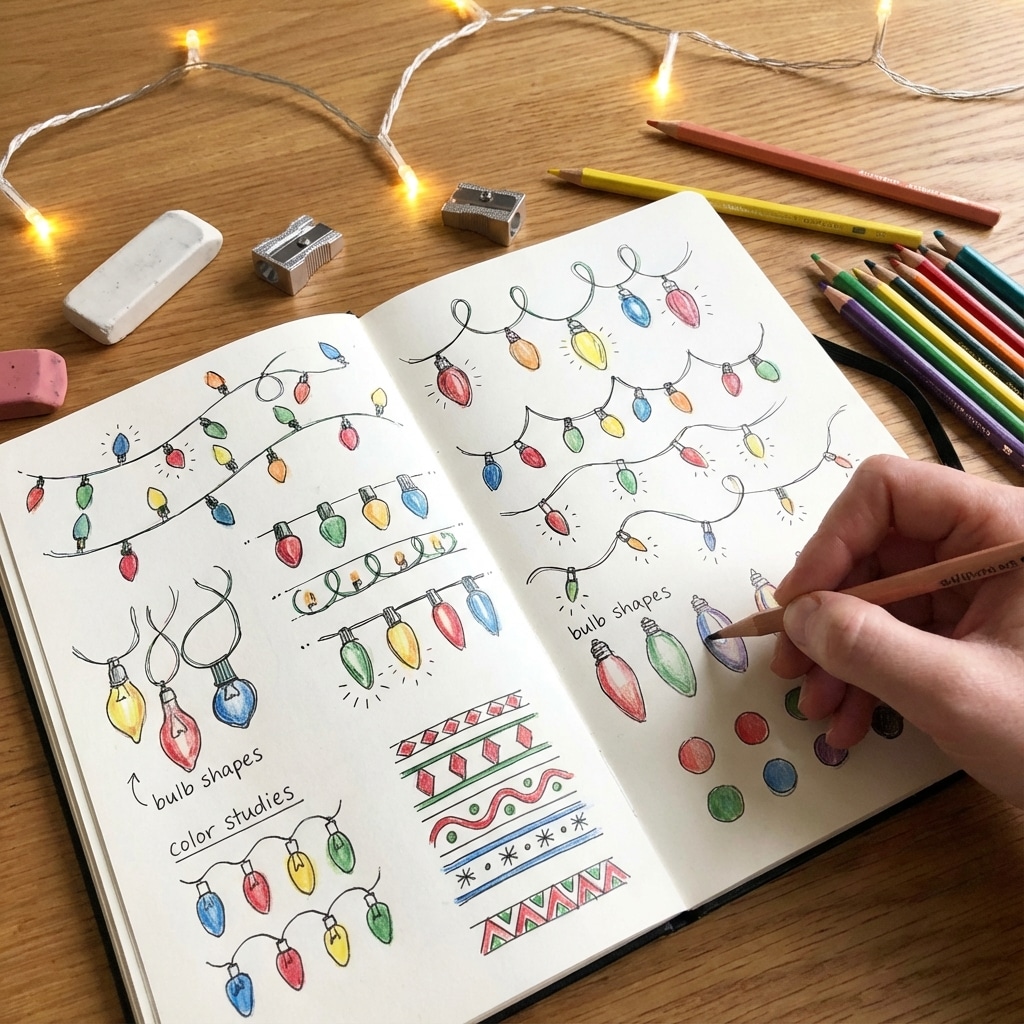
Practice the base shapes first
Before you create a full design, fill a page with:
- Curved lines that cross the page in different directions
- Small rectangles, evenly spaced on a curved line
- Rows of simple teardrops, circles, and oval shapes
If you spend a few minutes on these warmups, it becomes much easier to build the final drawing.
Draw a simple strand of Christmas lights step by step
Now you are ready to draw your first full strand. You can follow this step-by-step method adapted from Amy Latta Creations and similar tutorials for beginners (Amy Latta Creations).
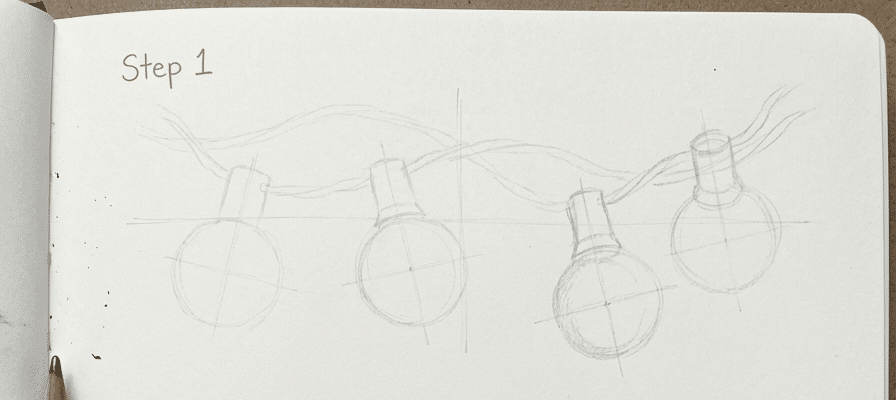
Step 1: Sketch the wire
- Draw a wide “u” shaped line across your page.
- Add a few gentle curves instead of making it perfectly straight.
- Let the line dip and rise to mimic how a real light string hangs.
You can stop at one “u,” or you can connect multiple “u” shapes to create a longer garland.
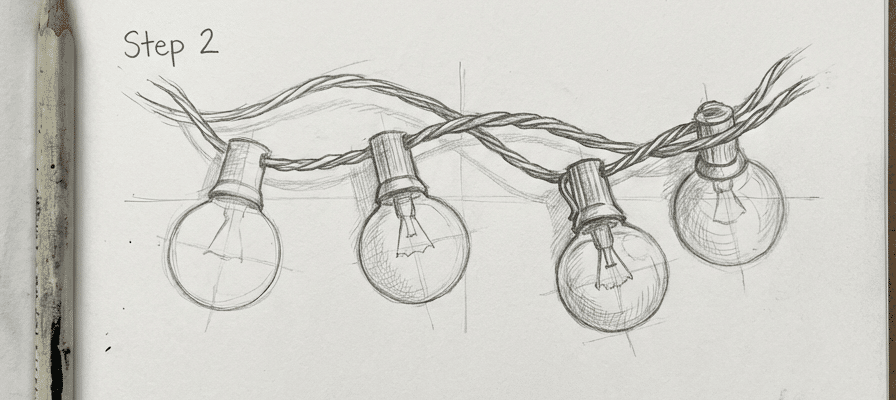
Step 2: Add the sockets
- Along the wire, draw small rectangles at regular intervals.
- Alternate their positions so one is slightly above the wire and the next slightly below.
- Keep them all about the same size.
These small rectangles represent the plastic bases that the bulbs screw into. Amy Latta Creations recommends this method of placing rectangles evenly along the wire to create a clear structure for your bulbs (Amy Latta Creations).
Step 3: Draw the bulbs
On top of each rectangle, sketch your bulb shapes:
- For a classic Christmas look, use a pointed teardrop shape.
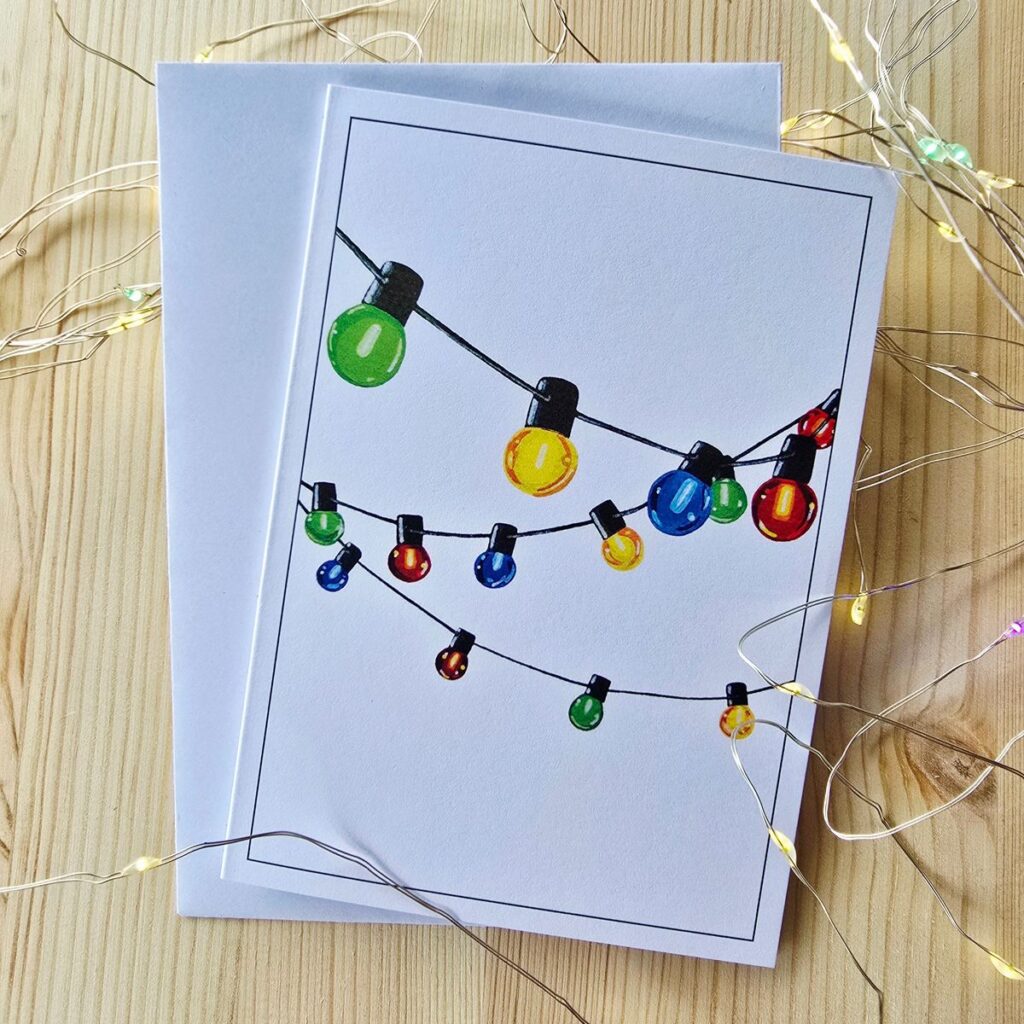
- For vintage or “cafe” style lights, use rounded ovals.
- For a whimsical or kid-friendly style, mix circles, ovals, and drops.
Each bulb should connect neatly to its rectangle so the transition between the socket and the glass looks natural.
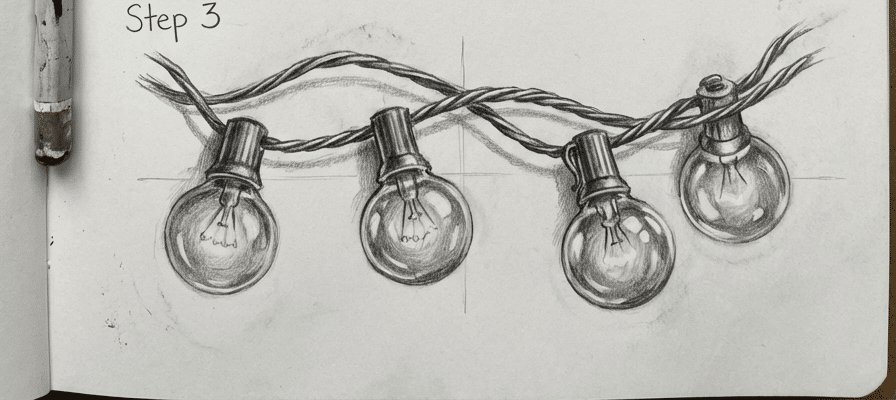
Step 4: Refine details and add depth
Once you like the basic layout, you can:
- Trace over your lines with a black pen or fineliner.
- Erase extra pencil marks after the ink dries.
- Add short curved detail lines inside each rectangle to suggest grooves and ridges. Amy Latta Creations suggests these detailed lines to make the bases more realistic (Amy Latta Creations).
At this point, you have a clean line drawing that you can leave as is or color.
Color your Christmas lights for maximum impact
Color is what makes your Christmas lights drawing feel festive. With a few simple tricks, you can keep the bulbs bright and lively instead of flat.
Choose a color palette
You can use any colors you like, but these combinations work especially well:
- Classic multicolor: red, green, yellow, blue, and orange
- Wintery cool: light blue, aqua, icy violet, white or very pale yellow
- Modern monochrome: different shades of the same color, like all blues or all golds
- Pastel holiday: soft pinks, mint, pale lavender, creamy yellow
Decide whether you want a repeating pattern, such as red, green, blue, yellow, or a more random mix.
Add flat color first
- Color each bulb with a solid layer of pencil, marker, or crayon.
- Leave the wire a neutral color like dark green, black, or brown, so it does not overpower the bulbs.
- Keep the sockets a darker version of the wire color or a simple gray.
If you like a more graphic, poster-style look, you can stop here.
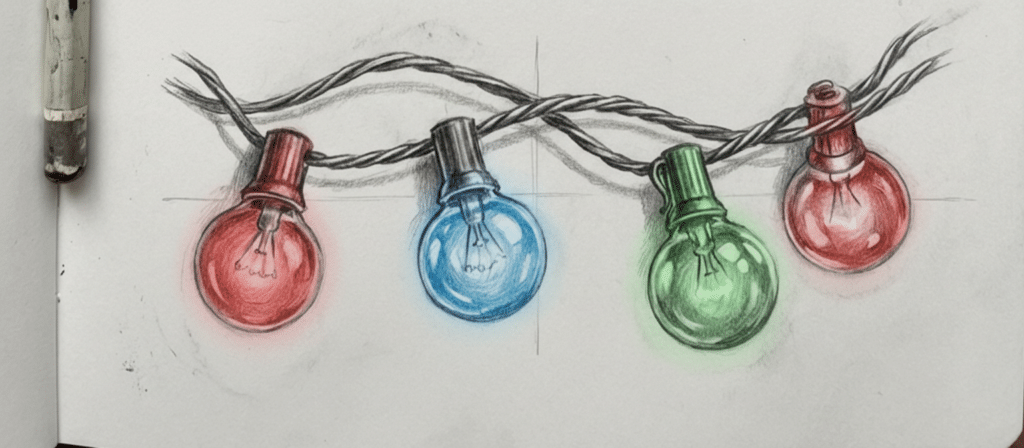
Make the bulbs look like they glow
To create a glowing effect, you can borrow techniques from Amy Latta Creations and Coco Wyo, both of which recommend highlights and radiating lines for a bright finish (Amy Latta Creations, Coco Wyo). Try these steps:
- Leave a small curved area uncolored on each bulb to suggest a reflection.
- If you already colored the bulbs completely, use a white gel pen to draw a curved highlight line instead.
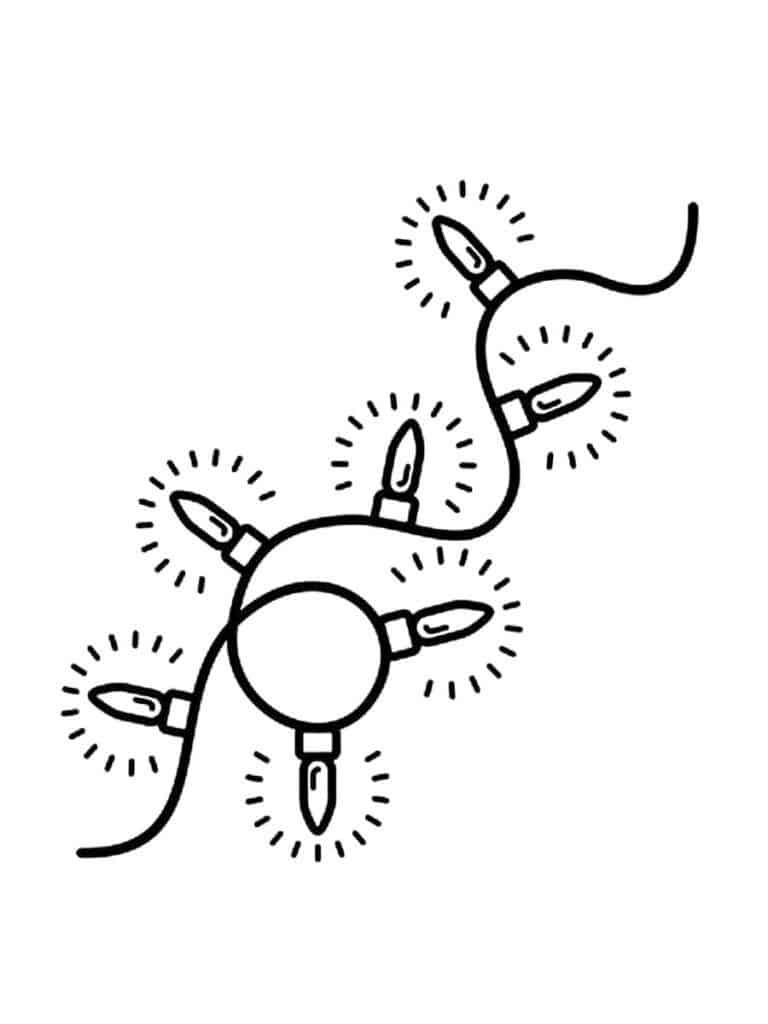
- Around the tip or center of the bulb, add very short lines, almost like tiny rays. Match their color to the bulb or use a lighter tone to make them subtle.
If you are drawing on a darker background, you can also lightly shade around each bulb in a pale yellow or white to create a soft halo.
Design a full-page Christmas lights illustration
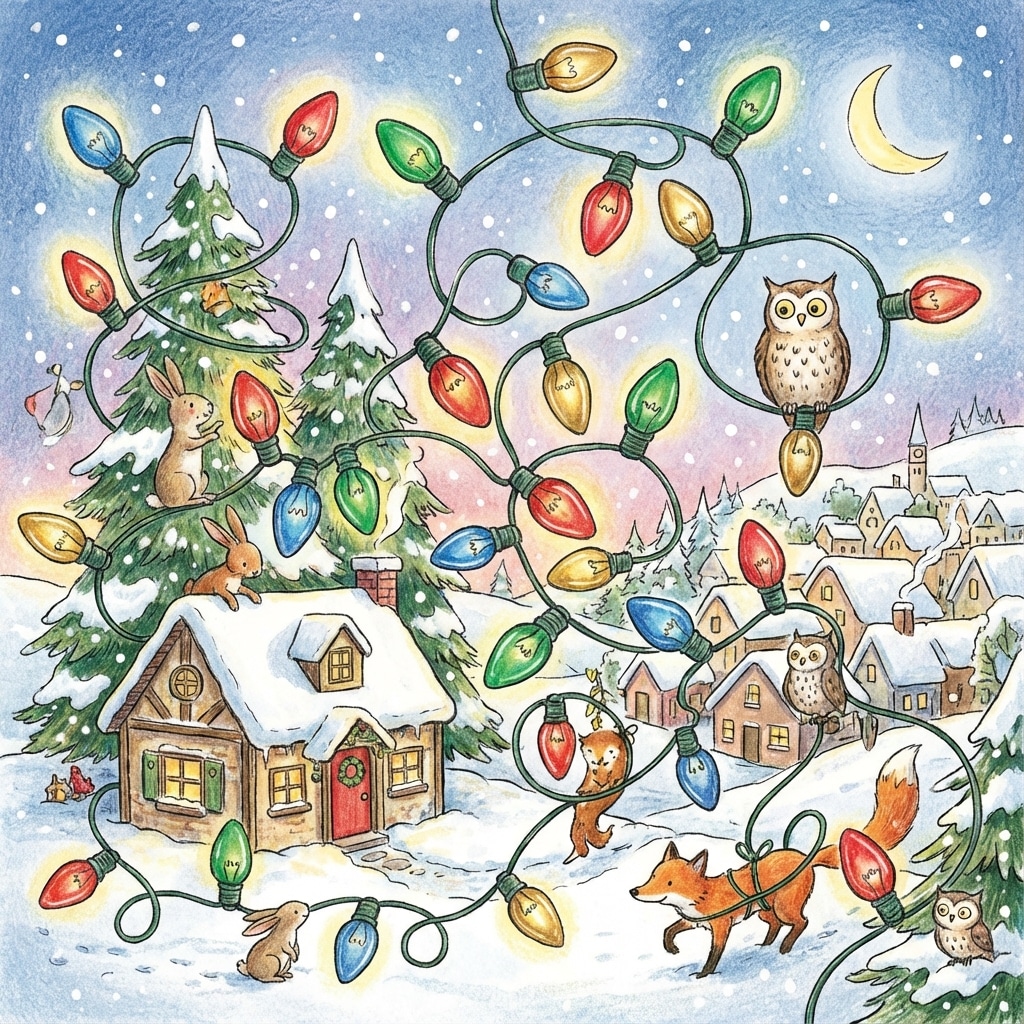
Once you can draw a basic strand, you may want to fill an entire page with Christmas lights. You can use ideas from Art Projects for Kids, which emphasizes planning a balanced composition on the paper by arranging repeated bulb shapes along a curving wire (Art Projects for Kids).
Plan your composition first
Spend a minute visualizing how you want the lights to move across the page:
- A single strand sweeping from corner to corner
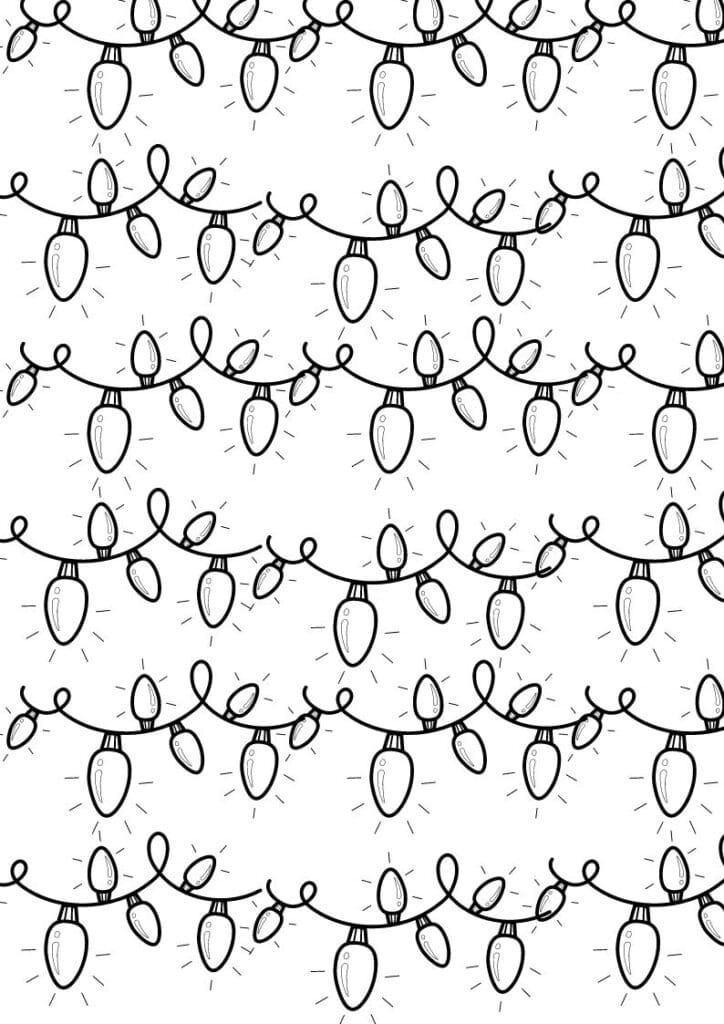
- Several rows that hang like a banner
- A spiral around the edge of the page as a border
- Crisscrossing strings that overlap
Lightly sketch only the wires first so you can adjust the flow before you commit.
Add bulbs without overcrowding
As you place sockets and bulbs, watch your spacing:
- Keep some areas more crowded to create interest.
- Leave open spaces so the drawing can “breathe.”
- Vary the direction of the bulbs slightly so they do not all point in exactly the same angle.
You can use the step-by-step structure from Art Projects for Kids, which shows each stage of the drawing to help you gradually build up the wire and bulbs until the page feels complete (Art Projects for Kids).
Experiment with a colored background
Coco Wyo recommends starting by coloring the background to set the scene before you add your Christmas lights, especially if you want a strong night sky effect (Coco Wyo). You can:
- Lightly shade the whole page in dark blue or navy.
- Blend different blues and purples for a dusk or twilight look.
- Add tiny white dots for stars if you want a sky theme.
After the background is ready, draw the wires, sockets, and bulbs on top. Use brighter, high-contrast colors for the bulbs so they stand out against the dark background.

Use Christmas lights to practice drawing skills
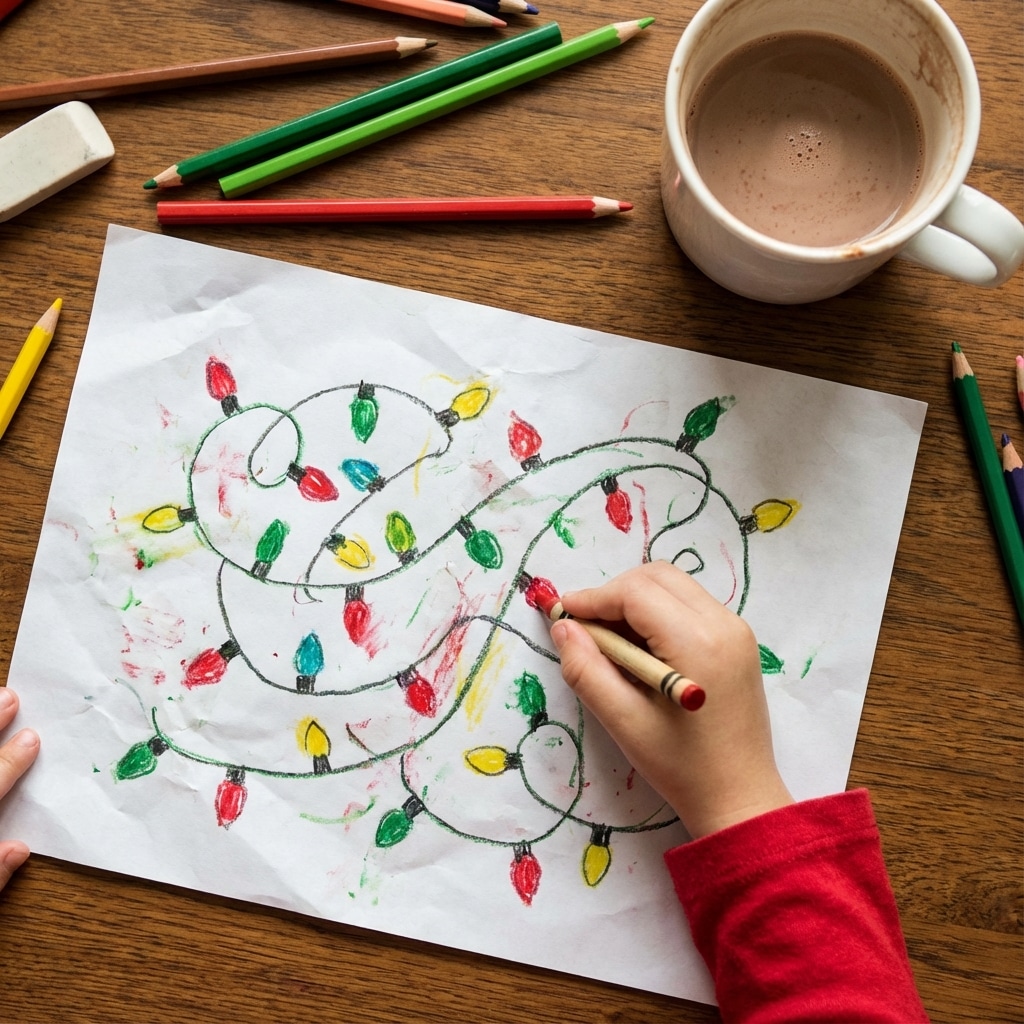
Learning how to draw Christmas lights is not just about seasonal art. The shapes and shading help you practice several core drawing skills in a low-pressure way. Art Projects for Kids highlights that Christmas light drawings are especially useful for younger artists practicing shading and simple graphic design ideas (Art Projects for Kids).
Practice curves and flow
The wire helps you improve:
- Control over long, smooth lines
- Understanding how lines can “lead the eye” across a page
- Comfort with drawing curves instead of relying only on straight lines
You can test different wire styles: big loose curves, tight zigzags, and overlapping loops.
Build confidence with repeated shapes
Since you draw the same bulb many times, you get:
- Repetition, which is great for muscle memory
- A clear sense of proportion, because you keep matching each bulb to the previous ones
- A gentle introduction to patterns and rhythm in design
Try setting a small challenge, such as drawing ten bulbs in a row, all the same size, before you color them.
Explore light, shadow, and transparency
Each bulb gives you a chance to explore shading:
- Darken the side opposite the highlight.
- Keep a mid-tone in the middle of the bulb.
- Add the brightest color near the highlight.
If you are comfortable with colored pencils, you can blend two or three shades of the same color to suggest glass that catches the light. This is a simple way to practice the kind of shading you might use later for more complex subjects.
Add historical context for inspiration
If you like connecting your art to history, you can use a bit of background about Christmas lights to inspire your drawings. According to Art Projects for Kids, Christmas lights began as candles attached to trees in 17th century Germany, held in place with wax or pins. Over the next 200 years, the practice spread throughout Eastern Europe (Art Projects for Kids).
You can let this history influence your work by:
- Drawing an early-style tree with little candle flames instead of electric bulbs.
- Creating a series of pictures that move from candles to vintage bulbs to modern LED-style strands.
- Designing a mix of tiny candle drawings and light bulbs on the same page to show the evolution.
Even a short note about this in your sketchbook can make your Christmas lights drawing feel more meaningful.
Turn your drawings into holiday projects
Once you like your Christmas light drawings, you can put them to use in handmade projects. You do not need any special equipment, only your drawings and basic craft supplies.
Create custom cards and tags
Here are a few simple ideas:
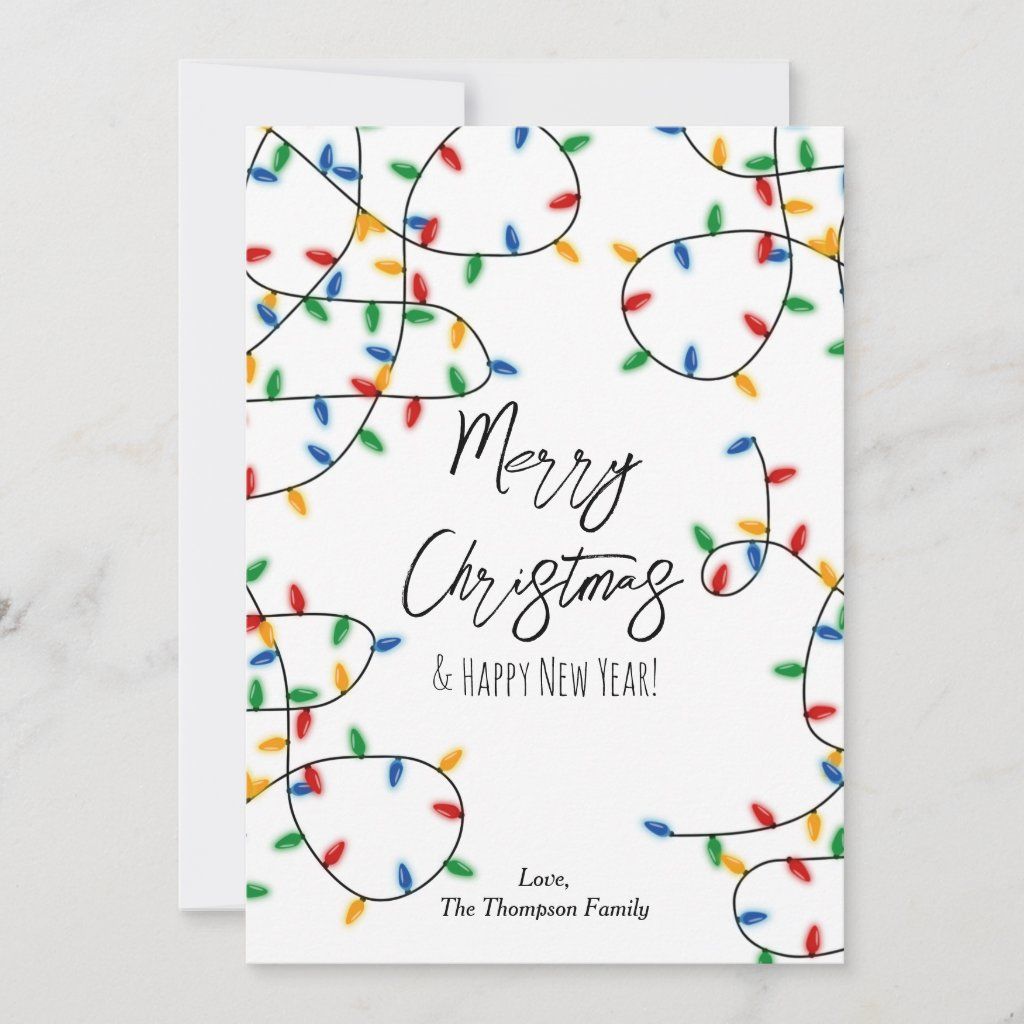
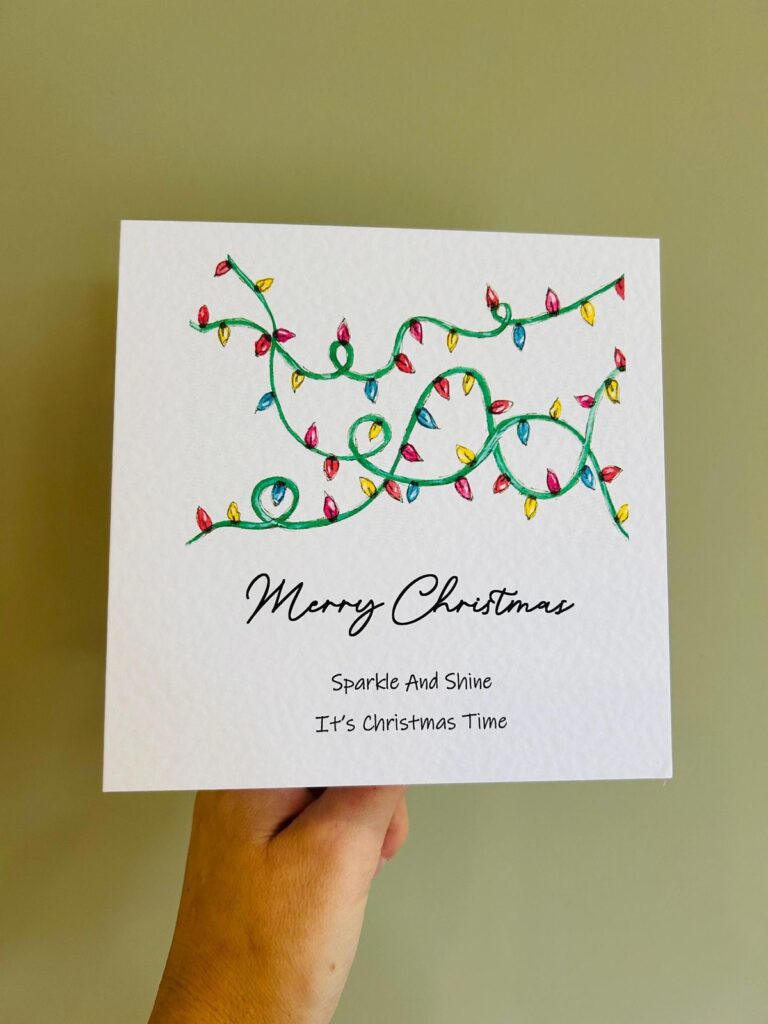
- Draw a strand of lights as a border around a blank card, then write a message in the center.
- Create a small cluster of bulbs in one corner and keep the rest of the card minimal.
- Cut out individual bulb shapes and glue them onto plain tags for gifts.
You can also scan or photograph your favorite drawing, then print it on cardstock to make a full set of matching holiday cards.
Decorate envelopes and wrapping paper
If you enjoy doodling, you can:
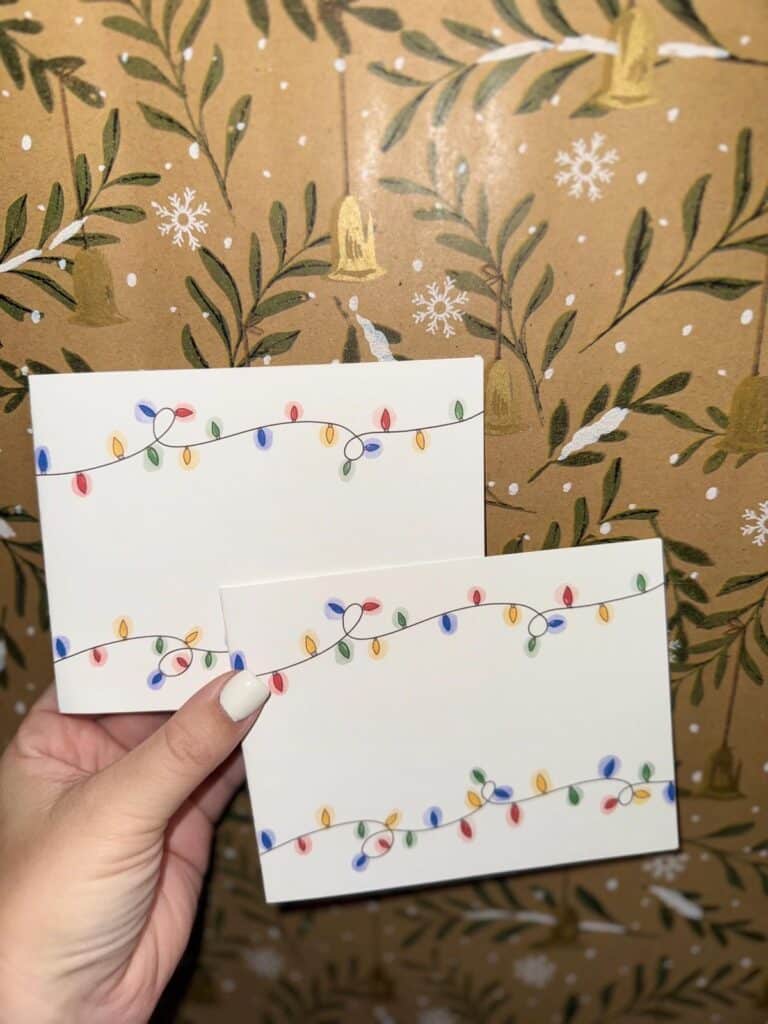
- Draw a single string of lights across the front or back of an envelope.
- Add small light strands along the edges of plain kraft wrapping paper.
- Wrap a gift in solid color paper, then use markers to draw strands of lights all over it.
Your drawings do not need to be perfect. A slightly uneven or wobbly string of Christmas lights can actually look more playful and handmade.
Use lights in sketchbook pages and journals
Christmas lights work well as:
- Dividers between sections in a bullet journal
- Borders around a list of holiday plans or memories
- Decorative elements in a December art challenge
You can keep a dedicated “lights” page where you test different color combinations and bulb shapes each year.
Try kid-friendly and classroom-friendly approaches
If you are drawing with children or beginners, you might want an even simpler version of the process. Art Projects for Kids and Amy Latta Creations both focus on straightforward steps that work for elementary-level artists and quick classroom sessions (Art Projects for Kids, Amy Latta Creations).
Use clear, repeatable steps
You can follow or adapt a structure like this:
- Draw a curved line across the page for the wire.
- Add small rectangles evenly along the line.
- Draw bulbs above each rectangle.
- Outline everything with a darker pen or marker.
- Color the bulbs in bright shades.
This approach is simple enough for kids to remember and repeat, but it still encourages focus and neatness.
Set a realistic time frame
Art Projects for Kids estimates about 45 minutes to complete a full Christmas lights drawing, including the wire, bulbs, and color, which makes it a good fit for a single classroom period or an after-school art activity (Art Projects for Kids).
You can break that time into:
- 10 minutes for planning and sketching the wire
- 10 minutes for drawing sockets and bulbs
- 20 minutes for coloring and adding highlights
- 5 minutes to sign, date, and admire the finished artwork
Encourage subscriptions and ongoing practice
If you enjoy regular guided activities, you can look into resources that provide daily or frequent drawing prompts. For example, Art Projects for Kids offers “The Daily Draw,” which shares instant tutorials for Christmas lights and many other subjects. This kind of steady practice can help you improve your line control, shading, and design instincts over time (Art Projects for Kids).

Explore advanced variations and compositions
Once you are comfortable with the basics, you can push your Christmas light drawings further with more complex layouts and effects.
Layer multiple strands and overlap
For a denser, more dramatic look:
- Draw one strand across your page.
- Add another strand that crosses it, slightly higher or lower.
- Vary the size of the bulbs on each strand.
When strands cross, decide which one is “in front,” then erase small sections of the other wire so the overlap looks realistic.
Wrap lights around objects
Instead of a plain line, you can wrap Christmas lights around:
- A tree trunk or branch
- A window frame
- A simple drawing of a house
- A hand-lettered holiday phrase
To do this, lightly sketch the object first. Then draw the wire so it curves around and behind it, erasing the parts that would be hidden. This creates a sense of depth and makes your drawing more dynamic.
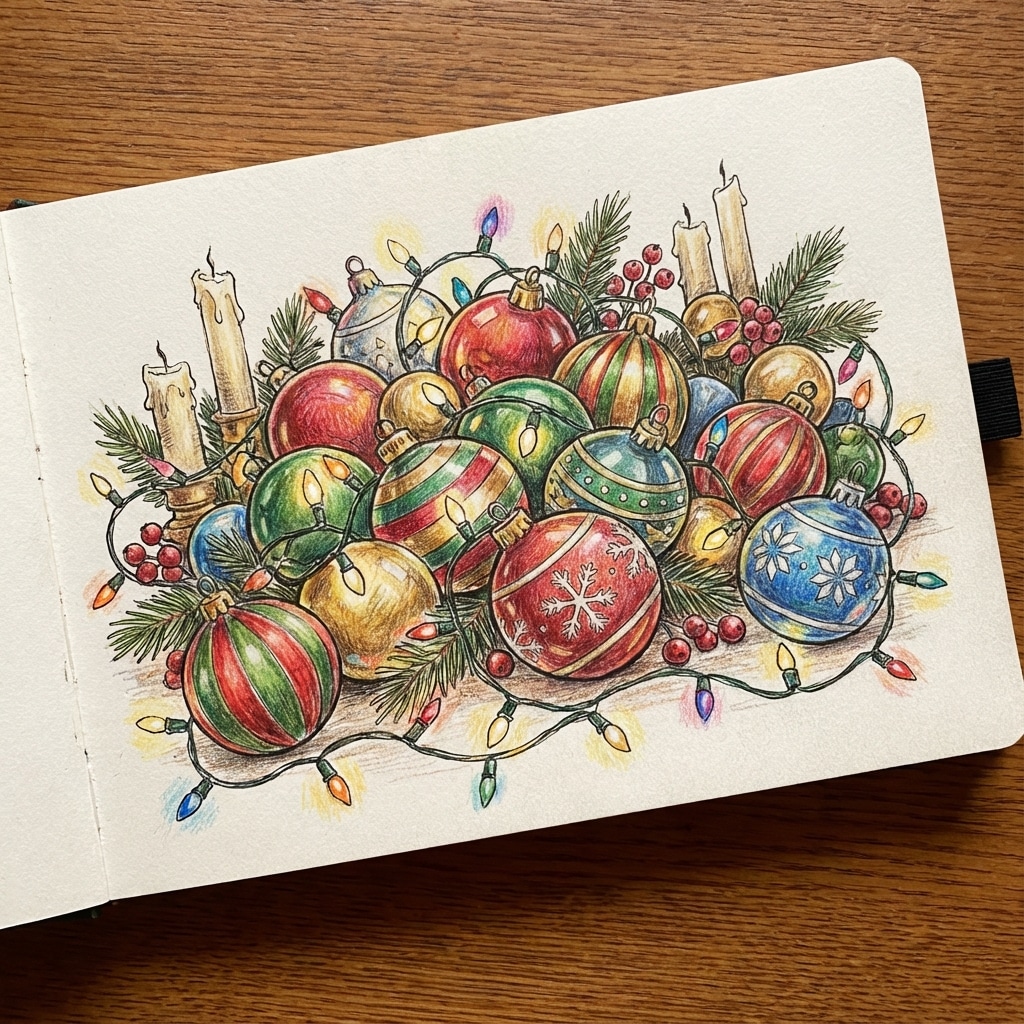
Combine with other Christmas drawings
You can pair your lights with:
- Ornaments and baubles hanging from the same wire
- Snowflakes scattered around the page
- Garland, holly, or pine branches on which the lights rest
Each element can share the same color palette, so your illustration feels unified.

Use digital tools for clean and repeatable designs
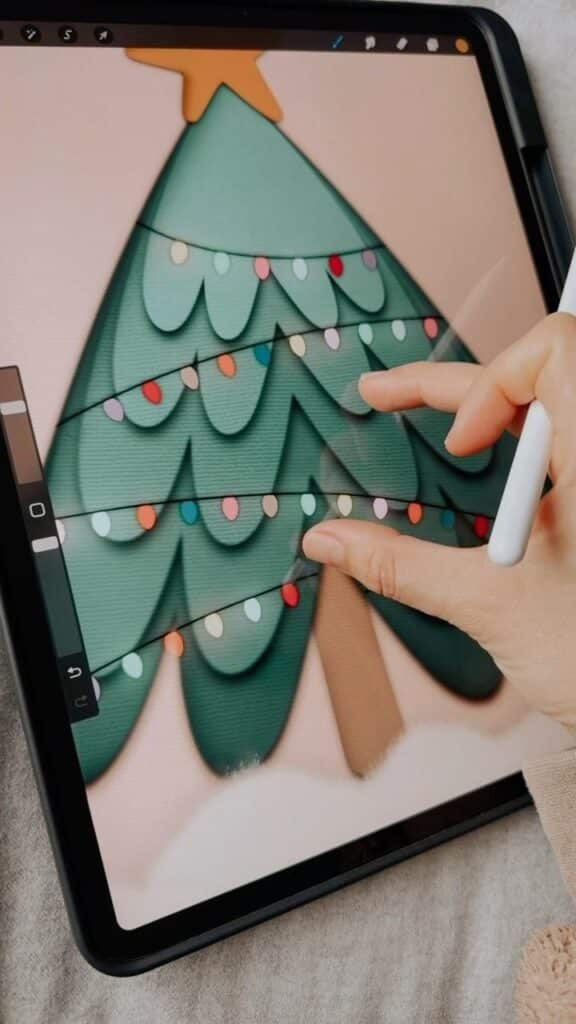
If you enjoy digital art, you can adapt everything you learned about how to draw Christmas lights to your tablet or drawing software.
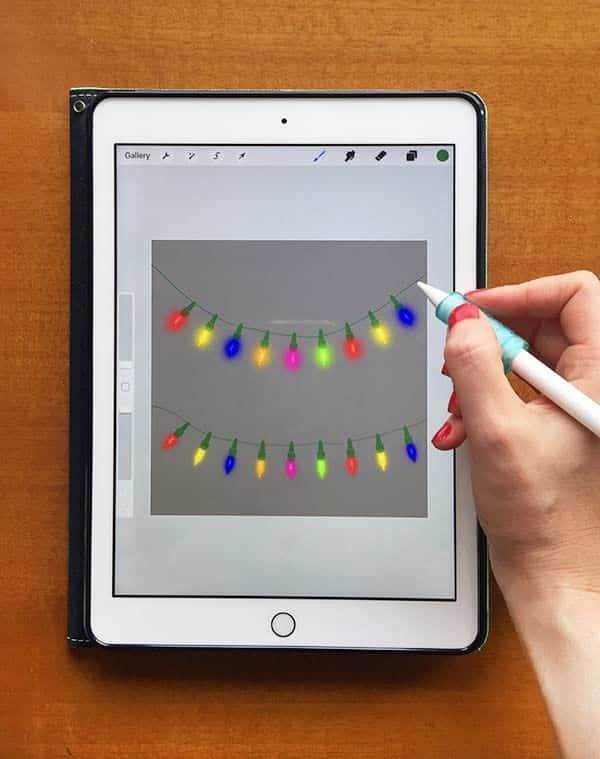
Create a reusable “light bulb” brush or stamp
- Draw a single bulb and socket on one layer.
- Turn it into a brush, stamp, or copy-and-paste element in your program of choice.
- Place copies along a curved wire, adjusting the angle of each bulb so they follow the line.
This lets you quickly create matching Christmas light borders or patterns for digital cards, headers, or printable sheets.
Experiment with digital glow effects
Most drawing apps have tools to simulate a glow:
- Use a soft airbrush with low opacity behind each bulb.
- Add a bright dot or small streak of white at the highlight point.
- Slightly blur the halo around each bulb for a soft, festive effect.
Even if you mostly draw on paper, trying digital tools can give you new ideas for shading and composition that you can bring back to your traditional work.
Frequently asked questions about how to draw Christmas lights
How do you draw Christmas lights step by step?
You can draw Christmas lights in five main steps:
- Sketch a curved “u” shaped line for the wire.
- Add small rectangles evenly along the line to serve as sockets.
- Draw bulb shapes on top of each rectangle, using teardrops, ovals, or circles.
- Outline with a pen, then erase the extra pencil guidelines.
- Color the bulbs, add highlights, and draw short lines around them if you want a glowing effect, as suggested by tutorials from Amy Latta Creations (Amy Latta Creations).
How can you make drawn Christmas lights look like they are glowing?
To make your Christmas lights look like they are glowing:
- Leave a small uncolored highlight on each bulb or add one with a white gel pen.
- Darken the edges of each bulb slightly so the center appears brighter.
- Add faint, short lines or a soft halo around the bulbs using a light color, which Coco Wyo recommends for a twinkling effect (Coco Wyo).
- Use a darker or colored background so the bright bulbs pop.
What is the easiest way for kids to draw Christmas lights?
For kids, keep the process very simple:
- Draw one or two curved lines for the wires.
- Add small rectangles or short lines along them.
- Draw circles or simple ovals on top of each rectangle.
- Color each bulb a different bright color.
Art Projects for Kids tailors its Christmas lights drawing projects to elementary-level artists, usually completing everything in about 45 minutes, which is a child-friendly timeframe for a full drawing with color (Art Projects for Kids).
What shapes work best for Christmas light bulbs?
You can use several standard shapes for Christmas light bulbs:
- Teardrops for a classic, retro feel
- Rounded ovals for “fairy light” or cafe-style strands
- Circles for a playful, cartoon look
- Longer pointed ovals for large outdoor C7 or C9 style bulbs
Try drawing a row of each shape to see which style matches the mood you want for your holiday drawing.
How long does it take to draw Christmas lights?
Your time will depend on how detailed you want to be, but as a guideline, Art Projects for Kids estimates that a full Christmas lights drawing, including sketching, outlining, and coloring, can be completed in about 45 minutes (Art Projects for Kids).
If you are doing a quick sketch or a small border on a card, you might finish in 10 to 15 minutes once you are familiar with the steps.
When you break the process into clear steps, learning how to draw Christmas lights becomes both manageable and fun. Start with a single strand and a few bright colors, then build up to full-page scenes, holiday cards, and more complex compositions. With a bit of practice, you will have a whole collection of festive light drawings ready to brighten your art all season long.
- 78shares
- Facebook0
- Pinterest78
- Twitter0
- Reddit0