
Drawing a convincing 3D circle is one of the most important foundational skills an artist can master. While a circle is a simple 2D shape, turning it into a believable 3D form — a sphere, ring, or volumetric object — requires an understanding of form, light, perspective, and shading.
Whether you’re sketching traditionally with pencil or working digitally, the ability to draw a 3D circle unlocks everything from realistic portraits and still lifes to tattoo designs, logos, and concept art. This guide breaks the process down step by step, moving from basic construction to advanced shading techniques used by professional artists.
What Is a 3D Circle in Drawing?
In art, a “3D circle” usually refers to one of three things:
- A sphere (a solid circle with volume)
- A 3D ring or torus (a hollow circular form)
- A circle shown in perspective, using ellipses
Artists rarely draw shapes — they draw forms. A 3D circle is about convincing the viewer that the object exists in space, not on the page.
Why Learning 3D Circles Matters for Artists
If you can draw a sphere well, you can:
- Shade faces more realistically
- Understand anatomy and muscle mass
- Draw believable objects under light
- Improve tattoo designs and realism
- Strengthen perspective and depth in sketches
Most complex forms — heads, joints, fruits, planets — start as spheres.
Tools You’ll Need (Traditional or Digital)
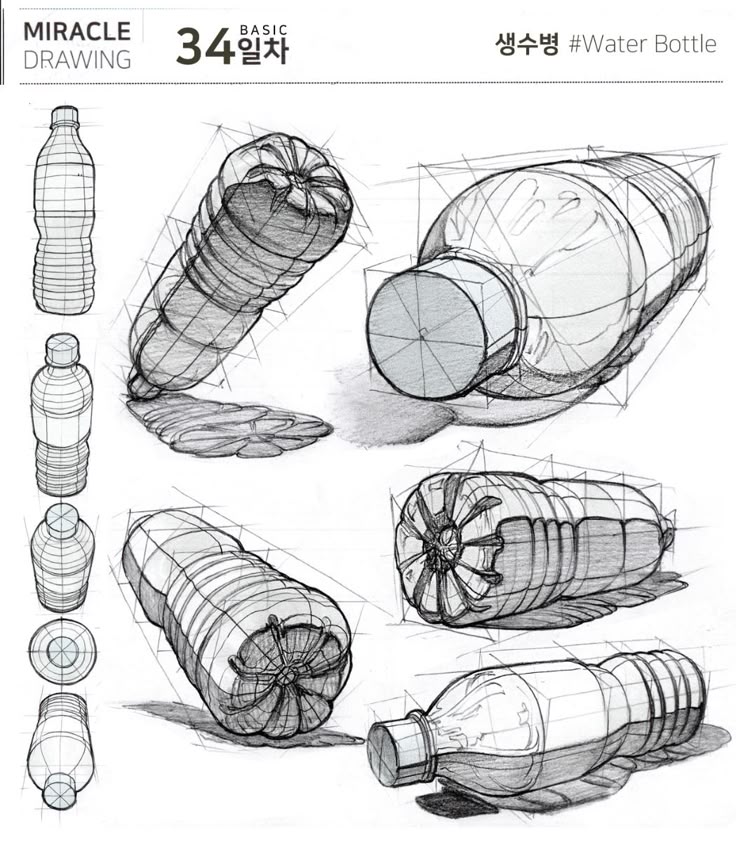
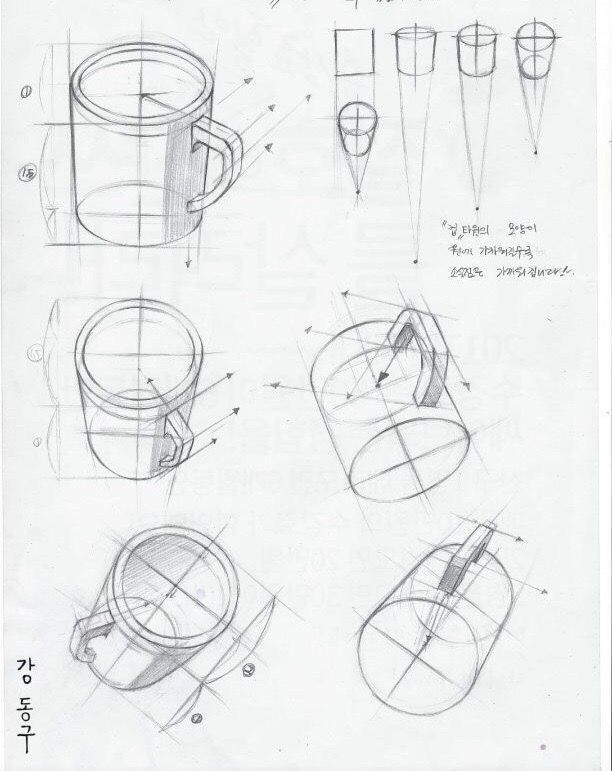
You don’t need much to practice, but quality helps.
Traditional
- HB, 2B, 4B pencils
- Eraser (kneaded preferred)
- Blending stump or tissue
- Smooth or medium-texture paper
Digital
- Round brush with pressure sensitivity
- Soft airbrush for blending
- Hard brush for edges
- Layers (especially for construction vs shading)
Method 1: The Basic 3D Circle (Sphere Construction)
This is the foundation method every artist should master.
Step 1: Draw a Clean Circle
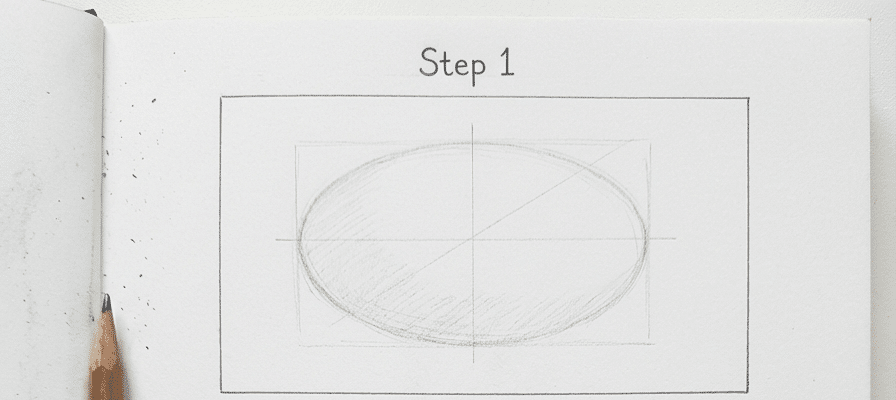
- Don’t over-sketch — confidence matters
- Rotate the paper if needed
- Imperfect circles are fine; symmetry improves with practice
Step 2: Add a Curved Vertical Axis
Draw a curved line from top to bottom, following the circle’s contour.
- This line shows the sphere’s rotation in space
- Avoid straight lines — curvature sells depth
Step 3: Add a Curved Horizontal Axis
Draw a second curved line across the middle.
- Think of it like the equator on a globe
- These two lines turn a flat circle into a form
At this stage, you’ve created a wireframe sphere.
Method 2: Turning the Circle into a Realistic 3D Sphere (Shading)
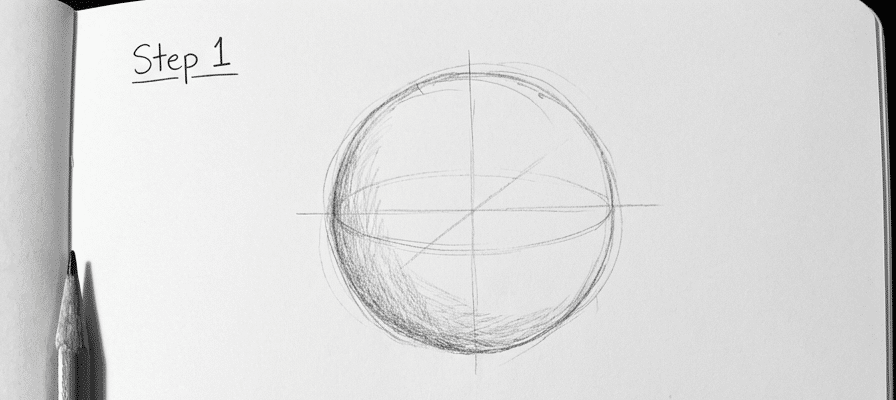
Shading is what truly makes a circle look 3D.
Step 1: Choose a Light Source
Decide before shading:
- Top-left
- Top-right
- Directly above
Consistency is critical.
Step 2: Understand the Five Shading Zones
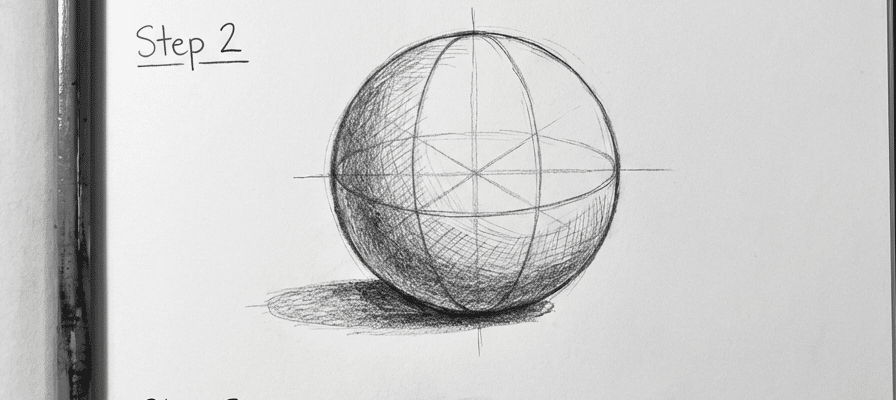
A realistic sphere contains:
- Highlight – brightest point
- Light tone – surrounding highlight
- Mid-tone – transition area
- Core shadow – darkest area
- Reflected light – subtle light bouncing back on the shadow side
Never outline these areas — let gradients define them.
Step 3: Shade Gradually
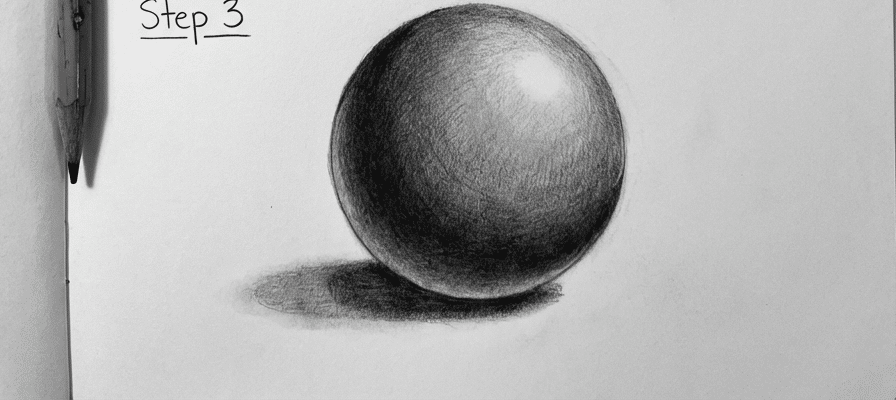
- Start with light pressure
- Build value slowly
- Blend smoothly, but don’t over-blend (muddy shading kills form)
Step 4: Add the Cast Shadow
A sphere floats without a shadow.
- Cast shadow should be darkest near the base
- Fade outward
- Match the light direction
This step grounds the form in space.
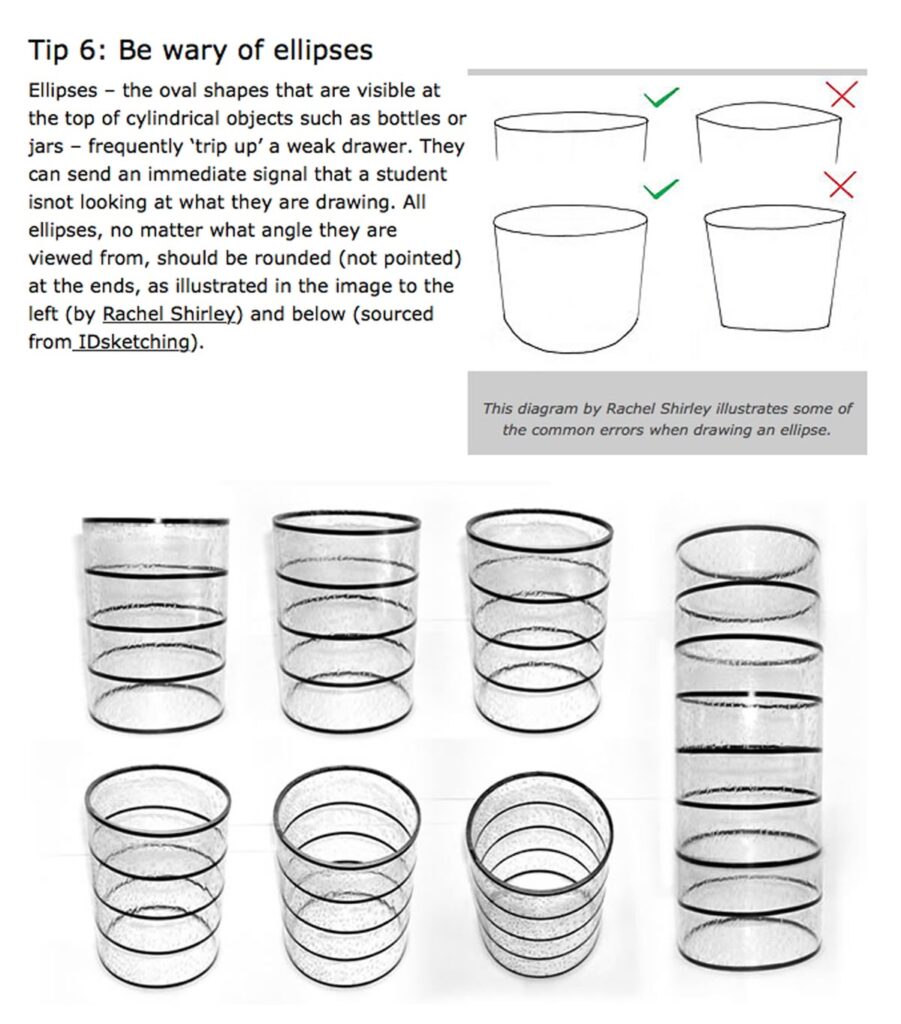
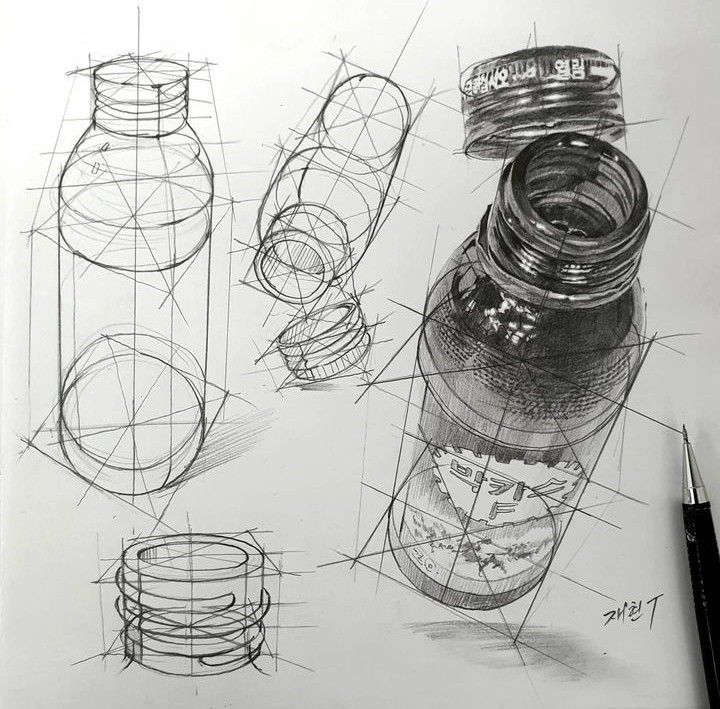
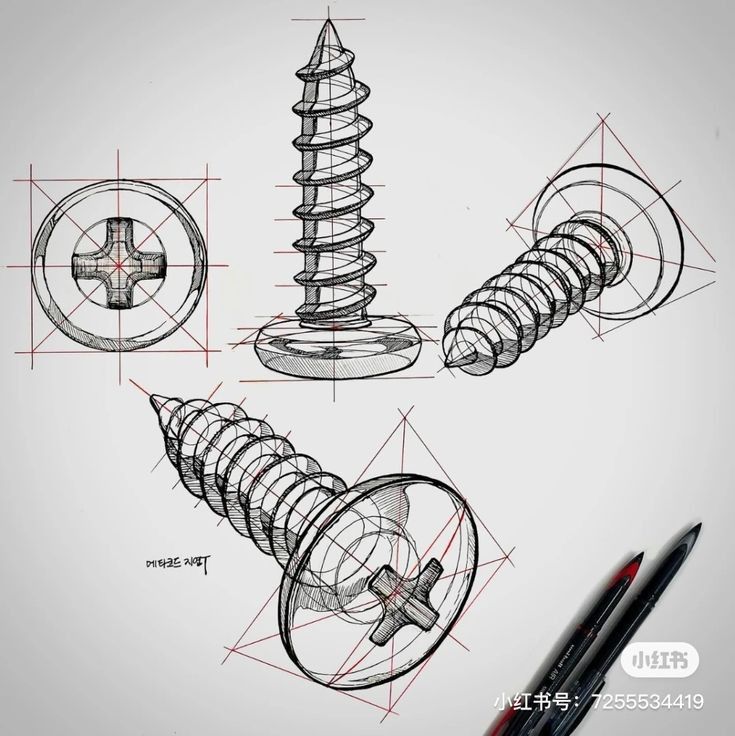
Method 3: Drawing a 3D Circle Using Ellipses (Perspective)
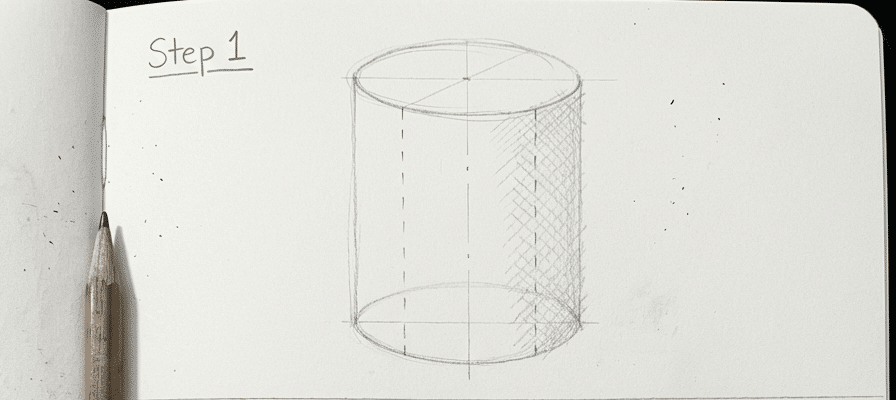
This method is essential for:
- Technical drawing
- Logos
- Cylinders and rings
- Architecture and product sketches
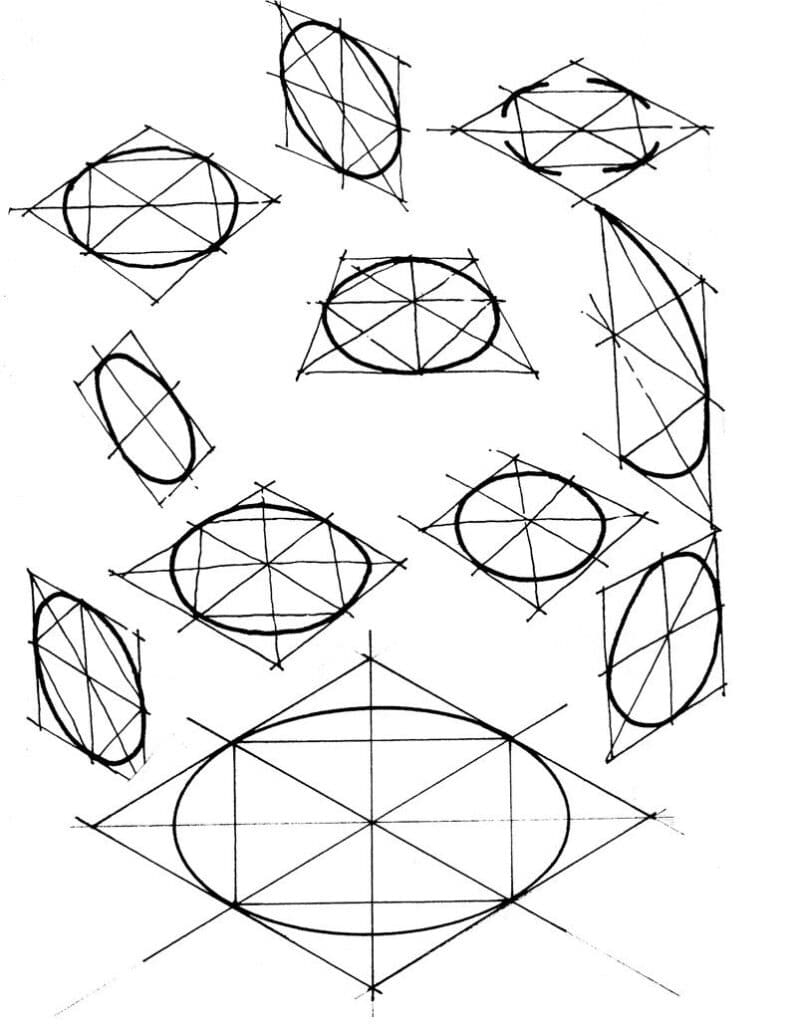
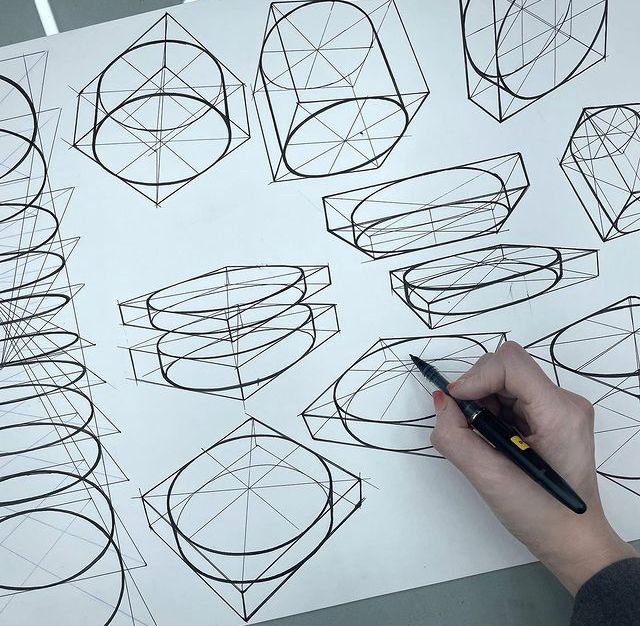
Step 1: Draw an Ellipse
An ellipse is a circle in perspective.
- The more stretched it is, the more extreme the angle
Step 2: Duplicate the Ellipse
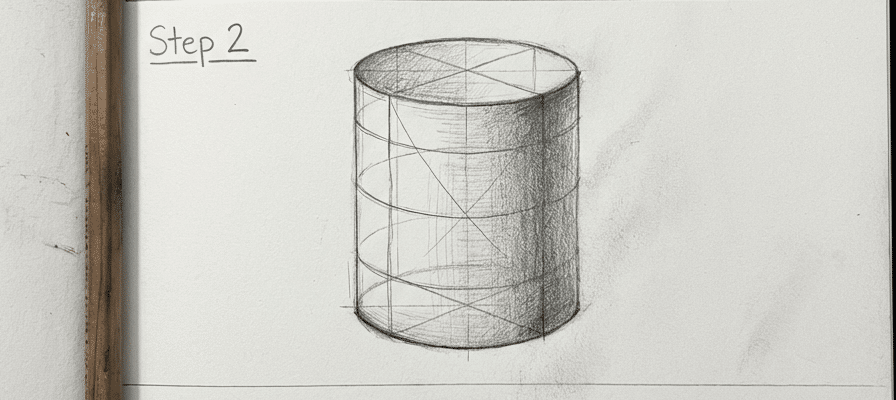
Offset it slightly backward in space.
Step 3: Connect the Edges
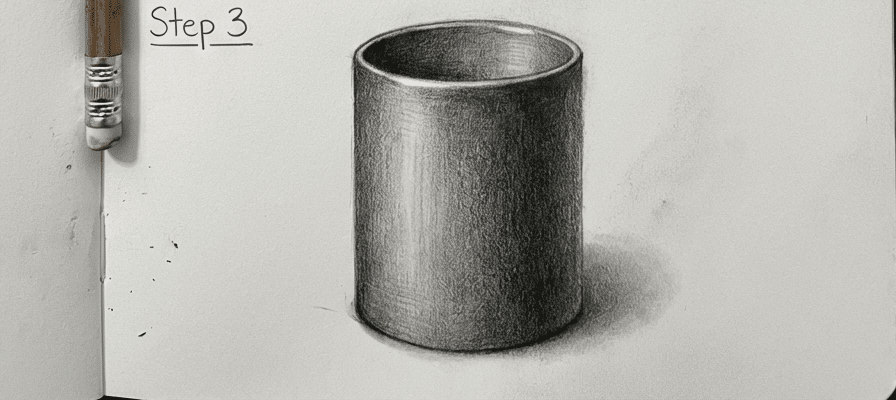
Use straight or slightly curved lines.
Step 4: Erase Hidden Lines
Remove the back-facing edges that wouldn’t be visible.
This creates the illusion of depth and rotation.
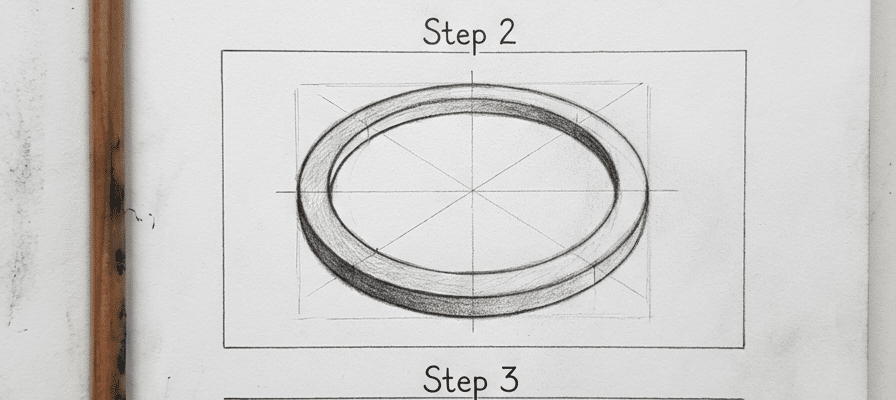
Method 4: Drawing a 3D Ring or Hollow Circle
A 3D ring (torus) is popular in:
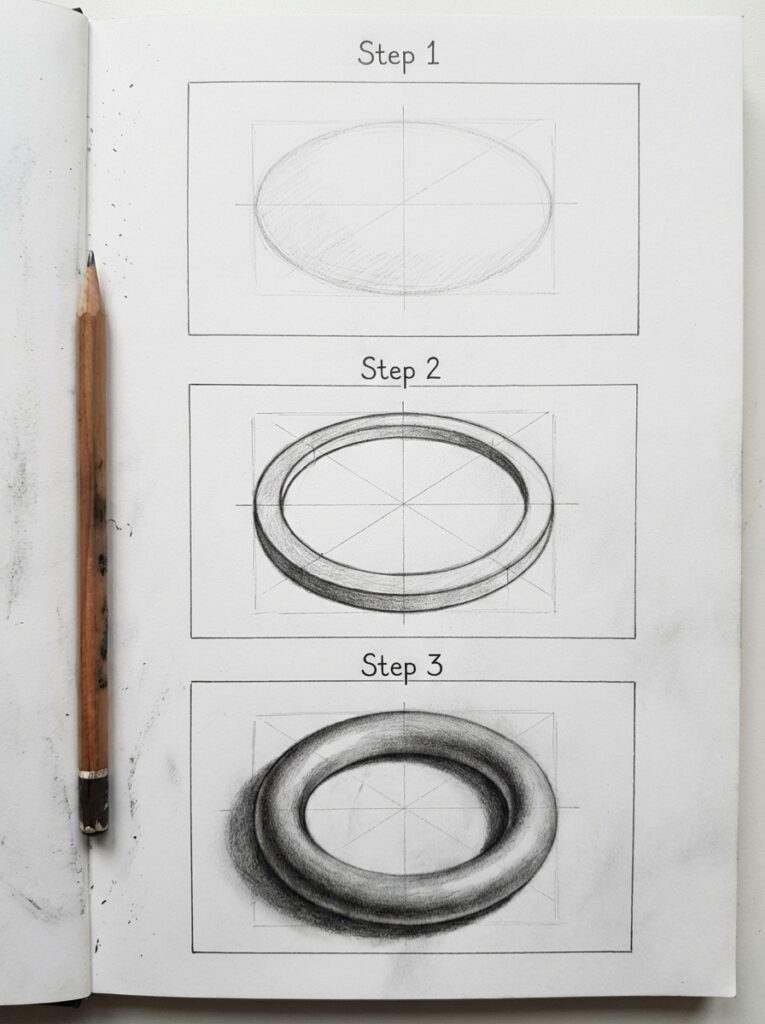
- Tattoo designs
- Graphic art
- Symbolism and logos
Steps:
- Draw two concentric circles
- Offset the inner circle slightly
- Shade the inner edge darker
- Add highlights along the outer curve
Focus on edge thickness — inconsistent width breaks realism.
Advanced Shading Tips for Artists
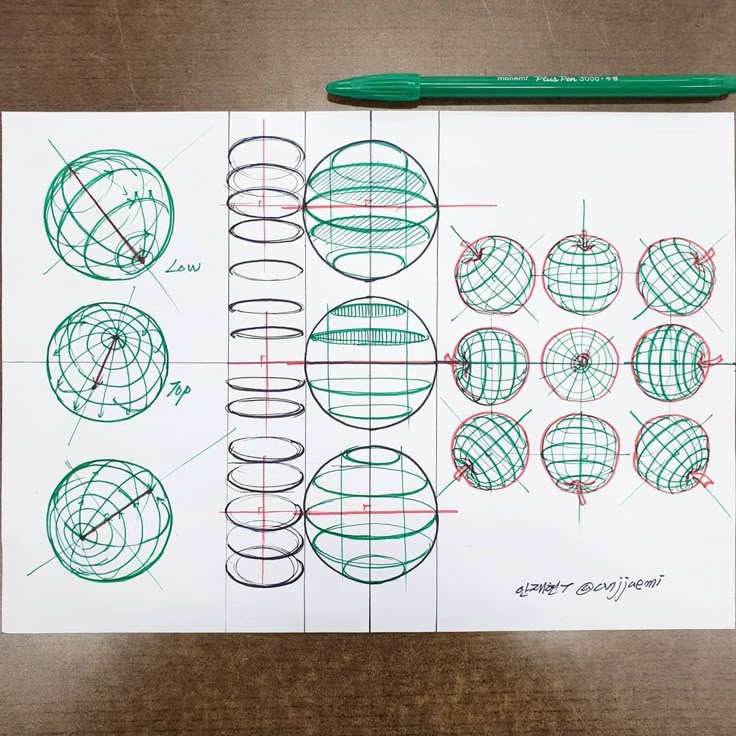
Use Soft Edges Strategically
Hard edges flatten forms. A sphere needs:
- Soft transitions
- Minimal outlines
- Controlled contrast
Avoid Outlining the Circle
Outlines kill realism.
Let value changes define the edge instead.
Think in Planes, Not Lines
Imagine carving the sphere from clay.
You’re sculpting with light, not drawing symbols.
Common Mistakes Artists Make
- Shading evenly (no contrast)
- Using straight lines inside the circle
- Forgetting reflected light
- Inconsistent light source
- Over-blending until details disappear
Practice Exercises to Master 3D Circles
Exercise 1: 10 Spheres a Day
- Different light directions
- Different sizes
- No erasing
Exercise 2: One Sphere, Five Lighting Setups
Train your understanding of light behavior.
Exercise 3: Sphere to Object
Turn a sphere into:
- An apple
- A skull
- A planet
- A character head
How 3D Circles Apply to Real Art Skills
- Portraits: Heads start as spheres
- Anatomy: Joints and muscles use spherical forms
- Tattoo Design: Depth separates amateur from professional
- Digital Painting: Lighting realism begins with spheres
- Concept Art: Strong form reads instantly
Frequently Asked Questions
Is a 3D circle the same as a sphere?
In drawing terms, yes — a 3D circle usually means a sphere or circular form with volume.
How long does it take to get good at drawing 3D circles?
With focused practice, noticeable improvement happens in 1–2 weeks.
Should beginners shade or outline first?
Construction lines first, then shading. Skip heavy outlines.
Are digital and pencil techniques different?
The principles are identical — only the tools change.
Final Thoughts: Why Every Artist Should Master 3D Circles
Learning how to draw a 3D circle isn’t just an exercise — it’s the backbone of realistic drawing. Once you understand how light wraps around a sphere, every other form becomes easier. Artists who master this skill see immediate improvement in confidence, realism, and control.
If you can draw a believable 3D circle, you can draw almost anything.
- 775shares
- Facebook0
- Pinterest775
- Twitter0
- Reddit0