

Understand why Christmas lights coloring pages matter
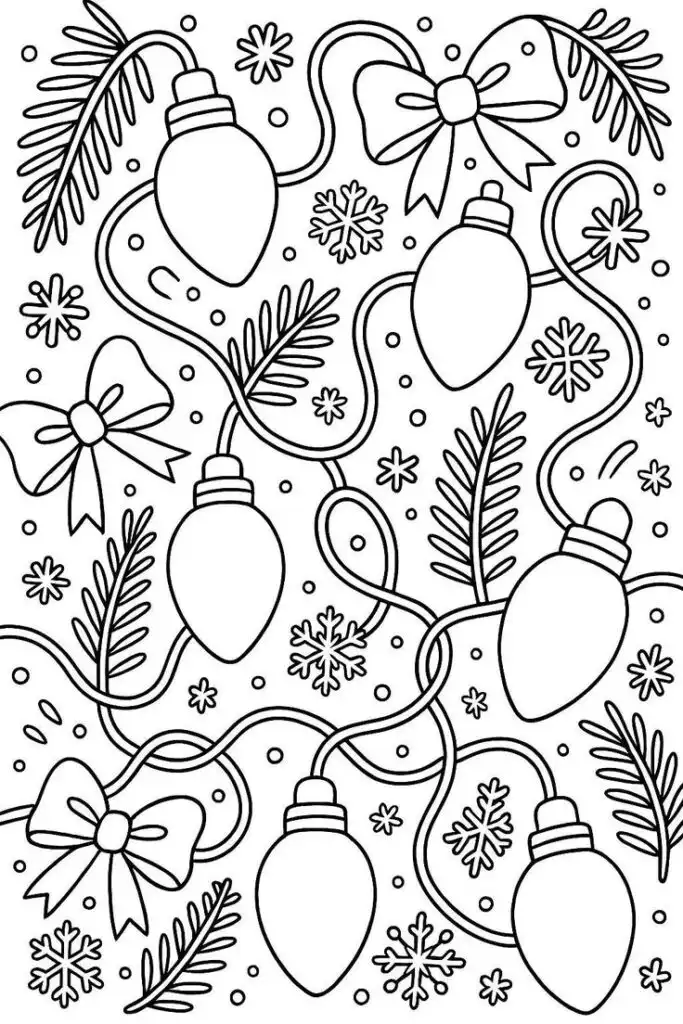
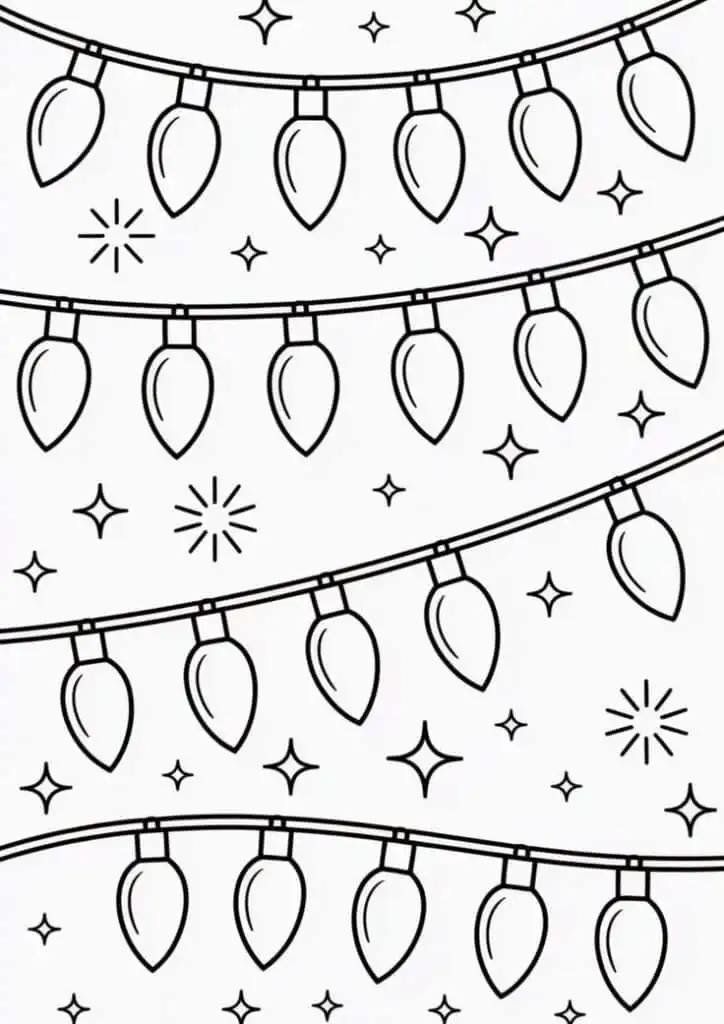
A Christmas lights coloring page is a simple activity that can make a big difference to how families, teachers, and children experience the holiday season. By combining bright bulbs, festive shapes, and creative prompts, these pages help children practice fine motor skills and color recognition while giving adults a calm, low-prep way to bring holiday joy into classrooms and homes.
Websites such as Monday Mandala and Superstar Worksheets offer a wide range of free Christmas lights coloring pages that are ready to download and print. These designs include classic strings of bulbs, trees wrapped in lights, houses decorated for the season, and characters tangled in light strands, all created to encourage experimentation with different color combinations (Monday Mandala, Superstar Worksheets).
For teachers and parents in the United States, these printables provide a quick way to set up a focused, screen-free activity during a busy time of year. They can be used on their own or turned into crafts, math games, and decorations that brighten any space.
Choose the right Christmas lights coloring page
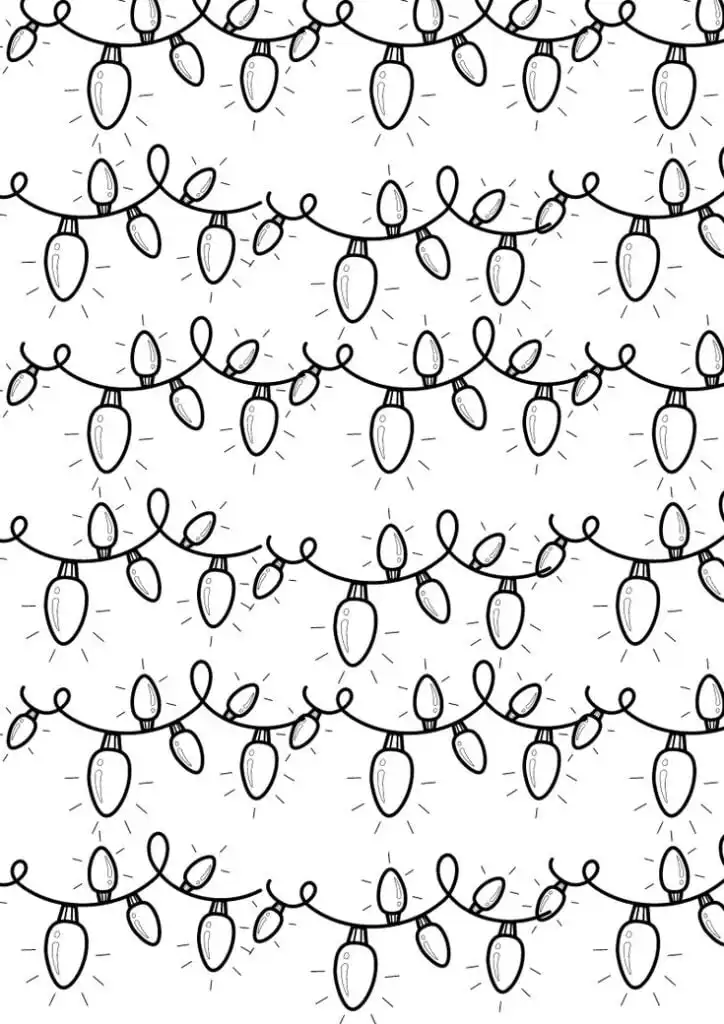
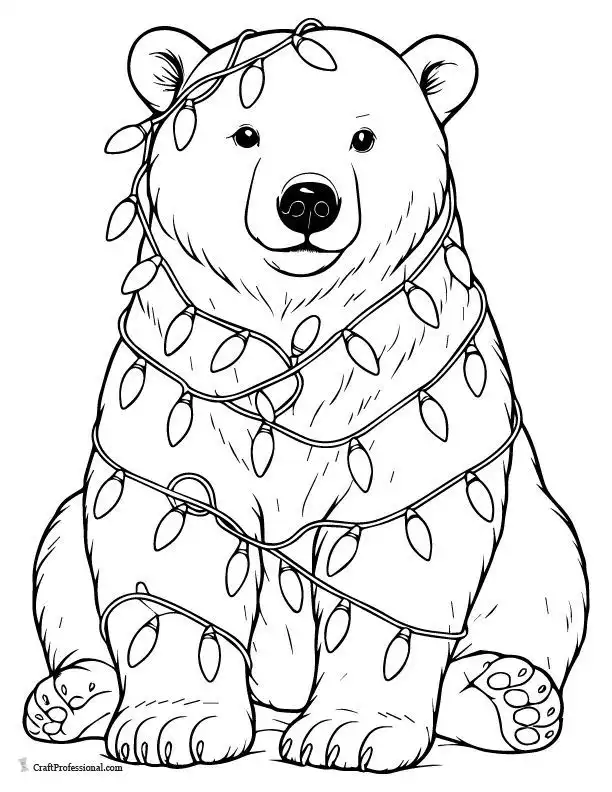
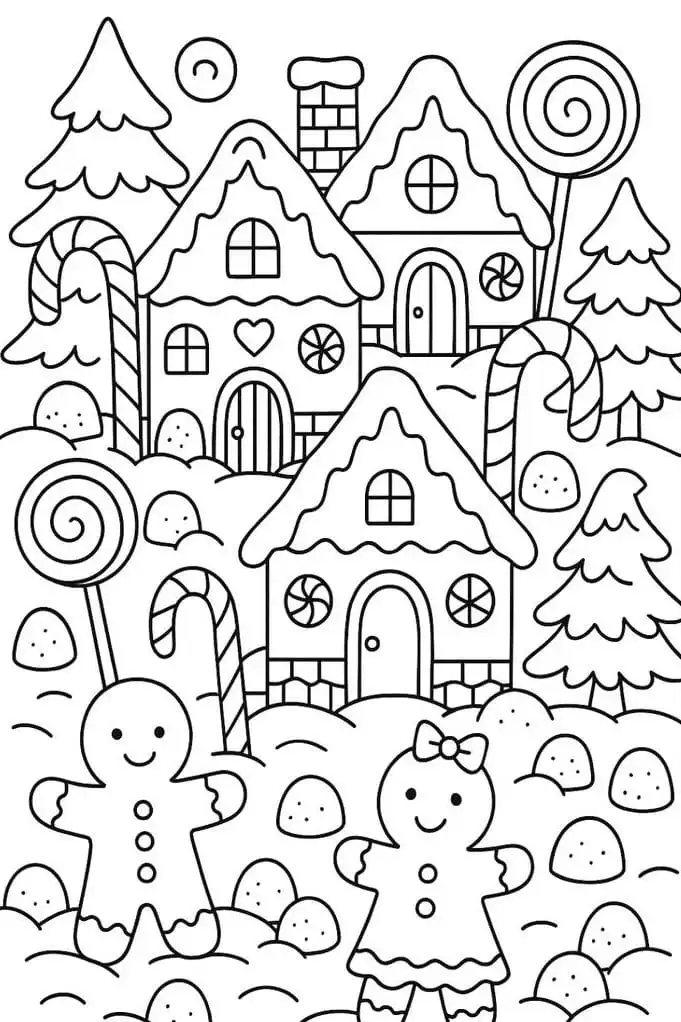
Selecting the right christmas lights coloring page depends on who will use it, how old they are, and what the goal of the activity is.
Match designs to age and skill level
When choosing designs, it helps to think about detail level and how long the child is likely to stay engaged.
Preschool and kindergarten
Large bulbs, thick outlines, and short light strands
Simple scenes such as a single tree with lights or a basic string with repeating shapes
Pages that double as pattern or color matching activitiesSuperstar Worksheets provides large printable pages with strings of lights, a medium page with two bulbs, and a small page with nine bulbs. These formats allow younger children to focus on coloring within clear boundaries, while older students can cut, arrange, and use them for group projects (Superstar Worksheets).
Early elementary
Medium-detail bulbs, trees, and houses
Light strings with gentle curves that still feel manageable
Designs that invite creative choices, such as different bulb shapes and background elements
Older children, teens, and adults
More complex scenes with overlapping light strands
Characters wrapped in lights, night-time street scenes, or detailed decorated houses
Pages that reward shading, blending, and highlight techniques
Monday Mandala features 31 free Christmas lights coloring pages in PDF format, suitable for kids and adults. These range from classic bulbs to more detailed scenes such as houses covered in lights and characters wrapped in glowing strands (Monday Mandala).
Check page format and printing needs
A key advantage of popular christmas lights coloring page resources is that they are ready to print on standard paper sizes.
- Monday Mandala pages are formatted for both US letter and A4 paper, which makes them easy to use in homes and classrooms without resizing or editing (Monday Mandala).
- Superstar Worksheets pages are designed specifically for classroom use and can be printed as large strings, medium designs, or small bulbs suitable for group projects (Superstar Worksheets).
Teachers and parents usually only need access to a printer and basic supplies like crayons, markers, or colored pencils. Glitter glue, sequins, and metallic markers can be added later for a more festive effect.
Prepare materials and workspace
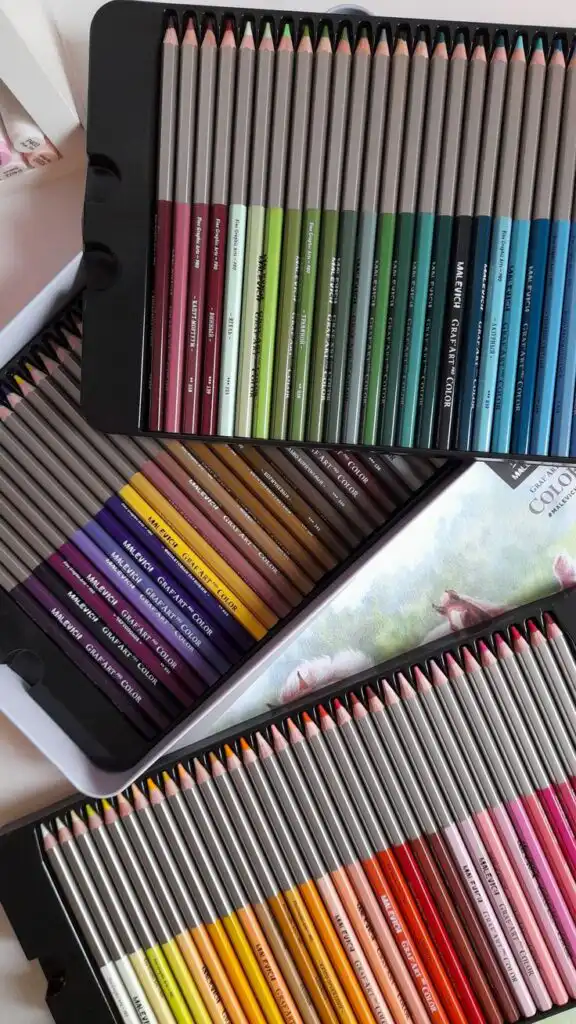
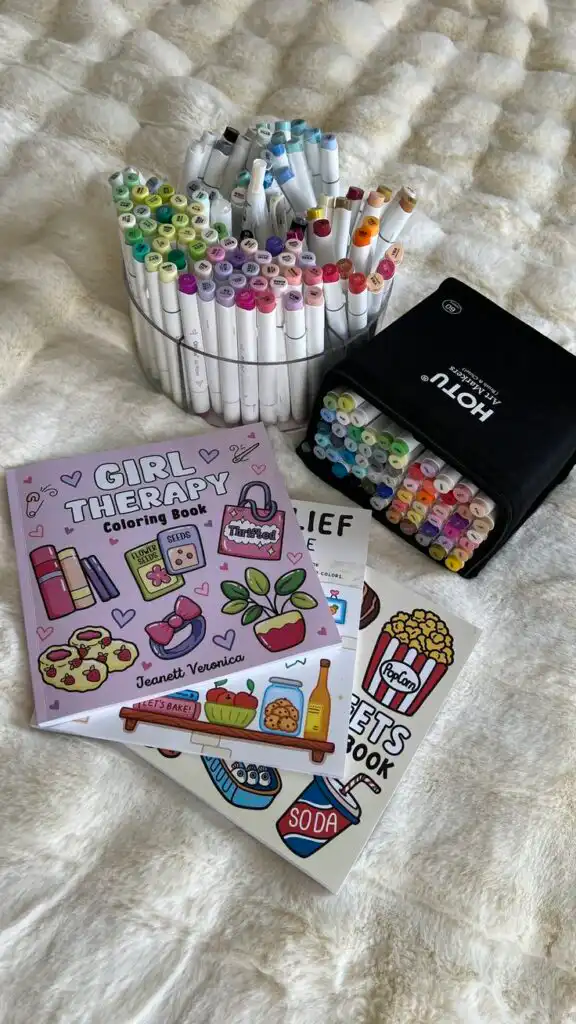
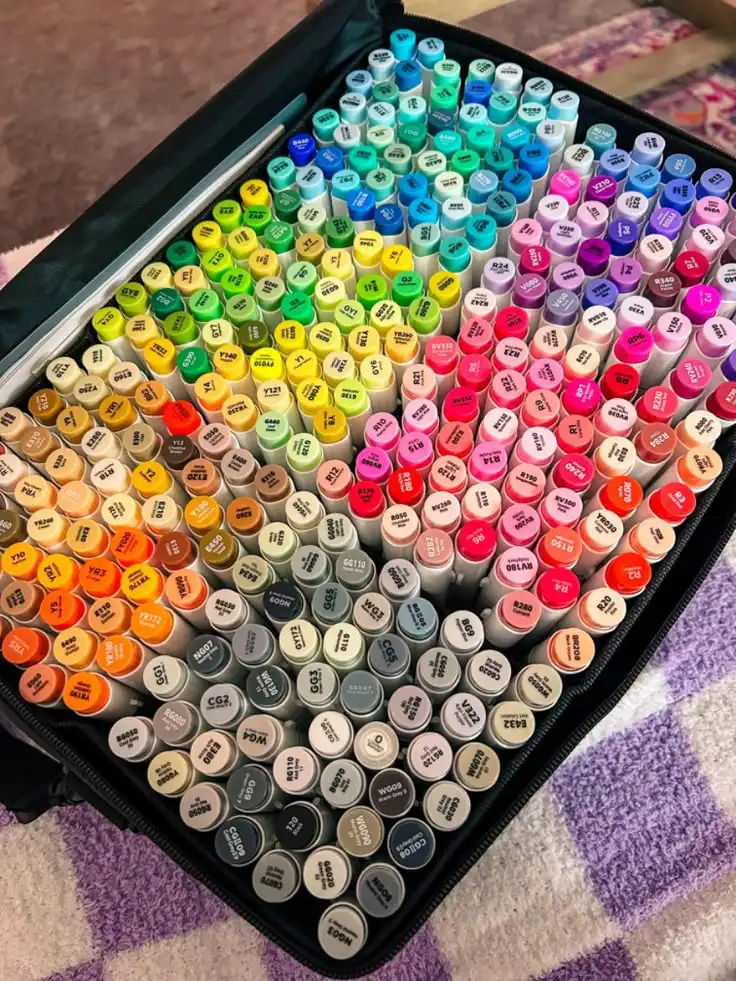
Before anyone starts coloring Christmas lights designs, it helps to set up a clear, calm workspace with the right tools. This reduces interruptions and keeps the focus on creativity and enjoyment.
Gather basic coloring supplies
Most christmas lights coloring pages work well with common art materials:
- Crayons
- Washable markers
- Colored pencils
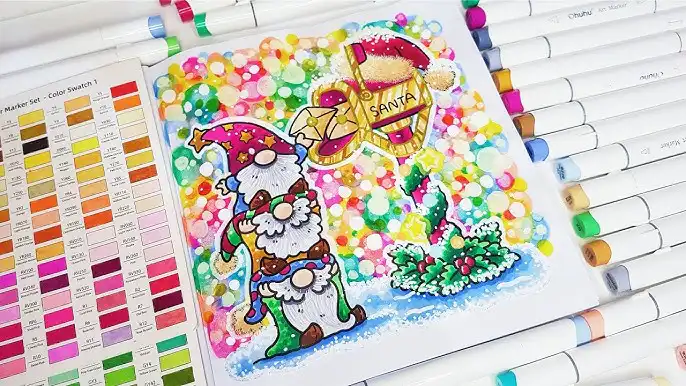
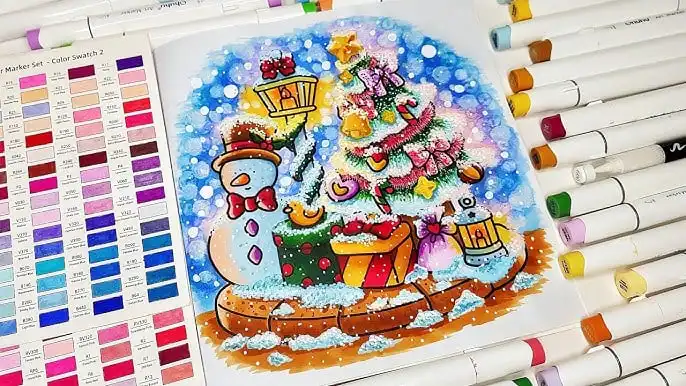
For those who want more advanced results, some coloring guides recommend alcohol markers and gel pens. For example, a step-by-step tutorial from Coco Wyo suggests using Ohuhu alcohol markers along with a Sakura white gel pen to create realistic shine and highlights on Christmas lights (Coco Wyo).
Add optional decorative materials
To make holiday projects more special, teachers and parents may want to include:
- Glitter glue for glowing light halos
- Sequins or small gems to mimic sparkles
- Metallic markers for golden or silver strands and hooks
- Glue sticks and safety scissors for craft extensions
These add-ons are particularly useful if the coloring pages will become banners, ornaments, or bulletin board displays.
Set up a child-friendly space
A well-organized space makes the activity feel inviting:
- Cover tables with scrap paper or a disposable tablecloth
- Provide clipboards or cardboard backing if students color on the floor
- Offer small containers for crayons and markers to prevent rolling
- Keep wipes or paper towels nearby in case of spills
Teachers who plan to use christmas lights coloring pages in learning centers can pre-sort pages by difficulty level and place them in labeled trays. This helps children choose an appropriate challenge independently.
Follow a step-by-step coloring process
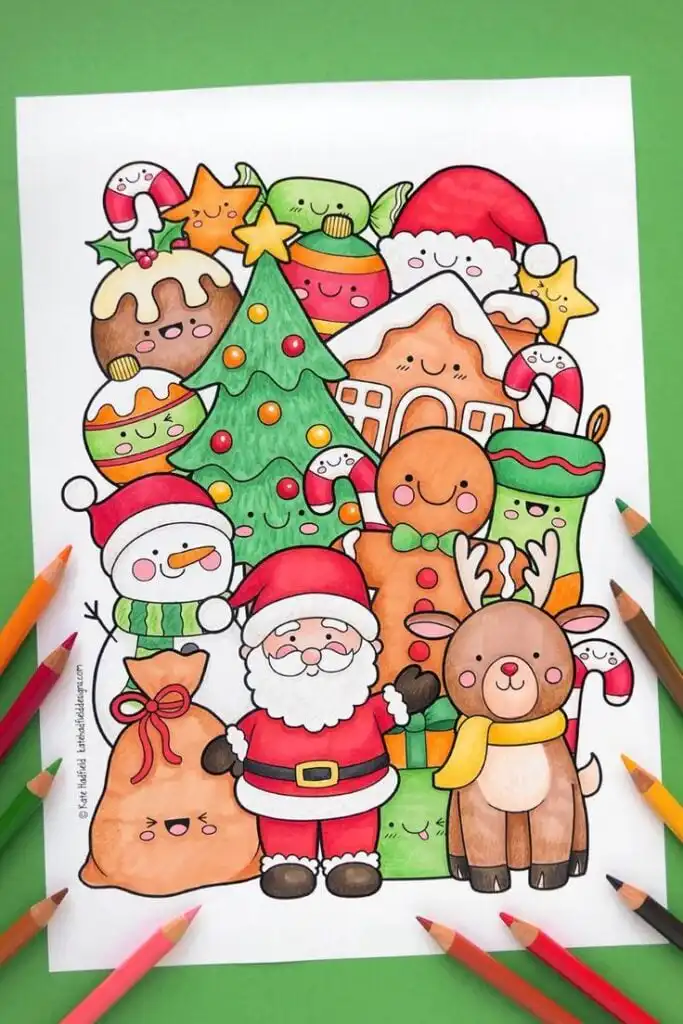
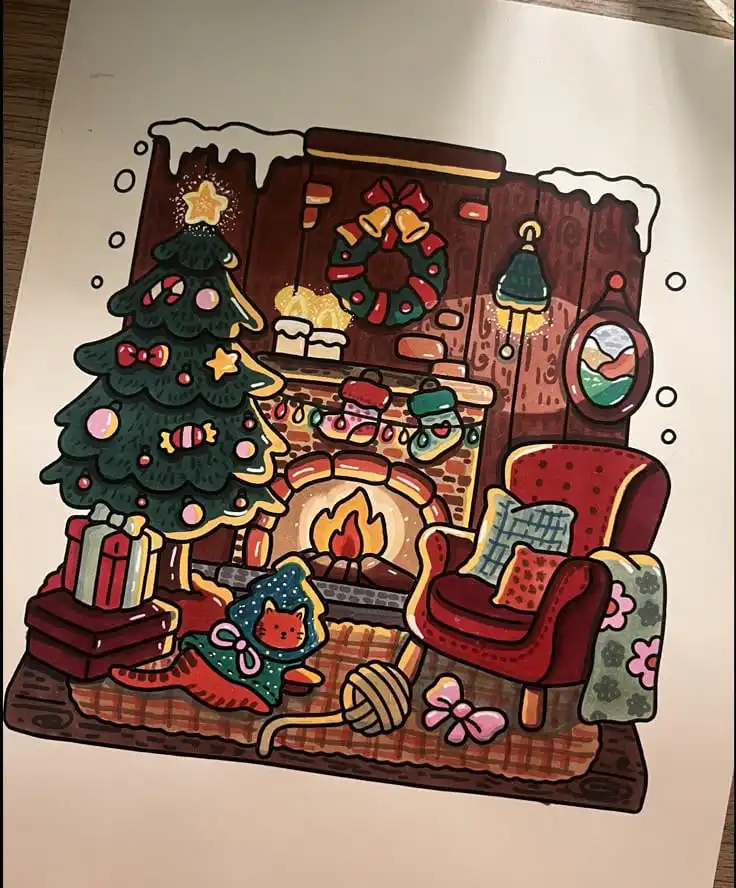
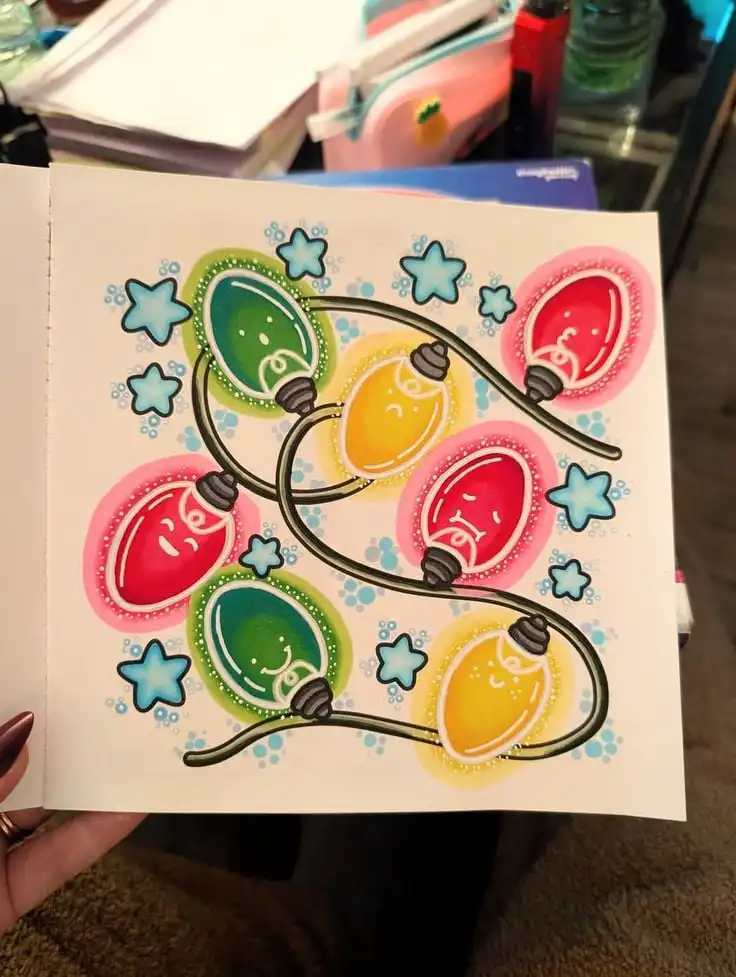
Coloring a christmas lights coloring page can be more engaging when students follow a simple sequence. This helps them think about planning, layering, and composition in a calm and structured way.
Step 1: Discuss colors and mood
Before anyone starts shading bulbs, it is useful to talk briefly about color choices and how they affect the overall look.
Children can be invited to think about:
- Traditional Christmas color schemes such as red, green, gold, and white
- Modern palettes such as teal, pink, silver, and purple
- Warm vs cool colors and how they change the mood of the picture
This short conversation helps students slow down and make intentional choices rather than coloring randomly.
Step 2: Color the background first
Several experienced coloring artists recommend starting with the background. In a tutorial on how to color Christmas lights, Coco Wyo suggests filling the background before working on the bulbs and strings, so that the glowing lights can be layered on top more effectively (Coco Wyo).
Depending on the design, the background might be:
- A night sky in dark blue or purple
- An indoor wall in soft neutral colors
- Snowy hills with light shading
- Simple flat color blocks for younger children
By starting with the background, colorers avoid accidentally smudging or dulling the lights later.
Step 3: Outline and define the light strings
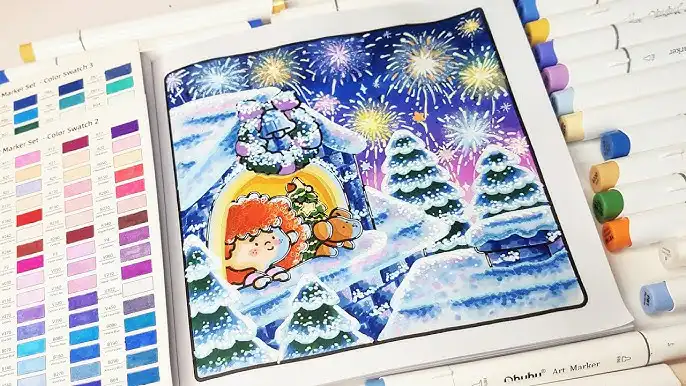
Once the background is in place, it is time to work on the light strings and sockets:
- Trace the string lines with a slightly darker marker or pencil color.
- Fill in the sockets where the bulbs connect, often in gray, dark green, or black.
- Make sure lines are smooth but not too thick so that the bulbs remain the main focus.
Coloring the structure first makes it easier for children to see the pattern and spacing of the bulbs.
Step 4: Choose bulb colors and create a pattern
The bulbs are the heart of every christmas lights coloring page. They offer a chance to explore patterns, repetition, and creativity.
Children and adults can:
- Alternate between two or three colors, such as red, green, and yellow
- Create repeating sequences, such as red-blue-yellow-red-blue-yellow
- Use gradients, for example light blue at the tip, dark blue near the socket
Printable pattern activities that use Christmas light bulbs show how powerful this approach can be. A Christmas Lights Pattern Activity uses colored bulbs to help children recognize and extend patterns, with boards that include both fully colored sequences and blank spaces so students can fill in missing colors (Teachers Pay Teachers).
Step 5: Add highlights and glow
For those who want a more realistic, glowing effect:
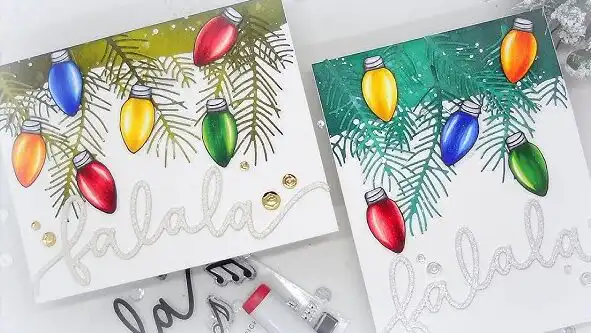
- Leave a small white area on each bulb to act as a highlight.
- Blend two or more shades of the same color, lighter at the highlight and darker toward the base.
- Use a white gel pen to add a crisp reflection line across the bulb.
- Very lightly shade around the bulb with a soft color to suggest a halo of light.
This technique is described in detail in the Coco Wyo guide, where the artist colors the bulbs in various hues and then adds gel pen highlights to ensure each light appears to shine (Coco Wyo).
Step 6: Refine details and personalize
At the final stage, colorers can:
- Add tiny stars or snowflakes around outdoor lights
- Draw small ornaments or garlands near indoor lights
- Write short messages like “Joy,” “Peace,” or “Merry Christmas” in open spaces
Encouraging students to add these final touches helps them feel ownership of the artwork.
Turn coloring pages into festive crafts
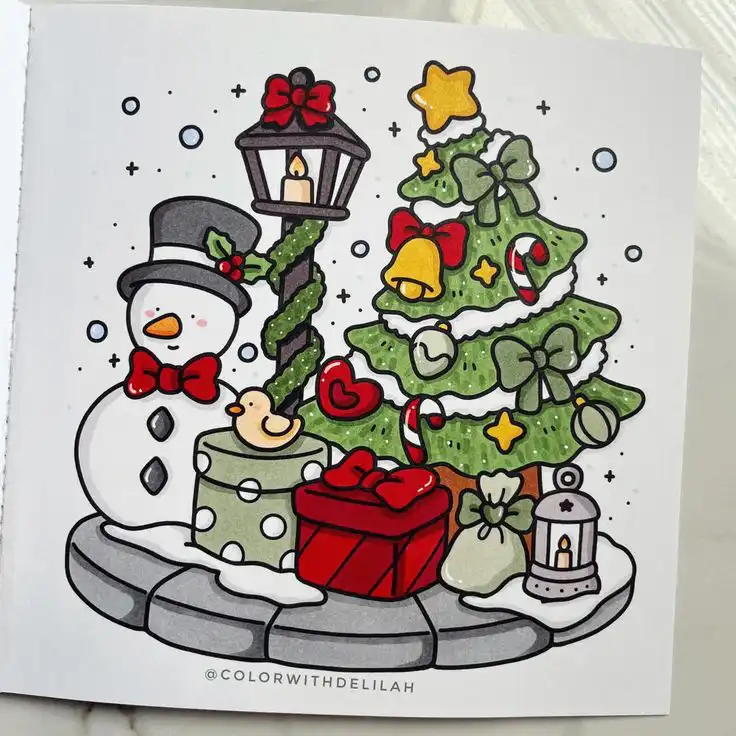
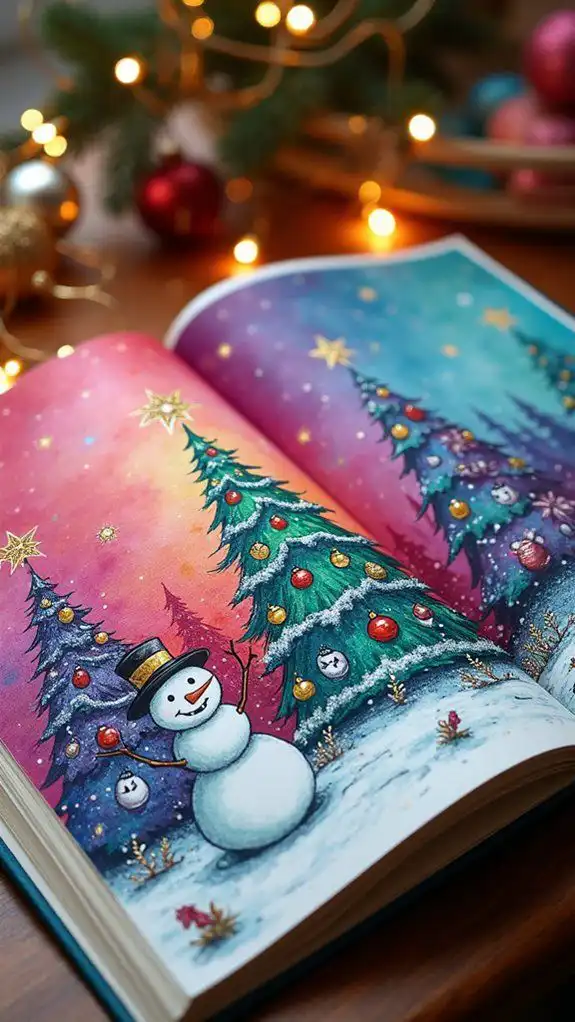
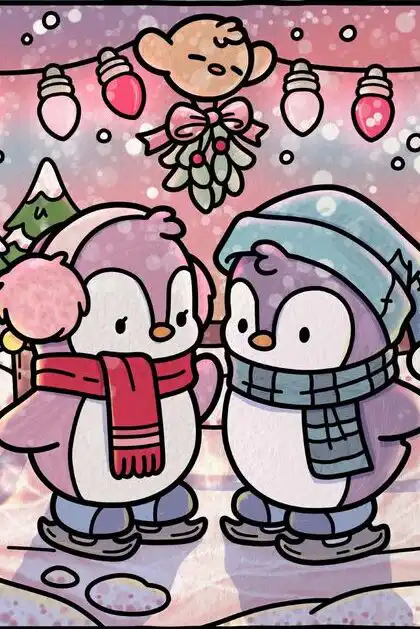
A single christmas lights coloring page can be the starting point for many holiday crafts. This is one reason these pages inspire so much seasonal joy in classrooms and homes.
Create banners and garlands
Colored bulbs can quickly become banners that decorate walls, hallways, or bulletin boards.
Possible projects include:
Classroom light banners
Students color individual light bulbs or short strands, cut them out, and attach them to ribbon or string to create a long banner. Monday Mandala suggests this approach as one of several craft ideas that pair with their Christmas lights designs (Monday Mandala).Patterned paper chains
Teachers can ask students to color light bulbs in patterned sequences, then connect them in order to demonstrate understanding of pattern continuation.Name banners
Each child colors one bulb and writes their name on it, then the bulbs are hung in a row across the room.
Make ornaments and keepsakes
Smaller christmas lights coloring pages or cropped sections of larger pages can be turned into ornaments.
For example:
- Cut out individual bulbs from a small-bulb page, laminate them, and add a ribbon loop.
- Use colored and cut-out light bulbs to decorate picture frames, as suggested in Monday Mandala’s list of craft ideas that also includes real-look ornaments, headbands, and decorative wreaths (Monday Mandala).
- Glue decorated bulbs onto cardstock circles, punch a hole, and add yarn to hang them on a classroom tree or display board.
These activities can double as inexpensive, personalized gifts for family members.
Decorate functional items
Some coloring pages are sturdy enough to become part of daily objects during the holiday period:
- Wrap decorated strips of bulbs around jars to make candle holders or pencil cups.
- Adhere colored bulbs to pet bowls, mugs, or reusable cups. Monday Mandala notes that Christmas lights coloring designs can be used to decorate items like Christmas mugs and pet bowls, which introduces a practical element to the creative work (Monday Mandala).
- Use clear tape or contact paper to turn colored lights into removable stickers for windows and desktops.
By integrating art into everyday objects, these pages keep the sense of holiday excitement alive beyond the initial coloring session.
Integrate coloring into learning activities
A christmas lights coloring page is more than an art project. It can support different areas of learning, especially for younger children.
Strengthen fine motor and pre-writing skills
Coloring within lines helps children practice:
- Grip strength
- Hand-eye coordination
- Controlled movement in small spaces
Using different tools, such as thick crayons and fine markers, encourages children to adjust pressure and control, which prepares them for writing.
Build math and pattern recognition
Christmas light designs work especially well for pattern-based math activities.
Teachers can:
- Ask students to copy a color pattern on a light strand.
- Provide a sequence with one or two missing bulbs and invite children to fill them in correctly.
- Use black and white light bulb strips that students color and tape together to create long patterned strands.
The Printable Christmas Lights Pattern Activity on Teachers Pay Teachers includes color pattern boards and black and white strips. The strips print three per page and can be colored, combined, and even used with magnets, which supports skill assessment and small group work (Teachers Pay Teachers).
Support literacy and themed centers
Christmas lights coloring pages can be paired with seasonal literacy resources:
- Students might complete a Christmas word search and then color a light strand using words they found as a starting point for color choices.
- Writing prompts can ask children to describe a house or tree they decorated with colored lights.
- Children can label bulb colors or write short sentences under a completed page.
Superstar Worksheets notes that Christmas Lights Coloring Pages integrate well with other Christmas worksheets, such as word searches, and are suitable for morning work or creative centers in December (Superstar Worksheets).
Use pages in classrooms and group settings
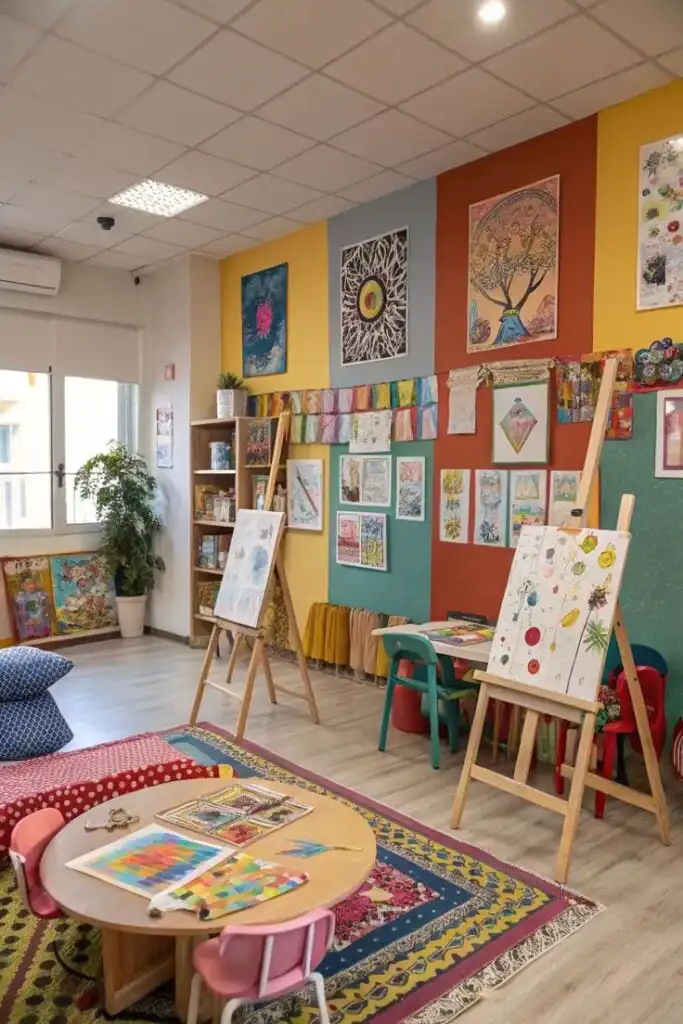

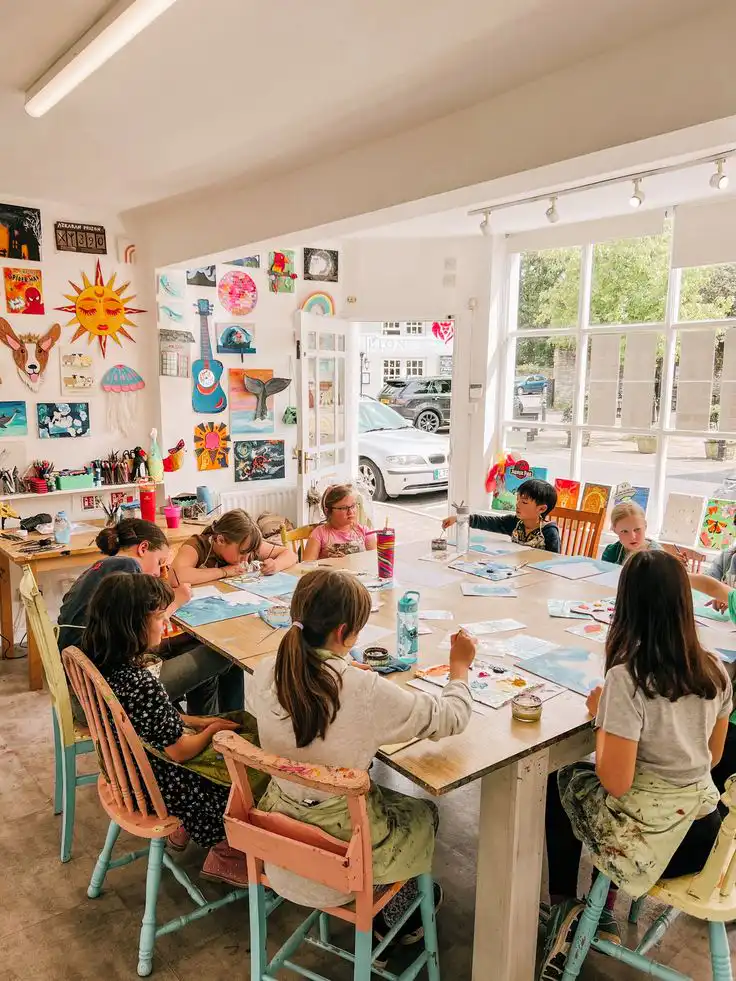
When used thoughtfully, christmas lights coloring pages can shape the tone of a classroom or group program throughout the holiday season.
Set up seasonal learning centers
Teachers may designate a holiday art or math center that uses Christmas lights pages in rotation:
Art center
Students choose from lights-themed coloring pages, add glitter or sequins, and display their work.Math center
Children use pattern strips, cut-out bulbs, and pattern boards to practice creating and extending sequences.Writing center
Completed pages serve as visual prompts for short stories or descriptive paragraphs.
These centers help maintain routine and structure at a time of year that can feel unsettled for some students.
Encourage collaboration and shared displays
Collaborative projects help build community and shared excitement.
Ideas include:
- A large classroom tree on a bulletin board, decorated with nine-bulb pages where each student colors a small section, as prompted by the smaller printables from Superstar Worksheets (Superstar Worksheets).
- A hallway gallery of different christmas lights coloring page styles from multiple sources, showing how the same theme can be interpreted in many ways.
- Group “light up the town” scenes where each child colors a house and lights, then the pages are assembled into one long street.
These shared displays can be revisited over several weeks, reminding students of their contributions and building a sense of ongoing celebration.
Extend coloring into holiday routines at home
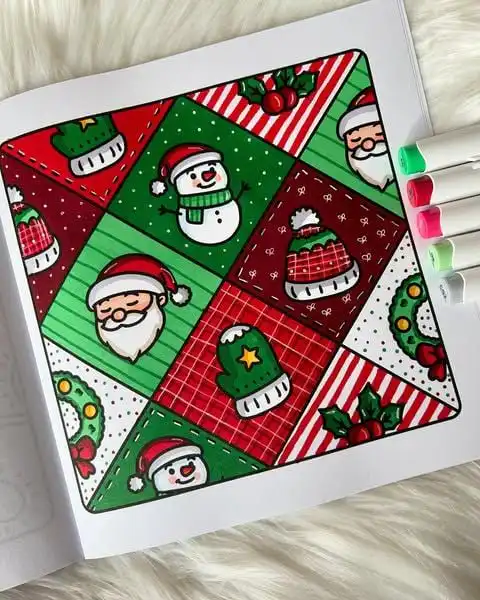
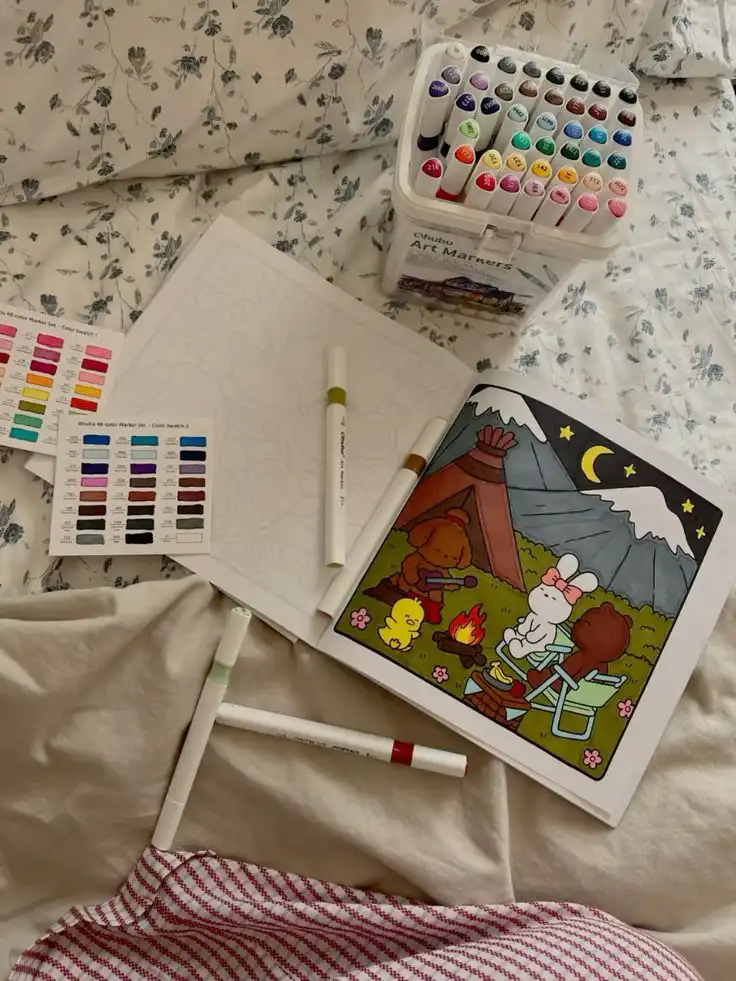
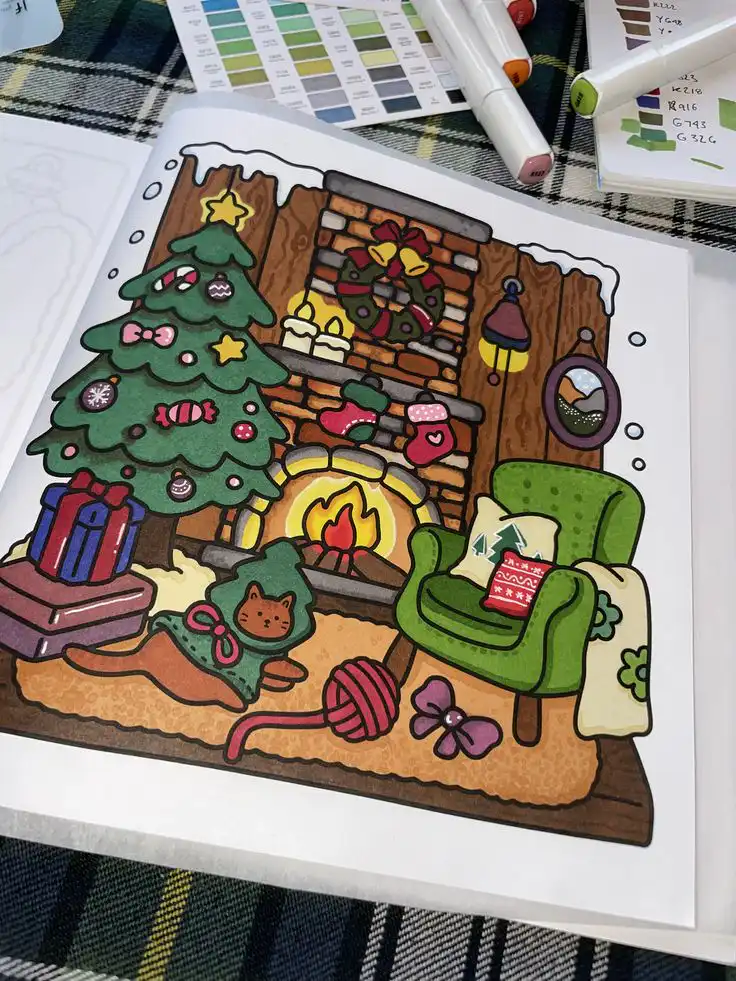
Families can integrate christmas lights coloring pages into home traditions in practical and meaningful ways.
Create calm moments during busy days
The holiday season often includes noise and activity. A short daily or weekly coloring time can provide a calm break.
Parents might:
- Print a few new designs each weekend and offer them as a quiet morning option.
- Keep a folder of Christmas lights pages and a small set of supplies available on a coffee table.
- Use coloring sessions as a way to transition between high-energy activities and bedtime.
Because many resources, such as Monday Mandala, offer thousands of free printables in addition to Christmas lights pages, families can introduce new themes as needed without additional cost (Monday Mandala).
Build simple traditions and keepsakes
Colored Christmas lights pages can become part of annual traditions:
- Families choose one page to complete together each year, then store it in a folder or frame it for seasonal display.
- Children decorate a “holiday journal” cover with light bulbs and add notes, photos, or drawings inside.
- Siblings exchange colored pages as homemade gifts.
These small practices help children connect creative work with memories of shared time.
Try advanced techniques for older artists
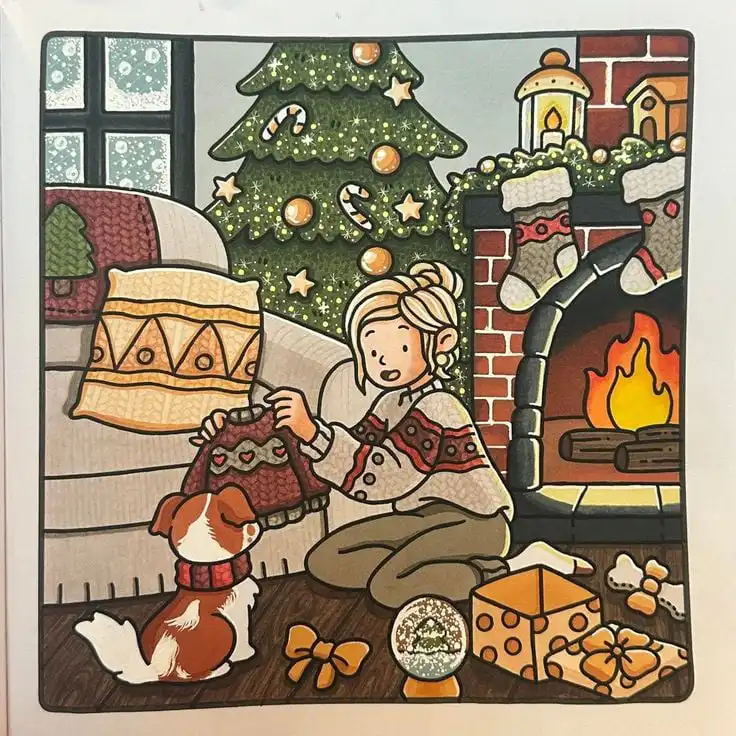
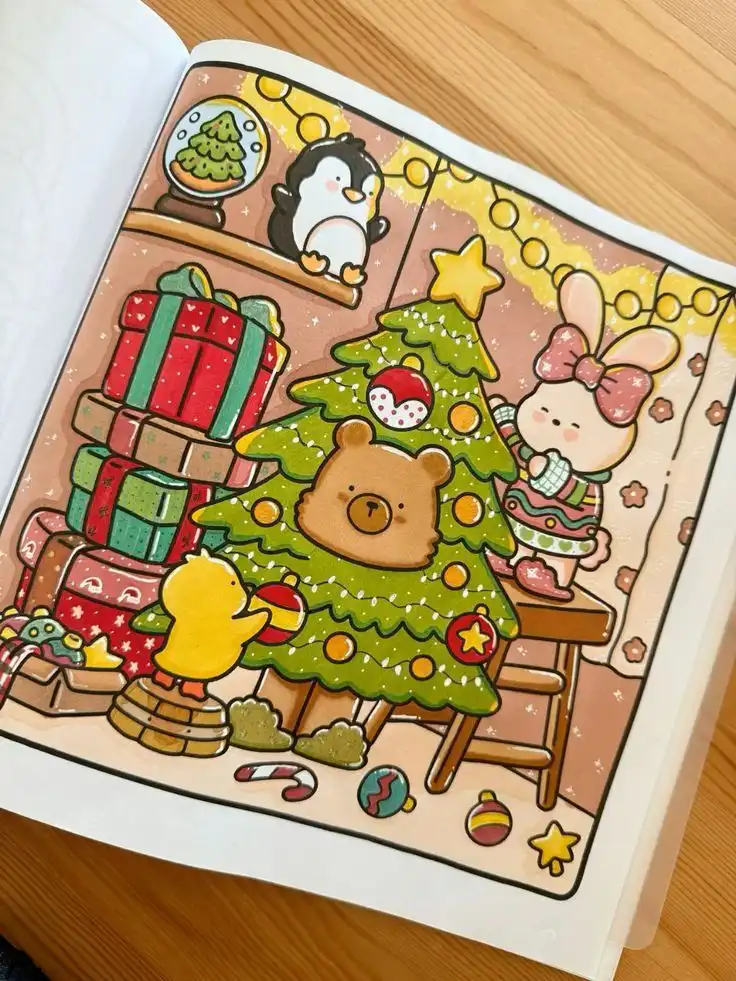
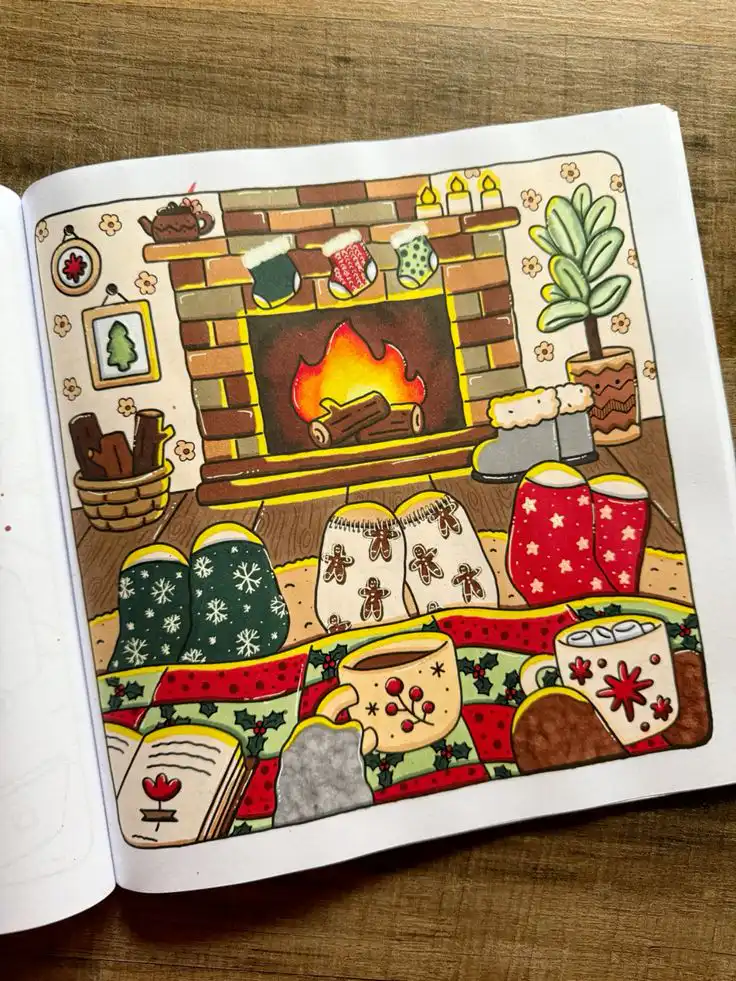
For teenagers and adults who want more challenge from a Christmas lights coloring page, more detailed techniques can be introduced.
Use layering and blending
Alcohol markers, watercolor pencils, or high-quality colored pencils can be used to:
- Layer multiple colors on each bulb for a glass-like appearance.
- Create gradients that move from one color to another along a string of lights.
- Add atmospheric effects, such as blurred light reflections in nearby windows or snow.
Coco Wyo’s step-by-step guide illustrates this approach by starting with the background, drawing light strings, coloring bulbs in varied hues, and finally adding highlights and fine details with a white gel pen (Coco Wyo).
Explore themed coloring books
Some artists prefer structured collections over single pages. In these cases, a christmas lights coloring page can be found within a larger holiday or cozy-themed book.
The “Cozy Friends” Coloring Book, for instance, includes a Christmas lights page that can be colored using the same techniques described above. Coco Wyo notes this page as part of a series that also features Cozy Christmas, Cozy Days, and Cozy Vibes coloring books, which extend the calming, seasonal feel beyond December (Coco Wyo).
These books can provide a sense of continuity for older students or adults who use coloring as a regular relaxation tool.
Frequently asked questions
1. How does a Christmas lights coloring page inspire holiday joy?
A christmas lights coloring page brings holiday joy by inviting people to interact with familiar festive imagery in a creative way. The process of choosing colors, filling in bulbs, and watching a simple outline turn into a glowing scene can be calming and satisfying. When finished pages are displayed or turned into crafts, they also contribute to the seasonal atmosphere in homes and classrooms.
2. Are Christmas lights coloring pages suitable for both kids and adults?
Yes. Many resources offer a wide range of difficulty levels. Monday Mandala’s collection includes 31 free designs suitable for children and adults, from simple light strings to more detailed scenes with houses and trees wrapped in lights (Monday Mandala). Younger children can focus on large shapes and basic colors, while older users experiment with shading and complex palettes.
3. What materials work best for coloring Christmas lights?
Basic supplies like crayons, washable markers, and colored pencils work well for most christmas lights coloring pages. For more advanced results, some artists recommend alcohol markers and a white gel pen to add glossy highlights and glowing effects on the bulbs (Coco Wyo). Glitter glue, sequins, and metallic markers are also popular for adding sparkle.
4. How can teachers use Christmas lights pages in the classroom?
Teachers can use christmas lights coloring pages in art centers, math activities, writing prompts, and classroom decor. Pattern-based printables help students practice recognizing and extending color patterns, as seen in the Printable Christmas Lights Pattern Activity that includes color boards and black and white pattern strips (Teachers Pay Teachers). Colored bulbs can also be cut out and used for banners, bulletin boards, and collaborative displays.
5. Where can families and teachers find free Christmas lights coloring pages?
Several trusted websites provide free Christmas lights coloring pages:
- Monday Mandala offers 31 free PDF pages formatted for US letter and A4, along with craft ideas like banners, ornaments, headbands, and decorative wreaths (Monday Mandala).
- Superstar Worksheets provides free printable Christmas lights pages in multiple sizes that integrate with other Christmas worksheets for classroom use (Superstar Worksheets).
These resources are designed to support teachers, parents, and children with fun, educational, and easily accessible holiday activities.
- 192shares
- Facebook0
- Pinterest192
- Twitter0
- Reddit0