If you’ve spent any time wandering around modern UK gardens, whether on Instagram, Pinterest mood boards, or your neighbour’s newly renovated back patio, you’ll notice one trend everywhere: porcelain patio tiles. And honestly, no surprise why, many homeowners choose porcelain slabs for contemporary patio paving, as they are one of the most stylish, durable, and low-maintenance paving slab materials.
But here’s the catch: Porcelain paving is not as easy as other natural stone options, like sandstone, concrete, or limestone, & if you’re looking for the best paving slabs for gardens, it’s worth knowing which materials will perform well. Make a few installation mistakes and find out how it can quickly lead to big headaches, like wobbly tiles, water pooling, cracks, porcelain tiles lifting, slippery surfaces, and discolouration.
So today, let’s break down the most common mistakes UK gardeners make, why porcelain can be tricky, and how you can avoid the cost, stress, and time of having to repair a patio twice.
Why Porcelain Patio Tiles Can Be Tricky to Install
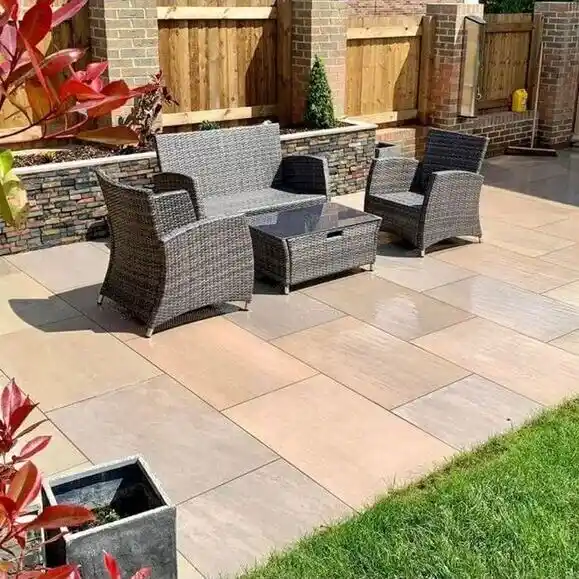
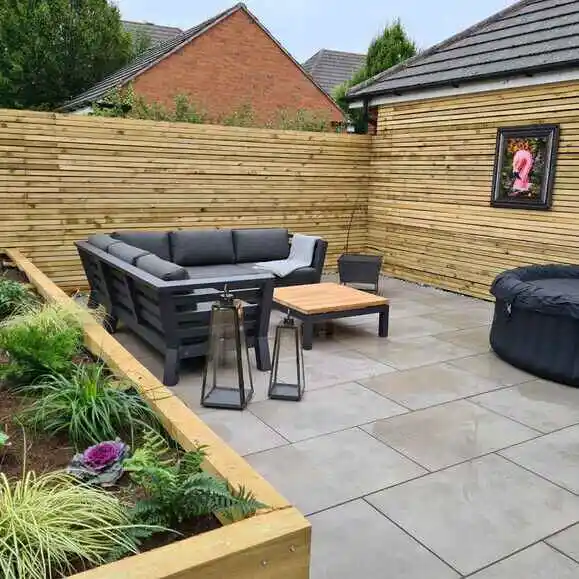
Porcelain looks like a dream material. They are smooth, strong, and elegant; however, underneath the style is a highly engineered, extremely dense, non-porous tile.
That means:
1. Porcelain does NOT absorb water.
This is why it won’t stain, crack, or fade in frost, but also why it won’t “stick” to mortar unless it is properly primed
2. It needs a strong base.
Installing porcelain is less like laying slabs and more like installing giant ceramic tiles in your garden. A strong and stable foundation ensures its long-term durability.
3. UK weather makes things harder.
Rain, frost, and constant moisture mean:
- Adhesives take longer to set.
- Drainage must be perfect.
- One uneven tile becomes a water trap.
Common Beginner Misconceptions
Creative DIY gardeners often assume:
- Tiles naturally stick to mortar: Not porcelain, it will lift if you don’t prime it.
- Drainage doesn’t matter much: Heavy UK rain makes water pooling on porcelain patio surfaces a real issue.
- Any adhesive, grout, or mix will do: Only outdoor-rated porcelain mortar and grout will hold up long-term.
Top 7 Mistakes UK Gardeners Make
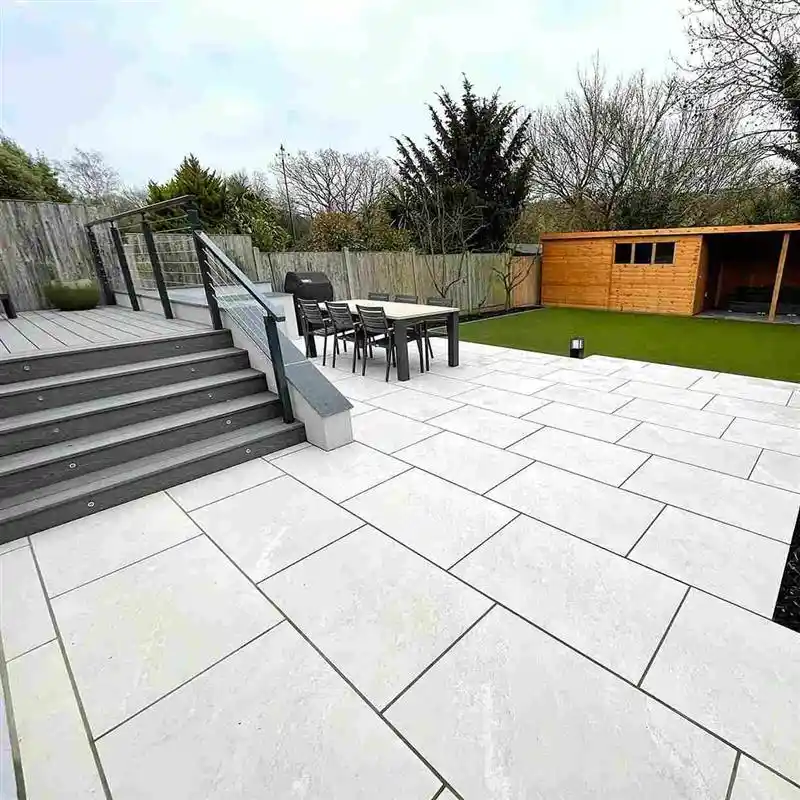
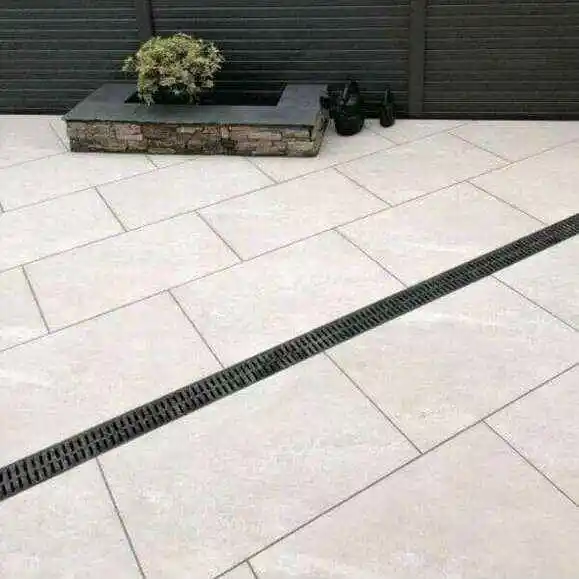
If you’ve ever searched “porcelain patio tiles mistakes” or “porcelain paving problems UK,” you’re not alone. These questions pop up because porcelain really is different from traditional paving. And if you get the installation wrong, the disadvantages of porcelain paving slabs become very real.
Below are the porcelain patio mistakes I’ve seen over and over again, even from experienced DIYers and landscapers new to porcelain.
1. Laying on an Uneven or Weak Base
This is the number one cause of porcelain patio problems.
Porcelain requires:
- A compacted MOT Type 1 sub-base
- A full wet-bed mortar
perfectly level preparation
Otherwise, you’re dealing with:
- Rocking or wobbly slabs,
- Cracks from pressure points,
- Long-term drainage issues,
- Water pooling around grout lines,
- Frost damage.
UK Patio Installation Tips:
Use a proper sub-base, check levels regularly, and avoid shortcuts like “spot bedding” or resting tiles on soil.
2. Skipping Primer
Do porcelain patio tiles need primer? Skipping this step means you have a silent patio killer because porcelain is non-porous, mortar won’t bond to it without a slurry primer. Skipping this step almost guarantees porcelain garden tiles lifting within the first winter.
Why primer matters:
- It bonds the tile to the mortar bed
- It protects against moisture in the adhesive
- It stabilises the entire structure
And remember: applying primer in cold, damp, or rainy weather lowers its effectiveness, a mistake many UK gardeners make unknowingly.
3. Incorrect Mortar Mix or Application
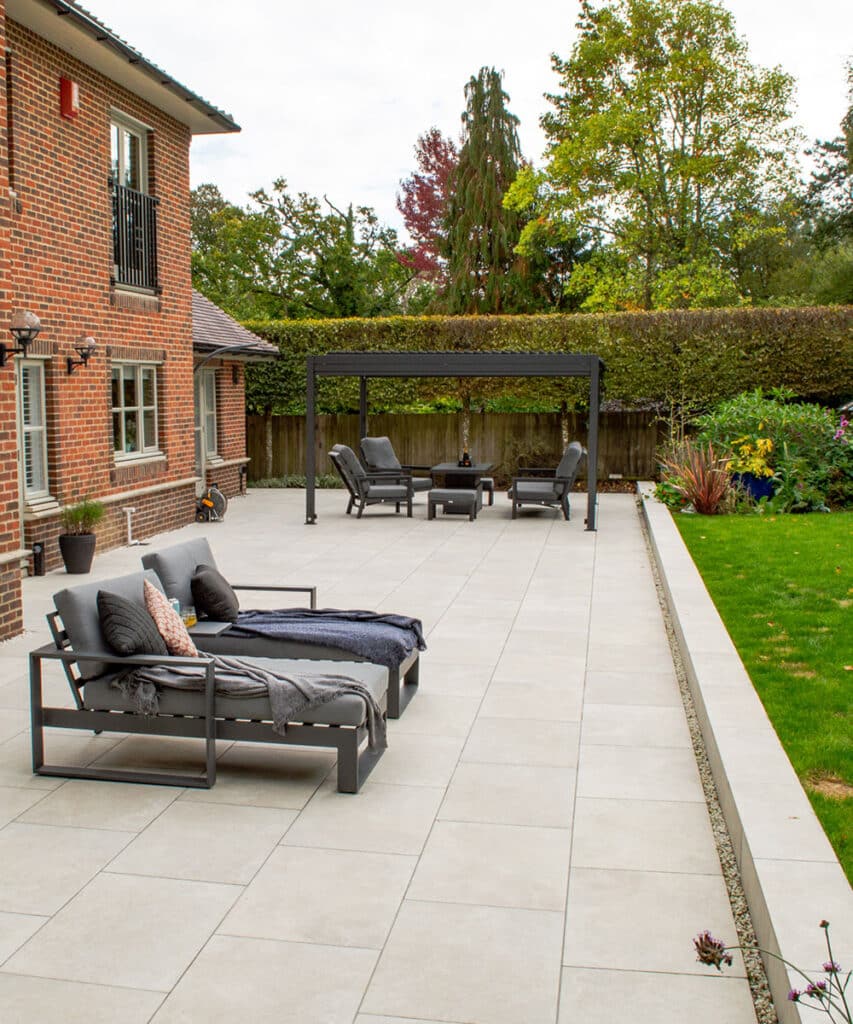

Even a perfectly primed tile won’t hold if the mortar is wrong.
Common beginner mistakes:
- Using a dry mix
- Dot-and-dab (creating hollows beneath the tile)
- Adding too much water
- Using adhesive meant for bathrooms, not patios
Ideal mix:
A 4:1 sand-to-cement ratio, spread across the entire tile area.
One of the major disadvantages of porcelain paving slabs when installed incorrectly is that if there is a hollow space under the porcelain, it can become water pockets, leading to frost cracks.
4. Cutting or Handling Mistakes
Porcelain is tough and dense, but also very brittle if you cut it the wrong way.
Common issues:
- Jagged edges from poor blades
- Chipped corners
- Cracks spreading from bad cuts
- Sharp edges that become safety risks
A wet tile saw with a diamond blade while cutting porcelain patio tiles without cracking. It avoids micro-cracks that eventually break under garden furniture or frost.
5. Ignoring Drainage & Weather Protection
Are outdoor porcelain tiles slippery?
Not if installed correctly, which includes managing drainage and using R11 porcelain tiles for patios.
Key UK drainage rules:
- A minimum fall of 1:60 away from the house
- Avoid completely flat installations
- Use permeable bedding if needed
Poor drainage leads to:
- Algae (which makes porcelain slippery)
- Water pooling
- Frost expansion cracking
- Staining that’s hard to clean
Weather protection during installation also matters. Rain on unset mortar leads to weak bonding and tiles lifting later.
6. Poor Maintenance & Cleaning
Porcelain is low-maintenance paving, not no-maintenance paving.
Keep your porcelain patio neat and clean by using:
- pH-neutral cleaners
- Soft brushes
- Warm water
Avoid:
- Bleach
- Pressure-washing too close
- Abrasive pads
Are outdoor porcelain tiles durable? Absolutely, but harsh chemicals can damage grout and edge finishes of these durable outdoor porcelain tiles. Light-coloured tiles may benefit from sealing grout to avoid long-term staining.
7. Choosing the Wrong Tile Type for UK Weather
Here’s a mistake many homeowners don’t know they’re making: Laying porcelain tiles outside that are not made for outdoors.
Check for:
- 20mm porcelain slabs for patios
- R11 or higher slip rating
- Frost-proof rating
- Textured surface for grip
Choosing indoor porcelain tiles will lead to slippery surfaces, cracks, and rapid wear, all avoidable with the right selection.
Costly Consequences of These Mistakes
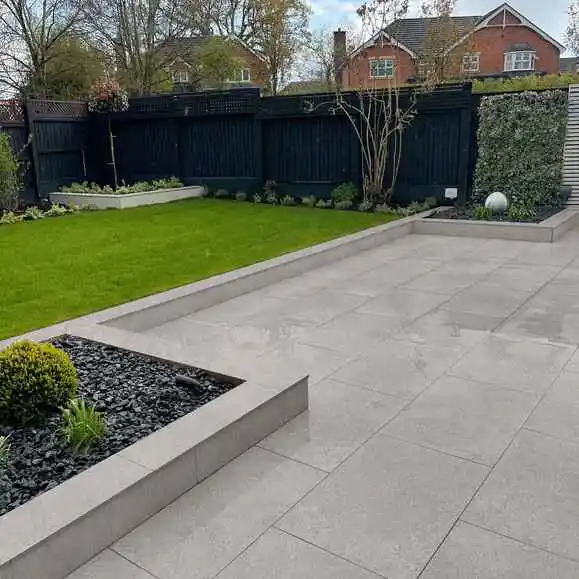

When something goes wrong while laying porcelain tiles or maintaining them, it really goes wrong.
Typical consequences:
- Shifting or lifting tiles
- Cracks from poor base support
- Discolouration from standing water
- Slippery patios from algae growth
- Uneven surfaces damaging garden furniture
And the worst part? Fixing these usually means lifting the whole patio and starting again to use the best porcelain tiles for gardens.
A properly installed porcelain patio lasts decades. A badly installed one lasts one winter. Industry bodies like the British Association of Landscape Industries (BALI) and the HTA emphasise best practice and standards, helping consumers make informed choices about paving and installation.
How to Avoid Porcelain Patio Tiles Mistakes
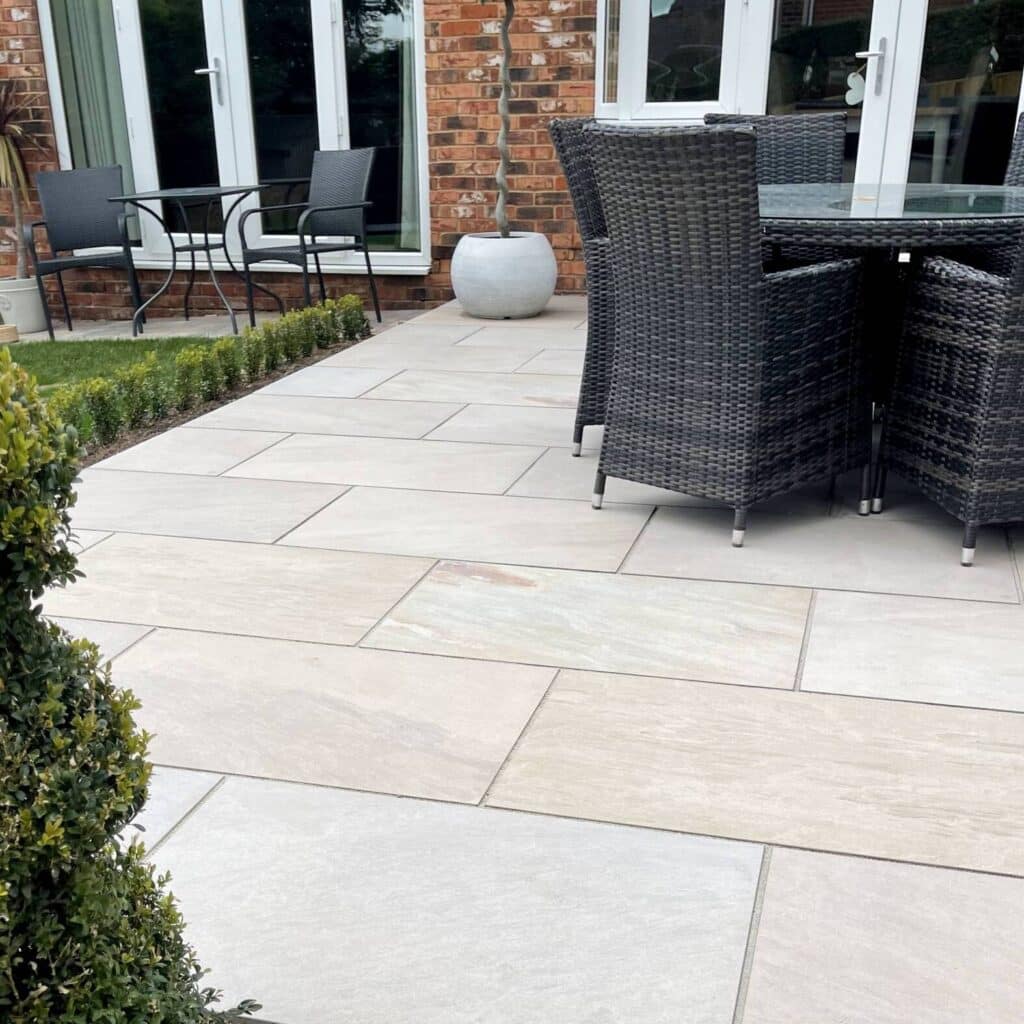
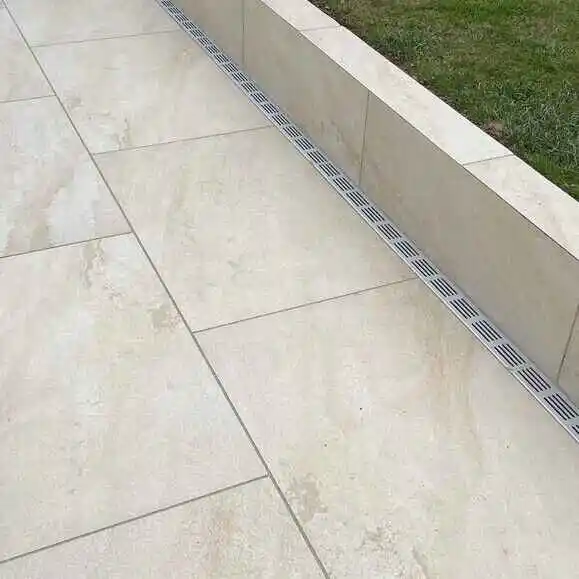
Here’s a quick list to avoid the most common porcelain paving problems in the UK:
- Prepare a level, compacted sub-base
Use Type 1 MOT and check levels with a long spirit level.
- Prime both the base and the back of each tile
Use a porcelain slurry primer while gardening tiling, every single time.
- Mix mortar properly
Use a 4:1 ratio and apply across the full tile area.
- Cut with the correct tools
Diamond-tipped blades only; avoid snapping tools.
- Ensure correct drainage and fall
A minimum gradient of 1:60 away from your home.
- Maintain regularly
Wash your outdoor porcelain tiles with pH-neutral detergents and soft brushes, for keeping porcelain patio tiles clean.
Following these steps avoids almost every major issue, from water pooling on porcelain patio surfaces to tiles lifting after frost.
Conclusion
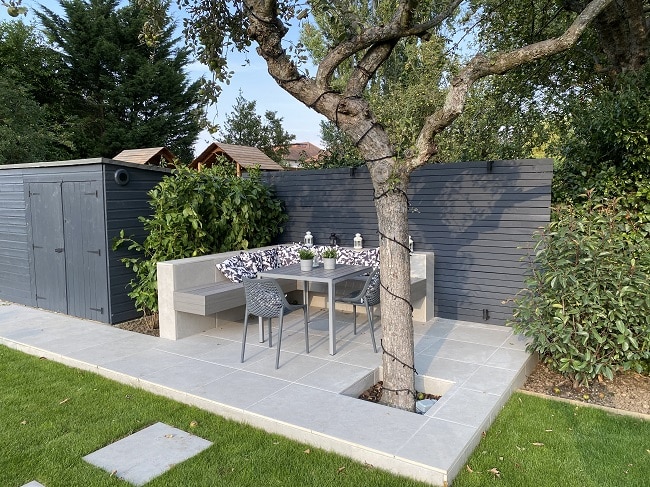
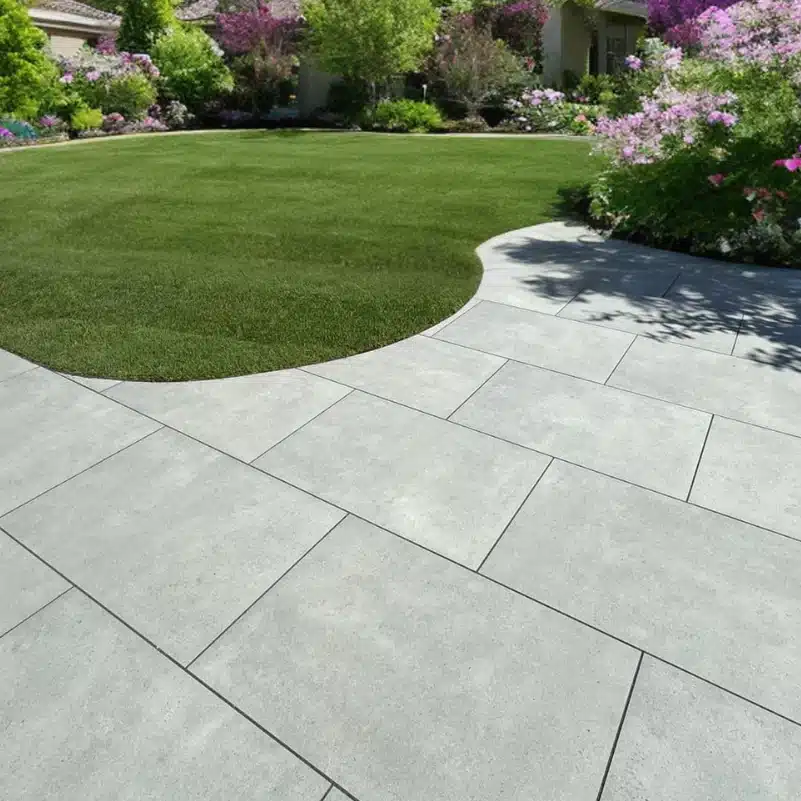
Porcelain can absolutely be the “fit and forget” non-slip porcelain paving slabs option, but only if you install it correctly. Porcelain outdoor tiles excel in durability, style, and are ideal for UK weather, but they demand precision, proper preparation, and the right materials.
If you avoid the major mistakes most gardeners make, you’ll have a patio that stays strong, safe, and stunning for decades. But if you’re unsure about any aspect of the installation, it is advisable to consult an experienced UK paving supplier, like Bradstone, Pave Direct &Marshalls for guidance and products.
A beautiful garden deserves a patio that enhances it, not one that becomes a recurring DIY nightmare. Install porcelain correctly, and you’ll truly enjoy its benefits, without the porcelain patio tiles disadvantages that come from poor installation.
Frequently Asked Questions
Is porcelain better than sandstone for UK rain?
Generally, yes. Porcelain is non-porous, frost-proof, and doesn’t absorb water, making it ideal for rainy climates. Sandstone looks beautiful but needs sealing to handle constant moisture.
How long will a sandstone patio last if sealed properly?
A well-sealed sandstone patio can last 10–20+ years, depending on maintenance and weather exposure.
Can I install porcelain tiles myself in the UK?
Yes, but only if you’re confident with priming, full-bed mortar, drainage, and cutting porcelain. It’s tougher than installing sandstone or concrete.
What is the easiest patio type to maintain in UK weather?
Porcelain is generally the easiest. It’s stain-resistant, algae-resistant, frost-proof, and requires very little cleaning when installed correctly.
- 3shares
- Facebook0
- Pinterest0
- Twitter3
- Reddit0