The first renovation I made when I moved into my current house wasn’t the walls or the flooring. It was the entrance.
Two plain steps, a bare door, no greenery. It felt functional but cold — the kind of threshold that doesn’t say anything about the home behind it. A single areca palm in a tall planter changed that within days. Visitors started commenting on it before they’d even stepped inside.
That experience made something clear: front door plants aren’t decoration in the ordinary sense. They’re the transition — the moment where a home announces what it is before you’ve opened the door. Get that moment right, and everything inside feels more welcoming. Skip it, and even a well-designed interior loses something on the approach.
This guide covers ten thoughtfully chosen plants for front door decoration — timeless favourites alongside global classics — each paired with the planter that genuinely suits it. Scale, light conditions, and the visual logic of each pairing are what make these combinations work.
10 Front Door Plant Ideas to Transform Your Entrance
1. Areca Palm
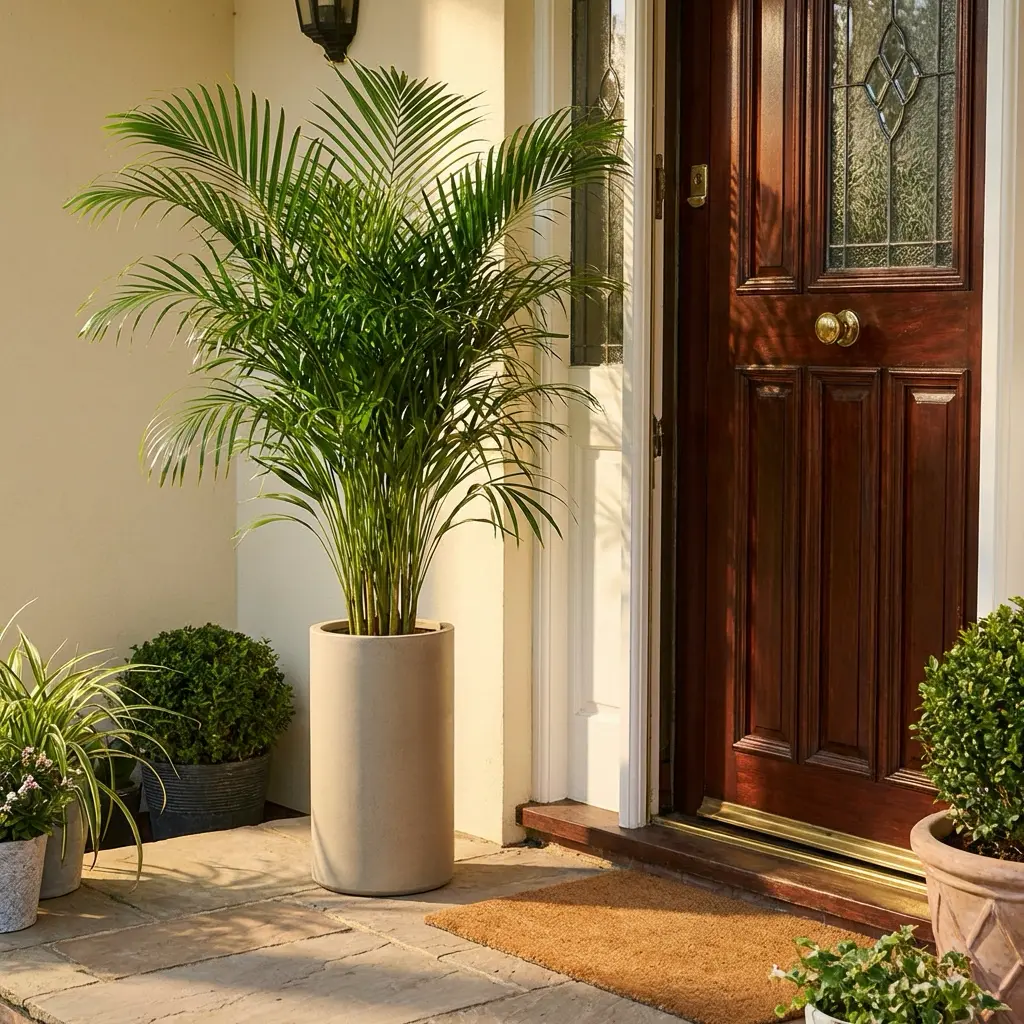
Why it works: Areca palms bring height, movement, and a naturally welcoming quality to entrances. Their soft, arching fronds create a canopy effect that makes a doorway feel like an arrival — open and generous without being imposing. They suit covered porches and sheltered entrances well, handling summer humidity and indirect light better than most statement plants.
Best planter choice: Feijo MS — These tall FRP U-shaped planters are built for corners and walkways. Their generous proportions and clean architectural form hold a mature areca palm properly, without the planting looking undersized or unstable.
2. Money Plant (Pothos)
Why it works: A classic in well-designed homes for good reason — the money plant is easy to maintain, carries associations with positivity and prosperity, and its trailing growth softens rigid entrance layouts beautifully. In shaded doorways or covered porticos that don’t get direct sun, it performs reliably where more demanding plants would struggle.
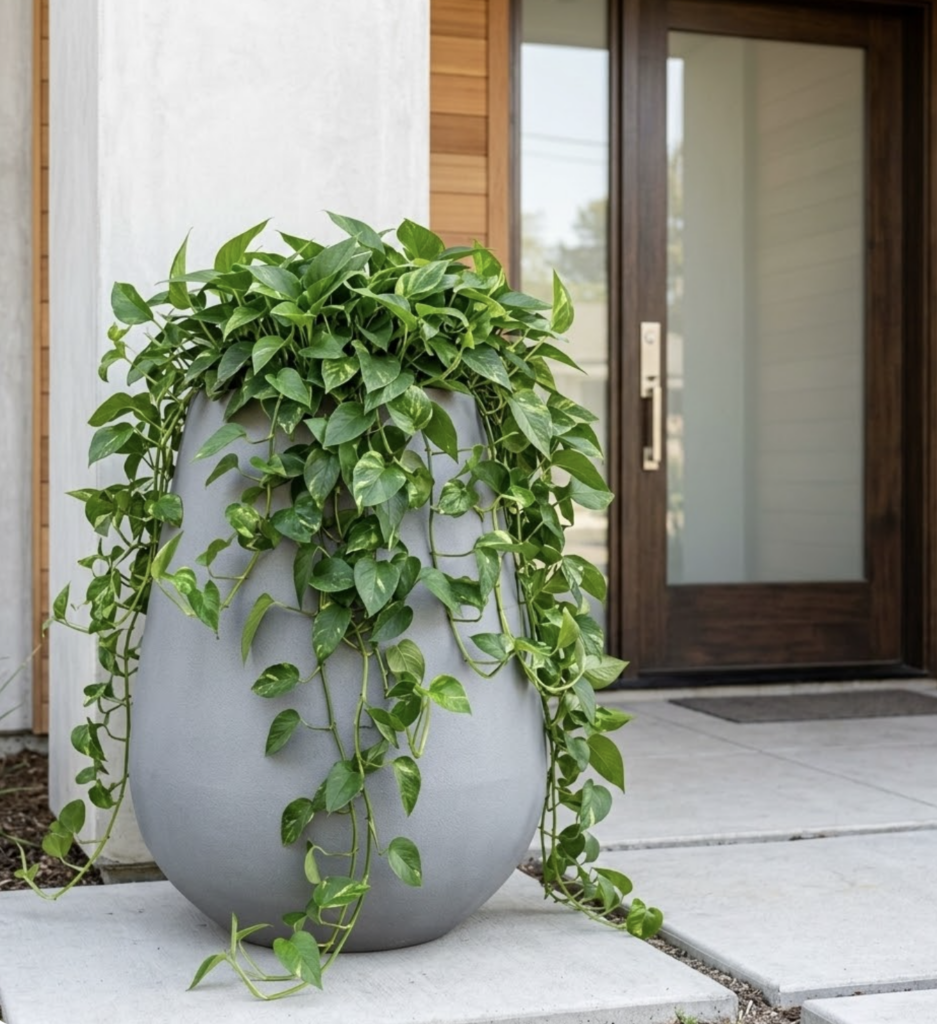
Best planter choice: Mailos MS — With its modern form and artistic character, Mailos MS transforms a simple trailing plant into a genuine visual feature. These substantial pots add personality to entrances without competing with the architecture around them.
3. Snake Plant (Sansevieria)
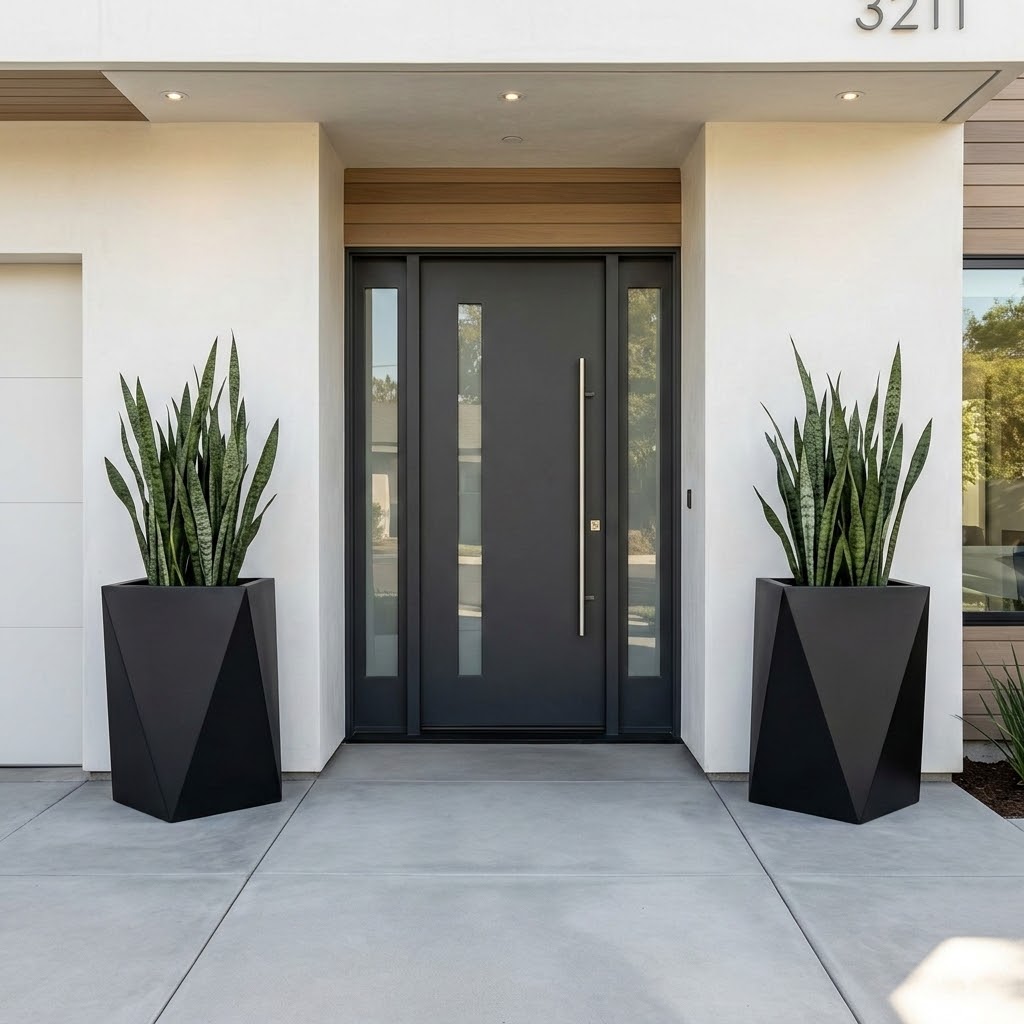
Why it works: The snake plant is the entrance plant for anyone who values clean lines and low maintenance. Its upright, sculptural leaves reinforce rather than compete with modern architecture. I’ve found it particularly effective placed in pairs on either side of a door — the symmetry adds quiet formality without the upkeep demands of more delicate plants.
Best planter choice: Takos MS — These large, U-shaped geometric FRP pots echo the snake plant’s vertical discipline. Takos MS planters bring contemporary structure and visual balance to entrance styling, especially in homes where every element is expected to carry its own weight.
4. Holy Basil (Tulsi)
Why it works: Holy Basil is more than just greenery at an entrance — it’s a statement of wellness and tradition. Its presence near a doorway carries a calming, purifying significance. Beyond symbolism, it’s genuinely aromatic, adding a sensory dimension guests notice before they consciously register it. It needs direct sunlight and good airflow, so it suits entrances that receive a few hours of sun daily.
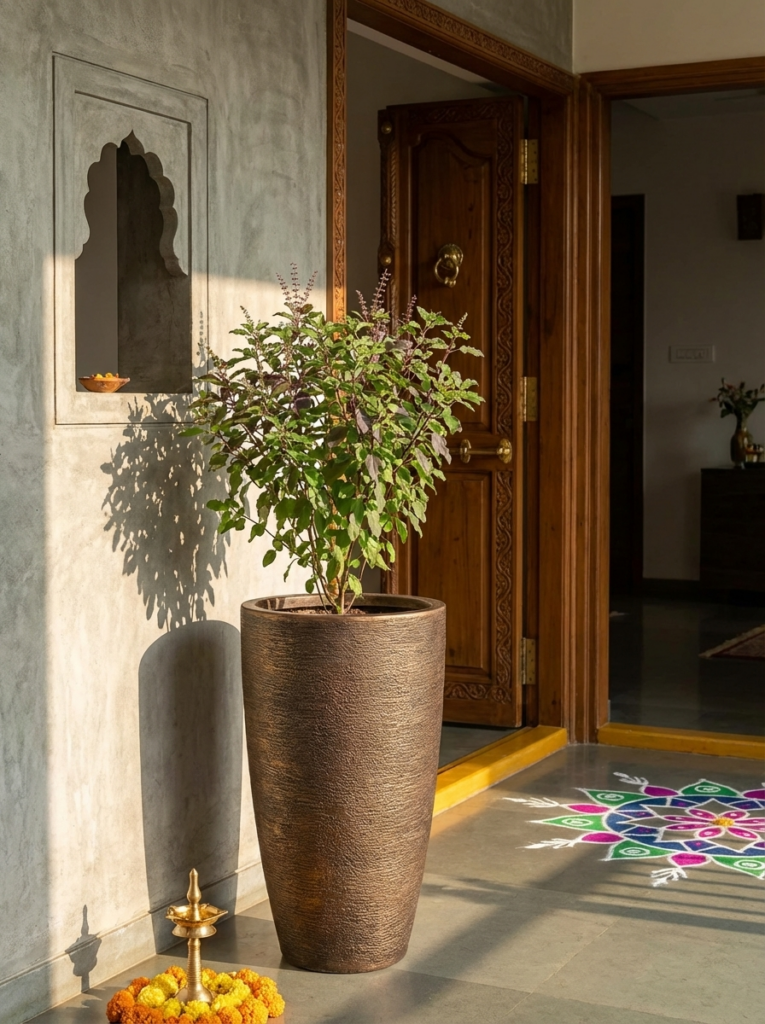
Best planter choice: Corsa MS — Tall and elegant, Corsa MS planters offer the visual dignity that this plant’s traditional importance deserves, while fitting smoothly into contemporary home aesthetics — a balance that’s harder to achieve than it sounds.
5. Rubber Plant
Why it works: The rubber plant brings boldness — broad, glossy leaves that create depth and presence without needing height. It works well in entrances with lower ceiling clearance or covered spaces where tall palms wouldn’t fit. The deep green (or near-burgundy in darker varieties like Burgundy Ficus) adds richness that reads as deliberate rather than accidental. It tolerates irregular watering, which matters for entrance plants that don’t always get daily attention.
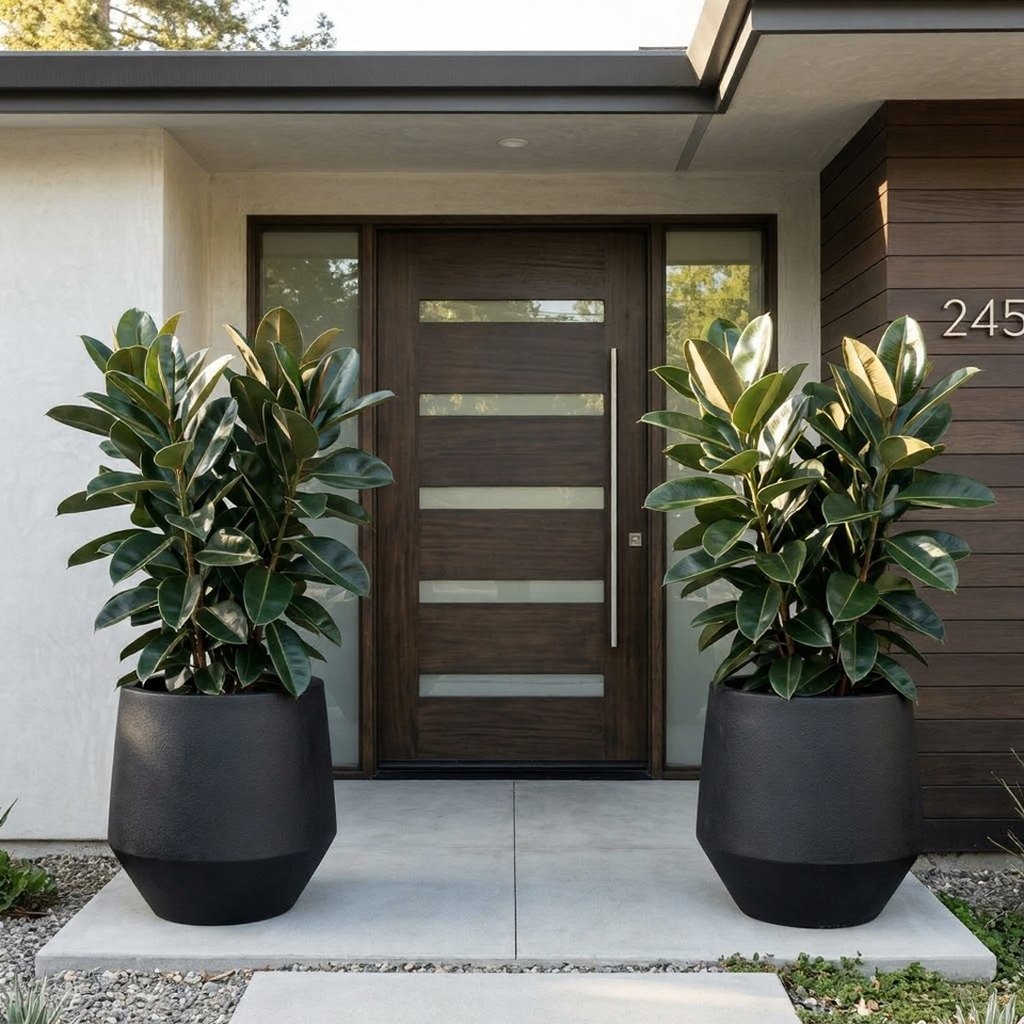
Best planter choice: Mailos MS — Its distinctive design and ample depth support the rubber plant’s root system properly while adding a creative, design-forward character to the entrance. The planter’s confidence complements the plant’s own visual boldness.
6. Jasmine
Why it works: Jasmine earns its place at the entrance through scent. During mornings and evenings — precisely the moments when people are arriving and leaving — it releases a fragrance that’s universally calming. The sensory experience of passing through a jasmine-scented doorway is one of the small details that make a home feel genuinely cared for.
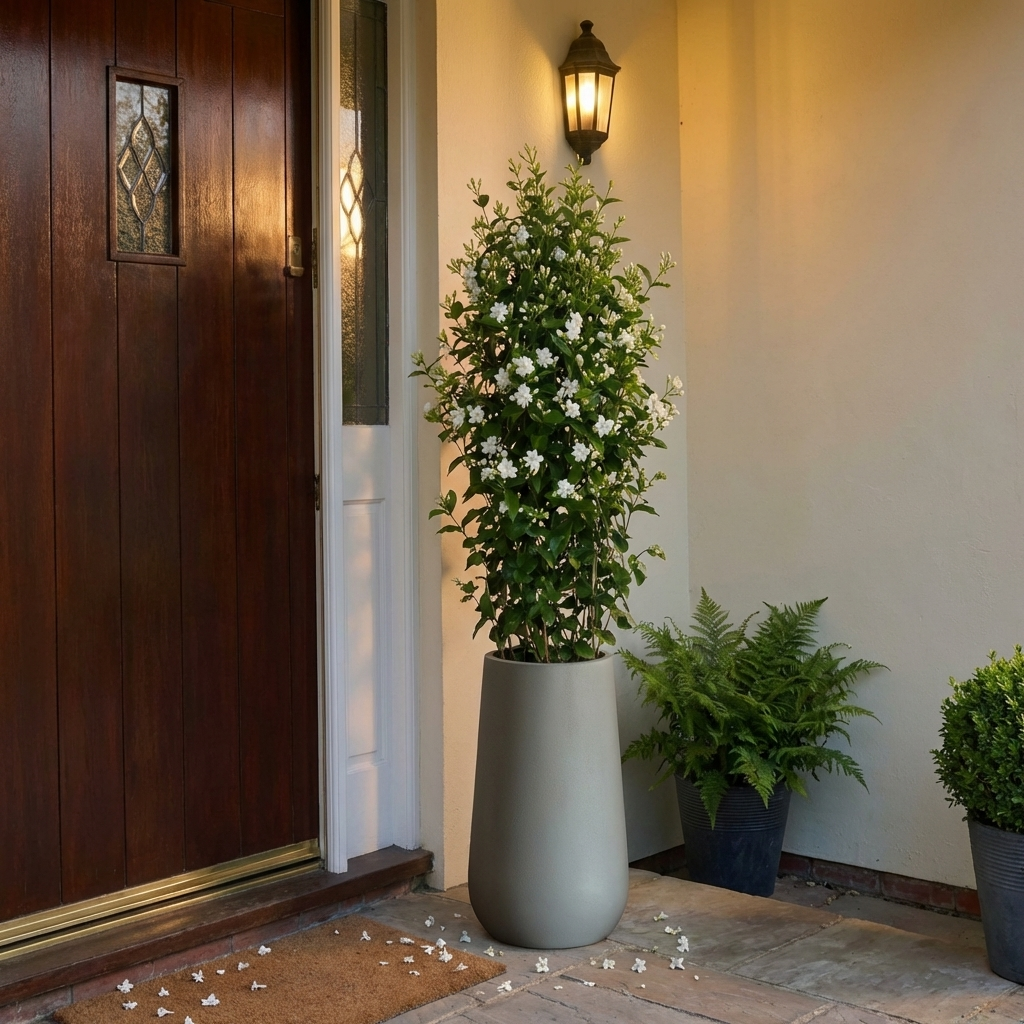
Best planter choice: Feijo MS — The size and structural stability of Feijo MS allow jasmine to flourish as it grows without tipping or becoming unmanageable. The planter’s refined form keeps the entrance looking composed even as the plant becomes more exuberant over time.
7. Boxwood or Ficus Bonsai
Why it works: Where most entrance plants add softness and movement, boxwood and ficus bonsai add precision. They’re used in formal entrance landscaping globally because they create symmetry and signal careful cultivation. A matched pair of clipped boxwood spheres or well-trained bonsai flanking a door is one of the most reliable ways to add instant formality to an entrance. They require consistent trimming, but the visual return is significant.
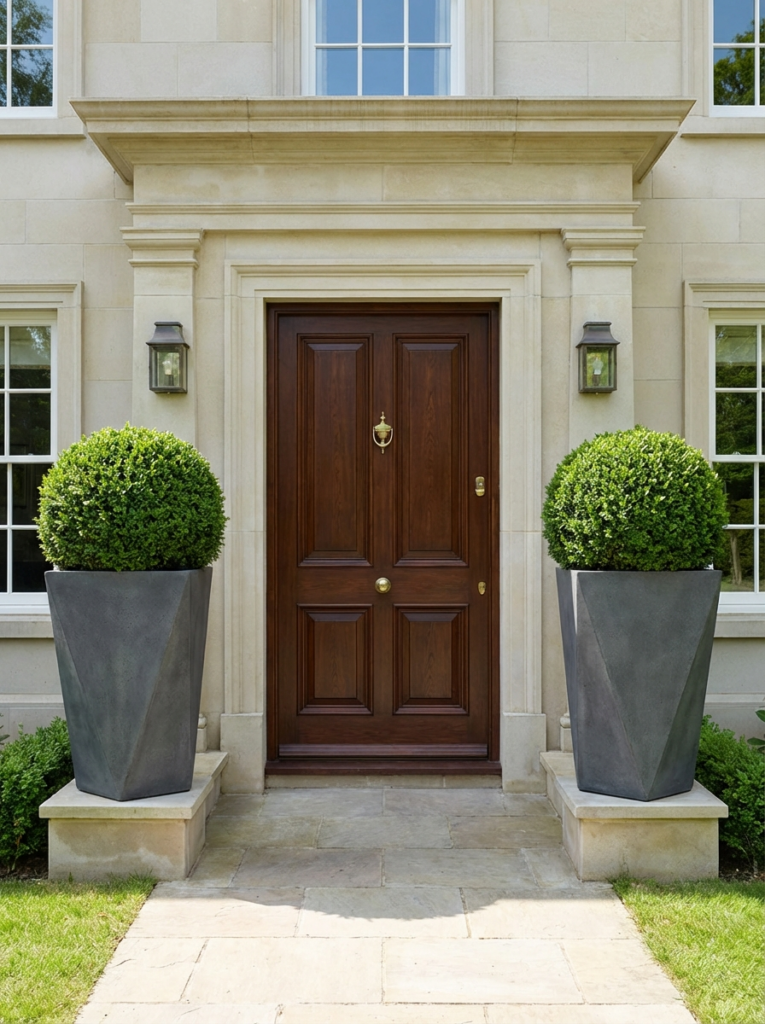
Best planter choice: Takos MS — The clean geometry of Takos MS planters complements the disciplined growth of bonsai and boxwood. The pairing creates a well-balanced, sophisticated entrance that suits both traditional architecture and contemporary minimalism.
8. Frangipani (Plumeria)
Why it works: Frangipani is an entrance plant with genuine character. Its sculptural, branching form is architectural in the way most flowering plants aren’t — visually interesting even without blooms. When it flowers, the tropical fragrance is distinctive and memorable. For outdoor entrances and courtyards with space for a larger planting, it adds the kind of presence that makes one feel like an occasion.
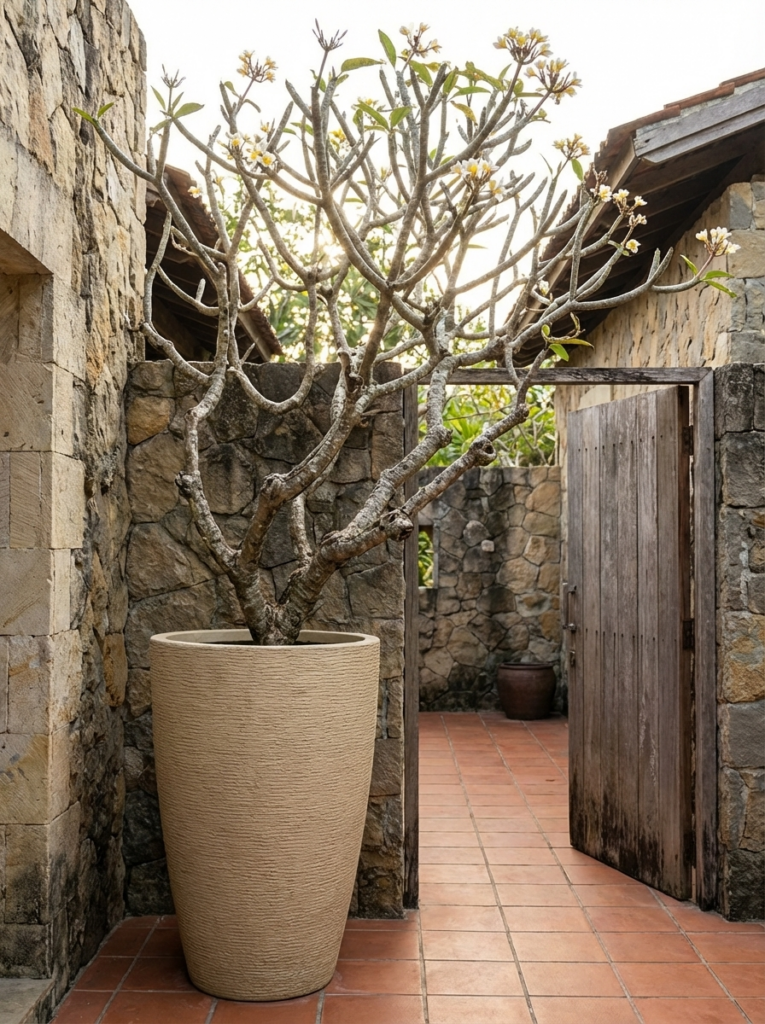
Best planter choice: Corsa MS — Designed to provide ample root space and substantial visual height, Corsa MS supports frangipani’s scale while maintaining the entrance’s overall elegance. The planter’s proportions suit a plant that needs room to establish its own character properly.
9. Night-Flowering Jasmine
Why it works: This plant has a specific, unhurried atmosphere. Its delicate flowers fall overnight, carpeting the ground beneath with colour and scent by morning — a daily seasonal ritual that adds natural poetry to an entrance that no designed element can replicate. It suits sheltered semi-open spaces and handles partial shade well, making it appropriate for covered porticos and verandas.
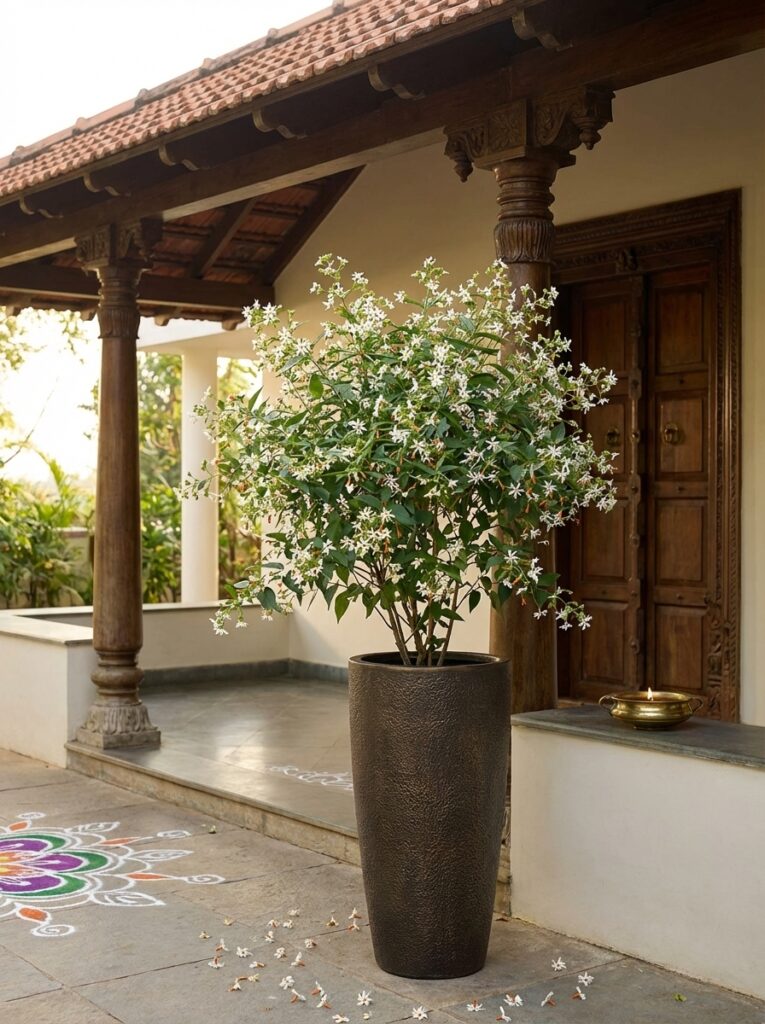
Best planter choice: Feijo MS — With its commanding size and elegant form, Feijo MS gives the plant the space and stability it needs to grow well. The planter’s scale suits the graceful, unhurried growth habit while elevating the overall entrance composition.
10. Ferns (Boston or Asparagus Fern)
Why it works: Ferns do something at an entrance that structured plants can’t — they soften. The cascading texture of a well-placed fern breaks up hard surfaces, adds cooling visual weight, and creates immediate natural abundance. Boston ferns and asparagus ferns both thrive in covered or shaded front door areas where direct sun would stress more delicate plants. In high-humidity environments, they actively perform better than conditions most other plants merely tolerate.
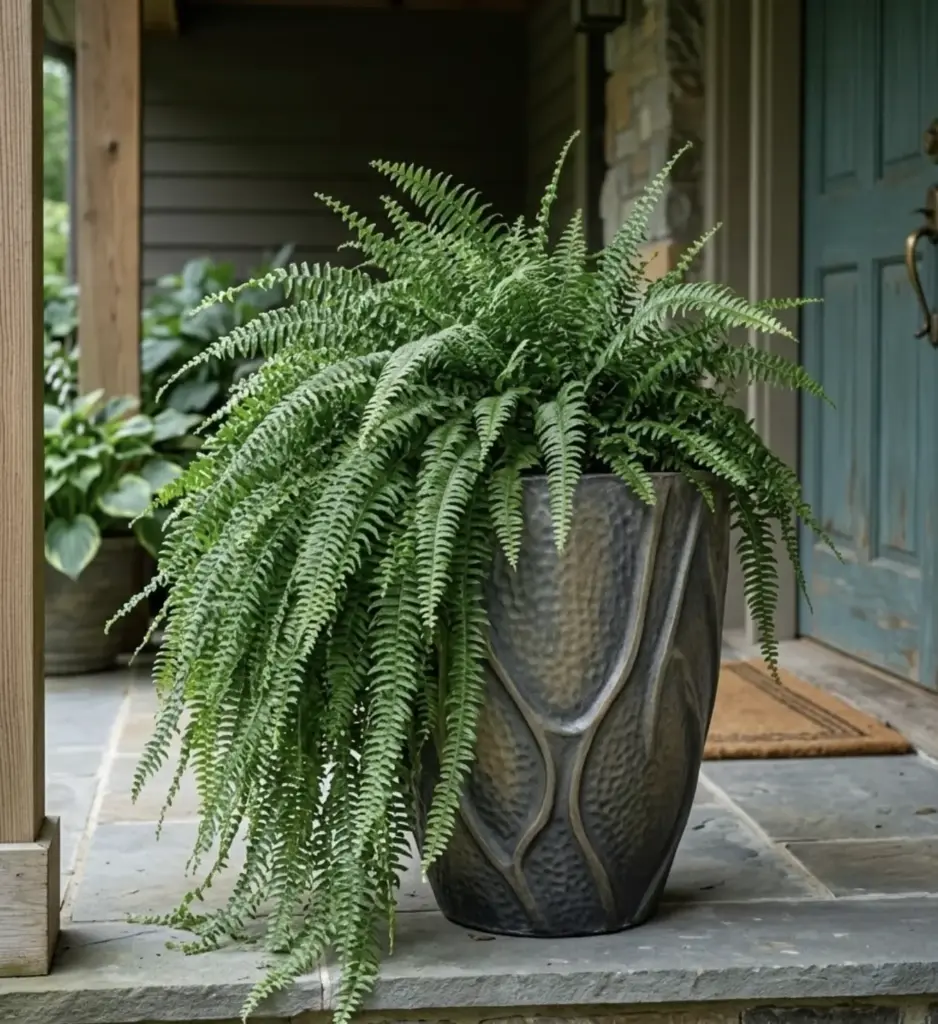
Best planter choice: Mailos MS — These artistic pots allow ferns to cascade naturally over the edges, enhancing the entrance with a relaxed but curated quality. The planter ensures the overall effect reads as designed rather than simply untended.
Why FRP Pots Are a Thoughtful Choice for Front Door Styling
The planter matters as much as the plant — and at an entrance, it matters more than anywhere else in the home.
FRP (Fiberglass Reinforced Plastic) pots have become the practical standard in well-designed residences because they resolve a genuine tension in entrance styling: you want planters that look premium but actually perform outdoors. FRP delivers both. Significantly lighter than ceramic or stone alternatives of comparable size, fully weather-resistant, and available in shapes and finishes that hold up under seasonal conditions, they’re the considered choice when the planting needs to look consistent year-round.
Bonasila’s large-format FRP planters — Feijo MS, Takos MS, Mailos MS, and Corsa MS — are designed specifically for this balance. Their scale, structure, and surface finish work at the proportions that meaningful entrance planting requires. For anyone looking for beautiful planters that serve both aesthetically and functionally through varied climates, these are the formats worth knowing.
Final Thoughts
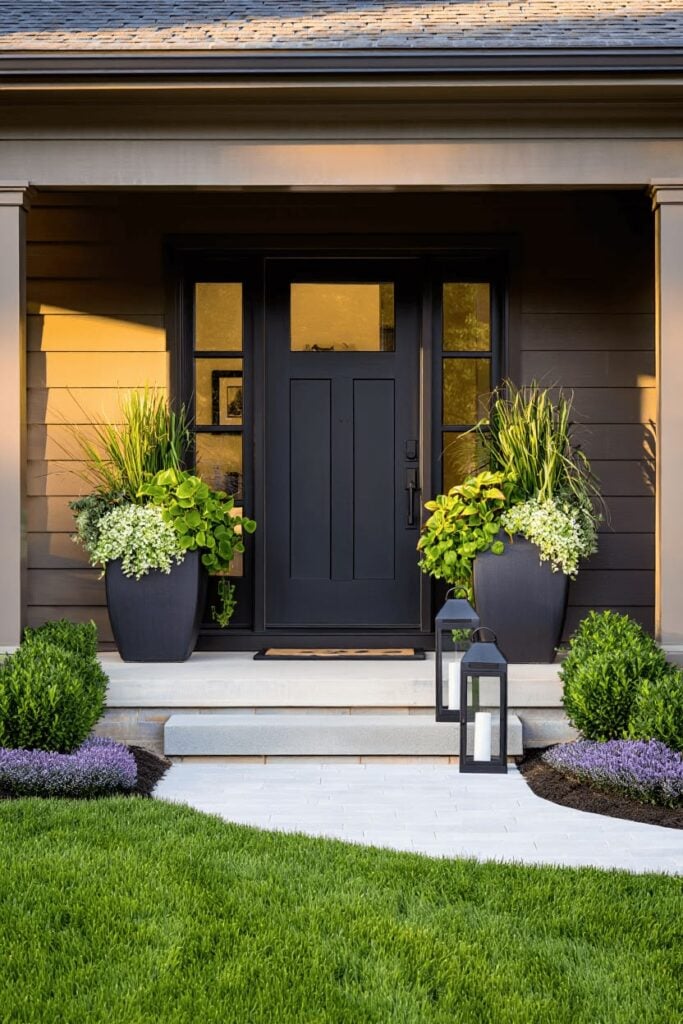
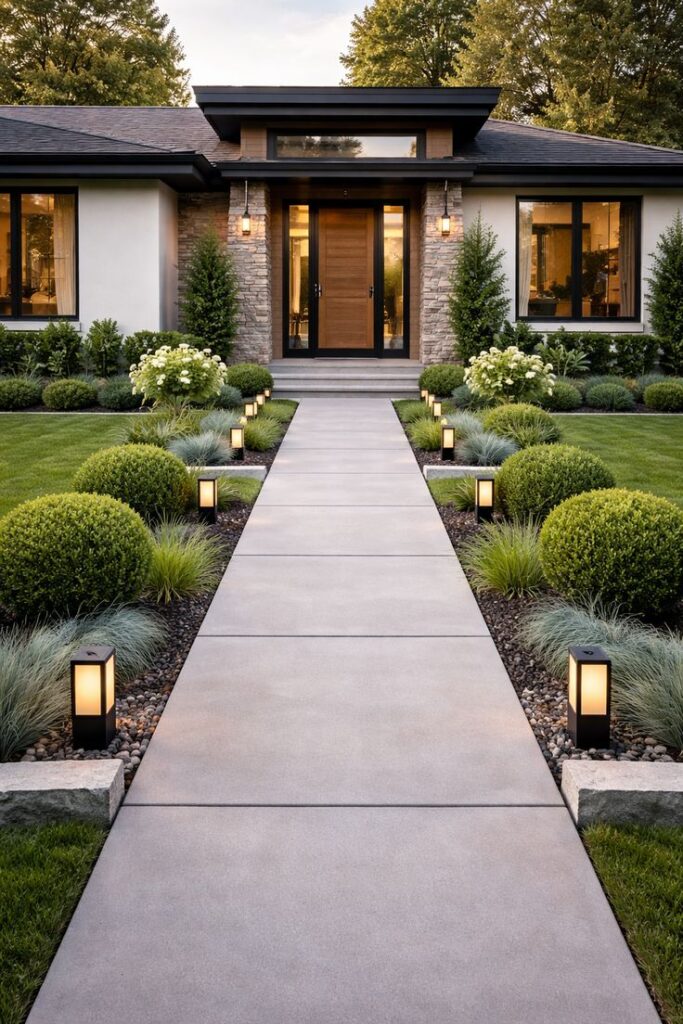
Front door plants shape how a home feels from the very first step — not just visually, but through fragrance, texture, and the sense that someone made considered choices about the space between outside and inside.
The combinations in this list work across different budgets, climates, and home styles because they start from sound principles: the right plant for the light conditions, the right planter for the plant’s scale, the right pairing for the entrance’s character.
Start with one plant, well-chosen and properly placed. The entrance changes faster than you’d expect.
- 78shares
- Facebook0
- Pinterest78
- Twitter0
- Reddit0