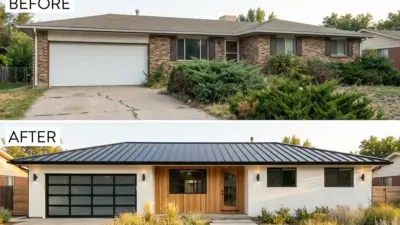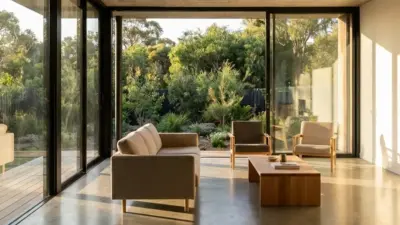

You can have the most beautiful architectural sketches and interior design mood boards, but without a skilled, professional builder, your vision will be ruined.
There’s a moment every homeowner knows. You’re sitting across from an interior designer, and they pull up the 3D render on a laptop screen. The kitchen extension glows with natural light. The open-plan living space flows exactly the way you imagined. The bespoke cabinetry sits flush against walls that seem impossibly straight. You feel that specific excitement — the kind that makes you want to start immediately.
Then reality arrives.
Not in a dramatic way. Subtly. The first contractor quotes a figure that makes you wince. The second talks about ‘structural complications.’ The third seems competent enough, but something about the conversation leaves you uneasy. And slowly, the gap between what’s on that render and what might actually get built starts to widen.
- The Design Is Only Half the Work
- Experience Is What Protects the Design
- Planning Is What Aligns the Vision
- Craftsmanship Is What the Light Reveals
- Communication: The Quality That Holds Everything Together
- The Render Is the Promise. The Build Is the Proof.
- Frequently Asked Questions
- Q: How do I find a reliable professional builder in Merseyside?
- Q: What should I look for in a builder for a design-led home project?
- Q: Why does planning matter so much in a home extension or renovation?
- Q: How do I know if a builder truly understands design intent?
- Q: What is the most common reason home projects don't match the original design?
- Q: How long does a typical home extension take to build in Merseyside?
This gap — between architectural vision and physical execution — is where most home projects succeed or fail. And it has almost nothing to do with the quality of the design. It has everything to do with who you hire to build it.
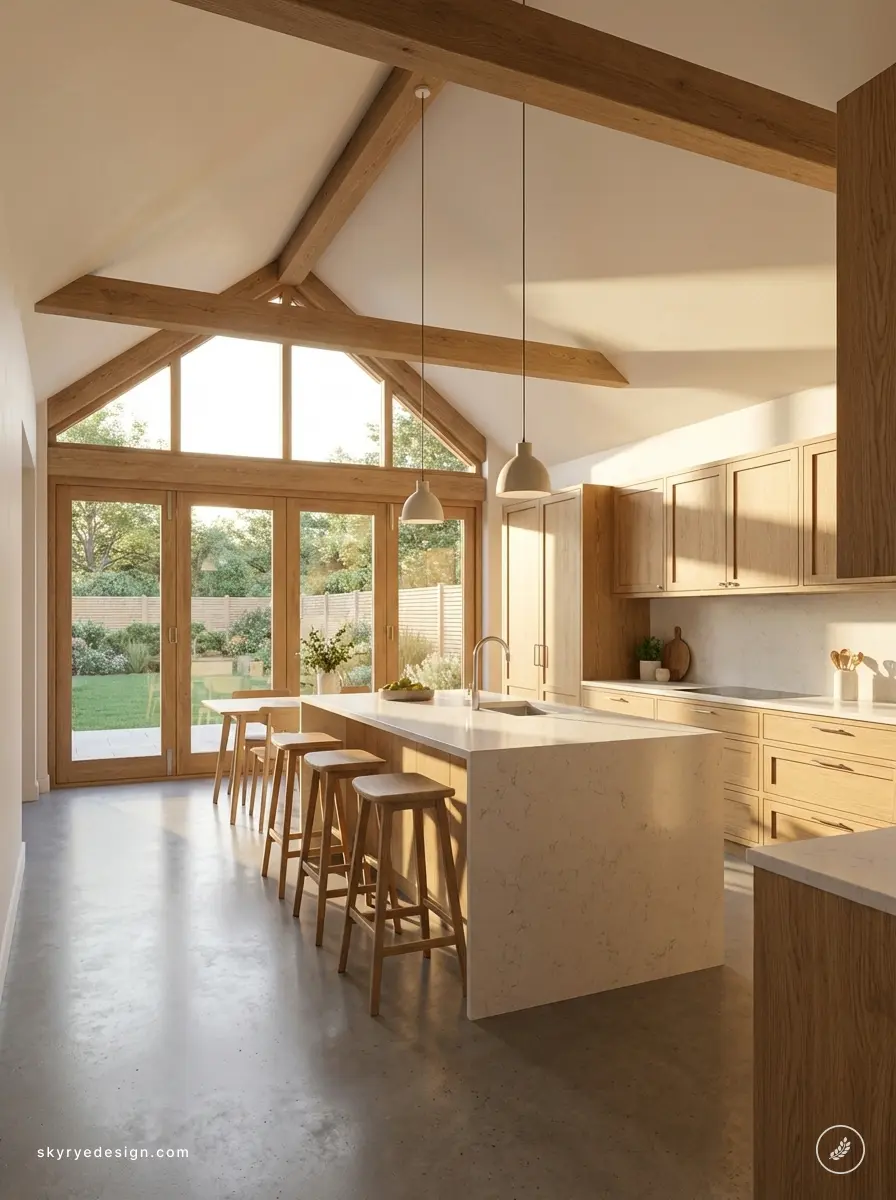
I’ve spoken to enough homeowners who commissioned beautiful designs only to watch them compromised in execution to know this pattern well. The mood board was perfect. The drawings were detailed. The render was convincing. But the plasterer wasn’t briefed on the lighting specification. The carpenter fitted the cabinetry before the electrician roughed in the under-cabinet sockets. The bifold doors arrived two weeks late because no one accounted for the lead time. Each event, unremarkable on its own. Together, they eroded the entire design intent.
The solution to this isn’t a better designer. It’s a better builder.
The Design Is Only Half the Work
Ask any architect or interior designer what actually ruins a project, and they’ll tell you the same thing without hesitation: a bad build. Not a bad concept. Not a flawed mood board or an uninspired material palette. The execution.
You can have the most precise drawings, the most considered specification, the most carefully resolved lighting plan — and watch all of it unravel when the walls aren’t plumb, the ceiling height is miscalculated by 40mm, or the electricals are roughed in before anyone checked where the bespoke joinery was supposed to sit.
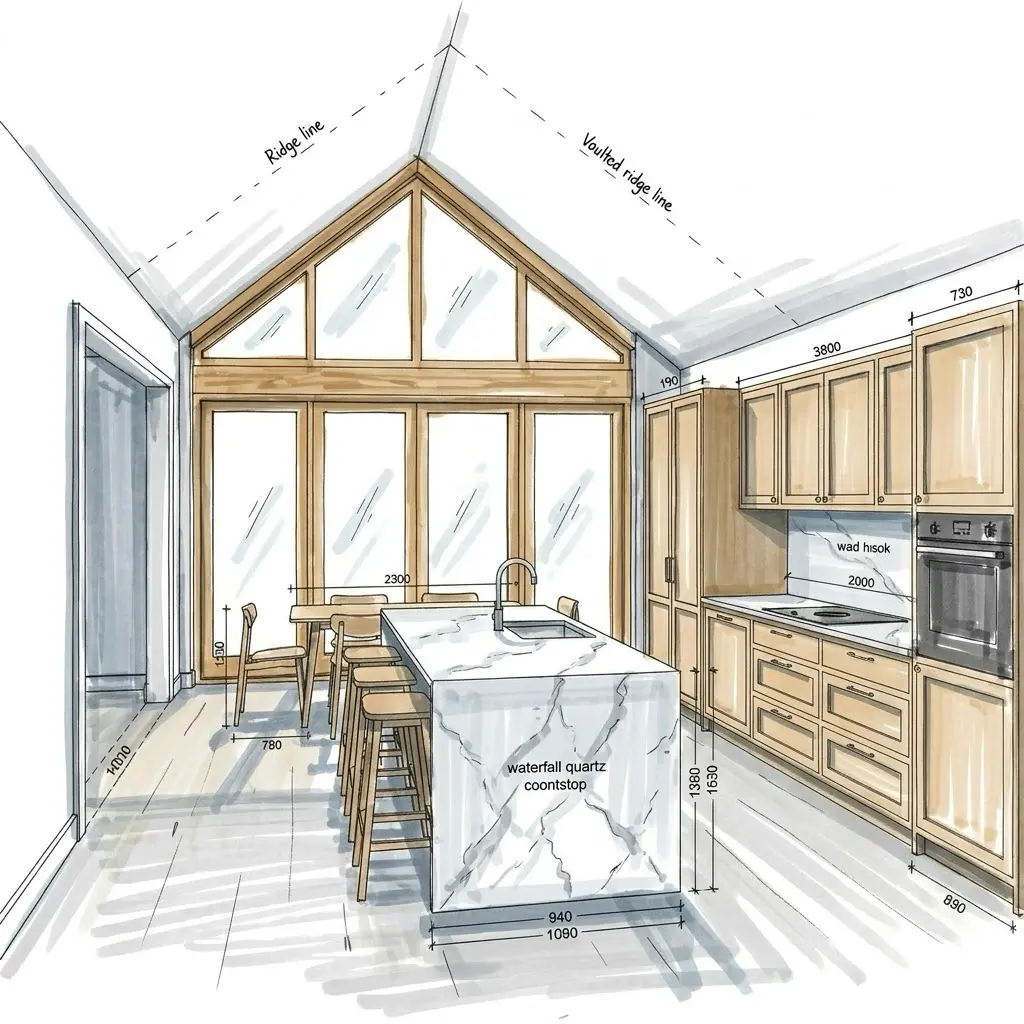
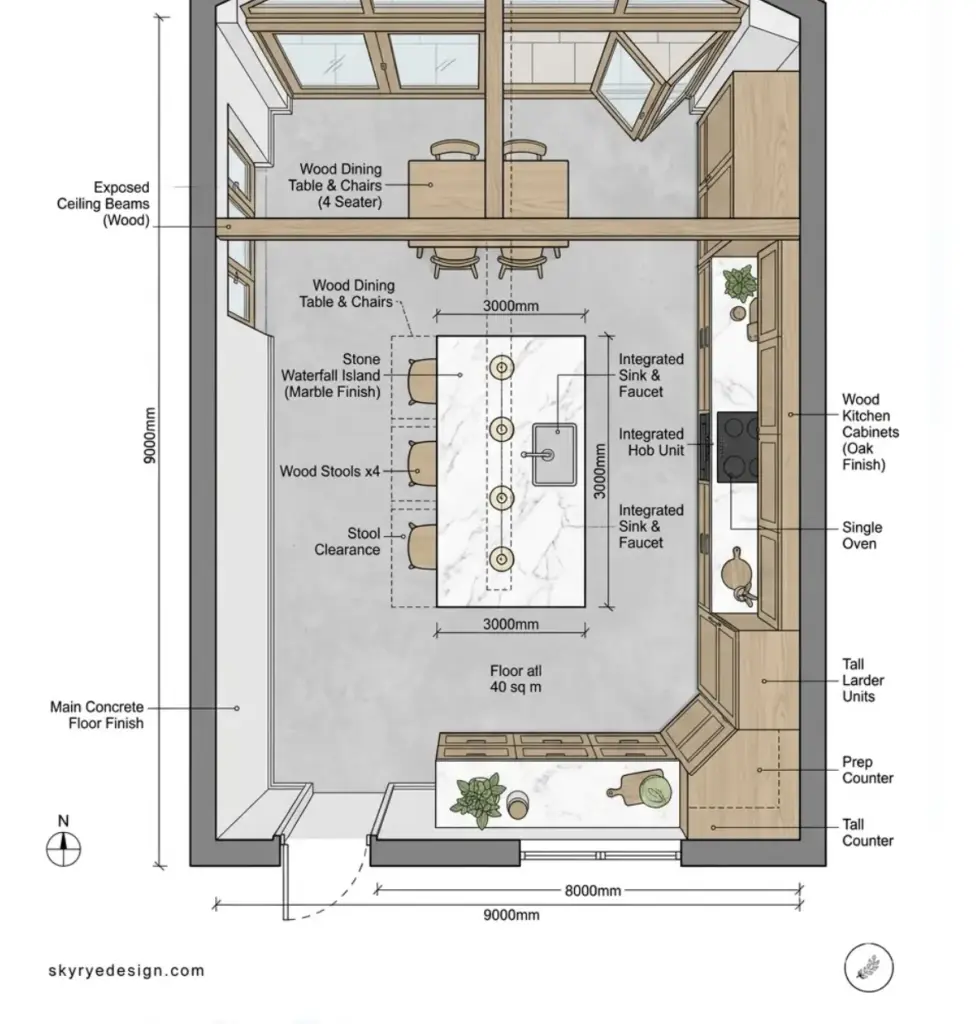
Professional builders don’t just follow instructions. They read a set of drawings the way a skilled musician reads a score — understanding not just the notes written down, but the intention behind them. When a designer specifies shadow-gap skirting, or requests a precise reveal depth around a window frame, an experienced builder knows exactly why that detail matters to the finished space. More importantly, they know how to execute it under real site conditions, not just in ideal ones.
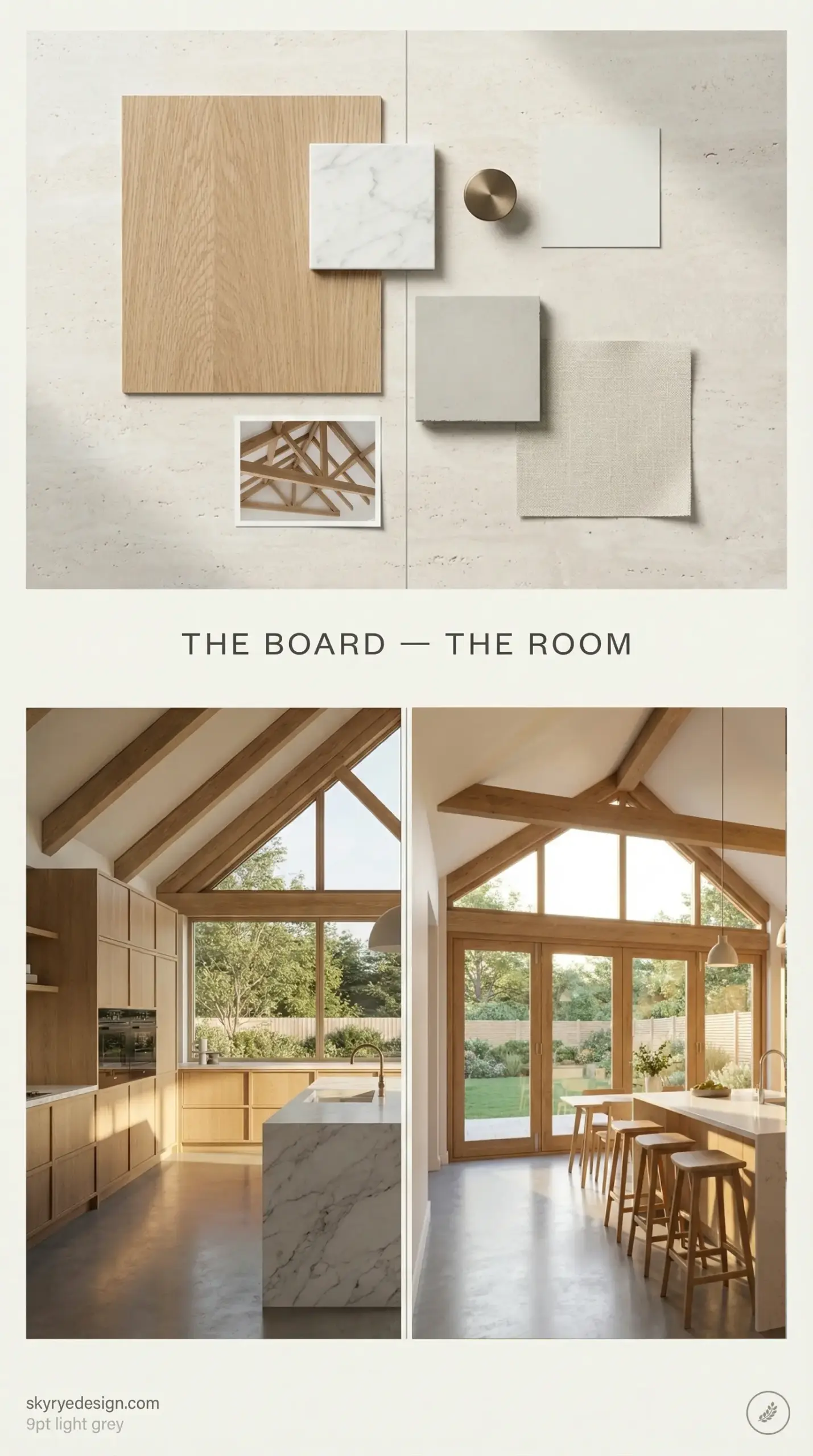
That translation — from drawing to physical space — is a craft in its own right. It requires spatial intelligence, material knowledge, and the ability to hold the design intent in mind while solving the dozens of small practical problems that arise on every single job.
It’s why homeowners across the North West increasingly look for established firms rather than the lowest quote. Companies like Builders Merseyside work at the intersection of construction competence and design awareness — understanding that the quality of what gets built determines whether a designer’s vision ever actually exists in the real world, or remains permanently on a screen.
Experience Is What Protects the Design
Pattern Recognition on Site
Experienced builders carry something no render can ever show: pattern recognition built from years of solving problems under real conditions. They’ve seen which details hold up and which fall apart.
They know that a certain type of older Merseyside terrace is likely to have floor joists running in an unexpected direction that will affect where the underfloor heating manifold can sit. They know which specialist suppliers deliver consistently and which will let a schedule slip. They know when a structural engineer’s specification needs a conversation before anyone starts cutting.
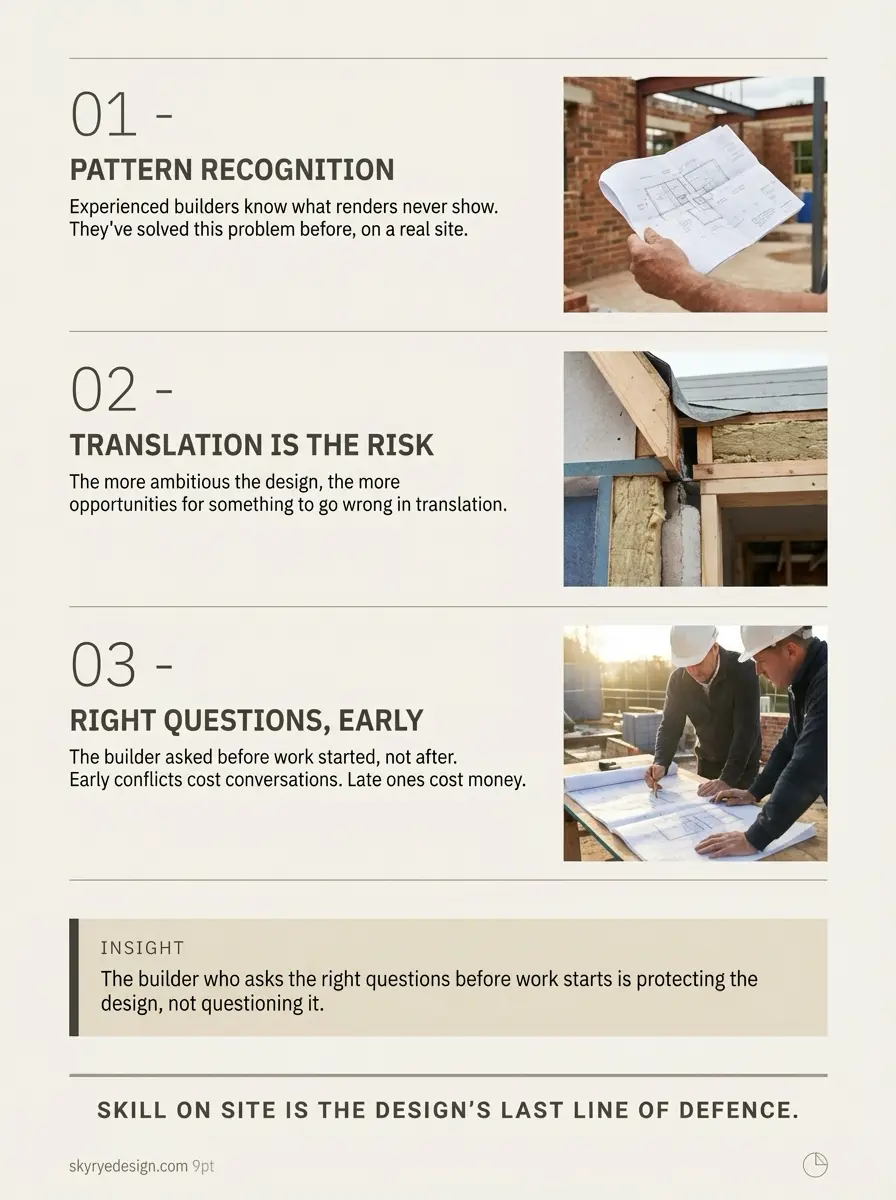
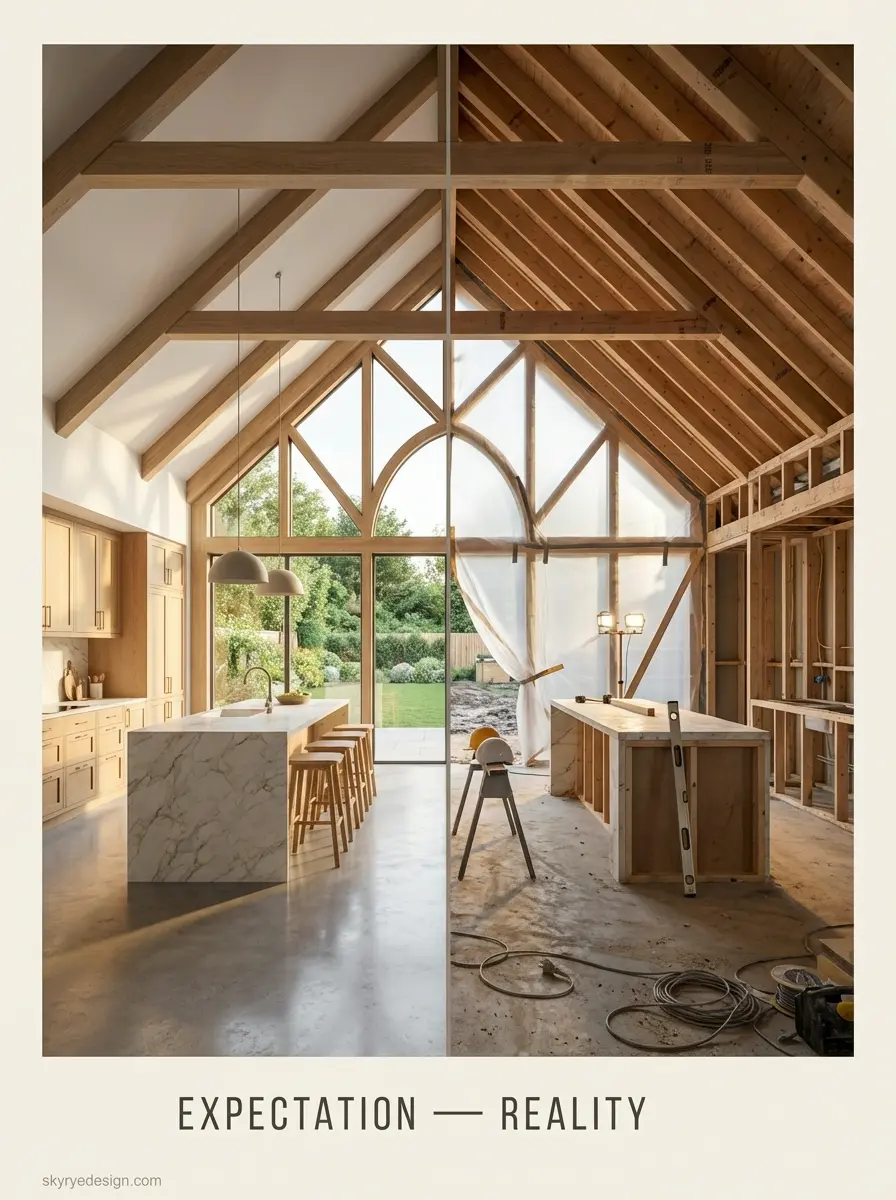
This matters enormously for design-led projects, because the more ambitious the design, the more opportunities there are for something to go wrong in translation. An open-plan kitchen extension with bifold doors, a vaulted ceiling, and an integrated rooflight isn’t a complicated design concept — it’s a genuinely complicated build.
The steel beam sizing, the thermal bridging at the roof-to-wall junction, the way the floor level steps between old and new structure, the sequence in which each trade needs to enter the space: these are the details that either make the finished room feel as seamless as the render, or reveal it as something that fell slightly short.
| 💡 INSIGHT: Designers who work regularly with genuinely skilled builders describe the same experience: the builder asked the right questions before work started, not after. They flagged conflicts between drawings and site conditions early — when they were cheap to resolve — rather than late, when they had already become expensive problems. |
Anticipating Problems Before They Cost You
A builder who has done thirty kitchen extensions knows that the specification calls for a steel beam that’s slightly undersized for the span. They raise it with the structural engineer before the beam is ordered. A builder who has done five doesn’t know to look. The difference in outcome is significant — not just financially, but in terms of what the finished space is actually able to be.
Experience also means familiarity with the specific character of regional housing stock. Properties across Merseyside range from Victorian terraces with original lime mortar and suspended timber floors, to 1960s semis with cavity walls and unusual load-bearing configurations, to contemporary new-builds with their own set of tolerances and finishes. Each type presents different challenges that an experienced local builder navigates routinely — and that an inexperienced one may encounter for the first time on your job.
Planning Is What Aligns the Vision
Construction as a Coordination Problem
Here is where most homeowners fundamentally underestimate the complexity of what they’re commissioning. Construction isn’t a linear process. It’s a coordination problem — a dense sequence of interdependent trades that have to arrive in the right order, with the right information, at the right time.
The electrician needs to rough in before the plasterer boards the ceiling. The plasterer needs to finish before the carpenter fits the cabinetry. The cabinetry dimensions need to be confirmed and signed off before the worktop template is cut. The worktop template needs to be cut before the splashback tiles can be ordered, because the tile cut has to account precisely for the worktop thickness and the wall reveal. One delayed decision or miscommunication cascades in both directions through the programme.
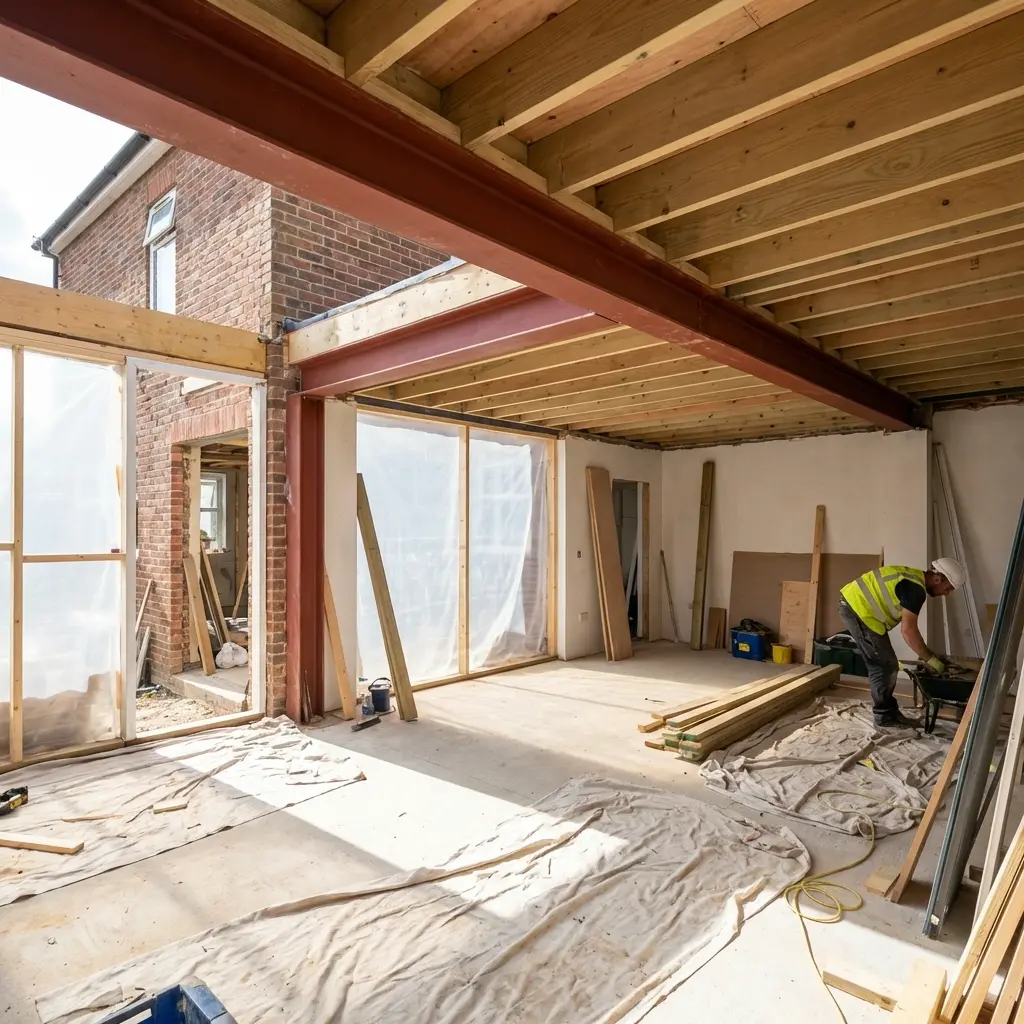
A professionally planned build maps all of this in advance. It accounts for lead times on bespoke and specified items — that custom steel-framed window takes eight to ten weeks, not two. It sequences the trades so that no one arrives to find the previous stage unfinished, and no completed surface is damaged by whoever comes next. It builds in review points where the homeowner, designer, and builder can collectively confirm that what is being built still matches what was intended.
Why This Matters More for Design-Led Projects
Integrated lighting, built-in furniture, and carefully considered material junctions don’t just require good individual craftsmanship — they require a build programme that respects the systemic complexity of what’s being attempted. A pendant light that needs to drop from a specific ceiling point requires that point to be structurally prepared before plastering. A run of bespoke kitchen units that sits flush to the ceiling requires the ceiling to be completely level before the units are templated. A polished concrete floor that runs continuously from kitchen to living area requires those two spaces to be at exactly the same structural level before any screed is poured.
None of these requirements are exotic. All of them are routinely ignored when a project lacks a builder with the planning discipline to enforce the correct sequence.
Craftsmanship Is What the Light Reveals
The Natural Light Test
There’s a reliable test that every finished interior eventually faces: natural light, moving across the room through the course of a day.
A space that looks perfectly adequate under flat construction lighting can reveal a completely different story once the afternoon sun hits the walls at a raking angle. Plaster that isn’t truly flat — not just smooth, but flat — catches that light and telegraphs every imperfection across the surface. Ceiling junctions that haven’t been formed to a crisp, clean line create unintended shadow lines that weren’t in any drawing. Floor tiles laid to a tolerance that seemed acceptable during installation look visibly off-level once a low evening light skims across them.
This is precisely why craftsmanship isn’t a soft value or a vague marketing term. It is a measurable technical standard, and it’s the standard that determines whether the space you commissioned actually looks designed — or just built.
The Details That Define a Room
Plastering to a standard that remains visually neutral under raking light. Forming perfectly square internal reveals around doorways and window openings. Installing engineered timber flooring with consistent joint spacing that gives no indication of what lies beneath it. Jointing brickwork at a uniform depth and profile that gives the exterior elevation a composed, deliberate quality. These aren’t decorative refinements — they’re the baseline requirements for a room that performs as its designer intended.
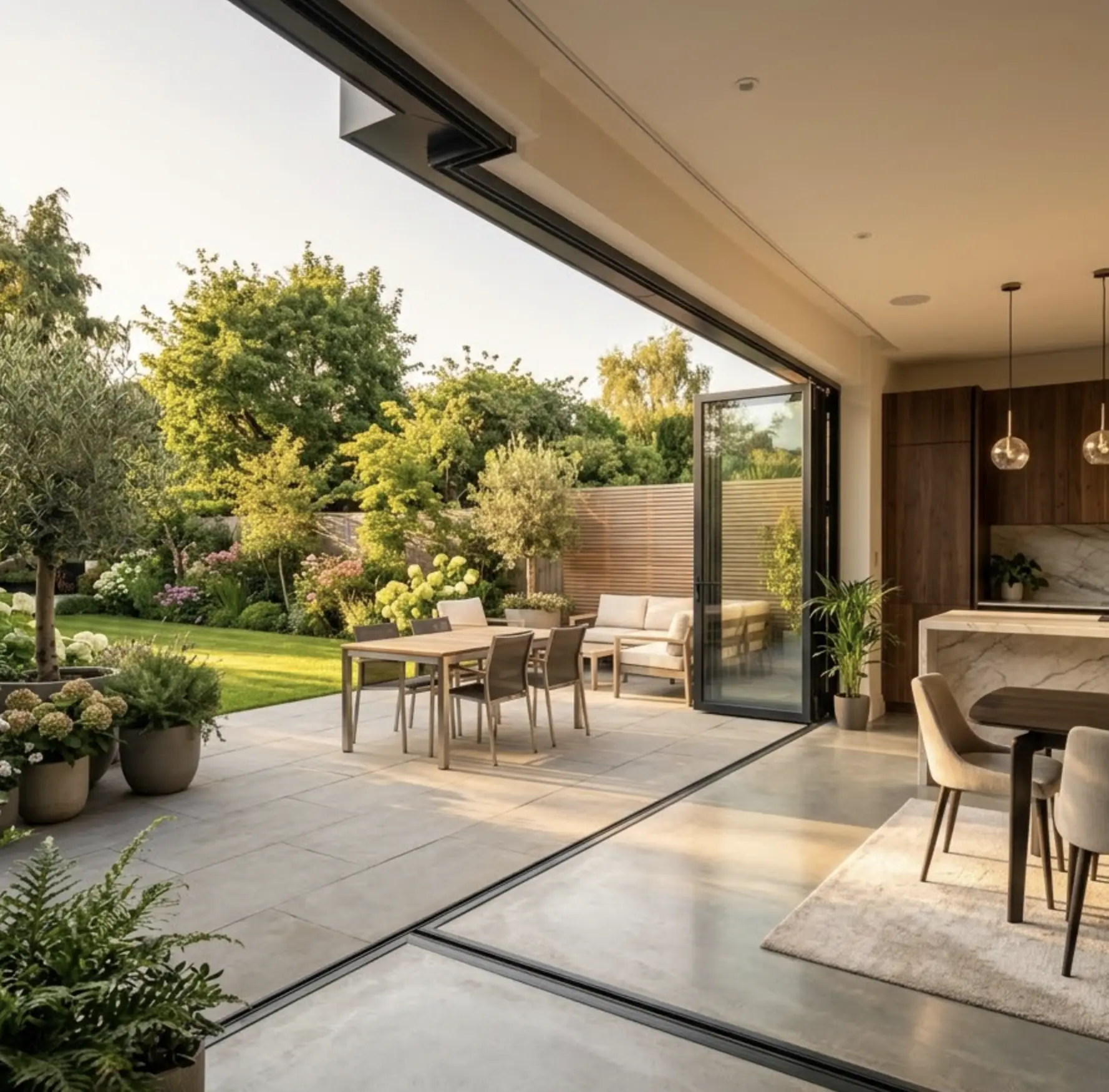
I’ve walked through extensions where the original design was genuinely ambitious and carefully considered — and where every ambition had been quietly undermined by a 3mm variation in wall thickness here, a slightly misaligned tile grid there, a door reveal that’s 5mm deeper on one side than the other. Individually, each issue is minor. Together, they create a persistent, low-level visual discomfort that means the room never quite settles. It never looks as good as the render. It always feels like something’s slightly off.
| 💡 INSIGHT: The best builders approach finish quality with the same rigour that a designer brings to material selection. The point of the work isn’t to complete a task list — it’s to produce a space that performs exactly as intended, aesthetically and functionally, for years to come. |
Communication: The Quality That Holds Everything Together
There’s one more quality that separates professional builders from the rest, and it rarely appears in any list of credentials or trade accreditations: the ability to communicate clearly across disciplines.
A well-designed home project involves at least three parties with different professional languages — the designer who thinks in elevations, sections, and material relationships; the structural engineer who thinks in loads, spans, and safety factors; and the builder who thinks in sequences, tolerances, and site logistics. When these parties communicate poorly, the consequences appear in the finished building.


A professional builder acts as the translator between these disciplines. They understand enough of each language to identify when a conflict exists between the designer’s intent and the structural engineer’s requirement, and to raise it as a question rather than making an unilateral decision.
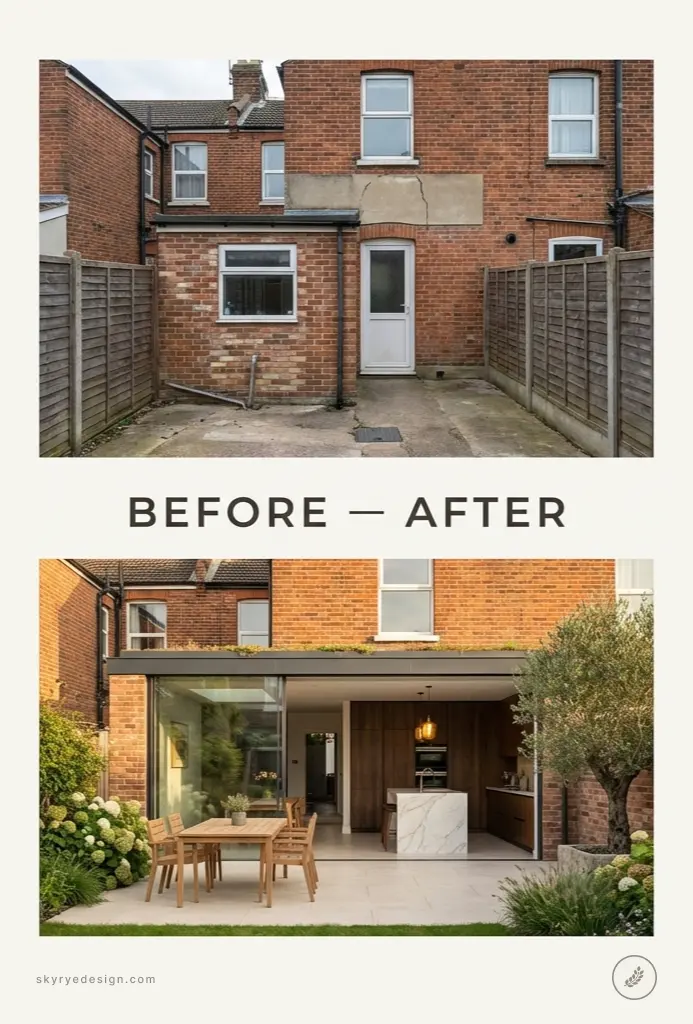
They know when a detail that looks resolved on a drawing will need to be rethought in three dimensions. They can tell a homeowner clearly what a change of specification will cost — in money, in time, and in design terms — so the decision can be made with full information.
This quality of clear, professional communication across the full project team is characteristic of builders who operate at a genuinely high level. It’s part of what makes established local firms — like Builders Merseyside — worth seeking out for projects where design quality and build quality both matter. The ability to hold the design intent through weeks of complex, messy, physical construction is a rare capability, and it’s the one that ultimately determines whether the render on the designer’s laptop ever fully becomes real.
The Render Is the Promise. The Build Is the Proof.
Every home project begins as a vision. Something you’ve imagined for years, refined through conversations with designers, expressed in drawings and material samples and carefully art-directed mood boards. That vision is worth protecting — and the only way to protect it is to choose the person who will execute it with the same level of care and intelligence that went into creating it.
A professional builder with genuine experience, disciplined planning, and an uncompromising approach to craftsmanship doesn’t just build your extension or renovation. They complete the design work. They take something that exists in two dimensions on a screen and make it exist in three dimensions in the real world, with all the complexity and specificity and physical presence that entails.
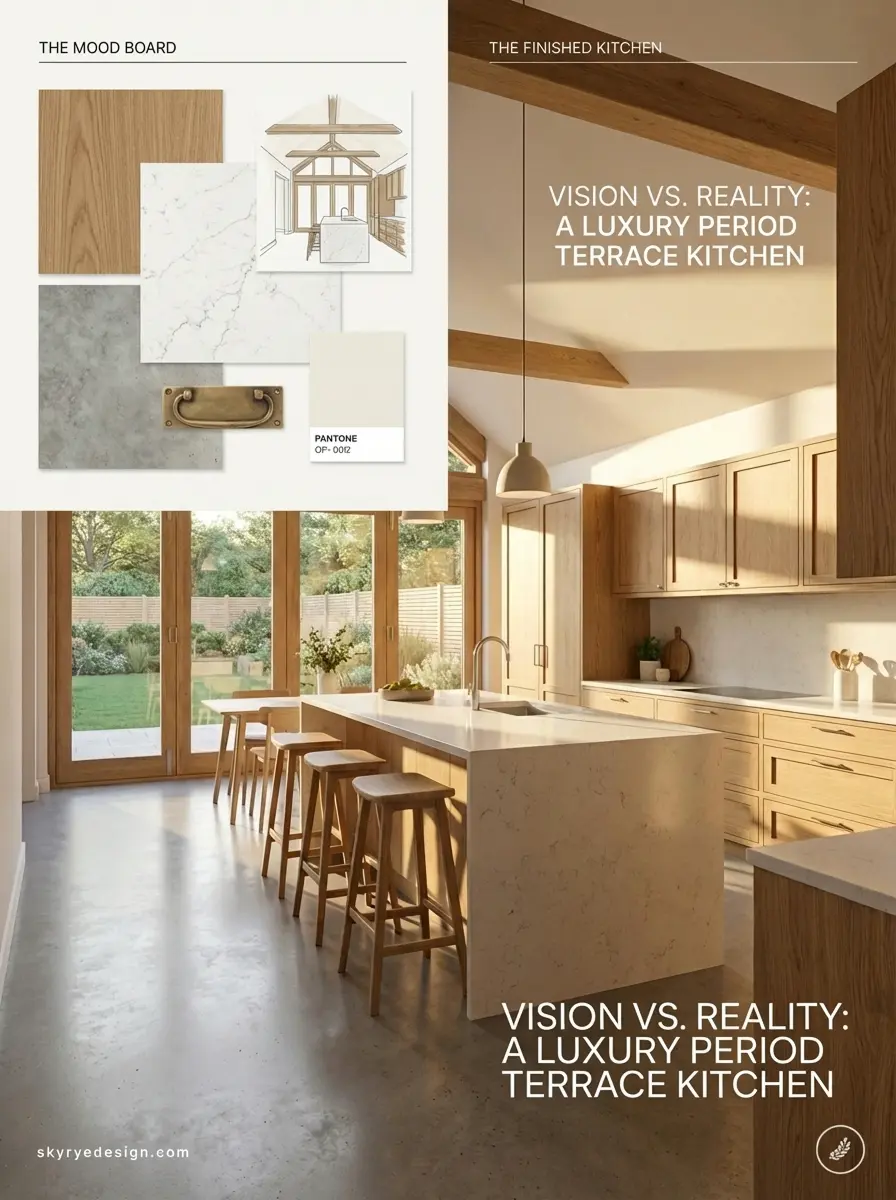
The gap between a beautiful render and a beautifully built space is not inevitable. It’s a choice made at the point of selecting who does the work. Choose carefully, ask detailed questions, look at finished projects rather than just quotes, and find a builder who understands that what they’re building was designed to look and feel a specific way. That understanding is, in the end, what makes the difference.
| The render is the promise. The build is the proof. |
Frequently Asked Questions
Q: How do I find a reliable professional builder in Merseyside?
Start by looking for builders with a verifiable portfolio of completed local projects — not just stock photos. Ask for references from recent clients and, where possible, visit a finished project. Check for trade memberships such as the Federation of Master Builders (FMB) or NHBC registration. Local firms with an established presence in Merseyside will have direct knowledge of the area’s housing stock, planning norms, and trusted trade networks.
Q: What should I look for in a builder for a design-led home project?
Beyond technical competence, look for communication. A builder suited to design-led work will ask detailed questions about design intent before starting, not just about dimensions and materials. They should demonstrate familiarity with the specific finishes and details your project requires — shadow-gap joinery, flush flush thresholds, custom metalwork — and should be able to explain how they’ll coordinate the trades to protect those details through the construction process.
Q: Why does planning matter so much in a home extension or renovation?
Construction is a sequencing problem. Each trade depends on the previous one completing correctly and on time. Without disciplined programming, delays cascade and finished surfaces get damaged by later trades. For design-led projects specifically, the sequencing is even more critical — bespoke items have long lead times, and many finish details require the preceding structural and services work to be exactly right before they can be installed.
Q: How do I know if a builder truly understands design intent?
Ask them to walk you through a previous project — not just what they built, but decisions they made when the drawings didn’t fully resolve something on site, or when a material wasn’t available and a substitute had to be chosen. A builder who understands design intent will be able to explain why those decisions mattered to the finished result, not just what was practically done.
Q: What is the most common reason home projects don’t match the original design?
Poor sequencing and trade coordination account for most finish-quality issues. The second most common cause is substitution — a specified material or product is changed without fully considering the design consequences. Both problems stem from builders who treat a set of drawings as a task list rather than as a design intent to be preserved throughout the build. The solution is choosing a builder who reads and understands the specification before work begins.
Q: How long does a typical home extension take to build in Merseyside?
A single-storey rear kitchen extension typically takes 10–16 weeks from groundworks to practical completion, depending on size, specification complexity, and material lead times. A two-storey extension runs 16–24 weeks. Design-led projects with bespoke elements — custom metalwork, specialist glazing, made-to-measure joinery — should have additional lead time factored into the programme before work starts on site, often 8–12 weeks for longer-lead items.
- 7shares
- Facebook0
- Pinterest7
- Twitter0
- Reddit0