A home coffee corner works best when it solves two problems at once: it makes your morning brew easier, and it gives a small part of the house a clear visual purpose. The goal is not to copy a cafe counter. It is to create a compact coffee station where the machine, grinder, mugs, beans, water access, lighting, and storage all sit where your hands naturally reach for them.
Start with the routine before the decor. If you make espresso, you need counter depth, nearby outlets, and room for tamping or frothing. If you prefer pour-over or French press, leave space for a kettle, scale, filters, and a drying spot. Once that workflow feels calm, the styling choices become easier: shelves, jars, trays, plants, art, and warm task lighting can make the corner feel intentional instead of crowded.
How to make a coffee corner at home
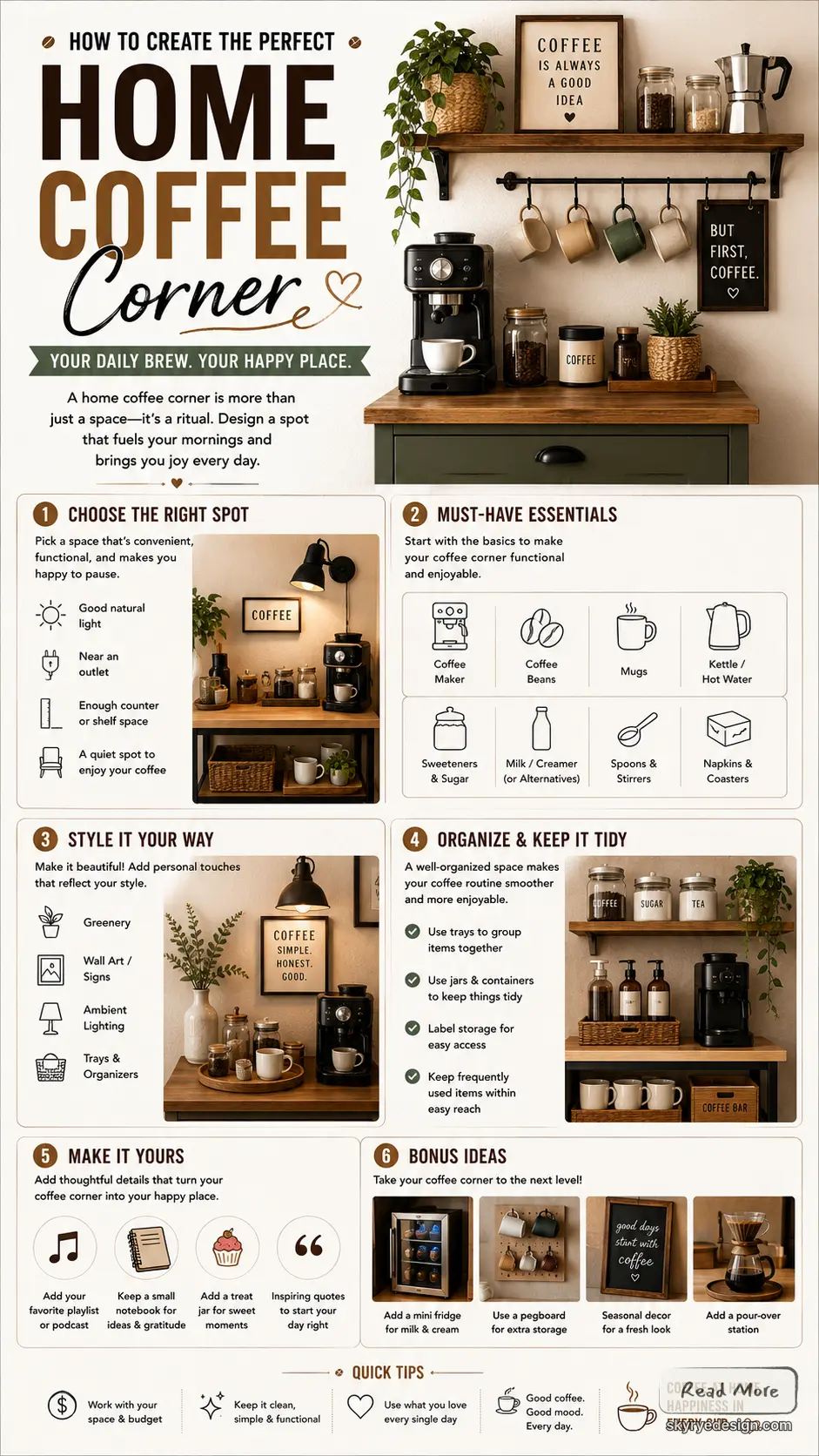
To make a coffee corner at home, choose a spot close to power and water, give the coffee maker a stable surface, keep daily supplies within one arm’s reach, and use vertical storage so the counter stays clear. A small tray helps define the station, while shelves or hooks hold mugs, filters, beans, and tools without taking over the room.
The easiest layout is a simple left-to-right workflow: beans and grinder, brewer, cups, then cleanup items. In design work, I look for the same thing I would in a tiny studio: every object needs a job, and the negative space around it matters as much as the object itself.
| Coffee corner decision | Best choice for most homes | Why it works |
|---|---|---|
| Small counter area | Tray, compact brewer, wall hooks | Keeps the station readable without adding furniture |
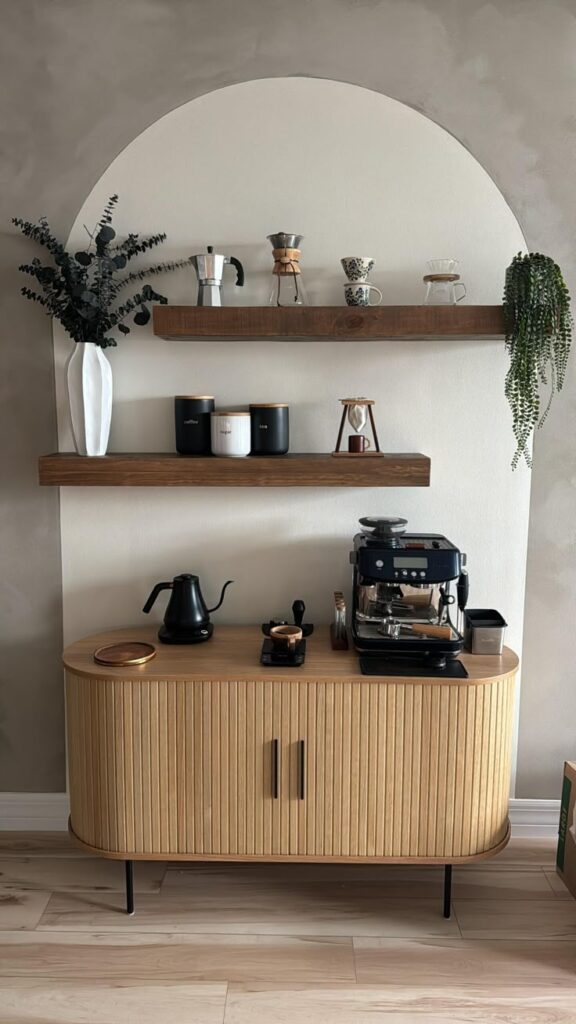
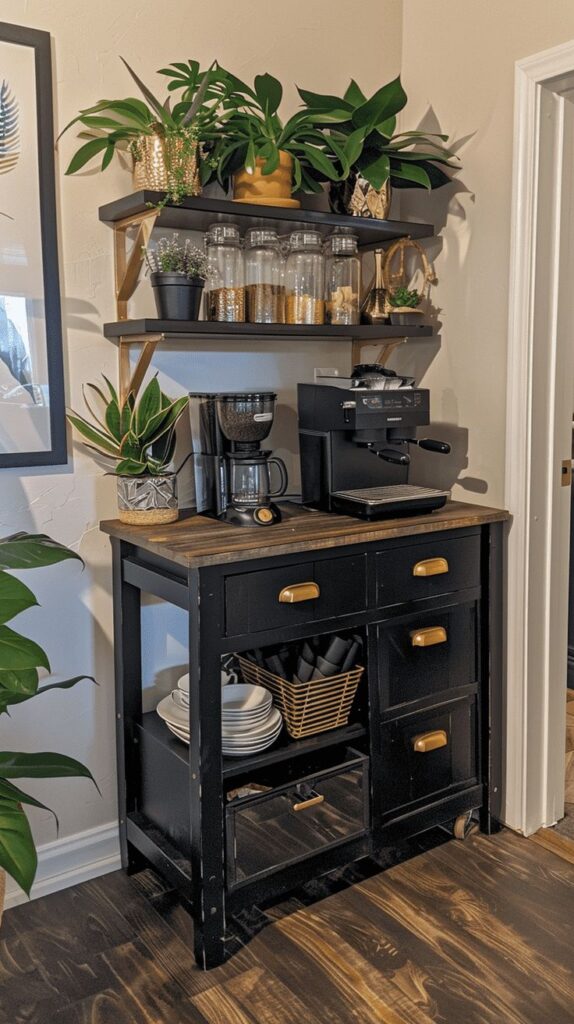
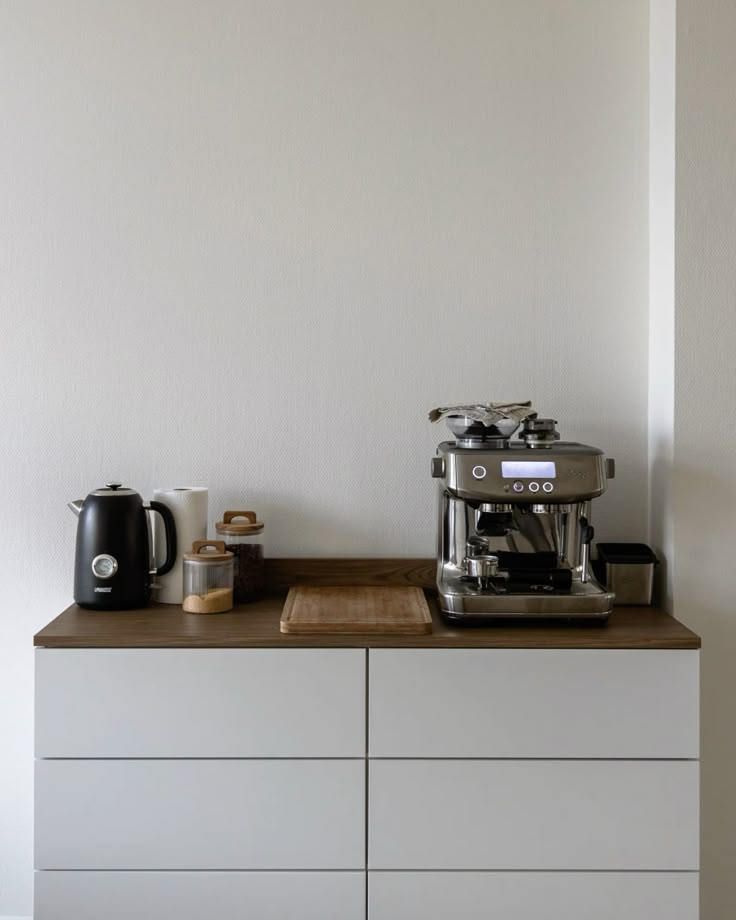
| Unused wall or alcove | Console table with shelves above | Creates a real coffee nook from awkward space |
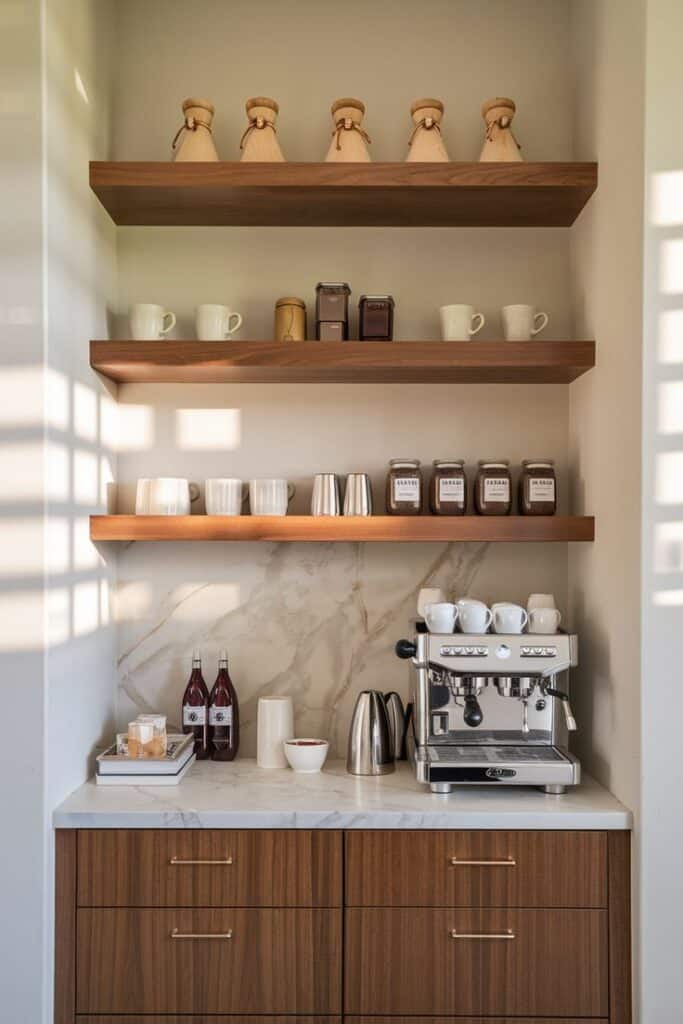
| Open kitchen | Built-in cabinet zone or end-of-counter setup | Looks intentional and protects the main prep area |
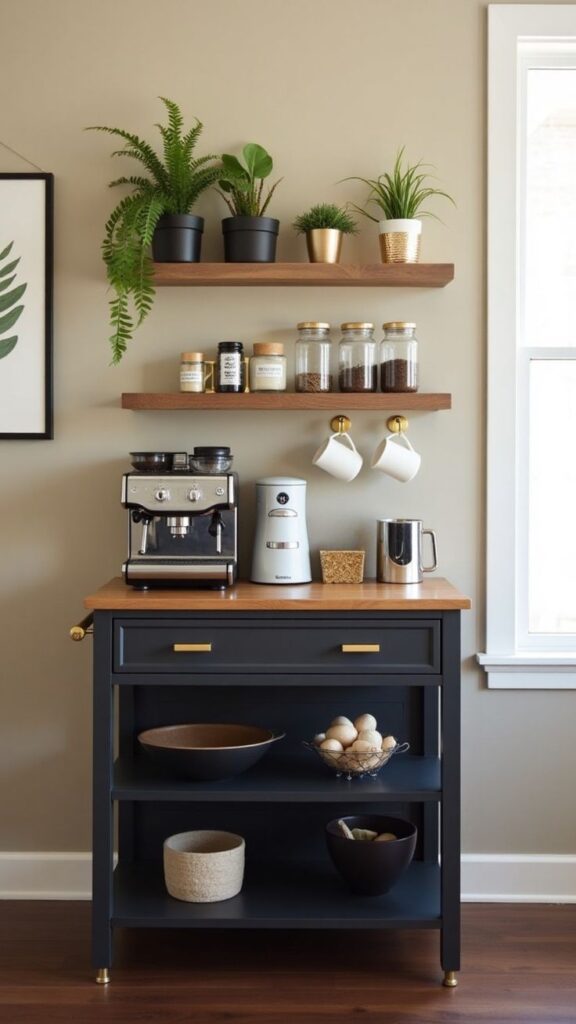
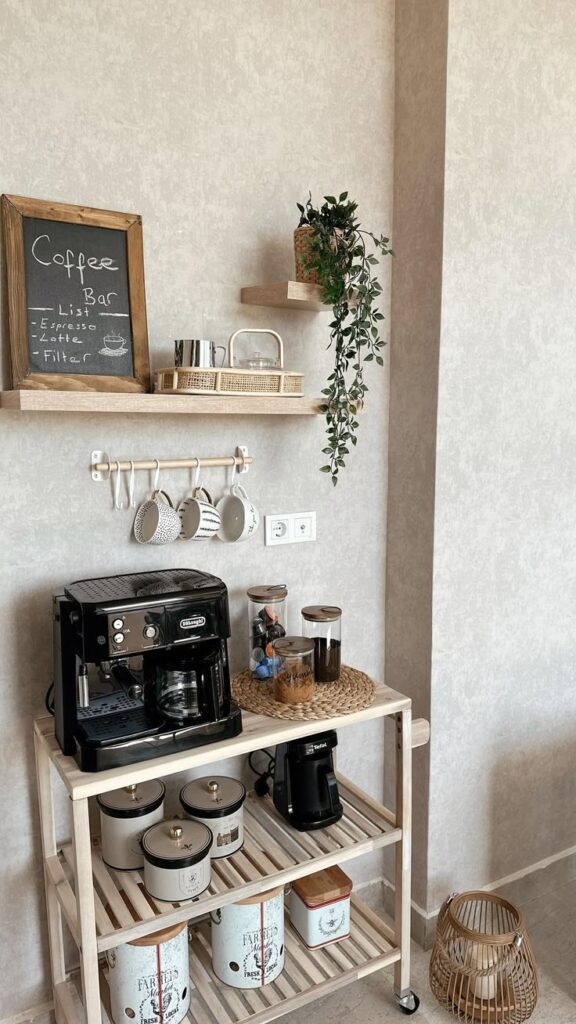
| Rental apartment | Bar cart or freestanding cabinet | Flexible, movable, and easy to style without renovation |
Key Takeaways
- A well-designed coffee corner combines functionality with aesthetic appeal, creating a dedicated space that enhances your daily brewing ritual.
- Your coffee station can be customized to fit spaces of any size, from small countertop areas to built-in nooks with cabinetry and shelving.
- Thoughtful organization of equipment, beans, and accessories makes morning routines more efficient while creating an inviting atmosphere in your home.
Planning Your Home Coffee Corner
Creating a functional coffee corner requires thoughtful planning to ensure it meets your daily brewing needs. The right location, efficient use of space, and appropriate furniture will transform your coffee routine into a delightful experience.
Choosing the Right Location
The perfect spot for your coffee corner should balance convenience and atmosphere. Consider placing it in the kitchen for easy access to water and electricity. A corner near a window offers natural light for a pleasant morning brew experience.
Alternatively, a dining room nook or dedicated space in a home office can work well if you prefer to separate your coffee ritual from cooking activities.
Think about your morning routine – where do you naturally gravitate first? Your coffee station should be in a location that complements this flow rather than disrupting it.
Avoid high-traffic pathways where you might bump into the setup during busy mornings. A quiet alcove or unused wall space can become a charming coffee nook with minimal effort.
Assessing Space and Layout
Measure your available space carefully before purchasing any equipment or furniture. A coffee bar can be created in spaces as small as 24 inches wide, though 36-48 inches provides more comfort.
Consider the height of your coffee machines and storage needs. Standard counter height (36 inches) works well for most people, but adjust based on your comfort.
Allow at least 12 inches of clearance above your coffee maker for easy access when adding water or beans. Electrical outlets are crucial – ensure you have enough for all your equipment.
Plan your layout with workflow in mind. Position your coffee maker, grinder, and supplies in the sequence you’ll use them. For right-handed users, arrange from left to right; reverse for left-handed brewers.
Think vertically. Wall-mounted shelves or cabinets maximize small spaces while keeping frequently used items within reach.
Coffee corner layout checklist
- Keep the brewer close to an outlet, but leave the cord loose enough that the machine is not pulled against the wall.
- Leave a clear landing area for a cup, milk pitcher, spoon, or filter basket before you add decorative pieces.
- Store beans away from strong sun, steam, and oven heat; a pretty jar only helps if it protects the coffee too.
- Use one warm task light for measuring and pouring, then softer ambient light if the nook is also a sitting spot.
For coffee freshness, the National Coffee Association’s coffee storage guide is a useful reminder to protect beans from air, moisture, heat, and light. For the actual brewing side, its brewing methods overview is a helpful reference when you are deciding how much space to give to pour-over, espresso, French press, or cold brew gear.
Essential Furniture and Fixtures
A stable surface forms the foundation of your coffee station. Options include:
- Dedicated coffee bar cart (mobile and versatile)
- Small side table or console (perfect for apartments)
- Built-in counter extension (integrated look)
- Repurposed hutch or bookshelf (adds character)
Storage solutions are vital for keeping your coffee corner organized. Include:
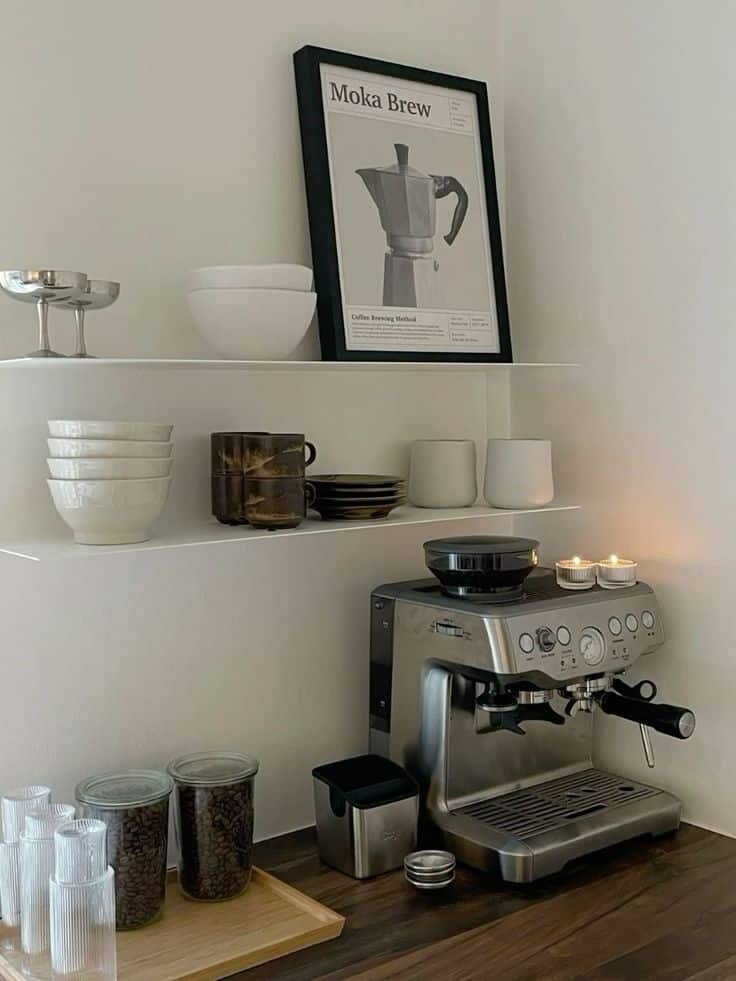
- Open shelving for displaying mugs and canisters
- Drawers for utensils and small accessories
- Hooks for hanging measuring spoons and mugs
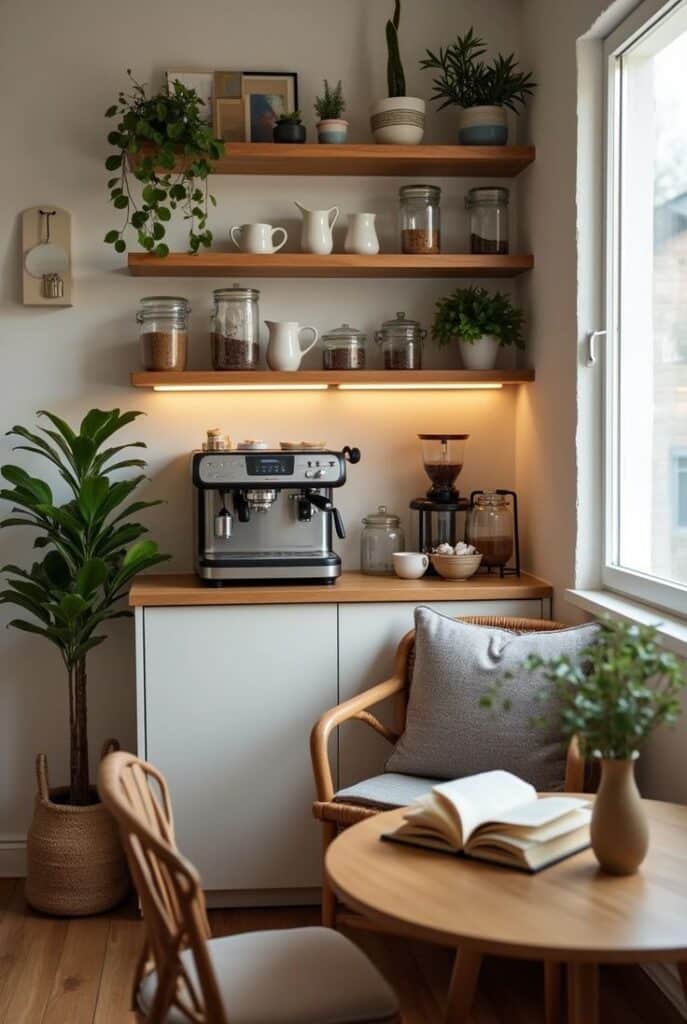
Lighting enhances both function and mood. Under-cabinet lights illuminate your workspace, while a small lamp creates a cozy atmosphere for early mornings.
Consider a small sink if budget and plumbing allow – it’s incredibly convenient for rinsing equipment. Otherwise, position your coffee corner reasonably close to your kitchen sink.
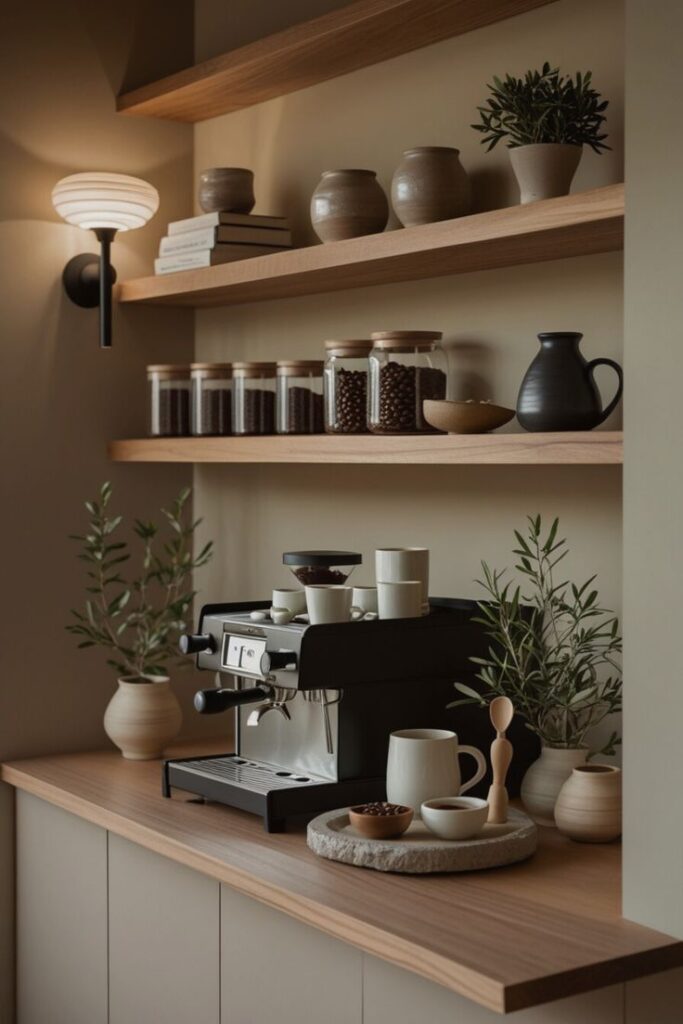
Designing and Styling Ideas for Coffee Corners
Creating a coffee corner that reflects your personality while serving its practical purpose requires thoughtful design choices. The right lighting, style approach, and personal touches can transform a simple corner into a sanctuary that enhances your morning routine.
Incorporating Lighting and Natural Light
Position your coffee corner near a window whenever possible to take advantage of natural light. Morning sunlight creates an inviting atmosphere and helps you start your day with energy and warmth.
Install under-cabinet lighting to illuminate your workspace for precise measuring and pouring. LED strip lights are inexpensive, energy-efficient options that provide consistent light without generating heat near your coffee equipment.
Pendant lights hanging above your coffee bar add both functional lighting and visual interest. Choose styles that complement your overall aesthetic—glass pendants for modern spaces or metal fixtures for industrial or farmhouse designs.
For evening coffee sessions, consider adding a small lamp with warm-toned bulbs. This creates a cozy ambiance that transforms your coffee corner from a functional morning station to a relaxing evening retreat.
If you add LED strips or puck lights under a shelf, choose a warm color temperature for wood, brass, cream tile, or natural stone, and keep the light source hidden from eye level. The U.S. Department of Energy’s LED lighting guide is a good starting point if you are comparing efficiency, brightness, and lifespan before buying fixtures.
Modern and Farmhouse Styles
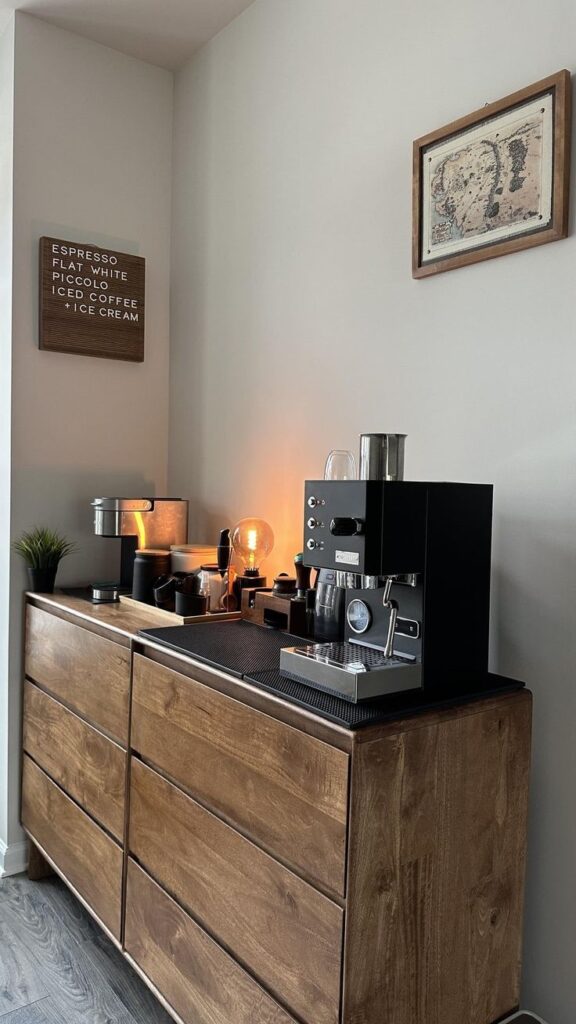
Modern coffee bars feature clean lines, minimalist storage solutions, and a monochromatic or high-contrast color palette. Choose sleek appliances in stainless steel or matte black for a contemporary look that maintains visual cohesion.
For a modern coffee corner, incorporate:
- Floating shelves with hidden brackets
- Glass or acrylic containers for beans and accessories
- Streamlined, digital coffee makers with programmable features
Farmhouse coffee bars embrace rustic elements and natural materials. Reclaimed wood shelving, mason jars for storage, and vintage-inspired appliances create an approachable, homey feel.
Key farmhouse coffee bar elements include:
- Open shelving with decorative brackets
- Woven baskets for supplies
- Ceramic mugs in complementary earthy tones
- Chalkboard signs or labels for personalization
Using Decorative Elements and Personal Touches
Display a carefully curated collection of your favorite mugs to add personality to your coffee corner. Choose pieces that share a common element—color scheme, material, or theme—to maintain visual harmony.
Add small plants or herbs like mint that can be used in drinks. Succulents require minimal maintenance while adding life and color to your space.
Incorporate art that reflects your passion for coffee. Vintage coffee advertisements, coffee-themed prints, or even your own photos from favorite cafés create meaningful connections to your coffee ritual.
Use texture to add depth through:
- A small textured rug under your coffee station
- Woven trivets for hot cups
- Wooden or marble trays to corral supplies
Store frequently used items in beautiful containers that deserve to be displayed. Coffee beans in glass jars, sugar in ceramic canisters, and specialty syrups in decorative bottles turn necessities into design elements.
Selecting Coffee-Making Equipment
The foundation of your coffee corner lies in selecting the right equipment to match your brewing preferences and lifestyle. Quality tools will significantly impact the taste of your coffee and the enjoyment of your daily ritual.
Choosing Your Coffee Maker and Espresso Machine
When selecting a coffee maker, consider your daily consumption and preferred coffee style. Drip coffee makers are excellent for households needing multiple cups throughout the morning. They’re user-friendly and consistently deliver reliable results.
For espresso lovers, investing in a dedicated espresso machine opens up possibilities for lattes, cappuccinos, and americanos. Entry-level machines start around $100, while prosumer models can exceed $1,000 with temperature stability and pressure profiling features.
Compact coffee machines like Nespresso or Keurig offer convenience with minimal counter space requirements. These are ideal if you value speed and simplicity over customization.
Consider your budget, available space, and how many people you’ll typically serve when making your selection. A machine that’s difficult to use will likely end up collecting dust.
Utilizing Brewing Equipment and Tools
Beyond your primary coffee machine, specialized brewing equipment can elevate your coffee experience. A pour-over setup (like Chemex or V60) produces clean, bright flavors and makes brewing a mindful ritual.
French press brewers offer rich, full-bodied coffee with minimal equipment. They’re perfect for weekend mornings when you have a few extra minutes to spare.
Cold brew systems are worth considering if you enjoy smooth, less acidic coffee, especially during warmer months. They require advance preparation but produce coffee concentrate that stays fresh for days.
Don’t overlook essential accessories like a quality kettle with temperature control for pour-overs. Precise water temperature significantly impacts extraction and flavor development in your brew.
Coffee Grinders and Accessories
A burr grinder is perhaps the single most important investment for your coffee corner. Fresh grinding immediately before brewing preserves aromatic compounds that pre-ground coffee loses within minutes.
Conical burr grinders provide more consistent particle size than blade grinders, resulting in more even extraction and better flavor. Entry-level models start around $40, while higher-end options offer more grind settings and consistency.
Complementary tools like a milk frother can transform your coffee experience. Handheld frothers are affordable ($10-20), while automatic models provide barista-quality microfoam.
Keep essential accessories organized and accessible: a timer for precise brewing, a scale for measuring beans (aim for 0.1g precision), and reusable coffee filters to reduce waste. These tools help ensure consistency in your daily brew and contribute to a more organized coffee corner.
Organizing and Storing Coffee Supplies
Effective storage and organization of coffee supplies creates a functional space that enhances your brewing experience while keeping everything accessible and fresh.
Utilizing Open Shelving and Floating Shelves
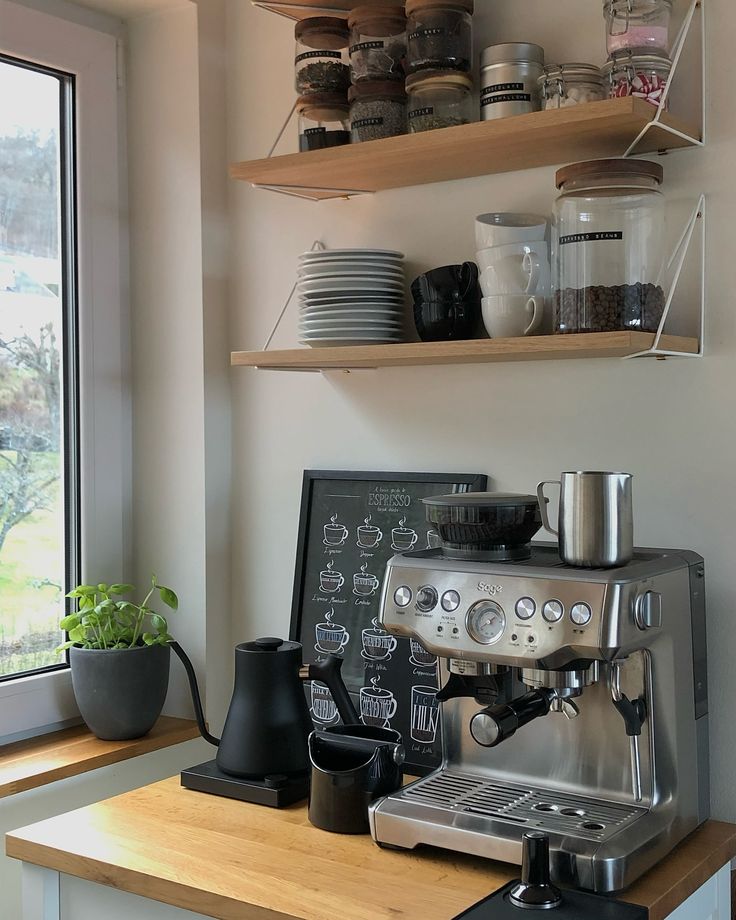
Open shelving provides immediate visual access to your coffee collection while adding decorative appeal to your coffee corner. Install floating shelves above your coffee maker to keep frequently used items within arm’s reach. Display your favorite mugs, specialty beans, and brewing equipment on these shelves for both functionality and aesthetic appeal.
Consider arranging items by frequency of use, with daily essentials at eye level. Group similar items together—cups and mugs on one shelf, beans and grounds on another. For visual appeal, alternate heights of objects and incorporate small plants or coffee-themed decorative items between functional pieces.
When selecting shelving, choose materials that complement your kitchen’s design. Wood adds warmth, while metal shelving offers a modern, industrial look.
Maximizing Vertical Space
Vertical space utilization dramatically increases your storage capacity without expanding your coffee corner’s footprint. Wall-mounted cup racks keep mugs accessible while freeing up shelf space. Consider installing a pegboard system where you can hang measuring spoons, filters, and other brewing accessories.
Under-cabinet storage solutions work effectively for smaller items like stirrers and sugar packets. Magnetic strips mounted underneath cabinets can hold metal scoops and other metal accessories.
For limited counter space, invest in stackable containers for beans, grounds, and additives. Clear canisters with airtight seals not only protect coffee freshness but also create a visually appealing display of your coffee collection.
Multi-tiered stands can hold various supplies while maintaining a small footprint.
Incorporating Storage Solutions
Dedicated storage containers preserve coffee freshness and maintain organization. Invest in airtight containers with date markers to track bean freshness. These containers should block light to prevent premature degradation of your coffee.
A rolling bar cart offers flexibility, allowing you to move your coffee station as needed. Look for carts with multiple shelves to separate brewing equipment from ingredients and accessories. The lower shelves can accommodate a mini fridge for milk and cream.
Drawer organizers keep smaller items like filters, stirrers, and measuring spoons neatly arranged. Consider compartmentalized trays for various coffee pods if you use a pod-based system.
Baskets and decorative bins add both functionality and style to your coffee corner. Use them to store less frequently used items or bulk supplies of filters and beans.
Common coffee corner mistakes to avoid
The most common mistake is styling the coffee corner before testing the workflow. A beautiful row of mugs can still be annoying if the grinder blocks the water reservoir or the cups sit too far from the machine.
- Too many objects on the counter: keep daily tools visible and move occasional syrups, seasonal mugs, and spare filters into a drawer or bin.
- Weak lighting: one dim overhead bulb makes measuring, pouring, and cleaning harder than it needs to be.
- Beans stored as decor: clear jars look good in photos, but opaque airtight storage protects flavor better.
- No cleanup zone: leave room for a towel, knock box, compost bowl, or rinse path so the station does not become a sticky corner by noon.
For a deeper lighting reference, the Lighting Research Center’s homeowner guide to residential under-cabinet lighting is useful when you are deciding between puck lights, linear fixtures, and strips for a small work surface.
Enhancing the Coffee Experience at Home
Creating a dedicated coffee corner is just the beginning of your journey toward exceptional home brewing. The real magic happens when you personalize your experience, explore different coffee varieties, and infuse your space with café-inspired elements.
Personalizing Your Coffee Rituals
Morning rituals can transform your relationship with coffee. Consider timing your brew to coincide with sunrise or a quiet moment before the day begins. Having all your tools arranged in order of use streamlines the process and makes it more enjoyable.
Track your preferences in a small notebook or digital app. Note brewing times, water temperatures, and bean-to-water ratios that deliver your perfect cup.
Your choice of vessel matters significantly. A handmade ceramic mug retains heat differently than a double-walled glass cup. Some materials enhance certain flavor notes while subduing others.
Consider incorporating aromatherapy elements like cinnamon sticks or orange peels near your coffee corner to complement your coffee’s natural scents.
Exploring Coffee Varieties and Preferences
Single-origin coffees offer distinct flavor profiles based on their growing regions. Ethiopian beans typically feature fruity, wine-like characteristics, while Colombian varieties often present nutty, chocolate notes.
Try a coffee subscription service that delivers fresh beans monthly. Many offer curated selections based on your taste preferences and brewing methods.
Experiment with roast levels. Light roasts preserve origin flavors but can be acidic. Medium roasts balance acidity with body. Dark roasts develop bold, caramelized flavors.
Consider keeping a rotation of 2-3 different beans at home. This prevents flavor fatigue and lets you match your coffee to your mood or the time of day.
Popular Brewing Methods and Their Flavor Profiles:
| Method | Extraction | Resulting Flavor |
|---|---|---|
| Pour-over | Slow, controlled | Clean, nuanced |
| French press | Full immersion | Rich, full-bodied |
| Espresso | Pressurized | Concentrated, intense |
| Cold brew | Extended steep | Smooth, low acidity |
Bringing the Coffee Shop Vibe Home
Background music significantly impacts your coffee experience. Create a playlist of café favorites or ambient sounds that complement your brewing ritual.
Lighting sets the mood. Consider warm, dimmable lights for your coffee corner. Natural light is ideal during morning sessions, while soft lamps create evening ambiance.
Introduce coffee shop-inspired seating. A comfortable chair with a small side table creates a dedicated spot for savoring your brew without distractions.
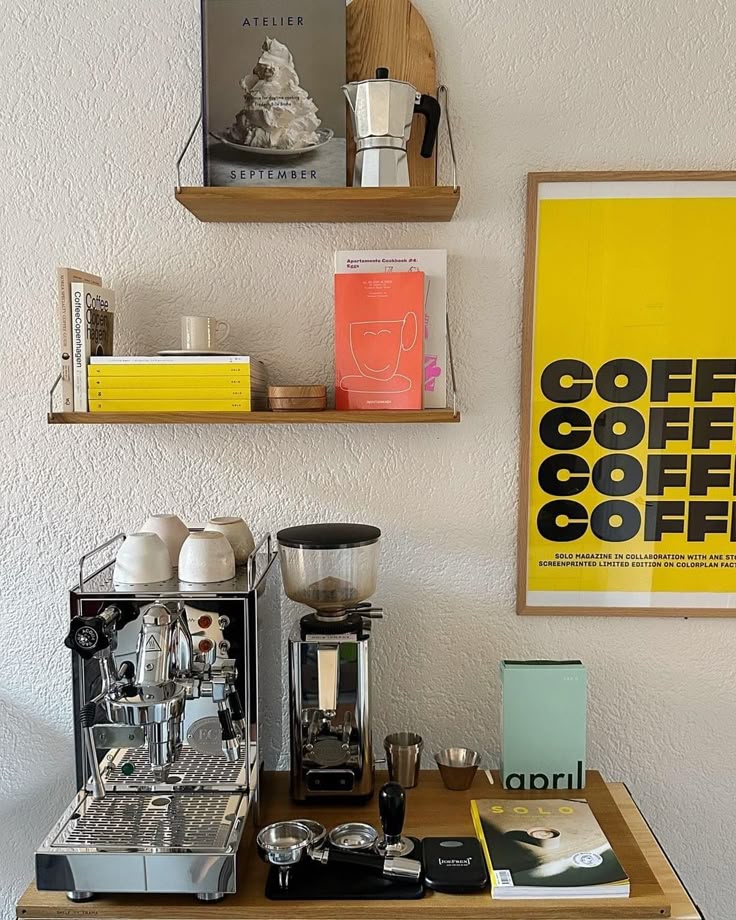
Display coffee table books or magazines near your small coffee bar. This encourages you to slow down and enjoy the moment rather than rushing through your cup.
Consider adding plants to your coffee corner. They improve air quality and create a relaxing environment that enhances your sensory experience.
Home coffee corner FAQ
Q: What is a home coffee corner?
A: A home coffee corner is a small dedicated area for making and serving coffee. It can be a kitchen counter zone, bar cart, cabinet, alcove, or wall nook with the brewer, mugs, beans, tools, storage, and lighting arranged together.
Q: How much space do you need for a coffee corner?
A: You can build a useful coffee corner in about 24 inches of width if you keep the setup simple. A 36 to 48 inch zone feels more comfortable because it leaves room for a machine, cups, beans, a tray, and a small landing area.
Q: Where is the best place to put a coffee station?
A: The best place for a coffee station is close to an outlet, near water or cleanup access, and outside the busiest walkway. A kitchen counter, dining nook, pantry wall, home office cabinet, or unused alcove can all work if the workflow feels easy.
Q: What should every coffee corner include?
A: Every coffee corner should include a stable surface, coffee maker, mugs, beans or pods, storage containers, filters or accessories, a spoon or stirrer, and a small cleanup plan. Add shelves, hooks, lighting, and decor only after the daily tools fit.
Q: How do you style a small coffee nook without clutter?
A: Use one tray to define the station, limit the visible color palette, and store backup supplies out of sight. Keep the tallest object, usually the machine or shelf, balanced with smaller jars, mugs, plants, or art so the nook feels intentional.
Q: What is the best lighting for a home coffee corner?
A: Warm under-shelf or under-cabinet lighting is usually best for a coffee corner because it lights the work surface without making the space feel harsh. Use brighter task light for measuring and softer ambient light if the nook is also a sitting area.
More home design guides for coffee corner planning
If you are planning the coffee nook as part of a larger room update, these related Sky Rye Design guides can help with the surrounding layout: small space design ideas, budget kitchen ideas, small kitchen design, cozy kitchen ideas, kitchen floor plans, loft kitchen design, interior design principles, LED room lighting ideas, interior design textures, and home art studio storage ideas.
- 1.1Kshares
- Facebook0
- Pinterest1.1K
- Twitter1
- Reddit0