I built my first deck by instinct. It seemed straightforward—measure the space, buy lumber, attach boards to joists. The construction was solid. The problem was everything else. The deck felt too small for the house, the steps landed in an awkward spot, and the whole thing looked like it had been dropped onto the property rather than designed for it. Technically functional, aesthetically forgettable.
The second deck I built started differently. Before cutting a single board, I studied how architects approach outdoor spaces. I learned that successful decks follow specific rules about proportion, height, and integration with the existing structure. These aren’t arbitrary guidelines—they’re principles developed through decades of observing what works and what creates that “something’s off” feeling.
Here’s what separates decks that feel like natural extensions of a home from decks that feel like afterthoughts: intentional design based on architectural principles, not just available space and budget. The difference between a deck you tolerate and one you love often comes down to decisions made before construction begins.
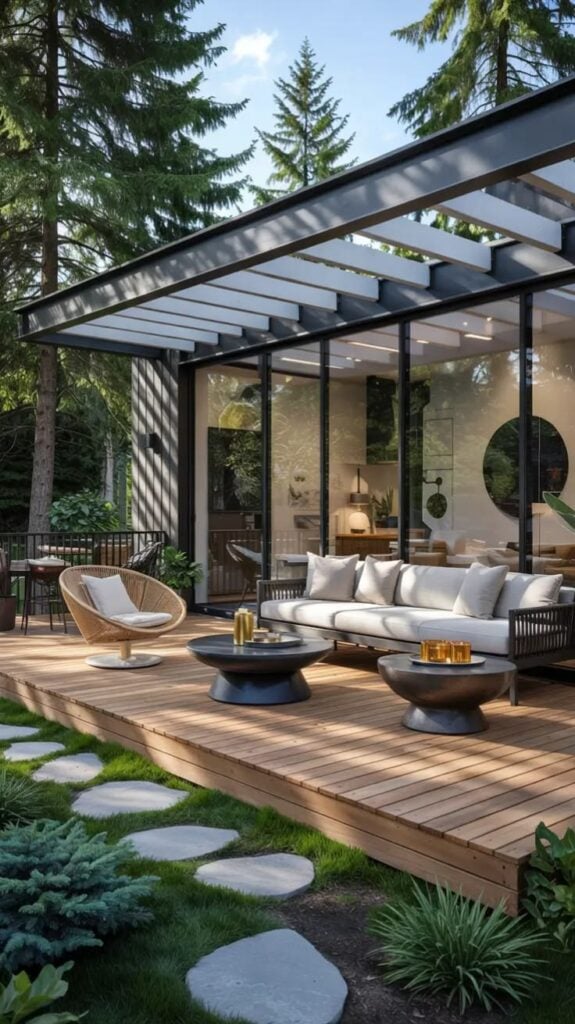
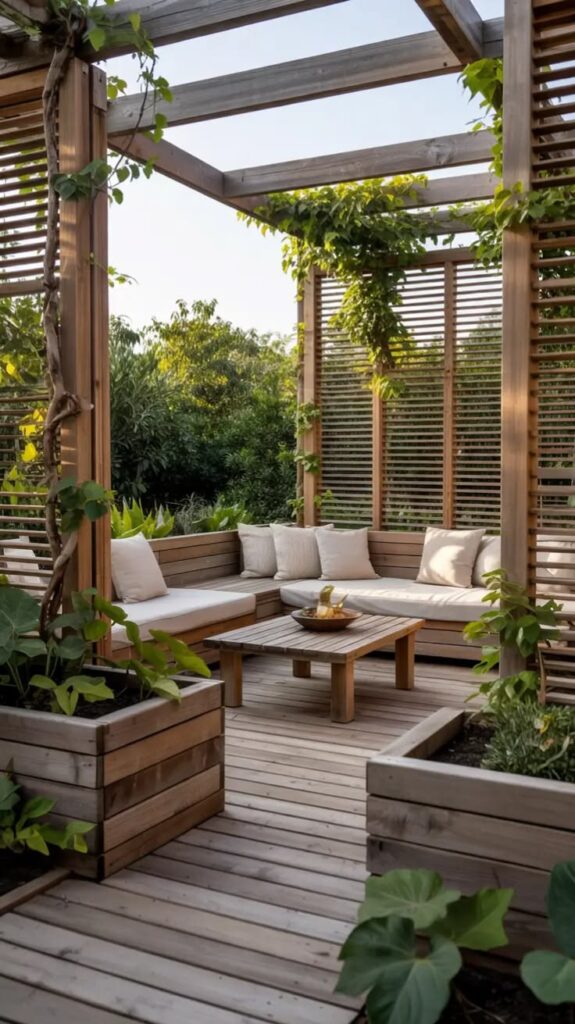
This guide covers the three foundational rules that architects and experienced deck builders use to design outdoor spaces that look right, feel right, and last for decades.
These principles come from building multiple decks, consulting with architects and contractors, and studying both successful designs and common failures. The rules are simple, but ignoring them produces results that never quite satisfy.
Rule 1: Proportion and Scale
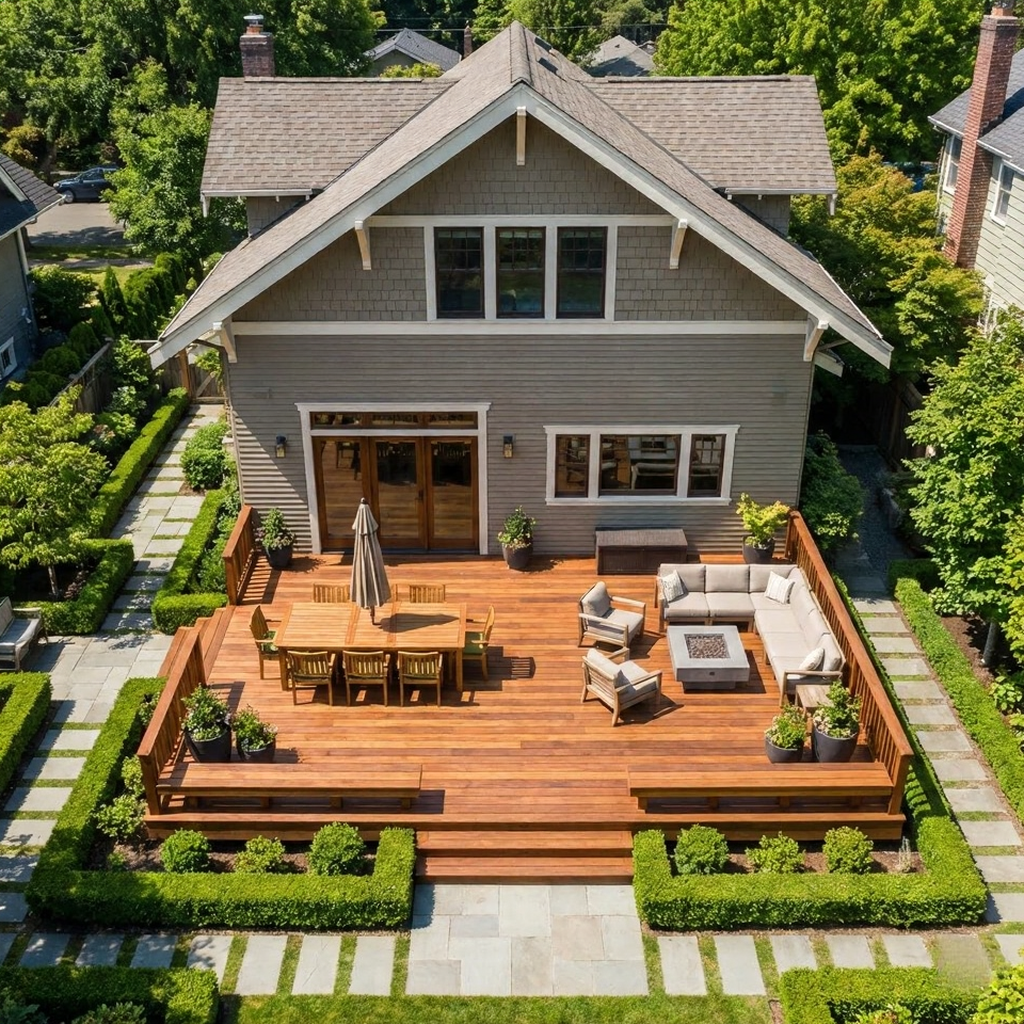
The most common deck design failure is proportion. A deck that’s too small looks like a porch; too large overwhelms the house. Getting proportion right creates the foundation for everything else.
The 20% Guideline
Architects use a simple rule for initial deck sizing: the deck footprint should not exceed 20% of your home’s total square footage. A 2,000 square foot home suggests a deck no larger than 400 square feet. A 1,500 square foot home points toward 300 square feet maximum.
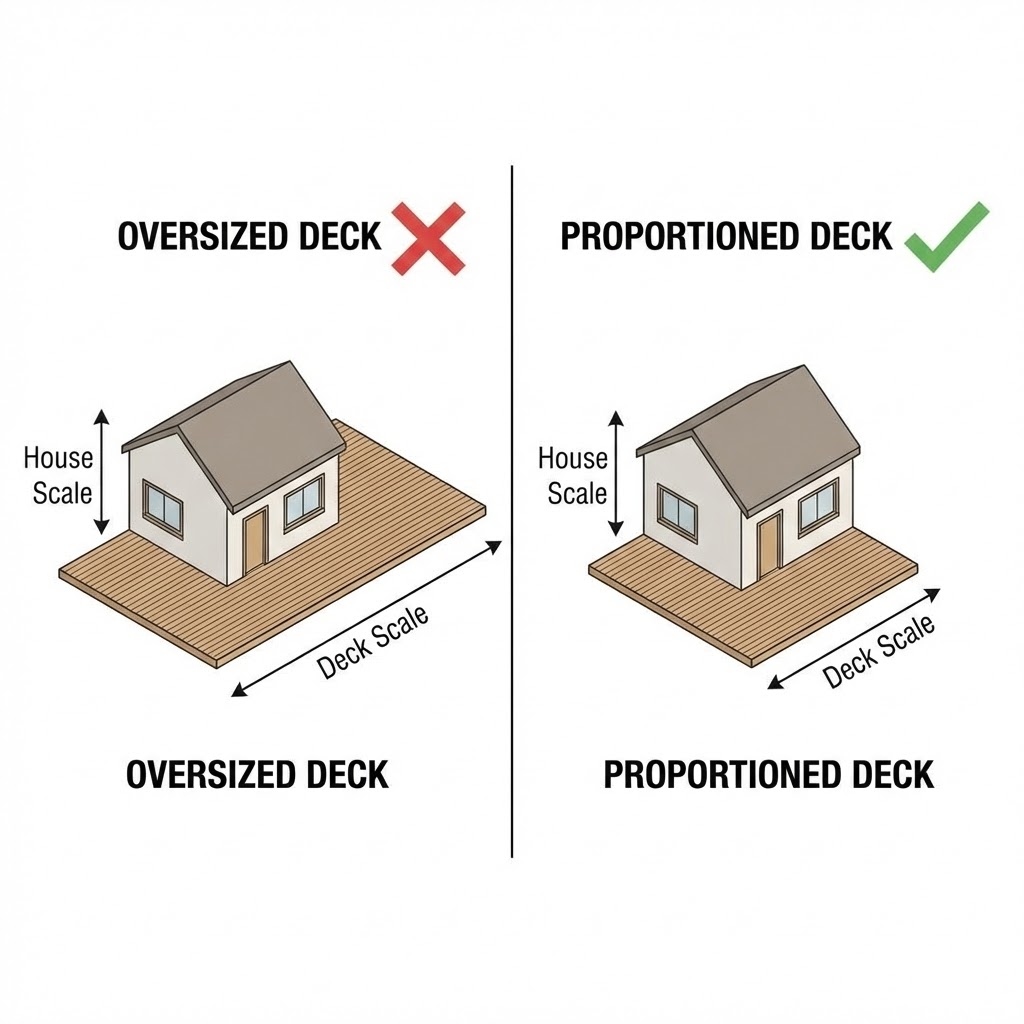
This isn’t a rigid law—context matters. But starting from this proportion ensures your deck relates appropriately to your home’s scale. Decks that dramatically exceed this guideline often overwhelm the house visually, making the structure look unbalanced from the yard or street.
Why this works: Human perception responds to proportion intuitively. We sense when elements relate harmoniously, even if we can’t articulate why. A deck that respects the 20% guideline maintains visual balance between indoor and outdoor living space.
Relating to Interior Spaces
Your deck should relate to the rooms it connects to. If the deck attaches to a living room and kitchen, consider how those interior spaces flow into outdoor use:
Furniture zones: Map where outdoor furniture will sit before finalizing dimensions. A dining area needs approximately 10×12 feet minimum. A seating area needs 8×10 feet minimum. Circulation paths between zones need 3-4 feet width.
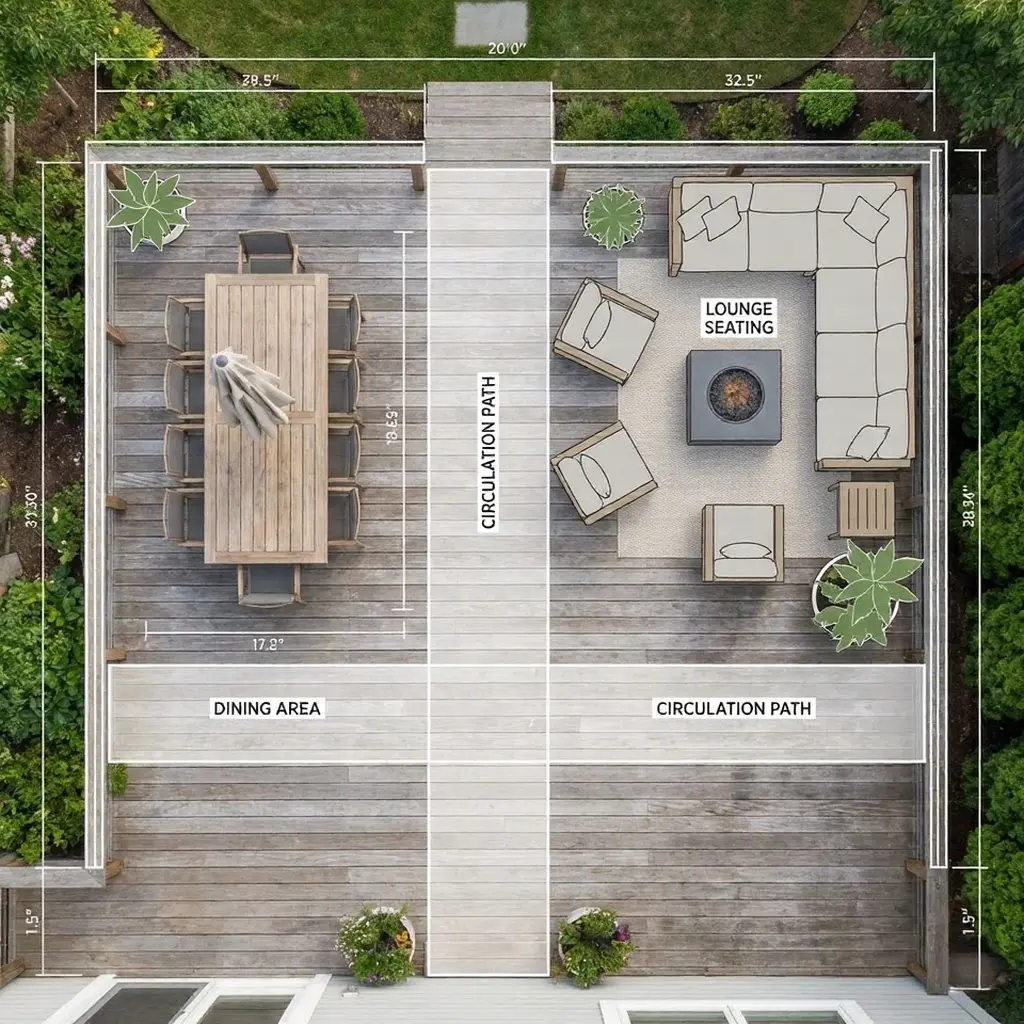
Door relationships: The deck should feel like an extension of the interior room, not a disconnected platform. Consider sightlines from inside—what will you see through sliding doors or windows?
Traffic flow: How do people move from inside to outside and across the deck? Avoid designs that force awkward paths or bottlenecks at doors.
Avoiding the “Floating Platform” Effect
Decks that ignore proportion often look like they’re floating disconnected from the house. Signs of this problem:
- The deck appears much wider than the house wall it attaches to
- From the yard, the deck dominates the view more than the house itself
- The deck feels like an island rather than an extension
The fix: Extend design elements from the house onto the deck. Match trim colors, echo architectural details, use similar material tones. Create visual bridges—planters, pergolas, railings—that connect deck to house.
Rule 2: Height, Safety, and Code Requirements
Deck height affects everything from safety requirements to visual integration. Understanding height rules prevents costly redesigns and ensures your deck meets code.
The 30-Inch Threshold
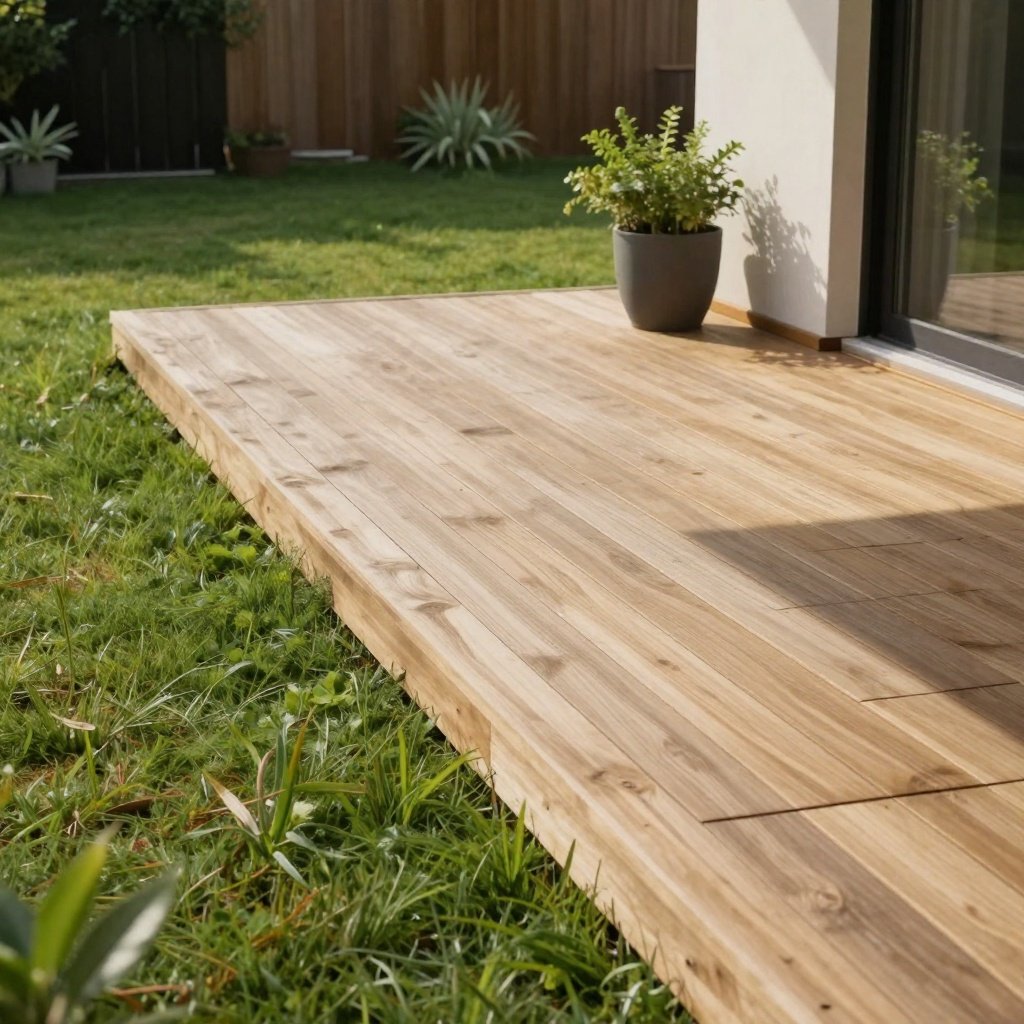
Building codes treat decks differently based on height. The critical threshold is 30 inches above ground level. Decks higher than this measurement require railings, more substantial footings, and additional structural considerations.
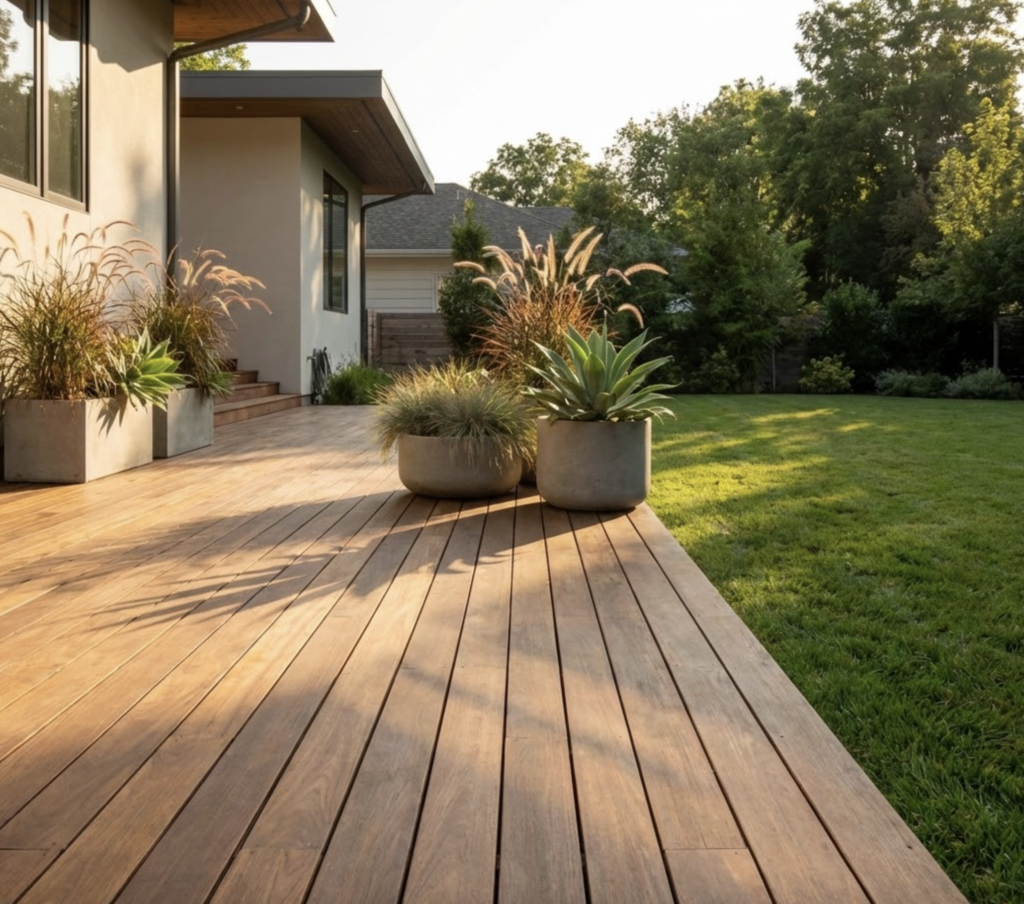
Below 30 inches: Often called “ground-level” or “floating” decks. Simpler permit requirements in most jurisdictions. May not require railings (though you might want them anyway). Easier construction with less structural complexity.
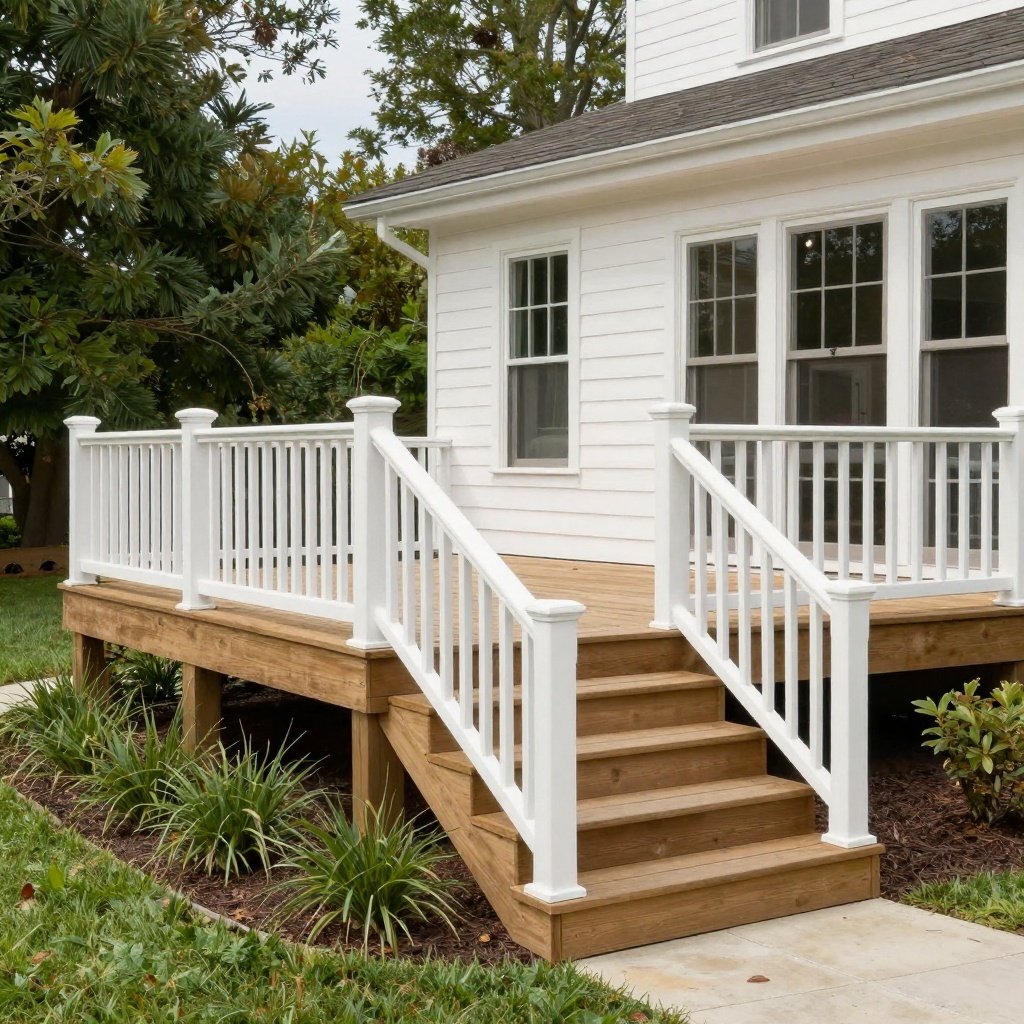
At or above 30 inches: Railings become mandatory (typically 36-42 inches high). More stringent footing requirements. Often requires engineered plans or professional design review. More complex stair calculations.
Why this matters for design: If your site allows either option, the sub-30-inch deck offers simpler construction and more design flexibility. But if your yard slopes significantly or the house sits high on its foundation, you may have no choice but to design for the higher deck category.
Working With Your Site
Evaluate your specific conditions:
Measure from the door threshold to grade. This determines your minimum deck surface height. Add joist depth and decking thickness to understand total construction height.
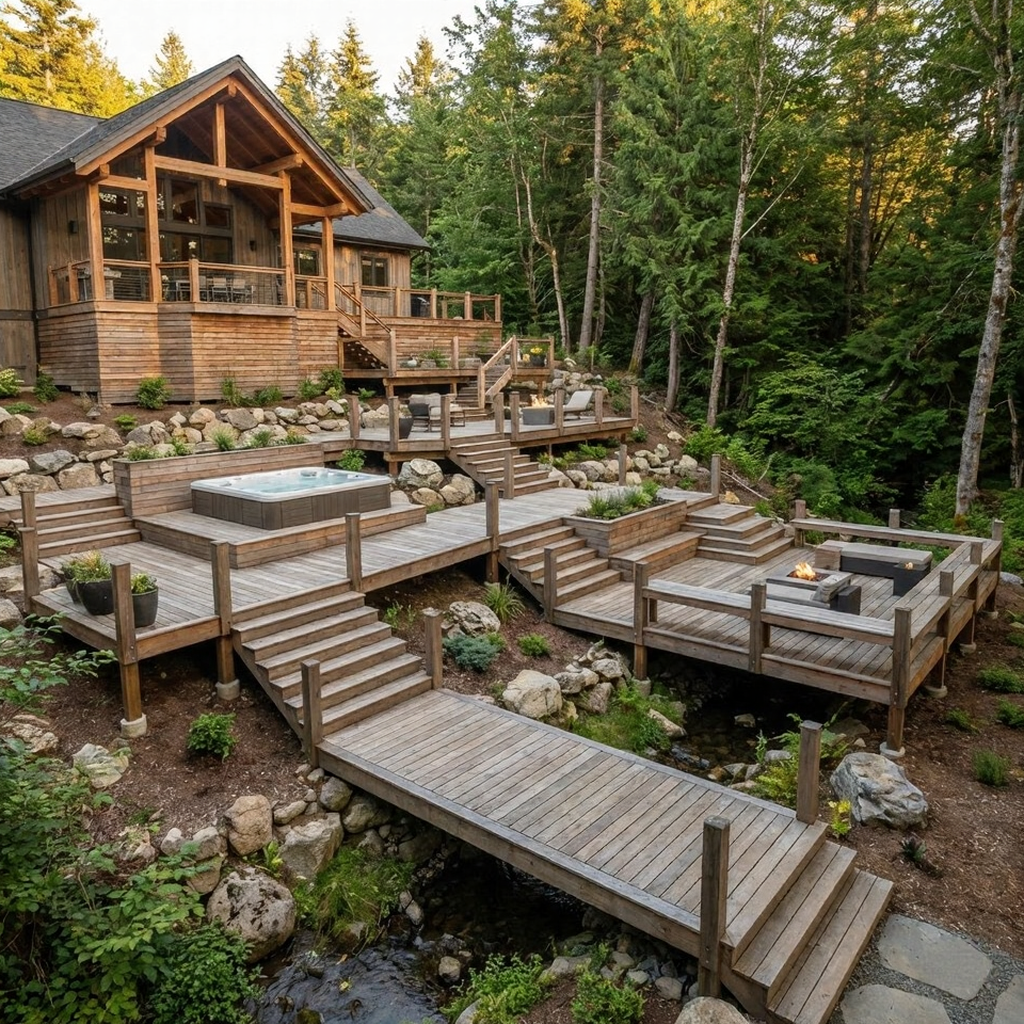
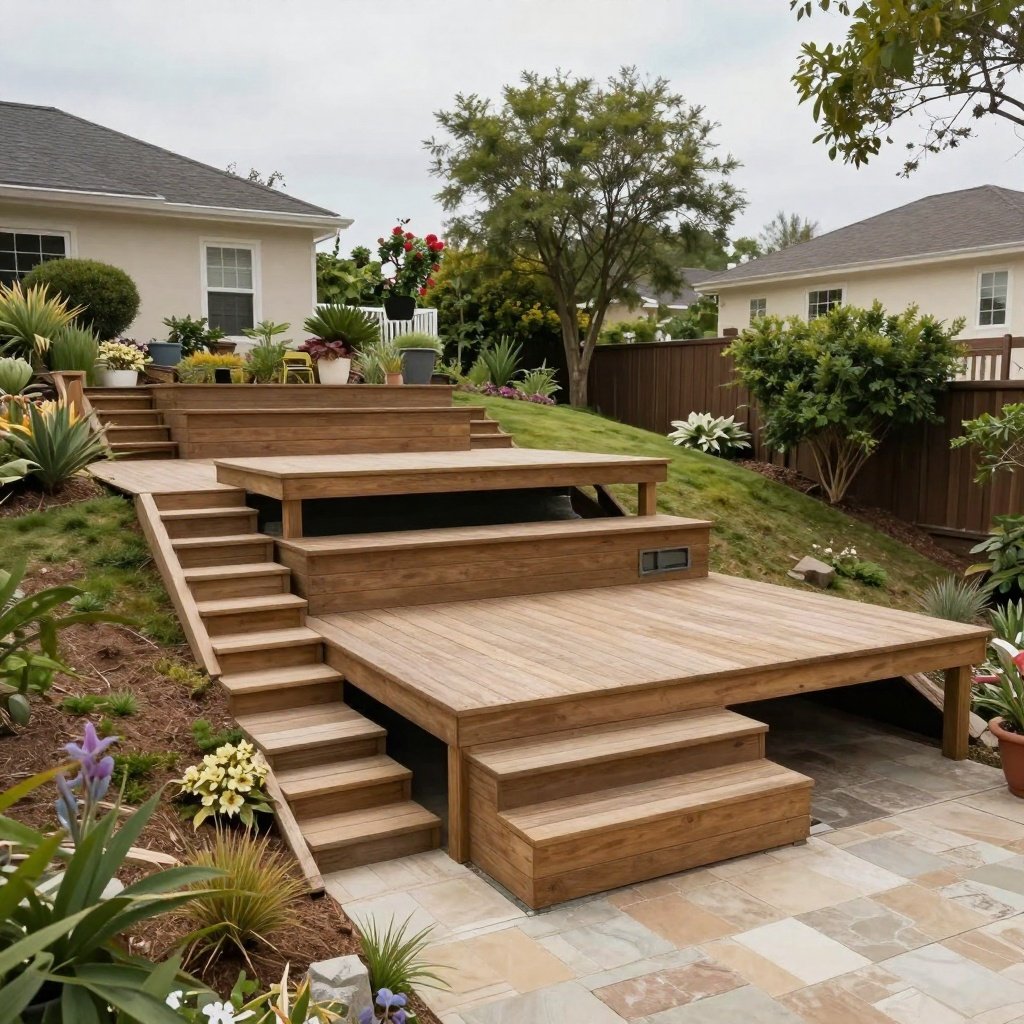
Assess slope. A level yard simplifies everything. Sloping yards may require stepped deck sections, varying post heights, or significant grading work.
Check drainage patterns. Water should flow away from the house and not pool under the deck. Deck height affects your options for managing grade and drainage.
Code Compliance Saves Money
Designing to code from the start prevents expensive corrections:
Permits: Most jurisdictions require permits for permanent decks. The permit process catches design issues before construction.
Inspections: Footings, framing, and final completion typically require inspection. Building correctly the first time avoids tear-out and rebuild.
Resale implications: Unpermitted or non-code-compliant decks create problems when selling. Buyers’ inspectors flag these issues, potentially killing deals or requiring remediation.
Insurance considerations: Deck failures can cause injuries. Proper construction documented through permits provides protection; unpermitted work creates liability.
Rule 3: Material Selection and Longevity
Material choice affects appearance, maintenance, cost, and lifespan. The right decision depends on your priorities and realistic assessment of maintenance commitment.
Understanding Material Lifespans
Different decking materials offer dramatically different longevity:
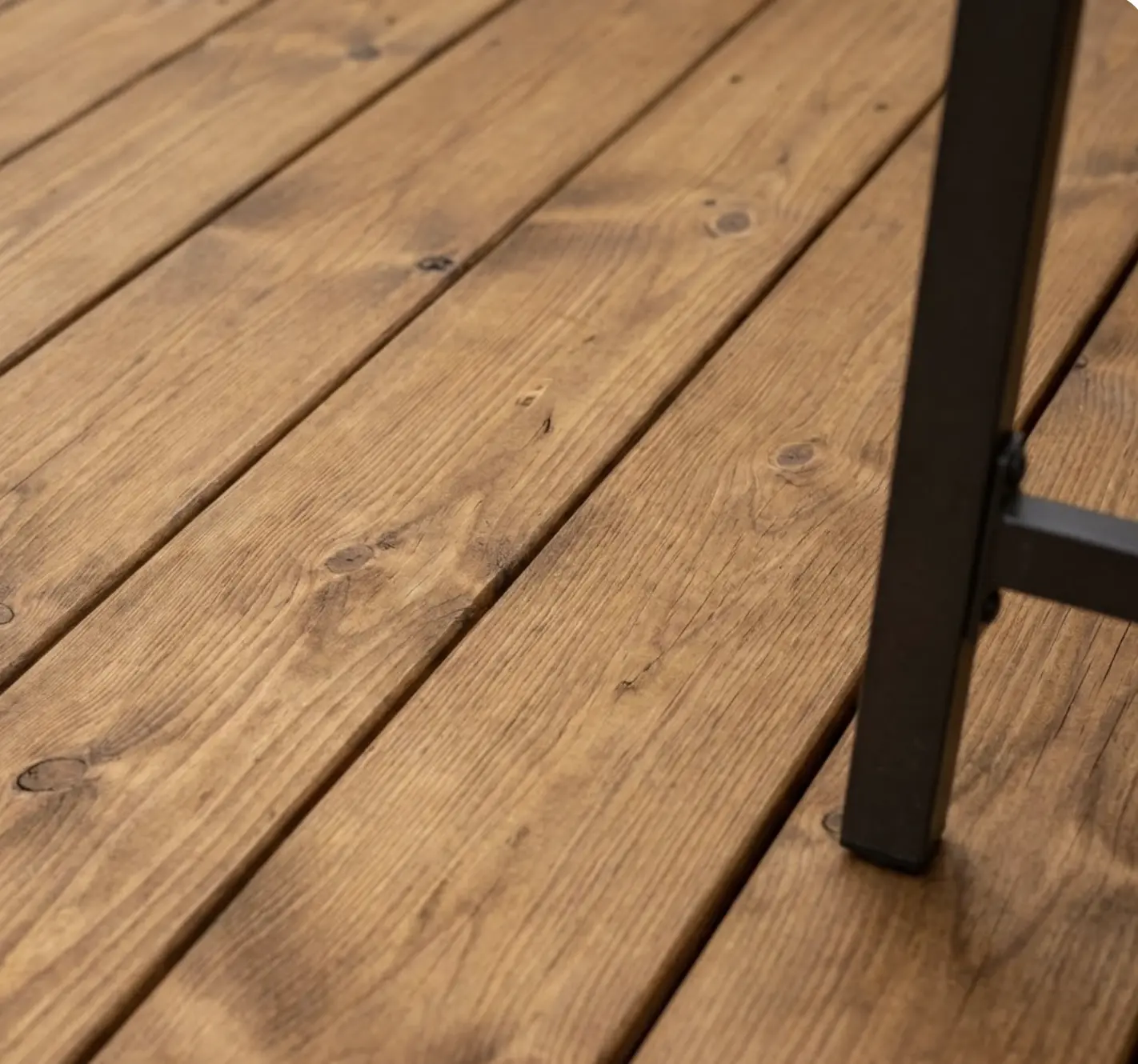
Pressure-treated lumber: The budget option. Properly maintained, pressure-treated decks last between 25 and 30 years. “Properly maintained” means annual cleaning, periodic sealing or staining, and prompt replacement of damaged boards. Neglected pressure-treated lumber fails much faster—15 years or less without maintenance.
Cedar and redwood: Naturally rot-resistant softwoods. Similar lifespan to pressure-treated (25-30 years) when maintained. More expensive initially but requires less chemical treatment. Weathers to gray naturally if left untreated; requires staining to maintain original color.
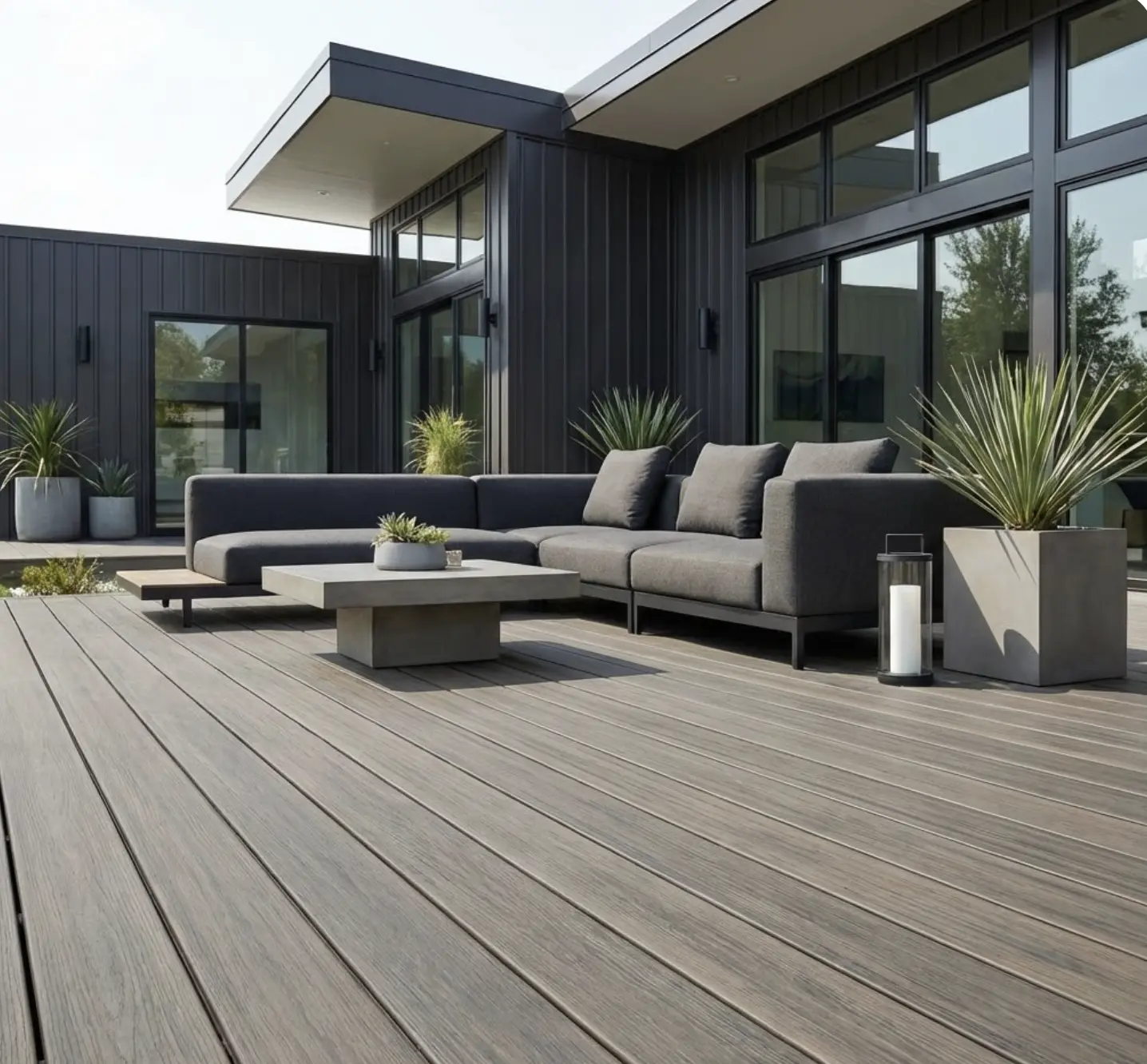
Composite decking: Manufactured from wood fibers and plastic. Varies widely by brand—quality composites can exceed 30 years with minimal maintenance. Higher initial cost offset by reduced maintenance. Won’t rot, splinter, or require staining. Some products fade or scratch; research specific brands.
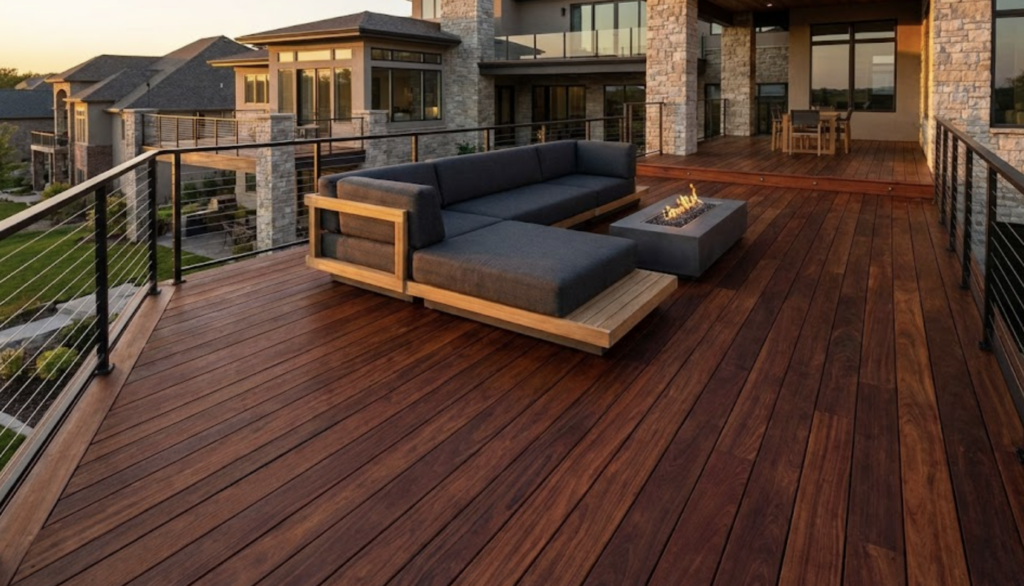
Hardwoods (ipe, cumaru, tigerwood): Extremely durable tropical hardwoods. Can last 40-75 years with proper care. Very high initial cost. Extremely dense—requires pre-drilling and specialized fasteners. Environmental concerns with some sourcing; verify sustainable certification.
Maintenance Reality Check
Be honest about maintenance commitment:
If you’ll realistically maintain the deck annually: Pressure-treated or natural wood offers good value. The maintenance isn’t difficult—cleaning, occasional sanding, sealing every 2-3 years.
If you want minimal maintenance: Composite decking costs more initially but eliminates staining and sealing. You’ll still need to clean periodically, but the ongoing effort is substantially less.
If you want premium appearance and maximum lifespan: Hardwoods deliver both but at premium prices for materials and installation.
Matching Materials to Architecture
Your deck materials should relate to your home’s style:
Traditional homes: Natural wood tones, painted railings that match house trim, classic baluster patterns.
Modern homes: Composite or hardwood with clean lines, cable or glass railings, minimal ornamentation.
Rustic or craftsman: Heavy timber look, natural finishes, substantial posts and beams.
The mistake to avoid: Material choices that clash with the house. A ultra-modern composite deck on a Victorian home feels wrong; a rustic timber deck on a contemporary box house creates dissonance.
Bringing the Rules Together
Successful deck design integrates all three rules:
Design Process
Step 1: Establish proportion. Calculate the 20% guideline for your home. Map interior connections and furniture needs. Determine your target footprint.
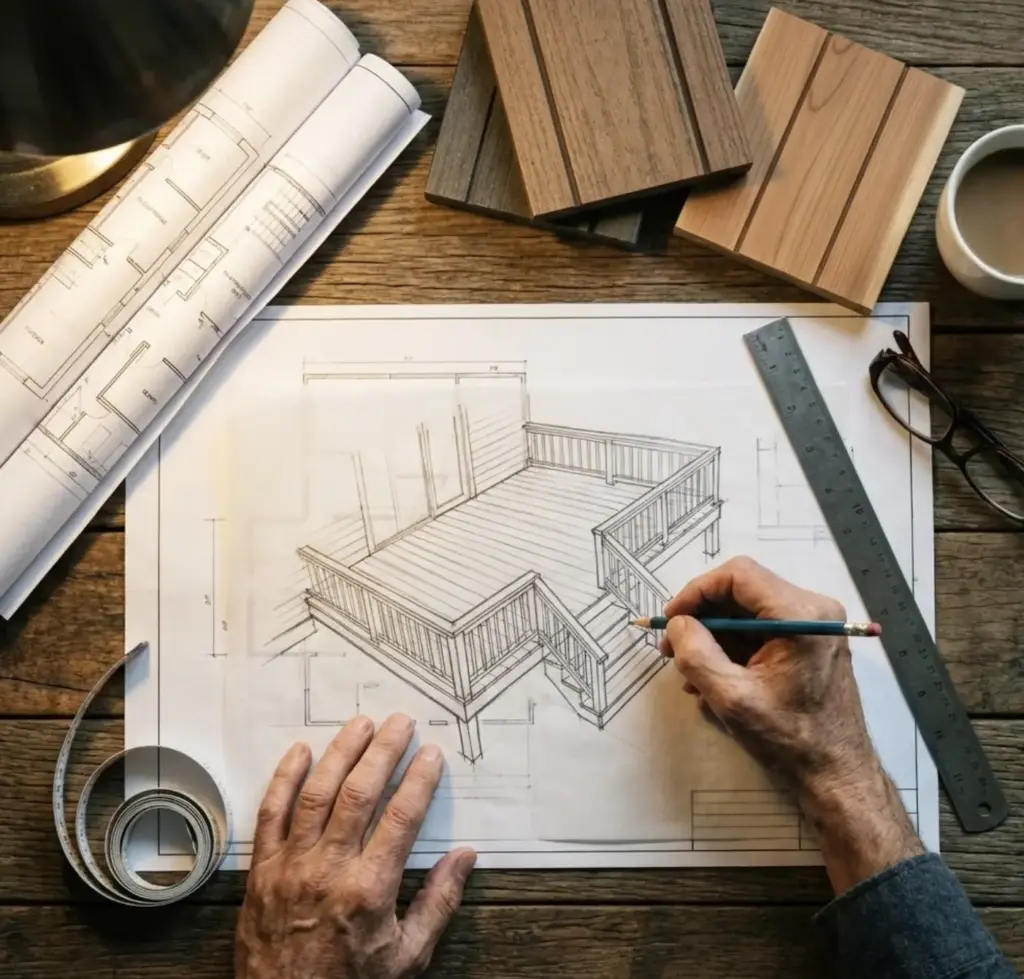
Step 2: Assess height requirements. Measure from door to grade. Determine whether you’re above or below the 30-inch threshold. Understand code implications for your height category.
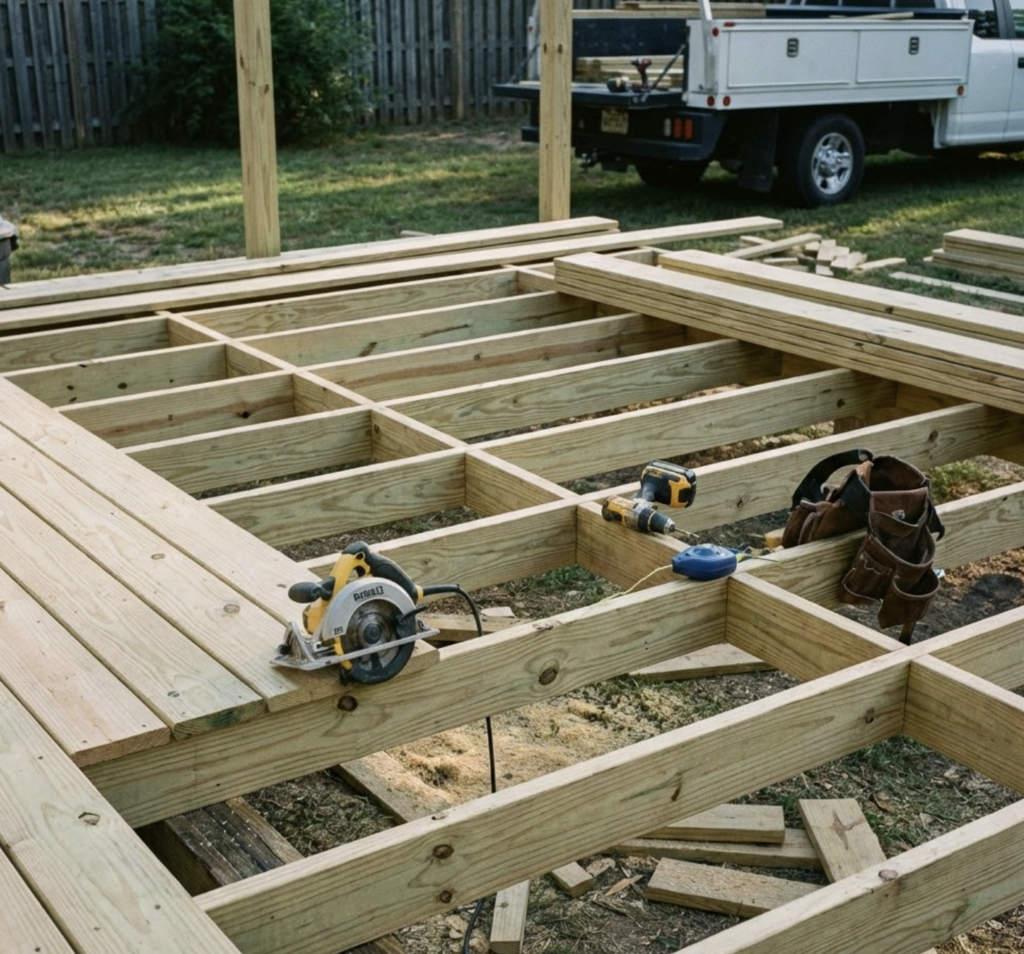
Step 3: Select materials. Match budget, maintenance willingness, and aesthetic goals. Ensure materials complement your home’s architecture.

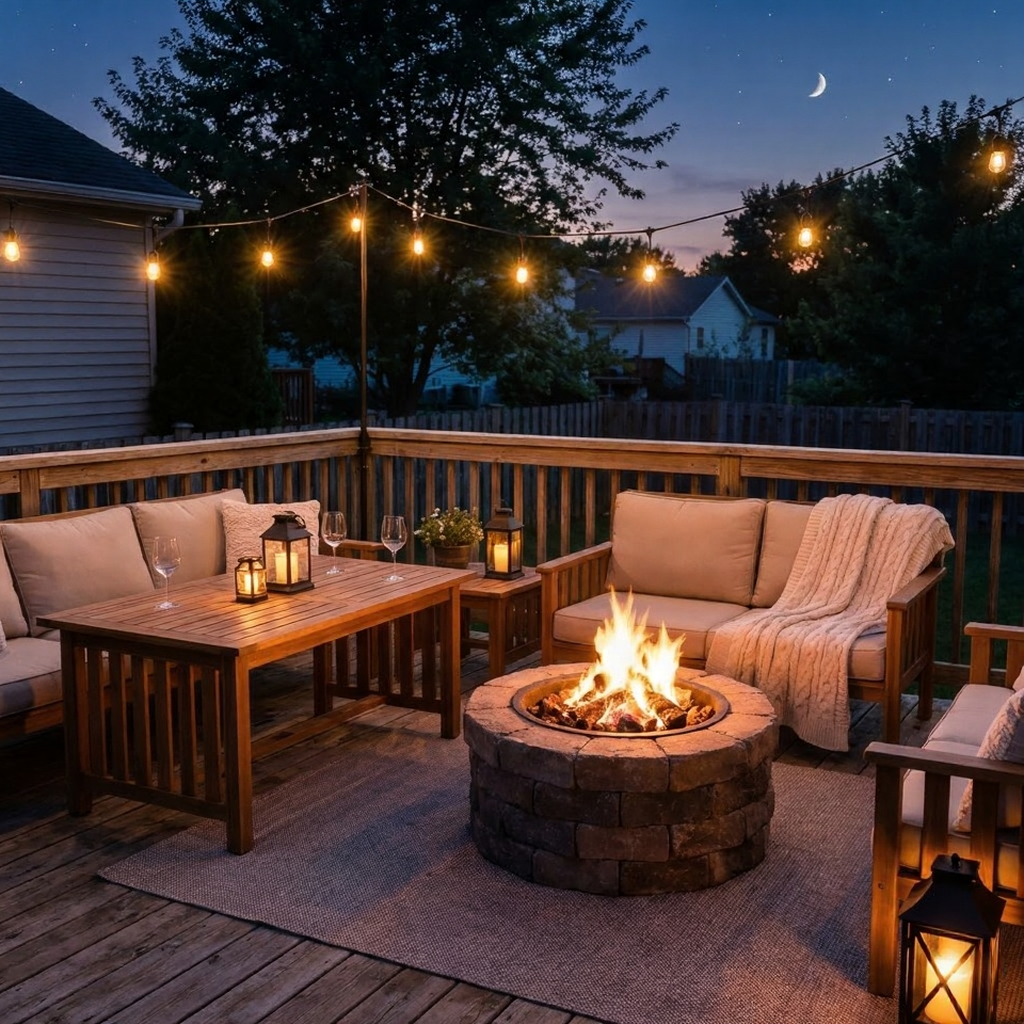
Step 4: Refine and detail. With fundamentals established, develop specifics: railing style, stair placement, built-in features, lighting, and finish selections.
Common Design Mistakes
Skipping proportion analysis: Building as large as budget allows without considering visual balance.
Ignoring height implications: Designing at 32 inches when 28 inches would have been possible—adding unnecessary code complexity.
Choosing materials by price alone: Lowest initial cost often means highest lifetime cost when maintenance and replacement factor in.
Designing in isolation: Not considering how the deck relates to landscaping, views, sun exposure, and privacy from neighbors.
FAQ
How do I determine the right deck size for my home?
Start with the 20% guideline—deck square footage should not exceed 20% of your home’s square footage. Then refine based on intended use: map furniture zones, circulation paths, and connection to interior spaces. The right size serves your actual activities without overwhelming your home’s scale.
Do I need a permit to build a deck?
Most jurisdictions require permits for permanent attached decks. Requirements vary by location and deck specifications. Check with your local building department before construction. Permits protect you by ensuring code compliance and create documentation valuable for insurance and resale.
What’s the most important factor in deck material selection?
Honest assessment of your maintenance commitment. Beautiful wood decks deteriorate quickly without annual care. If you won’t realistically maintain a wood deck, composite materials offer better long-term results despite higher initial cost.
How long should a well-built deck last?
Material dependent. Pressure-treated lumber and cedar/redwood last between 25 and 30 years with proper maintenance. Quality composite decking lasts 25-30+ years with minimal maintenance. Premium hardwoods can exceed 50 years. All estimates assume proper construction and appropriate care.
What’s the biggest deck design mistake homeowners make?
Building before designing. Starting construction without working through proportion, height, and material decisions produces decks that function but never quite satisfy. Time invested in design before building pays dividends for decades of use.
Final Thoughts
Crafting an ideal deck hinges not on limitless spending or rare components, but on utilizing sound design concepts to achieve an aesthetic balance between your exterior area and your residence. The trio of guidelines—scale, elevation consciousness, and suitable finishes—offers a structure that avoids typical pitfalls resulting in decks that seem ill-suited even if structurally sound.
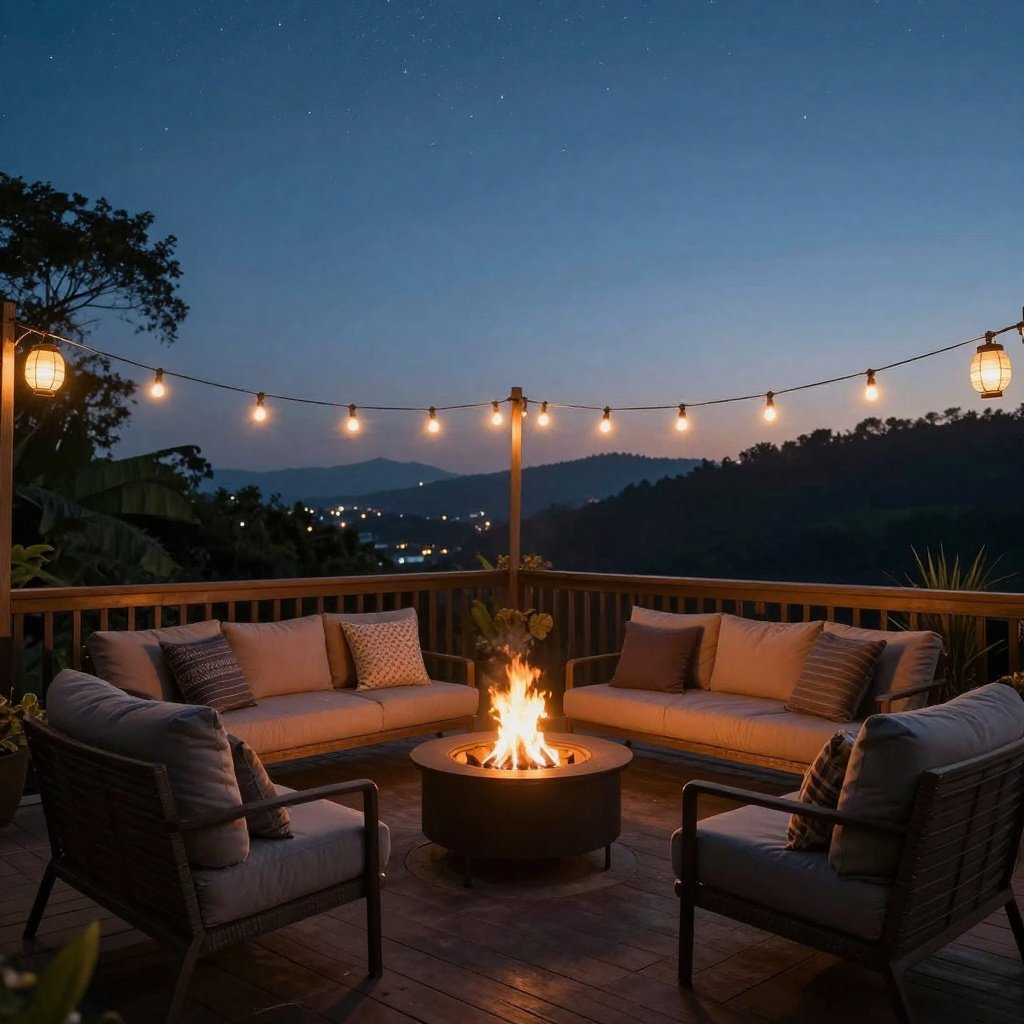
Your deck ought to feel organically linked to your house, an area that naturally pulls you outdoors and makes time spent there worthwhile. This sensation stems from deliberate planning, not chance.
This period: Explore your grounds with a renewed perspective. Determine clearances from doorway sills to ground level. Estimate the 20% sizing guideline relative to your dwelling. Note the solar path over your intended deck spot.
Prior to construction: Fully address all three guiding principles. Draft various layouts. Explore other possibilities. The time dedicated to planning averts prolonged unhappiness with the final product.
The reward: A deck founded on sound structural design becomes a true augmentation of your living area—an exterior sanctuary that adds value to your property for many years ahead.
Your yard warrants more than a standard flat surface. Conceive it thoughtfully, construct it correctly, and relish the outcome for the next quarter-century or more.
For decks tied into complex gardens or slopes, drone site mapping for landscape design can reveal access, drainage, and elevation issues before detailing begins.
- 787shares
- Facebook0
- Pinterest787
- Twitter0
- Reddit0