Learning how to draw architecture starts with a simple idea: make the building read before you decorate it. Block in the big mass, set the horizon line, check the scale, and only then add windows, roofs, stairs, texture, and shadows. This guide walks through the beginner order I use for building sketches: tools, drawing types, perspective, line weight, and one complete step-by-step facade exercise.
What is architectural drawing?
Architectural drawing is the practice of turning buildings, rooms, and spatial ideas into clear visual information. For beginners, the goal is not a perfect artwork; it is a readable drawing that explains shape, scale, depth, and construction logic. Start with simple building masses, then add roof forms, openings, perspective lines, line weight, and shadows.
A strong architecture sketch usually shows four things clearly: the main volume, the viewer’s angle, believable proportions, and enough detail to explain the design. Practice with real buildings before inventing your own, because photos and street views teach how doors, windows, roofs, and human scale relate.
Once those basics feel steady, move into floor plans, elevations, sections, and perspective drawings so your sketches communicate like architecture, not just decoration.

Key takeaways
Start with the building mass before windows, texture, or decoration.
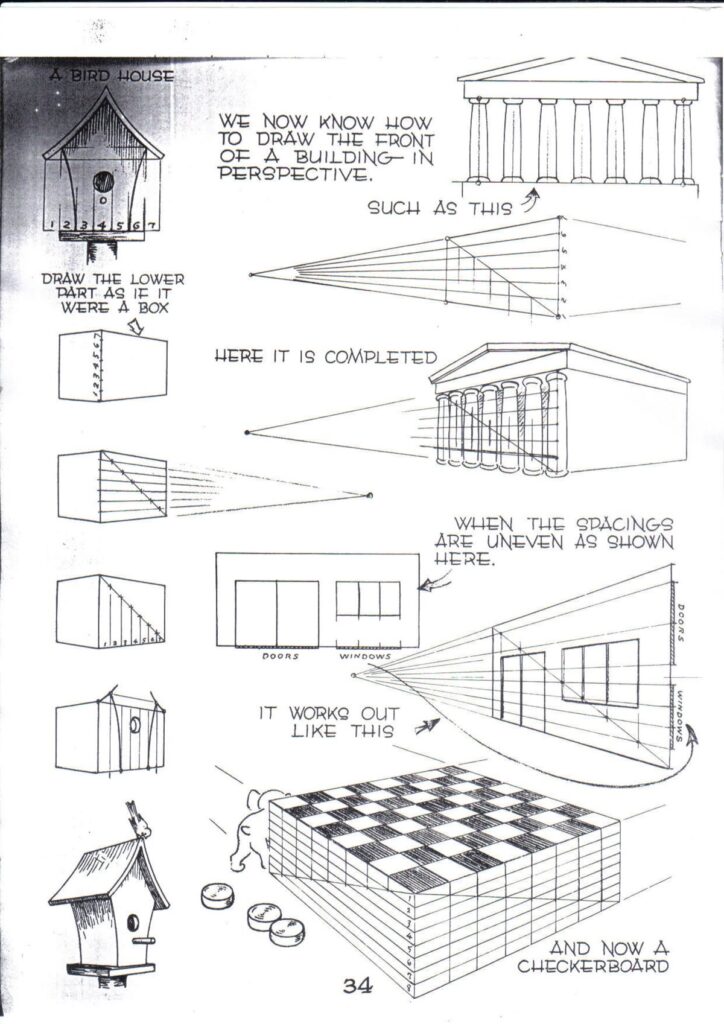
Use a horizon line and vanishing points whenever the building turns in space.
Practice plan, elevation, section, and perspective views so you understand what each drawing explains.
Use line weight to separate close edges, shadow edges, and fine surface detail.
Add people, trees, furniture, or cars only after the main scale feels believable.
How do you start drawing architecture as a beginner?
Begin with a small building you can understand at a glance: a cafe corner, a simple house, a garden pavilion, or a row of shopfronts. Do not start with a famous museum full of curved glass and impossible angles. The first job is to see the building as a few boxes sitting in space.

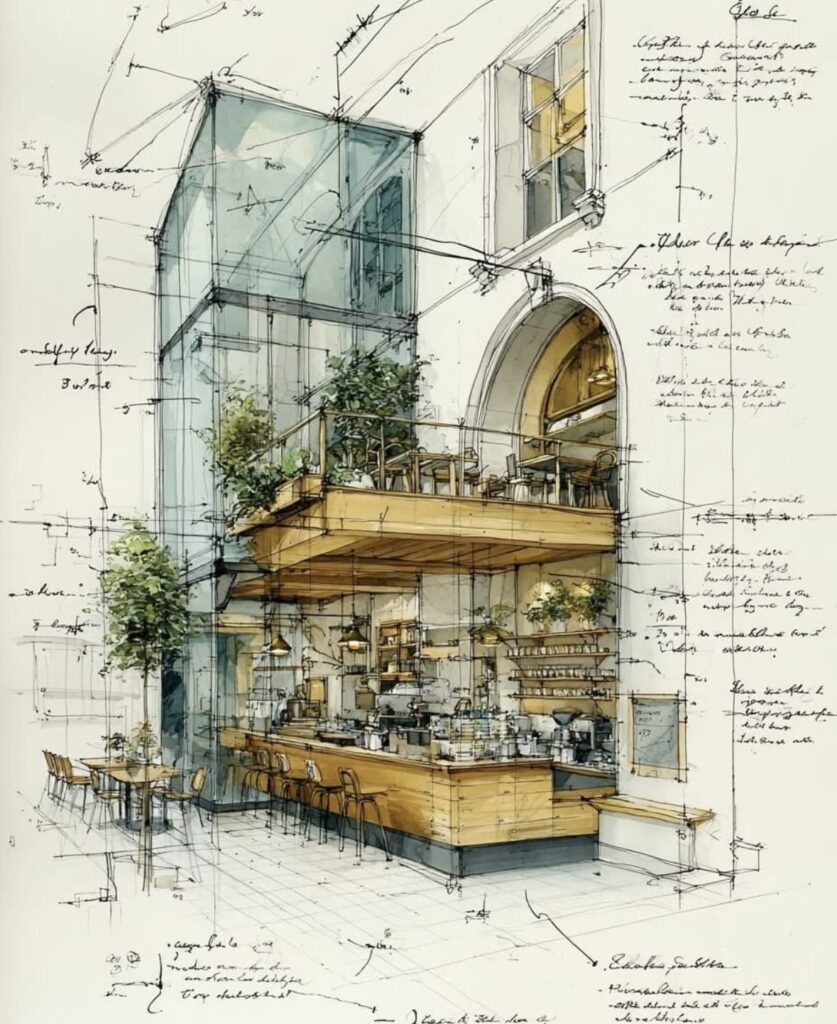
I like to thumbnail the mass first with a light HB pencil, then ask one blunt question: could someone tell where the front, side, roof, and ground plane are? If not, the drawing needs clearer structure before it needs nicer windows.
Mass: draw the largest box or group of boxes first.
Horizon: mark eye level before adding perspective edges.
Openings: place doors and windows as simple rectangles before frames or mullions.
Scale: add a person, tree, bench, or car to stop the building from floating.
Light: choose one light direction and keep every shadow consistent.
For a focused foundation lesson, the site already has guides on architecture sketches, perspective drawing, and beginner architecture drawing ideas. Use those after the first section, not before it; the intro of this article should stay clean and answer the query directly.
What tools do beginners need for architectural drawing?
You do not need a drafting table to start. A clean pencil setup is enough, and it teaches better habits than hiding every weak construction line under color. Keep the kit simple until your perspective and proportions feel stable.
| Tool | Use it for | Beginner note |
| HB pencil | Light construction lines | Press lightly so you can adjust the mass |
| 2B pencil | Shadows and darker edges | Save it for the last pass |
| Ruler | Horizon lines, vertical checks, measured edges | Use it to guide, not to make the sketch stiff |
| Fineliner 03 or 05 | Final line weight | Ink only after the pencil sketch works |
| Kneaded eraser | Lifting construction lines | Do not scrub the paper rough |
| Smooth sketch paper | Clean pencil and pen practice | A4 or letter size is easier than a tiny notebook |
How do you draw a building step by step?
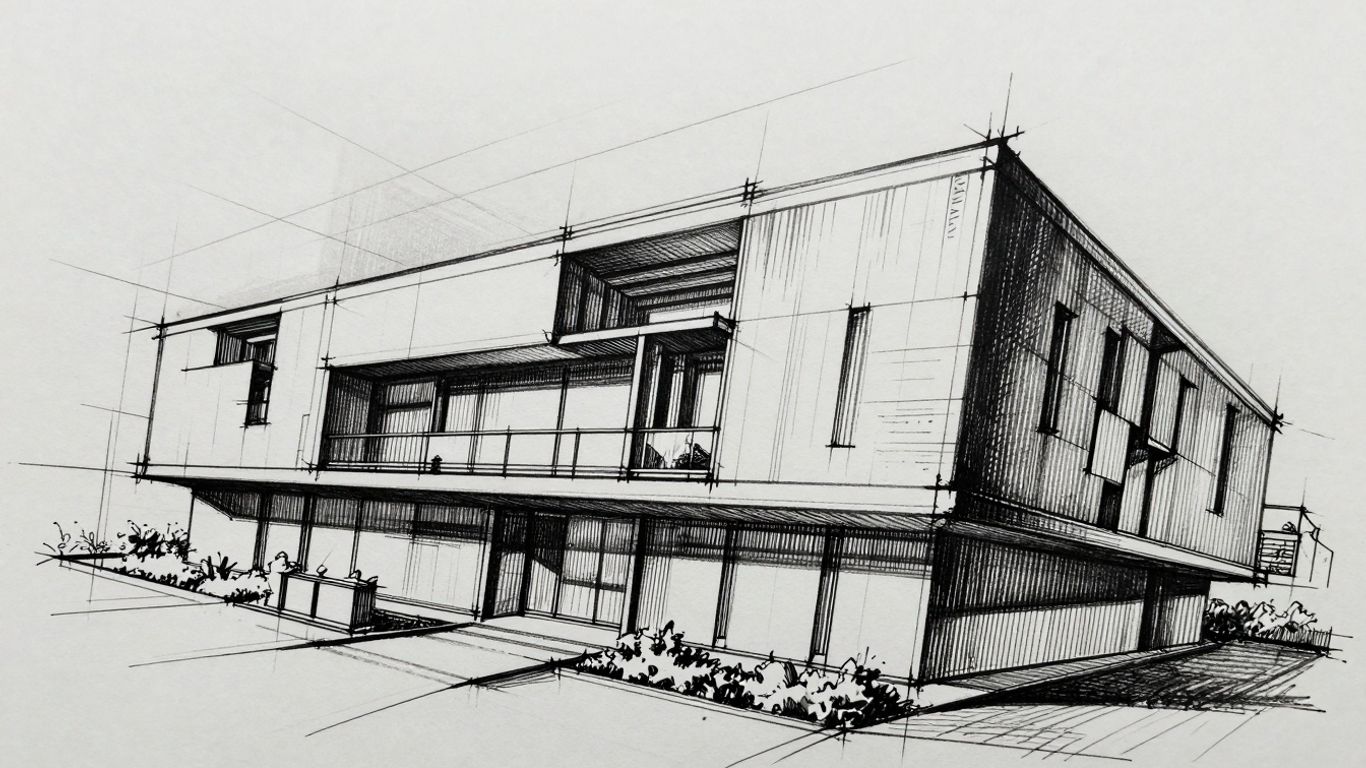
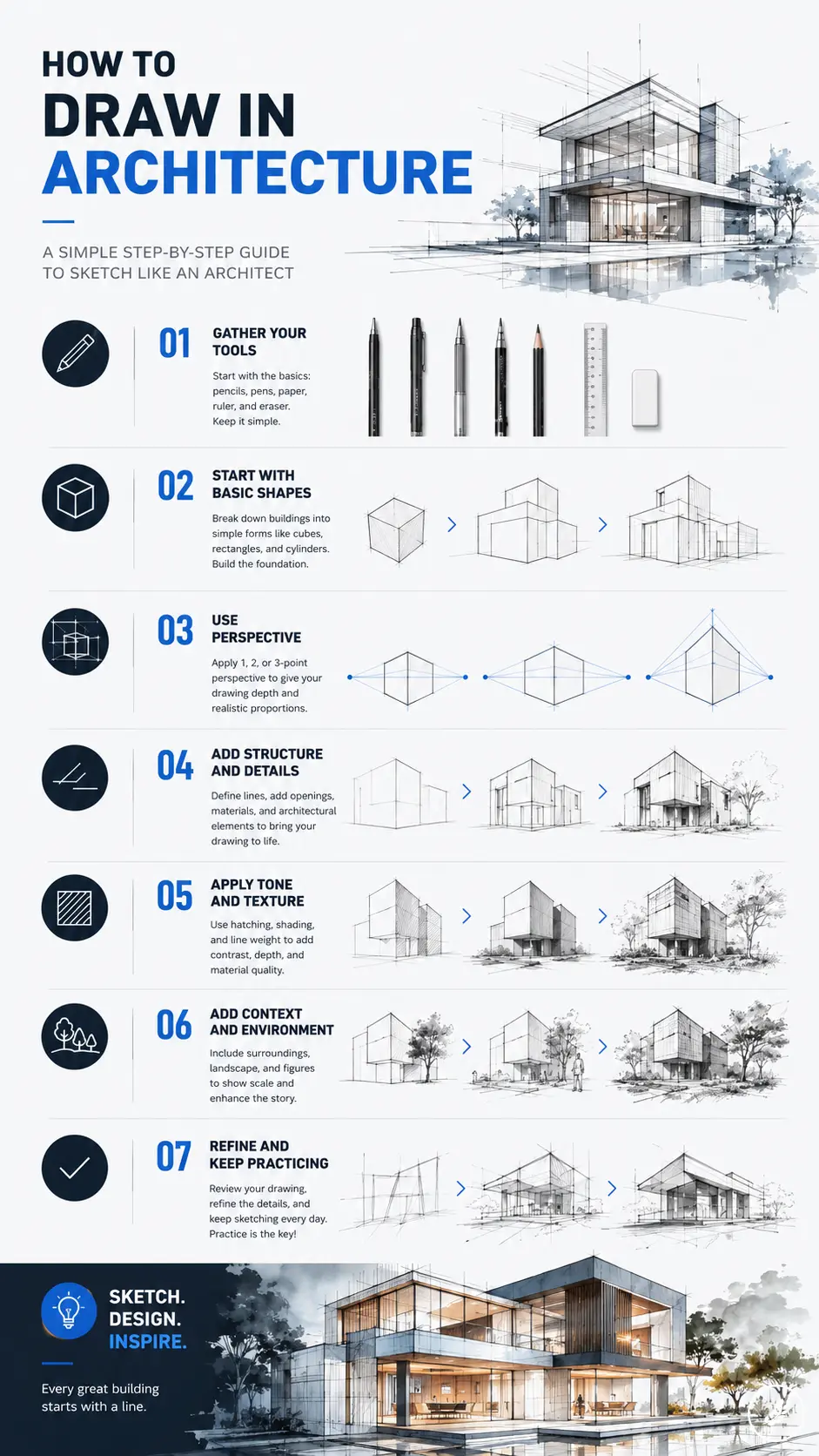
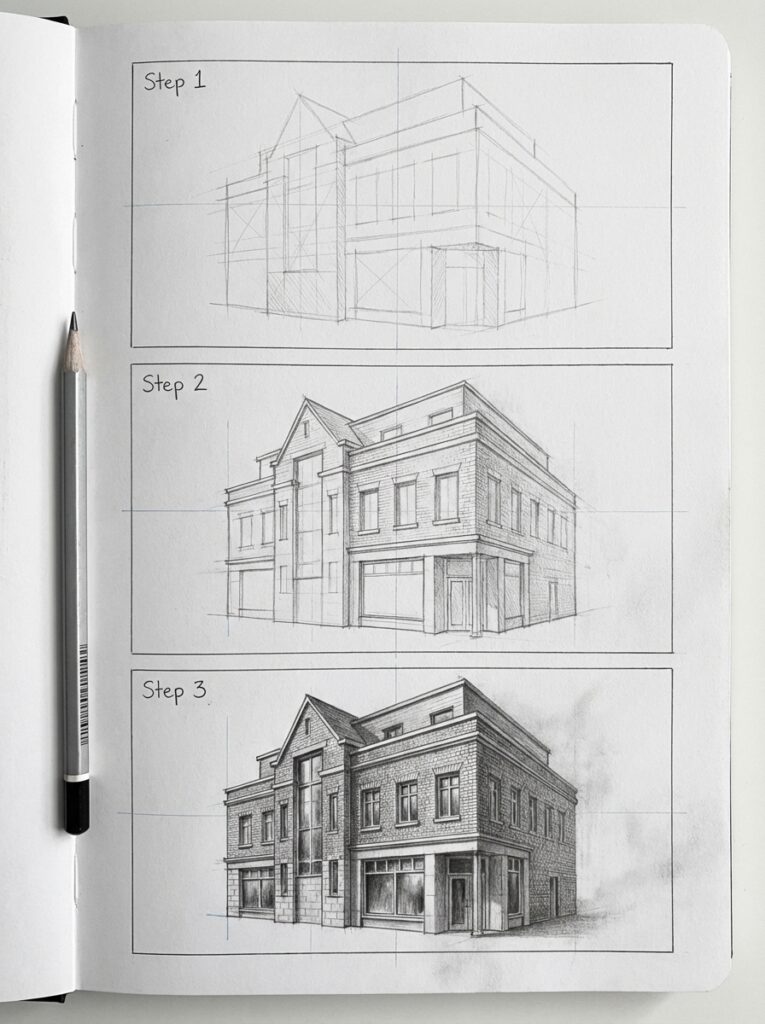
Use this exercise for a simple cafe facade or small house. It is deliberately plain, because beginners usually learn faster from a clear box than from a complicated landmark.
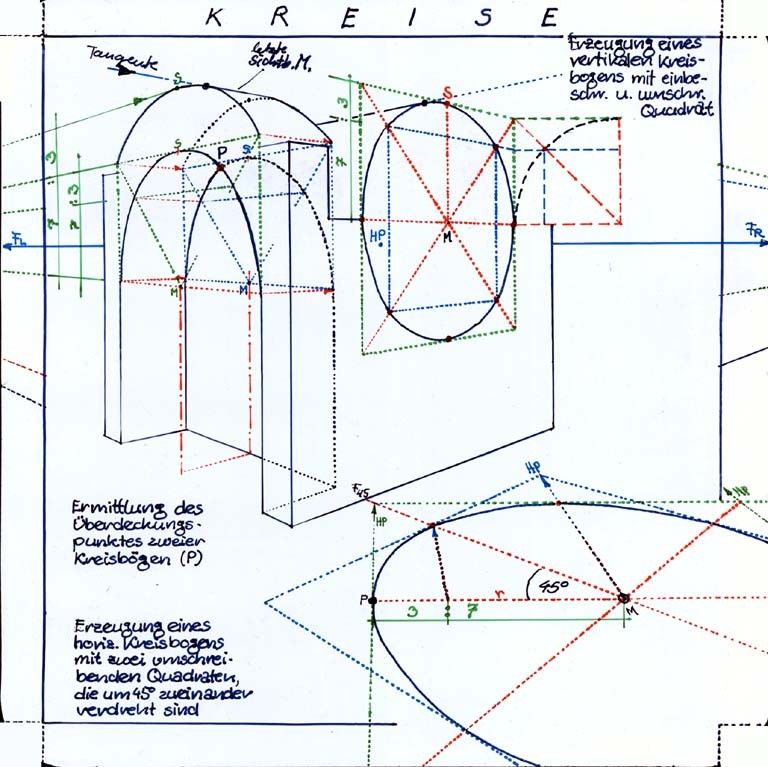
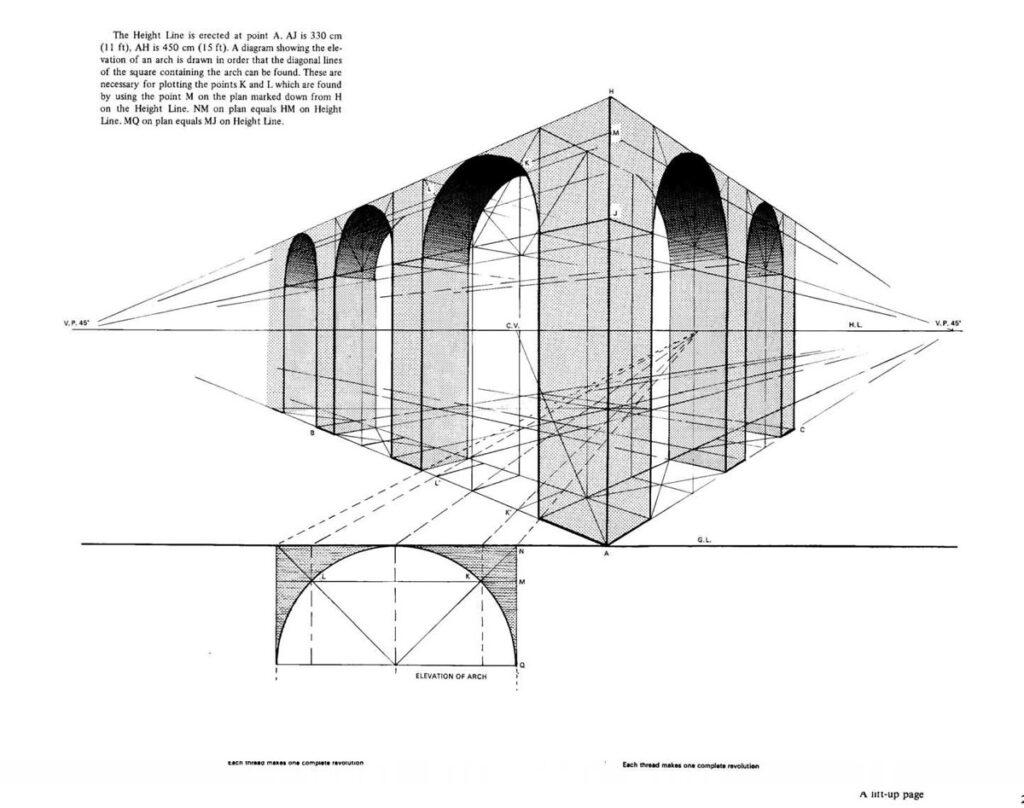
Draw the ground line and horizon line. Keep them light. The horizon tells you where the viewer’s eye level sits.
Block the main box. Sketch the front face first, then pull side edges toward a vanishing point.
Add the roof or top edge. Check that roof lines follow the same perspective direction as the walls.
Place doors and windows. Align their tops and bottoms with guide lines instead of guessing each rectangle separately.
Mark thickness. Add reveals, frames, steps, railings, and ledges so the building does not feel paper-thin.
Add line weight. Darken the closest outer edges and shadow-side corners. Keep far details lighter.
Finish with shadows and texture. Use brick, glass reflection, wood grain, or paving only where it helps the form read.
The Center for Architecture has a simple building-drawing activity that is useful for beginners because it starts with observation before decoration. ArchitectureCourses.org also separates architectural drawing into practical drawing types, which is exactly how students learn to move from a sketch to a readable design document.
Reference sources: Center for Architecture building drawing activity and ArchitectureCourses.org architectural drawing principles.
What drawing rules matter most in architecture?
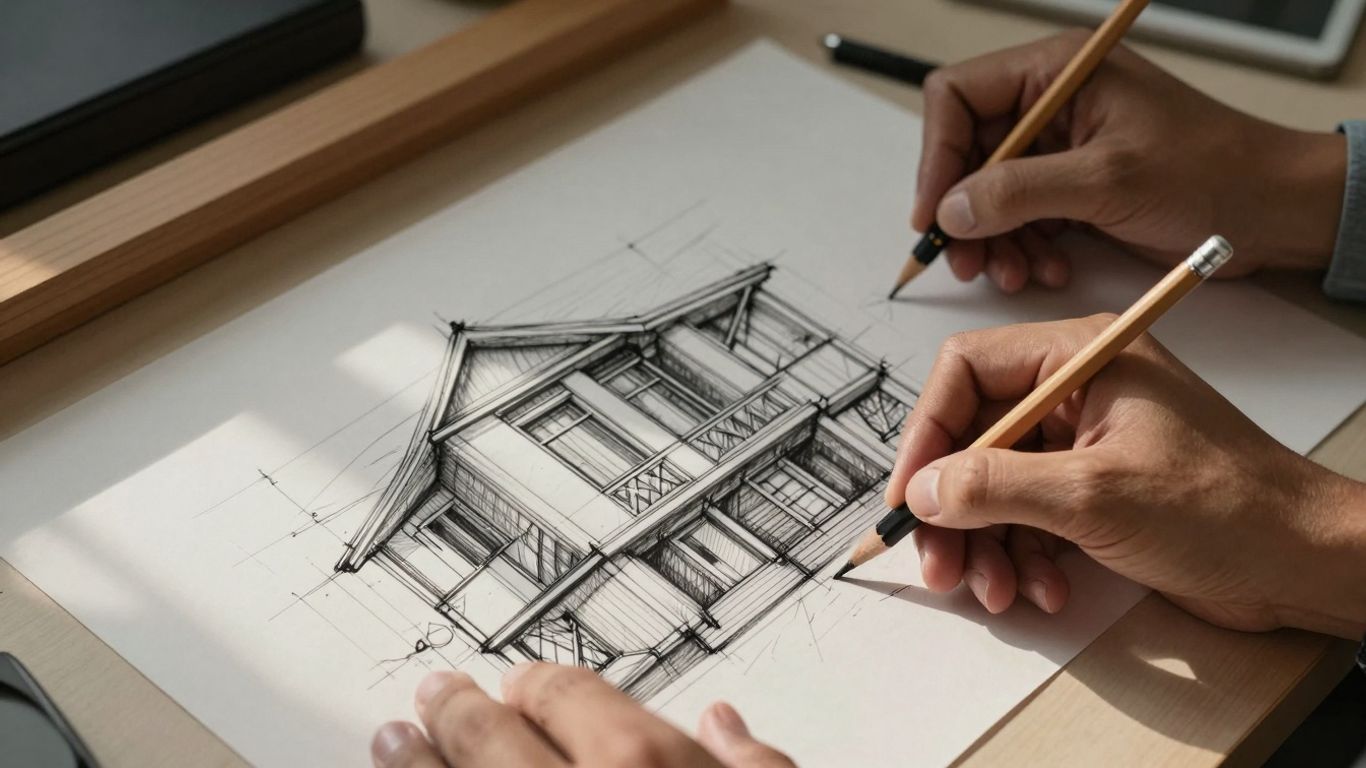
There are more than seven drawing rules, but beginners do not need a giant theory list. In architecture drawing, the rules that matter most are the ones that keep the building believable.

| Rule | What it controls | Quick check |
| Perspective | Depth and direction | Do receding edges aim at the same vanishing point? |
| Proportion | Relative size | Are windows, doors, and roof height believable together? |
| Scale | Human size | Could a person walk through the door you drew? |
| Line weight | Depth and emphasis | Are closer edges darker than far details? |
| Light and shadow | Solid form | Does every shadow agree with the same light source? |
| Composition | Page clarity | Is the building placed with room to breathe? |
| Detail control | Readability | Are details supporting the form instead of burying it? |
A useful rule from academic drawing is to compare angles before committing to details. If the roof angle is wrong, perfect window trim will not save the sketch. Fix the big geometry first.
What is the difference between a plan, elevation, section, and perspective drawing?
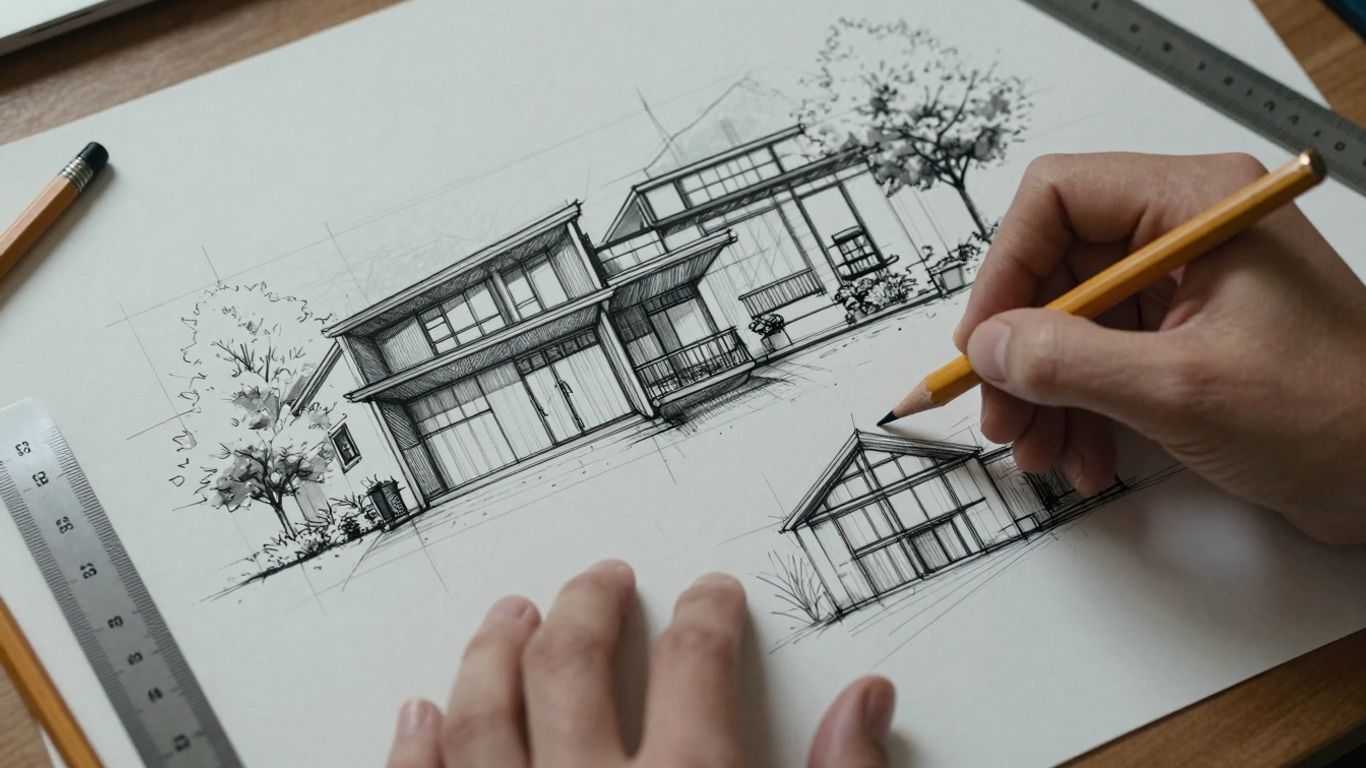
Architecture uses several drawing views because one picture cannot explain everything. A perspective sketch shows how a building feels in space, but it does not show exact room layout. A plan shows layout, but it does not show height. Learning the difference makes your sketches more useful.
| Drawing type | What it shows | Beginner exercise |
| Plan | The building from above | Draw the room layout as simple rectangles |
| Elevation | One exterior or interior face straight on | Draw the front wall with door and window proportions |
| Section | A cut through the building | Slice through a room to show floor, ceiling, and wall thickness |
| Perspective | The building from a viewer’s position | Use one or two vanishing points to show depth |
| Detail drawing | A close-up of one junction or element | Zoom into a window frame, stair edge, or roof overhang |
If you want a professional reference point, Rhino’s guide to reading architectural drawings is helpful because it explains why different drawing views exist. For beginners, the practical lesson is simple: draw one small building in plan, elevation, section, and perspective, then compare what each view reveals.
Reference source: Rhino guide to reading architectural drawings.
Practice next: a 20-minute building sketch
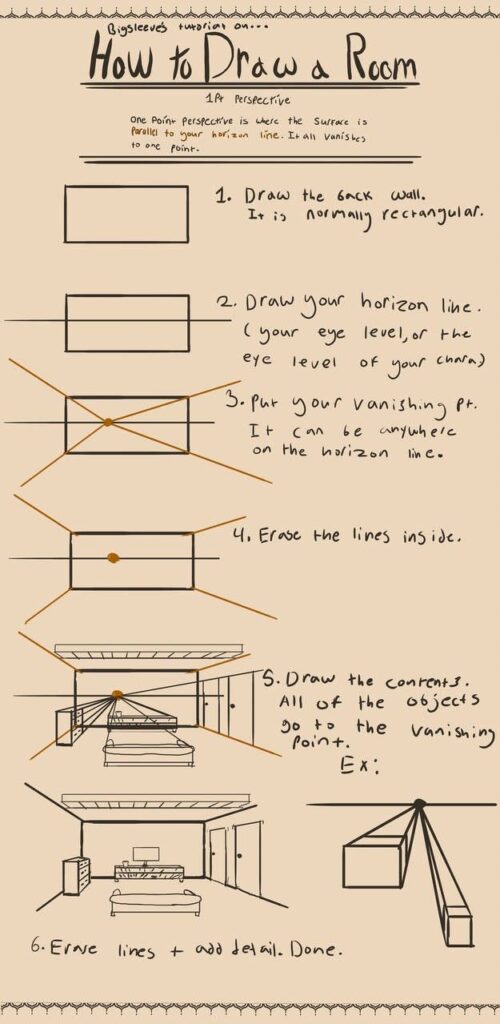
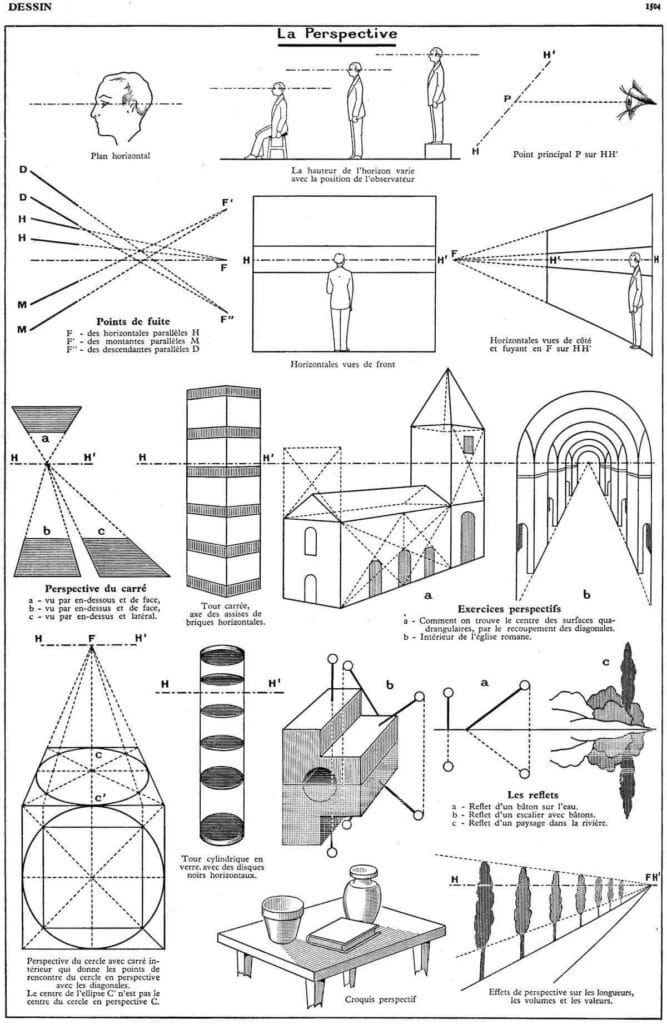
Set a timer for 20 minutes and sketch one small building from a photo. Spend five minutes on the mass, five on perspective, five on doors and windows, and five on shadows and line weight. Stop when the timer ends, even if the drawing feels unfinished. That limit teaches you to solve the structure first.
For the next round, try a more specific subject: a Japanese architecture drawing, a basic building sketch, or a stronger architectural perspective drawing. Keep the practice connected so every page builds the same skill from a slightly different angle.
The main takeaway: draw the building as structure first and image second. Once the mass, perspective, and scale work, the pretty details have somewhere to sit.
Architecture drawing FAQ
What is architectural drawing?
Architectural drawing is a way to describe buildings, rooms, and spatial ideas with lines. A sketch can be loose and exploratory, while a plan, elevation, section, or perspective drawing communicates a more specific view of the design. Beginners should learn both: sketching helps you think, and measured drawing helps other people understand what you mean.
How do you start drawing architecture as a beginner?
Start with a simple building, not a famous landmark. Draw the large box first, set a horizon line, add one or two vanishing points, then place the roof, doors, windows, and shadows. Keep the first drawing plain. If the main volume and perspective work, details will be much easier to add later.
What tools do I need to draw architecture?
You can start with an HB pencil, a 2B pencil, a ruler, a kneaded eraser, smooth sketch paper, and a fineliner. A triangle or T-square helps with cleaner measured drawings, but it is not required for practice. Digital artists can use the same process with a simple hard round brush and light construction lines.
What is the difference between a plan, elevation, section, and perspective drawing?
A plan shows the building from above, an elevation shows one side straight on, a section cuts through the building, and a perspective drawing shows depth from a viewer’s position. If you are learning, draw the same small building in all four views so you understand how they relate.
How do you make architectural sketches look realistic?
Use perspective, scale, line weight, and shadows together. Keep verticals straight, send receding edges to the same vanishing point, add a person or tree for scale, and make closer edges darker than distant ones. Realism usually comes from consistent structure before it comes from texture.
Should I draw from photos or real buildings?
Use both. Real buildings teach scale, proportion, and light better than imagination alone, while photos let you pause and study details. When drawing from a photo, do not copy every window. First simplify the building into big masses, then choose only the details that help the structure read clearly.
How long does it take to get good at architectural drawing?
You can learn the basics in a few weeks if you draw small buildings regularly, but confident architectural sketching takes longer. A useful routine is one 20-minute building sketch a day: five minutes for the mass, ten for perspective and openings, and five for shadows and line weight.
- 7.1Kshares
- Facebook0
- Pinterest7.1K
- Twitter0
- Reddit0